
Choosing a new floor is one of the biggest decisions you’ll make for your home. It’s a significant investment, and the fear of making a costly mistake—one you have to live with for decades—is real. You dream of the timeless beauty of hardwood floors, but the reality of daily life quickly sets in. What about kitchen spills, muddy paw prints, or that inevitable leaky dishwasher? For too long, homeowners have been forced to choose between the style they love and the durability they desperately need.
That compromise is now a thing of the past. Bravewood waterproof hybrid hardwood is engineered to deliver the authentic, stunning look of real wood without the worry. It represents the perfect marriage of flawless style and real-life durability. This is flooring designed for active, modern households that refuse to sacrifice elegance for practicality.
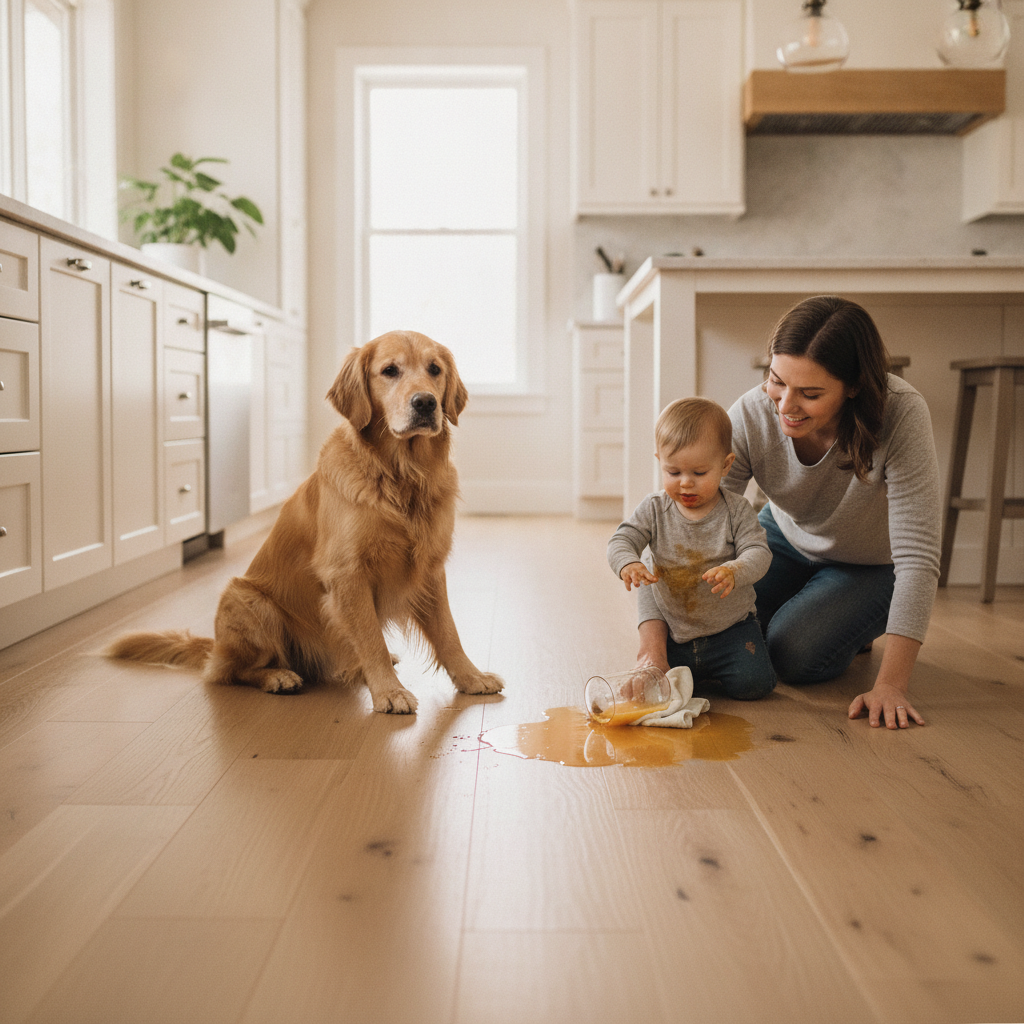
This guide will serve as your definitive roadmap. We’ll explore the technology that makes a worry-free wood floor possible, walk you through a step-by-step process for choosing the perfect style to complement your home’s unique decor, and answer the most critical questions to help you invest with absolute confidence.
- Why Your Home Needs More Than Just a Pretty Floor
- What is Bravewood? The Technology Behind a Worry-Free Wood Floor
- The Decorator’s Playbook: Matching Bravewood Styles to Your Home
- Bravewood vs. The Alternatives: A Head-to-Head Comparison
- Your Bravewood Questions, Answered (FAQ)
- The End of Compromise: Your Perfect Floor Awaits
- References & Authoritative Sources
Why Your Home Needs More Than Just a Pretty Floor
Before we dive into the exciting world of styles and colors, it’s crucial to understand the real-world challenges that modern flooring must overcome. In today’s active households, a floor’s performance is just as important as its appearance. Traditional flooring materials often fall short, leading to frustration, costly repairs, and a home that doesn’t live up to its potential.
The Peril of Water Damage: A Homeowner’s #1 Fear
Water is the natural enemy of traditional hardwood. A simple spill from a child’s cup, a pet’s water bowl, or a leak from an appliance can lead to devastating and permanent damage. According to industry experts, water damage is consistently one of the most common and costly issues homeowners face, with repairs often running into the thousands.[1]
When traditional wood absorbs moisture, it can lead to a host of problems:
- Cupping: The edges of the planks become higher than the center.
- Crowning: The center of the planks swells, rising above the edges.
- Buckling: The flooring lifts entirely from the subfloor, creating dangerous waves.
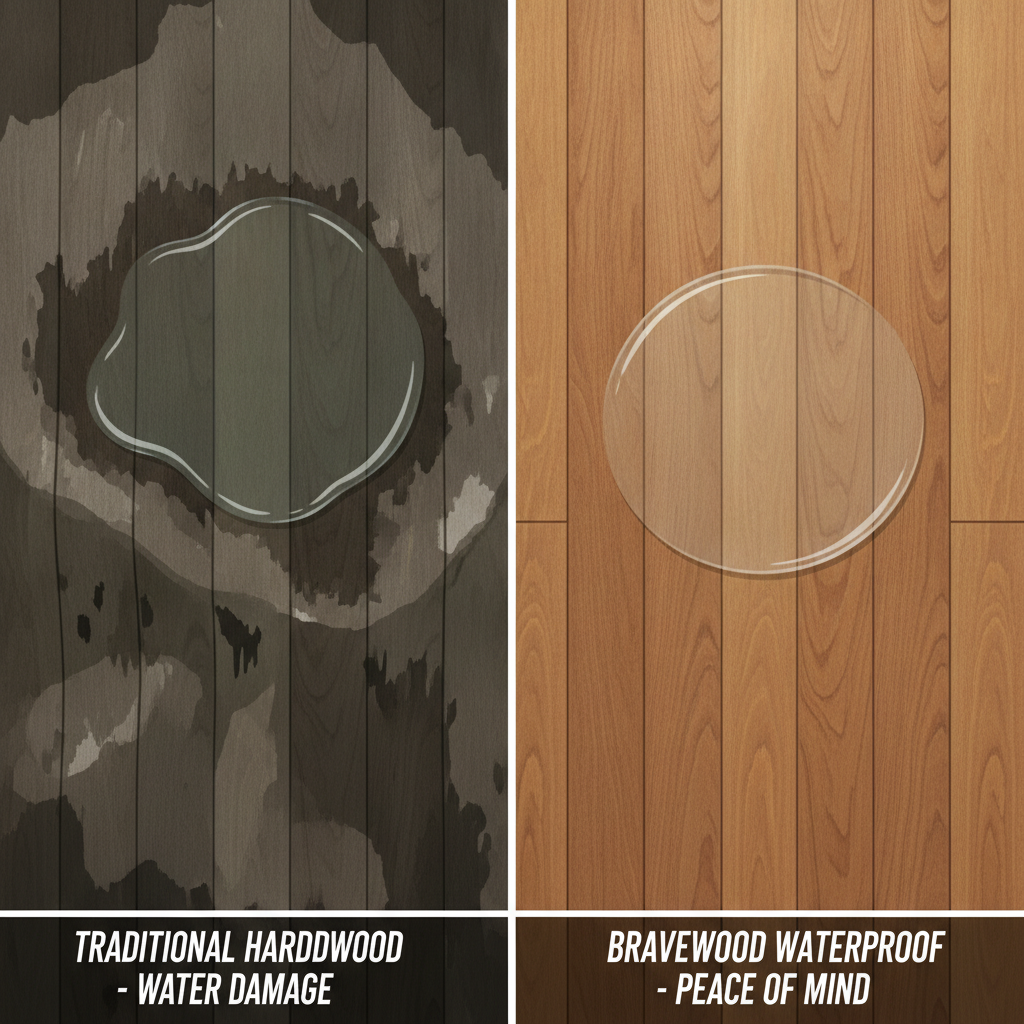
These issues are not just cosmetic; they can compromise the structural integrity of your home and lead to mold growth. The Institute of Inspection, Cleaning and Restoration Certification (IICRC) sets rigorous standards for water damage remediation for this very reason, highlighting the seriousness of uncontrolled moisture in a home.[2] A truly waterproof floor isn’t a luxury—it’s peace of mind.
The Pet Problem: Scratches, Stains, and Slips
We love our pets, but they can be incredibly tough on floors. From the clicking claws of a large dog to the occasional accident, pets introduce a unique set of challenges. When choosing a pet-friendly wood flooring, homeowners are rightly concerned about scratches, stains, and even their pet’s safety.
Durability against scratches is often measured using the Janka Hardness Scale, a scientific test that rates a wood’s resistance to denting and wear.[3] While harder woods offer more protection, no traditional wood is completely immune to deep scratches from active pets. Furthermore, pet urine can cause deep, permanent stains and odors if not cleaned immediately.
Beyond durability, there’s a critical safety component many homeowners overlook: traction. Slippery floors can be dangerous for pets, especially for senior dogs or those with mobility issues. The American Kennel Club (AKC) emphasizes the importance of providing non-slip surfaces to prevent injuries and ensure pets can move about the home comfortably and safely.[4]
The Cleaning Conundrum: The Hidden Cost of High-Maintenance Floors
The final piece of the puzzle is maintenance. Some floors look beautiful in the showroom but become a source of daily frustration. Grout lines that trap dirt, finishes that show every footprint, and cleaning processes that require expensive, specialized products all add up to a high-maintenance headache. This is the hidden cost of choosing the wrong floor.
Following manufacturer guidelines is always the gold standard for cleaning, but the complexity of those guidelines can vary dramatically. A floor that is easy to clean frees up your time and ensures your home looks its best with minimal effort.
Cleaning Process Comparison
| Feature | Traditional Hardwood | Waterproof Hybrid Flooring (Bravewood) |
|---|---|---|
| Daily Cleaning | Dry mop or vacuum (soft brush). | Dry mop or vacuum. |
| Spill Response | Immediate wipe-up required to prevent staining/warping. | Wipe up at your convenience. Waterproof core prevents damage. |
| Deep Cleaning | Requires specific hardwood floor cleaner; minimal water. | Can be wet-mopped without fear of water seeping into seams. |
| Vulnerabilities | Scratches easily, susceptible to water damage, can stain. | Highly scratch-resistant wear layer, 100% waterproof core. |
What is Bravewood? The Technology Behind a Worry-Free Wood Floor
To understand why Bravewood is such a revolutionary product, you need to look beneath the surface. This isn’t just another wood-look floor; it’s a true hybrid that combines the best of nature and technology. The National Wood Flooring Association (NWFA) defines engineered or hybrid hardwood as a product with a real wood top layer bonded to a stable core.[5] Bravewood takes this concept to the next level with its uncompromising focus on performance.
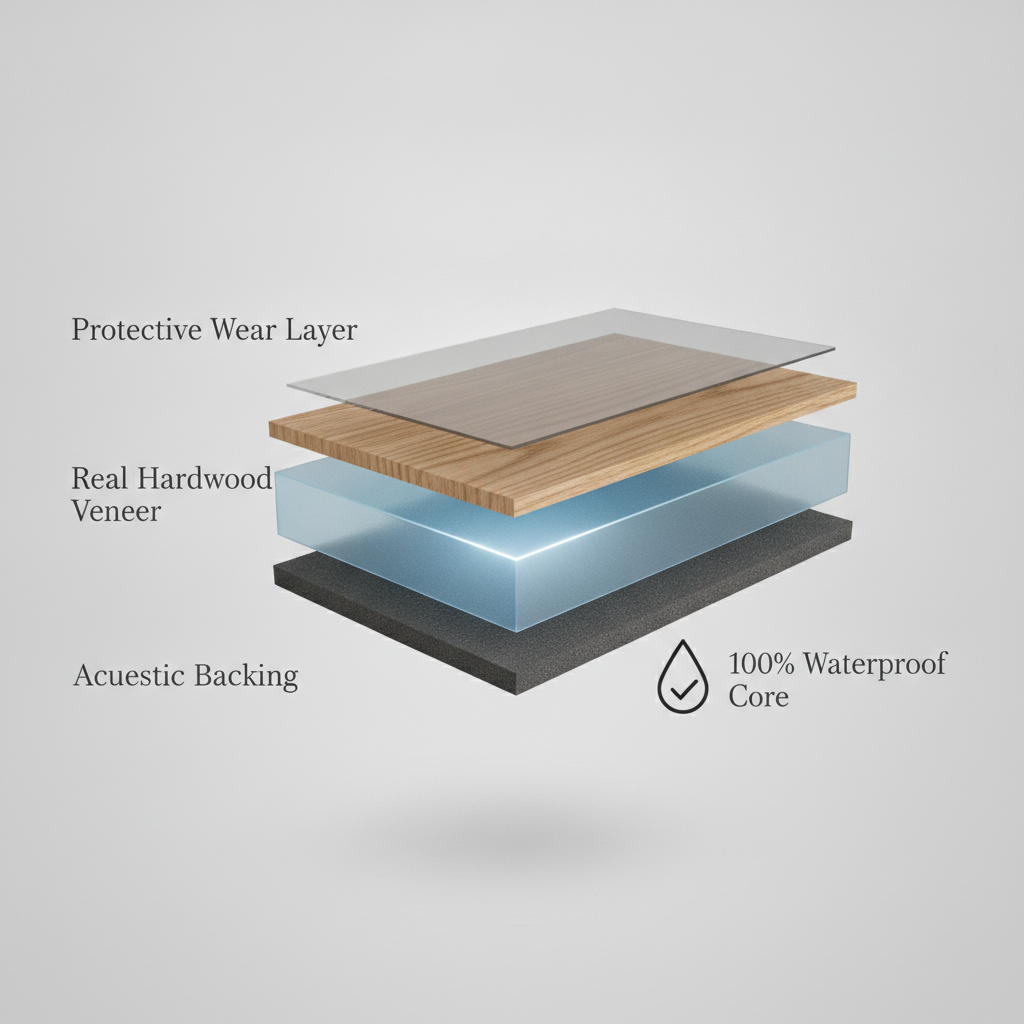
Imagine a cross-section diagram of a Bravewood plank. You would see multiple layers working in harmony:
- Protective Wear Layer: A tough, transparent coating that resists scratches, scuffs, and stains.
- Real Hardwood Veneer: A genuine layer of beautiful hardwood, providing authentic color, grain, and texture.
- 100% Waterproof Core: The high-tech center of the plank, engineered to be completely impervious to water.
- Acoustic Backing: An attached pad that provides sound insulation and underfoot comfort.
Not Just Water-Resistant, It’s Waterproof: The Core Difference
This is the most critical distinction. Many floors are marketed as “water-resistant,” meaning they can handle topical moisture for a short period. Bravewood is different. Its high-density core is genuinely 100% waterproof, as confirmed by official product specifications.[6] This means that if water gets past the seams from a major spill or leak, it will not cause the core to swell, warp, or delaminate. This robust construction allows Bravewood to be installed in any room of the house, including kitchens, bathrooms, and basements, where traditional hardwood would be a risky choice.
The Beauty of Real Hardwood, The Brawn of Hybrid Technology
The ultimate appeal of Bravewood is that it eliminates the need to compromise on aesthetics. Because it uses a veneer of real hardwood, it possesses a natural beauty that imitation products simply cannot replicate. You get the unique grain patterns, the subtle color variations, and the authentic texture that only real wood can provide. This directly answers the question so many homeowners ask: “Which waterproof flooring looks most like real hardwood?” The answer is a hybrid floor that uses a real hardwood surface. It’s the perfect blend of nature’s artistry and human ingenuity.
The Decorator’s Playbook: Matching Bravewood Styles to Your Home
Now for the fun part: choosing a style that will elevate your home’s decor and reflect your personal taste. Bravewood offers a curated collection of styles and colors designed to complement a wide range of aesthetics. This four-step playbook will help you move beyond simply picking a color you like to making a strategic design choice that creates a cohesive, stunning interior.
Step 1: Define Your Design DNA (Modern Farmhouse, Coastal, Minimalist & More)
The first step is to identify your home’s core design style. A floor should be the foundation of your decor, not an afterthought. Foundational design principles from organizations like the American Society of Interior Designers (ASID) emphasize harmony and cohesion, which start from the ground up.[7]
Here’s a visual guide matching popular decor styles with ideal Bravewood flooring choices:
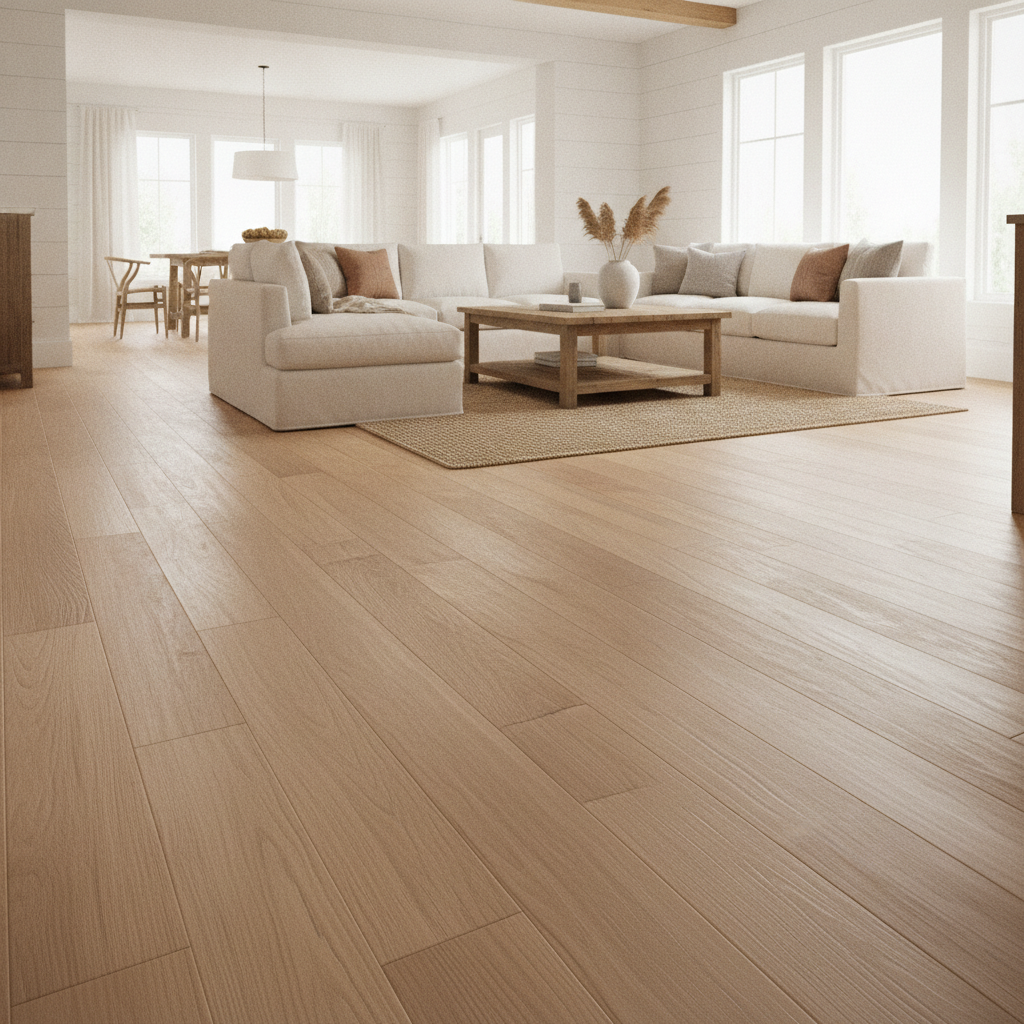
- Modern Farmhouse: This style blends rustic charm with clean, modern lines. Look for wide planks in light, natural tones. A light oak with a matte finish and subtle wire-brushed texture creates a warm, inviting, and authentic base.
- Coastal: Light, airy, and relaxed, this aesthetic calls for floors that reflect the colors of sand and driftwood. Consider bleached or whitewashed oak styles. These create a bright, open feel that is the hallmark of coastal design.
- Minimalist & Scandinavian: Characterized by simplicity, functionality, and natural light. Choose floors with clean lines and a neutral, consistent color palette. Light maple or ash tones with minimal grain variation work perfectly to create a serene and uncluttered foundation.
- Traditional & Transitional: These styles value timeless elegance. Rich, warm tones like walnut or hickory provide a sophisticated and classic backdrop that pairs beautifully with detailed trim, traditional furniture, and oriental rugs.
Step 2: Explore the Bravewood Style & Color Catalog
Once you have a style direction, it’s time to explore the specific options. Bravewood offers a versatile palette of colors, textures, and plank widths to bring your vision to life. You’ll find everything from light, contemporary grays and beiges to deep, classic browns.
When browsing, pay attention to:
- Plank Width: Wider planks can make a room feel larger and more modern, while narrower planks offer a more traditional look.
- Texture: Options like wire-brushed or hand-scraped finishes add depth and character, and they are excellent at hiding minor wear and tear.
- Color Variation: Some styles have high color variation from plank to plank for a rustic feel, while others are more uniform for a sleek, modern aesthetic.
Crucial Pro Tip: The way a floor looks on a screen can differ from its appearance in your home. Lighting is a major factor. Always order physical samples to see how the colors and textures look in your space throughout the day. Many homeowners who have installed Bravewood flooring share photos online, which can be a great source of real-world inspiration.
Step 3: Master Light and Undertones for a Perfect Match
This is a step that design professionals swear by and many homeowners overlook. Every color, even a “neutral” brown or gray, has an undertone—either warm (yellow, orange, red) or cool (blue, green, purple). According to color theory experts, creating a cohesive palette depends on harmonizing these undertones.[8]
- Warm Undertones: Floors with yellow, orange, or red undertones create a cozy, inviting, and energetic feel. They pair well with cream, beige, and earthy paint colors.
- Cool Undertones: Floors with gray, blue, or taupe undertones create a calm, serene, and modern atmosphere. They work beautifully with crisp whites, grays, and blues.
To see this in action, imagine the same light oak Bravewood floor in two different rooms. Under the warm, yellow-toned light of an incandescent bulb in the evening, it will appear cozier and more golden. Under the cool, blue-toned natural light from a north-facing window, it will look more neutral and muted. Getting samples allows you to test this in your own home and ensure your new floor harmonizes with your wall color, cabinetry, and furniture.
Step 4: Create a Cohesive Flow Throughout Your Home
The final step is to think about the big picture. Should the flooring be consistent throughout the entire house? For open-concept homes, the answer is almost always yes. Using a single, continuous flooring material creates a seamless flow that makes the entire space feel larger and more unified. Experts from the National Association of Realtors (NAR) often note that consistent, high-quality flooring is a major selling point that enhances a home’s perceived value.[9]
If you have existing wood trim or cabinets, use your flooring samples to find a Bravewood style that complements them. You don’t need an exact match. The key is to match the undertones. A warm oak floor will harmonize with warm cherry cabinets, while a cool gray floor might clash. For transitions to other flooring types, like in a bathroom, use a simple, clean transition strip that matches either the floor or the surrounding trim.
Bravewood vs. The Alternatives: A Head-to-Head Comparison
To make a truly informed decision, it’s helpful to see how Bravewood waterproof hybrid hardwood stacks up against other popular flooring options.
| Criteria | Bravewood Hybrid Hardwood | Luxury Vinyl Plank (LVP) | Waterproof Laminate | Traditional Solid Hardwood |
|---|---|---|---|---|
| Aesthetics | Excellent: Authentic real wood veneer. | Good: High-quality photographic layer. | Good: Realistic wood-look image. | Excellent: Solid wood through and through. |
| Waterproofing | Excellent: 100% waterproof core. | Excellent: 100% waterproof core. | Good: Waterproof core, but edges can be vulnerable. | Poor: Highly susceptible to water damage. |
| Durability | Excellent: High-strength wear layer over real wood. | Very Good: Durable wear layer. | Very Good: Tough, scratch-resistant surface. | Fair to Good: Varies by species; can scratch and dent. |
| Cost | $$$ (Premium) | $$ (Mid-Range) | $$ (Mid-Range) | $$$ – $$$$ (Premium to Luxury) |
| Maintenance | Easy: Can be wet-mopped. | Easy: Can be wet-mopped. | Easy: Can be wet-mopped. | Difficult: Requires special cleaners, no wet-mopping. |
Your Bravewood Questions, Answered (FAQ)
Here are answers to some of the most common questions homeowners have when considering Bravewood flooring.
Can you refinish Bravewood waterproof hardwood?
Because Bravewood uses a real wood veneer, the ability to refinish depends on the thickness of that layer. According to NWFA guidelines, engineered floors with a very thick veneer can sometimes be lightly sanded and refinished once.[5] However, most hybrid floors are designed for longevity through their durable wear layer, not through refinishing. It’s best to consult the manufacturer’s specific warranty and care instructions for your chosen style.
What is the most timeless and versatile flooring choice?
For long-term value and versatility, interior designers and real estate agents consistently recommend neutral, classic styles. A light-to-medium natural oak or a warm, mid-tone brown are incredibly adaptable. These styles don’t lock you into a specific trend and will complement evolving decor for decades. As noted by the National Association of Realtors (NAR), neutral hardwood floors have broad appeal and can significantly boost resale value.[9]
Where can I see photos of Bravewood flooring in real homes?
The best places to look are the official Bravewood website gallery and their social media channels. You can also search for hashtags related to the brand on platforms like Instagram and Pinterest. These resources often showcase professional photos and user-submitted images, giving you a great sense of how the floors look in a variety of real-world settings.
Is Bravewood FloorScore certified?
Yes, it is crucial to look for products with FloorScore certification. This independent certification signals that the flooring meets strict indoor air quality (IAQ) standards for low emissions of volatile organic compounds (VOCs).[10] This is especially important for the health of your family and pets. Always verify the FloorScore certification for the specific product you are considering on the manufacturer’s website or technical data sheet.
The End of Compromise: Your Perfect Floor Awaits
You no longer have to choose between the floor you love and the floor that can handle your life. Bravewood waterproof hybrid hardwood successfully bridges the gap, delivering the authentic beauty of real wood with the unparalleled durability required for a modern, active home. By understanding the technology and following a strategic approach to style selection, you can choose a floor with confidence, knowing it will be a beautiful, worry-free foundation for your home for years to come.
Ready to find the perfect, worry-free floor for your home? Explore the full Bravewood collection and order your free samples today to see and feel the difference for yourself.
This article discusses a specific brand, Bravewood. All product specifications, colors, and warranty details should be verified with the official manufacturer or an authorized dealer before purchase. This content is for informational purposes.
References & Authoritative Sources
- Federal Emergency Management Agency (FEMA). (n.d.). Guidance on Water Damage and Home Preparedness. FEMA.gov.
- Institute of Inspection, Cleaning and Restoration Certification. (n.d.). IICRC S500: Standard for Professional Water Damage Restoration. IICRC.org.
- Janka Hardness Scale for Wood. (n.d.). Wood-Database.com. (A widely recognized industry standard for measuring wood density and durability).
- American Kennel Club (AKC). (n.d.). Home Safety and Flooring Recommendations for Dogs. AKC.org.
- National Wood Flooring Association (NWFA). (n.d.). Official Definitions for Engineered and Solid Hardwood Flooring. NWFA.org.
- Bravewood Flooring. (n.d.). Official Product Specifications and Technical Data Sheets. (Retrieved from the official manufacturer’s website).
- American Society of Interior Designers (ASID). (n.d.). Foundational Principles of Interior Design. ASID.org.
- Sherwin-Williams / Benjamin Moore. (n.d.). Resources on Color Theory and Undertones. (Based on publicly available expert guidance from leading paint and color authorities).
- National Association of Realtors (NAR). (n.d.). Remodeling Impact Reports and Data on Home Resale Value. NAR.realtor.
- SCS Global Services. (n.d.). FloorScore Certification Program. SCSGlobalServices.com.
