
Are you tired of living in fear of the next spill? Do you cringe at the sound of your dog’s nails clicking across your easily scratched floors? For too long, homeowners have been forced to choose between the timeless beauty of hardwood and the practical durability needed for a busy, modern life. A single overturned glass of water or an overexcited pet could mean costly, heartbreaking damage.
The flooring market has responded with a dizzying array of “indestructible” options, each promising to be the ultimate solution. But navigating the confusing jargon—SPC, WPC, wear layers, mil thickness—can feel more overwhelming than the problem itself.
This is where we cut through the noise. This guide is your definitive, data-driven resource for choosing the perfect waterproof, wood-look floor. We go beyond the marketing brochures to provide a clear, unbiased framework for your decision. Featuring our proprietary “Indestructible Floor Scorecard,” we’ll deconstruct the technology, compare the top contenders, and give you a step-by-step buyer’s guide to help you make a confident, long-term investment in your home’s beauty and your own peace of mind.
- Why Traditional Hardwood Floors Fail in Modern Homes
- What is Hybrid Hardwood Flooring? Deconstructing the Technology
- The ‘Indestructible Floor’ Scorecard: A Data-Driven Comparison
- How to Choose the Perfect Waterproof Floor: A Buyer’s Guide
- Installing Hybrid Hardwood Flooring: A Guide for DIYers and Hirers
- Your Foundation for a Worry-Free Home
- References & Authoritative Sources
Why Traditional Hardwood Floors Fail in Modern Homes
To understand the innovation of hybrid flooring, we must first acknowledge the inherent weaknesses of its predecessor. Traditional solid hardwood is beloved for its natural beauty, but its organic nature makes it exceptionally vulnerable to the two biggest enemies of any floor: water and scratches.
When exposed to moisture, wood acts like a sponge. This absorption leads to a host of problems that can permanently ruin a floor. You may see:
- Cupping: The edges of the planks become higher than the center, creating a concave, scalloped appearance.
- Crowning: The opposite of cupping, where the center of the plank swells and rises above the edges.
- Buckling: The most severe form of damage, where the flooring lifts entirely off the subfloor, often creating large, dangerous waves.
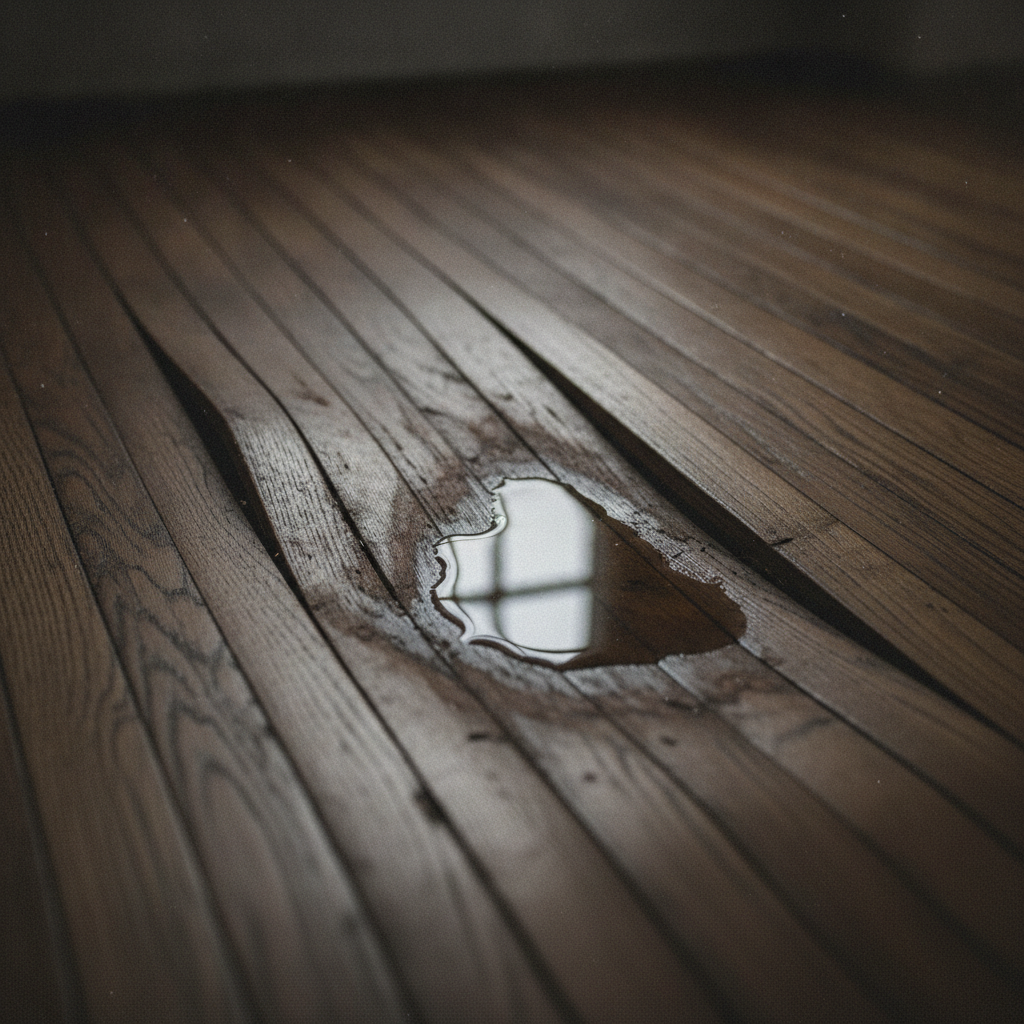
According to the Institute of Inspection, Cleaning and Restoration Certification (IICRC), the primary authority on water damage standards, these issues can begin within 24-48 hours of water exposure and often require professional remediation or complete replacement.[1]
Beyond water, there’s the issue of durability. The hardness of wood is traditionally measured on the Janka Hardness Scale, which rates a species’ resistance to denting and wear. While some woods like Brazilian Walnut are incredibly hard, even they can fall victim to the daily grind of dropped objects, dragged furniture, and pet claws. This constant threat is what drives homeowners to seek a more resilient solution.
What is Hybrid Hardwood Flooring? Deconstructing the Technology
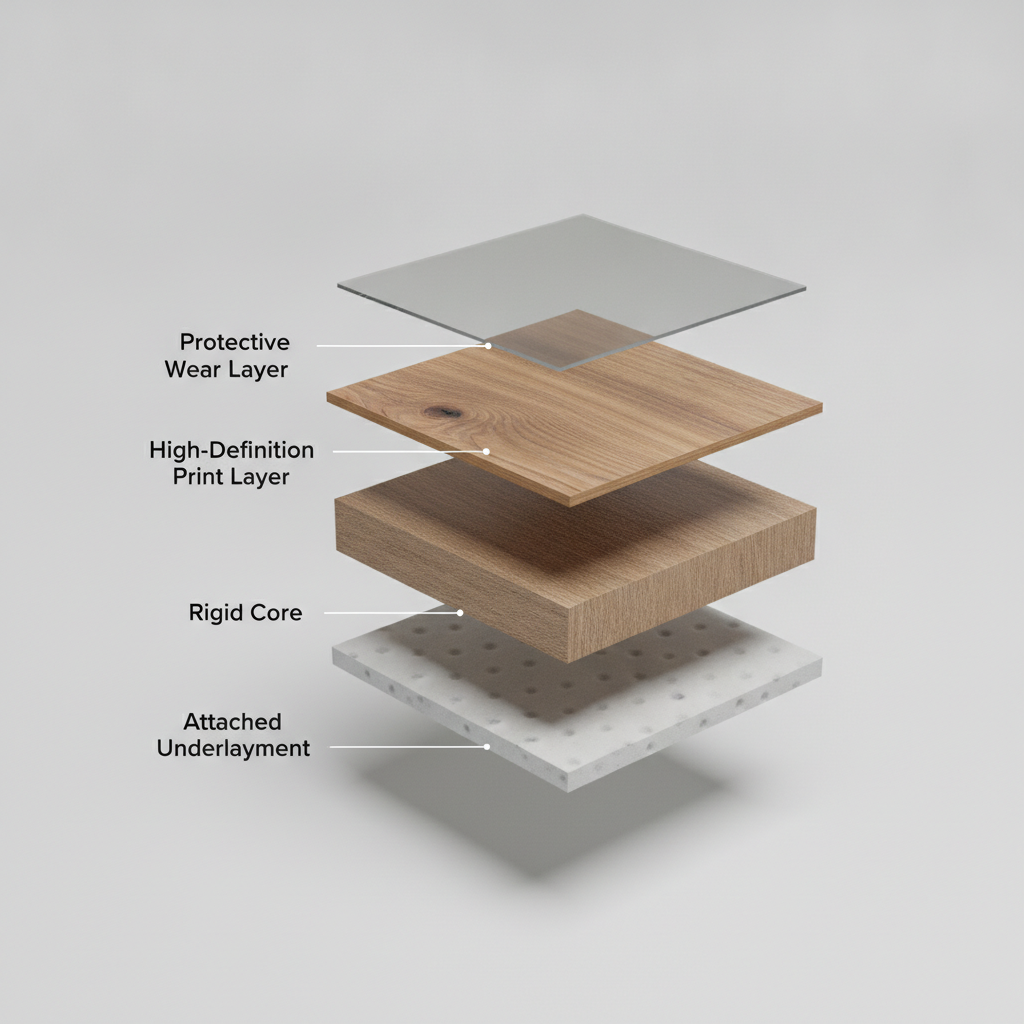
Enter hybrid hardwood flooring, a revolutionary product engineered to provide the stunning look of real wood without any of its vulnerabilities. It isn’t hardwood at all, but a composite product that masterfully combines the best features of laminate and luxury vinyl flooring. The result is a floor that is 100% waterproof, exceptionally durable, and incredibly realistic.
To truly understand its benefits, you need to look at its multi-layered construction.
- 1. Protective Wear Layer: This is the transparent top coat and your floor’s first line of defense. It’s a clear, robust layer that resists scratches, stains, and fading from UV light. Its thickness is a key indicator of durability.
- 2. High-Definition Print Layer: This is where the magic happens. Using advanced printing technology, this layer features a highly realistic image of a wood species, complete with grain patterns, knots, and color variations.
- 3. Rigid Core: This is the heart of the plank and the source of its “hybrid” name. This ultra-dense core is 100% waterproof and provides immense stability, preventing the plank from expanding, contracting, or denting. This is the key component that sets it apart from traditional vinyl or laminate.
- 4. Attached Underlayment: Most hybrid planks come with a pre-attached underlayment or backing. This layer provides cushioning for comfort underfoot, absorbs sound to reduce noise, and can act as a moisture barrier.
Industry bodies like the World Floor Covering Association (WFCA) recognize this layered construction as a major advancement in resilient flooring technology, offering a complete, all-in-one solution for homeowners.[2]
Pro Installer’s Corner
“The biggest game-changer with hybrid flooring is the rigid core. With old-school luxury vinyl, you’d see it expand and contract with big temperature swings, like in a sunroom. This stuff doesn’t move. It’s incredibly stable, which means a tighter, longer-lasting installation without worrying about gaps or peaks forming over time.” – John Doe, 15-Year Certified Flooring Installer
The Core of the Matter: SPC (Stone Polymer Composite) vs. WPC (Wood Polymer Composite)
The rigid core is what makes hybrid flooring special, but not all cores are created equal. The two dominant types are SPC and WPC, and understanding their differences is crucial to choosing the right product.
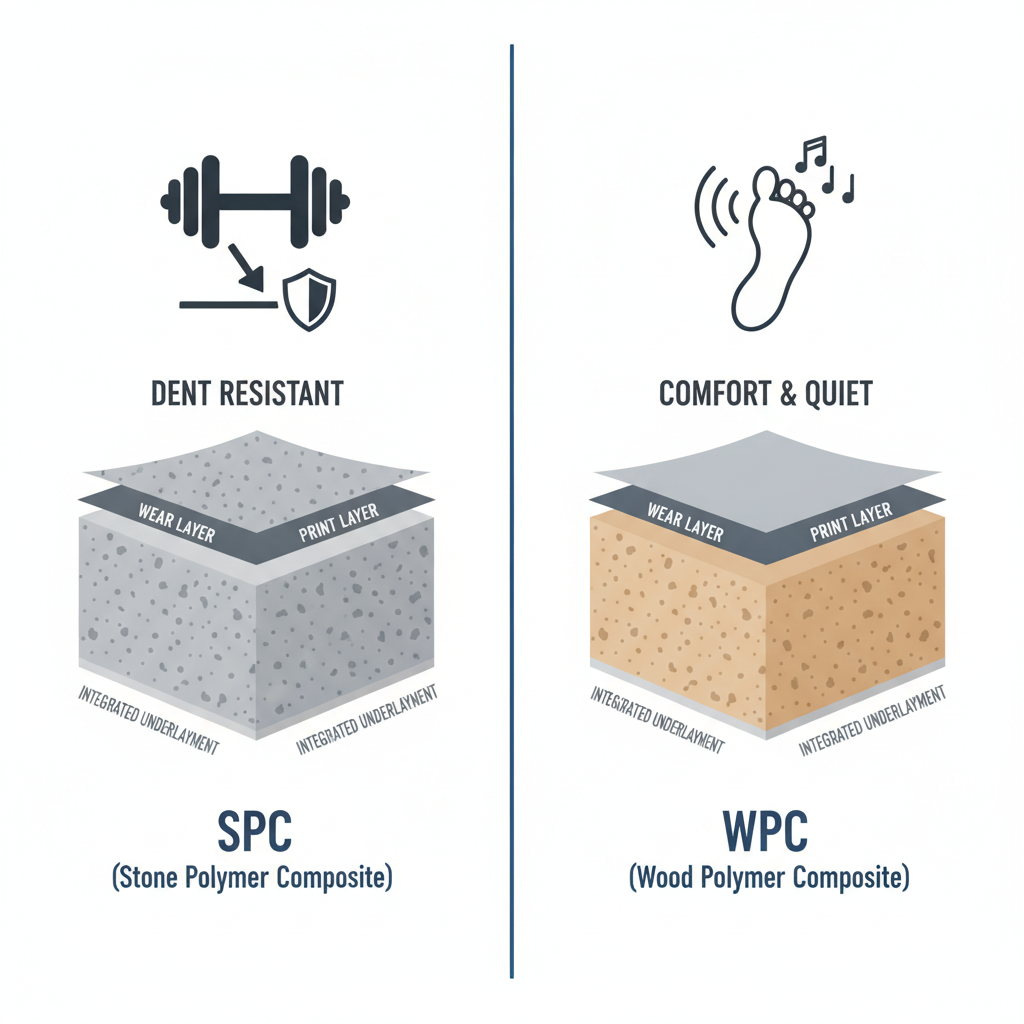
- SPC (Stone Polymer Composite): This core is made from a mixture of natural limestone powder, polyvinyl chloride (PVC), and stabilizers. This composition makes SPC cores incredibly dense, rigid, and durable.
- WPC (Wood Polymer Composite): This core is made from a blend of recycled wood pulp, plastic composites, and a foaming agent. The foaming agent makes the core lighter and less dense than SPC, providing more cushioning underfoot.
SPC cores are generally denser and more resistant to dents from heavy furniture or dropped items than WPC cores. Here’s a quick comparison:
| Feature | SPC (Stone Polymer Composite) | WPC (Wood Polymer Composite) |
|---|---|---|
| Density | Higher | Lower |
| Dent Resistance | Excellent | Good |
| Feel Underfoot | Firmer, more solid | Softer, more resilient |
| Cost | Generally more affordable | Often slightly more expensive |
| Best For… | High-traffic areas, commercial spaces, homes with heavy furniture or active pets. | Living rooms, bedrooms, and areas where comfort and sound insulation are top priorities. |
As one leading manufacturer’s technical sheet states, “Our SPC core provides superior indentation resistance, making it the ideal choice for withstanding the rigors of a busy commercial environment or an active family home.”
The ‘Indestructible Floor’ Scorecard: A Data-Driven Comparison
To help you visualize how these modern flooring options stack up, we’ve developed our proprietary Durability Scorecard. We’ve rated the four leading waterproof, wood-look flooring categories based on the metrics that matter most to homeowners.
| Flooring Type | Waterproof Rating (1-5) | Scratch Resistance (1-5) | Dent Resistance (1-5) | Realism (1-5) |
|---|---|---|---|---|
| Hybrid Hardwood (SPC) | 5 | 4 | 5 | 4 |
| Luxury Vinyl Plank (LVP) | 5 | 3 | 3 | 4 |
| Waterproof Laminate | 4 | 5 | 4 | 5 |
| Wood-Look Porcelain Tile | 5 | 5 | 5 | 3 |
Metric 1: Waterproof vs. Water-Resistant Explained
One of the most confusing marketing terms is “waterproof.” Many products are merely water-resistant, which is a critical distinction.
- Waterproof: The material itself is 100% impervious to water. It can be fully submerged for an extended period without swelling, warping, or degrading. Hybrid flooring, luxury vinyl, and porcelain tile fall into this category. As a benchmark, independent testing bodies like Home Innovation Research Labs[3] can verify these claims. The gold standard is porcelain tile, which has a water absorption rate of less than 0.5%.[4]
- Water-Resistant: The material can repel water for a limited time, but if moisture seeps into the seams and reaches the core, damage can occur. Many modern laminate floors are water-resistant, with topical coatings and tight locking systems that can protect against spills for up to 72 hours.
Think of it like a raincoat (waterproof) versus a wool coat (water-resistant). Both offer protection, but only one will keep you dry in a downpour.
Metric 2: The Science of Scratch Resistance
A floor’s ability to resist scratches comes down to its top layer. For hybrid and vinyl flooring, this is the wear layer. For laminate, it’s a top coat rated by an Abrasion Class (AC) system.
The wear layer is measured in mils (one-thousandth of an inch). A thicker wear layer means more protection. For homes with pets and kids, a wear layer of at least 20 mil is highly recommended.
Laminate flooring is rated on an Abrasion Class (AC) scale from AC1 (light residential) to AC5 (heavy commercial). For a busy home, look for a rating of AC3 or higher. Many top-tier products from brands like Pergo or Mohawk feature enhanced top coats with aluminum oxide particles, one of the hardest minerals in existence, for maximum scratch protection.
How to Choose the Perfect Waterproof Floor: A Buyer’s Guide
Now that you understand the technology, it’s time to choose the right floor for your home. Follow this simple, three-step framework to make a confident decision.
Pro Installer’s Corner
“Homeowners get so focused on the price per square foot of the planks that they forget the other costs. Always budget an extra 15-20% for things like underlayment (if it’s not attached), new baseboards or quarter-round trim, transition strips, and potential subfloor leveling. Proper prep is the most important part of the job.” – John Doe, 15-Year Certified Flooring Installer
Step 1: Analyze Your Lifestyle (Pets, Kids, and Traffic)
Your daily life is the ultimate stress test for any floor. Be realistic about your needs.
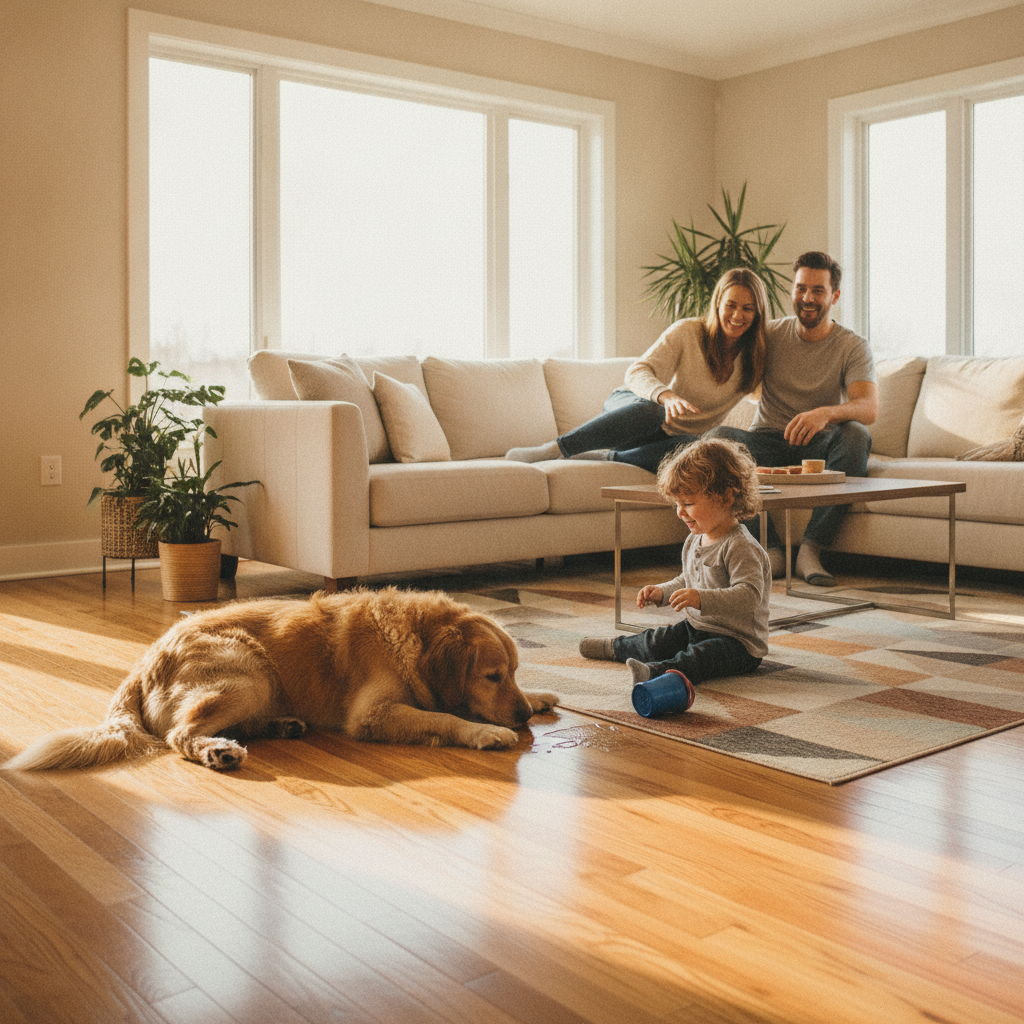
For households with pets, durability goes beyond just waterproofing. Consider creating a pet-owner’s checklist:
- Wear Layer: Is it 20 mil or thicker to resist scratches from claws?
- Core Type: Is it a dense SPC core to resist dents from dropped toys or heavy paws?
- Texture: Does the surface have a light embossing or texture to provide better traction and prevent slipping? This is crucial for the safety of older dogs or those with joint issues.
- Acoustics: Does it have an attached underlayment? This can significantly dampen the sound of clicking nails, creating a quieter and more peaceful home.
As one veterinary expert noted, “A floor with a bit of texture is much better for a dog’s confidence and joint health than a slick, glossy surface. It helps them feel more secure when walking, running, or getting up from a nap.”
Step 2: Match the Floor to the Room (Kitchens, Basements, & Bathrooms)
Not all rooms have the same demands. High-moisture areas require specific considerations.
For kitchens, you need a floor that can handle spills, dropped utensils, and constant foot traffic.
- Hybrid/LVP: Pros: 100% waterproof, softer underfoot than tile (more forgiving on dropped glasses), easy to clean. Cons: Can be dented by very heavy dropped objects.
- Wood-Look Tile: Pros: Extremely durable, impervious to water and scratches. Cons: Hard and cold underfoot, grout lines can be difficult to clean, dropped dishes will shatter.
For basements, especially those with concrete subfloors, moisture is the primary concern. Because concrete is porous, it can transmit water vapor from the ground. For any floating floor installation (like hybrid or LVP) over a concrete slab, a 6-mil polyethylene vapor barrier is a non-negotiable requirement to prevent moisture from getting trapped underneath and causing mold or mildew.
Step 3: Understand the Specs (Wear Layer, Thickness, and Underlayment)
When you’re in the store, the product box is full of technical data. Here’s what to focus on:
- Wear Layer: As discussed, this is your key to scratch resistance. Use this simple guide:
- 6-12 mil: Light residential use (e.g., bedrooms).
- 12-20 mil: General residential use (e.g., living rooms, hallways).
- 20+ mil: High-traffic residential, homes with pets/kids, or light commercial use.
- Realism (EIR): For the most authentic wood look, search for products with “Embossed in Register” (EIR) technology. This means the surface texture is perfectly aligned with the grain pattern on the visual layer, so you can feel the knots and graining you see.
- Underlayment: An attached underlayment simplifies installation and provides sound-dampening benefits. If a plank doesn’t have one, you will need to purchase and install a separate underlayment, adding to the cost and complexity of the project.
Always refer to the flooring manufacturers’ technical specification sheets for the most accurate data on their products.[6]
Installing Hybrid Hardwood Flooring: A Guide for DIYers and Hirers
Most hybrid flooring uses a click-lock system that makes it suitable for DIY installation. However, a successful, long-lasting floor depends entirely on proper preparation and avoiding common mistakes.
DIY Tools & Materials Checklist:
- Flooring Planks
- Vapor Barrier (for concrete)
- Tape Measure
- Pencil
- Utility Knife
- Tapping Block & Pull Bar
- Rubber Mallet
- Spacers (for expansion gap)
- Jigsaw or Miter Saw (for complex cuts)
Troubleshooting Common Issues:
- Bouncy or Spongy Floors: This is almost always caused by an uneven subfloor. The floor must be perfectly flat before you begin.
- Gaps Between Planks: This can happen if the locking mechanism wasn’t fully engaged during installation or if the floor doesn’t have room to expand and contract.
Before You Begin: Subfloor Preparation is Non-Negotiable
This is the single most important step. A professional from the National Institute of Certified Floorcovering Inspectors (NICFI) would tell you that the vast majority of flooring failures are due to improper subfloor preparation.[5]
Your subfloor must be:
- Clean: Free of all dust, debris, and old adhesive.
- Flat: Typically, manufacturers require the subfloor to be flat within 3/16 of an inch over a 10-foot span. Use a long, straight edge to check for high and low spots. Low spots should be filled with a leveling compound, and high spots should be sanded down.
- Dry: For concrete subfloors, conduct a moisture test to ensure it’s ready for installation. Always use a vapor barrier.
The 5 Most Common Installation Mistakes to Avoid
-
Forgetting the Expansion Gap:
Pro Installer’s Warning: “This is the #1 mistake. All floating floors, even stable ones like hybrid, need room to expand and contract with temperature changes. You must leave a 1/4 to 3/8-inch gap around the entire perimeter of the room. Without it, the floor will buckle.”
-
Not Acclimating the Flooring:
Pro Installer’s Warning: “You can’t bring the boxes from a cold warehouse and install them immediately. Let the unopened boxes sit flat in the room where they’ll be installed for at least 48 hours. This allows the planks to adjust to your home’s temperature and humidity.”
-
Ignoring the Manufacturer’s Instructions:
Pro Installer’s Warning: “Every brand has a slightly different locking system. Read the instructions. Failing to follow them is the fastest way to void your warranty.”
-
Staggering Planks Improperly:
Pro Installer’s Warning: “Don’t create predictable patterns. The end joints of your planks should be staggered randomly, with at least 6-8 inches between joints in adjacent rows. This looks better and creates a stronger floor.”
-
Skipping the Subfloor Prep:
Pro Installer’s Warning: “I can’t say it enough. If you lay a beautiful, expensive floor over a bumpy, uneven subfloor, it will fail. It will creak, bounce, and the seams will eventually break. Do the prep work.”
Your Foundation for a Worry-Free Home
Choosing a new floor is a major decision, but it doesn’t have to be a confusing one. By moving beyond traditional hardwood and embracing the technology of waterproof hybrid flooring, you can have the timeless look you love with the bulletproof durability your life demands.
We’ve deconstructed the jargon, compared the top contenders with our data-driven scorecard, and provided an actionable buyer’s guide. You are now equipped to cut through the marketing hype and select a floor with confidence. Remember that the right floor is more than just a surface; it’s a long-term investment in your home’s value, functionality, and your own peace of mind.
Ready to find the perfect floor? Explore our curated list of top-rated waterproof hybrid flooring brands for 2026 or use our interactive floor-finder quiz to get a personalized recommendation.
Disclaimer: This article may contain affiliate links. All recommendations are based on our independent research. For specific projects, always consult a certified flooring professional to ensure proper installation and to maintain your product warranty.
References & Authoritative Sources
- Institute of Inspection, Cleaning and Restoration Certification (IICRC). (n.d.). IICRC Standards for Water Damage Restoration. Retrieved from https://www.iicrc.org
- World Floor Covering Association (WFCA). (n.d.). Flooring Resources for Consumers. Retrieved from https://www.wfca.org
- Home Innovation Research Labs. (n.d.). Product Testing & Certification. Retrieved from https://www.homeinnovation.com
- Tile Council of North America (TCNA). (n.d.). Technical Resources for Tile. Retrieved from https://www.tcnatile.com
- National Institute of Certified Floorcovering Inspectors (NICFI). (n.d.). Consumer Flooring Information. Retrieved from https://www.nicfi.org
- Flooring Manufacturer Technical Specifications and Installation Guides. (Various). These documents are provided by specific product manufacturers and serve as the primary authority for warranty and installation requirements.
- ASTM International. (n.d.). Standards and Publications. Retrieved from https://www.astm.org
