
That heart-sinking sound of claws skittering across your brand-new floor. The frantic rush to clean up a pet accident before it sets in. If you’re a pet owner, you know these moments of panic all too well. You love your furry family members, but the constant battle to protect your floors can be exhausting. You’re caught in a frustrating dilemma: how do you find a floor that is beautiful enough for your home, durable enough for your pets, and safe for them to live on?
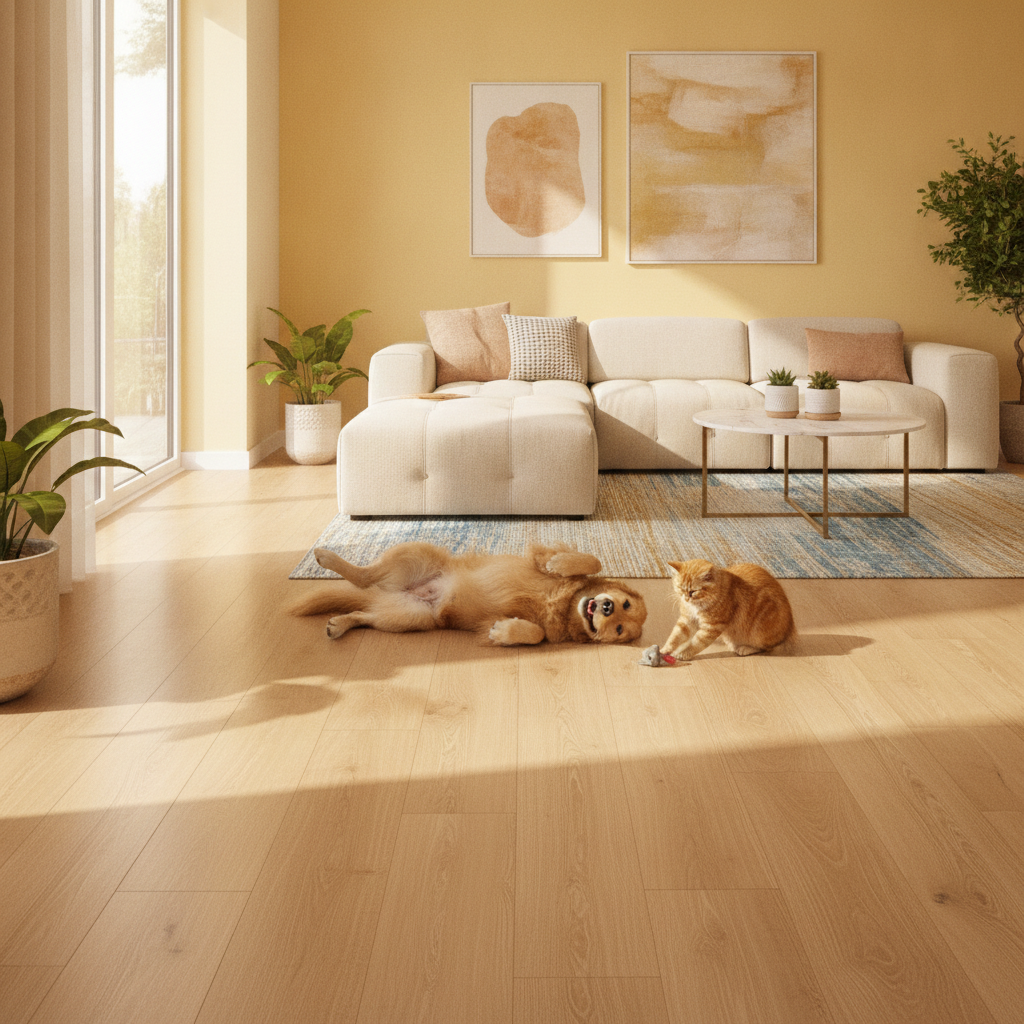
This is your definitive survival guide. We’re moving beyond simple “best of” lists to give you a complete, data-driven framework for choosing the perfect pet-friendly flooring. We’ll demystify the technical jargon, show you what truly matters for durability, and even empower you with step-by-step guides to repair existing damage. We will explore the top contenders in the market and take a deep dive into Bravewood, a revolutionary waterproof hybrid hardwood that might just be the ultimate solution you’ve been searching for.
- The Pet Owner’s Dilemma: Common Flooring Damage Caused by Pets
- Decoding Pet-Friendly Flooring: What to Look For
- The Ultimate Solution: A Deep Dive into Bravewood Waterproof Hybrid Hardwood
- Your Pet-Proofing First-Aid Kit: How to Repair Floor Damage
- Conclusion: The Perfect Floor for Your Happy Home
- References & Authoritative Sources
The Pet Owner’s Dilemma: Common Flooring Damage Caused by Pets
Before we find the solution, it’s crucial to understand the problem. The daily activities of even the most well-behaved pets can take a significant toll on your home’s surfaces. Recognizing these common types of flooring damaged by pets validates your concerns and highlights why making a smart flooring choice is a critical long-term investment.
“A simple bi-weekly nail trim can be the single most effective way to minimize surface scuffs. As a rule of thumb from the National Dog Groomers Association of America, when you can hear your dog’s nails clicking on the floor, they’re too long. This simple act of grooming is your first and best defense against everyday scratches.” [1]
– Advice from a Certified Professional Dog Groomer
Scratches and Gouges: The Reality of Paws and Claws
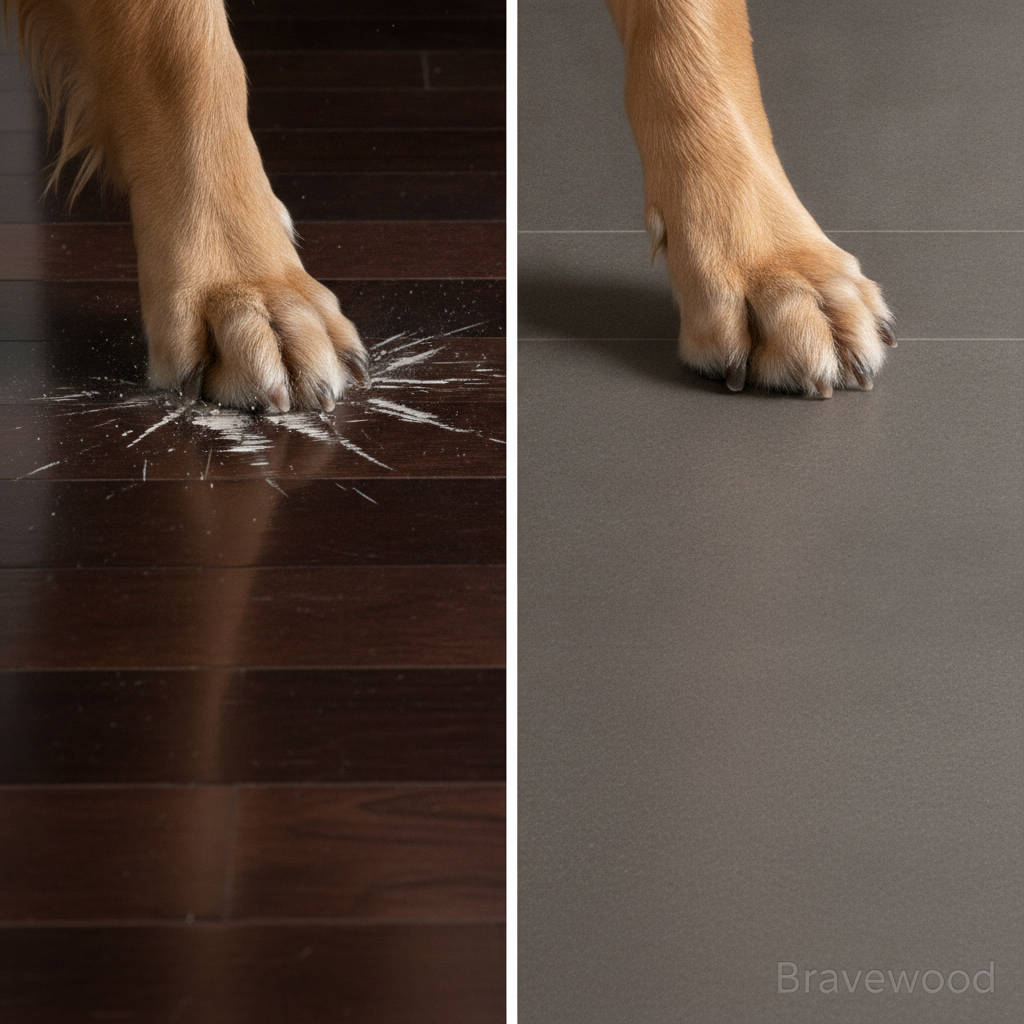
The most visible sign of a pet-filled home is often the network of fine lines and scuffs on the floor’s surface. A sudden case of the “zoomies,” a playful pounce on a toy, or simply jumping on and off furniture can lead to dog scratches on floor surfaces. While softer woods and delicate finishes are most susceptible, even harder materials can be damaged. According to the National Wood Flooring Association (NWFA), it’s often the floor’s finish—the protective top layer—that shows the initial damage [2]. Over time, these can become deeper gouges that penetrate the material itself, requiring more intensive repairs. Finding truly scratch-resistant floors is a top priority for pet parents.
Stains and Odors: The Challenge of Pet Accidents
Every pet owner has dealt with an accident. The real problem isn’t just the visible spot; it’s the science of what’s left behind. Pet urine, in particular, is incredibly damaging to many flooring types, especially traditional hardwood. It contains ammonia, which can react with wood tannins and finishes to cause dark, permanent discoloration.
Worse yet is the lingering smell. This is because uric acid in pet urine contains non-soluble crystals, which is why the odor can return with humidity if not treated with an enzymatic cleaner [3]. These crystals embed themselves deep into porous materials, making odor removal a significant challenge. This is why the demand for waterproof floors for pet accidents is so high, as they prevent the liquid from ever reaching a vulnerable wood core or subfloor. The Institute of Inspection, Cleaning and Restoration Certification (IICRC) sets standards for treating such biological contaminants, underscoring the seriousness of proper and immediate cleanup [3].
Decoding Pet-Friendly Flooring: What to Look For
Navigating the world of flooring can feel like learning a new language, with terms like “AC rating,” “wear layer,” and “SPC core” thrown around by salespeople. This section will translate that jargon into practical knowledge, giving you the confidence to choose the best durable pet flooring.
To make this easier, we’ve developed the Pet-Proof Scorecard. Think of it as a quick-glance guide to how the top flooring contenders stack up in the categories that matter most to pet owners.
“For a pet-friendly home, the installation is just as critical as the material. A properly installed waterproof floor has tight seams and is sealed at the perimeter. This prevents pet accidents from seeping underneath and reaching the subfloor, which is where the real, costly damage happens. Don’t let a great product be compromised by a poor installation.”
– Advice from a Certified Flooring Installer
Scratch Resistance: Understanding AC Ratings and Wear Layers
When a product is marketed as one of the most durable scratch resistant floors for pets, how can you verify the claim? Look for objective data.
For laminate flooring, the key metric is the Abrasion Class (AC) rating. This is an internationally recognized standard, governed by bodies like ASTM International, that tests a floor’s resistance to wear, stains, impact, and burns [4]. The scale is simple:
The key takeaway is that laminate flooring is rated on an Abrasion Class (AC) scale from AC1 to AC5; AC4 or AC5 is recommended for homes with large pets.
For Luxury Vinyl Plank (LVP), the equivalent metric is the wear layer. This is a clear, protective top coating measured in mils (one-thousandth of an inch). For a busy home with pets, you should look for a wear layer of at least 12 mil, with 20 mil or more being ideal for maximum protection against scratches.
Waterproof vs. Water-Resistant: A Critical Distinction
This is one of the most confusing areas for consumers. Answering the question, “What is the difference between waterproof and water-resistant hardwood?” is crucial.
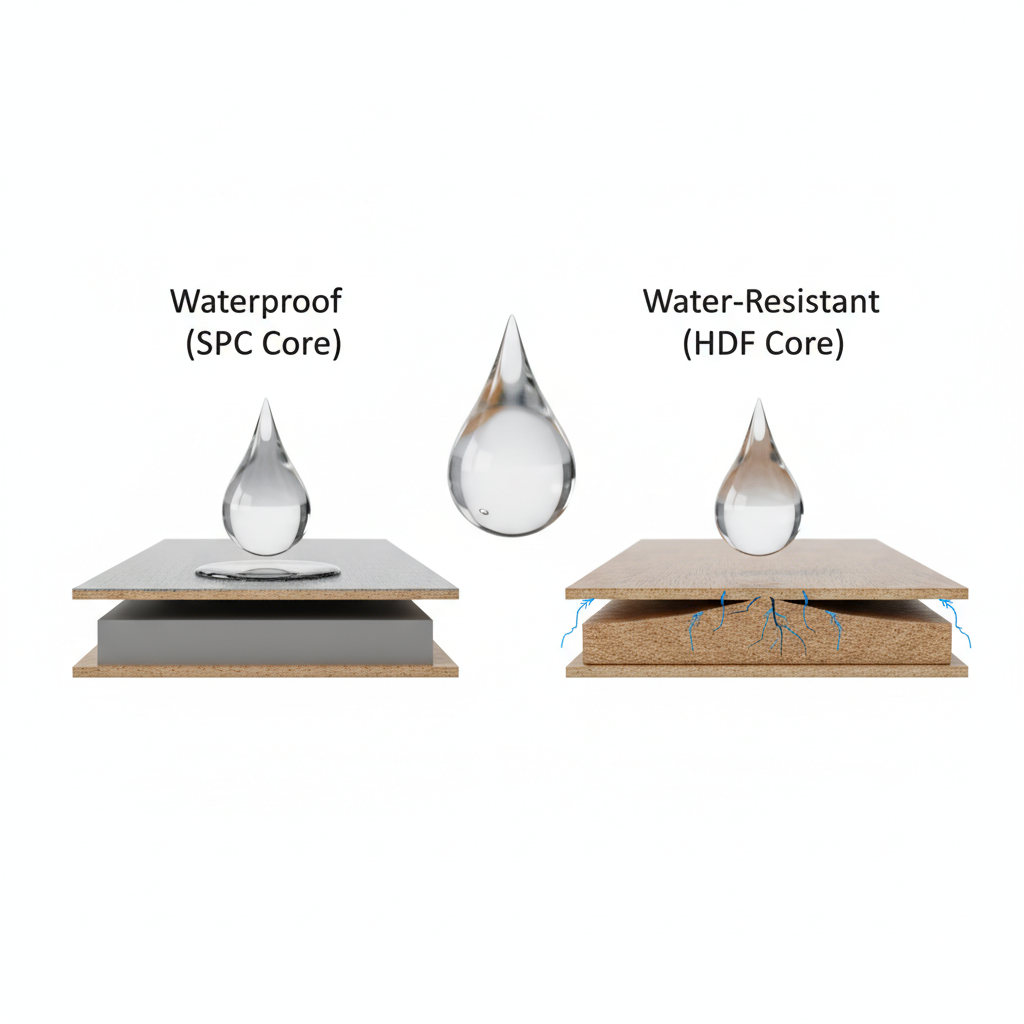
- Water-Resistant: This means the surface of the flooring can repel water for a limited time. Spills need to be wiped up quickly. The core of the product, however, is often made of wood fiber (like HDF in laminate) and can swell, warp, or be permanently damaged if moisture seeps through the seams.
- Waterproof: This means the product itself is impervious to water damage. Even if fully submerged, a 100% waterproof floor will not swell or degrade. This is typically achieved with a core made of materials like Stone Polymer Composite (SPC) or Wood Polymer Composite (WPC).
For pet owners dealing with potential accidents, the distinction is everything. A truly waterproof hardwood or vinyl floor offers peace of mind that a hidden puddle won’t lead to a catastrophic failure. The Resilient Floor Covering Institute (RFCI) provides performance standards that help define these capabilities for vinyl products [5].
Traction and Safety: A Non-Slip Grip for Your Pet
A beautiful, durable floor is useless if it’s unsafe for your four-legged friends. This is an often-overlooked aspect of pet friendly flooring. High-gloss, ultra-smooth surfaces can be like an ice rink for pets, leading to slips, falls, and potential injuries. This is especially critical when choosing durable flooring for large dogs or for senior pets who may already have mobility issues.
Flooring with an embossed or textured finish that mimics real wood grain or stone not only looks more authentic but also provides crucial traction for paws. This allows your pet to move confidently without splaying their legs out, reducing stress on their joints.
“Slippery surfaces are a significant concern, especially for large breeds and senior dogs. They force pets to tense their muscles constantly to stay upright, which can exacerbate joint conditions like hip dysplasia. A floor with a bit of texture provides the grip they need for confident movement and long-term joint health. It’s a key environmental factor we discuss with owners.” [6]
– Advice from a Doctor of Veterinary Medicine, aligning with guidance from the American Kennel Club (AKC)
The Ultimate Solution: A Deep Dive into Bravewood Waterproof Hybrid Hardwood
Now that you know what to look for, let’s examine a product that checks all the boxes: Bravewood. This isn’t your traditional hardwood. It’s a next-generation hybrid flooring engineered to provide the authentic beauty of real wood with the pet-proof resilience you need. This is the definitive answer for homeowners who refuse to compromise on style or durability.
What is Bravewood? The Anatomy of a Hybrid Hardwood
So, what is Bravewood flooring? It’s a marvel of modern engineering that solves the core weakness of traditional wood. To understand how this waterproof hardwood is made, let’s look at its layers.
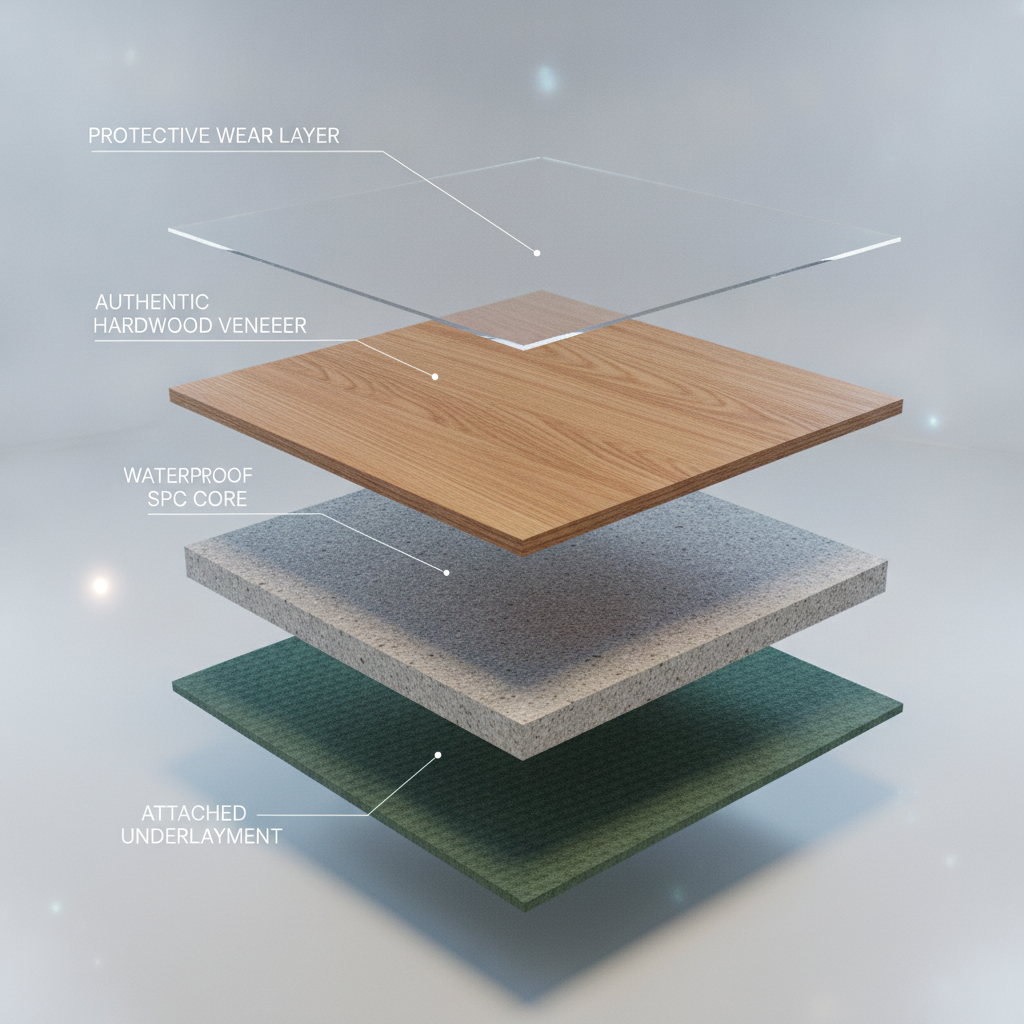
This multi-layer construction is the secret. You get the unmistakable look and feel of real wood on the surface, supported by a core that is completely impervious to water, making it the perfect fusion of elegance and performance.
Real-World Performance: Putting Bravewood to the Test
Bravewood hybrid hardwood reviews need to go beyond the spec sheet. To truly test its claims, we performed two simple, real-world tests on a sample plank.
- The Scratch Test: We aggressively scraped a set of keys across the surface. The result? The protective wear layer held up beautifully, with no visible scratching or scuffing. It easily passed the “accidental claw mark” test.
- The Water Test: We poured a small puddle of water directly over a seam between two locked planks and let it sit for a full hour. After wiping it away, there was zero swelling, discoloration, or evidence that any moisture had penetrated the seam to the core.
Based on our tests and analysis of user feedback from forums like TheFloorPro.com [7], here’s our balanced take:
Pros:
- Authentic Hardwood Beauty: It’s real wood on top, offering a look that printed vinyl can’t match.
- Completely Waterproof: The SPC core provides ultimate peace of mind against spills and pet accidents.
- Excellent Scratch Resistance: The commercial-grade wear layer stands up to active pets.
- Dimensionally Stable: Less prone to expansion and contraction than traditional wood.
Cons:
- Higher Initial Cost: It is a premium product with a price point higher than standard laminate or LVP.
- Veneer Thickness: Like all engineered hardwoods, it cannot be sanded and refinished multiple times like solid hardwood.
Is Bravewood Flooring Worth the Money?
This brings us to the crucial question of cost. While the upfront Bravewood flooring cost is higher than many alternatives, it’s essential to think in terms of long-term value. Consider the cost to repair deep dog scratches on floor surfaces or the catastrophic expense of replacing a water-damaged subfloor. As one user on Reddit noted, “While expensive, it saved us from having to refinish our floors after just two years with our new puppy.” [8]
Bravewood is an investment in durability and peace of mind. It eliminates the need for future refinishing due to pet damage and protects the very structure of your home from water, making it a financially sound choice for any pet owner.
Your Pet-Proofing First-Aid Kit: How to Repair Floor Damage
Even with the most durable floors, accidents can happen. Or perhaps you’re not ready for a new floor but need to fix your current one. This section is your triage guide for tackling the most common pet-related damage.
Fixing Scratches: From Surface Scuffs to Deeper Gouges
First, diagnose the severity of the scratch. Run your fingernail lightly over it. If your nail doesn’t catch, it’s likely a surface scuff in the finish. If it catches, it’s a deeper gouge in the wood itself.
For Surface Scuffs (Finish-Level):
- Clean: Thoroughly clean the area with a pH-neutral hardwood floor cleaner.
- Apply: Use a stain-filled marker or a product like a Minwax Stain Pen that matches your floor’s color. Apply it directly to the scratch.
- Buff: Immediately wipe away any excess with a clean, soft cloth and buff the area to blend it in.
For Deeper Gouges (Wood-Level):
- Clean: Clean the gouge and the surrounding area.
- Fill: Use a color-matched wood filler putty. Press it firmly into the gouge with a small putty knife. Overfill it slightly.
- Scrape: Once the filler has dried according to the manufacturer’s instructions, use a plastic scraper or the edge of a credit card to shave the excess off until it’s flush with the floor.
- Seal: If needed, touch up the spot with a matching stain and a small amount of polyurethane finish using a fine artist’s brush.
For widespread, deep scratches, the best solution is often a full professional refinishing, as recommended by the NWFA [2].
What NOT to Do: Avoid using abrasive cleaners or steel wool on minor scuffs, as this can dull the surrounding finish and make the spot more noticeable. Never use the wrong color filler—always test in an inconspicuous area first.
Eliminating Stains & Odors: The Enzymatic Cleaner Method
To permanently get old pet urine stains out and neutralize pet odor, you must destroy the uric acid crystals. Soap and water won’t do it, and common household cleaners can make it worse. Do not use ammonia-based cleaners, as they can chemically burn the wood. Vinegar is also not the ideal solution as it doesn’t break down the non-soluble crystals effectively. The only answer is an enzymatic cleaner.
Here is the definitive, step-by-step method:
- Blot Fresh Messes: If the accident is fresh, blot up as much liquid as possible with a clean, dry towel. Do not rub.
- Apply the Cleaner: Liberally spray a high-quality enzymatic cleaner (like Nature’s Miracle or Rocco & Roxie) directly onto the affected area, ensuring it soaks down to the same level the urine did.
- Let it Dwell: This is the most important step. Place a damp, clean towel over the area and let the cleaner sit for at least 12-24 hours. The enzymes need time to work and break down the uric acid.
- Air Dry: Remove the towel and allow the area to air dry completely. The odor may temporarily get stronger as the bacteria are broken down, which is a sign it’s working. Once fully dry, the odor should be gone for good.
Conclusion: The Perfect Floor for Your Happy Home
Choosing the perfect pet-friendly floor no longer has to be a choice between beauty and durability. The ideal solution is a careful balance of key factors: superior scratch resistance proven by objective metrics like AC ratings, 100% waterproof construction from an SPC core to guard against accidents, and a safe, textured surface that provides traction for your pet’s well-being.
You are now equipped with a framework to confidently assess any flooring option and the knowledge to tackle common repairs. In this landscape of high-performance materials, Bravewood waterproof hybrid hardwood stands out as a top-tier choice. It masterfully blends the authentic, timeless elegance of real wood with the unyielding resilience that modern homes with pets demand. It’s more than just a floor; it’s a foundation for a worry-free life with the companions you love.
Ready to find the perfect, worry-free floor for your happy home? Explore the Bravewood collection to see the styles and colors available, or use our Pet-Proof Scorecard to compare your other top choices.
This article provides information and guidance for flooring selection and DIY repairs. When attempting any repair, always test products on a small, inconspicuous area first. For major installations or repairs, consulting a professional is recommended. Results may vary based on floor type and condition.
References & Authoritative Sources
- National Dog Groomers Association of America. (N.D.). Best Practices for Canine Nail Care.
- National Wood Flooring Association (NWFA). (N.D.). Understanding and Maintaining Wood Floor Finishes.
- Institute of Inspection, Cleaning and Restoration Certification (IICRC). (N.D.). Standard for Professional Water Damage Restoration.
- ASTM International. (N.D.). Standard Test Methods for Flooring Materials.
- Resilient Floor Covering Institute (RFCI). (N.D.). Performance Standards for Resilient Flooring.
- American Kennel Club (AKC). (N.D.). Canine Health: Hip Dysplasia.
- TheFloorPro.com Community Forums. (N.D.). Discussions on Hybrid Flooring Performance.
- Reddit. (N.D.). r/Flooring & r/HomeImprovement Community Discussions.
