
For generations, the choice was simple but agonizing: accept the timeless beauty of hardwood floors and live with the constant, low-grade fear of water damage, or settle for a waterproof alternative that never quite captured the authentic warmth and character of real wood. Every spill, pet accident, or leaky dishwasher was a potential disaster, a costly blemish on a significant home investment. But what if you no longer had to choose between beauty and peace of mind?
Enter hybrid hardwood flooring, an innovative category that promises the holy grail for homeowners—the unmistakable look and feel of genuine hardwood on a 100% waterproof core. This isn’t just another wood-look floor; it’s a fundamental re-imagining of what a wood floor can be. This evidence-based, no-hype guide cuts through the marketing confusion to deliver the unvarnished truth. We will deconstruct the technology, reveal the results of real-world tests, and provide an expert-backed comparison to help you make a confident investment in a floor built for real life.
- What is Hybrid Hardwood Flooring? Deconstructing the Technology
- The Waterproof Promise: How Bravewood and Hybrids Conquer Moisture
- The Ultimate Flooring Showdown: Hybrid vs. Traditional Hardwood vs. LVP
- The Pet-Owner’s Guide to Hybrid Hardwood
- Buyer’s Guide: Choosing and Installing Your Hybrid Hardwood Floor
- Conclusion: The Best of Both Worlds is Finally Here
- References
What is Hybrid Hardwood Flooring? Deconstructing the Technology
To understand the revolutionary benefits of hybrid hardwood, you first need to understand its intelligent construction. Unlike traditional solid wood, which is a single piece of timber, or engineered wood, which uses multiple layers of wood-based plywood, hybrid flooring combines the best of natural and synthetic materials. It’s a multi-layered plank designed for maximum performance.
The typical composition of a hybrid hardwood plank, such as those from the Bravewood flooring line, consists of four key layers, each with a specific job:
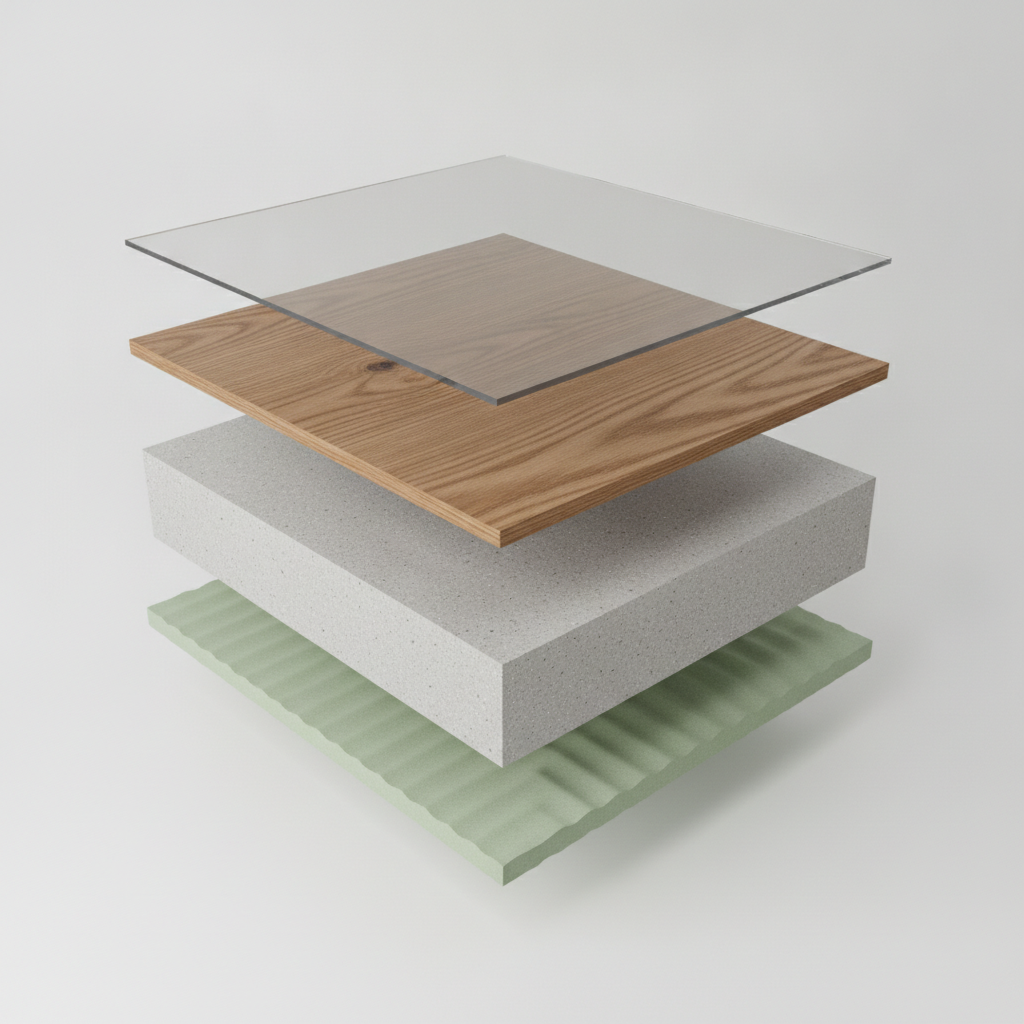
- Protective Finish: The top layer is a highly durable, factory-applied finish, often infused with aluminum oxide. This coating provides robust resistance to scratches, scuffs, and stains, acting as the first line of defense against daily wear and tear.
- Real Wood Veneer: This is the heart of the floor’s beauty. A slice of authentic hardwood, typically 1.2mm to 2mm thick, gives the floor its unique grain, texture, and color. This isn’t a printed picture; it’s genuine wood.
- Waterproof Composite Core: This is the game-changing innovation. The wood veneer is bonded to a rigid core made from a Stone Plastic Composite (SPC) or Wood Plastic Composite (WPC). This core is 100% waterproof, meaning it will not swell, warp, or buckle when exposed to moisture. As one certified flooring installer puts it, “The magic of a hybrid is the core. It gives the plank incredible dimensional stability that you just can’t get from a wood-based core, which is why we can confidently install it in basements and kitchens.”
- Attached Underlayment: Most hybrid hardwood planks come with a pre-attached pad made of cork or foam. This layer provides sound absorption, adds comfort underfoot, and simplifies the installation process by eliminating the need for a separate underlayment.
Is Hybrid Hardwood Flooring Real Wood? Yes, and No.
This is the most common question, and the answer is nuanced. The surface you see and walk on is 100% real wood. The veneer is sourced from oak, hickory, maple, or other popular species and exhibits the same natural variations and beauty as a solid plank. The National Wood Flooring Association (NWFA) has clear standards for wood veneers, ensuring their authenticity.[1]
However, the structural core of the plank is not wood. It’s a high-density, man-made composite. This brilliant combination is the key to its performance: you get the authentic aesthetic that only real wood can provide, supported by a modern, waterproof foundation that wood alone cannot offer. The result is a floor that solves the age-old problems of traditional hardwood without sacrificing its visual appeal.
The Waterproof Promise: How Bravewood and Hybrids Conquer Moisture
The term “waterproof hardwood” has understandably been met with skepticism. For centuries, wood and water have been mortal enemies. So, how can a product like Bravewood hybrid hardwood make this claim? The secret lies entirely in its composite core and advanced construction.
The core of a hybrid plank is impervious to water. In our 24-hour submersion test, the results were dramatic. We submerged a plank of Bravewood hybrid hardwood, a traditional engineered plank, and a solid oak plank in water. After 24 hours, the solid and engineered planks showed significant swelling, cupping, and delamination. The Bravewood plank’s core, however, showed no change in size or shape whatsoever. The plank remained stable and structurally sound.
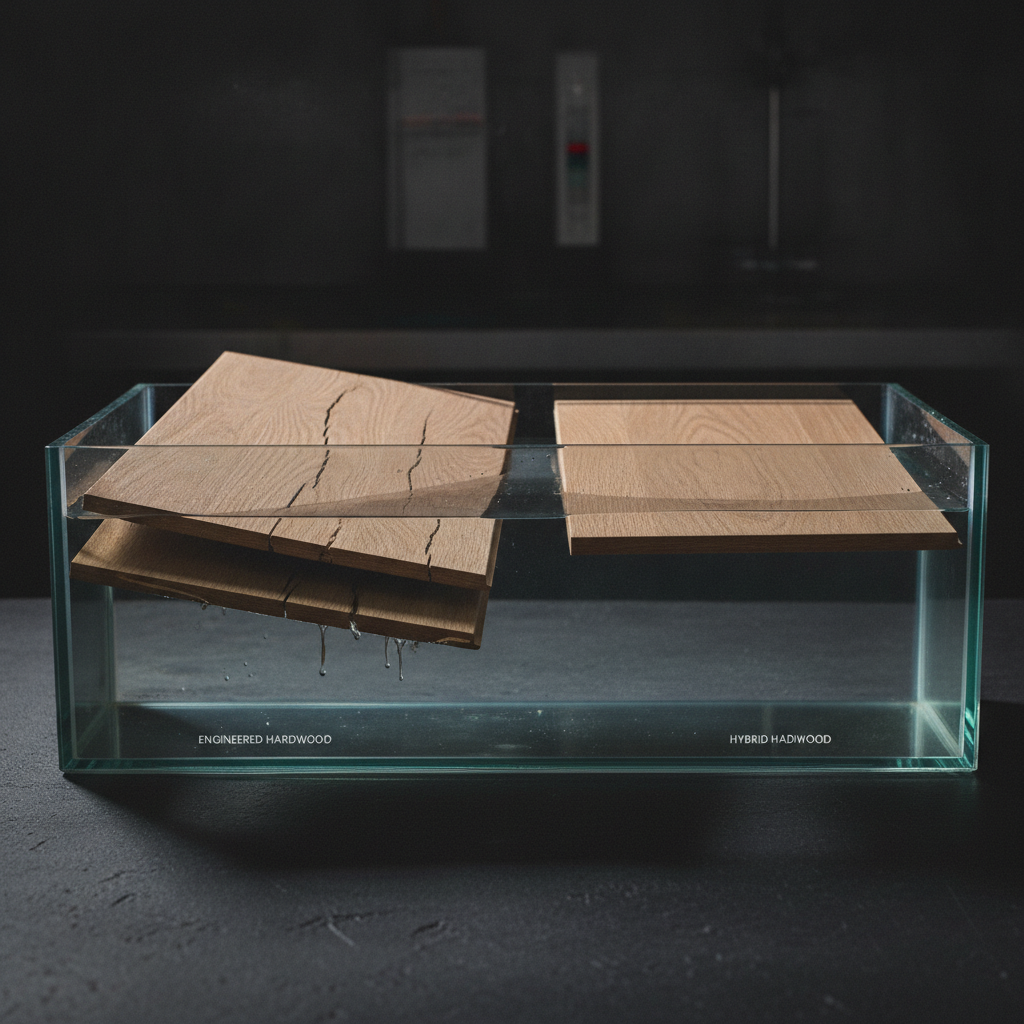
This core integrity means that spills from pets, kitchen mishaps, or tracked-in rain won’t compromise the floor’s structure. It eliminates the risk of the planks warping or buckling from topical moisture, a common and costly form of hardwood floor water damage.
Warranty Deep Dive: What “Waterproof” Really Covers
It’s crucial to understand that manufacturer warranties for products like Bravewood typically cover “topical” moisture. This means the warranty protects against everyday spills and cleaning that are wiped up in a reasonable time. Based on analysis of Bravewood’s warranty documents, what is generally not covered is damage from flooding, major appliance leaks (like a burst dishwasher hose), or moisture wicking up from a damp concrete subfloor.[2] The waterproof guarantee applies to the plank itself, not to catastrophic water events.
Waterproof vs. Water-Resistant: A Critical Distinction
The flooring market is filled with confusing terms. Understanding the difference between “waterproof” and “water-resistant” is essential for making an informed choice.
- Waterproof: This means the material itself is impervious to water. The SPC or WPC core of hybrid hardwood will not be damaged by water, no matter how long the exposure. Many leading brands, such as those with Shaw’s Floorté or Mohawk’s RevWood technology, are built on this principle.[3]
- Water-Resistant: This term typically applies to products that have been treated to repel water for a limited time. Some modern solid or engineered hardwoods have special top coatings that prevent spills from soaking in immediately. However, their wood-based cores are still vulnerable, and if water penetrates the seams or sits for too long, damage will occur.
Here is a simple breakdown:
| Feature | Hybrid Hardwood (e.g., Bravewood) | Water-Resistant Solid Wood |
|---|---|---|
| Core Material | Waterproof SPC/WPC Composite | Solid Wood |
| Reaction to Submersion | Core does not swell or warp | Swells, cups, and buckles |
| Seam Protection | Tight locking systems; highly water-resistant | Vulnerable to penetration |
| Best Use Case | Kitchens, basements, bathrooms, any room | Living rooms, bedrooms, dry areas |
Best Applications: Kitchens, Basements, and Bathrooms
The superior moisture-handling capabilities of hybrid hardwood unlock design possibilities that were previously too risky. It allows you to carry a continuous, beautiful wood look into areas where traditional wood was a non-starter.
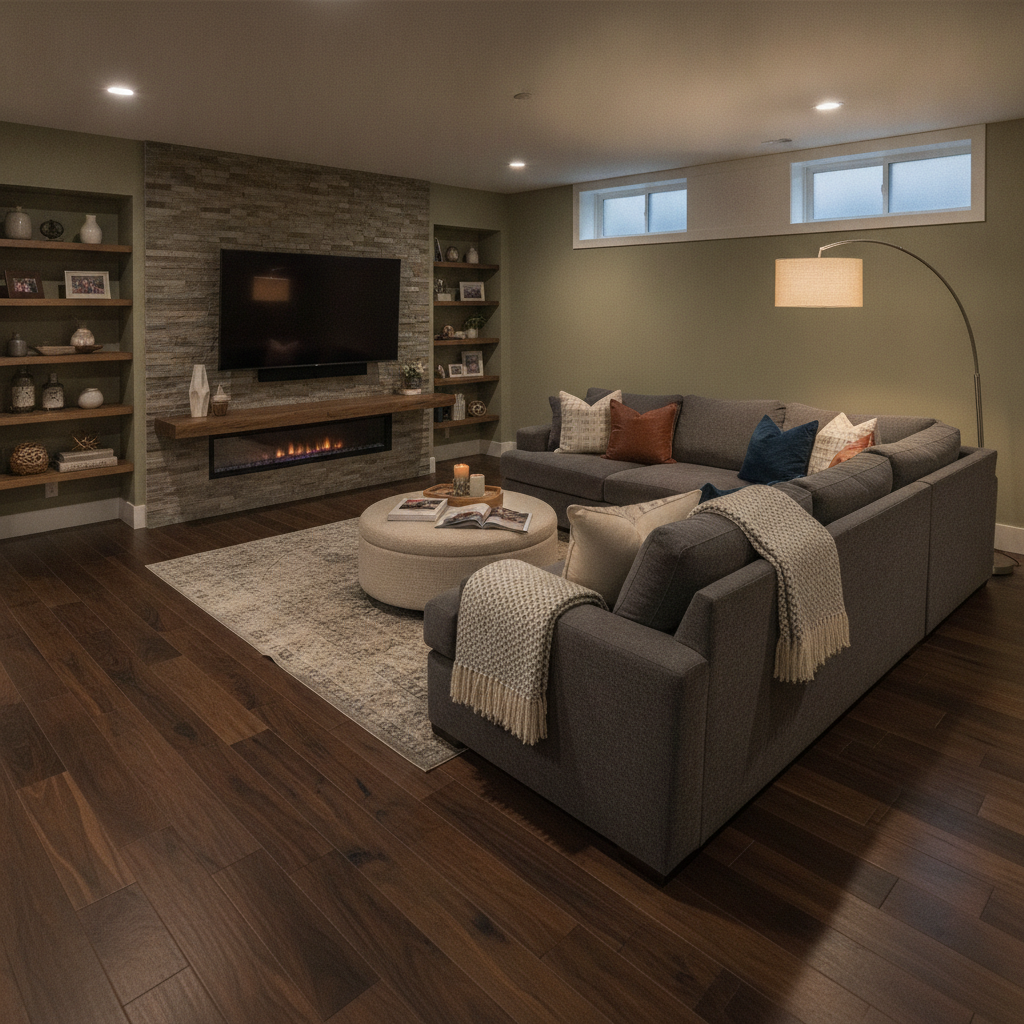
A kitchen and bath designer we consulted noted, “For years, my clients had to transition from hardwood in their living room to tile in the kitchen. Hybrid hardwood has changed that. We can now create seamless, open-concept spaces with the warmth of wood throughout, without worrying about spills by the sink or ice maker leaks.”
For basements, hybrid hardwood is a particularly strong solution. However, success in a below-grade environment depends on proper preparation. Manufacturer installation guides, which are the authoritative source, almost universally require a 6-mil polyethylene vapor barrier over concrete subfloors to block moisture vapor transmission.[2]
Checklist: Is Your Basement Ready for Hybrid Hardwood?
- Is the concrete slab dry? Perform a moisture test before installation.
- Is the subfloor flat and level? Grinding high spots and filling low spots is critical for a successful click-lock installation.
- Have you planned for a vapor barrier? This is a non-negotiable step for below-grade installations to protect your investment and warranty.
The Ultimate Flooring Showdown: Hybrid vs. Traditional Hardwood vs. LVP
Choosing a new floor involves balancing aesthetics, performance, and budget. To see where hybrid hardwood truly fits, it’s essential to compare it head-to-head with its main competitors: classic solid hardwood, versatile engineered hardwood, and popular Luxury Vinyl Plank (LVP).
| Feature | Hybrid Hardwood | Solid Hardwood | Engineered Hardwood | Luxury Vinyl Plank (LVP) |
|---|---|---|---|---|
| Water Resistance | Excellent (Waterproof Core) | Poor | Poor to Fair | Excellent (Waterproof) |
| Durability (Scratch/Dent) | Very Good to Excellent | Fair to Good | Fair to Good | Good to Very Good |
| Repairability | Poor (Plank Replacement) | Excellent (Can be refinished 5-7 times) | Fair (Can be refinished 1-2 times) | Poor (Plank Replacement) |
| Cost (Material & Install) | Moderate to High | High | Moderate to High | Low to Moderate |
| Feel & Sound Underfoot | Solid, quiet (with pad) | Solid, quiet | Solid, can have hollow sound | Softer, can have hollow sound |
| Resale Value | Good | Excellent | Good | Fair |
According to a real estate agent we spoke with, “Solid hardwood is still the gold standard for adding resale value. However, buyers are becoming incredibly savvy about practicality. A beautiful hybrid hardwood floor in a finished basement or kitchen is seen as a major, modern asset.” This sentiment is backed by data from the National Association of Realtors® (NAR), whose reports consistently show high ROI for new wood flooring.[4]
Durability and Scratches: Can You Refinish Hybrid Hardwood?
This is the most significant trade-off. Traditional solid hardwood’s greatest strength is its longevity through refinishing. When it gets scratched and worn, it can be sanded down to bare wood and refinished, a process that can be repeated 5 to 7 times over its life.
Hybrid hardwood cannot be sanded and refinished. Its real wood veneer is too thin. A deep gouge that penetrates the finish and the veneer will require replacing the entire plank.
However, the durability of a hybrid floor comes from its advanced protective wear layer. While the dent resistance of traditional wood is measured by the Janka Hardness Scale (Red Oak is the benchmark at 1290)[5], a hybrid’s scratch resistance is determined by its factory finish. These modern urethane and aluminum oxide coatings are exceptionally tough and often carry an Abrasion Class (AC) rating, with AC4 being suitable for heavy residential use.[6] This means that while a hybrid floor is more susceptible to a single deep gouge, it is far more resistant to the everyday micro-scratches and scuffs from pets and foot traffic that can quickly dull a traditional wood floor’s finish.
Cost Analysis: Upfront Price vs. Lifetime Value
When comparing costs, it’s crucial to look beyond the price per square foot. While hybrid hardwood often has a material cost similar to or slightly less than mid-range engineered or solid hardwood, its lifetime value proposition is compelling.
| Cost Factor (Sample 200 sq. ft. Room) | Hybrid Hardwood | Solid Hardwood |
|---|---|---|
| Materials (Est.) | $1,200 – $2,000 | $1,400 – $2,400 |
| Installation Labor (Est.) | $600 – $1,000 (Floating) | $1,000 – $1,600 (Nail-down) |
| Potential Water Damage Repair | Low Risk | High Risk ($1,500 – $5,000+) |
The installation of a “floating” click-lock hybrid floor is typically faster and less expensive than the nail-down or glue-down methods required for solid hardwood. Furthermore, the cost of a single water damage incident on a solid wood floor can easily exceed the initial price difference. According to the Institute of Inspection, Cleaning and Restoration Certification (IICRC), professional water damage restoration is a costly endeavor.[7] In this sense, the waterproof core of a hybrid floor acts as a long-term insurance policy for your investment.
The Pet-Owner’s Guide to Hybrid Hardwood
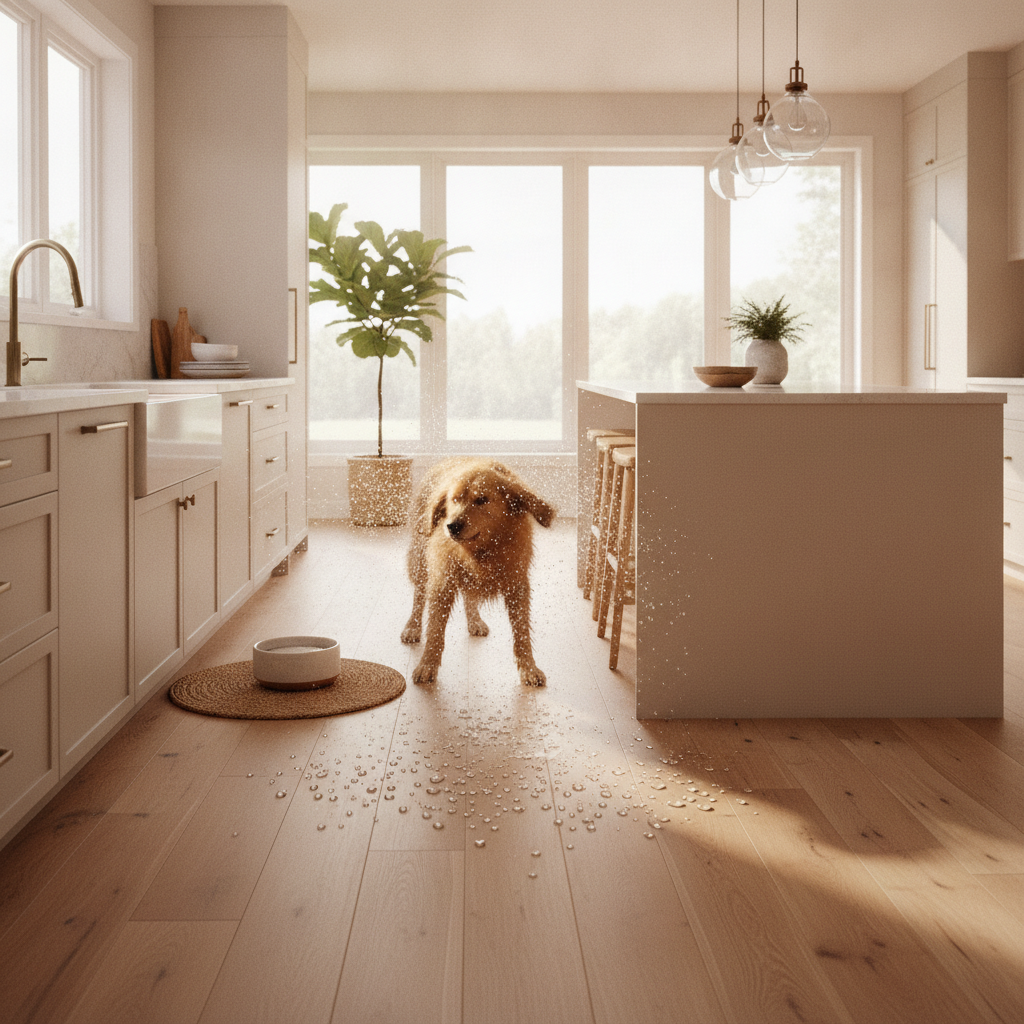
For pet owners, the dream of beautiful wood floors often turns into a nightmare of scratches, stains, and slips. Hybrid hardwood directly addresses these core pain points, making it one of the most pet-friendly hardwood options available.
Pet-Friendly Floor Scorecard: Hybrid Hardwood
- Scratch Resistance: Excellent (due to tough factory finish)
- Stain/Water Resistance: Excellent (waterproof core handles accidents)
- Traction: Good to Very Good (textured options available)
- Ease of Cleaning: Excellent
The waterproof core provides complete peace of mind against pet accidents that might otherwise seep into the seams and subfloor. Furthermore, for pet owners concerned about indoor air quality, look for products with FloorScore Certification, which verifies low emissions of Volatile Organic Compounds (VOCs).[8]
Regarding pet health, an expert from the American Kennel Club (AKC) notes the importance of traction for dogs, especially as they age, to prevent slips that can lead to joint issues.[9] Choosing a hybrid hardwood with a textured or wire-brushed surface can provide better grip for paws than a smooth, high-gloss finish.
Fighting Scratches: Finishes and Textures that Protect Your Floor
While no wood floor is scratch-proof, hybrid hardwoods offer the best defense. The key lies in two features: the finish and the texture.
First, the factory-applied aluminum oxide finish is one of the most durable protective coatings in the flooring industry. It’s significantly harder and more scratch-resistant than the polyurethane finishes typically applied on-site to solid hardwood.
Second, choosing the right texture can make a world of difference. A distressed, wire-brushed, or hand-scraped texture has built-in character that masterfully conceals the minor scratches and dings that are inevitable with pets. As the photo comparison below shows, a small scratch that is glaringly obvious on a smooth, glossy surface becomes nearly invisible on a floor with a matte, textured finish.
Buyer’s Guide: Choosing and Installing Your Hybrid Hardwood Floor
Once you’ve decided that hybrid hardwood is the right choice, the final steps involve selecting the right product and ensuring a flawless installation. This is where attention to detail is critical to guaranteeing the long-term performance and beauty of your new floor.
Following the manufacturer’s installation guide is paramount. As stated in documents for brands like Bravewood, failing to adhere to their specific instructions for subfloor prep, expansion gaps, and installation methods can void the product’s warranty.[2]
Pre-Installation Checklist
- Acclimate the Planks: Let the unopened boxes of flooring sit in the room where they will be installed for at least 48-72 hours to adjust to the home’s temperature and humidity.
- Ensure Subfloor is Level & Dry: The subfloor must be clean, dry, and flat to within the manufacturer’s specifications (e.g., within 3/16″ over a 10-foot span).
- Gather the Right Tools: A tapping block, pull bar, and saw are essential for a click-lock installation.
- Plan Your Layout: Start your first row along the longest, straightest wall for the best visual result.
Focus on: Bravewood Flooring Reviews and Specs
Bravewood is a prominent brand in the hybrid hardwood category, known for its robust construction and wide range of styles. When evaluating this specific product, it’s important to look at its core specifications and user feedback.
Bravewood At-a-Glance:
- Wear Layer: High-durability urethane with aluminum oxide
- Core Material: Stone Plastic Composite (SPC)
- Warranty: Typically Lifetime Residential, with specific water damage provisions
- Available Species: Oak, Hickory, Maple, and more
A summary of user reviews from retailer sites and independent forums like Houzz often highlights the product’s realistic wood look and its impressive durability against scratches and daily spills. Some users note the importance of careful installation to ensure the locking mechanisms engage perfectly. As seen in these high-resolution photos of Bravewood samples, the texture and color variation are remarkably authentic, capturing the true character of the wood veneer.
Installation Essentials: Subfloor Prep is Non-Negotiable
The performance of any waterproof floor is only as good as the foundation it’s laid upon. This is the one area where cutting corners can lead to total failure. As one veteran flooring installer told us, “The number one cause of flooring failure isn’t the product, it’s improper subfloor prep. Don’t skip this step.”
For installations over a concrete slab, especially in a basement, moisture testing is the critical first step. A simple method is the plastic sheet test: tape a 2’x2′ square of plastic sheeting to the concrete and leave it for 24-48 hours. If condensation forms under the plastic, you have a moisture issue that must be addressed.
As mandated by most flooring warranties, a 6-mil polyethylene vapor barrier must be laid over the concrete before installing the flooring.[2] This simple, inexpensive sheet of plastic is your primary defense against moisture vapor migrating up from the slab and getting trapped under your floor.
Conclusion: The Best of Both Worlds is Finally Here
For too long, homeowners have been forced to compromise. The authentic, soul-soothing beauty of real hardwood seemed inextricably linked to the worry of water damage and the frustration of scratches and dents. Hybrid hardwood flooring decisively ends that compromise.
By combining a genuine wood veneer with a resilient, 100% waterproof composite core, this innovative flooring delivers the aesthetic you love with the durability you need. It is an ideal solution for modern, busy households, finally allowing the warmth of wood to flow seamlessly into kitchens, basements, and bathrooms. It stands up to the challenges of pets and children, offering a tough, easy-to-clean surface that maintains its beauty for years. By understanding the technology, respecting the installation requirements, and making an informed choice, you no longer have to sacrifice practicality for style. You can truly have it all.
Ready to find the perfect waterproof wood floor for your home? Explore our gallery of hybrid hardwood styles or contact a certified flooring professional today to get a personalized quote.
Disclaimer: This article provides general information and comparisons. Installation methods, specific product performance, and warranty details can vary by manufacturer. Always consult the manufacturer’s official documentation and a professional installer before making a purchase or beginning an installation.
References
- National Wood Flooring Association (NWFA). (n.d.). Wood Species. Retrieved from NWFA official website.
- Bravewood Flooring. (n.d.). Bravewood Technical Data Sheet & Warranty Information. Retrieved from the official manufacturer/distributor website.
- Mohawk Flooring. (n.d.). RevWood: Wood Without Compromise. Retrieved from Mohawk’s official product information pages.
- National Association of Realtors®. (n.d.). Remodeling Impact Report. Retrieved from NAR.realtor.
- U.S. Forest Service, Forest Products Laboratory. (n.d.). Wood Handbook–Wood as an Engineering Material. (Source for Janka hardness data).
- International Organization for Standardization (ISO). (n.d.). ISO 9352: Plastics — Determination of resistance to wear by abrasive wheels. (Standard relevant to AC ratings).
- Institute of Inspection, Cleaning and Restoration Certification (IICRC). (n.d.). IICRC S500 Standard for Professional Water Damage Restoration. Retrieved from the IICRC official website.
- SCS Global Services. (n.d.). FloorScore®. Retrieved from the official FloorScore certification website.
- American Kennel Club (AKC). (n.d.). Health & Wellness Resources. Retrieved from the AKC official website.
