
You dream of the timeless beauty of hardwood floors—the warmth, the character, the value they add to your home. But then, reality sets in. The spilled glass of water, the scramble of dog claws across the surface, the trail of muddy footprints from the kids. The fear of scratches, water damage, and constant maintenance can quickly turn that dream into a source of stress.
What if you could have the authentic look of real wood without the anxiety? Enter waterproof hybrid hardwood, the modern flooring solution designed for real life. It offers the stunning aesthetic of a genuine wood veneer on top of a technologically advanced, waterproof core. But the secret to its longevity lies in its finish—the invisible shield that stands between your beautiful floor and the daily chaos of a busy home.
This is not just another list of flooring options. This is your ultimate Flooring Survival Guide. We will empower you with data-driven tools, including our exclusive Durability Scorecard and Scratch Repair Matrix, to help you decode the technical jargon, compare the best finishes, and make a confident, regret-proof investment in a floor that’s built to last.
- Understanding Waterproof Hybrid Hardwood: More Than Just a Pretty Surface
- The Definitive Guide to Durable Hardwood Finishes
- The Lifestyle Test: Matching Your Floor to Your Life
- Your Flooring Triage Guide: A Practical Plan for Prevention & Repair
- Frequently Asked Questions
- Your Floor, Your Life, Your Choice
- References
Understanding Waterproof Hybrid Hardwood: More Than Just a Pretty Surface
Before choosing a finish, it’s crucial to understand the revolutionary construction of waterproof hybrid hardwood. This flooring isn’t a single piece of wood; it’s a multi-layered marvel of engineering designed to solve the historical problems of its solid wood ancestors. By deconstructing its layers and clarifying the marketing terms, you can appreciate why it’s a superior choice for many modern homes.
The Anatomy of a Modern Floor: Deconstructing the Layers
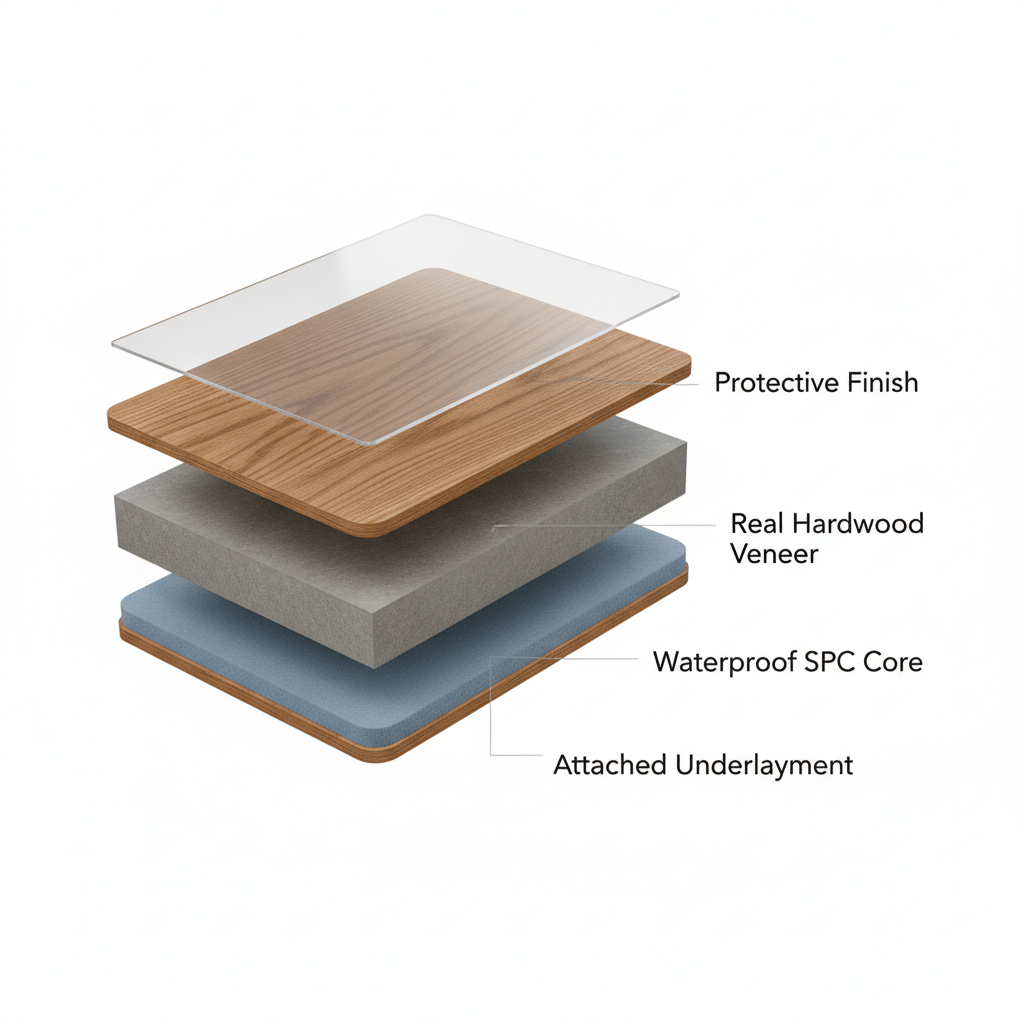
At its core, waterproof hybrid hardwood combines the best of multiple worlds. Imagine a cross-section of a single plank; you would see several distinct layers working in concert:
- Protective Finish / Wear Layer: This is the topmost, transparent coating and your floor’s first line of defense. It’s a high-performance layer, often infused with aluminum oxide or ceramics, designed to resist scratches, stains, and UV fading.
- Real Hardwood Veneer: Just below the finish is a thin layer of authentic hardwood (like oak, hickory, or maple). This is what gives the floor its unique grain, texture, and natural beauty. Unlike laminate, which has a photographic image, this is real wood.
- Waterproof Composite Core: This is the game-changing innovation. The wood veneer is bonded to a rigid, 100% waterproof core. This core is typically made from either Stone Polymer Composite (SPC) or Wood Polymer Composite (WPC). Leading manufacturers like Shaw Floors and Mohawk Flooring utilize SPC for its exceptional dimensional stability and resistance to dents, ensuring the plank won’t swell or warp when exposed to moisture[2].
- Attached Underlayment (Optional): Many hybrid hardwood products come with a pre-attached pad made of cork or foam. This layer provides sound absorption, insulation, and added comfort underfoot, simplifying the installation process.
Waterproof vs. Water-Resistant: A Critical Distinction
The flooring industry is filled with terms that can be confusing, but the difference between “waterproof” and “water-resistant” is one you can’t afford to misunderstand. Getting this right manages your expectations and protects your investment.
- Myth: “Water-resistant” and “waterproof” mean the same thing.
- Fact: According to industry standards bodies like the Floor Covering Institute, these terms describe very different levels of protection[3]. Water-resistant flooring can withstand topical moisture, like a small spill, for a limited time before it needs to be cleaned up. The seams and core may still be vulnerable to damage from prolonged exposure. Waterproof flooring, specifically products with a vinyl or SPC core, means the plank itself is impervious to water. It will not swell, buckle, or degrade even if fully submerged. While the subfloor can still be damaged, the flooring plank itself will remain stable. This performance is often verified through rigorous testing outlined by organizations like ASTM International[4].
The Real Deal: Pros and Cons of Moisture-Resistant Hardwood
Making an informed decision means looking at the full picture. Waterproof hybrid hardwood offers incredible advantages, but it’s essential to weigh them against its limitations.
Pros
- Authentic Wood Beauty: You get the genuine grain and character of real hardwood because the top layer is real hardwood.
- Superior Water Protection: Ideal for kitchens, mudrooms, and basements where traditional hardwood is a high-risk choice.
- Enhanced Durability: The rigid composite core provides excellent dent resistance, often outperforming solid wood.
- Dimensional Stability: The layered construction provides incredible stability, reducing the natural expansion and contraction from humidity changes by up to 70% compared to solid wood.
Cons
- Limited Refinishing: The thin wood veneer cannot be sanded and refinished like solid hardwood. Major damage may require plank replacement.
- Higher Upfront Cost: The advanced technology and multi-layer construction often make it more expensive than traditional laminate or LVP.
- Not Flood-Proof: While the planks are waterproof, a major flood can still damage your subfloor and seep under baseboards. Most manufacturer warranties are voided in the event of standing water or flooding.
- Vulnerable to Deep Scratches: While the finish is tough, a deep scratch that penetrates the wear layer can expose the wood veneer and may be more difficult to repair than on solid wood.
The Definitive Guide to Durable Hardwood Finishes
The finish is the single most important factor determining your floor’s long-term durability, appearance, and ease of maintenance. For waterproof hybrid hardwood, the finish is almost always applied in a factory setting, allowing for technologies and levels of hardness that are impossible to replicate with an on-site, DIY application. Understanding these factory-applied finishes is key to choosing a floor that will truly stand up to your life.
Decoding the Technology: Polyurethane vs. Aluminum Oxide vs. UV-Cured Finishes
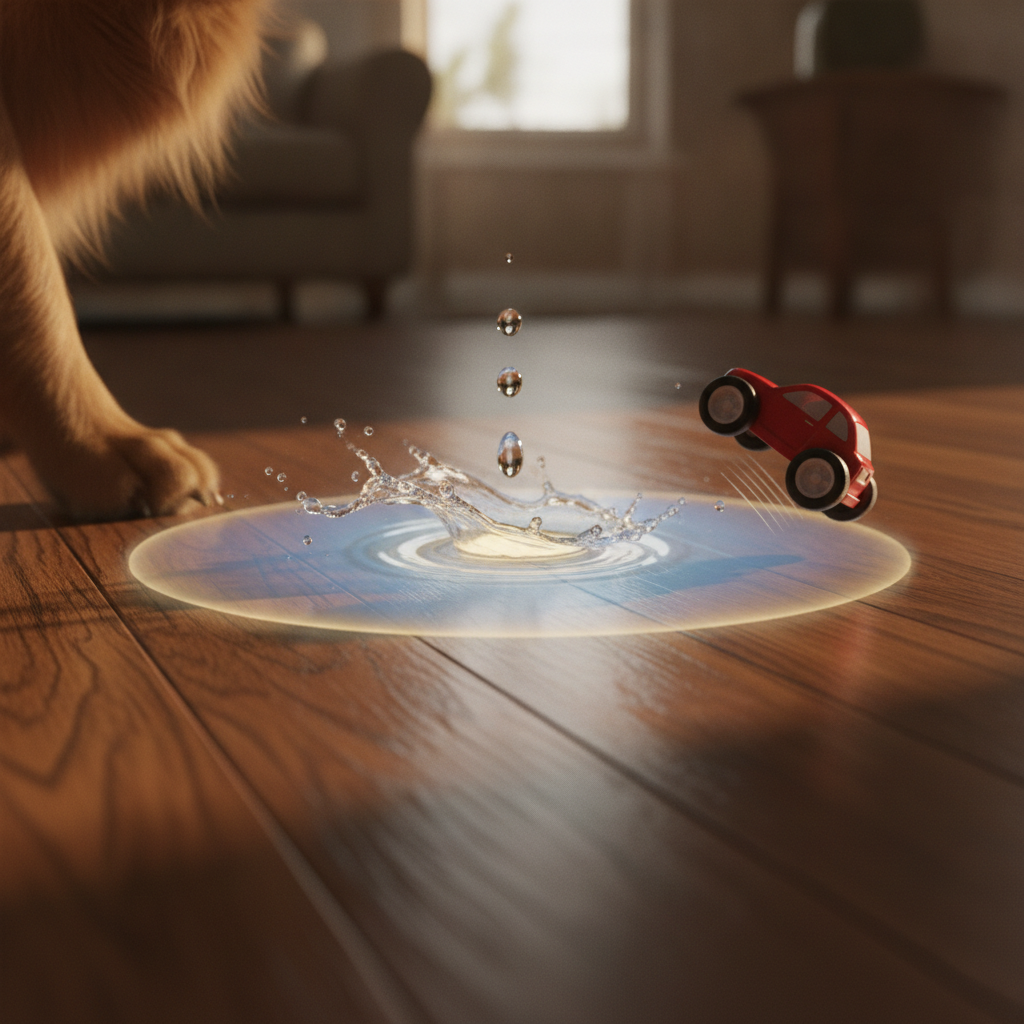
Factory finishes are engineered for maximum performance. They are applied in multiple thin coats and cured under ultraviolet (UV) lights for an instant, hardened bond. According to guidelines from the National Wood Flooring Association (NWFA), this controlled process results in a more durable and consistent finish than manual applications[1].
- UV-Cured Polyurethane: This is the foundational finish for most modern flooring. It’s available in water-based or oil-based formulations. Water-based options are prized for their clarity (they don’t yellow over time) and low VOCs (Volatile Organic Compounds).
- Aluminum Oxide: This is the industry’s workhorse for durability. Aluminum oxide is a naturally occurring mineral, nearly as hard as diamond, that is suspended in the polyurethane finish. According to research from sources like the U.S. Forest Service’s Forest Products Laboratory, finishes with aluminum oxide can make a floor 5 to 10 times more abrasion-resistant than standard polyurethane alone[5]. This is a factory-only application and is the most common choice for high-quality, scratch-resistant flooring.
- Ceramic-Infused & Other Additives: Pushing durability even further, some premium finishes are infused with microscopic ceramic particles. Similar to aluminum oxide, these additives increase the surface hardness and wear resistance. Leading finish manufacturers like Bona Pro and Loba are constantly innovating with proprietary formulas to maximize performance[6].
The Durability Scorecard: Rating Finishes on What Matters Most
To simplify your choice, we’ve created this scorecard to compare the most common factory-applied finishes. Ratings are on a scale of 1 (Poor) to 5 (Excellent), based on typical performance in a residential setting.
| Finish Type | Scratch Resistance | Moisture Protection | Clarity / Aesthetics | Repairability |
|---|---|---|---|---|
| Standard UV Polyurethane | ★★★☆☆ | ★★★☆☆ | ★★★★☆ | ★★☆☆☆ |
| Aluminum Oxide Infused | ★★★★★ | ★★★★☆ | ★★★★☆ | ★☆☆☆☆ |
| Ceramic Infused | ★★★★★ | ★★★★☆ | ★★★★★ | ★☆☆☆☆ |
| UV-Cured Natural Oil | ★★☆☆☆ | ★★☆☆☆ | ★★★★★ | ★★★★★ |
Key Takeaways:
- For Maximum Scratch Resistance: Finishes with Aluminum Oxide or Ceramic additives are the undisputed champions and the best choice for homes with pets and kids.
- For Aesthetics & Repair: UV-Cured Oil finishes offer a beautiful, matte, natural look and are the easiest to spot-repair. However, they require more frequent maintenance and offer significantly less protection against scratches and moisture.
- The Trade-Off: The hardest, most durable finishes (Aluminum Oxide, Ceramic) are also the most difficult to repair. A deep gouge cannot be “buffed out” and may require professional attention or plank replacement.
Why Hybrid Hardwood Finishes Are Different from Solid Wood
The finish on a waterproof hybrid floor is fundamentally different from what you’d find on a solid hardwood floor for one critical reason: the inability to sand and refinish.
As noted by trade publications like Hardwood Floors Magazine, the process of refinishing solid wood involves sanding off the old finish and a thin layer of the wood itself to create a fresh surface[7]. This is impossible on most waterproof hybrid products, where the real wood veneer is often just 0.6mm to 2mm thick. Sanding would instantly wear through the veneer to the composite core below.
This reality means:
- The Factory Finish is Everything: The finish your floor comes with is the finish you will have for its entire life. You must choose a product with a high-quality, durable finish from the start.
- Repair, Don’t Refinish: Your maintenance strategy must shift from large-scale refinishing to localized repair of any damage that occurs.
The Lifestyle Test: Matching Your Floor to Your Life
Technical specifications are important, but the best floor is ultimately the one that fits seamlessly into your daily life. For most people, that means a floor that can handle the unpredictable challenges of pets and children without demanding constant worry and attention.
The Pet-Owner’s Verdict: The Most Scratch-Proof and Accident-Resistant Finishes
Pets are family, but they are uniquely tough on floors. Between claws, accidents, and shedding, choosing the right flooring is a matter of household sanity.
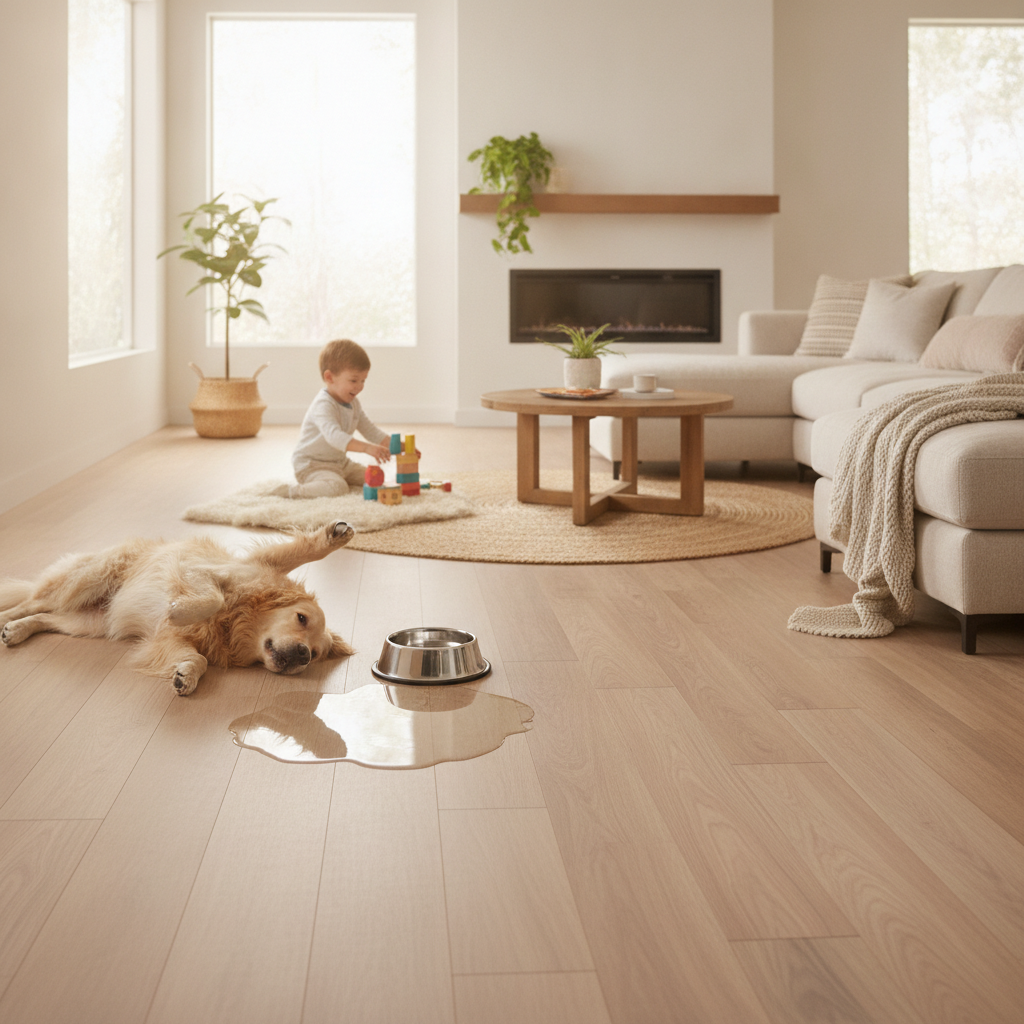
- Scratch Resistance is Paramount: While the hardness of the wood species itself (measured on the Janka Hardness Scale) plays a role, the finish is the true first line of defense against claw marks. A factory-applied finish with aluminum oxide is the top choice for protecting the wood veneer. When considering vinyl-based waterproof flooring, the American Kennel Club (AKC) advises looking for a thick wear layer of at least 20 mil for maximum scratch protection[8].
- Accident-Proof is a Must: The waterproof core of hybrid hardwood provides peace of mind that a pet accident won’t cause the plank to swell or delaminate. The non-porous surface finish also prevents stains from setting in, making cleanup simple and effective. The Humane Society of the United States emphasizes the importance of easy-to-clean surfaces for maintaining a hygienic home environment for pets.
The Family-Proof Choice: What to Look for in High-Traffic Areas
From the entryway to the kitchen, family life is lived in high-traffic zones. Your floor’s finish needs to be ready for the constant barrage of footsteps, dropped toys, and tracked-in dirt.
- Abrasion Resistance: This is the finish’s ability to withstand the wear and tear of daily foot traffic. Look for products that advertise high abrasion resistance, often backed by manufacturer data from a Taber Abrasion Test, which measures how many cycles of wear a finish can endure before it’s compromised.
- Ease of Cleaning: A smooth, non-porous finish makes sweeping, vacuuming, and mopping a breeze. This is a key consideration for any busy family, as an easy-to-clean floor saves time and effort.
- Aesthetics that Hide: Interior designers often suggest that for active homes, a floor with a matte or low-sheen finish and a visible grain pattern is more forgiving than a dark, high-gloss finish. The natural texture helps to camouflage minor scuffs, dust, and pet hair between cleanings.
Your Flooring Triage Guide: A Practical Plan for Prevention & Repair
Even the most durable floor can suffer damage. The key is to know how to prevent it and what to do when accidents happen. This guide provides a clear, actionable plan for protecting your investment.
Emergency Plan: What to Do Immediately After a Leak or Spill
While your waterproof hybrid planks are safe, a significant leak from an appliance or pipe can still damage your subfloor and walls. Act fast to mitigate the damage.
- Stop the Source: Immediately shut off the main water valve or the specific valve for the leaking appliance.
- Remove Standing Water: Use towels, a wet-dry vacuum, or a mop to remove all visible water from the floor’s surface.
- Encourage Drying: Open windows and use fans and a dehumidifier to circulate air and remove moisture from the room. This is critical, as the U.S. Environmental Protection Agency (EPA) warns that mold can begin to grow within just 24-48 hours of water exposure[11].
- Check Underneath: If possible, check the basement or crawlspace below the affected area for signs of water.
- Call a Pro Now: If the leak was substantial, involved contaminated water, or you see signs of floor buckling (a sign of subfloor issues), call a professional water damage restoration company immediately. The Institute of Inspection, Cleaning and Restoration Certification (IICRC) S500 standard is the industry benchmark for water restoration, so look for an IICRC-certified firm[9]. Guidance from FEMA also provides crucial steps for safe cleanup after a major event[10].
The Scratch Repair Matrix: A Visual Guide to Fixing Flaws
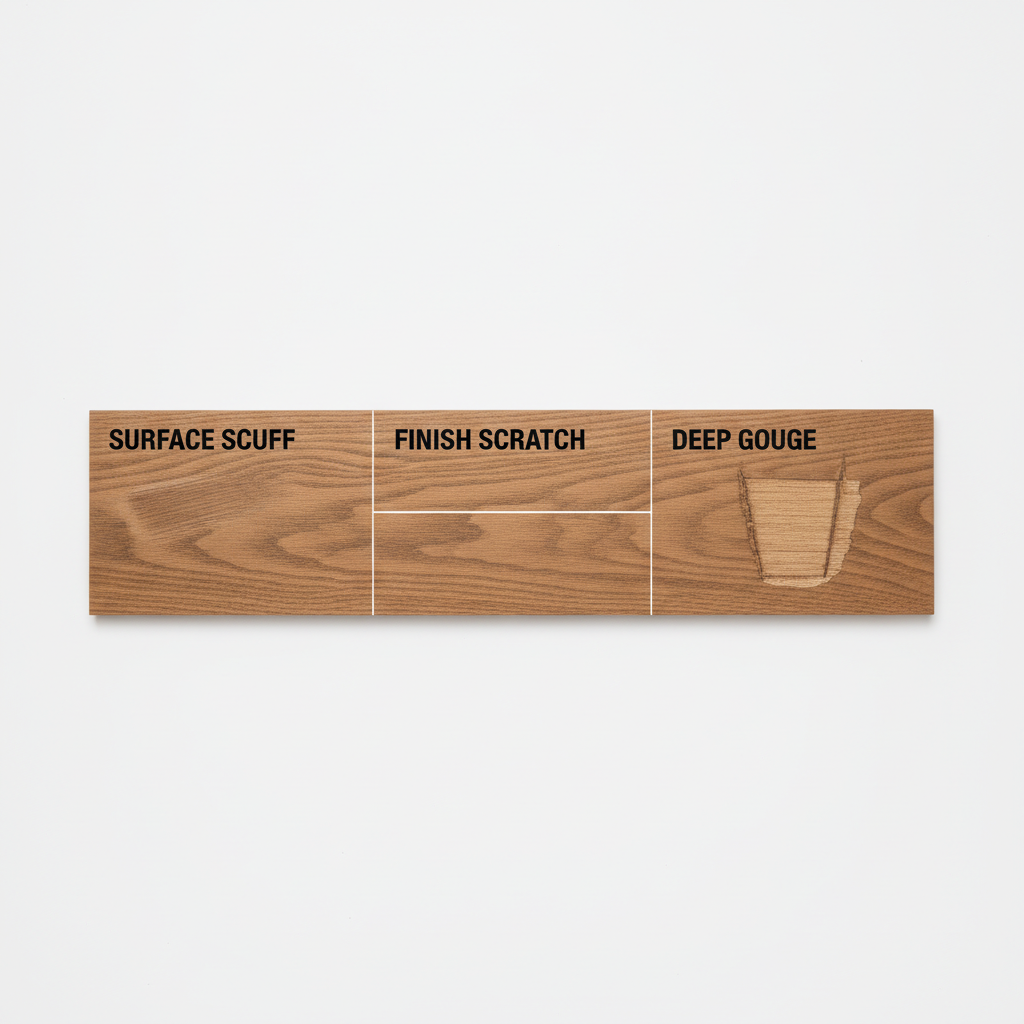
Don’t panic over every mark. Most minor scratches on a high-quality finish can be easily addressed. Identify the type of scratch and find the corresponding solution in our matrix.
| Scratch Type | Visual Cue | Difficulty | Solution |
|---|---|---|---|
| Surface Scuff | A light mark on the finish, often from shoe rubber. No color change. | ★☆☆☆☆ | Clean & Polish: First, clean the area with a manufacturer-approved cleaner. Then, use a soft cloth to apply a floor polish or restorer. This fills in microscopic abrasions. |
| Finish Scratch | A fine, white line where the top layer of the finish has been abraded. Has not reached the wood. | ★★☆☆☆ | Concealer Pen / Marker: Use a finish repair pen or a wax pencil that matches the floor’s sheen level. These products, recommended by experts like Minwax, fill the shallow scratch and make it visually disappear[12]. |
| Deep Gouge | A scratch that has penetrated the finish and the wood veneer, exposing the lighter-colored raw wood below. | ★★★★☆ | Color-Match Putty / Filler: For deeper damage, use a color-match wood filler putty. Carefully apply it to the gouge, remove the excess, and let it dry. This is a more advanced repair and may be best left to a professional. |
| Major Damage | A deep, wide gouge or a section of chipped wood. | ★★★★★ | Plank Replacement: The best solution for severe damage is to replace the entire plank. This is why it’s crucial to save extra planks from your installation. This is a job for an experienced flooring installer. |
The Big Question: Can You Refinish Waterproof Hybrid Hardwood?
This is one of the most critical questions, and the answer is almost always no.
As confirmed by NWFA technical guidelines, the thin wood veneer on these products—often between 0.6mm and 1.2mm—is not thick enough to withstand the sanding process required for refinishing[1]. Attempting to do so would destroy the floor.
Instead of refinishing, your long-term care strategy should focus on:
- Proactive Protection: Use felt pads on furniture, place mats at entryways, and keep pet nails trimmed.
- Regular Cleaning: Keep the floor free of abrasive dirt and grit.
- Spot Repairs: Use the Scratch Repair Matrix above to address minor flaws as they occur.
- Professional Polishing: Some professional services can deep clean and apply a new coat of polish to rejuvenate the finish without sanding.
Frequently Asked Questions
What is the most scratch-resistant finish for wood floors?
For residential use, a factory-applied UV-cured polyurethane finish that is fortified with aluminum oxide or ceramic particles is the most scratch-resistant option available. These additives can make the surface 5 to 10 times more resistant to abrasion than polyurethane alone.
Which type of flooring is best for basements and bathrooms?
For areas prone to high moisture, spills, or humidity like basements and bathrooms, you must choose a flooring with a 100% waterproof core. Waterproof hybrid hardwood with an SPC core is an excellent choice, as is Luxury Vinyl Plank (LVP). According to building science principles from the U.S. Department of Energy, traditional solid and engineered hardwood with wood-based cores should be avoided in these below-grade or wet environments due to the risk of moisture damage[13].
How do I test for moisture in my subfloor before installation?
Testing for subfloor moisture is a critical step to prevent future flooring failure. While best left to a professional installer, common methods include a calcium chloride test (which measures moisture vapor emissions) or an in-situ relative humidity (RH) probe. For concrete subfloors, the moisture content should generally be below 3 lbs per 1000 sq. ft. per 24 hours for a safe installation.
Your Floor, Your Life, Your Choice
Choosing the right floor is about more than just color and style; it’s about investing in a surface that can handle the realities of your life with grace and resilience. By understanding the superior construction of waterproof hybrid hardwood, you’re already a step ahead. But by focusing on its most critical component—the finish—you can truly future-proof your home.
You are now equipped with the knowledge to decode technical specs and the tools, like our Durability Scorecard and Scratch Repair Matrix, to make a decision based on your unique needs. Whether you’re defending against pet claws, toddler spills, or the wear and tear of a busy household, you can now select a floor not just for how it looks today, but for how beautifully it will live with you for years to come. You are empowered to avoid buyer’s remorse and make a smart, long-term investment in your home.
Feeling confident about your choice? Explore our curated selection of waterproof hybrid hardwood flooring or connect with a certified flooring expert today to get a personalized quote for your project.
This article provides general guidance. Always consult manufacturer specifications and a professional flooring installer for your specific project. Product performance can vary based on installation, maintenance, and environmental conditions.
References
- National Wood Flooring Association (NWFA). (N.D.). Technical Guidelines. Retrieved from NWFA resources.
- Shaw Floors, Mohawk Flooring. (N.D.). Product Technical Specifications. Retrieved from official manufacturer websites.
- Floor Covering Institute. (N.D.). Industry Standards & Definitions. Retrieved from Floor Covering Institute resources.
- ASTM International. (N.D.). Standard Test Methods for Flooring Performance (e.g., ASTM D543). Retrieved from ASTM.org.
- U.S. Forest Service, Forest Products Laboratory. (N.D.). Research on Wood Properties and Treatments. Retrieved from fpl.fs.fed.us.
- Bona Pro, Loba, Pallmann. (N.D.). Professional Finish Technical Data Sheets. Retrieved from official manufacturer websites.
- Hardwood Floors Magazine. (N.D.). Technical Articles on Wood Floor Finishing. Retrieved from hardwoodfloorsmag.com.
- The American Kennel Club (AKC). (N.D.). Home Environment Recommendations for Dogs. Retrieved from akc.org.
- Institute of Inspection, Cleaning and Restoration Certification (IICRC). (N.D.). IICRC S500 Standard for Professional Water Damage Restoration. Retrieved from iicrc.org.
- Federal Emergency Management Agency (FEMA). (N.D.). Flood Cleanup and Safety Guidance. Retrieved from fema.gov.
- Environmental Protection Agency (EPA). (N.D.). A Brief Guide to Mold, Moisture, and Your Home. Retrieved from epa.gov/mold.
- Minwax / Varathane. (N.D.). Wood Repair and Finishing Tutorials. Retrieved from official brand websites.
- U.S. Department of Energy, Building America Solution Center. (N.D.). Guidance on Moisture Management in Homes. Retrieved from basc.pnnl.gov.
