
The frantic search that brought you here likely started one of two ways: with a sense of panic or a spark of inspiration. Perhaps you’re standing over a spreading puddle from a leaky dishwasher, watching your beautiful kitchen floor begin to cup and warp. Or maybe you’re excitedly scrolling through design ideas, dreaming of a stunning new kitchen that can withstand the beautiful chaos of family life, from spilled juice to muddy paws.
You’re in the right place. This is your complete playbook to move from crisis to conquest. We’ve designed this guide to serve both the homeowner in an emergency and the meticulous planner, providing expert-backed, actionable frameworks for every situation.
If you have a leak or floor damage RIGHT NOW, click here to jump to our Emergency First-Response Guide.
If you’re planning a new, indestructible kitchen, start with our Ultimate Buyer’s Guide to Spill-Proof Flooring.
- Emergency First-Response: What to Do About Kitchen Floor Water Damage
- The Ultimate Buyer’s Guide to Spill-Proof & Durable Kitchen Flooring
- Beyond the Floor: How to Make Your Entire Kitchen Spill-Proof
- Frequently Asked Questions (FAQ)
- From Panic to Perfection: Your Worry-Free Kitchen Awaits
- References & Authoritative Sources
Emergency First-Response: What to Do About Kitchen Floor Water Damage
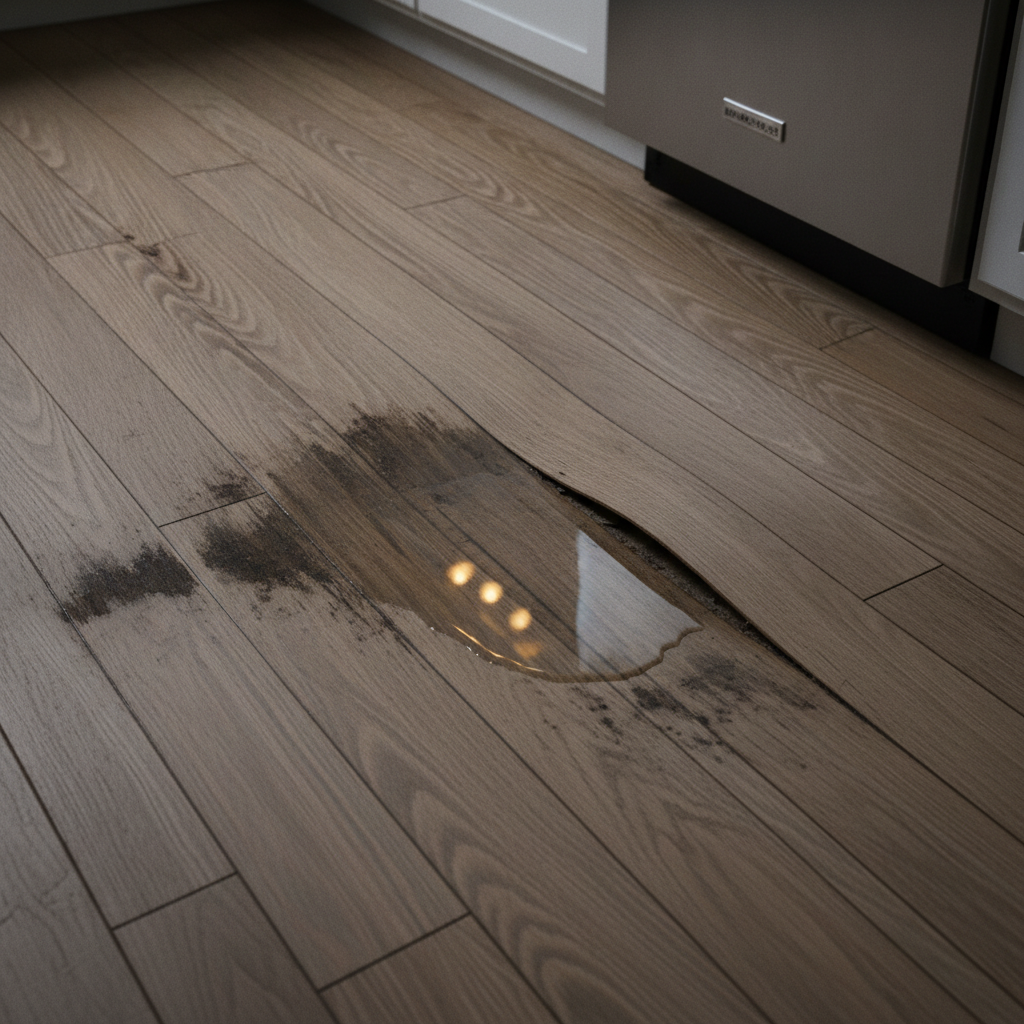
Seeing water damage on your kitchen floor can be incredibly stressful. But taking swift, correct action can save you thousands of dollars and prevent long-term problems like mold. This section is your immediate action plan. According to restoration professionals, the first 24-48 hours are critical. The industry benchmark for professional water damage restoration is the S500 standard from the Institute of Inspection, Cleaning and Restoration Certification (IICRC), which emphasizes rapid and thorough drying to mitigate damage [1].
First Signs of Trouble: How to Spot Water Damage Early
Catching water damage early is key. Keep an eye out for these tell-tale signs, often originating from common culprits like a leaky dishwasher, refrigerator ice line, or sink drain.
- Visible Discoloration: Dark spots or staining on hardwood, vinyl, or laminate.
- Changes in Texture: The floor feels soft, spongy, or “squishy” when you walk on it.
- Changes in Shape:
- Cupping: The edges of hardwood planks are higher than the center.
- Buckling: The flooring lifts completely off the subfloor.
- Musty Odors: A persistent damp, mildewy smell is a red flag for hidden moisture and potential mold growth.
- Peeling or Bubbling: Vinyl or laminate flooring may start to bubble or peel at the seams as the adhesive fails.
- Loose Tiles: Grout may crack or tiles may become loose as the subfloor is compromised.
Can a Water-Damaged Floor Be Saved? Repair vs. Replacement
This is the most pressing question for anyone facing a water-damaged kitchen floor. The answer depends on three key factors: the type of flooring, the extent of the damage, and the condition of the subfloor.
A seasoned flooring contractor will tell you that while small, quickly-addressed issues can often be repaired, full replacement is necessary when the structural integrity is compromised. If water has saturated the subfloor, caused widespread buckling, or if mold is present, replacement is almost always the safest and most effective long-term solution.
Decision-Making Flowchart: Repair or Replace?
- How long was the floor exposed to water?
- < 24 hours: Repair is more likely.
- > 48 hours: Replacement becomes more probable due to subfloor saturation and mold risk.
- What is the flooring material?
- Solid Hardwood: Can sometimes be saved by sanding and refinishing after complete drying.
- Engineered Hardwood/Laminate: The core layers often delaminate and cannot be repaired; affected planks must be replaced.
- Vinyl/LVT: The planks themselves are waterproof, but water can get trapped underneath, damaging the subfloor. Sections may need to be pulled up to dry the subfloor.
- Tile: Tiles are waterproof, but grout can crack and the subfloor can be damaged. Regrouting or tile replacement may be needed.
- Is the subfloor damaged?
- Use a moisture meter. If the subfloor is saturated, soft, or showing signs of mold, it must be repaired or replaced, which usually requires removing the entire floor covering.
For Your Insurance Claim: Before you begin any major cleanup, document everything. Take clear photos and videos of the damage from multiple angles, including close-ups. Keep a log of all communications and save receipts for any professional services or materials you purchase.
How to Fix Warped Hardwood Floors in the Kitchen
Warped hardwood floors kitchen are a common and frustrating result of water damage. The key to any repair is first identifying and stopping the source of the moisture. According to the National Wood Flooring Association (NWFA), wood is hygroscopic, meaning it naturally absorbs and releases moisture from the air [2]. When one side of a board is wetter than the other, it swells, causing warping.
Using a moisture meter is a non-negotiable step for professionals. It helps determine if the wood and subfloor are fully dry before attempting any repairs.
- Cupping: This occurs when the edges of a plank are higher than its center, creating a concave shape. It’s usually caused by a moisture imbalance—the bottom of the board is wetter than the top. If caught early and the wood is allowed to dry completely and slowly, minor cupping can sometimes resolve on its own. For more significant cupping, the floor must be sanded flat and refinished after it has returned to its normal moisture content.
- Crowning: The opposite of cupping, crowning is when the center of the board is higher than its edges. This often happens if the surface of a cupped floor was sanded before it had a chance to dry out completely.
- Buckling: This is the most severe form of warping, where the flooring lifts entirely away from the subfloor. It’s caused by excessive moisture and expansion, and almost always requires replacing the affected boards.
For more detailed consumer information on wood flooring care, the National Wood Flooring Association (NWFA) consumer guides are an excellent resource. After any significant water event, it’s also crucial to prevent mold. For authoritative guidelines, consult FEMA’s resources on dealing with mold after a disaster [3].
The Ultimate Buyer’s Guide to Spill-Proof & Durable Kitchen Flooring
If you’re planning a kitchen renovation, you have the incredible opportunity to design a space that is not only beautiful but also virtually indestructible. Choosing the right waterproof kitchen flooring is the single most important decision you can make for a low-maintenance, worry-free kitchen. This guide will demystify the options and empower you to select the perfect foundation for your home.
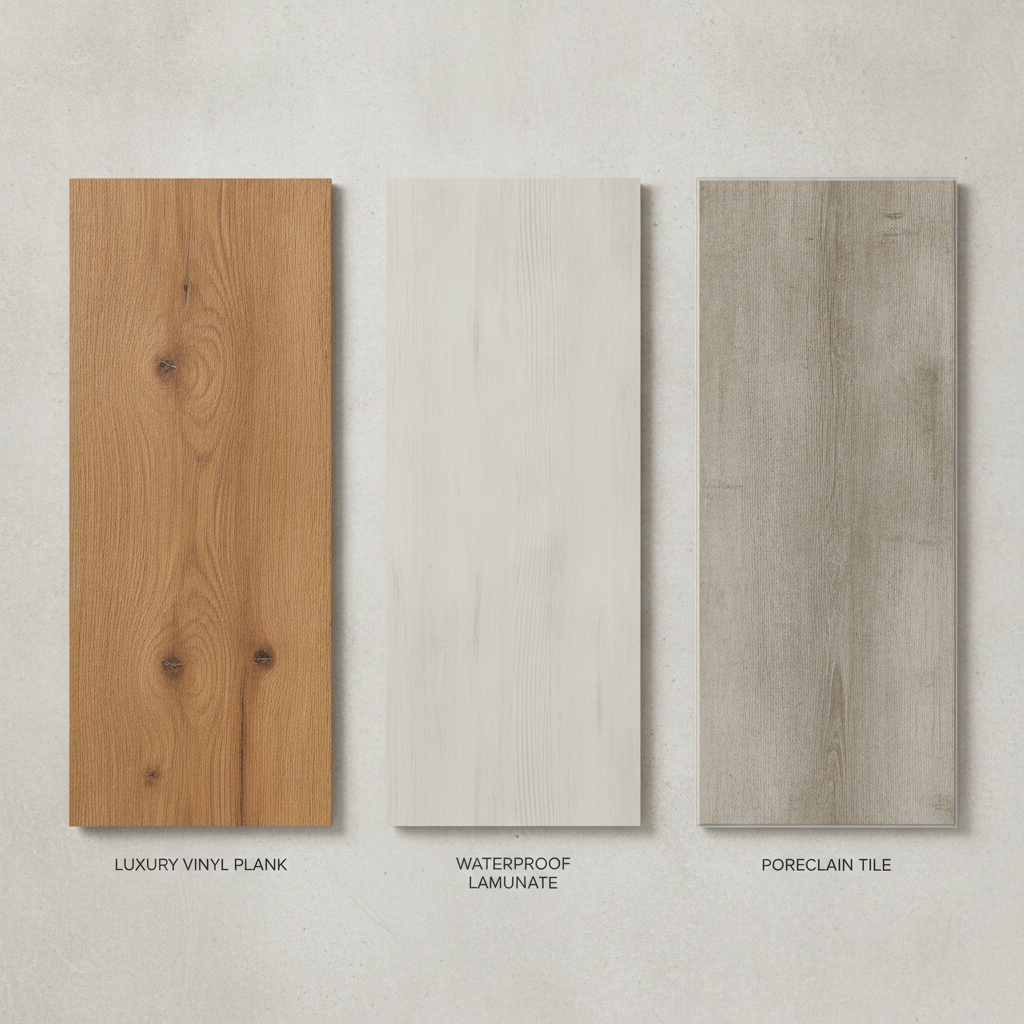
Master Comparison: Top Durable Kitchen Flooring Options
| Feature | Luxury Vinyl Tile (LVT) | Waterproof Laminate | Porcelain Tile | Hybrid Hardwood |
|---|---|---|---|---|
| Water Resistance | 5/5 (100% Waterproof) | 4/5 (Top-down proof) | 5/5 (Waterproof) | 5/5 (Waterproof) |
| Stain Resistance | 5/5 | 4/5 | 5/5 | 4/5 |
| Scratch Resistance | 4/5 | 5/5 | 5/5 | 4/5 |
| Comfort Underfoot | 4/5 | 3/5 | 2/5 | 4/5 |
| Avg. Cost (DIY) | $2 – $5 / sq. ft. | $2 – $4 / sq. ft. | $3 – $7 / sq. ft. | $4 – $8 / sq. ft. |
Decoding Durability: What to Look For on the Spec Sheet
To move beyond marketing claims, you need to understand the language of durability. These three key specs will tell you how a floor will truly perform in a busy kitchen.
- PEI Rating (Porcelain/Ceramic Tile): The Porcelain Enamel Institute (PEI) provides a 1-to-5 scale rating the hardness and durability of a tile’s glaze [4]. For kitchen floor use, look for a PEI rating of Class 3 (Moderate Traffic) or higher. Class 4 (Moderate to Heavy Traffic) is ideal for busy family kitchens.
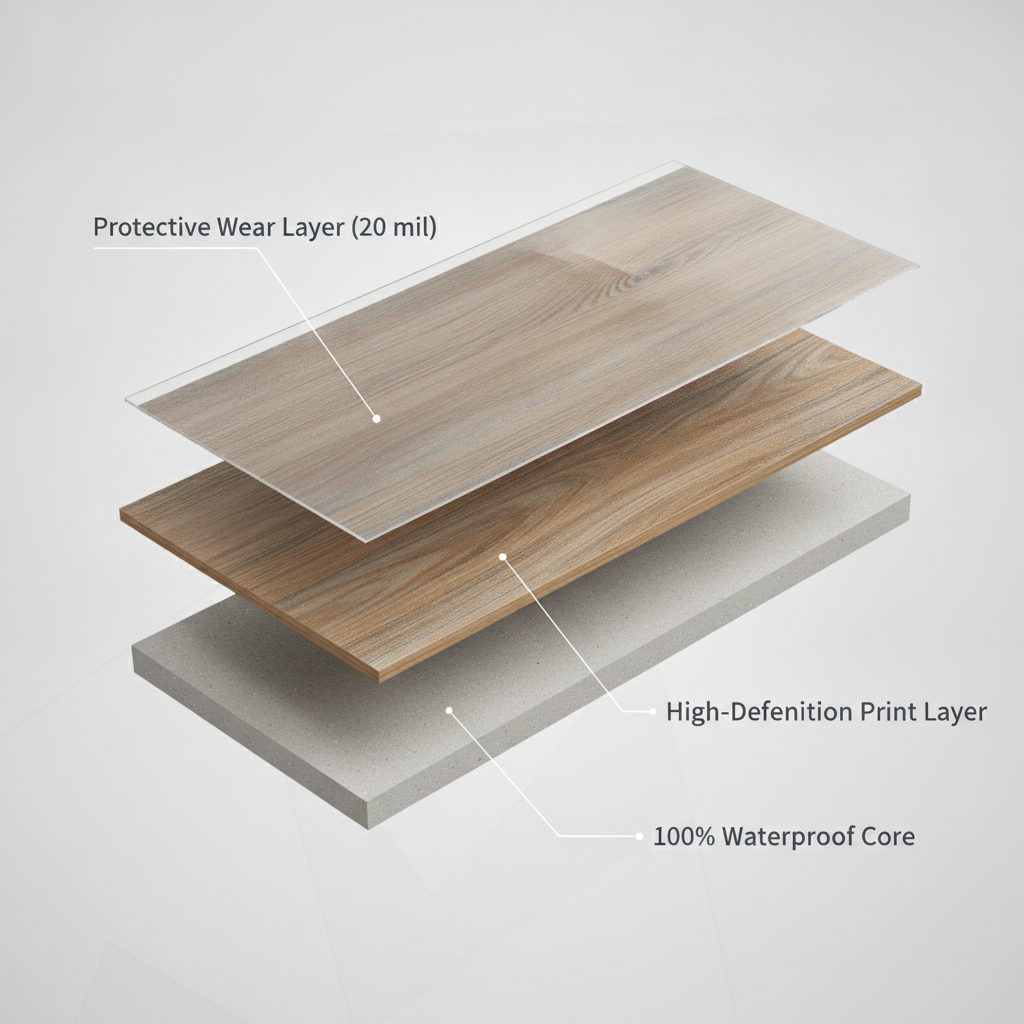
- Wear Layer (Luxury Vinyl Tile): This is the transparent top layer that protects the printed design from scratches, scuffs, and stains. It’s measured in mils (one-thousandth of an inch). Think of it like the screen protector on your phone. For a kitchen, a 12 mil wear layer is the minimum, but a 20 mil wear layer is highly recommended for homes with kids and pets. The Resilient Floor Covering Institute (RFCI) is an authoritative source for technical standards on these products [5].
- AC Rating (Laminate): The Abrasion Class (AC) rating measures a laminate floor’s resistance to abrasion, impact, stains, and burns. The scale runs from AC1 to AC5. For residential kitchens, an AC3 rating is good, while an AC4 rating is excellent and suitable for light commercial use, meaning it can easily handle the demands of a high-traffic home.
Comparing the Top Contenders for a Waterproof Kitchen
Let’s dive into the pros and cons of the most popular spill proof kitchen flooring materials.
Luxury Vinyl Tile (LVT/LVP): The All-Around Champion?
Modern luxury vinyl tile (LVT) or planks (LVP) is a game-changer. It combines a 100% waterproof core (typically made of stone-plastic composite or wood-plastic composite) with stunningly realistic high-definition visuals of wood and stone.
- Pros: Completely waterproof, highly durable, comfortable and quiet underfoot, easy to install, and relatively affordable.
- Cons: Can be dented by very heavy objects; quality can vary significantly between brands.
- Family Focus: For parents concerned about indoor air quality, look for products with FloorScore certification. This independent certification by SCS Global Services ensures that the flooring meets strict standards for low emissions of volatile organic compounds (VOCs), contributing to a healthier home environment [6]. You can learn more at the official FloorScore certification page.
Waterproof Laminate: The Scratch-Resistant Challenger
Laminate flooring has evolved significantly. While older versions were notoriously susceptible to water damage, modern waterproof laminate features water-repellent coatings and tight-locking joints that prevent spills from penetrating the surface.
- Pros: Extremely scratch-resistant (often more so than vinyl), highly realistic wood looks, and budget-friendly. Its AC rating is a reliable indicator of its toughness.
- Cons: While the surface is waterproof, the core is still wood-based. If water gets to the core through an unsealed perimeter or a deep gouge, it can still swell.
- Installation Note: To ensure true waterproof performance, it is critical that the perimeter of the room is sealed with 100% silicone caulk during installation, preventing water from getting underneath the planks.
Porcelain Tile: The Indestructible Classic
When it comes to sheer durability and water impermeability, nothing beats porcelain tile. Because it is fired at extremely high temperatures and has a water absorption rate of less than 0.5%, it is fundamentally waterproof.
- Pros: Virtually scratch-proof (check the PEI rating), completely waterproof, and available in endless styles, including convincing wood looks.
- Cons: Hard and cold underfoot, can be slippery when wet (look for textured options), and grout lines can be susceptible to staining if not sealed properly.
- Pro Tip: Minimize maintenance by using a high-performance epoxy or sealed grout. These modern grout options are highly resistant to stains and moisture, making cleanup a breeze.
Spotlight on Hybrid Hardwood: The Best of Both Worlds?
A newer category, hybrid hardwood, aims to deliver the authentic beauty of real wood with the worry-free performance of a waterproof core. Products like Bravewood are a prime example, featuring a top layer of genuine hardwood veneer bonded to a rigid, 100% waterproof composite core.
This construction answers the question, “Is Bravewood flooring truly waterproof?” Yes, the core is, which prevents the planks from warping or swelling like traditional hardwood when exposed to topical spills. This makes it a viable option for kitchens.
- Real-World Performance: Independent discussions on forums like Reddit’s r/flooring suggest that while the core is waterproof, the real wood veneer on top can still be susceptible to scratching and denting, similar to traditional engineered hardwood. Users praise its authentic look but caution that it’s not as indestructible as LVT or porcelain tile in terms of surface wear.
- Cost & Complaints: The average cost is higher than LVT or laminate. The most common complaints revolve around the durability of the thin wood veneer layer compared to the thicker wear layers of high-end LVT.
- The Verdict: Hybrid hardwood is an excellent choice for those who prioritize the authentic look and feel of real wood but need protection against everyday spills and moisture. It’s a compromise between the unmatched beauty of nature and the resilience of modern technology.
The Family-Friendliness Scorecard: Best Flooring for Kids & Pets
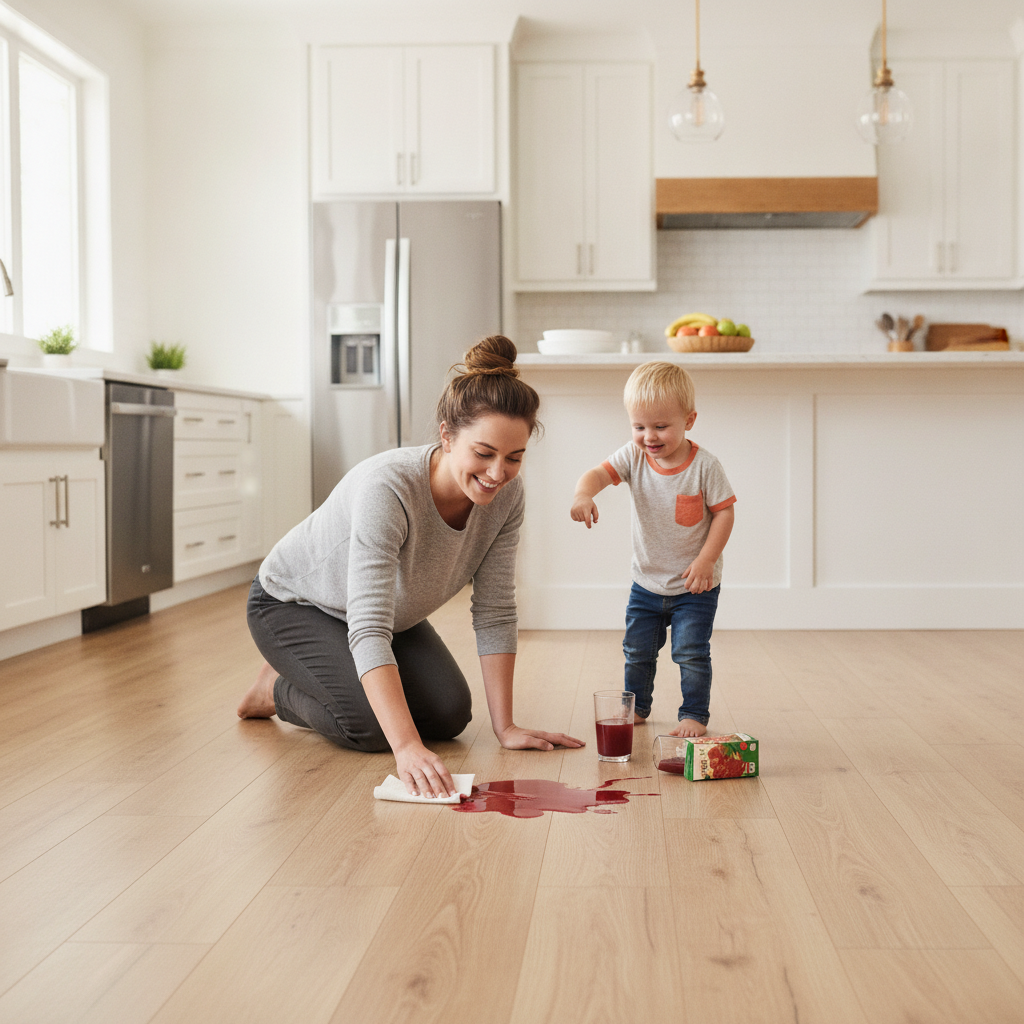
For households with children and pets, durability goes beyond water. Here’s how the top options stack up on the factors that matter most to families.
| Feature | Luxury Vinyl Tile (LVT) | Waterproof Laminate | Porcelain Tile |
|---|---|---|---|
| Scratch Resistance | ★★★★☆ (Good) | ★★★★★ (Excellent) | ★★★★★ (Excellent) |
| Stain Removal | ★★★★★ (Excellent) | ★★★★☆ (Good) | ★★★★★ (Excellent) |
| Non-Slip Texture | ★★★★☆ (Good) | ★★★☆☆ (Fair) | ★★★☆☆ (Fair)* |
| Indoor Air Quality | ★★★★★ (Excellent)** | ★★★★☆ (Good)** | ★★★★★ (Excellent) |
*Look for tiles with a high DCOF (Dynamic Coefficient of Friction) rating for better slip resistance.
**When FloorScore Certified.
For objective data on material safety, standards from organizations like ASTM International are used to test properties like slip resistance, ensuring products meet reliable safety benchmarks [7].
Achieving the Perfect Wood Look: A Realism Rating
You want waterproof wood look flooring, but you don’t want it to look fake. Realism comes down to visual detail and texture.
- Luxury Vinyl Plank (LVP): ★★★★☆
- Realism Factor: High-definition printing has become incredibly convincing. Look for products with low pattern repetition and wider planks for a more authentic look. The key technology to seek out is Embossed in Register (EIR) texture. This means the surface texture is perfectly aligned with the printed wood grain underneath, so you can feel the knots and graining you see.
- Waterproof Laminate: ★★★★☆
- Realism Factor: Laminate has long excelled at sharp, detailed visuals. Like LVP, the best products feature EIR texture and realistic beveling on the plank edges, mimicking the look of individual hardwood boards.
- Wood-Look Porcelain Tile: ★★★☆☆
- Realism Factor: From a distance, wood-look tile can be very convincing. Up close, however, the lack of realistic texture and the presence of grout lines can detract from the illusion. It excels in durability but is often the least realistic option in terms of feel.
Beyond the Floor: How to Make Your Entire Kitchen Spill-Proof
A truly spill-proof kitchen is a system. Your waterproof floor is the foundation, but protecting your cabinets, countertops, and grout lines creates a fortress against spills and stains. Best practices from the National Kitchen & Bath Association (NKBA) emphasize creating durable, easy-to-clean surfaces throughout the kitchen’s primary work zones [8]. For more consumer resources on kitchen planning, visit the NKBA website.
Your Proactive Maintenance Playbook: The Stain Removal Matrix
Even with the best flooring, spills happen. Knowing how to tackle common stains on kitchen floor quickly and safely is crucial.
WARNING: ALWAYS TEST ANY CLEANING SOLUTION IN AN INCONSPICUOUS AREA FIRST.
| Stain Type | Luxury Vinyl Tile (LVT) | Laminate | Porcelain Tile (Sealed Grout) |
|---|---|---|---|
| Grease/Oil | Mild dish soap and warm water. | A pH-neutral cleaner designed for laminate. | A degreasing cleaner or a paste of baking soda and water. |
| Red Wine/Juice | Wipe immediately. For dried stains, use a 50/50 mix of water and rubbing alcohol. | Wipe immediately. Use a damp cloth; avoid excessive water. | A mix of water and hydrogen peroxide on the grout. |
| Coffee/Tea | Mild dish soap and warm water. | A damp microfiber cloth. | A pH-neutral tile cleaner or baking soda paste on grout. |
| Scuffs/Marks | A tennis ball or a pencil eraser can often lift scuffs. | A small amount of acetone (nail polish remover) on a cloth. | A melamine foam eraser (like Mr. Clean Magic Eraser). |
For tough stains, always consult your flooring manufacturer’s care guide first. Trusted sources like the Good Housekeeping Institute also provide reliable cleaning advice for various household surfaces [9].
The Unsung Hero: Why Professional Installation Matters
You can choose the best waterproof material in the world, but a poor installation can render it useless. A certified flooring installer will tell you that the most common DIY mistakes are inadequate subfloor preparation and improper perimeter sealing.
A perfectly flat, clean, and dry subfloor is essential for a successful installation. Furthermore, professionals know how to leave the correct expansion gap around the room’s perimeter and seal it with flexible, waterproof silicone. This creates a “bathtub” effect, ensuring that even if a large amount of water spills, it stays on the surface of the floor and cannot seep underneath to the subfloor. A professional installation is an investment in the long-term performance of your floor and is often required to keep the manufacturer’s warranty valid.
Frequently Asked Questions (FAQ)
What is the absolute most durable waterproof flooring for a busy kitchen?
For pure, brute-force durability against scratches, heat, and water, porcelain tile with a PEI rating of 4 or 5 is the undisputed champion. However, for the best all-around combination of durability, comfort, safety, and ease of installation in a busy family home, a high-quality Luxury Vinyl Tile (LVT) with a 20 mil wear layer is often considered the best choice.
What’s the real difference between ‘waterproof’ and ‘water-resistant’?
This is a critical distinction. Think of it like a raincoat versus a light jacket.
- Waterproof: The material itself is impervious to water. It can be completely submerged without being damaged. LVT and porcelain tile are examples.
- Water-Resistant: The material can repel water for a limited amount of time. Spills need to be wiped up promptly to prevent moisture from seeping into the core and causing damage. Most waterproof laminates and some engineered hardwoods fall into this category.
Are there good non-toxic flooring options for a kitchen?
Absolutely. Health is a top priority, especially with children in the home. Look for flooring with low or zero Volatile Organic Compounds (VOCs).
- Porcelain tile is an excellent choice as it’s made from natural clay and fired at high temperatures, making it inert with zero VOCs.
- For vinyl and laminate, the key is to look for FloorScore certified products [6]. This certification guarantees that the flooring has been tested and meets strict indoor air quality standards, making it a safe choice for your family.
From Panic to Perfection: Your Worry-Free Kitchen Awaits
Whether you arrived here in the middle of a flooring crisis or at the start of an exciting renovation, you now have the knowledge to conquer any challenge. You can confidently diagnose and address water damage, and you’re equipped to select a new floor that is not just stunning but also engineered to withstand the rigors of daily life. By choosing the right materials and focusing on a complete spill-proof system, you can create a beautiful, durable kitchen that gives you peace of mind for years to come.
Ready to design your own stunning and spill-proof kitchen? Explore our gallery of waterproof flooring options or use our downloadable spill-proofing checklist to get started today.
This article provides general advice for educational purposes. For severe water damage, structural issues, or complex installations, always consult a certified and insured professional. Follow all manufacturer guidelines for products mentioned.
References & Authoritative Sources
- Institute of Inspection, Cleaning and Restoration Certification (IICRC). (n.d.). IICRC S500 Standard for Professional Water Damage Restoration. Retrieved from iicrc.org.
- National Wood Flooring Association (NWFA). (n.d.). Moisture and Wood. Retrieved from woodfloors.org.
- Federal Emergency Management Agency (FEMA). (n.d.). Dealing with Mold & Mildew in your Flood Damaged Home. Retrieved from https://www.fema.gov/fact-sheet/dealing-mold-after-disaster.
- Porcelain Enamel Institute (PEI). (n.d.). PEI Rating. The PEI rating system is a widely adopted industry standard for ceramic and porcelain tile.
- Resilient Floor Covering Institute (RFCI). (n.d.). Technical Information. Retrieved from rfci.com.
- SCS Global Services. (n.d.). FloorScore. Retrieved from https://www.scsglobalservices.com/services/floorscore.
- ASTM International. (n.d.). Standards and Publications. Retrieved from https://www.astm.org/.
- National Kitchen & Bath Association (NKBA). (n.d.). Kitchen & Bath Planning Guidelines. Retrieved from nkba.org.
- Good Housekeeping Institute. (n.d.). Cleaning Guides. The Good Housekeeping Institute is a recognized authority on home care and product testing.
