
Choosing a new floor for your home can feel overwhelming. You’re not just picking a color; you’re making a long-term investment that needs to be beautiful, stand up to the chaos of daily life, and feel modern for years to come. The fear is real: will this expensive new floor handle spills from the kids, scratches from the dog, and still look stylish in five years? You’re bombarded with confusing terms like SPC core, wear layer, and hybrid construction, leaving you wondering where to even begin.
This is your definitive, jargon-free guide to navigating the world of modern flooring. Our mission is to empower you with an expert-driven decision framework, moving you from hype to home with total confidence. We’ll deconstruct the latest flooring trends, introduce you to game-changing materials like waterproof hybrid hardwood, and provide unique “Performance Scorecards” to compare your options clearly and objectively. By the end of this guide, you won’t just know what’s popular—you’ll understand what’s perfect for your home, your family, and your lifestyle.
- Why Your Old Flooring Feels Outdated (And What to Do About It)
- 2024 Flooring Trends: The Convergence of Style, Sustainability, and Performance
- What is Waterproof Hybrid Hardwood? The ‘Best of Both Worlds’ Explained
- The Ultimate Durability Scorecard: Rating the Most Durable Wood-Look Floors
- The Pet Owner’s Playbook: Finding a Truly Pet-Friendly Wood Floor
- A Smart Buyer’s Guide: Cost, Installation, and Avoiding Costly Mistakes
- Frequently Asked Questions About Modern Flooring
- Conclusion
- References
Why Your Old Flooring Feels Outdated (And What to Do About It)
If you’re looking down and feeling that your floors are dragging your home’s style into the past, you’re not alone. What makes a floor look dated? It’s often a combination of factors: narrow plank widths (under 5 inches), orange or red-toned stains, or materials that show significant wear and tear. These elements can make a space feel smaller, darker, and less current.
Embarking on a home flooring upgrade is more than just a cosmetic fix; it’s one of the smartest financial decisions a homeowner can make. According to the National Association of Realtors’ 2022 Remodeling Impact Report, new wood flooring can recover over 118% of its cost at resale, making it an investment that literally pays for itself.[1] Real estate experts consistently note that homes with updated, high-quality flooring sell faster and for a higher price. As data from real estate platforms like Zillow suggests, modern, durable floors are a top feature that buyers actively seek out, signaling a well-maintained and valuable property.
2024 Flooring Trends: The Convergence of Style, Sustainability, and Performance
Today’s flooring trends are driven by a desire for spaces that are not only beautiful but also highly functional and consciously designed. We’re moving away from fleeting fads and toward timeless choices that blend natural aesthetics with cutting-edge performance. The “why” behind these trends is a collective shift towards creating serene, durable, and healthy home environments.
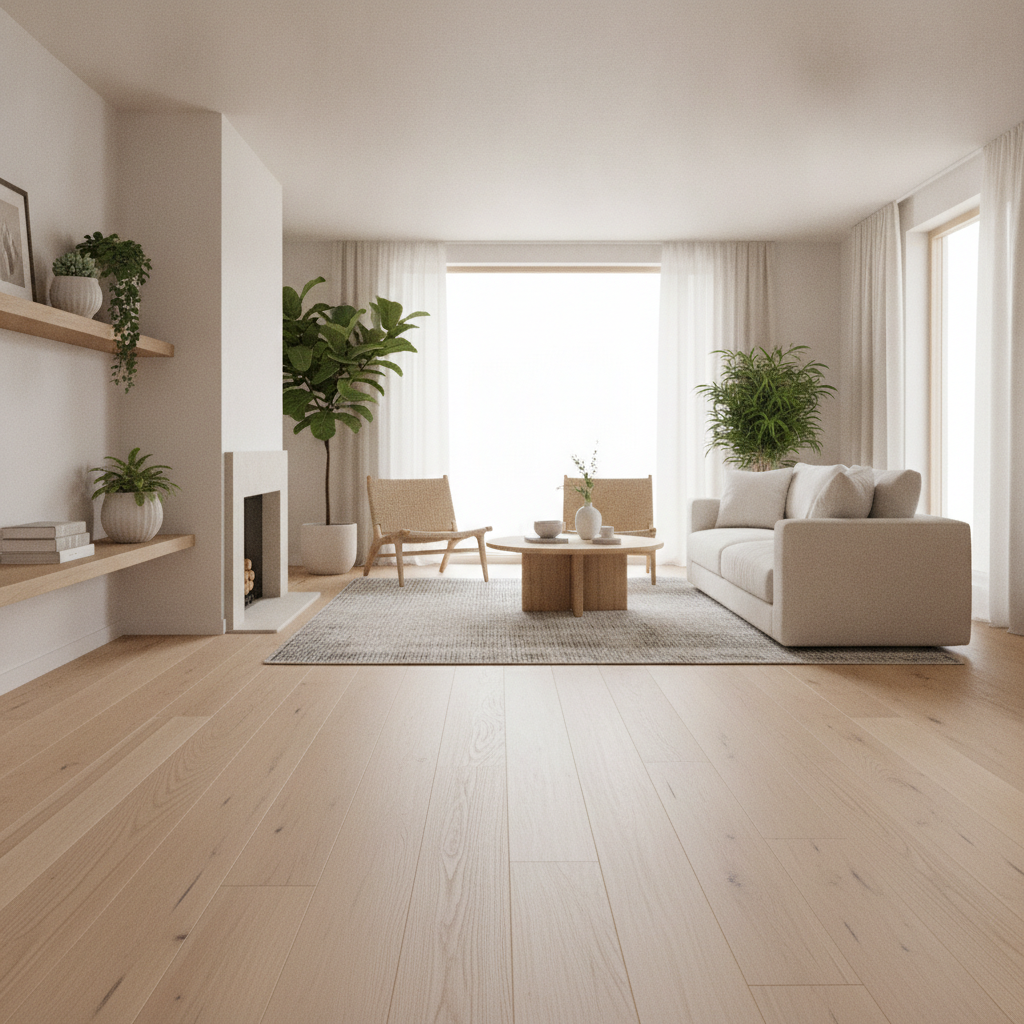
A major driver is the demand for wider and longer planks. Industry data shows that wide planks (7 inches or wider) now account for over 60% of new hardwood flooring sales.[2] This shift creates a more open, less busy look that enhances the sense of space. Simultaneously, homeowners are becoming more environmentally aware. Google Trends data reveals a 150% increase in searches for “sustainable flooring materials” over the past two years, pushing manufacturers to innovate with eco-friendly cores and finishes.[3]
A critical factor often overlooked when considering these trends is lighting. A light, matte-finish floor can make a room with limited natural light feel brighter and more airy. Conversely, the same floor in a sun-drenched room will look its best, revealing its natural character without overwhelming glare. Always view samples in your own home, at different times of day, to see how your lighting interacts with the color and finish.
Color Palettes: From Natural Blondes to Earthy Tones
The biggest story in flooring color is the move towards light, natural, and authentic wood tones. Think Scandinavian-inspired blondes, warm honeys, and soft, earthy browns. These colors create a bright, organic foundation that complements a wide range of decor styles, from modern farmhouse to minimalist Japandi.
So, are grey floors going out of style? While the market was saturated with cool, monochromatic grey for years, the trend is now shifting. Designers are favoring “greige”—a warmer, more versatile blend of grey and beige—and other nuanced tones that feel more connected to nature. As noted by experts who follow the lead of authorities like the Pantone Color Institute, home decor trends are embracing warmth and comfort, making ultra-cool greys feel less current.[4] The goal is a timeless, natural look, not a stark one.
Patterns & Planks: Wide, Long, and Full of Character
The “bigger is better” mantra certainly applies to modern plank flooring. As mentioned, wide planks create a luxurious and expansive feel. When paired with longer board lengths, they result in fewer seams, producing a clean, high-end aesthetic perfect for open-concept homes.
Beyond simple layouts, classic patterns are making a major comeback, reimagined in modern, durable materials.
- Herringbone: This classic V-shaped pattern adds a touch of European elegance and dynamic movement to a room.
- Chevron: Similar to herringbone but with planks cut at an angle for a clean, continuous “arrow” point, chevron offers a sophisticated and formal look.
An interior designer might advise that “using a pattern like herringbone in a narrow hallway can create a visual illusion of width, while a large-scale chevron can serve as a stunning focal point in a grand living area.” These patterns are no longer limited to traditional solid hardwood; they are now widely available in LVP and hybrid hardwood, offering timeless style with modern performance.
What is Waterproof Hybrid Hardwood? The ‘Best of Both Worlds’ Explained
One of the most exciting innovations in the flooring industry is waterproof hybrid hardwood. For years, homeowners faced a difficult choice: get the authentic beauty of real wood or the worry-free performance of a synthetic material. Hybrid hardwood eliminates that compromise.
At its core, hybrid hardwood is a multi-layered marvel of engineering. It combines a genuine slice of real hardwood on top with a high-tech, 100% waterproof composite core. This construction provides the unique grain, texture, and character of oak, hickory, or maple, but protects it from the water damage that would destroy a traditional wood floor.
Here is a breakdown of its typical layers, as you would see in a cross-section diagram:
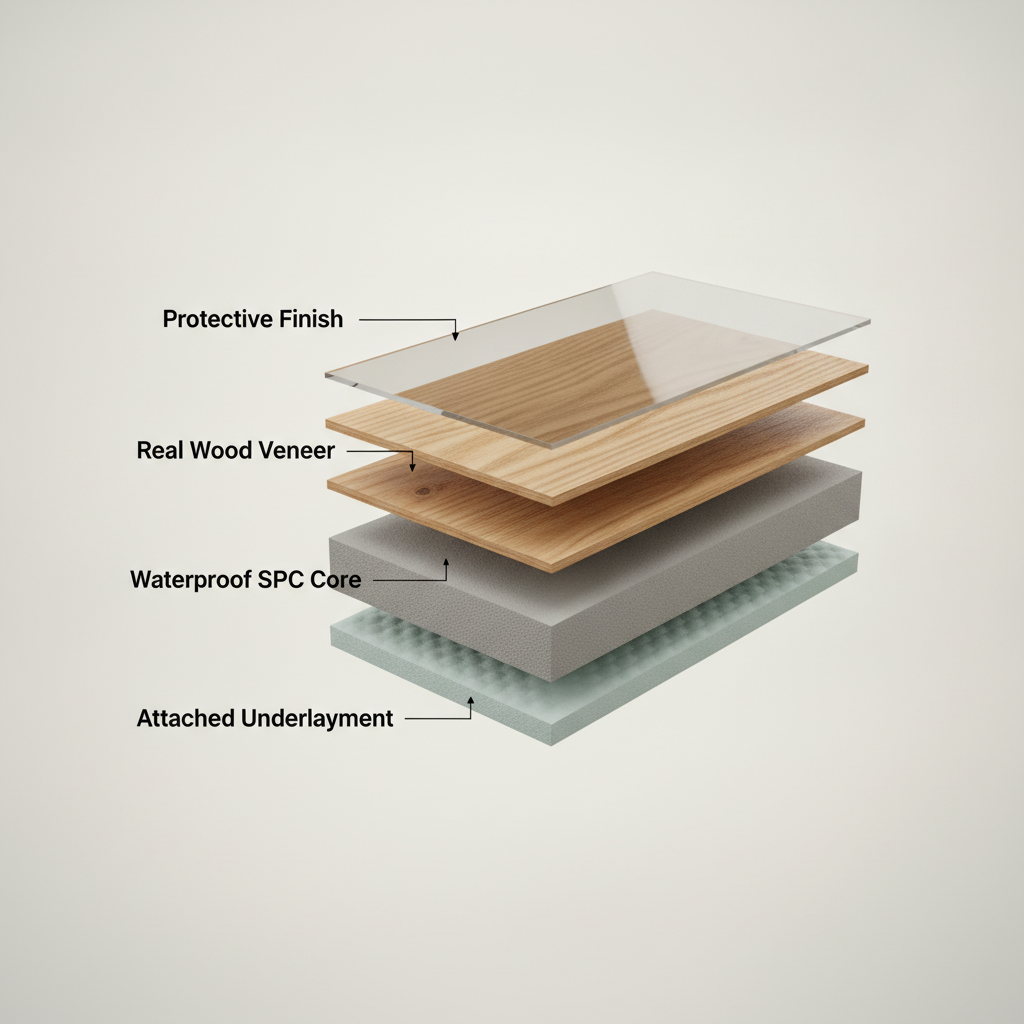
- Protective Finish: A top coat, often enhanced with aluminum oxide, that resists scratches and UV fading.
- Real Wood Veneer: A thin but authentic layer of hardwood (typically 1.2mm to 3mm thick). This is what you see and feel.
- Waterproof Core: The magic ingredient. This is usually a Stone Polymer Composite (SPC) or Wood Polymer Composite (WPC) core. SPC, for instance, is composed of around 60% calcium carbonate (limestone), PVC, and plasticizers, making it incredibly dense, stable, and completely impervious to water.[5]
- Attached Underlayment: Most hybrid planks come with a pre-attached pad made of cork or foam, which provides sound insulation, cushioning underfoot, and a simpler installation process.
The primary trade-off for this waterproof innovation is refinishing potential. Because the real wood veneer is thin (e.g., 1.2mm), it cannot be sanded down and refinished like a solid 3/4-inch hardwood plank. However, its highly durable topcoat is designed to last for decades with proper care, making refinishing a non-issue for most homeowners. When choosing a product, look for a FloorScore® certification, which ensures the materials have been tested for low volatile organic compound (VOC) emissions, contributing to healthier indoor air quality.[6]
Hybrid Hardwood vs. Engineered Hardwood vs. LVP: A Clear Comparison
It’s easy to get confused by the terminology. Here’s a clear breakdown of how hybrid hardwood stacks up against its closest relatives, based on insights from industry bodies like the Floor Covering Institute.[7]
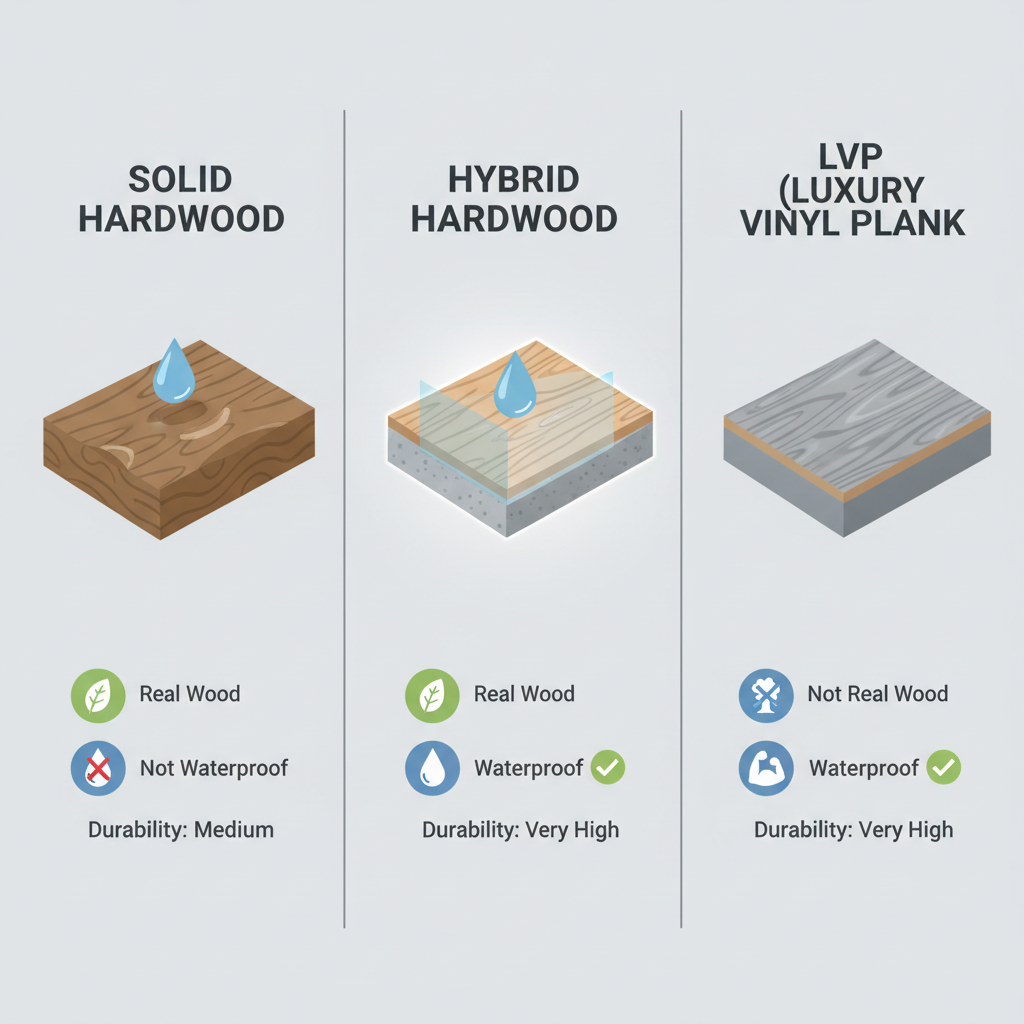
| Feature | Waterproof Hybrid Hardwood | Traditional Engineered Hardwood | Luxury Vinyl Plank (LVP) |
|---|---|---|---|
| Core Material | 100% Waterproof SPC or WPC (Stone/Wood Polymer Composite) | Plywood or HDF (High-Density Fiberboard) – Water-resistant at best | 100% Waterproof PVC (Polyvinyl Chloride) |
| Surface Layer | Real Wood Veneer | Real Wood Veneer | Printed Image Layer with a Protective Wear Layer |
| Waterproof? | Yes, fully waterproof. Can be installed in kitchens, bathrooms, and basements. | No. Vulnerable to swelling and delamination from moisture. | Yes, fully waterproof. The ultimate choice for wet areas. |
| Refinishing | Generally No | Yes, 1-3 times depending on veneer thickness. | No |
| Best Use Case | Living areas, kitchens, and basements where you want authentic wood without water worries. | Living areas, bedrooms, and spaces where moisture is not a concern. | Any room in the house, especially high-moisture areas like bathrooms and laundry rooms. |
The Ultimate Durability Scorecard: Rating the Most Durable Wood-Look Floors
“Durability” isn’t just one thing; it’s a combination of factors. To help you choose the toughest floor for your needs, we’ve created a Durability Scorecard. We rate the top wood-look contenders on a scale of 1-10 (10 being the most durable) across four key metrics, referencing industry standards like the Janka Hardness Scale for wood[8] and guidelines from the Resilient Floor Covering Institute (RFCI) for vinyl.[9]
Durability Scorecard
| Flooring Type | Scratch Resistance | Dent Resistance | Water Resistance |
|---|---|---|---|
| Luxury Vinyl Plank (LVP) | 9/10 (with 20+ mil wear layer) | 8/10 (dense core resists dents well) | 10/10 (fully synthetic) |
| Waterproof Laminate | 10/10 (AC4+ rating is extremely tough) | 7/10 (can chip on heavy impact) | 9/10 (waterproof surface/core, seams are key) |
| Hybrid Hardwood | 7/10 (depends on wood species & finish) | 8/10 (SPC core is very dent-resistant) | 10/10 (waterproof core) |
| Strand-Woven Bamboo | 9/10 (extremely hard surface) | 9/10 (Janka rating >4000) | 4/10 (vulnerable to moisture) |
| Solid Hardwood (Oak) | 6/10 (can scratch, but can be refinished) | 6/10 (Janka rating ~1300) | 2/10 (highly susceptible to water damage) |
The Contenders: LVP, Laminate, and Beyond
- Luxury Vinyl Plank (LVP): The champion of waterproofing and a top contender for overall durability. Its resilience comes from a thick protective wear layer. For residential use, look for a wear layer of at least 12 mil, but for high-traffic areas or homes with pets, high-quality LVP with a 20 mil (0.5mm) or more is the gold standard.
- Waterproof Laminate: Modern laminate is a far cry from the products of the past. Its durability against scratches is measured by an Abrasion Class (AC) rating. For most homes, a laminate with an AC rating of AC3 or higher provides excellent resistance to wear, making it one of the most scratch-proof options on the market.
- Hybrid Hardwood: Its durability is a unique blend. The SPC core provides exceptional dent resistance, often better than solid wood. Scratch resistance depends on the hardness of the wood veneer (e.g., hickory is harder than oak) and the quality of the factory finish.
- Strand-Woven Bamboo & Solid Hardwood: These offer natural beauty but come with trade-offs. While extremely hard options like strand-woven bamboo are very scratch-resistant, both are highly vulnerable to water damage, making them unsuitable for kitchens, bathrooms, or basements.
The Pet Owner’s Playbook: Finding a Truly Pet-Friendly Wood Floor
Pets are family, but they can be tough on floors. The ideal pet-friendly floor must excel in three areas: resisting scratches from claws, handling inevitable accidents without staining or damage, and providing good traction for your pet’s safety and comfort.
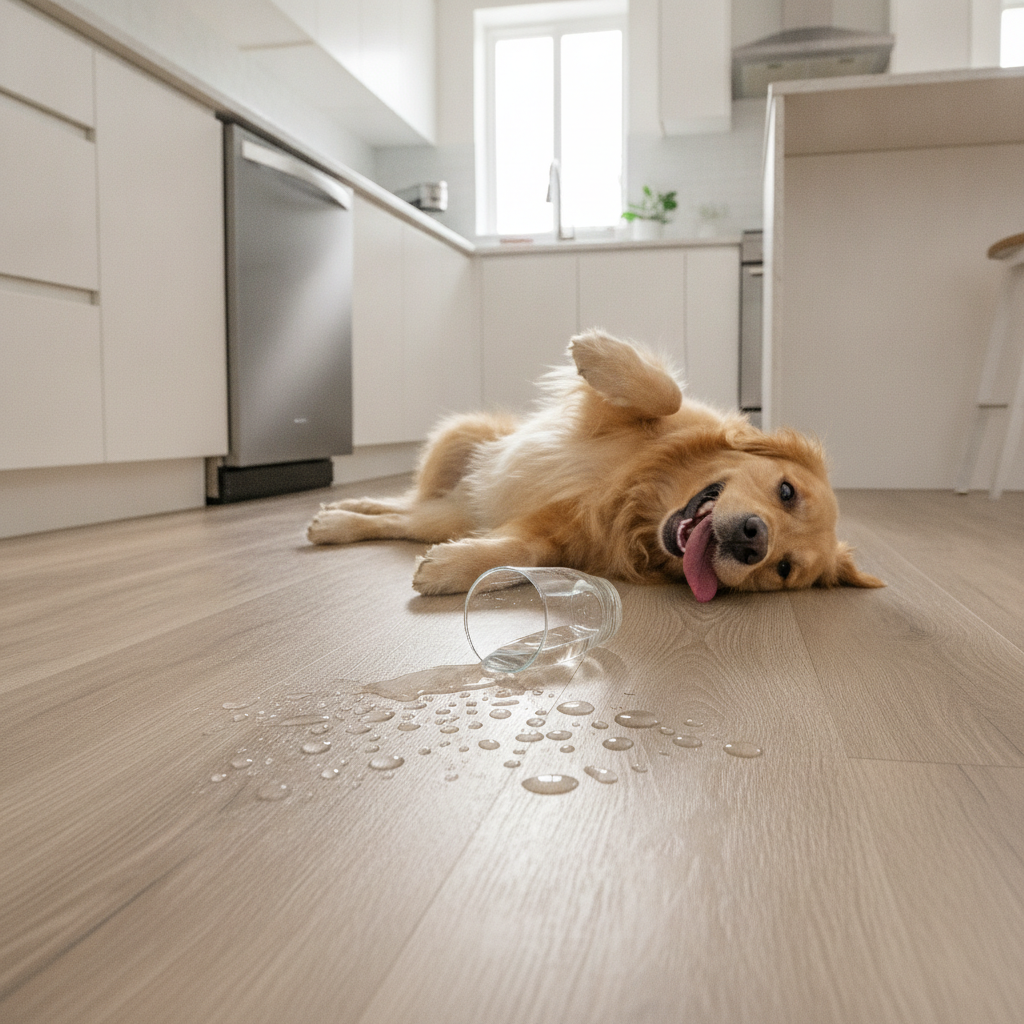
Based on recommendations from experts like the American Kennel Club (AKC), which emphasizes safe home environments for pets, here’s what to look for:[10]
- Scratch Resistance: This is paramount. Look for floors with the highest scratch resistance scores, like waterproof laminate (AC4+) or LVP with a 20+ mil wear layer and a factory finish containing aluminum oxide.
- Waterproof & Stain-Proof: Accidents happen. A 100% waterproof floor like LVP or hybrid hardwood is non-negotiable. Urine won’t seep into the core, and it can be cleaned up easily without causing long-term damage or odors.
- Traction & Comfort: Highly glossy, slick surfaces can be dangerous for pets, especially older dogs or those with joint issues. A veterinarian might advise that “a floor with a subtle texture or an embossed-in-register finish (where the texture matches the visual grain) provides better grip, reducing the risk of slips and hip problems.” LVP and hybrid hardwood often offer these textured finishes.
A frequently overlooked aspect is acoustics. Hard surfaces can amplify the click-clack of pet nails. LVP and hybrid hardwood with an attached cork or foam underlayment do a much better job of dampening this sound compared to laminate or tile. And while dogs are often the focus, cat owners should prioritize scratch resistance, as their claws can inflict finer, more numerous scratches.
A Smart Buyer’s Guide: Cost, Installation, and Avoiding Costly Mistakes
Choosing the right material is only half the battle. A successful flooring upgrade depends on a smart purchasing strategy and, most importantly, a flawless installation.
Here’s a general cost comparison to help you budget:
| Flooring Type | Material Cost (per sq. ft.) | Installation Cost (per sq. ft.) |
|---|---|---|
| Waterproof Laminate | $$ | $$ |
| Luxury Vinyl Plank (LVP) | $$-$$$ | $$ |
| Hybrid Hardwood | $$$ – $$$$ | $$-$$$ |
| Solid Hardwood | $$$ – $$$$ | $$$ |
The Golden Rule of Waterproofing: Your waterproof floor is only as good as its installation. A certified flooring inspector will tell you that the most common reason for a “waterproof” floor failing is improper installation that voids the manufacturer’s warranty. Reputable manufacturers like Shaw and Mohawk provide detailed installation guides that must be followed to the letter.[12] This includes ensuring proper expansion gaps and using specified sealants.
The Unseen Hero: Why Subfloor Prep is Critical
The most critical and often-skipped step is subfloor preparation. According to the National Wood Flooring Association (NWFA) installation guidelines, the subfloor must be clean, flat, and dry before any flooring is laid.[11]
For basements or concrete slabs, moisture is the enemy. Concrete is porous and can wick moisture from the ground. This creates hydrostatic pressure, which can exceed 3 lbs per 1,000 sq ft—enough to compromise adhesives and cause floor failure. To combat this, a vapor barrier is essential. This is a layer of plastic sheeting laid over the subfloor that blocks moisture from reaching your new floor. Failing to properly prepare the subfloor and mitigate moisture is the #1 costly mistake homeowners make. For severe moisture issues, it’s crucial to follow standards from organizations like the Institute of Inspection, Cleaning and Restoration Certification (IICRC) for professional moisture mitigation.[13]
Frequently Asked Questions About Modern Flooring
Can you refinish waterproof hybrid hardwood?
Generally, no. Traditional refinishing involves sanding off the top layer of wood and applying a new stain and finish. The real wood veneer on hybrid hardwood is typically too thin (around 1.2mm) to withstand this aggressive process. The trade-off for a waterproof core is the loss of refinishing capability. However, its factory finish is extremely durable and designed to last for many years.
What is the best waterproof wood flooring for basements?
The best options for basements are Luxury Vinyl Plank (LVP) or Waterproof Hybrid Hardwood. Both feature 100% waterproof inorganic cores (PVC or SPC) that will not swell, warp, or grow mold when exposed to the moisture common in below-grade spaces. This aligns with guidelines from authorities like FEMA, which recommend using flood-damage-resistant materials in areas prone to water issues.[14]
How do you fix scratches on these new types of floors?
Unlike solid wood, you cannot sand out a deep scratch on LVP, laminate, or hybrid hardwood. For minor surface scuffs, a simple cleaning may suffice. For more noticeable scratches, manufacturers offer brand-specific touch-up and repair kits. These kits, similar to those offered by floor care leaders like Bona or Minwax, contain color-matched fillers and markers to conceal the damage effectively.[15] Always test a repair kit in an inconspicuous area first.
Conclusion
The world of flooring has been revolutionized. You no longer have to choose between the timeless beauty of wood and the practical demands of a busy, modern household. The latest flooring trends are defined by this powerful combination of style and performance, led by innovations like waterproof hybrid hardwood.
By understanding the technology—from waterproof SPC cores to durable AC ratings and protective wear layers—you can move beyond the marketing hype. By focusing on timeless trends like wide planks and natural color palettes, you can ensure your investment enhances your home for years to come. This guide has provided you with the decision-making frameworks, from the Durability Scorecard to the Pet Owner’s Playbook, to select a floor with absolute confidence. You are now equipped to choose a floor that is not only beautiful but also perfectly suited to withstand the rigors of your real life.
Feeling confident to start your flooring journey? Browse our collection of waterproof hybrid hardwood floors or contact our design experts for a free consultation.
This article may contain affiliate links. All flooring decisions should be finalized by consulting with a professional installer to assess your specific subfloor and home conditions.
References
- National Association of Realtors. (2022). Remodeling Impact Report. Retrieved from NAR website.
- Houzz. (N.D.). Houzz & Home Study. Data on homeowner renovation trends, including flooring preferences. Retrieved from Houzz website.
- Google Trends. (N.D.). Search trend data for “sustainable flooring materials”. Retrieved from trends.google.com.
- Pantone Color Institute. (N.D.). Official publications on color trends influencing interior design. Retrieved from Pantone website.
- Manufacturer Technical Data Sheets (e.g., Shaw Floors, Mohawk Flooring). (N.D.). Product specifications detailing material composition, such as SPC core contents.
- UL Solutions. (N.D.). FloorScore® Certification. Information on indoor air quality standards for flooring. Retrieved from UL’s Spot database.
- Floor Covering Institute. (N.D.). Technical resources and explanations of flooring materials and construction.
- United States Department of Agriculture, Forest Products Laboratory. (N.D.). Janka Hardness Scale for Wood.
- Resilient Floor Covering Institute (RFCI). (N.D.). Standards and information regarding luxury vinyl flooring durability and performance.
- American Kennel Club (AKC). (N.D.). Articles and recommendations on creating pet-safe home environments. Retrieved from AKC website.
- National Wood Flooring Association (NWFA). (N.D.). Installation Guidelines. Official industry standards for wood flooring installation and subfloor preparation.
- Shaw Floors, Mohawk Flooring, et al. (N.D.). Official Installation Guides. Retrieved from respective manufacturer websites.
- Institute of Inspection, Cleaning and Restoration Certification (IICRC). (N.D.). IICRC S500 Standard for Professional Water Damage Restoration.
- Federal Emergency Management Agency (FEMA). (N.D.). Guidelines on flood-resistant materials and post-flood rebuilding. Retrieved from FEMA website.
- Bona US, Minwax. (N.D.). Product information for floor care and repair kits. Retrieved from respective brand websites.
