
As a pet owner, you know the unparalleled joy a furry companion brings to your home. You also know the unique set of challenges they present, especially to your floors. The constant worry over clicking claws, muddy paws, inevitable accidents, and water bowl splashes can turn the dream of beautiful new flooring into a source of anxiety. You find yourself asking, “Can I have a stunning home and a happy pet without one destroying the other?”
The answer is a resounding yes. But it requires moving beyond marketing fluff and understanding what truly makes a floor “pet-proof.” This is your evidence-based guide—a pet owner’s flooring bible. We will decode the complex technical jargon, compare the top contenders based on real-world pet challenges, and explore why a new category of flooring, waterproof hybrid hardwood, might just be the perfect solution you’ve been searching for. We’ll look at every option not just through the lens of protecting your financial investment, but also through the equally important lens of protecting your pet’s health and comfort.
Get ready to leave the decision paralysis behind and make a confident choice for a beautiful, durable, and truly pet-friendly floor.
- Why Your Pet is Your Floor’s Biggest Challenge
- The Pet-Friendly Flooring Showdown: A Quick Comparison
- Deep Dive: Is Waterproof Hybrid Hardwood the Perfect Pet Solution?
- The Other Champions: Top Alternatives for Pet-Proofing Your Home
- Decoding Durability: What ‘Pet-Proof’ Really Means
- Beyond Durability: A Vet’s Perspective on Pet Health & Comfort
- Flooring to Avoid: A Pet Owner’s ‘Buyer Beware’ Guide
- Protecting Your Investment: Cleaning, Maintenance, and Repair
- Your Pet-Proof Floor Awaits
- References
Why Your Pet is Your Floor’s Biggest Challenge
Before finding the solution, it’s crucial to understand the problem. The daily life of a pet involves a unique combination of forces that can wreak havoc on unsuitable flooring. From the frantic zoomies of a puppy to the occasional accident from a senior dog, your floors are on the front lines.
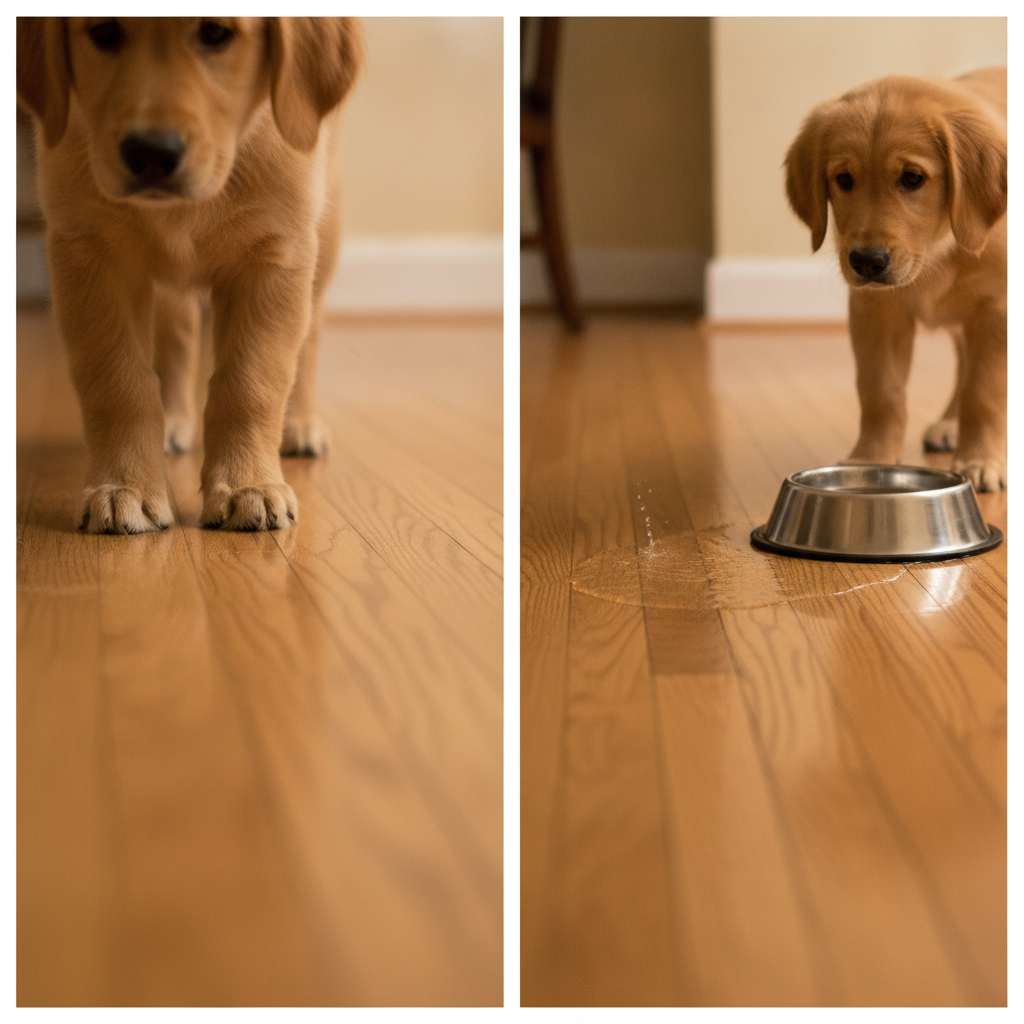
The two primary culprits of pet-related floor damage are scratches and moisture.
Claw Marks and Scratches: Dog and cat claws, even when trimmed, act like tiny, persistent sanders on your floor’s surface. Energetic play, jumping on and off furniture, and even just walking can create a network of scratches that dull the finish and damage the material itself. This is the most visible sign of wear and a constant source of frustration for homeowners with traditional hardwood or soft laminate.
Moisture and Urine Damage: This is the silent destroyer. From spilled water bowls to house-training accidents, moisture can be catastrophic for many flooring types. Pet urine is particularly destructive. It contains uric acid, which doesn’t dissolve in water and can leave behind crystals that create a lingering, stubborn odor.[1] If not cleaned immediately and properly, this acid can etch the finish of stone, permanently stain wood, and cause materials like traditional hardwood or MDF-core laminate to swell, warp, and delaminate.
The Pet-Friendly Flooring Showdown: A Quick Comparison
Navigating the world of flooring is overwhelming. To simplify your decision, we’ve created a quick comparison matrix that rates the top contenders on the five most critical factors for pet owners.
Pet-Friendly Flooring Decision Matrix
| Flooring Type | Scratch Resistance | Waterproofing | Pet Comfort & Traction | Ease of Cleaning | Average Cost ($/sq. ft. installed) |
|---|---|---|---|---|---|
| Waterproof Hybrid Hardwood | 🐾🐾🐾🐾 | 🐾🐾🐾🐾🐾 | 🐾🐾🐾🐾 | 🐾🐾🐾🐾🐾 | $$$$ |
| Luxury Vinyl Plank (LVP) | 🐾🐾🐾🐾🐾 | 🐾🐾🐾🐾🐾 | 🐾🐾🐾🐾 | 🐾🐾🐾🐾🐾 | $$-$$$ |
| High-Performance Laminate | 🐾🐾🐾🐾🐾 | 🐾🐾🐾🐾 | 🐾🐾🐾 | 🐾🐾🐾🐾🐾 | $$ |
| Porcelain Tile | 🐾🐾🐾🐾🐾 | 🐾🐾🐾🐾🐾 | 🐾🐾 | 🐾🐾🐾🐾 | $$-$$$$ |
Deep Dive: Is Waterproof Hybrid Hardwood the Perfect Pet Solution?
For years, pet owners faced a difficult choice: get the timeless beauty of real hardwood and live with the constant fear of damage, or opt for a more durable but synthetic-looking alternative. Waterproof hybrid hardwood shatters this compromise. It’s an innovative flooring category designed to deliver the best of both worlds: authentic wood beauty combined with a virtually indestructible, 100% waterproof core.
This flooring represents a new frontier for pet owners who refuse to sacrifice style for durability. Its multi-layer construction is an engineering marvel, specifically designed to combat the daily challenges of life with pets. A typical plank consists of a high-density, waterproof core, a real hardwood veneer for authentic looks, and a commercial-grade protective wear layer to fend off scratches and stains.
What is Hybrid Hardwood Made Of?
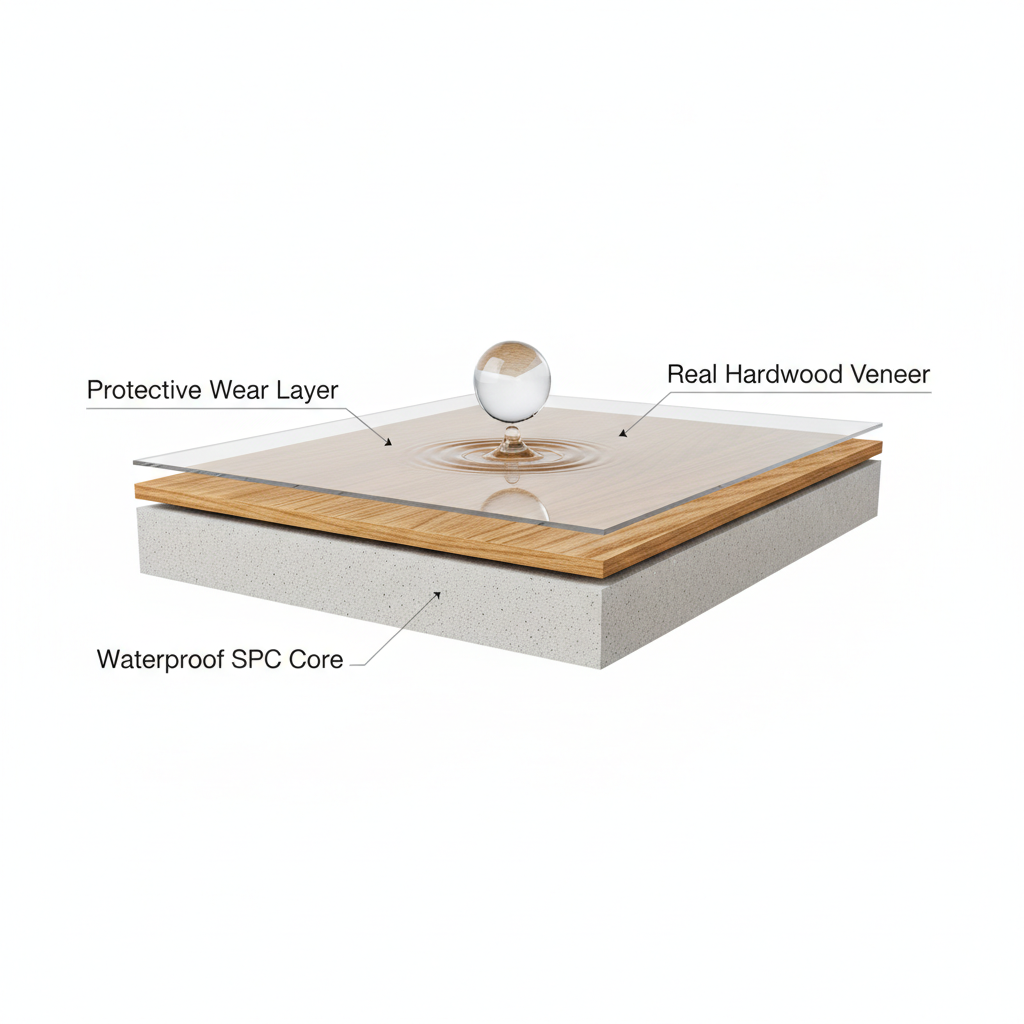
The magic of waterproof hybrid hardwood lies in its construction. Unlike solid hardwood, which is a single piece of wood, or engineered hardwood, which typically has a plywood core, this hybrid product is built on a foundation of a Stone Plastic Composite (SPC) core.
This SPC core is a super-dense and dimensionally stable material made from a mixture of natural limestone powder, polyvinyl chloride, and stabilizers. This core is the source of its superpowers: it is 100% waterproof and will not swell, warp, or buckle when exposed to water, pet urine, or humidity. This level of performance is consistent with standards for resilient flooring, such as those outlined by ASTM International.[2] On top of this rigid core sits a thin, real hardwood veneer, which is then protected by multiple layers of a tough, transparent finish—often infused with aluminum oxide for maximum scratch resistance.
Pros and Cons for Homes with Pets
No floor is perfect for every situation. Based on real-world feedback from flooring communities and professional installers, here’s a balanced look at how waterproof hybrid hardwood stacks up for pet owners.
Pros:
- 100% Waterproof Core: This is the game-changer. Spills, drool, and accidents are no longer a catastrophe. You have peace of mind that moisture won’t damage the core of your floor.
- Authentic Hardwood Beauty: Because it uses a real wood veneer, it offers the natural grain patterns, knots, and unique character that vinyl and laminate can only imitate.
- Superior Dent Resistance: The dense SPC core makes it far more resistant to dents from dropped toys or heavy furniture than traditional solid or engineered hardwood.
- Easy to Clean: The smooth, non-porous surface makes cleaning up pet hair, dirt, and accidents simple and effective.
Cons:
- Cannot Be Refinished: This is the most significant trade-off. Unlike solid hardwood that can be sanded and refinished multiple times, a deep scratch that penetrates the wear layer and damages the thin wood veneer cannot be sanded out. The plank would need to be replaced.
- Veneer Can Still Scratch: While the protective topcoat is extremely tough, it’s not invincible. A large, heavy dog with untrimmed nails could potentially scratch the surface finish or even the wood veneer itself. It is highly scratch-resistant, not scratch-proof.
- Higher Cost: As a premium product, it generally comes with a higher price tag than LVT or laminate.
Pet Owner’s Verdict: Waterproof Hybrid Hardwood is the ideal choice for pet owners who desperately want the authentic look of real wood without the constant worry of water damage. It’s perfect for kitchens, living areas, and entryways. While you must accept that it cannot be refinished, its day-to-day resilience against spills and dents makes it a top-tier contender for a beautiful, long-lasting, pet-friendly home.
The Other Champions: Top Alternatives for Pet-Proofing Your Home
While hybrid hardwood is an incredible innovation, it’s not the only excellent choice. The market is filled with durable, waterproof, and stylish options that can stand up to your furry family members.
Luxury Vinyl Tile/Plank (LVT/LVP): The All-Around Winner
For many, LVT is the undisputed champion of pet-friendly flooring. It’s a synthetic material that masterfully mimics the look of wood, stone, or ceramic tile, but its true beauty lies in its performance. LVT is typically 100% waterproof, comfortable underfoot, and exceptionally durable.
The key to its durability against pet claws is the wear layer—a clear top coating that protects the printed design. For homes with pets, a wear layer of 20 mil (0.5mm) or higher is ideal for maximum scratch protection.[3] LVT comes with two main core types: SPC (Stone Plastic Composite), which is more rigid and dent-resistant, and WPC (Wood Plastic Composite), which is slightly softer and quieter. According to the Resilient Floor Covering Institute (RFCI), both offer excellent performance, but the rigidity of SPC often gives it an edge in high-traffic, pet-heavy homes.[3]
High-Performance Laminate: Not Your Parents’ Laminate
Modern laminate flooring has evolved dramatically. Once susceptible to water damage and chipping, today’s high-performance laminate is a powerhouse of durability. Its strength comes from a multi-layer construction with a tough, clear top layer that is one of the most scratch-resistant surfaces on the market.
To gauge its durability, look for the AC (Abrasion Class) Rating. This system, standardized by the North American Laminate Flooring Association (NALFA), rates a product’s resistance to abrasion, impact, stains, and burns.[4] For a busy home with pets, an AC4 or AC5 rating is highly recommended. Furthermore, many leading brands now offer water-resistant or fully waterproof laminate with special core materials and edge sealants, providing protection from spills for up to 72 hours.
Porcelain Tile: The Indestructible Option
When it comes to pure, unadulterated scratch resistance, nothing beats porcelain tile. Made from fine clay fired at extremely high temperatures, porcelain is incredibly dense and hard. On the Mohs scale of mineral hardness, it often scores a 7-9, making it harder than granite and virtually impossible for pet nails to scratch.
The durability of tile for flooring use is measured by the PEI (Porcelain Enamel Institute) Rating, which indicates its resistance to wear. A PEI rating of 4 or 5 is suitable for any residential application, including homes with the most active pets.[5] The main considerations for pet owners are that tile can be hard, cold, and slippery. More importantly, the grout lines are porous and can absorb stains and odors from pet urine. Using a high-performance epoxy grout or diligently sealing traditional grout is essential to prevent this.
Decoding Durability: What ‘Pet-Proof’ Really Means
Shopping for flooring can feel like you need an engineering degree. Manufacturers use a host of technical terms to describe their products’ durability. Understanding these key metrics will empower you to see past the marketing and choose a floor that will truly perform.
Glossary of Durability
- Janka Hardness Rating: Used for solid and engineered hardwood. It measures the force required to embed a steel ball into the wood. A higher number means the wood is harder and more resistant to denting.
- AC Rating (Abrasion Class): Used for laminate flooring. It’s a 1-5 scale (AC1-AC5) that rates resistance to abrasion, impact, and stains. AC4 and AC5 are commercial-grade and ideal for pets.
- PEI Rating: Used for ceramic and porcelain tile. It’s a 0-5 scale that measures the wear resistance of the glaze. PEI 4 and 5 are recommended for heavy residential traffic.
- Wear Layer: The top protective coating on LVT and hybrid hardwood, measured in mils (1/1000th of an inch). A 20 mil wear layer is the gold standard for homes with pets.
- SPC Core (Stone Plastic Composite): A rigid, high-density core used in LVT and hybrid floors. It is 100% waterproof and highly resistant to dents and impacts.
The Science of Scratch Resistance: Janka, AC Ratings, and Wear Layers Explained
These three metrics are your best friends when evaluating a floor’s ability to withstand pet claws.
- For wood, the Janka scale is key. Softer woods like Pine (Janka rating ~600-900) will be easily damaged, while extremely hard woods like Brazilian Walnut (Janka ~3680) or strand-woven bamboo (Janka ~4000+) offer incredible resistance.
- For laminate, the AC Rating is non-negotiable. An AC4-rated floor is designed for light commercial use (like a small office), which means it can easily handle the traffic of even the most energetic pets.[4]
- For LVT and hybrid floors, the wear layer thickness is paramount. A thin 6 or 12 mil layer may suffice for a low-traffic home, but for pets, a robust 20 mil or thicker wear layer provides the necessary protection to keep the floor looking new.[3]
Waterproof vs. Water-Resistant: A Critical Distinction for Pet Owners
These terms are often used interchangeably, but for a pet owner, the difference is massive.
- Water-Resistant means the surface of the floor can repel water for a limited time. If a spill is wiped up quickly, it will likely be fine. However, if pet urine or water sits for too long, it can seep into the seams and damage the core of the floor, causing it to swell or warp.
- Waterproof means the material itself is impervious to water. Flooring with an SPC core, like LVT and waterproof hybrid hardwood, will not be damaged even if completely submerged in water. As professional restoration bodies like the IICRC can attest, preventing moisture from reaching the subfloor is critical to avoiding long-term issues like mold and structural damage.[1]
Warranty Warning: Always read the fine print on your flooring warranty. Many “waterproof” guarantees only cover topical spills and may be voided by moisture coming from the subfloor or flooding. Understand exactly what is and isn’t covered before you buy.
Beyond Scratches: Impact Resistance and Acoustic Properties
Durability isn’t just about scratches. For owners of large, playful dogs, impact resistance is a major concern. A dropped heavy bone or a case of the “zoomies” can dent softer floors. This is where a rigid SPC core truly shines, offering far more protection against dents than traditional hardwood or even softer WPC-core vinyl.
Another often-overlooked factor is acoustics. The sound of clicking nails on a hard surface can be a significant annoyance. Many modern LVT and hybrid hardwood products come with a pre-attached underlayment pad. This pad not only adds comfort underfoot but also provides excellent sound absorption, dampening the “click-clack” of your pet’s paws and creating a quieter, more peaceful home.
Beyond Durability: A Vet’s Perspective on Pet Health & Comfort
A truly pet-friendly floor isn’t just one that survives your pet; it’s one that helps your pet thrive. Choosing a floor also means considering its impact on your pet’s health, safety, and comfort.
Traction & Joint Health: Why Slippery Floors are a Hazard
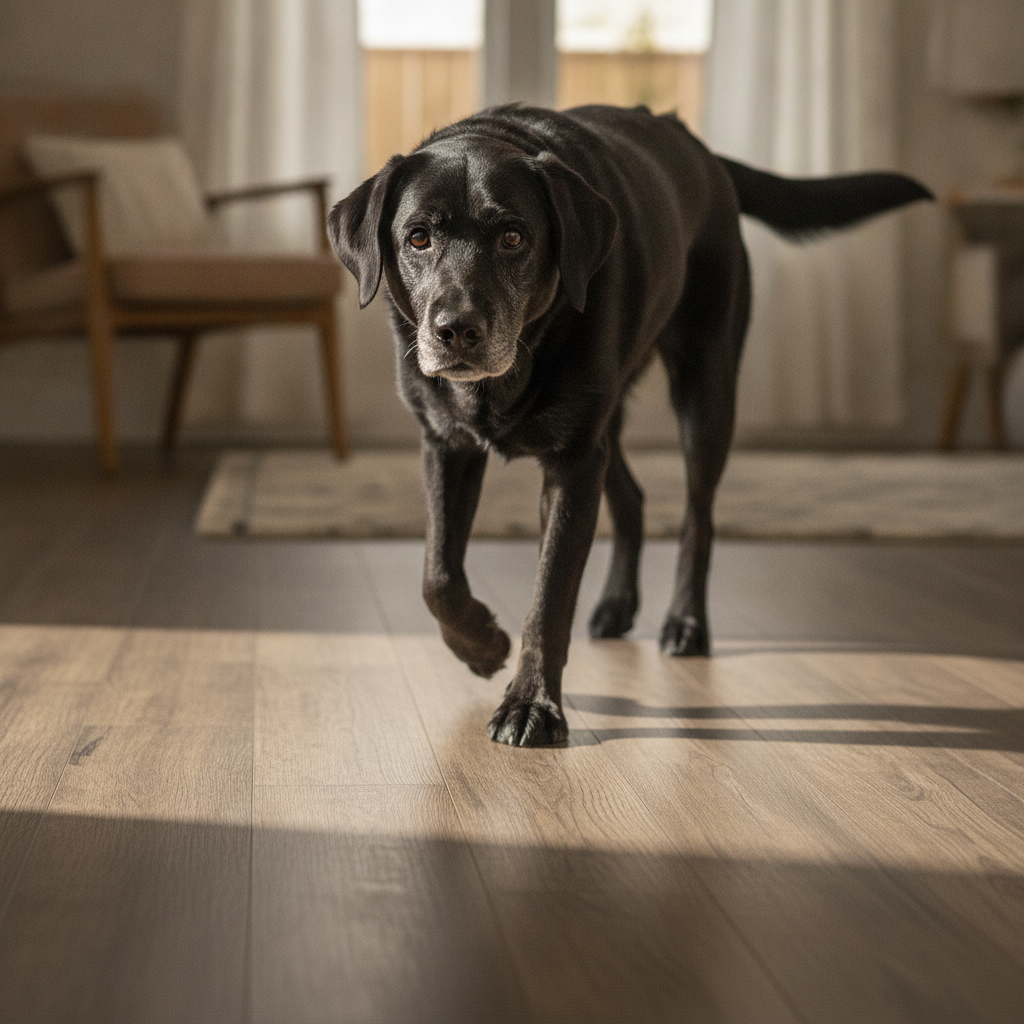
Extremely smooth, glossy floors can be like an ice-skating rink for pets. This lack of traction can cause anxiety and lead to dangerous slips and falls. According to veterinary experts and organizations like the American Kennel Club (AKC), this is especially hazardous for senior dogs or breeds prone to joint problems like hip dysplasia, as slipping can cause serious injury or exacerbate existing conditions.[6] Look for flooring with textured or embossed surfaces that provide better grip for paws. Many LVT and hybrid products feature “embossed in register” textures that follow the wood grain, adding both realism and traction.
Air Quality & Allergies: The Importance of Low-VOC and Easy-to-Clean Surfaces
Your home’s indoor air quality affects your entire family, including your pets. Many building materials, including some types of flooring and adhesives, can release Volatile Organic Compounds (VOCs), which are chemicals that can cause respiratory irritation. To ensure a healthy environment, look for flooring with third-party certifications like FloorScore or Greenguard Gold. These certifications guarantee that the product meets strict standards for low chemical emissions.
For pets and people with allergies, hard surface flooring is a clear winner over carpet. Surfaces like LVT, hybrid hardwood, laminate, and tile don’t trap dust, dander, and other allergens, making them incredibly easy to clean and helping to maintain a healthier home.
Flooring to Avoid: A Pet Owner’s ‘Buyer Beware’ Guide
Just as important as knowing what to look for is knowing what to avoid. Certain flooring types are simply a bad investment for a home with pets.
- Solid Softwoods: Woods like Pine, Fir, and American Cherry have very low Janka hardness ratings. They are beautiful but will show scratches and dents from even small pets almost immediately.
- Wall-to-Wall Carpet: While soft, carpet acts like a sponge for accidents, absorbing odors deep into the pad and subfloor. It also traps pet hair and dander, making it a challenge for allergy sufferers. Loop pile carpets, like Berber, are particularly risky as claws can easily snag and unravel the loops.
- Unsealed Porous Stone: Natural stones like marble, travertine, and limestone are beautiful but can be easily and permanently stained or etched by the acid in pet urine if not properly and regularly sealed.
Protecting Your Investment: Cleaning, Maintenance, and Repair
Choosing the right floor is half the battle. The other half is proper care and maintenance. With a few simple habits, you can keep your pet-friendly floor looking great for years to come.
The Ultimate Guide to Removing Pet Stains and Odors
When accidents happen, act fast. But don’t reach for just any cleaner.
- Blot, Don’t Rub: Immediately soak up as much of the liquid as possible with a clean cloth or paper towel.
- Use an Enzymatic Cleaner: This is the most critical step. Standard cleaners can’t break down the uric acid crystals that cause lingering pet urine odor.[1] Enzymatic cleaners contain beneficial bacteria that produce enzymes specifically designed to consume and eliminate these crystals, permanently destroying the source of the smell.
- Avoid Ammonia: Never use ammonia-based cleaners. Ammonia’s chemical signature is similar to that of urine, and using it can actually encourage your pet to re-mark the same spot.
Safety Warning: Never mix cleaning chemicals, especially products containing ammonia and bleach. This combination can create toxic chloramine gas, which is extremely dangerous to inhale for both people and pets.
Simple Tricks to Minimize Scratches on Any Floor
Even the most durable floor benefits from proactive protection.
- Prioritize Nail Care: “Regular nail trims are the single most effective way to protect any floor from scratches,” advise professional dog groomers. Keeping your pet’s nails short and filed smooth dramatically reduces their ability to damage surfaces.
- Use Mats and Rugs: Place durable doormats at all entrances to trap dirt, grit, and moisture. Use area rugs in high-traffic zones and “play areas” to provide an extra layer of protection and a soft spot for your pet.
- Wipe Paws: Keep a towel by the door to wipe down muddy or wet paws before your pet tracks messes through the house.
Your Pet-Proof Floor Awaits
Choosing the right flooring for your home is one of the biggest decisions you’ll make as a homeowner and a pet owner. It’s a long-term investment in your property’s value, your daily peace of mind, and your pet’s well-being.
By moving beyond simple aesthetics and focusing on the critical metrics of durability, waterproofing, and pet comfort, you can confidently select a floor that stands up to the rigors of pet life. While excellent options like luxury vinyl and porcelain tile offer incredible performance, waterproof hybrid hardwood stands out for its unique ability to deliver the authentic, high-end beauty of real wood with the bulletproof core a pet-filled home demands.
You no longer have to choose between a beautiful home and a happy pet. By understanding the science behind a truly pet-proof floor, you are now equipped to make the best possible choice for you and your furry family.
This article may contain affiliate links. All recommendations are based on extensive research, but readers should consult with a professional flooring installer for advice specific to their home and subfloor conditions.
References
- Institute of Inspection, Cleaning and Restoration Certification (IICRC). (N.D.). Standards for Professional Cleaning, Restoration, and Inspection.
- ASTM International. (N.D.). ASTM F3261 – Standard Specification for Resilient Flooring in Modular Format with Rigid Polymeric Core.
- Resilient Floor Covering Institute (RFCI). (N.D.). Technical Resources and Specifications for Resilient Flooring.
- North American Laminate Flooring Association (NALFA). (N.D.). Understanding AC Ratings for Laminate Flooring.
- Tile Council of North America (TCNA). (N.D.). Consumer Resources on Tile Standards and Durability.
- American Kennel Club (AKC). (N.D.). Expert Advice on Canine Health and Home Safety.
