
You love the timeless, elegant look of hardwood floors. It’s the gold standard, the dream for your home renovation. But then, reality sets in. The thought of a spilled glass of water, a pet accident, or the daily chaos of kids’ toys turning your beautiful, expensive investment into a warped, scratched mess is enough to cause serious hesitation. This is the modern homeowner’s dilemma: choosing between the aesthetic you desire and the durability your life demands.
What if you didn’t have to compromise?
Enter waterproof hybrid hardwood flooring. This innovative product category represents a true evolution in flooring, engineered to deliver the authentic beauty of a real wood surface on a 100% waterproof core. It’s the “best-of-both-worlds” solution you’ve been searching for.
But with any new technology comes a wave of confusing marketing terms, technical jargon, and a dizzying array of options. This is not just another article with generic pros and cons. This is your definitive, data-driven buyer’s guide. We will decode the specifications, explain what truly matters for long-term performance, and provide an actionable checklist that empowers you to walk into a showroom and choose the perfect floor for your home with absolute confidence.
- What is Waterproof Hybrid Hardwood Flooring, Really?
- The Ultimate Buyer’s Checklist: 7 Key Factors to Look For
- 1. Wear Layer Thickness: Your Floor’s Shield
- 2. Core Construction: SPC vs. WPC
- 3. Hardwood Veneer Quality: Judging Realism
- 4. Plank Thickness & Attached Underlayment
- 5. The Locking System: The Unsung Hero
- 6. Health & Safety Certifications: Decoding the Labels
- 7. The Warranty: Reading Between the Lines
- Is Waterproof Hybrid Hardwood Flooring Good? A Balanced Review
- Hybrid Hardwood vs. Other Hardwood Alternatives: A Comparison
- Frequently Asked Questions (FAQ)
- Your Confident Choice for a Beautiful, Durable Home
- References & Authoritative Sources
What is Waterproof Hybrid Hardwood Flooring, Really?
Before you can choose the right product, you need to understand exactly what it is. Waterproof hybrid hardwood flooring isn’t a single material; it’s a sophisticated, multi-layered product engineered for performance. It combines a genuine layer of hardwood with a resilient, waterproof foundation, solving the primary weakness of traditional solid and engineered wood floors.
The Anatomy of a Hybrid Plank: A Layer-by-Layer Breakdown
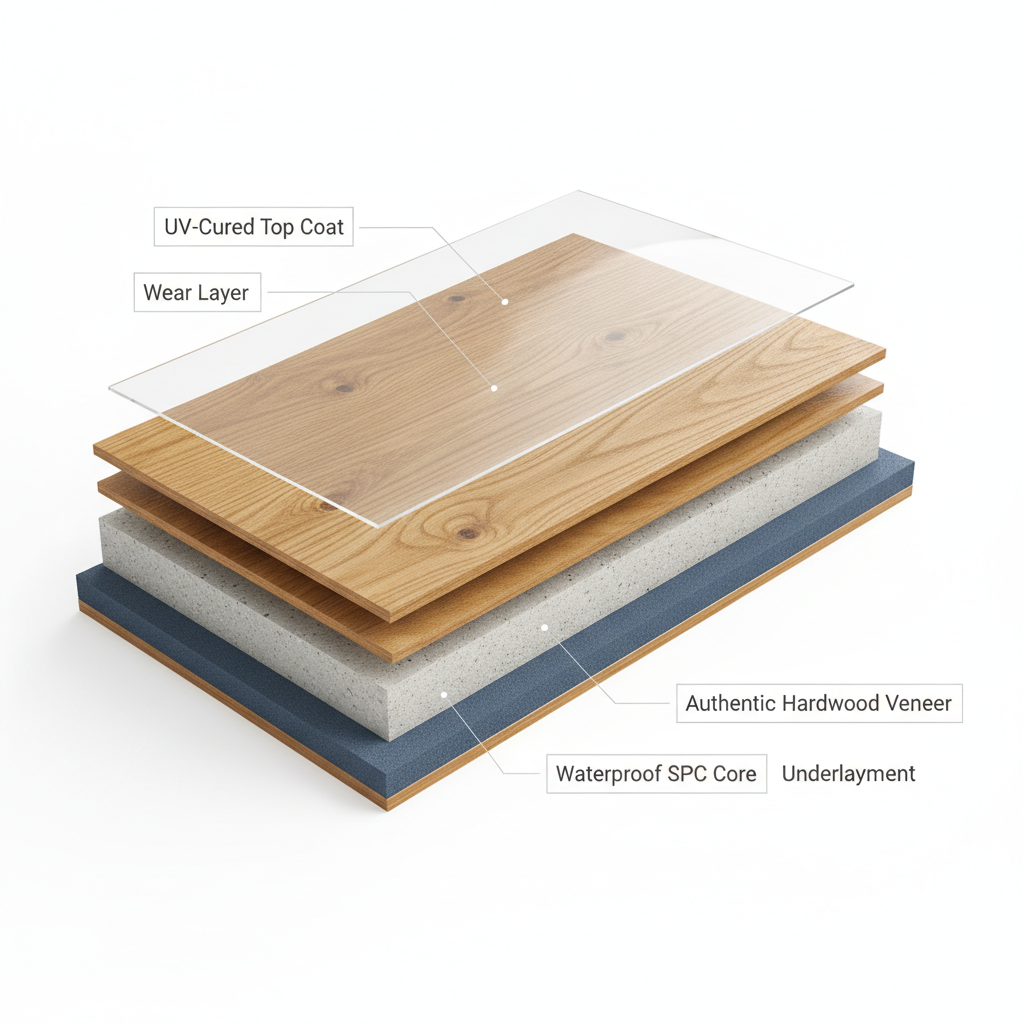
Imagine slicing a plank of hybrid hardwood in half. You would see a marvel of modern engineering, with each layer serving a distinct and critical purpose.
- UV-Cured Top Coat: This is the invisible first line of defense. It’s a factory-applied finish, often containing materials like aluminum oxide, that resists fading from sunlight and provides the initial barrier against scuffs and stains.
- Wear Layer: Arguably the most important layer for durability, the wear layer is a clear, robust coating that protects the real wood veneer from scratches, dents, and daily wear and tear. Its thickness is a key indicator of quality, which we’ll cover in detail later.
- Authentic Hardwood Veneer: This is what gives the flooring its genuine beauty and unique character. Unlike laminate or vinyl which have a printed image, this is a thin, real slice of wood. The National Wood Flooring Association (NWFA) defines engineered wood flooring—the predecessor to this technology—as having a real wood top layer, and hybrid hardwood follows this principle.
- Waterproof Core: This is the heart of the plank and the source of its “waterproof” superpower. These cores are typically made from one of two materials: SPC (Stone Polymer Composite) or WPC (Wood Polymer Composite). This rigid, ultra-dense layer is completely impervious to water, preventing it from ever reaching your subfloor from a topical spill.
- Attached Underlayment: Most high-quality hybrid planks come with a pre-attached pad or underlayment. This layer provides sound dampening, adds comfort underfoot, and can help smooth over minor imperfections in the subfloor, simplifying installation.
How ‘Waterproof’ is It? Understanding the Fine Print
This is one of the most critical questions homeowners ask: Is hybrid hardwood flooring completely waterproof? The answer requires a clear distinction. The core of the plank itself is 100% waterproof. If you were to submerge a single plank in water, it would not swell or warp like traditional hardwood.
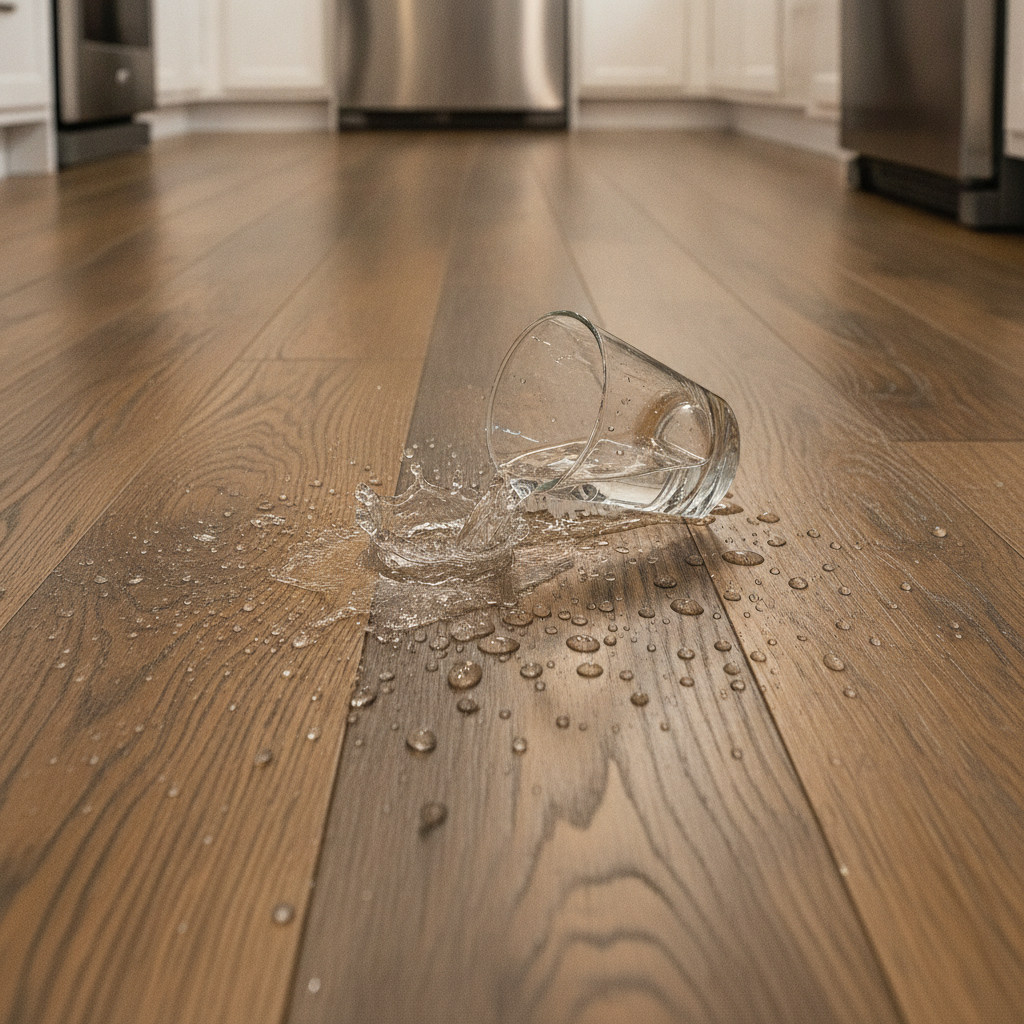
However, a truly “waterproof system” depends on more than just the plank. The term waterproof generally means the flooring will protect your subfloor from top-down moisture, like spills or pet accidents. This is achieved because the planks have tight-fitting locking mechanisms that prevent liquid from seeping through the seams for an extended period.
This differs from water-resistant, a term often used for products that can repel water for a short time but will eventually be damaged by prolonged exposure.
For a hybrid hardwood floor to function as a truly waterproof system, proper installation is non-negotiable. As flooring experts consistently emphasize, a flawless installation with tight seams and proper perimeter sealing is what ensures that moisture stays on the surface where it can be cleaned up, fully protecting the structure of your home.
The Ultimate Buyer’s Checklist: 7 Key Factors to Look For
Now that you understand the construction, it’s time to become an expert shopper. When you’re comparing products, the marketing language can be overwhelming. This checklist cuts through the noise and focuses on the seven technical specifications that truly determine a floor’s quality, durability, and long-term value. The products in this category are generally held to rigorous manufacturing standards, such as those outlined by ASTM International in specifications like ASTM F3261 for rigid core flooring.[2]
1. Wear Layer Thickness: Your Floor’s Shield
The wear layer is the transparent top coating that protects the beautiful wood veneer from life’s daily assaults—pet claws, dragged furniture, and foot traffic. Its thickness is measured in mils (one-thousandth of an inch) and is the single most important indicator of how well your floor will resist scratching and wear.
- Basic Residential Use (6-10 mil): Suitable for low-traffic areas like bedrooms or closets.
- Standard Residential Use (12 mil+): For most families, a wear layer of at least 12 mil is the recommended starting point. This provides good durability for living rooms, dining rooms, and hallways.
- High-Traffic & Pet-Friendly (20 mil+): For the busiest homes with active kids, large dogs, or high-traffic entryways, a 20 mil or thicker wear layer is a wise investment. It offers commercial-grade durability and the best long-term protection.
2. Core Construction: SPC vs. WPC
The waterproof core provides the plank’s stability and structure. You’ll primarily encounter two types:
- SPC (Stone Polymer Composite): Made from a mixture of natural limestone powder, polyvinyl chloride, and stabilizers. SPC cores are incredibly dense, rigid, and durable.
- WPC (Wood Polymer Composite): Made from a combination of recycled wood pulp and plastic composites. WPC cores are generally lighter and less dense than SPC, which gives them a slightly softer feel underfoot.
Which one is right for you?
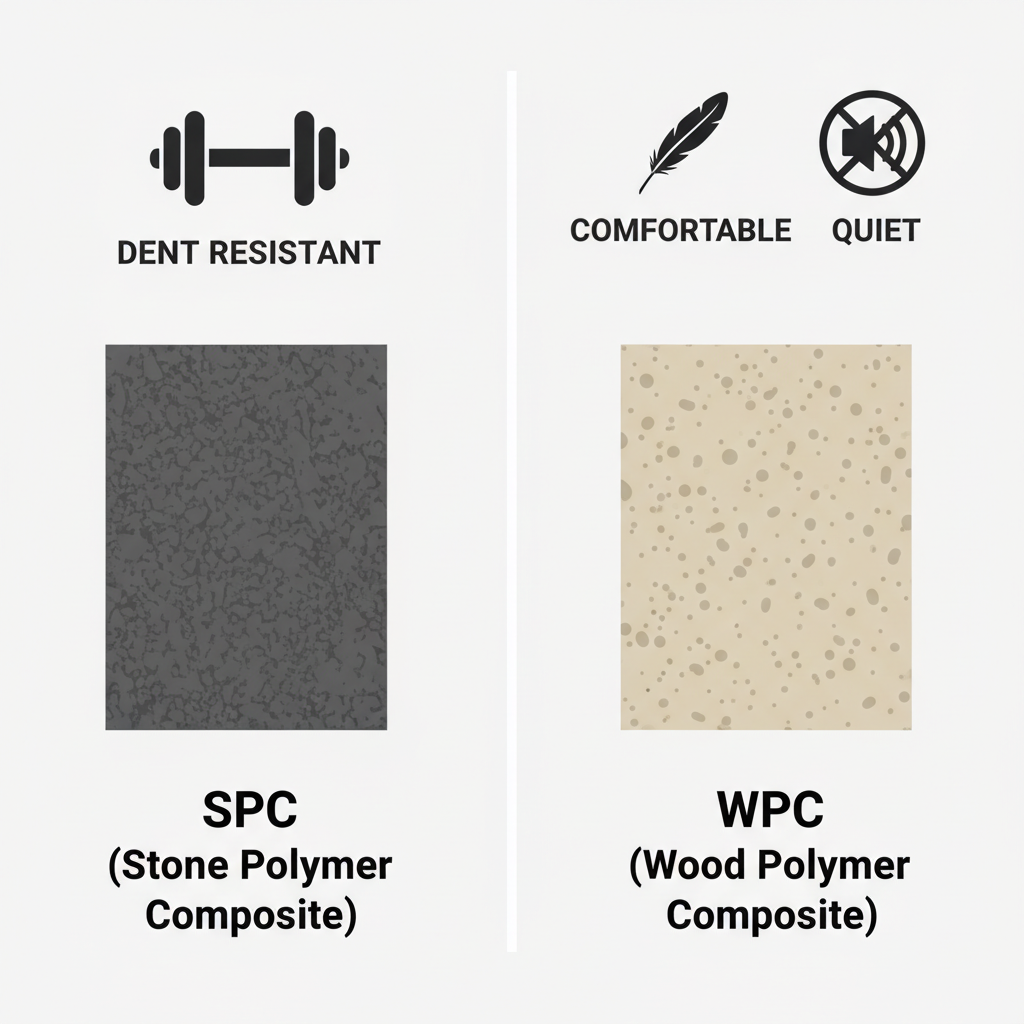
| Feature | SPC (Stone Polymer Composite) | WPC (Wood Polymer Composite) |
|---|---|---|
| Dent Resistance | Higher. Its density makes it more resistant to impacts from dropped objects. | Lower. Softer and more prone to denting from heavy impacts. |
| Comfort & Sound | Good. Firmer underfoot. Sound can be more pronounced without a quality underlayment. | Better. The added air in the core makes it feel warmer and quieter to walk on. |
| Stability | Excellent. Less prone to expansion/contraction with temperature changes. | Very Good. Stable, but less so than SPC in extreme temperature swings. |
| Cost | Generally more affordable. | Often slightly more expensive. |
The Bottom Line: SPC is best for high-impact areas, homes with significant temperature fluctuations (like a three-season room), and for budget-conscious buyers needing maximum durability. WPC is best for those prioritizing comfort and quietness in living areas and bedrooms.
3. Hardwood Veneer Quality: Judging Realism
Does hybrid hardwood flooring look fake? Absolutely not—if you choose a quality product. The key is the real wood veneer. Here’s how to judge its quality:
- Veneer Thickness: The veneer on hybrid hardwood is typically thin, ranging from 0.6mm to 2mm. While a thicker veneer might offer a slightly more substantial wood feel, it’s crucial to understand that this layer cannot be sanded and refinished like solid hardwood. This is a fundamental trade-off for the waterproof core.
- Wood Species & Grade: Look for veneers made from popular species like Oak, Hickory, or Maple. Higher-grade products will have fewer knots and a more consistent grain, while rustic or character-grade options will embrace natural imperfections.
- Pattern Repetition: In the showroom, lay out several planks from the same box. High-quality products will have more unique planks with less pattern repetition, creating a more natural and authentic look once installed. Budget options may repeat the same grain pattern every few planks, which can look artificial.
4. Plank Thickness & Attached Underlayment
The overall thickness of the plank (veneer + core + underlayment) contributes to its feel underfoot. Thicker planks (8mm or more) often feel more substantial and solid, similar to traditional hardwood.
Most reputable hybrid floors include a pre-attached underlayment or pad. As one certified flooring installer notes, “A high-quality attached pad is a huge benefit. It not only saves a step during installation but also provides crucial sound dampening and can forgive minor subfloor imperfections, leading to a better-finished product.” Look for pads made of cork or high-density foam for the best performance.
5. The Locking System: The Unsung Hero
This is a critical feature that is often overlooked. The locking system, or “click-lock” mechanism, is how the planks connect to one another. A high-quality, precision-milled locking system is essential for two reasons:
- Waterproof Seal: It creates a tight, gap-free seam that prevents water from penetrating to the subfloor.
- Long-Term Durability: A weak locking system can lead to planks separating or peaking over time, ruining the floor.
While you may not be an expert on different lock types, you can ask your retailer about the quality of the system and look for brands known for their robust engineering. The manufacturer’s installation guide is always the ultimate authority on how their specific system works and should be installed.
6. Health & Safety Certifications: Decoding the Labels
A beautiful floor should also contribute to a healthy home. Volatile Organic Compounds (VOCs) are chemicals that can be released into the air from building materials. To ensure your floor promotes good indoor air quality, look for these third-party certifications:
- FloorScore®: This is one of the most recognized independent certifications for indoor air quality.[3] A FloorScore certified product has been tested and proven to meet stringent low-VOC emission standards.
- Greenguard Gold: Developed by UL Environment, the Greenguard Gold certification has even stricter criteria, including health-based standards for over 360 VOCs.[4] It’s a benchmark for products used in sensitive environments like schools and healthcare facilities, making it an excellent choice for a family home.
7. The Warranty: Reading Between the Lines
A long warranty can provide peace of mind, and it’s common to see warranties for high-quality hybrid flooring ranging from 25 years to a lifetime for residential use. However, you must understand what is—and isn’t—covered.
- What’s Covered: Typically, warranties cover manufacturing defects, such as the wear layer peeling off or the layers delaminating.
- What’s NOT Covered: Warranties almost never cover issues arising from improper installation, failure to follow maintenance guidelines, scratches and dents from normal use, or water damage coming from the subfloor (e.g., a plumbing leak below the floor).
Warranty Red Flags: Look out for warranties that are voided by using non-brand-specific cleaning products or that have complex, hard-to-meet requirements for subfloor preparation.
Is Waterproof Hybrid Hardwood Flooring Good? A Balanced Review
So, is this flooring the right choice for you? After considering the technical details, the answer often comes down to your lifestyle, budget, and priorities. Here’s a balanced look at the pros, cons, and common myths.
Myth vs. Fact
| Myth | Fact |
|---|---|
| “It looks and feels fake.” | Modern hybrid hardwood uses a real wood veneer. High-quality products are nearly indistinguishable from solid hardwood in appearance and texture. |
| “It’s indestructible.” | While highly durable and scratch-resistant, it is not scratch-proof. Heavy, sharp objects can still damage the surface. |
| “You can install it anywhere.” | Its waterproof nature makes it suitable for most rooms, but it still requires a flat, stable subfloor and adherence to installation guidelines. |
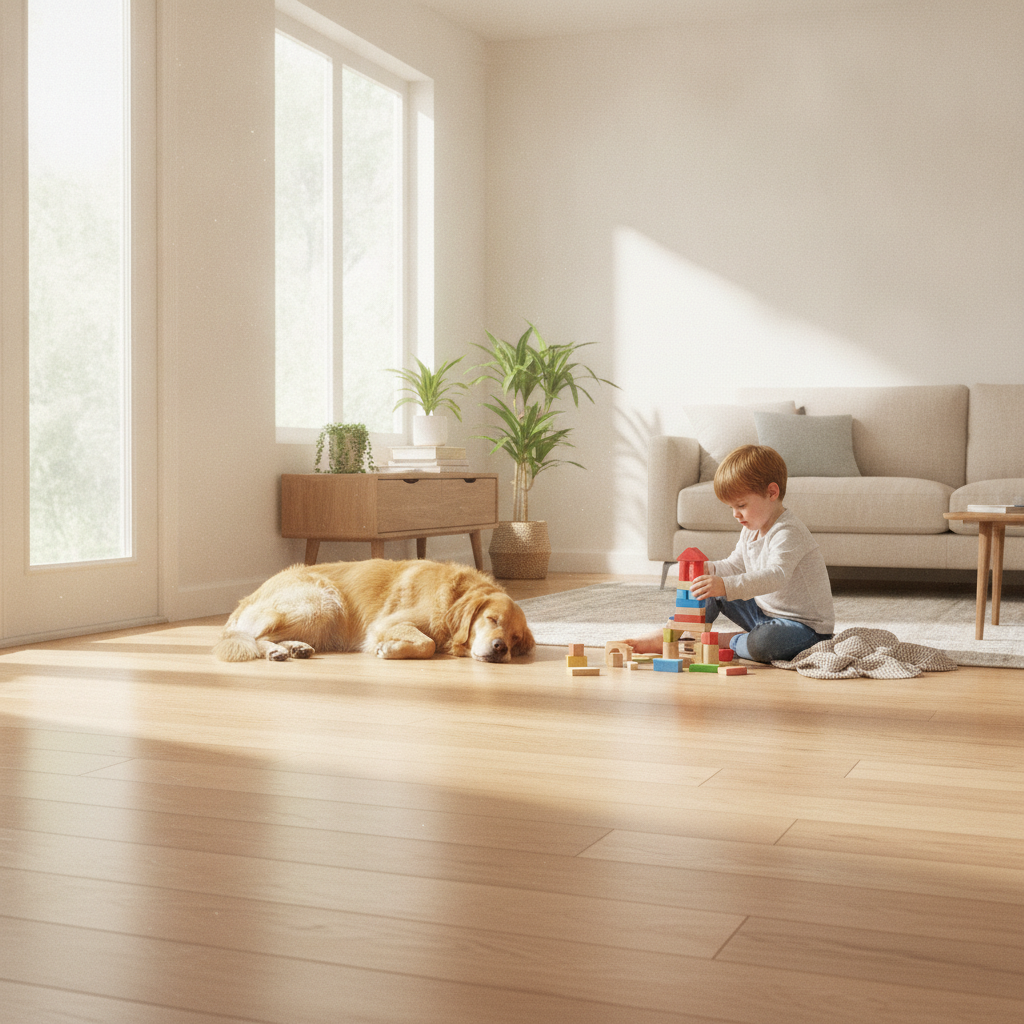
This product is BEST FOR:
- Active Families with Kids & Pets: The combination of a durable wear layer and waterproof core makes it a worry-free solution for spills, accidents, and high traffic.
- Kitchens, Basements, & Bathrooms: It allows you to have the beautiful look of wood in moisture-prone areas where traditional hardwood is a major risk.
- Homeowners Seeking Low Maintenance: Simple sweeping and occasional mopping with a pH-neutral cleaner is all that’s required.
You might be BETTER OFF WITH ANOTHER OPTION if:
- You Want to Refinish Your Floors: If the ability to sand and refinish your floors every 10-15 years is important to you, solid hardwood is still the best choice.
- You Are on a Tight Budget: While competitively priced, hybrid hardwood is generally more expensive than standard laminate or many LVP options.
The Pros: Why It’s a Game-Changer for Modern Lifestyles
- Superior Water Resistance: Enjoy the look of wood without the constant fear of water damage.
- Authentic Wood Beauty: You get the unique grain, texture, and character that only real wood can provide.
- Exceptional Durability: A thick wear layer and dense core stand up to scratches, dents, and heavy foot traffic.
- Easy Maintenance: No waxing, polishing, or special treatments required.
Our hybrid hardwood floor has been a lifesaver. We’ve had everything from spilled juice to muddy paw prints, and it cleans up perfectly every time. We get the look we wanted for our main living area without having to constantly worry about it.
– Homeowner with two kids and a Golden Retriever
The Cons & Considerations: What You Need to Know
- Higher Cost: It typically costs more than other waterproof alternatives like LVP and laminate flooring.
- Cannot Be Refinished: This is the most significant trade-off. The thin wood veneer cannot be sanded down to remove deep scratches or change the color.
- Repairability: While you can’t refinish the whole floor, a single damaged plank can be replaced by a skilled installer, though this is more complex than a simple touch-up.
- Pattern Repetition: As mentioned, be mindful of pattern repetition in lower-cost options, which can detract from the authentic look.
Hybrid Hardwood vs. Other Hardwood Alternatives: A Comparison
To make a final decision, it’s helpful to see how hybrid hardwood stacks up against other popular waterproof, wood-look options.
| Feature | Waterproof Hybrid Hardwood | Luxury Vinyl Plank (LVP) | Waterproof Laminate |
|---|---|---|---|
| Realism | Excellent. A real wood veneer provides unmatched authenticity. | Very Good. Embossed-in-register technology creates realistic texture, but it’s still a printed image. | Good. Modern printing has improved, but it can look less realistic up close. |
| Durability | Excellent. High-quality wear layer protects the wood. Dense core resists dents. | Excellent. A thick (20 mil+) wear layer is extremely tough. 100% vinyl is dent-resistant. | Excellent. Measured by an AC Rating (AC4+ is very durable), which is a standard from the EPLF.[5] |
| Cost | $$$ | $$ | $ – $$ |
| Waterproofing | Excellent. Waterproof core and tight locking systems protect the subfloor. | Excellent. 100% synthetic material is completely waterproof from top to bottom. | Good. Core is water-resistant, and top layers prevent spills from seeping in, but not fully waterproof if submerged. |
| Comfort Underfoot | Very Good. Especially WPC core options, which feel warmer and softer. | Good. Can feel harder and colder than wood, but quality underlayment helps. | Good. Can feel hard and produce a “clicking” sound without a good underlayment. |
Frequently Asked Questions (FAQ)
What is the average cost of hybrid hardwood flooring?
The cost can vary significantly based on the quality of the wear layer, veneer, and core. For materials alone, expect to pay between $5 to $12 per square foot. For comparison, LVP is often $2-$7/sq ft, and solid hardwood is typically $8-$15/sq ft. Professional installation can add another $2-$5 per square foot to your total project cost.
How do you clean and maintain waterproof hybrid hardwood?
Maintenance is simple. Regular sweeping or vacuuming (using a hard floor setting without a beater bar) is key. For deeper cleaning, use a microfiber mop with a pH-neutral cleaner designed for hard surface floors. Avoid steam mops, wax-based cleaners, and excessive amounts of water. Most importantly, always consult the specific manufacturer’s care and maintenance guide to protect your warranty.
Can you install hybrid hardwood flooring in basements or bathrooms?
Yes, absolutely. Its waterproof core makes it one of the best options for achieving a wood look in high-moisture, below-grade areas like basements or full bathrooms. However, success hinges on creating a complete “Basement Flooring System.” This means ensuring the concrete subfloor is clean, flat, and dry, and that a proper vapor barrier is used where required by the manufacturer to prevent moisture from wicking up from the concrete.
Your Confident Choice for a Beautiful, Durable Home
Choosing a new floor is a major investment, and you deserve a product that fits both your design vision and your real-world lifestyle. Waterproof hybrid hardwood flooring successfully bridges that gap, offering the undeniable beauty of wood without its traditional vulnerabilities.
By now, you are equipped with the expert knowledge to look past the marketing and focus on what matters. Remember the key takeaways from your buyer’s checklist: demand a durable wear layer (12-20 mil), choose the right core type (SPC for durability, WPC for comfort), and inspect the veneer quality for an authentic look. By prioritizing these factors, you can confidently select a floor that will not only look stunning on day one but will perform beautifully for years to come.
Ready to find the perfect waterproof hybrid hardwood floor for your home? Explore our curated collection of top-rated styles or contact our flooring experts for a personalized consultation today.
This article is for informational purposes only. Consult with a professional flooring installer and refer to manufacturer specifications before making a purchase. Product performance can vary based on installation and maintenance.
References & Authoritative Sources
- National Wood Flooring Association (NWFA). The NWFA provides standards and guidelines for the wood flooring industry. Their definitions help classify and understand products like engineered and hybrid hardwood.
- ASTM International. (N.D.). ASTM F3261 – Standard Specification for Resilient Flooring in Modular Format with Rigid Polymeric Core. Retrieved from https://www.astm.org/f3261-22.html
- FloorScore®. (N.D.). SCS Global Services. FloorScore is a third-party certification program that tests for compliance with the indoor air quality emissions requirements of the California Section 01350 program. Retrieved from https://www.scsglobalservices.com/services/floorscore
- Greenguard Certification (UL). (N.D.). UL Solutions. The Greenguard Certification Program helps manufacturers create—and helps buyers identify—interior products and materials that have low chemical emissions, improving the quality of the air in which the products are used. Retrieved from https://www.ul.com/services/greenguard-certification
- Association of European Producers of Laminate Flooring (EPLF). The EPLF developed the Abrasion Class (AC) rating system, which is the industry standard for measuring the durability of laminate flooring.
