
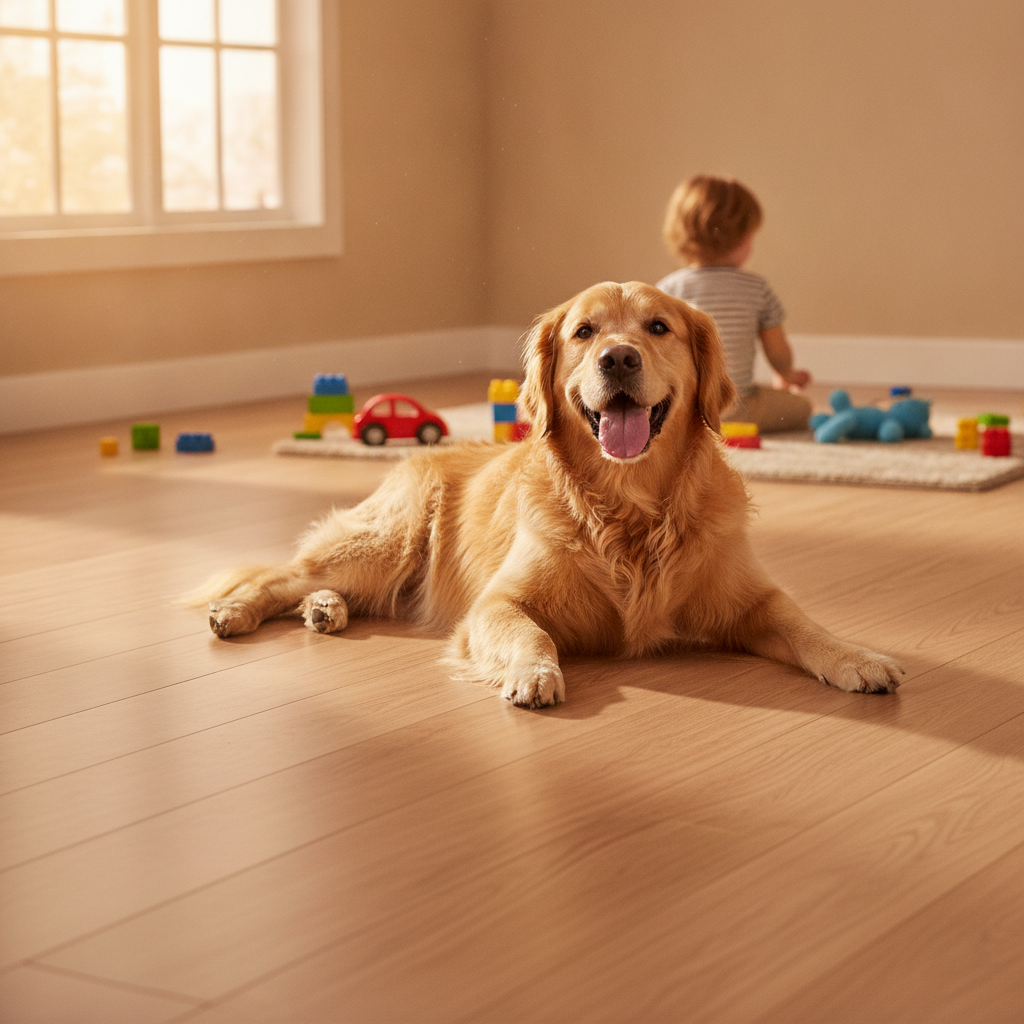
The sound is all too familiar: the frantic scrabble of dog claws on the floor during an attack of the “zoomies,” the heart-stopping thud of a dropped toy, or the silent dread of discovering a spilled sippy cup that’s been hiding under the sofa for hours. For active families with kids and pets, a beautiful floor often feels like a temporary luxury, destined to become a roadmap of scratches, stains, and water damage. You find yourself constantly worrying, cleaning, and cringing, wondering if there’s a flooring solution that doesn’t force you to choose between a stylish home and a life well-lived.
The good news is, there is. Enter waterproof hybrid hardwood, a revolutionary flooring category engineered to withstand the chaos of modern family life. It promises the authentic beauty of real wood with the resilience of a synthetic floor. But with so many products making bold claims, how can you be sure you’re making a wise investment?
This is not another marketing pitch. This is your evidence-based, stress-tested guide to finding a truly durable floor. We will cut through the jargon, dive deep into the technology, and put the top contenders through a real-world gauntlet. By the end, you will have the confidence and clarity to choose the perfect, pet-friendly flooring that lets your family live freely without fear of ruining your floors.
- The Daily Dilemma: Why Standard Floors Fail Active Families and Pets
- What is Waterproof Hybrid Hardwood Flooring? A Deep Dive
- The Ultimate Showdown: Hybrid Hardwood vs. Other Pet-Friendly Champions
- The ‘Indestructible Floor’ Gauntlet: Our Real-World Stress Tests
- Your First Line of Defense: A Practical Guide to Prevention and Care
- Your Home, Your Floor, Your Peace of Mind
- References & Authoritative Sources
The Daily Dilemma: Why Standard Floors Fail Active Families and Pets
Before finding the right solution, it’s crucial to understand the problem. The daily life of a busy household presents a unique set of challenges that can quickly overwhelm traditional flooring materials, especially classic hardwood.
The constant motion in a home creates a gauntlet of potential damage. It’s the worn, faded path from the back door to the kitchen, a visible reminder of every trip to let the dog out. It’s the network of fine scratches from pet nails, which seem to appear overnight and catch the light in the most unflattering way. As one professional floor refinisher notes, “The most common and costly repairs I’m called for aren’t from major disasters; they’re from the slow, steady wear of family life. We’re talking about deep scratches from a child dragging a chair, or the permanent graying and cupping of wood planks next to a pet’s water bowl.”
This vulnerability to moisture is a critical weakness. Traditional hardwood is fundamentally organic. When water from spills on wood floors penetrates the surface, it causes the wood fibers to swell. This leads to warping, cupping, and discoloration that is often impossible to fix without complete replacement. The panic of a spilled drink or a pet accident is real because the damage can be both immediate and permanent, turning a beautiful investment into a source of constant anxiety. These high traffic flooring problems and susceptibility to moisture are precisely why a new class of durable waterproof flooring was born.
What is Waterproof Hybrid Hardwood Flooring? A Deep Dive
So, what is waterproof hybrid hardwood flooring, and how does it solve these problems? It’s not just wood with a better topcoat; it’s an entirely re-engineered product designed from the core up for maximum durability. Imagine it as a multi-layered sandwich, with each layer serving a specific purpose.
A visual cross-section would reveal its intelligent construction:
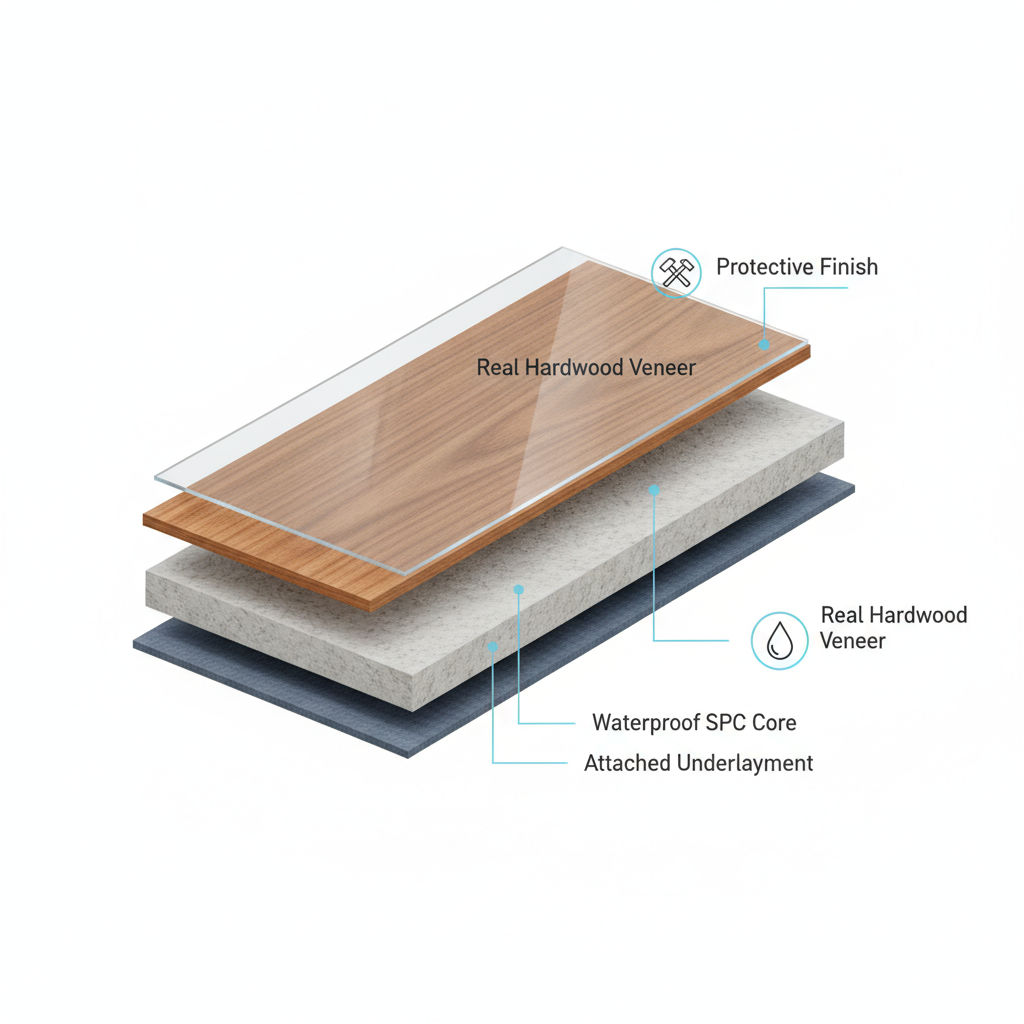
- Top Layer: Real Hardwood Veneer. This is what you see and feel. It’s a thin but authentic layer of real wood—like oak, hickory, or maple—that gives the flooring its genuine character, grain, and beauty.
- Protective Finish: A factory-applied, multi-coat finish, often infused with aluminum oxide, provides superior resistance to scratches and scuffs.
- Middle Layer: Waterproof Core. This is the game-changing innovation. Instead of a wood-based core that swells with moisture, hybrid hardwood uses a rigid, 100% waterproof composite core. Most commonly, this is an SPC (Stone Plastic Composite) core, a dense and rigid material made from a mixture of limestone powder, polyvinyl chloride, and stabilizers.
- Bottom Layer: Attached Underlayment. Most hybrid hardwood planks come with a pre-attached pad made of cork or foam, which provides sound insulation, cushioning underfoot, and a moisture barrier.
This construction directly addresses the failures of traditional flooring. As a representative from a leading manufacturer like Shaw Floors might explain, “The SPC core is the engine of hybrid flooring. It’s completely inert to water, so spills that would destroy a solid or engineered wood floor can sit on the surface of a hybrid floor without causing any swelling, warping, or damage to the plank itself.”
However, it’s crucial to understand two key details often lost in marketing. First, the real wood veneer is typically quite thin, usually less than 2mm. This means that unlike solid hardwood which can be sanded and refinished multiple times, most hybrid hardwood floors cannot be refinished. Deep scratches that penetrate the protective finish and the veneer are permanent. Second, the term “waterproof” applies to topical protection. While the planks themselves won’t be damaged by water sitting on top, manufacturer warranties often specify time limits (e.g., 24-72 hours) and don’t cover damage from flooding or moisture coming from the subfloor below.
The Ultimate Showdown: Hybrid Hardwood vs. Other Pet-Friendly Champions
Waterproof hybrid hardwood is a fantastic option, but it’s not the only player in the durable flooring game. To make the best choice for your family, it’s essential to compare it against other pet-friendly champions.
| Feature | Waterproof Hybrid Hardwood | Luxury Vinyl Plank (LVP/SPC) | Waterproof Laminate | Porcelain/Ceramic Tile |
|---|---|---|---|---|
| Scratch Resistance | Very Good to Excellent (Finish is key) | Good to Excellent (Wear layer is key) | Excellent (AC Rating is key) | Ultimate |
| Water Resistance | Excellent (Topical) | Ultimate (100% Waterproof) | Very Good (Topical) | Ultimate |
| Comfort/Warmth | Good (Warmer than LVP/Tile) | Fair (Can feel cool/hard) | Fair (Can feel cool/hard) | Poor (Cold and hard) |
| Pet Traction | Good | Good | Fair (Can be slippery) | Poor (Very slippery) |
| Repairability | Poor (Plank replacement) | Fair (Plank replacement) | Fair (Plank replacement) | Poor (Difficult to replace) |
| Average Cost (Installed) | $$$$ | $$ – $$$ | $$ – $$$ | $$$ – $$$$ |
Contender #1: Luxury Vinyl Plank (LVP/SPC)
LVP has become a go-to for durable waterproof flooring, and for good reason. It is a 100% synthetic product, making it completely impervious to water from top to bottom. Its durability against scratches and scuffs is determined almost entirely by its wear layer, a clear top coating measured in mils (thousandths of an inch). For a busy home, a wear layer of 20 mil or higher is recommended for long-term performance.[1]
The core of LVP also matters. Modern LVP primarily uses an SPC (Stone Plastic Composite) core, which is the same technology found in hybrid hardwood. This makes it incredibly dense and resistant to dents from dropped objects. This is a significant improvement over older WPC (Wood Plastic Composite) cores, which are softer and more prone to denting. Furthermore, LVP tends to be quieter than laminate, absorbing more sound from pet claws and footsteps, addressing a common complaint about hard-surface floors. For health-conscious families, look for products with FloorScore certification, which ensures they meet strict indoor air quality standards.[4]
Contender #2: Modern Waterproof Laminate
Laminate flooring has evolved significantly. Once known for being noisy and susceptible to water damage, new-generation waterproof laminates feature water-repellent coatings and dense cores that can withstand spills for extended periods.
Laminate’s greatest strength is its exceptional scratch resistance. This is measured by the Abrasion Class (AC) rating, which grades its durability from AC1 (light residential use) to AC5 (heavy commercial use).[2] For homes with kids and pets, an AC3 or AC4 rating is highly recommended, offering a surface that can stand up to an incredible amount of punishment. As flooring experts at major retailers often note, “A high-quality AC4 laminate is one of the toughest surfaces you can put in a home; it’s practically immune to pet claw scratches.” However, this extreme hardness can be a trade-off. The surface can be more prone to chipping if a very heavy or sharp object is dropped on it, and its rigid nature can make it feel harder and sound louder underfoot than hybrid or vinyl options.
Contender #3: Porcelain & Ceramic Tile
When it comes to pure, brute-force durability, nothing beats tile. It is completely waterproof and virtually scratch-proof. For areas like mudrooms, bathrooms, or kitchens, it remains an undefeated champion. However, for main living areas, its downsides can be significant for families.
Tile is cold and extremely hard underfoot. As many veterinarians would advise, these hard, often slippery surfaces can be tough on the joints of older dogs and may not provide secure footing for playful pets, potentially leading to injury. The comfort factor for kids playing on the floor is also low. Beyond that, the grout lines present a major cleaning challenge. A professional home cleaner might tell you, “The tile itself is easy to clean, but the grout is porous and grabs every bit of dirt. Keeping it looking fresh requires regular, deep cleaning and sealing, which is a significant maintenance commitment many families aren’t prepared for.”
The ‘Indestructible Floor’ Gauntlet: Our Real-World Stress Tests
To move beyond specifications and see how these floors perform under pressure, we subjected samples of each category to a series of real-world “torture tests” simulating the chaos of a busy home.
The Scratch Test: We dragged a set of keys, the plastic wheel of a child’s toy, and a weighted tool meant to simulate a dog’s claw across each surface.
Results: The AC4 Laminate was the clear winner, showing almost no visible marks. The Hybrid Hardwood and 20 mil LVP performed admirably, resisting lighter scratches but showing faint marks from the heaviest pressure. The tile was, unsurprisingly, completely unscathed.
The Stain Test: We applied common household culprits—grape juice, mustard, and crayon—and let them sit for one hour before cleaning according to manufacturer guidelines.
Results: The non-porous surfaces of Tile, LVP, and Laminate released all stains perfectly with a simple cleaner. The Hybrid Hardwood also cleaned up perfectly, but it highlighted the importance of its protective finish; any breach in that finish could allow stains to reach the real wood veneer.
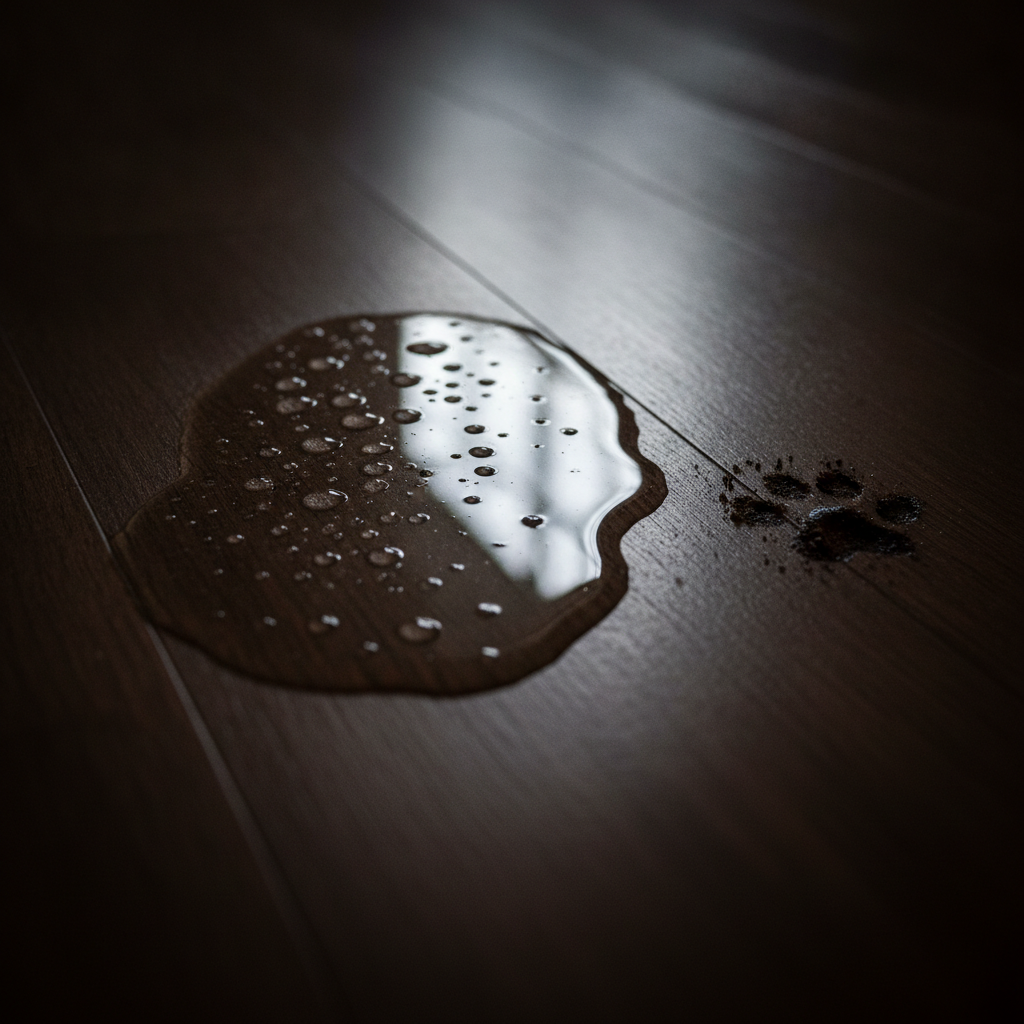
The Water Test: We poured a small puddle of water over a seam between two planks of the Hybrid, LVP, and Laminate samples and let it sit for 24 hours.
Results: As expected, the LVP showed zero effect. The Waterproof Laminate and Hybrid Hardwood also performed flawlessly, with no water penetrating the tight locking systems and no swelling or damage to the planks’ edges. This test proved that modern waterproof claims on high-quality products hold up to everyday spills.
Your First Line of Defense: A Practical Guide to Prevention and Care
Investing in a durable floor is the most important step, but protecting that investment with smart habits ensures it looks great for years to come. We recommend a “Pyramid of Prevention” approach that tackles potential damage at every level.
Stopping Scratches Before They Start
Even the most scratch-resistant floor benefits from proactive protection. According to the standardized Janka Hardness Scale, which measures the resistance of wood to denting and wear, even the strongest wood species can be scratched.[6] While the core of a hybrid floor is tough, the real wood veneer on top still has the inherent properties of that wood species.
Your prevention checklist should include:
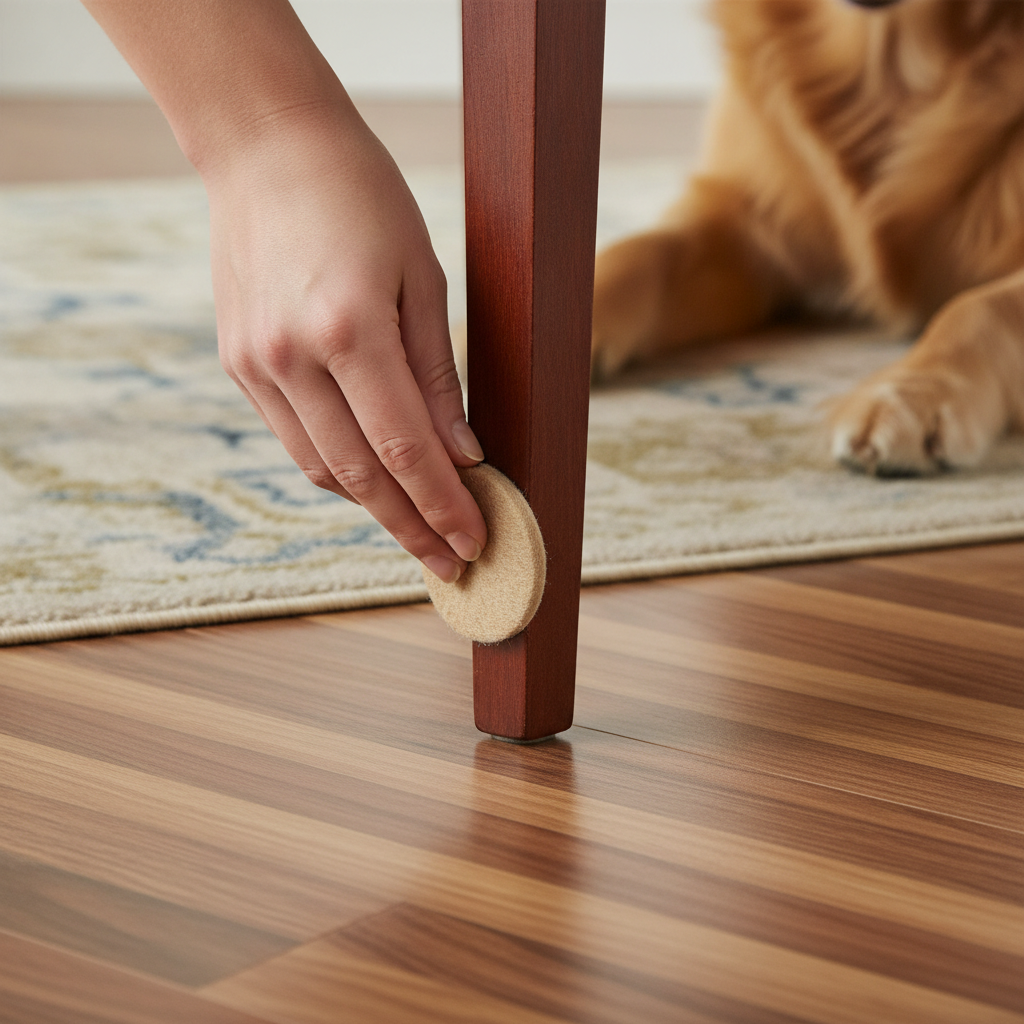
- Felt Pads: Place high-quality felt pads on the bottom of every piece of furniture—chairs, tables, sofas, and entertainment centers.
- Entry Mats: Use durable doormats at every entrance to your home to trap grit, gravel, and moisture before it gets tracked onto your floors.
- Area Rugs: In high-activity zones like play areas or hallways where pets frequently run, area rugs can provide an extra layer of defense and add comfort and style.
- Pet Nail Care: This is non-negotiable. A veterinarian or professional groomer will confirm that keeping your pet’s nails trimmed short is the single most effective way to prevent scratches. Well-trimmed nails shouldn’t click loudly on the floor. The American Kennel Club (AKC) offers excellent guides on how to trim nails safely at home.[3]
The ‘Emergency Spill Response’ Plan for Any Floor
For waterproof flooring, a spill isn’t a catastrophe, but prompt action is still the best policy to prevent messes from spreading or becoming sticky. The best practices for water damage restoration, as outlined by organizations like the Institute of Inspection, Cleaning and Restoration Certification (IICRC), always begin with immediate removal.[7]
Assemble a simple “Spill Kit” to keep in your kitchen or pantry:
- Absorbent Cloths: Microfiber cloths are ideal.
- Approved Cleaner: A pH-neutral cleaner recommended by your flooring manufacturer. Major finish manufacturers like Bona provide specific cleaning solutions designed to work effectively without damaging the floor’s protective layer.[5]
The Process:
- Blot the spill immediately with a dry cloth—don’t wipe, as that spreads the liquid.
- Lightly spray the area with the approved cleaner.
- Wipe clean with a fresh cloth.
Crucially, avoid using common DIY cleaning solutions like vinegar and water. The acid in vinegar can break down and dull modern polyurethane finishes over time, potentially voiding your warranty.
Your Home, Your Floor, Your Peace of Mind
Choosing a new floor is a major decision, but it doesn’t have to be an overwhelming one. By moving past the marketing hype and understanding the core technology, you can find a solution that truly fits your family’s lifestyle.
Waterproof hybrid hardwood stands out as a premier choice, offering an unparalleled combination of authentic wood beauty and modern, engineered resilience. It successfully stands up to the daily challenges of pets, kids, and high traffic. While premium LVP offers ultimate waterproofing and laminate provides superior scratch resistance, hybrid hardwood delivers a “best of both worlds” experience for those who refuse to compromise on the look and feel of real wood.
Ultimately, the goal is to invest in a floor that gives you peace of mind—a foundation for your home that allows for spontaneous dance parties, happy pet zoomies, and the occasional spilled juice box without a moment of panic. With the right knowledge, you can confidently choose a floor that is not only beautiful but truly built for a lifetime of family memories.
Feeling confident about your choice? Explore our curated gallery of waterproof hybrid hardwood styles or download our ‘Family Flooring Checklist’ to take with you on your shopping trip.
References & Authoritative Sources
- Resilient Floor Covering Institute (RFCI). (n.d.). Performance and Maintenance Standards for Resilient Flooring. Retrieved from rfci.com/standards
- European Producers of Laminate Flooring (EPLF). (n.d.). Abrasion Resistance and AC Ratings for Laminate Flooring. Retrieved from eplf.com/en/laminate/quality/ac-ratings
- American Kennel Club (AKC). (2023). The Best Flooring for Dogs. Retrieved from akc.org/expert-advice/home-living/best-flooring-for-dogs/
- SCS Global Services. (n.d.). FloorScore® Certification. Retrieved from scsglobalservices.com/services/floorscore
- Bona US. (n.d.). Hardwood Floor Care & Cleaning Guides. Retrieved from bona.com/en-us/home/hardwood-floors/
- United States Department of Agriculture (USDA) Forest Products Laboratory. (n.d.). Wood Handbook–Wood as an Engineering Material. Retrieved from fpl.fs.fed.us/products/publications/
- Institute of Inspection, Cleaning and Restoration Certification (IICRC). (n.d.). IICRC S500 Standard for Professional Water Damage Restoration. Retrieved from iicrc.org/s500/
