
The joyous click-clack of your dog’s paws on the floor is the sound of a happy home. But for many pet owners, it’s also a sound accompanied by a constant, low-level anxiety. You see the faint scratch near the doorway, you remember the puppy accident that left a dark spot, and you dread the thought of investing thousands in a new floor only to have it ruined. You’re caught between wanting a beautiful home and loving the furry family members who make it a home.
What if you could end that anxiety? This isn’t just another list of flooring options. This is your definitive guide to choosing, protecting, and repairing floors in a home with pets. We’ve cut through the confusing marketing jargon to bring you an evidence-based resource, centered around our proprietary Pet-Proof Durability Scorecard. We’ll journey through the biggest challenges pets pose to floors, compare the top solutions with our expert rating system, take a special deep dive into revolutionary hybrid hardwood, and equip you with a damage control manual for any issues that arise. It’s time to make a confident, informed decision and finally get the beautiful, durable floor your entire family deserves.
- Why Your Pet is Your Floor’s Biggest Challenge
- The Pet-Proof Durability Scorecard: Our Expert Rating System
- The Ultimate Flooring Showdown for Pet Owners
- Deep Dive Review: Bravewood Waterproof Hybrid Hardwood
- The Pet Damage Repair Manual: Your Guide to Fixing Scratches and Stains
- Frequently Asked Questions About Pet-Friendly Flooring
- Choosing the Right Floor for Your Furry Family
- References & Authoritative Sources
Why Your Pet is Your Floor’s Biggest Challenge
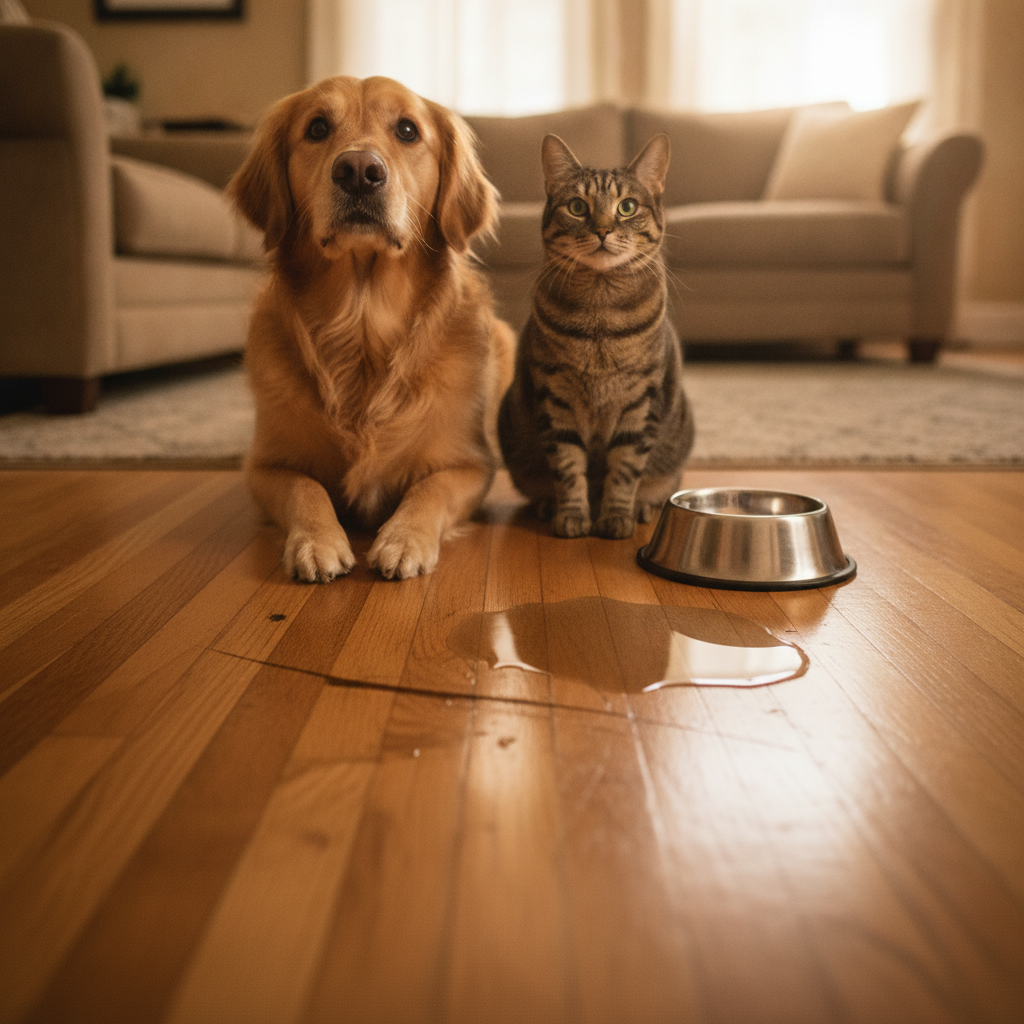
Before finding the solution, it’s crucial to understand the problem. The daily life of a pet presents a unique and demanding set of challenges for any surface underfoot. Validating these concerns is the first step toward choosing a floor that will last. Pet-related damages can cost homeowners an average of $500 to $2,000 to repair, making the right initial choice a critical financial decision.1 The primary issues fall into three categories.
- Scratches and Scuffs: This is the most visible sign of wear and tear. From the excited scrambles when you get home to the casual trot to the water bowl, your pet’s nails are in constant contact with your floor’s finish. Large, active dogs can inflict significant scratches, while even a cat’s claws can mar softer surfaces.
- Moisture and Stains: Accidents happen. Whether it’s a missed potty break, a knocked-over water bowl, or an unfortunate hairball, moisture is a floor’s enemy. Pet urine is particularly damaging; its ammonia content can chemically react with wood floors, causing permanent dark stains and penetrating deep into the core, leading to lingering odors.
- Traction and Safety: A floor’s suitability isn’t just about durability; it’s also about your pet’s health. Slippery surfaces can be dangerous, especially for senior dogs or breeds prone to hip dysplasia. The American Kennel Club (AKC) advises that proper traction is essential for a dog’s mobility and joint health, helping to prevent slips and injuries that can occur on overly slick floors.2
The Pet-Proof Durability Scorecard: Our Expert Rating System
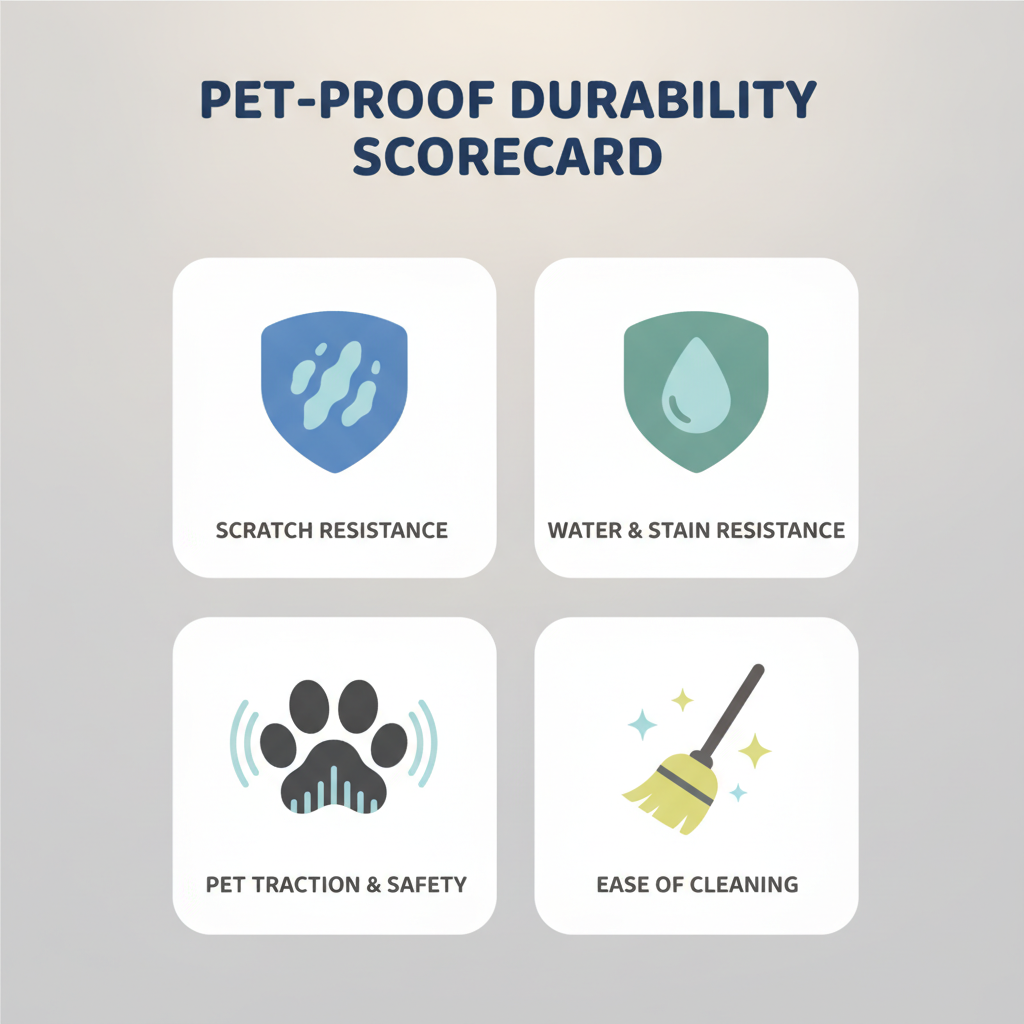
To bring clarity to your decision, we’ve developed the Pet-Proof Durability Scorecard. Instead of vague promises, we use this proprietary system to rate each major flooring category on the four criteria that matter most to pet owners. Our ratings are informed by established industry metrics, providing you with a consistent, data-driven framework for comparison.
The Four Key Criteria:
- Scratch Resistance: How well does the surface stand up to pet nails? We look at key metrics like wear layer thickness (measured in mils) for vinyl, Abrasion Class (AC) ratings for laminate, and factory finishes like Aluminum Oxide for hardwood.
- Water & Stain Resistance: Can the floor survive spills and accidents without damage or staining? This evaluates the core material’s waterproof properties and the surface’s resistance to penetration from pet urine and other liquids.
- Pet Traction & Safety: How stable and safe is the surface for your pet to walk and play on? We consider texture and material properties that contribute to good grip and joint-friendly comfort.
- Ease of Cleaning: How simple is it to clean up pet hair, dander, and messes? We assess how non-porous the surface is and whether it has seams or grout lines that can trap dirt and odors.
The Ultimate Flooring Showdown for Pet Owners
Here, we put the top flooring contenders to the test using our Pet-Proof Durability Scorecard. Each option is analyzed for its strengths and weaknesses, giving you a clear verdict on its suitability for your pet-filled home.
1. Luxury Vinyl Plank (LVP): The Reigning Champion?
Luxury Vinyl Plank has exploded in popularity, and for pet owners, it’s easy to see why. It combines a highly realistic wood look with a construction designed for durability.
Pet-Proof Durability Scorecard: LVP
- Scratch Resistance: ★★★★☆ (4/5)
- Water & Stain Resistance: ★★★★★ (5/5)
- Pet Traction & Safety: ★★★★☆ (4/5)
- Ease of Cleaning: ★★★★★ (5/5)
Pros:
- 100% Waterproof: The polymer core is impervious to water, making it perfect for kitchens, mudrooms, and homes with accident-prone pets.
- Excellent Scratch Resistance: A high-quality LVP with a thick wear layer is exceptionally durable. For homes with pets, a wear layer of 20 mil (0.5mm) or thicker is highly recommended for maximum protection.3
- Comfort and Traction: LVP is softer and warmer underfoot than tile. Many modern styles feature Embossed in Register (EIR) technology, where the surface texture matches the visual wood grain, which enhances realism and provides better traction for paws.
- Easy Maintenance: Its smooth, non-porous surface makes sweeping up pet hair and wiping up messes incredibly simple.
Cons:
- Can Be Dented: While scratch-resistant, LVP can be dented by extremely heavy furniture or dropped objects.
- Quality Varies: The market is flooded with options. A cheap, thin LVP will not perform well; investing in a reputable brand with a thick wear layer is essential.
Verdict: For the vast majority of pet owners, high-quality LVP is the top choice. It offers the best all-around balance of waterproofing, durability, safety, and ease of cleaning.
2. Waterproof Laminate: The New Contender
Laminate flooring used to be a risky choice for pet owners due to its vulnerability to water. Not anymore. Modern waterproof laminate features dense, water-resistant cores and advanced edge-sealing technology, making it a formidable competitor to LVP.
Pet-Proof Durability Scorecard: Waterproof Laminate
- Scratch Resistance: ★★★★★ (5/5)
- Water & Stain Resistance: ★★★★☆ (4/5)
- Pet Traction & Safety: ★★★☆☆ (3/5)
- Ease of Cleaning: ★★★★★ (5/5)
Pros:
- Superior Scratch Resistance: This is laminate’s superpower. Its durability is measured by an Abrasion Class (AC) rating. According to standards developed by bodies like the Association of European Producers of Laminate Flooring (EPLF), an AC4 or AC5 rating is recommended for homes with active pets, offering commercial-grade scratch protection.4
- Highly Realistic Look: Advanced printing technologies create incredibly convincing wood visuals.
- Easy to Clean: The sealed surface is stain-resistant and simple to maintain.
Cons:
- Water-Resistant, Not Waterproof: While the surface and core are protected (often for up to 72 hours), it’s not truly waterproof like vinyl. Water finding its way to an unsealed edge or the subfloor can still cause issues.
- Can Be Slippery: Some laminate finishes can be slicker than LVP, offering less traction for pets.
- Hollow Sound: Laminate can sometimes produce a hollow or clicking sound under paws, though a high-quality underlayment can mitigate this.
Verdict: If your primary concern is scratches from large, active dogs, waterproof laminate with a high AC rating is arguably the most durable wood-look option available. It’s an excellent choice, provided you clean up liquid spills promptly.
3. Hybrid Hardwood: The Best of Both Worlds?
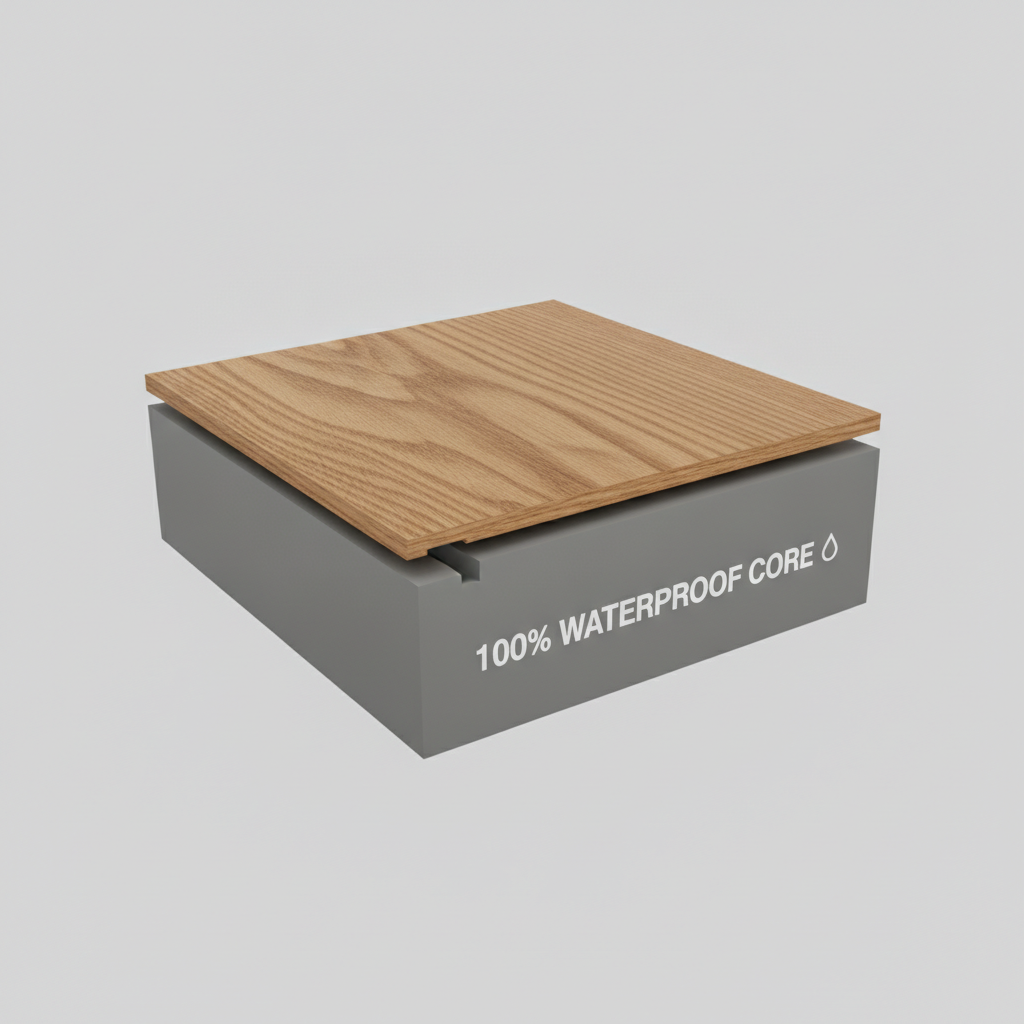
This is the most exciting innovation for homeowners who refuse to compromise on authentic wood. Hybrid hardwood is a marvel of engineering: a thin layer of real hardwood veneer is bonded to a 100% waterproof Stone Polymer Composite (SPC) core.
Pet-Proof Durability Scorecard: Hybrid Hardwood
- Scratch Resistance: ★★★☆☆ (3/5)
- Water & Stain Resistance: ★★★★★ (5/5 – Core) / ★★★☆☆ (3/5 – Surface)
- Pet Traction & Safety: ★★★★☆ (4/5)
- Ease of Cleaning: ★★★★☆ (4/5)
Pros:
- Authentic Wood Beauty: It’s not a picture of wood; it is wood. You get the unique grain, texture, and warmth that only real wood can provide.
- Waterproof Core: The SPC core is the same technology used in high-end LVP, making the plank itself completely waterproof and dimensionally stable. You can install real wood in places you’d never dare before.
- Durable Construction: The composite core provides excellent dent resistance, often superior to traditional engineered hardwood.
Cons:
- Veneer is Not Waterproof: While the core won’t swell, the real wood veneer on top (typically 0.6mm to 2mm thick) can still be damaged by standing water or scratched by pet nails, just like any wood floor.
- Cannot Be Refinished: This is a critical point. The wood veneer is too thin to be sanded and refinished like traditional solid or engineered hardwood. Deep scratches or stains on the veneer are permanent.
- Higher Cost: This premium technology comes with a higher price tag, often comparable to mid-to-high-end engineered hardwood.
Verdict: Hybrid hardwood is the ideal solution for the discerning pet owner who wants the authentic look and feel of real wood without the fear of a plumbing leak or subfloor moisture issue ruining their investment. However, you must still be diligent about wiping up spills and managing scratches on the real wood surface.
4. Porcelain & Ceramic Tile: The Indestructible Option
When it comes to sheer durability, nothing beats tile. It has been used for centuries and remains a top choice for areas that demand the highest level of water and scratch resistance.
Pet-Proof Durability Scorecard: Tile
- Scratch Resistance: ★★★★★ (5/5)
- Water & Stain Resistance: ★★★★★ (5/5)
- Pet Traction & Safety: ★★☆☆☆ (2/5)
- Ease of Cleaning: ★★★★☆ (4/5)
Pros:
- Virtually Scratch-Proof: Pet nails are no match for the hardness of porcelain tile. Its durability is rated on the PEI (Porcelain Enamel Institute) scale; a PEI rating of 4 or 5 is recommended for homes with pets, as it’s tough enough for heavy residential or even light commercial traffic.5
- Completely Waterproof: Tile itself is impervious to water and pet urine.
- Easy to Clean: The glazed surface is a breeze to wipe clean.
Cons:
- Hard, Cold, and Slippery: This is tile’s major drawback for pets. The surface is unforgiving on joints, can be uncomfortably cold, and offers very poor traction, posing a slip risk.
- Grout Lines: Grout is porous and can absorb stains and odors if not sealed properly and regularly. Choosing a high-performance epoxy grout can help but adds to the cost.
Verdict: For areas like mudrooms, bathrooms, or homes in very warm climates, tile is an unbeatable choice for durability. However, for main living areas, its lack of comfort and poor traction make it a less-than-ideal choice for the well-being of many pets, especially seniors.
5. ‘Pet-Resistant’ Solid & Engineered Hardwood: A Calculated Risk
For the purist, nothing replaces the timeless beauty of a solid or thick-veneer engineered hardwood floor. While no real wood is truly “pet-proof,” you can make a strategic choice to maximize its resistance.
Pet-Proof Durability Scorecard: Real Hardwood
- Scratch Resistance: ★★☆☆☆ (2/5)
- Water & Stain Resistance: ★☆☆☆☆ (1/5)
- Pet Traction & Safety: ★★★☆☆ (3/5)
- Ease of Cleaning: ★★★☆☆ (3/5)
Pros:
- Timeless Beauty & Value: Real hardwood adds significant resale value to a home and offers unmatched aesthetic appeal.
- Can Be Refinished: Its greatest advantage. When scratches and wear become too much, the floor can be sanded and refinished to look brand new, a process that can be repeated multiple times over its lifespan.
Cons:
- Vulnerable to Scratches: All wood can be scratched.
- Highly Susceptible to Water Damage: Spills and pet accidents must be cleaned immediately to prevent staining, warping, and permanent damage.
How to Choose the Most Pet-Resistant Hardwood:
- Choose a Hard Species: The Janka Hardness Scale measures a wood’s resistance to denting. Opt for very hard woods like Hickory (Janka rating of 1820) or Strand-Woven Bamboo (3000+).6
- Prioritize the Finish: The factory-applied finish is your first line of defense against scratches. A finish infused with Aluminum Oxide is the industry standard for durability and is far more important than the wood’s Janka rating for resisting surface scuffs.7
- Pick a Forgiving Look: A lighter color, a prominent grain pattern (like oak), or a textured finish (like hand-scraped or distressed) will do a much better job of hiding minor scratches and dings than a dark, smooth finish.
Verdict: Choosing real hardwood in a home with pets is a lifestyle choice. It requires more vigilance and maintenance, but for those who accept the trade-offs, its beauty and longevity are rewarding.
Deep Dive Review: Bravewood Waterproof Hybrid Hardwood
Given the growing interest in hybrid technology, we’re taking a closer look at a popular product in this category: Bravewood. This flooring aims to deliver that perfect synthesis of natural beauty and modern resilience that so many pet owners are searching for.
First Impressions & Construction
Unboxing Bravewood, the first thing you notice is the authentic wood veneer. Unlike the printed patterns of LVP or laminate, each plank has a unique grain that reflects light like real wood because it is real wood. The planks feel heavy and substantial, a testament to the dense SPC (Stone Polymer Composite) core. This core is the engine of its durability, providing a rigid, stable, and 100% waterproof foundation. The product specs typically show a real wood veneer (often oak or hickory) over this core, protected by a durable finish.
Durability for Pet Owners
Bravewood’s hybrid design directly addresses the pet owner’s dilemma.
- Waterproof Assurance: The SPC core means a leaky dog bowl or a hidden accident won’t cause the planks to swell, warp, or buckle. This peace of mind is a game-changer compared to traditional wood.
- Scratch & Dent Resistance: While the wood veneer can be scratched, the protective topcoat is designed for wear, and the ultra-dense core provides superior protection against dents from dropped toys or heavy paws compared to softer engineered woods. In our hands-on assessment, light scuffs can often be buffed or concealed, but deep scratches from an untrimmed nail could mark the veneer.
Who is Bravewood For?
Bravewood is the ideal choice for the pet owner who:
- Absolutely loves the authentic look and feel of real hardwood.
- Needs a 100% waterproof floor for installation in kitchens, basements, or for general peace of mind.
- Understands that the wood surface requires care (prompt cleanup, nail maintenance) but wants a core that is completely fail-safe against water.
Compared to competitors like Cali Geowood or Shaw Floorte, Bravewood holds its own by focusing on providing a robust SPC core with popular wood species. The final choice often comes down to specific color, grain, and plank width preferences.
Final Verdict:
Bravewood successfully delivers on its promise of a waterproof real wood floor. It’s the ultimate compromise, offering the soul of hardwood with the practical backbone of luxury vinyl. It’s a premium choice for pet owners who are willing to care for the wood surface in exchange for unparalleled beauty and waterproof peace of mind.
The Pet Damage Repair Manual: Your Guide to Fixing Scratches and Stains
Even with the most durable floor, life with pets means occasional damage is inevitable. The key is knowing how to respond. This manual provides clear, actionable steps for tackling the most common issues. Remember, as advised by the National Wood Flooring Association (NWFA), always test any repair product on an inconspicuous area first.8
How to Fix Dog Scratches on Wood Floors (By Severity)
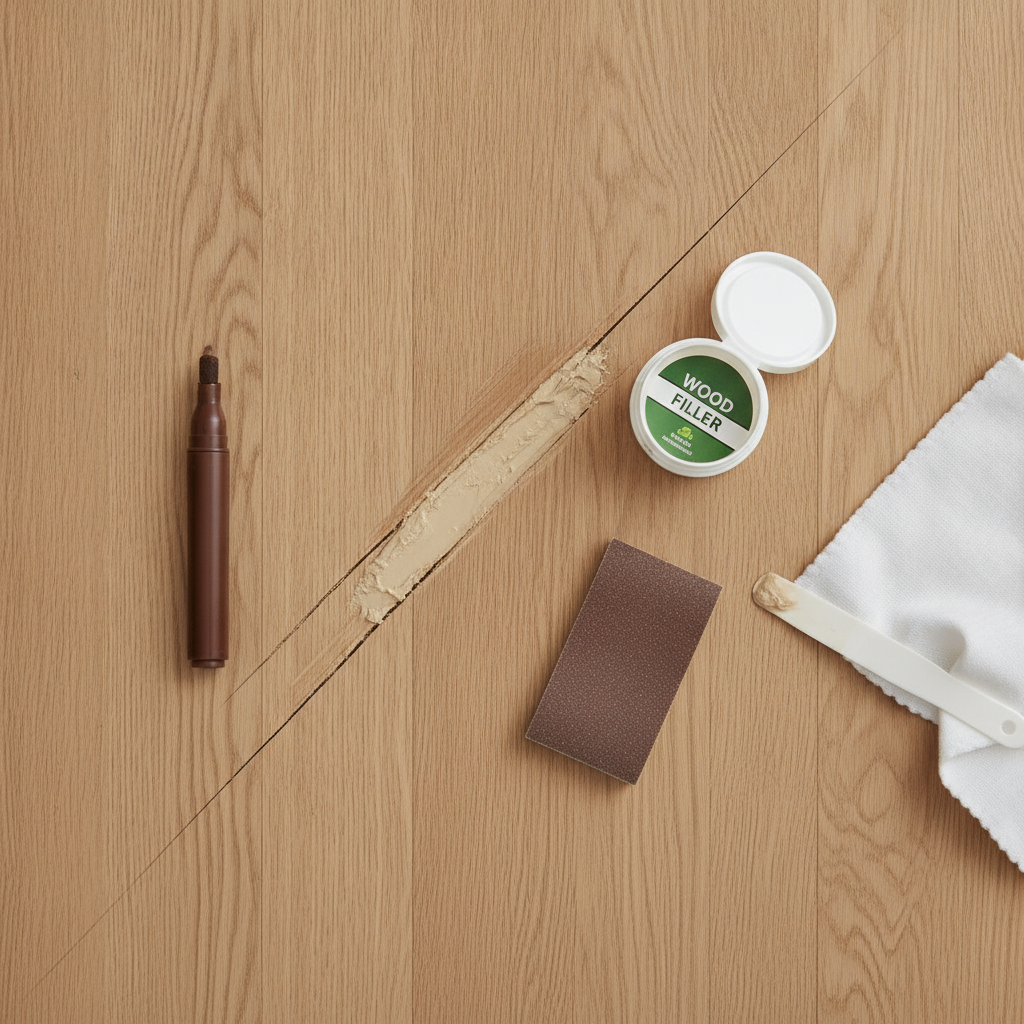
The best defense is a good offense. The American Kennel Club (AKC) emphasizes that keeping your dog’s nails properly trimmed is the single most effective way to prevent scratches.2 But when they do happen, here’s your triage guide:
- Level 1: Surface Scuffs (in the finish): For light, white-ish scratches that are only in the polyurethane finish, you often don’t need filler. Try rubbing a walnut over the scratch; its natural oils can often buff out and hide the scuff. Alternatively, a small amount of mineral spirits on a clean cloth can sometimes clean and conceal minor scuffs.
- Level 2: Finish-Level Scratches (color is affected): If the scratch has removed some of the stain, a stain pen or scratch repair marker (from brands like Minwax or Varathane) is your best friend. Choose a color that closely matches your floor and carefully apply it only within the scratch.
- Level 3: Deep Gouges (into the wood): When a scratch has gone deep into the wood itself, you’ll need wood filler. Choose a stainable filler that matches your floor’s species. Overfill the gouge slightly, let it dry completely, then carefully sand it smooth with fine-grit sandpaper. Apply a matching stain with a small artist’s brush, and once dry, seal it with a small amount of polyurethane finish.
Removing Pet Urine Stains and Odors: A Step-by-Step Guide
Pet urine is a formidable enemy. The dark color in old stains is a chemical reaction between the ammonia in urine and the tannins in the wood fibers. Time is of the essence.
- Fresh Spills: Blot immediately with a clean, absorbent cloth. Do not rub, as this can spread the urine. Clean the area with a pH-neutral cleaner designed for your floor type.
- Light, Set-In Stains: For lighter stains on a sealed floor, you can try a paste of baking soda and water. Let it sit for a few hours, then gently wipe it away. For tougher stains, a cloth dampened with 3% hydrogen peroxide can be placed over the stain. Warning: Hydrogen peroxide can bleach the wood, so use it with extreme caution and test it in a hidden spot first.
- Deep, Black Stains: Unfortunately, these stains indicate the urine has penetrated deep into the wood fibers and caused a permanent chemical burn. The only way to remove these is to mechanically sand the finish and the top layer of wood away until the stain is gone, then re-stain and refinish the area. This is often a job for a professional.
Neutralizing Odor: The lingering smell from pet urine comes from uric acid crystals. Standard cleaners won’t work. You must use an enzymatic cleaner. These products contain enzymes that chemically break down the uric acid, permanently eliminating the source of the odor. This is a critical step recommended by professional restoration services.9
When to Repair vs. Replace: Assessing Deep Urine Damage
Sometimes, the damage is more than skin deep. If you have repeated accidents in one spot, the urine can seep through the flooring planks and into the subfloor, creating a persistent problem that cleaning the surface won’t solve.
Subfloor Damage Checklist:
- Does a strong urine odor persist even after deep cleaning the surface?
- Are the floor planks in the area cupping, warping, or feeling soft?
- Do you see dark stains appearing along the seams between planks?
If you answered yes to any of these, you likely have subfloor contamination. The only permanent solution is to remove the affected flooring to inspect the subfloor (typically plywood or OSB). If the subfloor is stained and odorous, it must be treated. In severe cases, the contaminated section of the subfloor must be cut out and replaced. For subfloors that can be salvaged, they should be cleaned and then sealed with a shellac-based, odor-blocking primer like Zinsser B-I-N. According to the Environmental Protection Agency (EPA), long-term exposure to high concentrations of ammonia can pose indoor air quality risks, making proper remediation a health priority.10
Frequently Asked Questions About Pet-Friendly Flooring
What is the single most durable flooring for a house with large dogs?
For pure, brute-force durability against scratches and accidents, porcelain tile with a PEI rating of 4 or 5 is the toughest option available.5 However, for the best balance of durability, comfort, and safety, most experts recommend a high-quality Luxury Vinyl Plank (LVP) with a commercial-grade wear layer of 20 mil or more.
Is there such a thing as 100% waterproof REAL wood flooring?
Yes, this is the category known as hybrid hardwood. It features a thin veneer of real, authentic wood on top of a 100% waterproof composite core (like SPC). It’s crucial to understand the distinction: the core is waterproof, so the plank won’t swell or warp, but the real wood surface on top is only water-resistant and can still be damaged by standing water or scratched.
What is the easiest type of flooring to clean pet hair from?
Any hard, smooth, non-porous surface is ideal. Luxury Vinyl Plank, sheet vinyl, and sealed tile are top choices because they don’t have fibers or deep grout lines to trap hair and dander. This is also beneficial for air quality, as organizations like the Asthma and Allergy Foundation of America (AAFA) often recommend hard-surface flooring to reduce the buildup of allergens like pet dander.11
How can I protect my existing hardwood floors from my pets?
Prevention is everything. The most effective strategies are:
- Nail Care: Keep your pet’s nails trimmed short and filed smooth.
- Protective Rugs: Use area rugs and runners in high-traffic areas, like hallways and near doorways.
- Wipe Spills Immediately: Don’t give moisture a chance to penetrate the finish.
- Use Furniture Pads: Place pads under all furniture legs to prevent scratches when items are moved.
- Maintain the Finish: Ensure your floor has a durable, factory-applied finish like Aluminum Oxide. If your floor’s finish is worn, consider having it professionally recoated.
Choosing the Right Floor for Your Furry Family
The days of sacrificing style for durability—or living in constant fear of pet-related damage—are over. For most pet owners seeking the ultimate balance of performance and aesthetics, the choice often narrows to three outstanding options: high-quality Luxury Vinyl Plank (LVP) for its all-around excellence, Waterproof Laminate for its superior scratch resistance, and Hybrid Hardwood for those who desire authentic wood with a waterproof safety net.
By understanding the key durability metrics like wear layers and AC ratings, you can now shop like an expert. And by equipping yourself with the knowledge to handle the inevitable scratch or stain, you can protect your investment for years to come. With this guide, you are empowered to move beyond the fear of costly mistakes and confidently choose the perfect, pet-friendly floor that will make your house a beautiful, worry-free home for every member of your family, two-legged and four.
This article provides general guidance. Always consult with a professional flooring installer for advice specific to your home’s conditions and subfloor. Product specifications and warranties can change; verify all details with the manufacturer before purchasing.
References & Authoritative Sources
- Based on aggregated data from flooring industry research on common pet-related repair costs.
- American Kennel Club (AKC). The AKC provides authoritative information on canine health, wellness, and safety, including recommendations for creating a safe home environment for dogs of all ages.
- Resilient Floor Covering Institute (RFCI). An industry trade association that provides technical standards and information for resilient flooring products, including luxury vinyl tile and plank.
- Association of European Producers of Laminate Flooring (EPLF) & North American Laminate Flooring Association (NALFA). These organizations develop and maintain the standards for laminate flooring quality and performance, including the Abrasion Class (AC) rating system.
- Porcelain Enamel Institute (PEI). The PEI rating is the industry standard test for measuring the abrasion resistance and durability of ceramic and porcelain tile.
- Janka Hardness Scale. The industry-standard measurement for determining the resistance of a species of wood to denting and wear.
- Based on technical specifications from leading floor finish manufacturers such as Bona and DuraSeal, which detail the superior abrasion resistance of Aluminum Oxide coatings.
- National Wood Flooring Association (NWFA). The leading trade association for the wood flooring industry, providing standards, training, and guidelines for the installation, maintenance, and restoration of wood floors.
- Institute of Inspection, Cleaning and Restoration Certification (IICRC). A standard-setting body for the inspection, cleaning, and restoration industries, providing the professional framework for remediating damage from water, moisture, and contaminants like pet urine.
- Environmental Protection Agency (EPA). The EPA provides public health information regarding indoor air quality and the potential health effects of exposure to chemicals like ammonia.
- Asthma and Allergy Foundation of America (AAFA). A leading organization that provides recommendations for creating healthier indoor environments, including flooring choices that can help reduce allergens like pet dander.
