
Choosing a new floor for your home often feels like an impossible compromise. You crave the timeless beauty and warmth of hardwood, but your real life—with its busy kitchens, unpredictable pets, and active children—screams for something more practical. For years, homeowners have faced a difficult choice: accept the constant worry of water damage, scratches, and spills on traditional wood, or settle for a less authentic alternative. What if you didn’t have to choose?
This is where modern flooring innovation steps in. Bravewood’s waterproof hybrid hardwood is engineered to solve this exact dilemma, promising the stunning aesthetics of real wood with the resilience to handle the demands of a modern household. But with so many technical terms and marketing claims, how can you be sure you’re making the right choice?
This is not just another product overview. This is your definitive, expert-guided resource to future-proof flooring. We will decode the technology behind waterproof hybrid hardwood, provide real-world insights into its durability against pets and kids, and help you match the perfect style to your modern home. By the end of this guide, you will have the clarity and confidence to invest in a floor you’ll love for years to come.
- The Modern Homeowner’s Flooring Dilemma: Why Traditional Hardwood Falls Short
- What is Waterproof Hybrid Flooring? Decoding the Technology
- A Deep Dive into Bravewood: The Brand, The Styles, The Promise
- The Real-World Stress Test: Is Bravewood Durable Enough for Pets & Kids?
- Styling Your Space: Matching Bravewood Flooring to Modern Home Designs
- Bravewood vs. The Alternatives: A Head-to-Head Comparison
- Installation & Long-Term Care: Protecting Your Investment
- Is Bravewood Waterproof Hardwood Worth the Price? A Final Verdict
- References & Authoritative Sources
The Modern Homeowner’s Flooring Dilemma: Why Traditional Hardwood Falls Short
For generations, solid hardwood has been the gold standard for flooring, but its classic appeal comes with significant vulnerabilities. For today’s homeowner, these drawbacks aren’t just minor inconveniences; they are sources of constant stress and potential financial loss.
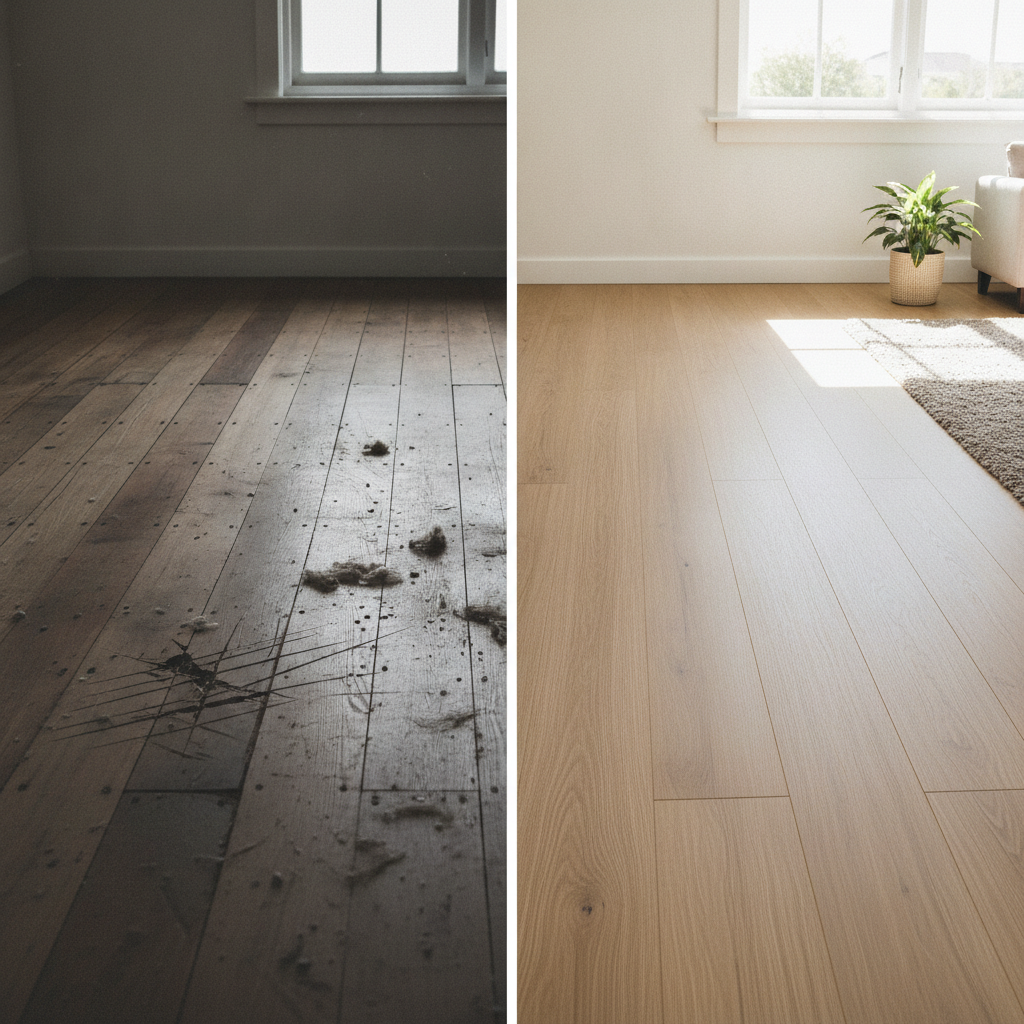
The most significant risk is water damage. Traditional hardwood is essentially a sponge. A simple spill, a pet accident, or a leaky appliance can lead to devastating consequences. According to certified water damage restoration professionals, moisture absorption causes wood cells to swell, leading to irreversible damage. “Once solid hardwood becomes saturated, you’ll see issues like cupping, where the edges of the planks are higher than the center, or crowning, where the center bulges,” explains a leading expert from an IICRC-certified firm. “In severe cases, the floor can buckle entirely, pulling away from the subfloor. These are not simple cosmetic fixes; they often require complete replacement.”
Beyond catastrophic leaks, there’s the daily battle against scratches and dents. Pet claws, dragged furniture, and dropped toys can quickly mar the surface of a beautiful wood floor, leaving a web of unsightly marks. While some minor scratches can be repaired, deep gouges often require professional sanding and refinishing—a costly and disruptive process.
Finally, there’s the challenge of style. Flooring is a major design element, and what was fashionable a decade ago can make a home feel dated today. As one real estate agent with deep market knowledge notes, “Outdated or visibly damaged flooring is one of the first things potential buyers notice. It can significantly impact a home’s perceived value and saleability.” This insight is backed by data from the National Association of Realtors® (NAR), which consistently reports that new, modern flooring offers a strong return on investment for homeowners [2]. The dilemma is clear: homeowners need a solution that offers the beauty of wood without the inherent fragility.
What is Waterproof Hybrid Flooring? Decoding the Technology
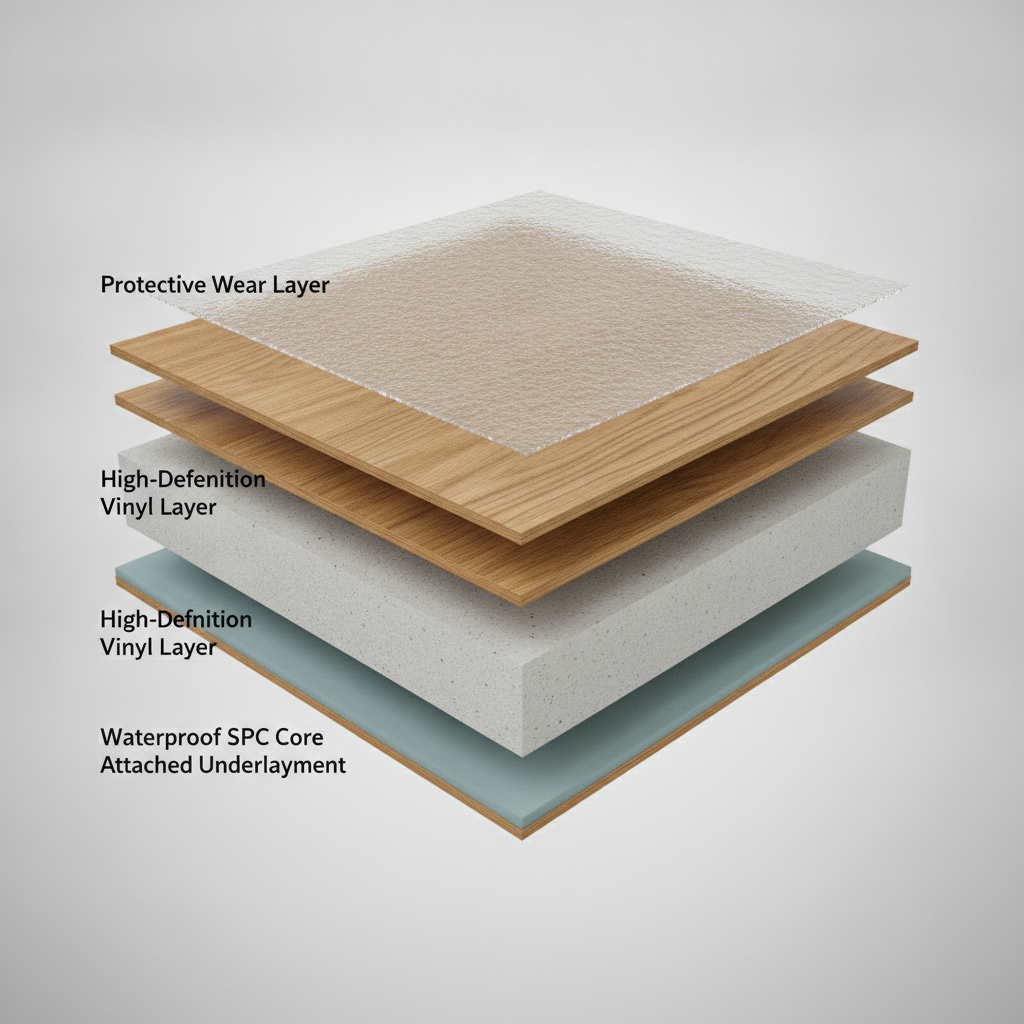
The term “waterproof hardwood” can seem contradictory, but the magic lies in its innovative hybrid construction. Unlike solid wood, which is a single piece of timber, waterproof hybrid flooring is a multi-layered marvel of engineering designed for maximum performance. To truly understand its benefits, let’s break it down layer by layer.
At the heart of this technology is a rigid core, which is typically one of two types:
- SPC (Stone Plastic Composite): This core is made from a mixture of natural limestone powder, polyvinyl chloride, and stabilizers. The result is an incredibly dense, rigid, and dimensionally stable core that is 100% waterproof and highly resistant to dents and impacts.
- WPC (Wood Plastic Composite): This core combines recycled wood pulp and plastic composites. It’s also 100% waterproof but is generally thicker and less dense than SPC, offering more comfort and quietness underfoot.
This waterproof core is the foundation, but the other layers are just as critical:
- Wear Layer: This is the transparent top coat that provides the primary defense against scratches, scuffs, and stains. Its thickness, measured in mils (thousandths of an inch), is a key indicator of durability.
- Vinyl Top Layer: This is where the stunning visual realism comes from. A high-resolution image of real wood grain and texture is printed on this layer, making it nearly indistinguishable from traditional hardwood.
- Rigid Core (SPC or WPC): The waterproof engine of the plank, providing stability and preventing water from ever reaching the subfloor.
- Attached Underlayment: Most hybrid flooring comes with a pre-attached pad that provides sound absorption, cushioning, and a moisture barrier, simplifying installation.
So, how “waterproof” is it? A certified flooring inspector clarifies the crucial distinction: “‘Water-resistant’ means a product can handle topical moisture for a limited time, but water can still seep through the seams. ‘Waterproof,’ in the context of hybrid flooring, means the plank itself will not swell, warp, or degrade when exposed to water.” Industry standards from organizations like ASTM International provide objective testing methods to validate these claims, ensuring that a product marketed as waterproof meets rigorous performance criteria [3]. When properly installed, the tight locking systems between planks create a surface that is exceptionally resistant to everyday spills, making it a true spill proof wood flooring solution for kitchens, bathrooms, and basements.
A Deep Dive into Bravewood: The Brand, The Styles, The Promise
With a clear understanding of the technology, let’s focus on Bravewood. As a brand, Bravewood has positioned itself as a provider of high-performance, design-forward flooring solutions specifically for modern homes. Their core promise is to deliver the authentic look of hardwood without the associated worries, leveraging advanced waterproof hybrid technology.
Bravewood’s product lines are built on a foundation of durable SPC cores, ensuring maximum dent resistance and stability. They offer a curated selection of styles that align with contemporary interior design trends, focusing on realistic textures, sophisticated color palettes, and modern plank dimensions. To get a clear picture of their offerings, it’s essential to consult the official Bravewood website for the most current specifications and collection details [5].
Here’s a snapshot of what defines the Bravewood promise:
Bravewood at a Glance
| Feature | Specification Range | Benefit for Homeowners |
|---|---|---|
| Core Type | Primarily Stone Plastic Composite (SPC) | Superior dent resistance, dimensional stability, and 100% waterproof performance. |
| Wear Layer Thickness | Typically ranges from 12 mil to 20 mil+ | Enhanced protection against scratches from pets, kids, and daily foot traffic. |
| Warranty | Comprehensive limited residential and light commercial warranties | Long-term peace of mind and protection for your investment. |
| Plank Sizes | Often features wider and longer planks (e.g., 7″ to 9″ wide) | Creates a more open, modern, and high-end aesthetic in any room. |
| Certifications | Often includes certifications like FloorScore® for low VOCs [4] | Ensures better indoor air quality, making it a healthier choice for your family. |
When evaluating a brand, reputation is key. A quick check of resources like the Better Business Bureau (BBB) can provide insight into a company’s track record with customer service and product reliability [6]. Bravewood’s commitment to using certified materials and offering robust warranties demonstrates a focus on quality and consumer trust, positioning them as a reputable choice in the competitive flooring market.
The Real-World Stress Test: Is Bravewood Durable Enough for Pets & Kids?
Marketing claims are one thing, but how does Bravewood’s durable hybrid hardwood for pets and kids hold up in the chaos of a real, active home? The answer lies in the technical specifications that go beyond the surface.
To objectively measure durability, we can use a “Durability Scorecard” approach, focusing on two key metrics:
- Wear Layer Thickness: As mentioned, this is your floor’s first line of defense. A thicker wear layer, measured in mils, provides more protection against scratches. For a busy household with pets, a wear layer of 12 mil is a good starting point, while 20 mil or more offers premium, commercial-grade protection. Bravewood’s offerings typically fall within this robust range.
- AC Rating (Abrasion Class): This is an industry standard that rates a floor’s resistance to abrasion, impact, stains, and burns [7]. The ratings range from AC1 (light residential use) to AC5 (heavy commercial use). Most high-quality hybrid floors, including those from Bravewood, carry an AC3 or AC4 rating, signifying they are built to withstand general to heavy residential traffic.
These specs directly translate to real-world resilience. The thick wear layer and high AC rating mean the floor is highly scratch-resistant against dog claws and dragged toys. The dense SPC core provides superior dent resistance, so a dropped can or heavy toy is far less likely to leave a permanent mark.
Of course, the ultimate test is against spills. A key benefit of Bravewood’s waterproof construction is that liquids bead up on the surface. A spilled glass of juice or a pet accident can be wiped away cleanly without any fear of it seeping into the core or subfloor, preventing stains, odors, and long-term damage. This makes it an ideal spill proof wood flooring solution.
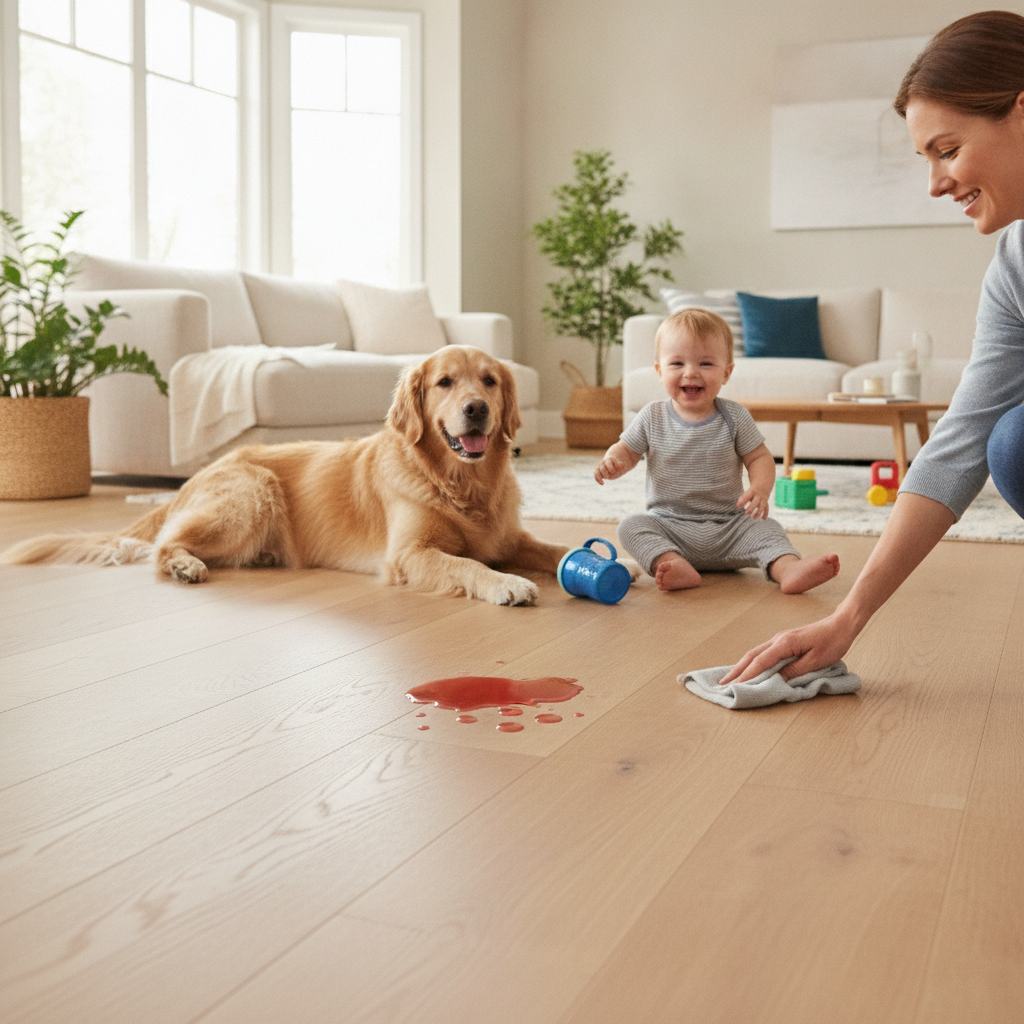
One family who recently installed Bravewood in their home shared their experience: “With two large dogs and a toddler, our old hardwood was a constant source of anxiety. Since installing the Bravewood hybrid, we just don’t worry anymore. Spills wipe right up, and after six months, we can’t find a single scratch from the dogs’ nails. It’s been a game-changer for our peace of mind.”
Furthermore, for families, health is a top priority. Many Bravewood products are Greenguard Gold Certified, indicating they have been tested for over 10,000 chemicals and have very low VOC (Volatile Organic Compound) emissions, contributing to healthier indoor air for your children and pets [8].
Styling Your Space: Matching Bravewood Flooring to Modern Home Designs
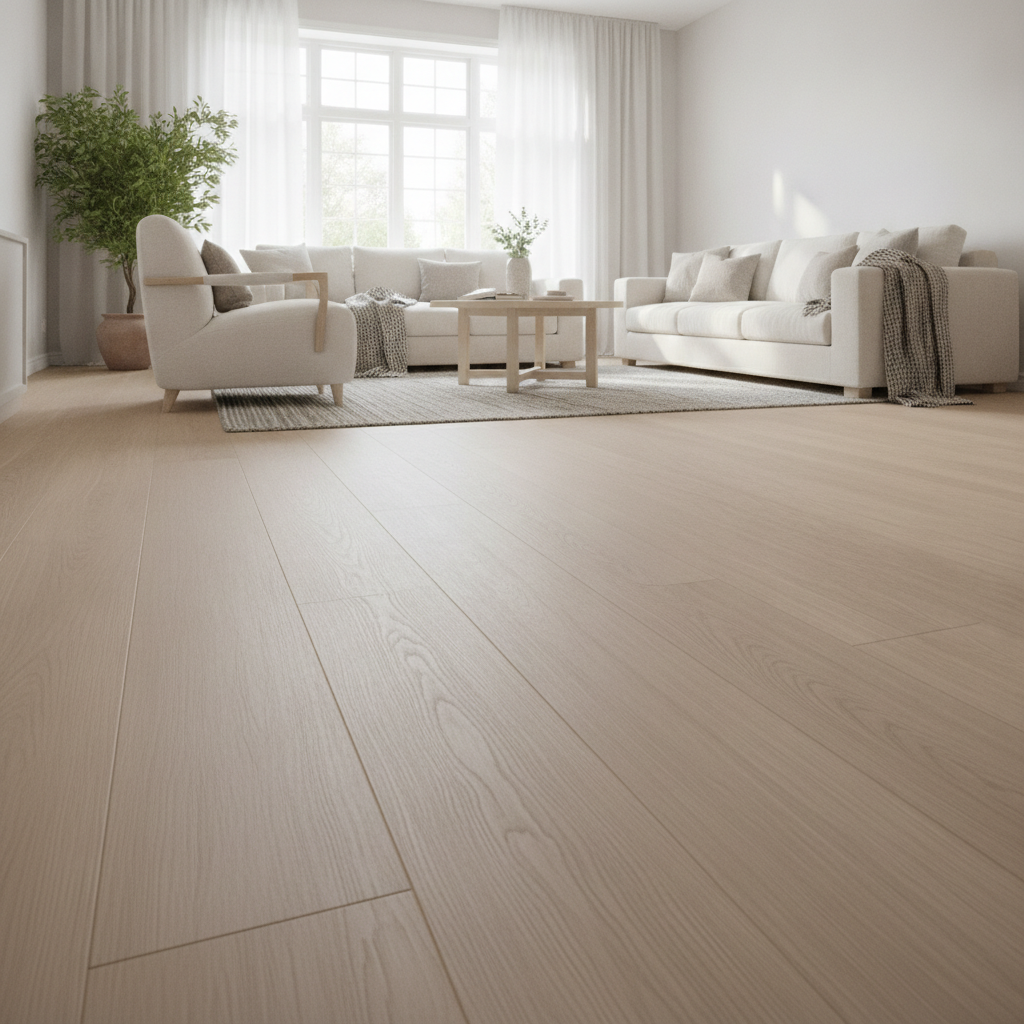
A floor’s performance is critical, but its style is what transforms a house into a home. Bravewood’s collections are specifically curated to complement today’s most popular modern home flooring aesthetics. Choosing the right color, texture, and plank width is key to achieving a cohesive and sophisticated look.
An accomplished interior designer on our pro panel emphasizes the importance of the foundation: “Flooring is the canvas of a room. For modern design, we’re seeing a strong trend towards wider, longer planks in more natural, matte finishes. They create a sense of spaciousness and authenticity that is essential for minimalist and organic styles.” This trend is validated by design publications like Architectural Digest and data from home design platforms like Houzz, which showcase a clear preference for less glossy, more natural-looking wood floors in contemporary projects [9].
For the Minimalist: Achieving Scandinavian and Japandi Looks
Scandinavian and Japandi (a hybrid of Japanese and Scandinavian) designs are defined by light, airiness, and a connection to nature. The goal is to create a serene, uncluttered space.
To achieve this, look for Bravewood styles with the following characteristics:
- Color: Light, natural wood tones like pale oak, bleached pine, or soft maple. These colors reflect light and make a space feel larger and more open.
- Plank: Wide planks (7 inches or more) with minimal color variation and knotting create a clean, seamless look.
- Finish: A matte or low-sheen finish is crucial. It looks more organic and prevents glare, contributing to the style’s calm and understated elegance. This minimalist flooring choice provides the perfect neutral backdrop for simple furnishings and natural textiles.
For the Urban Dweller: Industrial and Mid-Century Modern Styles
Industrial and Mid-Century Modern aesthetics embrace a different kind of character. Industrial design often features raw materials like exposed brick, concrete, and metal, while Mid-Century Modern is known for its clean lines and warm, organic wood tones.
For these styles, consider Bravewood options that offer more warmth and texture:
- Color: For an industrial look, a floor with grey undertones or a weathered, reclaimed appearance can beautifully complement concrete and metal elements. For Mid-Century Modern, choose styles with rich, warm tones like walnut or teak to harmonize with iconic furniture pieces.
- Plank: Wide plank floors are still very much a modern choice here, adding a sense of scale and substance.
- Finish: A wire-brushed texture can add depth and character that stands up to the rawness of an industrial space. For a Mid-Century look, a smooth, low-sheen finish allows the warm wood grain to be the star.
Bravewood vs. The Alternatives: A Head-to-Head Comparison
To make an informed decision, it’s crucial to see how Bravewood’s waterproof hybrid hardwood stacks up against other popular flooring options. Each material has its own set of strengths and weaknesses.
As one veteran flooring installer from our pro panel explains, “The biggest confusion I see is between hybrid, LVP, and laminate. They can look similar, but how they’re made and how they perform under pressure is very different. Understanding the core is everything.”
Here is a clear, head-to-head comparison:
| Criteria | Bravewood Hybrid Hardwood (SPC Core) | Luxury Vinyl Plank (LVP) | Laminate Flooring | Traditional Solid Hardwood |
|---|---|---|---|---|
| Water Resistance | Excellent (100% Waterproof Core) | Excellent (100% Waterproof Core) | Poor to Fair (Water-resistant top, but core is susceptible to swelling) | Very Poor (Highly susceptible to permanent water damage) |
| Scratch/Dent Resistance | Excellent. Dense SPC core provides superior dent resistance. Thick wear layer resists scratches. | Good to Excellent. Softer core can be more prone to dents from heavy objects. | Good. Highly scratch-resistant top layer, but can chip. | Fair to Poor. Dents and scratches easily depending on wood species and finish. |
| Aesthetics/Realism | Excellent. High-definition visuals and embossed textures create a very realistic wood look. | Very Good. Realism has improved dramatically, but can sometimes look less authentic. | Good. Can look artificial and produce a hollow sound when walked on. | Excellent. The authentic, natural standard for beauty and warmth. |
| Cost (Installed) | Mid to High ($$$) | Low to Mid ($$) | Low ($) | High to Very High ($$$$) |
| DIY-Friendliness | Very Good. Click-lock systems make for straightforward installation. | Excellent. Generally the easiest to cut and install for DIYers. | Good. Similar click-lock installation, but requires more care when cutting. | Poor. Requires professional installation with specialized tools. |
For a deeper understanding of the characteristics of traditional wood, the National Wood Flooring Association (NWFA) provides authoritative guidelines and standards [10]. Ultimately, Bravewood hybrid flooring occupies a sweet spot: it offers the waterproof performance of LVP but with superior dent resistance and a level of aesthetic realism that challenges traditional hardwood, all while being more durable and water-safe.
Installation & Long-Term Care: Protecting Your Investment
Choosing a great floor is only half the battle; proper installation and maintenance are essential to ensure it performs beautifully for its entire lifespan and that your warranty remains intact.
A critical mistake homeowners make is overlooking subfloor preparation. To maintain a waterproof seal, the floor must be installed correctly. Bravewood’s official installation guides are the primary authoritative source and should be followed meticulously [5].
Here are some essential installation dos and don’ts:
- DO ensure your subfloor is clean, dry, and perfectly level. Any imperfections can compromise the locking system.
- DO acclimate the flooring planks in the room for at least 48 hours before installation.
- DON’T install cabinets or kitchen islands on top of a floating floor; this can prevent it from expanding and contracting naturally.
- DON’T forget to leave a small expansion gap around the perimeter of the room as specified by the manufacturer.
Once installed, caring for your Bravewood floor is simple. Its non-porous surface makes it easy to clean. Regular sweeping or vacuuming (using a hard floor setting without a beater bar) and occasional mopping with a pH-neutral cleaner is all that’s needed. Avoid harsh chemicals, wax-based cleaners, and steam mops, as they can damage the finish and void the warranty.
DIY Fixes for Minor Scratches and Scuffs
Even with a durable wear layer, minor cosmetic scuffs or light scratches can occasionally happen. The good news is that for the typical polyurethane or urethane finish found on hybrid flooring, these are often easy to fix yourself.
For very light scuffs, first try cleaning the area with a soft cloth and the recommended neutral cleaner. If a scratch is still visible, a color-matched repair kit or stain pen can work wonders. Simply clean the area, apply the marker sparingly to the scratch, and immediately wipe away any excess with a clean, dry cloth. This simple process can make minor imperfections virtually disappear, keeping your floor looking new for years.
Is Bravewood Waterproof Hardwood Worth the Price? A Final Verdict
After decoding the technology, stress-testing its durability, and exploring its style potential, we arrive at the final question: is Bravewood waterproof hardwood flooring worth the price?
The answer depends on your priorities, but for the modern homeowner seeking a long-term solution that blends high-end style with real-world practicality, the value proposition is exceptionally strong. It directly solves the most significant pain points of traditional hardwood—fear of water damage and scratches—without forcing a major compromise on aesthetics.
Let’s summarize the key points:
Pros:
- 100% Waterproof: Provides ultimate peace of mind in kitchens, bathrooms, and basements.
- Exceptional Durability: High dent and scratch resistance makes it ideal for homes with pets and kids.
- Stunning Realism: Modern printing and texturing technology create an authentic wood look.
- Easy Maintenance: Simple to clean and care for, saving time and effort.
- Healthy Home Choice: Low-VOC options like those with FloorScore® and Greenguard Gold certifications contribute to better indoor air quality.
Cons:
- Higher Initial Cost: More expensive than traditional laminate or many LVP options.
- Not ‘Real’ Wood: While visually convincing, it is not solid hardwood and cannot be sanded or refinished.
Compared to cheaper alternatives like laminate, Bravewood offers vastly superior water protection and durability. Compared to LVP, it often provides better dent resistance and a more premium feel. And while it doesn’t have the refinishing potential of solid hardwood, it also doesn’t come with any of its anxieties. You are investing in a beautiful, worry-free floor from day one.
For homeowners ready to purchase, Bravewood flooring is typically available through a network of authorized dealers. You can find a local retailer by using the dealer locator on their official website.
In conclusion, Bravewood waterproof hybrid hardwood represents the next evolution in flooring. It’s a product born from a deep understanding of how modern families live. It acknowledges that you shouldn’t have to sacrifice style for durability or live in constant fear of a simple spill. By investing in this advanced flooring, you are not just buying a new surface; you are buying confidence, peace of mind, and a beautiful, lasting foundation for your home.
Ready to find the perfect future-proof floor for your home? Explore the latest Bravewood waterproof hardwood collections on their official site or download our free ‘Modern Flooring Checklist’ to guide your decision.
This article may contain affiliate links. All product performance claims should be verified with the manufacturer’s official documentation and warranty. Repair advice is for informational purposes; professional assistance is recommended for significant damage.
References & Authoritative Sources
- Institute of Inspection, Cleaning and Restoration Certification (IICRC). (N.D.). IICRC Standards for Water Damage Restoration. Retrieved from iicrc.org.
- National Association of Realtors®. (2022). 2022 Remodeling Impact Report. Retrieved from nar.realtor.
- ASTM International. (N.D.). Flooring Standards. Retrieved from astm.org.
- SCS Global Services. (N.D.). FloorScore®. Retrieved from scsglobalservices.com.
- Bravewood Flooring. (N.D.). Official Product Specifications and Warranty Information. Retrieved from the official manufacturer website.
- Better Business Bureau (BBB). (N.D.). Business Profile Information. Retrieved from bbb.org.
- European Producers of Laminate Flooring (EPLF). (N.D.). AC Ratings for Laminate Flooring. Retrieved from eplf.com.
- UL Environment. (N.D.). GREENGUARD Certification Program. Retrieved from ul.com/gg.
- Architectural Digest. (N.D.). Interior Design Trends. Retrieved from architecturaldigest.com.
- National Wood Flooring Association (NWFA). (N.D.). Technical Guidelines for Wood Flooring. Retrieved from nwfa.org.
