
Do you love the timeless, elegant look of hardwood floors but dread the thought of what a single spill, a pet accident, or your kids’ energetic playtime could do to them? You’re not alone. For decades, homeowners have faced a difficult choice: embrace the beauty of wood and live with constant anxiety, or settle for a more durable but less authentic alternative. But what if you didn’t have to compromise?
Enter the next generation of flooring: waterproof hybrid hardwood. This innovative solution promises the best of both worlds—the authentic beauty of a real wood surface combined with a resilient, 100% waterproof core. It’s designed for the chaos of modern life.
This guide will cut through the confusing marketing jargon to give you the clear, actionable information you need. We’ll unpack the science behind how these floors work, decode the durability ratings that actually matter, and provide a head-to-head comparison with other popular options. By the end, you’ll be empowered to make a confident investment in a floor that not only looks stunning but is truly built to last in any room of your house.
- What Exactly is ‘Waterproof Hardwood’? Unmasking the Technology
- The Science of a Future-Proof Floor: Decoding Durability
- Head-to-Head: Waterproof Hybrid Wood vs. The Alternatives
- The Lifestyle Selection Guide: Finding Your Perfect Floor
- Smart Shopping & Installation: What to Know Before You Buy
- Frequently Asked Questions (FAQ)
- Your Future-Proof Floor Awaits
- References & Authoritative Sources
What Exactly is ‘Waterproof Hardwood’? Unmasking the Technology
The first and most important thing to understand is that “waterproof hardwood” is not solid wood that has been magically made impervious to water. Instead, it’s a sophisticated, multi-layered hybrid product engineered to deliver a benefit that traditional wood simply cannot: total peace of mind against moisture. This technology is a game-changer, solving the fundamental vulnerability that has plagued wood floors for centuries.
As one veteran flooring expert puts it, “For years, the advice was simple: keep wood and water separate. Hybrid construction flips that on its head. By mounting a real wood veneer on a waterproof composite core, we’ve essentially created the floor homeowners have always dreamed of—one that has the soul of hardwood and the resilience of a high-tech material.”
The Anatomy of a Hybrid Plank: A Layer-by-Layer Breakdown
To truly understand waterproof hardwood, you need to look inside. Each plank is a marvel of material science, with every layer serving a distinct and critical purpose.
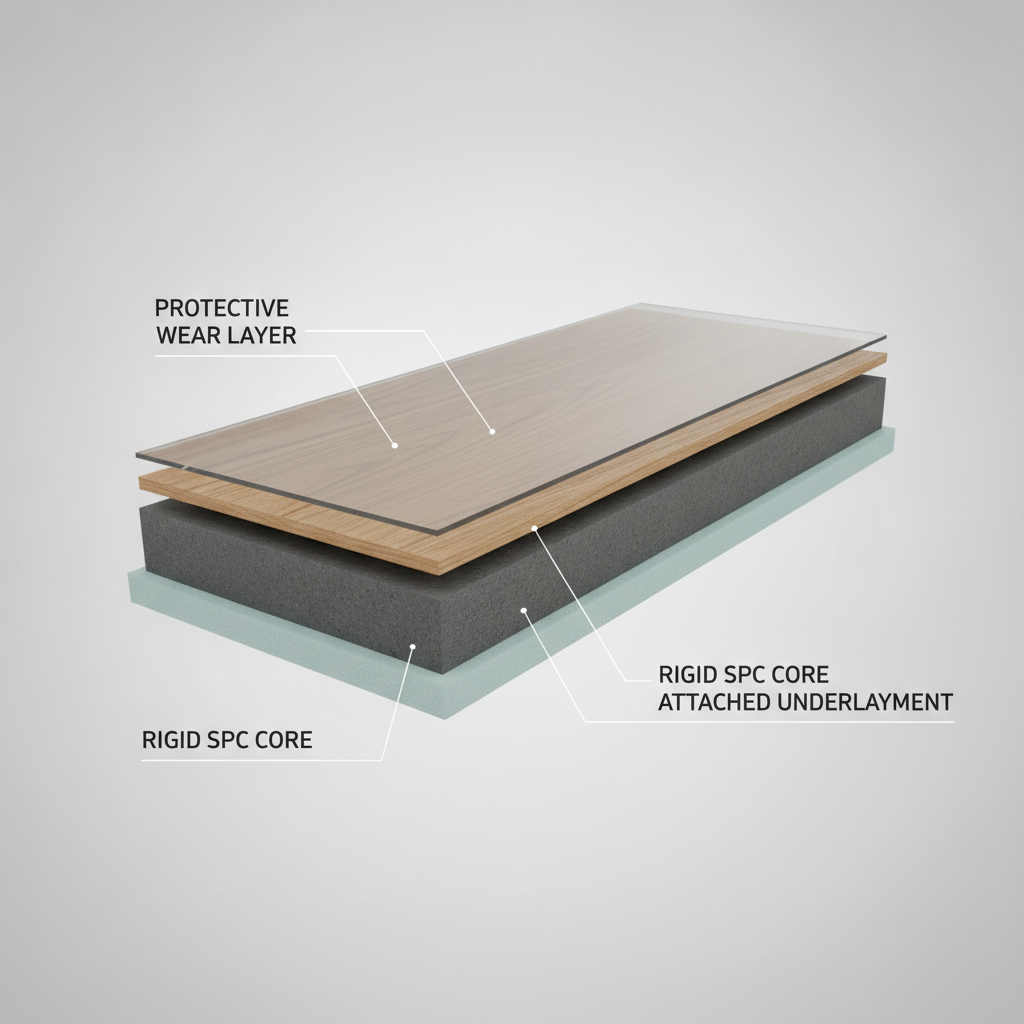
- Protective Wear Layer: This is the invisible shield on top. It’s a transparent, factory-applied coating, often enhanced with aluminum oxide particles, that provides the first line of defense against scratches, scuffs, and fading from UV light.
- Real Wood Veneer: This is the star of the show. Unlike laminate or vinyl which use a printed image, this is a thin slice of 100% authentic hardwood, typically ranging from 0.6mm to 2mm thick. It provides the unique grain, texture, and natural beauty that can only come from real wood.
- Rigid Core: This is the revolutionary heart of the plank. Made from either an SPC (Stone Polymer Composite) or WPC (Wood Polymer Composite) core, this layer is completely waterproof and incredibly stable. It will not swell, buckle, or warp when exposed to moisture. SPC is denser and more rigid, offering superior dent resistance, while WPC is slightly softer and quieter underfoot.
- Attached Underlayment: Most hybrid planks come with a pre-attached pad made of cork or foam. This layer provides sound absorption, adds comfort underfoot, and simplifies the installation process by eliminating the need for a separate underlayment roll.
Is It Real Wood? Setting the Record Straight
Yes, the part you see and touch is absolutely real wood. That’s what separates this category from look-alikes such as LVP or laminate. However, the core structure that provides the waterproof properties and stability is a man-made composite.
Think of it like a high-tech protective case on a beautiful, premium smartphone. The phone itself is the real deal, but it’s the advanced case that protects it from the drops and spills of daily life. Similarly, the real wood veneer provides the authentic aesthetic, while the composite core provides the bulletproof protection.
The National Wood Flooring Association (NWFA), the leading authority in the industry, categorizes wood flooring into distinct types 1. While this hybrid technology is newer, it builds on the principles of engineered flooring by layering materials to achieve superior performance characteristics that solid wood alone cannot offer.
The Science of a Future-Proof Floor: Decoding Durability
Marketing terms like “ultra-durable” and “pet-proof” are everywhere, but what do they actually mean? To make a smart investment, you need to understand the science and standardized metrics that define a floor’s true resilience. This is how you move past the sales pitch and evaluate a product like a pro.
Beyond ‘Waterproof’: Spill-Proof Systems and Seams
A critical distinction often missed is the difference between a waterproof plank and a waterproof floor system. While the hybrid plank itself won’t be damaged by water, that doesn’t help if water seeps between the seams and damages your subfloor, leading to mold and structural issues.
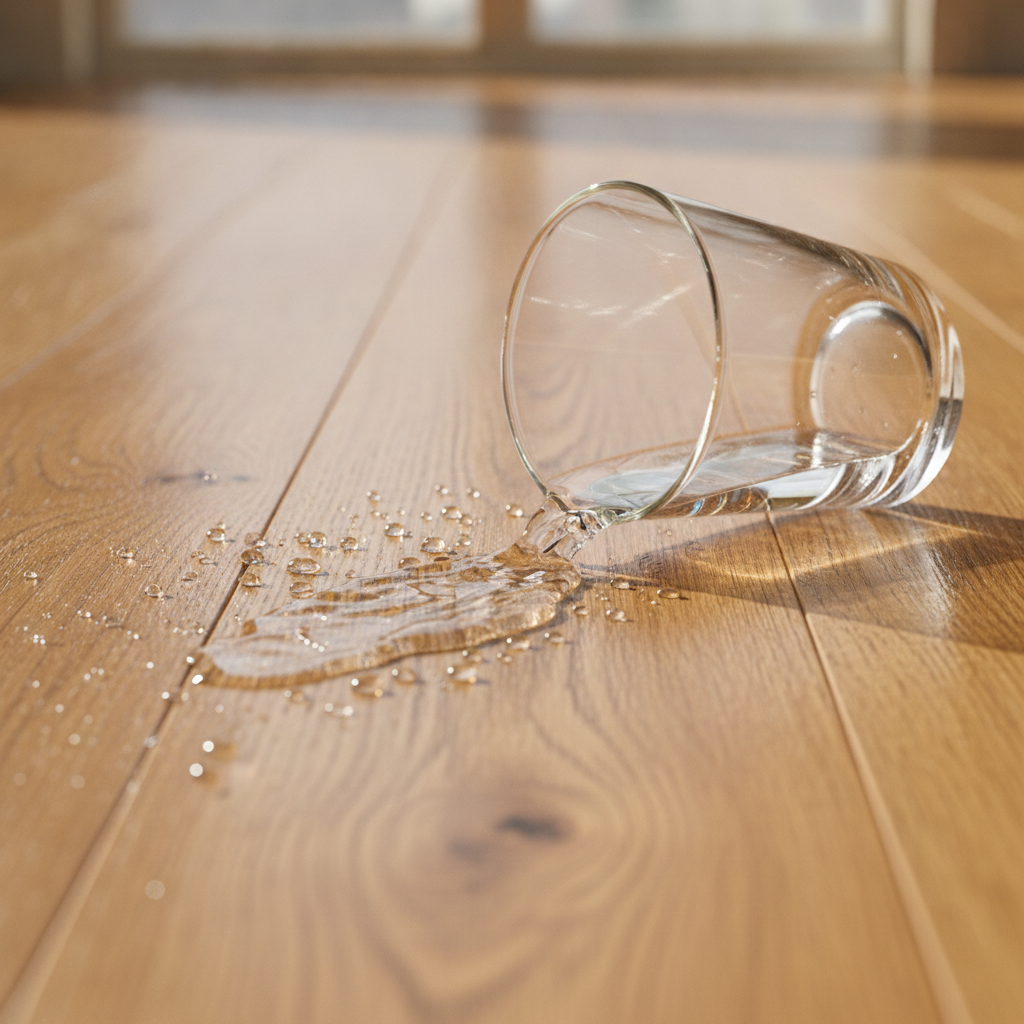
This is where advanced locking systems and hydrophobic coatings come in. Manufacturers have developed incredibly tight, precision-milled locking mechanisms that form a barrier against surface spills. Some brands go a step further with proprietary technologies, like Pergo WetProtect or Mohawk’s SpillProtect, which are designed to trap spills on the surface for extended periods (often 24-72 hours), giving you ample time to clean up.
Preventing subfloor moisture is paramount. The Institute of Inspection, Cleaning and Restoration Certification (IICRC) sets the professional standard for water damage restoration (the IICRC S500) 2, and their guidelines underscore the importance of keeping the subfloor dry to prevent long-term, costly problems. A floor with a robust spill-proof system is your best defense.
The Truth About Scratch Resistance: Wear Layers and AC Ratings
When it comes to everyday scratches from pet claws, dragged furniture, or kids’ toys, the wood itself is not the first line of defense—the wear layer is. Two key metrics tell you how tough this protective layer is:
- Wear Layer Thickness (Mils): Measured in mils (one-thousandth of an inch), this tells you how much protective coating is on the plank. For normal residential use, look for a minimum of 12 mil. For busy homes with pets and kids, a 20 mil or thicker wear layer is highly recommended for maximum protection.
- Abrasion Class (AC) Rating: This is a standardized test that rates a floor’s resistance to abrasion, impact, stains, and burns. The scale runs from AC1 (light residential use) to AC5 (heavy commercial use). For durable home flooring, look for products with an AC4 or AC5 rating, which indicates they are built to withstand heavy residential traffic.
These top-tier wear layers are often infused with microscopic particles of aluminum oxide, one of the hardest minerals in existence. As authorities on coating technology like Bona and DuraSeal can attest, this additive dramatically increases the surface’s resistance to the friction and abrasion that cause scratches.
Dent Resistance: The Role of the Core and the Janka Scale
Dents from dropped objects or heavy furniture are another major concern. Hybrid flooring fights this on two fronts. First, the high-density SPC core is incredibly rigid and resists impacts far better than traditional wood or softer WPC cores.
Second, the hardness of the wood veneer itself still plays a role. This is measured by the Janka Hardness Scale, an industry-standard test that measures the force required to embed a steel ball into the wood. The higher the Janka rating, the more resistant the wood is to denting. While a thick wear layer protects from scratches, a hard wood species like Hickory or Maple on top of a dense SPC core creates a floor that is exceptionally tough against impacts.
Data from sources like the US Forest Service’s Forest Products Laboratory 3 provides a reliable, scientific basis for comparing the inherent dent resistance of different wood species.
Head-to-Head: Waterproof Hybrid Wood vs. The Alternatives
With so many advanced flooring options available, how does waterproof hybrid wood stack up against the competition? Understanding the key differences in their construction and performance is crucial for choosing the right material for your home.
vs. Luxury Vinyl Plank (LVP): The Battle of the Cores
This is the closest matchup. Both hybrid wood and high-quality LVP are built on waterproof SPC or WPC cores, making them exceptionally durable. The fundamental difference lies in the surface. LVP is 100% synthetic, using a high-definition photographic layer to mimic the look of wood. Hybrid flooring uses a slice of real wood.
- Aesthetics: Hybrid wood wins on authenticity. The natural grain, depth, and unique variations from plank to plank are something even the best LVP can’t perfectly replicate.
- Durability: They are very comparable. Both offer excellent scratch and dent resistance, especially when comparing products with similar wear layers and core densities.
- Feel: Many homeowners feel the real wood veneer of a hybrid floor offers a more premium, natural feel underfoot compared to the PVC surface of LVP.
An interior designer might note, “LVP has become incredibly realistic, but for clients who value absolute authenticity, the subtle warmth and texture of the real wood veneer on a hybrid floor is the deciding factor. It bridges the gap between practicality and luxury.”
vs. Modern Waterproof Laminate: A Closer Look at the Surface
Laminate flooring has come a long way. Modern waterproof versions now compete directly with hybrid wood and LVP. Like LVP, laminate uses a high-definition printed image layer beneath a tough wear layer. The key difference is often the core material (typically a high-density fiberboard with water-repellent resins) and the exceptional surface hardness laminate is known for.
- Scratch Resistance: Laminate often has a slight edge here. Its surface, rated by the AC system, is notoriously tough and can be one of the most scratch-resistant options on the market.
- Water Resistance: While vastly improved, many “waterproof” laminates are technically “spill-proof” for a warranted period, often 24 to 72 hours. Hybrid wood’s composite core is 100% waterproof through and through, offering a higher level of protection against prolonged exposure or appliance leaks.
- Look & Feel: Hybrid wood again wins on authenticity with its real wood veneer.
vs. Traditional Engineered Hardwood: The Original vs. The Upgrade
Hybrid flooring is the direct evolution of traditional engineered hardwood. Both use a layered construction with a real wood veneer on top. The critical difference is the core. Traditional engineered wood uses a core of plywood or high-density fiberboard (HDF), both of which are susceptible to swelling and permanent damage from water. The SPC/WPC core in hybrid flooring eliminates this weakness.
- Water Resistance: Hybrid wood is the clear winner, with a 100% waterproof core.
- Refinishing: This is the one area where traditional engineered wood can have an advantage. If it has a thick enough wood veneer (typically 3mm or more), it can be sanded and refinished once or twice in its lifetime. Due to their very thin veneers (0.6mm-2mm), waterproof hybrid floors almost always cannot be sanded and refinished. According to NWFA guidelines 1, sanding requires removing a significant layer of wood, which is not possible on these products. Damage to a hybrid plank typically requires replacing the plank.
The Lifestyle Selection Guide: Finding Your Perfect Floor
The best floor isn’t just about technical specs; it’s about finding the perfect match for your life. Here’s how waterproof hybrid hardwood performs in the most demanding areas of your home.
The Ultimate Choice for Kitchens and Bathrooms
For years, the go-to choices for high-moisture areas have been porcelain tile and vinyl. Waterproof hybrid hardwood now provides a stunning third option, allowing you to carry the warm, continuous look of wood into rooms where it was previously forbidden. Its waterproof core means spills from the sink, splashes from the tub, or a dishwasher leak won’t spell disaster.
When comparing it to tile, consider comfort and safety. Hybrid floors are warmer and softer underfoot than ceramic. For safety in wet areas, the benchmark is the ANSI A326.3 standard for Dynamic Coefficient of Friction (DCOF), which recommends a rating of >0.42 to prevent slips 4. While tile is a leader in this area, many hybrid floors with textured surfaces also offer excellent traction. A truly waterproof tile installation, as defined by the Tile Council of North America (TCNA) 5, is a complete system of membranes and sealants—a level of complexity that a simple click-lock hybrid floor avoids.
Surviving Pets and Kids: A Focus on Scratches and Stains
This is where hybrid floors truly shine. For families with pets and children, the flooring challenge is twofold: scratches and stains.
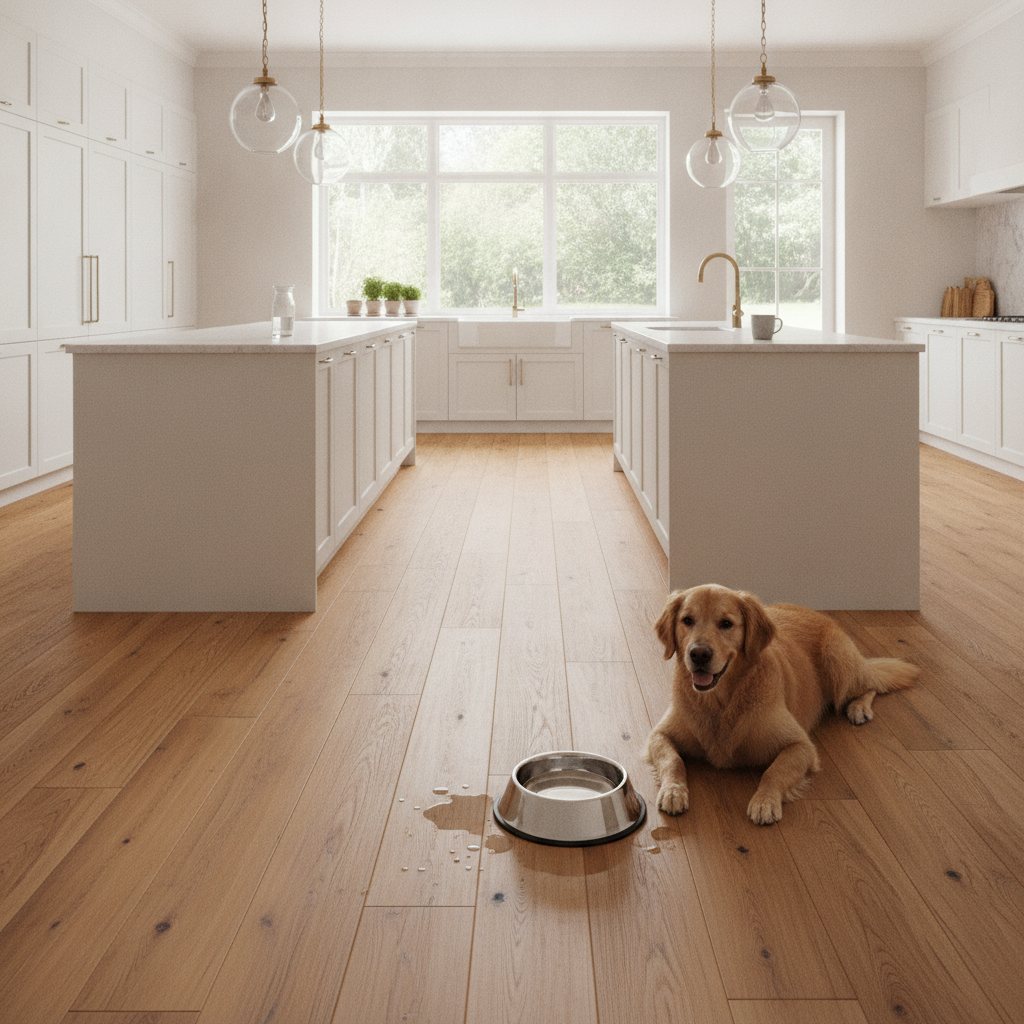
- Scratches: The combination of a tough, aluminum-oxide wear layer (look for 20 mil+) and a dense SPC core provides formidable resistance to scratches from dog nails and damage from dropped toys.
- Stains & Accidents: The non-porous surface and watertight seams prevent pet urine, spilled juice, or tracked-in mud from seeping into the core or subfloor. Clean-up is simple and doesn’t risk the dark stains and lingering odors that plague traditional hardwood.
Furthermore, consider pet health and aesthetics. As one veterinarian advises, “For older dogs or those with joint issues, flooring with some texture provides better traction and stability than slick, glossy surfaces.” Additionally, a floor with a visible grain pattern and a matte finish, like a wire-brushed oak or hickory, is brilliant at hiding minor scratches and pet hair between cleanings. This aligns with guidance from organizations like The Humane Society of the United States 6, which recommends creating safe, comfortable home environments for pets.
The All-Room Solution: Creating a Seamless Home Aesthetic
One of the most compelling design trends is the use of a single, continuous flooring material throughout an entire level of a home. This creates a clean, expansive, and cohesive look. Waterproof hybrid hardwood is one of the few materials perfectly suited for this, able to transition seamlessly from the living room into the kitchen and even into a powder room without interruption.
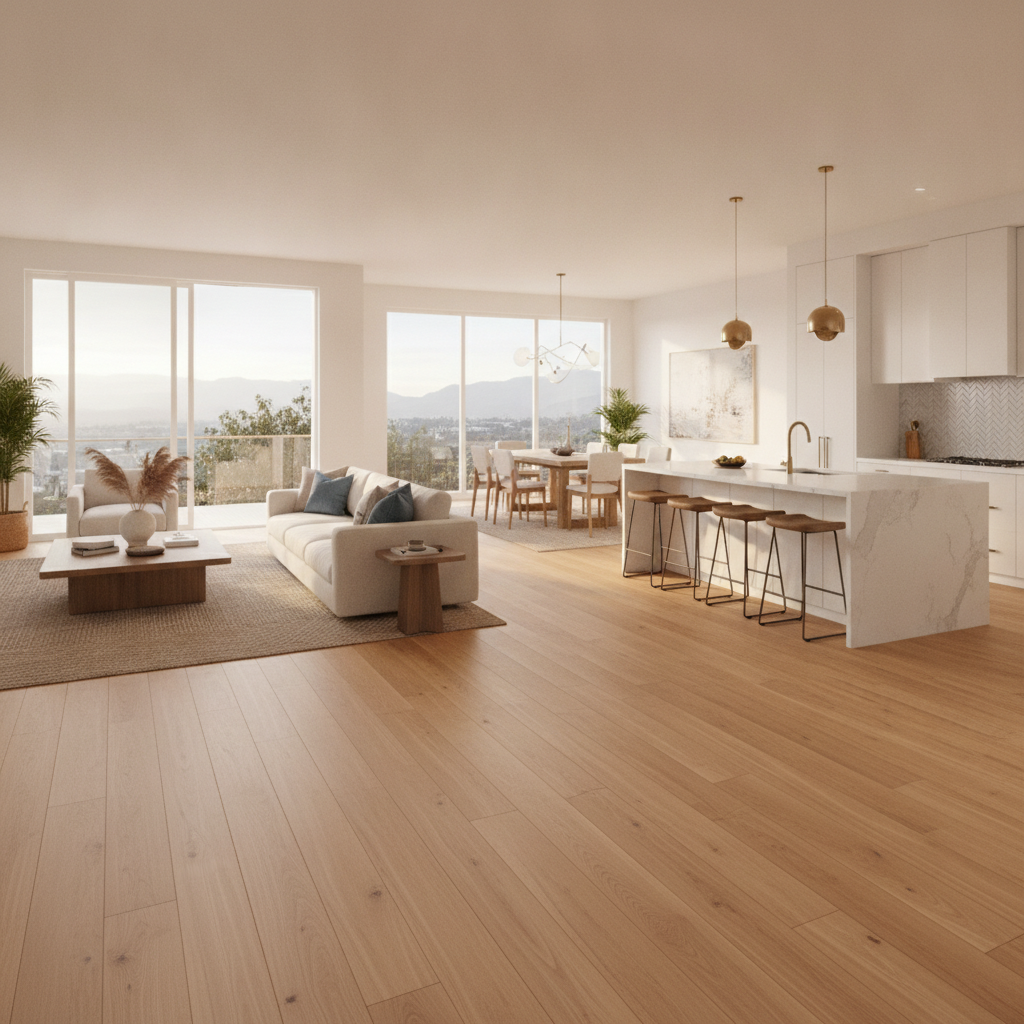
Manufacturer installation manuals, the ultimate authority on this topic, often state that their products can be installed in continuous runs of up to 5,000 square feet without needing unsightly transition moldings in doorways. However, there are technical considerations:
- Expansion Gaps: A small gap must be left around the perimeter of the entire installation (hidden by baseboards) to allow for seasonal movement.
- Acoustics: Hard surface flooring throughout a home can increase noise. Using area rugs in living spaces and bedrooms, and ensuring your chosen floor has a high-quality attached underlayment, can significantly mitigate sound transmission.
- Visual Interest: To keep a single floor from feeling monotonous, design principles from the American Society of Interior Designers (ASID) suggest using furniture, rugs, and varying wall colors to define different “zones” within an open-concept space.
Smart Shopping & Installation: What to Know Before You Buy
You’ve done the research and are ready to choose your floor. This final step is crucial for ensuring a successful project and long-term satisfaction.
As a veteran flooring installer often warns, “The most common DIY mistake is ignoring the subfloor. You can buy the best, most expensive flooring in the world, but if you lay it over an uneven or damp subfloor, you’re guaranteeing failure.”
How to Read the Fine Print on a Flooring Warranty
Many hybrid floors come with impressive-sounding “Lifetime Limited Residential Warranties.” While these warranties are valuable, it’s essential to understand what they do and do not cover. They typically protect against manufacturing defects, like the layers delaminating or the finish wearing through prematurely.
They almost always exclude damage from:
- Improper installation (e.g., not leaving expansion gaps).
- Use of improper cleaning products.
- Scratches, dents, or damage from abuse or accidents.
- Flooding caused by external sources (though the plank itself may survive).
Your warranty, which can range from 25 years to a lifetime limited guarantee, is only valid if you follow the manufacturer’s specific installation and maintenance instructions to the letter.
Installation Essentials: Why Subfloor Prep is Non-Negotiable
A floating floor like hybrid hardwood is only as good as the foundation it rests on. The subfloor is that foundation. Following the NWFA Installation Guidelines 1 for subfloor preparation is not just a best practice; it’s essential for your floor’s performance and warranty.
Subfloor Readiness Checks:
- Is it flat? Most manufacturers require the subfloor to be flat within 3/16 of an inch over a 10-foot span. High spots must be ground down and low spots filled with a leveling compound.
- Is it clean? The subfloor must be completely free of dust, debris, paint, or old adhesive.
- Is it dry? A concrete subfloor must be properly cured and tested for moisture. A wood subfloor must be structurally sound and dry.
Cleaning, Maintenance, and Repairability
Maintaining your new floor is simple, but requires the right approach. Always follow the manufacturer’s guide, which will typically advise:
- Regularly sweep or vacuum (using a hard floor setting without a beater bar).
- Clean up spills promptly.
- Mop using a damp microfiber mop and a pH-neutral cleaner specifically formulated for hard surface floors.
- Never use a steam mop, wax, oil soaps, or harsh abrasive cleaners, as these can damage the wear layer and void your warranty.
When it comes to repairs, remember that deep scratches or gouges cannot be sanded out. The standard repair method is to carefully remove the damaged plank and click a new one into its place, a task that is manageable for a skilled DIYer or a professional.
Frequently Asked Questions (FAQ)
What is the average cost of waterproof hardwood flooring?
The cost can vary significantly based on the brand, the thickness and species of the wood veneer, and the quality of the core and wear layer. Generally, you can expect to pay between $5 and $12 per square foot for the material alone. Professional installation costs are separate and will vary by region.
What are the best brands for waterproof hardwood?
While the “best” brand depends on your specific needs and budget, several manufacturers are well-regarded leaders in this category. Popular brands to research include Shaw Floorté, Mohawk UltraWood, and Cali Bamboo. It’s always a good idea to get samples from a few different brands to compare the look, feel, and quality firsthand.
Can you install waterproof hardwood in a basement?
Yes, absolutely. The 100% waterproof composite core makes hybrid hardwood an excellent choice for below-grade installations like basements, where moisture can be a persistent concern. However, it is still crucial to ensure the concrete subfloor is properly sealed and that a quality moisture barrier is used, as required by the manufacturer’s installation guidelines, to prevent any moisture from being trapped underneath the floor.
Your Future-Proof Floor Awaits
Waterproof hybrid hardwood represents a true leap forward in flooring technology. It successfully marries the authentic, natural beauty of real wood with the high-performance durability required for today’s busy households. It eliminates the long-standing fear of water damage, providing a single, elegant solution that can flow through every room of your home.
By understanding the science behind its layered construction, decoding the metrics of durability like wear layers and AC ratings, and knowing how it compares to the alternatives, you are no longer just a shopper—you are an informed consumer. You are now equipped with the knowledge to look past the marketing claims, ask the right questions, and choose a floor that is a smart, beautiful, and long-lasting investment for your home.
References & Authoritative Sources
- National Wood Flooring Association (NWFA). (n.d.). Consumer. WoodFloors.org. Retrieved from https://www.woodfloors.org/consumer/
- Institute of Inspection, Cleaning and Restoration Certification (IICRC). (n.d.). IICRC S500 Standard for Professional Water Damage Restoration. IICRC.
- U.S. Forest Service, Forest Products Laboratory. (n.d.). Wood Handbook–Wood as an Engineering Material (General Technical Report FPL-GTR-190).
- American National Standards Institute (ANSI). (n.d.). ANSI A326.3: American National Standard Test Method for Measuring Dynamic Coefficient of Friction of Hard Surface Flooring Materials.
- Tile Council of North America (TCNA). (n.d.). TCNA Handbook for Ceramic, Glass, and Stone Tile Installation.
- The Humane Society of the United States. (n.d.). Making your home safe for your pets. The Humane Society of the United States.
