
Choosing a new floor for your home feels like a high-stakes decision, because it is. You envision a beautiful, welcoming surface that ties your home together. But a nagging fear lingers in the back of your mind: What if you make the wrong choice? What happens after the first big spill, the first scratch from a pet’s nails, or the first sign of moisture from a humid summer? The investment is significant, and the thought of seeing it ruined by the realities of daily life is a homeowner’s nightmare.
This is where most guides fall short. They give you a simple list of options, but they don’t give you a system for making the right decision for your life. This is not just another list. This is The Life-Proof Flooring Playbook—a definitive, decision-making system designed to arm you with the knowledge to choose a floor that isn’t just beautiful, but truly resilient to the chaos of a modern home.
Together, we will move beyond marketing claims to understand the core threats to your floors, decode the technology behind today’s best waterproof solutions, and equip you with practical frameworks to select, install, and maintain the perfect floor with total confidence.
- Why ‘Life-Proof’ Flooring is No Longer a Luxury, It’s a Necessity
- Decoding Modern Waterproof Flooring: The Core Technologies Explained
- The Life-Proof Selection System: Choosing the Best Waterproof Floor for Your Home
- Flawless Installation: Your Guide to a Truly Waterproof System
- Long-Term Care & Repair: Protecting Your Investment
- Your Playbook for a Confident Choice
- References & Authoritative Sources
Why ‘Life-Proof’ Flooring is No Longer a Luxury, It’s a Necessity
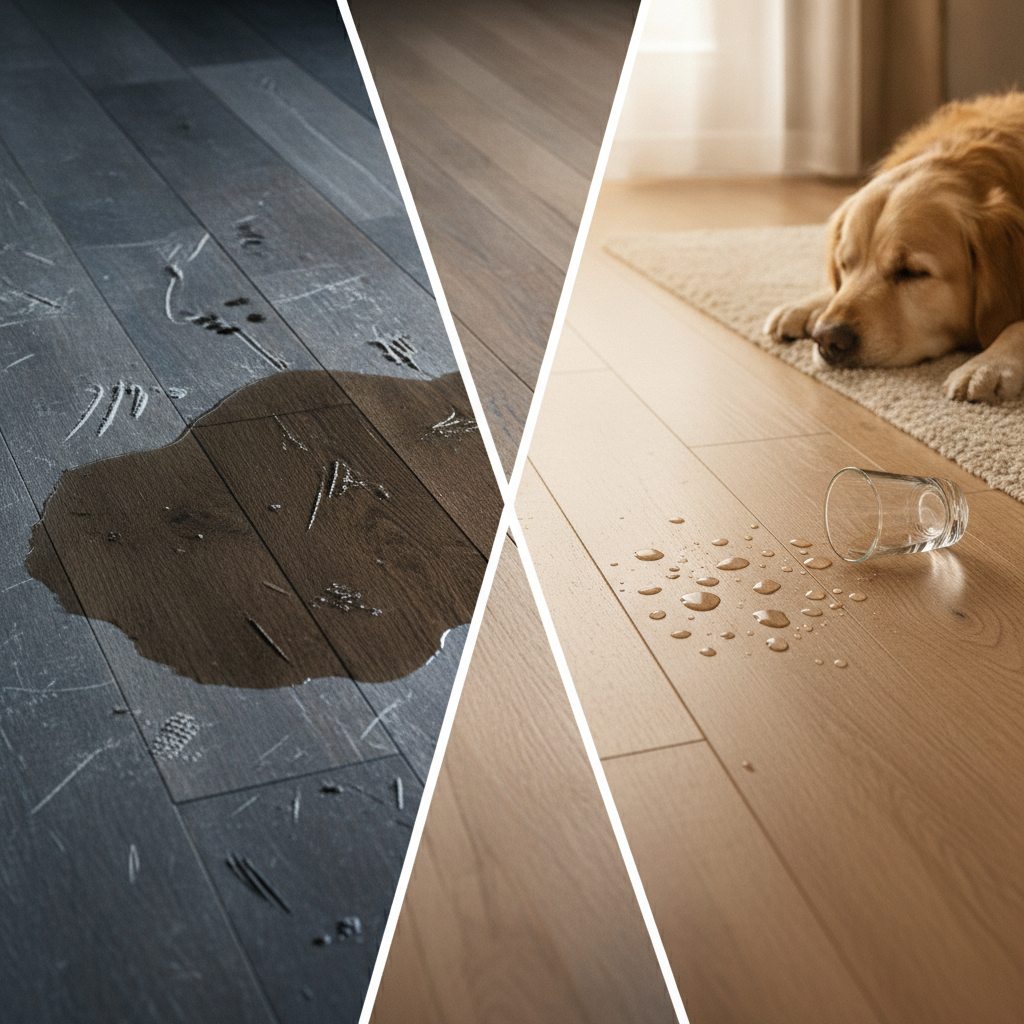
Before we explore the solutions, it’s crucial to understand the problems. The investment in new flooring is substantial, with homeowners often spending thousands on materials and installation. Seeing that investment compromised by common household mishaps is more than just frustrating; it can be incredibly costly. The modern home, with its pets, children, and busy lifestyle, demands a new standard of durability.
The Nightmare of Water Damage: From Kitchen Spills to Subfloor Moisture
Water is the arch-nemesis of most traditional flooring materials. The danger isn’t just from catastrophic events like a burst pipe; it’s the slow, silent creep of moisture from a leaky dishwasher, a humid basement, or even vapor moving through a concrete subfloor. According to industry data, approximately one billion dollars are spent every year on flooring-related failures caused by moisture[1].
For materials like traditional hardwood or laminate, the damage is swift and often irreversible. Experts in water damage restoration emphasize a “critical first 24 hours”[2]. Within this window, moisture soaks into porous cores, causing planks to swell, warp, and delaminate. To ensure proper mitigation, professionals adhere to rigorous industry guidelines like the IICRC S500 Standard for Professional Water Damage Restoration[3], a benchmark that underscores the complexity of dealing with water-damaged floors. Once this type of damage sets in, repair is often impossible, forcing a complete replacement.
The Daily Grind: Scratches, Dents, and the Threat from Pets & Kids
Beyond water, the daily physical abuse a floor endures can quickly degrade its appearance. The clicks of a dog’s nails, a dragged dining chair, or a dropped toy can leave behind a trail of scratches and gouges. With traditional hardwood, this is a constant source of anxiety.
The susceptibility of wood to scratching is scientifically measured by the Janka hardness scale, which rates a wood species’ resistance to denting. While a harder wood like Hickory is more resilient than a softer Pine, no natural wood is impervious to damage. Scratches can be surface-level scuffs in the finish or deep gouges that penetrate the wood itself. Flooring experts at District Floor Depot emphasize that preventative measures—like keeping pet nails trimmed and using furniture pads—are the first line of defense for traditional wood floors[4]. But for a truly worry-free surface, a more inherently scratch-resistant material is needed. This is a key reason why modern waterproof floors, which are also designed for high scratch resistance, have become so popular.
Decoding Modern Waterproof Flooring: The Core Technologies Explained
The term “waterproof flooring” is used everywhere, but what does it actually mean? The secret lies in the core materials and layered construction. Unlike traditional hardwood or laminate, which have porous wood-based cores, modern waterproof options are built from materials that are physically incapable of absorbing water.
What is Waterproof Hybrid Hardwood? (The Star of the Show)
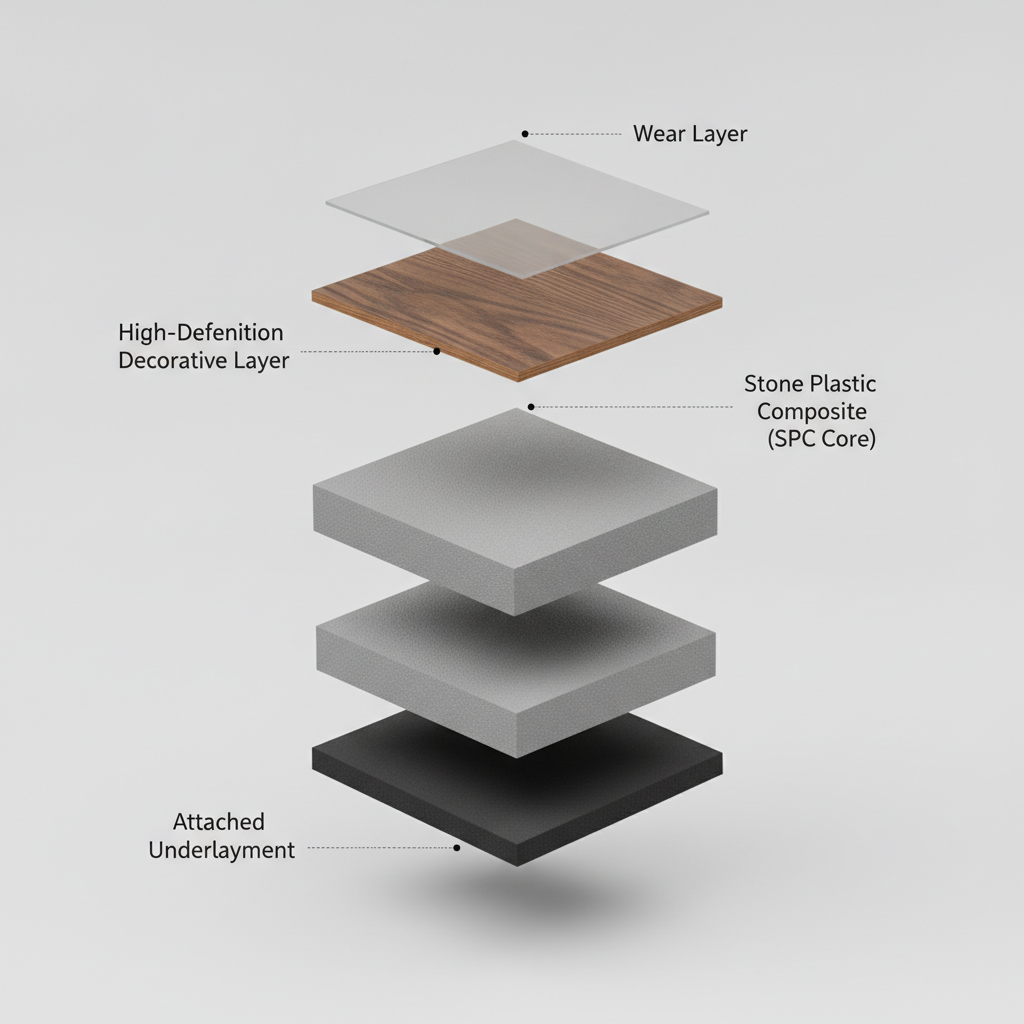
Waterproof hybrid hardwood is the revolutionary product that aims to give you the best of all worlds: the authentic beauty of wood with the unyielding durability of a synthetic core. It’s the perfect solution for homeowners who love the look of hardwood but fear its vulnerability.
The magic is in its construction. The bulk of the plank is a Stone Plastic Composite (SPC) core. As flooring specialists at HybridFloors.com.au explain, this core is made from a mixture of natural limestone powder and PVC, materials that are 100% waterproof and cannot absorb water[5]. This makes the plank incredibly stable; it won’t swell, warp, or buckle when exposed to moisture. On top of this rigid core sits a high-definition decorative layer that realistically mimics wood grain and texture, all protected by a tough, transparent wear layer. The quality and thickness of this decorative layer are critical, as they determine the floor’s long-term visual appeal and realism under different lighting conditions.
Luxury Vinyl Plank/Tile (LVP/LVT): The All-Around Champion
Luxury Vinyl Plank (LVP) is the established champion of the waterproof flooring world. It is a 100% synthetic product, meaning every layer—from the backing to the core to the wear layer—is waterproof. Like hybrid flooring, high-quality LVP is built around a rigid SPC core, giving it excellent dent resistance and dimensional stability.
LVP is a top choice for homes with pets and kids for two key reasons. First, its waterproof nature means pet accidents or spilled drinks aren’t a catastrophe. Second, its durability is determined by its wear layer. Flooring experts consistently recommend choosing a product with a wear layer of at least 20 mils for high-traffic areas or homes with pets[6]. This thick, clear topcoat provides robust protection against scratches and scuffs. Furthermore, LVP offers this performance at a significantly lower price point, often costing 50-70% less than traditional hardwood[7]. Top-tier brands like COREtec have built their reputation on this technology, delivering the durability of tile with far more comfort underfoot.
Waterproof Laminate & Porcelain Tile: Other Key Players
While hybrid and LVP lead the charge, two other players are crucial to consider:
- Waterproof Laminate: For years, laminate flooring was only water-resistant. Newer technologies, however, have introduced products with water-repellent coatings and improved locking systems that create a topical waterproof seal, protecting a still-wood-based core for a specified period (e.g., 24-72 hours). It offers incredible scratch resistance for its price but may not provide the same peace of mind as a truly waterproof SPC core in high-moisture areas.
- Porcelain Tile: For ultimate water and scratch protection, nothing beats porcelain tile. As major retailers like Carpet One often advise, it is the ideal choice for areas with constant water exposure, like bathrooms and mudrooms[8]. Because tile is non-porous, it has a zero-absorption rate. However, its hardness makes it less comfortable to stand on, it can be cold underfoot, and the grout lines require regular sealing and cleaning. As a pro tip for pet owners, flooring specialists at Advanced Flooring suggest choosing a darker grout to help hide potential stains[9].
The Life-Proof Selection System: Choosing the Best Waterproof Floor for Your Home
Now that you understand the technology, it’s time to apply it. This section moves from theory to practice, providing you with actionable frameworks to choose the perfect floor for your home, family, and budget. We’ll compare leading brands and give you the tools to make a data-driven decision.
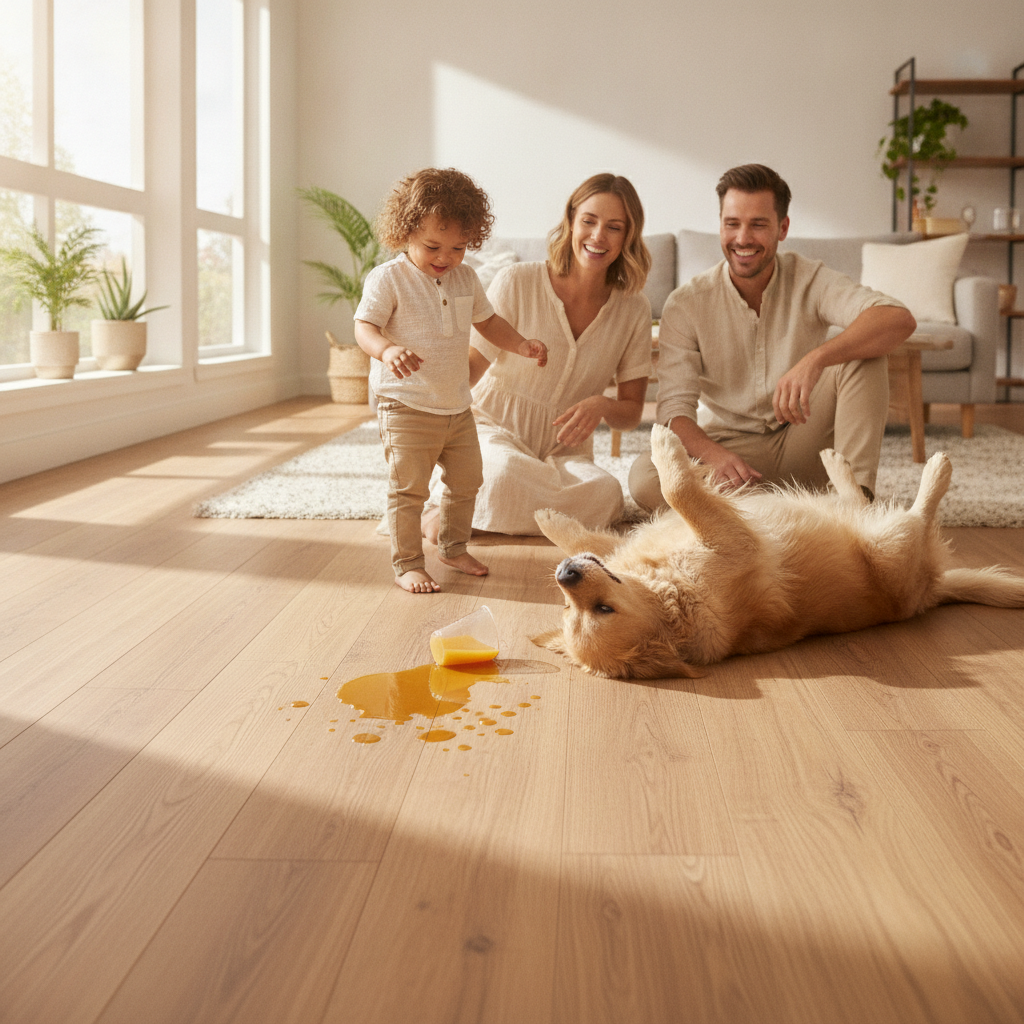
The Pet-Proof Flooring Scorecard: A Data-Driven Comparison
For the 70% of U.S. households with a pet, choosing a floor is about more than just aesthetics. This scorecard breaks down the performance of the top contenders on the factors that matter most to pet owners.
| Feature | Waterproof Hybrid Hardwood | Luxury Vinyl Plank (LVP) | Porcelain Tile |
|---|---|---|---|
| Scratch Resistance | Excellent: High-quality wear layer provides robust protection against nails. | Excellent: A 20+ mil wear layer is essential and highly effective. | Superior: Nearly impossible to scratch with pet nails. |
| Stain Resistance | Excellent: Non-porous surface prevents accidents from soaking in. | Excellent: 100% waterproof and non-porous. Easy to clean. | Excellent (Tile), Fair (Grout): Tile is non-porous, but unsealed grout can stain. |
| Traction/Safety | Good to Very Good: Embossed textures can provide good grip. | Good to Very Good: Textured surfaces offer better traction than smooth finishes. | Fair to Good: Can be slippery when wet. Look for textured, matte finishes. |
| Comfort | Very Good: Softer and warmer underfoot than tile. | Very Good: Often has an attached underlayment for comfort and warmth. | Poor: Very hard and cold underfoot. |
| Acoustic Impact | Good: The dense SPC core can be loud, but an acoustic underlayment helps dampen the sound of claws. | Good: Similar to hybrid; a quality underlayment is key to reducing noise. | Poor: Amplifies the sound of claws and dropped items. |
As Senior Design Consultant Sofia Rivera of Cavalieri Flooring notes, the choice often comes down to balancing ultimate durability with comfort for both pets and people[10]. Veterinarians also add that good traction is crucial for dogs, especially seniors, to prevent slips that can lead to joint injuries.
Room-by-Room Recommendations: Kitchens, Bathrooms, and Basements
Not all rooms have the same needs. Here’s how to choose the right waterproof flooring for the most demanding spaces in your home:
- Kitchens: This is a prime location for Waterproof Hybrid Hardwood or LVP. Both offer excellent protection against spills from the sink or dishwasher, are durable enough to handle dropped pots and heavy foot traffic, and are much more comfortable to stand on for long periods than tile.
- Bathrooms: Porcelain Tile remains the gold standard here. Its zero-absorption rate and ability to be installed as part of a fully waterproof “basin” system provide unmatched protection against constant water exposure. While hybrid and LVP can be used in half-baths, tile is the safest bet for a full bath with a shower or tub.
- Basements: Basements are often below-grade and prone to higher humidity or moisture wicking through the concrete slab. LVP with an SPC core is an outstanding choice. It is 100% waterproof, won’t be damaged by ambient moisture, and can be installed directly over concrete (with a proper vapor retarder).
Decoding Durability: Wear Layers, Core Tech, and Warranties Explained
When comparing products, look past the color and focus on the technical specifications.
- The Wear Layer: This is the single most important factor for scratch and scuff resistance. It’s a clear topcoat measured in mils (one-thousandth of an inch). For busy homes, especially those with pets, do not settle for less than a 20 mil wear layer[6].
- Core Technology: While most top products use a rigid SPC core, some brands add proprietary enhancements. For example, some brands like Optimax feature advanced coatings like “Techtanium™ Plus” for enhanced scratch resistance. Understanding these features helps you compare seemingly similar products.
- Warranties: A warranty reflects a manufacturer’s confidence in their product. Look closely at the terms. For instance, a brand like AquaGuard may offer a lifetime residential and a 20-year commercial warranty, while another like DuraLux might offer a lifetime residential and a 10-year commercial warranty. A stronger commercial warranty often indicates a more robust product.
Flawless Installation: Your Guide to a Truly Waterproof System
A waterproof floor is only as good as its installation. A single mistake can create a weak point for moisture to penetrate, completely defeating the purpose of your investment. This section focuses on the critical steps to ensure your floor performs as promised.
DIY Friendly: The Rise of Click-Lock Floating Floors
One of the biggest innovations in modern flooring is the click-lock installation system. Planks are designed with a special tongue-and-groove profile that simply clicks together, allowing them to “float” over the subfloor without nails or glue. This has made installation accessible for many skilled DIYers, as showcased by influencers like Jen Woodhouse who have successfully tackled these projects[11].
If you’re considering a DIY installation, you’ll need the right tools. Your basic “DIY Installation Kit” should include:
- Tape measure and pencil
- Utility knife
- Spacers (for expansion gaps)
- Tapping block and pull bar
- Rubber mallet
- Miter saw or circular saw for cuts
While the process is straightforward, avoiding common mistakes like failing to leave a proper expansion gap around the perimeter or not staggering the planks correctly is crucial for a professional-looking and durable result.
The Most Critical Step: Your Subfloor Moisture Prevention Checklist
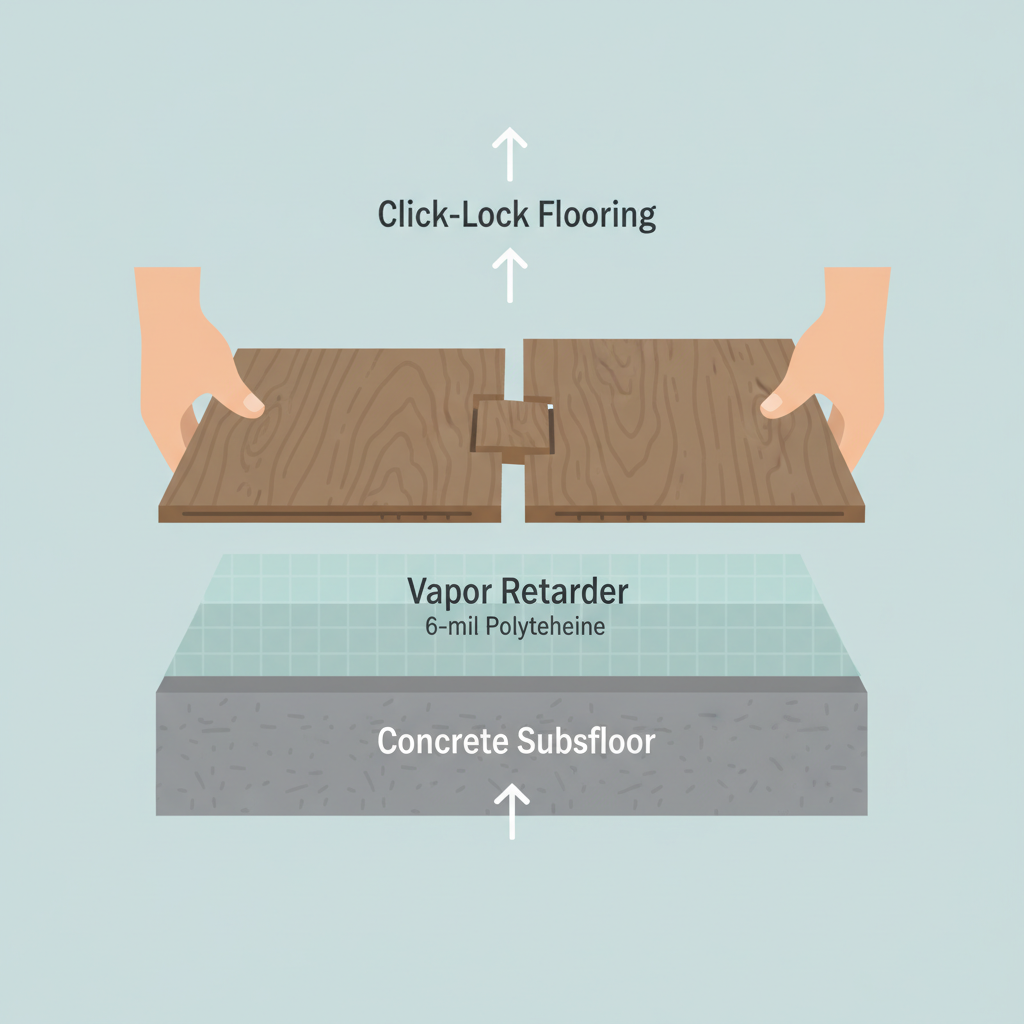
No matter who installs your floor, subfloor preparation is non-negotiable. Moisture vapor is always trying to move from damp areas to dry areas, and it can travel right up through a concrete slab. Trapping this moisture under a non-breathing floor like LVP can lead to adhesive failure, mold, and mildew.
Before a single plank is laid, follow this checklist:
- Test for Moisture: The subfloor, especially concrete, must be tested for moisture. Professionals use standardized tests like the in-situ probe test (ASTM F2170) or the calcium chloride test (ASTM F1869) to get an accurate reading of the moisture vapor emission rate[1]. Do not skip this step.
- Clean and Level: The subfloor must be perfectly clean, flat, and structurally sound. Any bumps or dips can compromise the locking system of the planks.
- Install a Vapor Retarder: This is a crucial, often-misunderstood component. A vapor retarder (often a 6-mil polyethylene sheet) is laid on top of the subfloor before the flooring. It is not the same as a vapor barrier, which is installed under the concrete slab itself. The retarder stops moisture vapor from reaching the underside of your new floor.
Long-Term Care & Repair: Protecting Your Investment
Your new life-proof floor is incredibly durable, but not indestructible. Proper care and knowing how to handle minor repairs will keep it looking new for years. Always follow the manufacturer’s specific cleaning guidelines, which typically recommend a pH-neutral cleaner and avoiding harsh chemicals or steam mops.
For the inevitable scratch, use this simple Triage Guide for Scratched Floors:
- Level 1 (Minor Scuffs): Often, these are not scratches in the floor but material transfer from another object (like a shoe sole). Try cleaning the area first with a soft cloth and approved cleaner. If that fails, a tennis ball can often buff out the scuff mark.
- Level 2 (Finish Scratches): These are light scratches that have only damaged the wear layer but not the decorative layer below. They often appear as a white line. A simple fix is to use a manufacturer-approved repair kit or a floor sealant pen to fill in the scratch and restore the sheen.
- Level 3 (Deep Gouges): These are the most serious scratches, having penetrated the wear layer and damaged the color/decorative layer. For these, you’ll need a color-matched repair putty kit. You clean the gouge, apply the putty, level it, and texture it to match the surrounding floor before it dries.
Your Playbook for a Confident Choice
You are now equipped with the Life-Proof Flooring Playbook. You understand that the real threats to a floor are water and wear, and you know the core technologies that combat them. By using the frameworks in this guide—from the Pet-Proof Scorecard to the Subfloor Moisture Checklist—you can move beyond the sea of samples at the hardware store and make a strategic, confident decision. You have a system for choosing a floor that won’t just look beautiful on day one, but will stand up to the rigors of your real life for years to come.
Feeling confident to choose your life-proof floor? Explore our curated collection of top-rated waterproof hybrid hardwood flooring or contact our flooring experts for a personalized consultation today.
This article may contain affiliate links. All recommendations are based on extensive research, but readers should consult with a professional flooring installer for advice specific to their home’s conditions.
References & Authoritative Sources
- ConcreteMoisture.com. (N.D.). Moisture Mitigation Systems: Prevention and Defense Against Moisture-Related Flooring Problems. Retrieved from https://www.concretemoisture.com/installers/moisture-mitigation-systems-prevention-defense-moisture-related-flooring-problems
- Advanced Dri (ADRI). (N.D.). Hardwood Floor Water Damage Repair. Retrieved from https://advanceddri.com/hardwood-floor-water-damage-repair
- Institute of Inspection, Cleaning and Restoration Certification (IICRC). (N.D.). IICRC S500 Standard for Professional Water Damage Restoration.
- District Floor Depot. (N.D.). Dogs and Hardwood Floors: How to Prevent Scratching. Retrieved from https://www.districtfloordepot.com/blogs/news/dogs-and-hardwood-floors-how-to-prevent-scratching
- HybridFloors.com.au. (N.D.). Hybrid Flooring Pros and Cons You Need To Know Before You Buy. Retrieved from https://hybridfloors.com.au/blogs/news/hybrid-flooring-pros-and-cons-you-need-to-know-before-you-buy
- Henson’s Greater Tennessee Flooring. (N.D.). What is the Best Waterproof Luxury Vinyl Flooring?. Retrieved from https://greatertennessee.com/what-is-the-best-waterproof-luxury-vinyl-flooring
- BestFloorForDogs.com. (N.D.). Pet Friendly Flooring. Retrieved from https://bestfloorfordogs.com/collections/pet-friendly-flooring
- Carpet One. (N.D.). The Best Waterproof Flooring Options. Retrieved from https://www.carpetone.com/flooring-guide/shopping/the-best-waterproof-flooring-options
- Advanced Flooring. (N.D.). Pet Friendly Flooring: Best Durable Options for Dog & Cat Owners. Retrieved from https://www.advancedflooring.net/blogs/news/pet-friendly-flooring-best-durable-options-for-dog-cat-owners
- Rivera, S. (N.D.). Pet-Friendly Flooring Options. In Cavalieri Flooring. Retrieved from https://cavalieriflooring.com/pages/blog/pet-friendly-flooring-options
- Woodhouse, J. (N.D.). Jen Woodhouse [YouTube Channel]. YouTube.
- Floor & Decor. (N.D.). Top Waterproof & Water Resistant Floors. Retrieved from https://www.flooranddecor.com/blogs/top-waterproof-water-resistant-floors.html
