
You love the timeless, grounding beauty of hardwood floors. It’s a look that feels like home, promising warmth and character for decades. But then, reality sets in. The splash from the dog’s water bowl, the tipped glass of juice, the scraping claws of a beloved pet, or the constant foot traffic of a busy family. The classic homeowner’s dilemma is born: choosing between the floor you desire and the durability you desperately need.
For years, this was a compromise. But today, flooring technology has evolved. Enter waterproof hybrid hardwood, a modern marvel engineered to offer the authentic beauty of real wood on a high-performance, life-proof core.
This guide is your definitive masterclass. We’re going beyond a simple pros and cons list to decode the science and technology behind both flooring options. We’ll dissect them layer by layer, compare them head-to-head on the factors that matter most, and provide expert recommendations for every room in your home. By the end, you won’t just have an opinion; you’ll have the knowledge to make a confident, informed investment in your home’s future.
- The Ultimate Showdown: Hybrid Hardwood vs. Traditional Hardwood
- A Deep Dive into Waterproof Hybrid Hardwood
- Understanding Traditional Hardwood: The Timeless Standard
- Which Floor is Right for Your Home? Application-Based Recommendations
- The Final Verdict: A Floor for Your Life
- References & Authoritative Sources
The Ultimate Showdown: Hybrid Hardwood vs. Traditional Hardwood
To understand which flooring is right for you, we need a direct, head-to-head comparison. We’ve developed the Flooring Performance Scorecard to rate each option across the most critical decision-making factors, from water resistance to long-term value. Let’s see how they stack up.
Factor 1: Water Resistance – The Core Difference
The single greatest distinction between these two floors lies in their response to moisture. Traditional solid hardwood is, at its core, organic wood. Like a sponge, it absorbs water, which causes the wood cells to swell. This leads to common forms of hardwood floor water damage like cupping (edges are higher than the center), crowning (the center is bowed upward), and buckling (planks lifting completely off the subfloor). According to the Institute of Inspection, Cleaning and Restoration Certification (IICRC), this type of damage requires immediate and professional remediation to prevent permanent harm and mold growth[1].
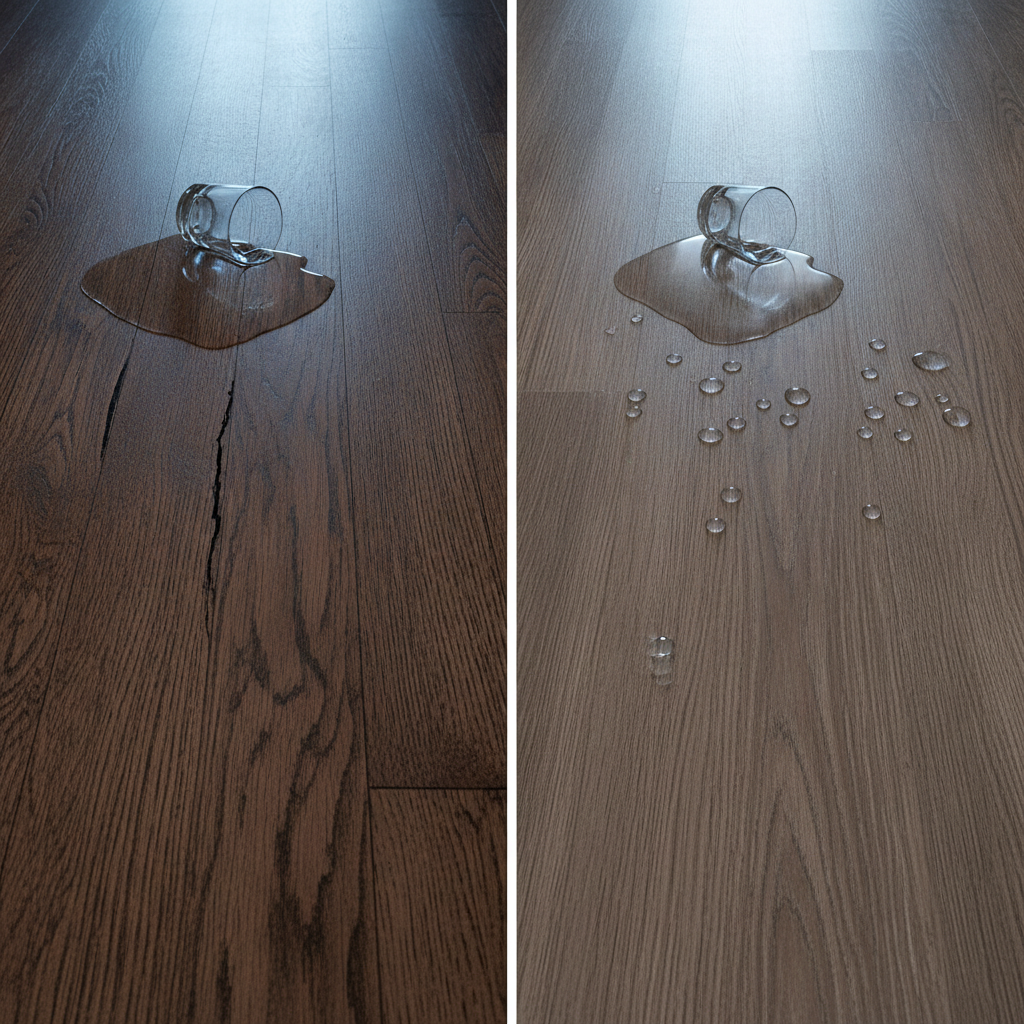
Waterproof hybrid hardwood, by contrast, is engineered specifically to combat this vulnerability. Its core is typically made from a Stone Polymer Composite (SPC) or Wood Polymer Composite (WPC), materials that are 100% waterproof. This means that topical spills, pet accidents, or moisture from a damp mop will not penetrate the core or cause it to swell. Leading manufacturers offer extensive warranties, with brands like Shaw’s Floorté and Mohawk’s RevWood often providing coverage for up to 50 years against damage from topical water.
It’s crucial to understand the limitations, however. While the planks themselves are waterproof, this does not make the floor “flood-proof.” Water can still seep through the seams during a major leak or flood, potentially damaging the subfloor. Furthermore, it does not prevent issues from hydrostatic pressure, which is moisture coming up from a concrete slab below.
Factor 2: Durability – Scratches, Dents, and Daily Life
Durability is a multi-faceted issue, encompassing everything from scratches from pet claws to dents from dropped objects.
Traditional hardwood’s durability is primarily determined by its species’ natural hardness, which is measured on the Janka Hardness Scale. A higher number indicates a harder, more dent-resistant wood.
Janka Hardness Scale (Select Species)
- Red Oak: 1290 (The industry benchmark)
- Hickory: 1820 (Very hard and durable)
- Brazilian Cherry: 2350 (Extremely hard)
- Pine: 380-690 (Very soft, dents easily)
Hybrid hardwood takes a different approach. Its durability comes from a combination of advanced technologies:
- Dent Resistance: The core is an ultra-dense SPC material, which provides significantly higher resistance to dents from dropped objects or heavy furniture than most natural woods.
- Scratch Resistance: The top layer is a commercial-grade urethane finish infused with microscopic particles of aluminum oxide or ceramic bead. This creates an incredibly tough surface that resists scratches from daily life. The performance of this wear layer is often measured by an Abrasion Class (AC) rating, from AC3 (heavy residential) to AC5 (heavy commercial). These ratings are determined by standardized tests, such as the Taber Abrasion Test defined by ASTM International standards[2].
For households with pets and kids, the superior scratch resistance and dent-proof core of hybrid hardwood often give it the edge in day-to-day resilience.
Factor 3: Appearance & Authenticity
This is where traditional hardwood shines. Each plank of solid wood is unique, with natural variations in grain, knots, and color that cannot be perfectly replicated. It offers a depth and character that is the benchmark for authenticity.
Waterproof hybrid hardwood comes remarkably close because it uses a thin layer of real wood veneer as its top visual layer. This isn’t a picture of wood; it’s actual wood, sliced thin. The thickness of this veneer, typically ranging from 0.6mm to 2.0mm, can impact the floor’s overall look and feel.
However, there are subtle differences. As one interior designer puts it, “While high-end hybrid floors are visually stunning, solid hardwood has a substantial, solid feel underfoot that is hard to match. It also tends to be acoustically warmer, absorbing sound, whereas some harder composite floors can have more of an echo.” The thinner profile and harder core of hybrid planks can feel different and sound different when walked upon—a key consideration for some homeowners.
Factor 4: Cost – Upfront Investment vs. Lifetime Value
The cost equation involves both the initial price and the long-term value.
- Upfront Cost: Traditional hardwood flooring typically costs between $6 to $15 per square foot for materials and professional installation. Waterproof hybrid hardwood can have a similar material cost, but its click-lock installation system can offer significant savings. For a moderately skilled DIYer, installing a hybrid floor can save $2 to $5 per square foot in labor costs.
- Lifetime Value: This is a more complex calculation. Well-maintained solid hardwood is a proven investment. According to real estate industry data, solid hardwood floors can increase a home’s resale value by up to 2.5%. They have a lifespan of over 100 years and can be sanded and refinished multiple times. Hybrid hardwood, being a newer product, has a less established track record for resale value. Its primary long-term value comes from avoiding costly repairs due to water damage and maintaining its “like-new” appearance for longer without refinishing.
Factor 5: Installation & Maintenance
Installation methods for these two floors are fundamentally different. Traditional hardwood requires professional skill, using nail-down or glue-down methods that are labor-intensive. The National Wood Flooring Association (NWFA) has extensive guidelines that professionals must follow, covering everything from subfloor preparation to acclimation[3].
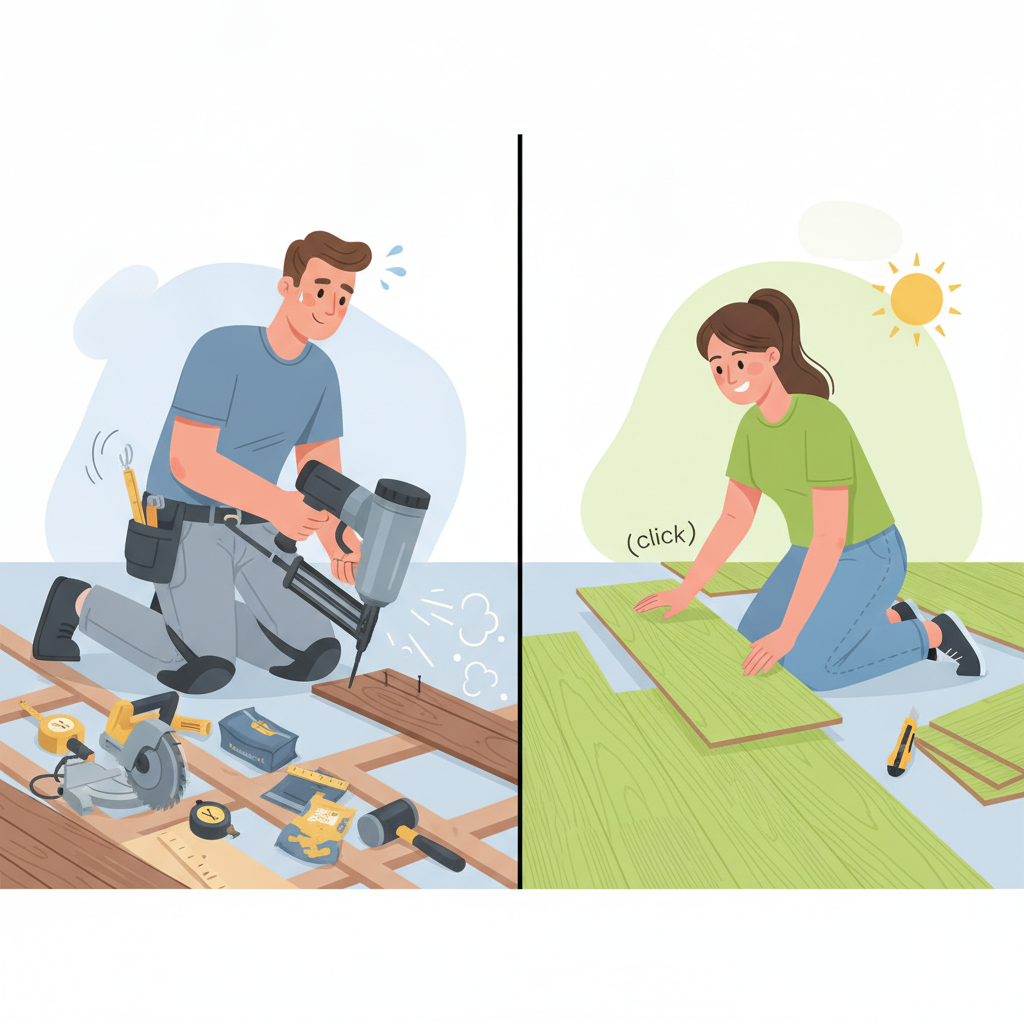
Hybrid hardwood is designed for simplicity. Most products feature a click-lock floating floor system that is highly friendly to DIY installers. However, as a certified flooring installer (CFI) would advise, “DIY-friendly doesn’t mean you can skip the prep. A flat, clean, and dry subfloor is just as critical for a floating floor as it is for a nail-down installation to ensure it performs correctly and lasts.”
Long-term maintenance is where the paths diverge significantly. Solid hardwood can be sanded down to bare wood and refinished 5-7 times over its life, effectively erasing decades of wear and tear. This is its greatest advantage. Damage to a hybrid floor’s thin veneer, however, cannot be sanded out. A deep gouge or scratch that penetrates the wear layer and damages the wood veneer often requires replacing the entire plank.
A Deep Dive into Waterproof Hybrid Hardwood
To truly understand this innovative flooring, we need to look beneath the surface. Its strength lies in its composite construction, where each layer serves a specific, critical function.
What is Hybrid Hardwood Made Of? The Anatomy of a Modern Plank
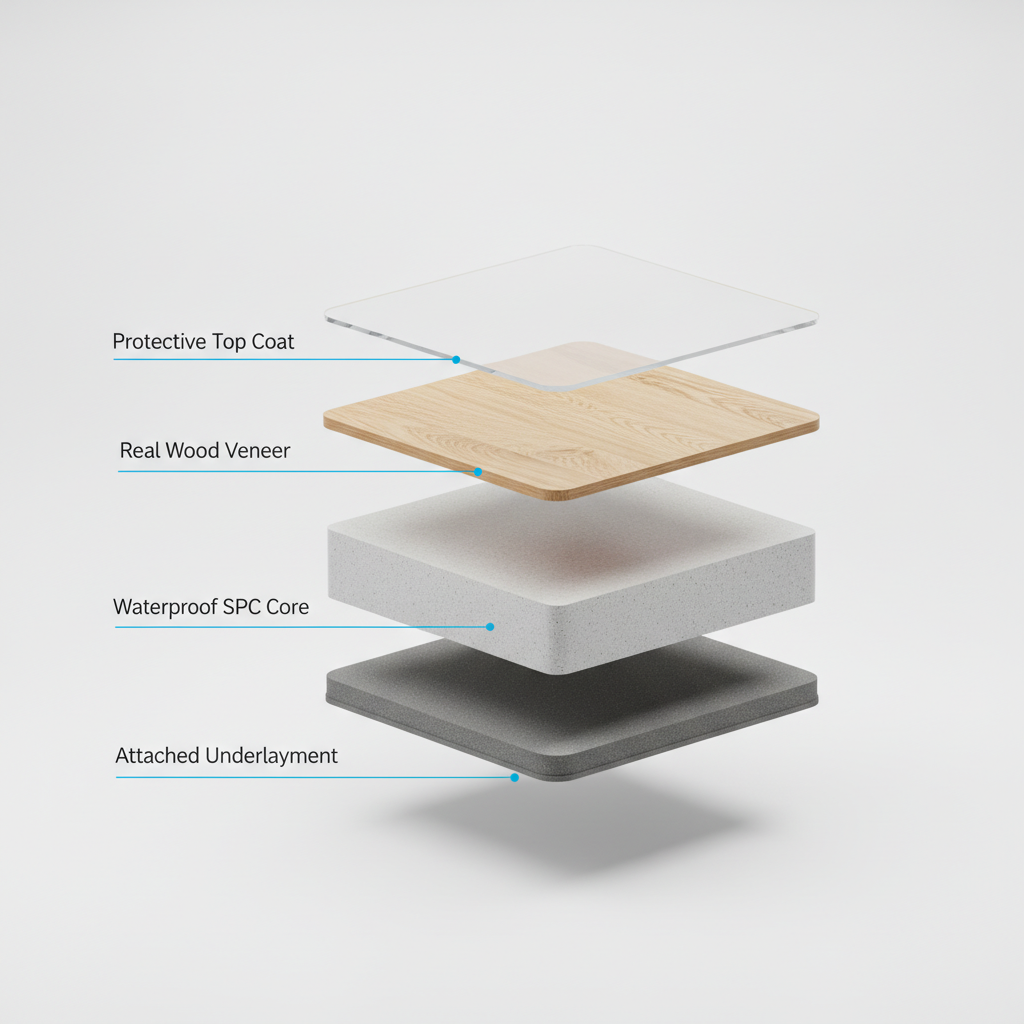
A hybrid plank is a sandwich of advanced materials:
- Protective Top Coat: The invisible shield. This is the clear urethane layer fortified with aluminum oxide or ceramic bead that provides extreme scratch, stain, and fade resistance.
- Real Wood Veneer: The beauty. This is a thin slice of authentic hardwood (like oak, hickory, or maple) that gives the floor its genuine look and grain pattern. This answers the question, “Is it real wood?”—yes, the part you see and touch is.
- Waterproof Core: The engine. This is the star of the show. It’s typically one of two types:
- SPC (Stone Polymer Composite): A core made from a mixture of limestone powder, polyvinyl chloride, and stabilizers. It is incredibly dense, rigid, and thermally stable, making it highly resistant to dents and temperature changes.
- WPC (Wood Polymer Composite): A core made from a mixture of recycled wood pulp, plastic composites, and a foaming agent. It is lighter and less dense than SPC, making it slightly softer and more comfortable underfoot, but also slightly less resistant to heavy impacts.
- Attached Underlayment: The foundation. Most hybrid planks come with a pre-attached pad made of cork or foam. This provides acoustic insulation, cushioning, and simplifies installation by eliminating the need for a separate underlayment roll.
When choosing a product, look for certifications like FloorScore®, which ensures the flooring meets strict indoor air quality standards for low volatile organic compound (VOC) emissions[4].
Can You Refinish Hybrid Hardwood?
This is one of the most critical questions, and the answer is, with very few exceptions, no. The real wood veneer layer is simply too thin (often less than 2.0mm) to withstand the abrasive process of sanding required for traditional refinishing.
However, this doesn’t mean the floor is irreparable. According to a flooring repair expert, “For minor to moderate surface scratches that haven’t fully penetrated the finish, we can often use specialized wax or stain marker kits to conceal the damage. For deeper gouges into the veneer, the best practice is to carefully remove and replace the damaged plank, which is much easier with a click-lock floating floor than a traditional nail-down installation.” Always consult the manufacturer’s guidelines for specific repair and maintenance instructions.
Pros and Cons of Hybrid Hardwood Flooring
Pros:
- 100% Waterproof Core: Provides peace of mind against everyday spills and allows for installation in kitchens, bathrooms, and basements.
- Exceptional Durability: High resistance to scratches, dents, and stains thanks to its protective top coat and dense core.
- Authentic Wood Beauty: Uses a real wood veneer for a genuine look.
- DIY-Friendly Installation: Click-lock systems save on professional labor costs.
- Low Maintenance: Requires simple sweeping and damp mopping; no waxing or refinishing needed.
Cons:
- Cannot Be Refinished: Deep damage requires plank replacement, not sanding.
- Different Feel Underfoot: Can feel harder and sound different than solid wood.
- Variable Resale Value: As a newer product, its impact on home value is less established than solid hardwood.
- Thinner Profile: May not feel as substantial as thick, solid wood planks.
Understanding Traditional Hardwood: The Timeless Standard
For centuries, solid hardwood has been the gold standard for flooring, and for good reason. It brings a natural elegance and long-term value that few materials can match. Understanding its core characteristics is key to appreciating both its strengths and its weaknesses.
Solid vs. Engineered: What’s the Difference?
When we say “traditional hardwood,” it can refer to two distinct products:
- Solid Hardwood: Each plank is milled from a single, solid piece of timber, typically 3/4 inch (19mm) thick. Its biggest advantage is its longevity and ability to be sanded and refinished 5-7 times. Its primary weakness is its instability when exposed to moisture or high humidity.
- Engineered Hardwood: This is also a real wood product, but it is constructed in layers. It has a thinner real wood veneer on top, bonded to a core of high-quality plywood or high-density fiberboard (HDF). The layers of the core are run in opposite directions (cross-ply construction), which makes the plank much more dimensionally stable. This means it expands and contracts less with changes in humidity, making it a more moisture-resistant option suitable for installation over concrete slabs or in basements where solid wood is not recommended. It can typically be refinished 1-3 times, depending on the thickness of its top veneer.
The Janka Hardness Scale and Why It Matters for Durability
As mentioned earlier, the Janka scale is the industry-standard measure of a wood’s resistance to denting and wear. This is particularly relevant for homeowners with large dogs, active children, or high foot traffic. Choosing a species with a higher Janka rating, like Hickory or Brazilian Walnut, provides a naturally more durable surface than a softer wood like Pine or Cherry.
Pros and Cons of Traditional Hardwood
Pros:
- Unmatched Authenticity & Beauty: Offers timeless appeal with unique, natural grain in every plank.
- High Resale Value: A proven investment that can increase a home’s value by up to 2.5%.
- Longevity & Refinishing: Can last for over 100 years and be sanded and refinished multiple times to look brand new.
- Warm & Solid Feel: Provides a substantial feel underfoot and good acoustic properties.
Cons:
- Vulnerable to Water Damage: Susceptible to cupping, crowning, and buckling from moisture.
- Prone to Scratches & Dents: Softer species can be easily damaged by pets, heels, and dropped objects.
- Professional Installation Required: Complex and costly installation process.
- Higher Maintenance: Requires more careful cleaning and eventual refinishing to maintain its appearance.
Which Floor is Right for Your Home? Application-Based Recommendations
The best floor isn’t just about the material; it’s about the match between the material and your life. Here’s how to choose based on the specific demands of your home.
For Kitchens, Bathrooms, and Basements: The Moisture-Prone Zones
For these high-moisture areas, the choice is clear: waterproof hybrid hardwood is the superior option. Its waterproof core eliminates the constant worry of water damage that makes traditional hardwood a high-risk choice. While other options like porcelain tile—which has a water absorption rate of less than 0.5% according to the Tile Council of North America (TCNA)[5]—are also fully waterproof, hybrid hardwood delivers that protection with the warmth and look of real wood.
An IICRC-certified professional would add a crucial note: “No matter how waterproof your flooring is, proper subfloor preparation is non-negotiable in a basement. A quality vapor barrier is essential to prevent moisture from the concrete slab from getting trapped underneath, which can lead to mold and air quality issues.”
For Homes with Pets and Kids: The Durability Champions
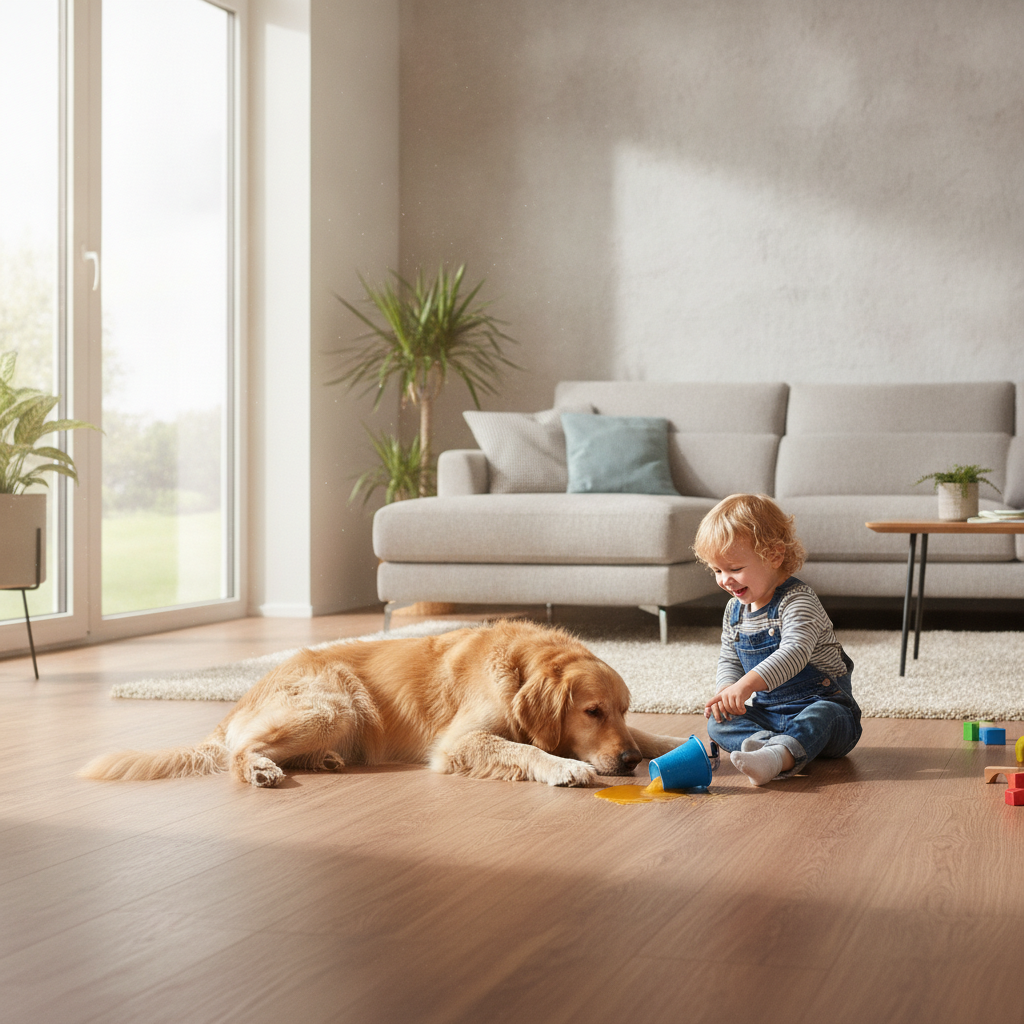
This is where life gets tough on floors. For the ultimate combination of protection, waterproof hybrid hardwood is the winner. The scratch-resistant top coat holds up against claws and toys, while the waterproof core provides an essential safeguard against pet accidents and spills.
If your heart is set on traditional wood, opt for a high-Janka species like Hickory or Brazilian Walnut and choose a matte or low-gloss finish, which is far better at hiding the inevitable micro-scratches than a high-gloss surface. An expert from the American Kennel Club (AKC) might also advise considering texture: “A floor with a wire-brushed or hand-scraped texture can provide better traction for dogs, especially seniors, helping to prevent slips and injuries.”
For Long-Term Investment & Resale Value
If your primary goal is maximizing the long-term resale value of your home, traditional solid hardwood still holds a slight edge. “For many buyers, there’s a perceived prestige and permanence to solid hardwood that is hard to beat,” notes a veteran real estate appraiser. “When well-maintained, it signals quality throughout the home.” The ability to refinish the floor to a buyer’s preference is a powerful selling point.
Waterproof hybrid hardwood should be viewed as a practical, high-performance choice that protects your investment from damage and appeals to modern buyers who prioritize low-maintenance, durable lifestyles.
The Final Verdict: A Floor for Your Life
The choice between waterproof hybrid and traditional hardwood is no longer just about aesthetics versus practicality. It’s about choosing a technology that fits your life.
Traditional hardwood remains the undisputed champion of authenticity, offering a century-long lifespan and the unique ability to be reborn again and again through refinishing. It’s an investment in timeless character, but one that demands a level of care and an environment free from moisture risks.
Waterproof hybrid hardwood is the modern problem-solver. It delivers the genuine beauty of a real wood surface on a core built to withstand the chaos of modern family life—spills, pets, high traffic, and all. It offers peace of mind in exchange for the inability to be refinished.
By understanding the science behind the surface, you are now empowered. You can look past the marketing and choose the perfect floor not just for your house, but for your life.
Ready to find the perfect floor for your home? Explore our gallery of waterproof hybrid and traditional hardwood options to see these beautiful, durable floors in real-life settings.
This article is for informational purposes only. Flooring choice and installation are major investments. Consult with a certified flooring professional and review manufacturer warranties before making a final decision.
References & Authoritative Sources
- Institute of Inspection, Cleaning and Restoration Certification (IICRC). (n.d.). IICRC S500 Standard for Professional Water Damage Restoration. Retrieved from the official IICRC website.
- ASTM International. (n.d.). ASTM D4060 – Standard Test Method for Abrasion Resistance of Organic Coatings by the Taber Abraser. Retrieved from the official ASTM International website.
- National Wood Flooring Association (NWFA). (n.d.). Installation Guidelines. Retrieved from the official NWFA technical resources.
- SCS Global Services. (n.d.). FloorScore®. Retrieved from the official SCS Global Services website.
- Tile Council of North America (TCNA). (n.d.). ANSI A137.1 American National Standard Specifications for Ceramic Tile. Retrieved from the official TCNA publications.
