
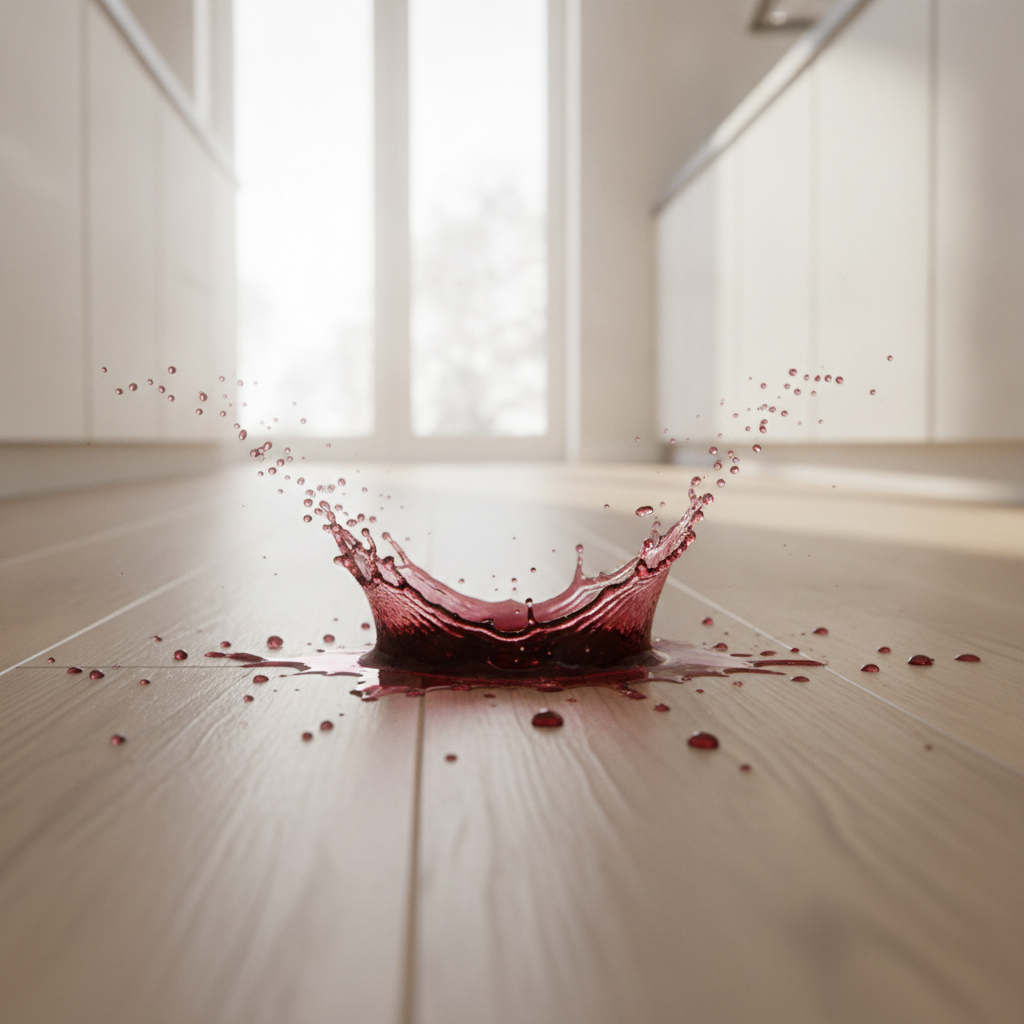
That heart-stopping moment: a full glass of red wine tumbles, a pot of water boils over, or the dog’s bowl sloshes across your beautiful kitchen floor. For decades, homeowners have faced a frustrating choice: embrace the timeless beauty of hardwood and live in constant fear of water damage, or settle for a more practical but less inspiring alternative. The kitchen, the heart of the home, has always been a battleground between style and sensibility.
But what if you didn’t have to choose?
Welcome to the definitive, myth-busting guide to kitchen flooring. We’re here to cut through the confusing marketing hype and compare the real-world performance of today’s top flooring options. This article will provide a deep dive into a revolutionary solution that promises the best of both worlds: waterproof hybrid hardwood. We will explore its innovative construction, stack it up against its toughest competitors like LVP and tile, and give you a clear framework for choosing a stylish, worry-free floor you can invest in with total confidence.
Get ready to discover how style can finally meet spill protection.
- Why Your Kitchen Floor is a High-Stakes Decision
- What is Hybrid Hardwood Flooring? The ‘Best of Both Worlds’ Explained
- The Kitchen Flooring Showdown: Hybrid Hardwood vs. The Competition
- How to Choose the Perfect Kitchen Floor for Your Home
- Frequently Asked Questions (FAQ)
- The Final Verdict: Confidence for Your Kitchen
- References & Authoritative Sources
Why Your Kitchen Floor is a High-Stakes Decision
Before we explore the solutions, it’s crucial to understand the unique challenges your kitchen floor faces every single day. It’s not just another room; it’s a high-traffic, high-risk environment where spills are inevitable and moisture is a constant threat. Ignoring these realities can lead to costly and stressful problems.
Common culprits of kitchen floor water damage include leaking dishwashers, faulty refrigerator ice maker lines, and overflowing sinks. These aren’t just minor inconveniences; they can cause catastrophic damage to your flooring and the subfloor beneath. According to restoration experts at the Institute of Inspection, Cleaning and Restoration Certification (IICRC), mold and mildew can begin to grow within just 24-48 hours of water exposure, posing a health risk and leading to complex repairs.[1]
Traditional hardwood floors are particularly vulnerable. Spills that aren’t wiped up immediately can seep between the planks, causing the wood to swell, cup, or stain permanently. This is why understanding the risks and choosing the right material from the start isn’t just a design choice—it’s a critical investment in your home’s longevity and your own peace of mind.
Expert Advice: What NOT to Do When a Spill Happens
When facing a spill on a wood or wood-look floor, your first instinct might be wrong. To avoid making the damage worse, the National Wood Flooring Association (NWFA) advises against common mistakes:[2]
- Do NOT use a steam mop: The combination of heat and excessive moisture can damage the finish and force water deeper into the floor’s core or seams.
- Do NOT use vinegar, ammonia, or abrasive cleaners: These can dull or strip the protective finish, leaving your floor more vulnerable to future damage.
- Do NOT wait to clean it up: The longer any liquid sits, the higher the risk of staining, warping, or seeping into the subfloor. Blot immediately with a dry, soft cloth.
What is Hybrid Hardwood Flooring? The ‘Best of Both Worlds’ Explained
For years, the flooring industry has been chasing a single goal: to create a floor with the authentic, undeniable beauty of real wood and the indestructible, waterproof performance of a synthetic material. Hybrid hardwood is the groundbreaking result of that quest.
At its core, hybrid hardwood is an engineered marvel composed of distinct layers, each serving a critical purpose:
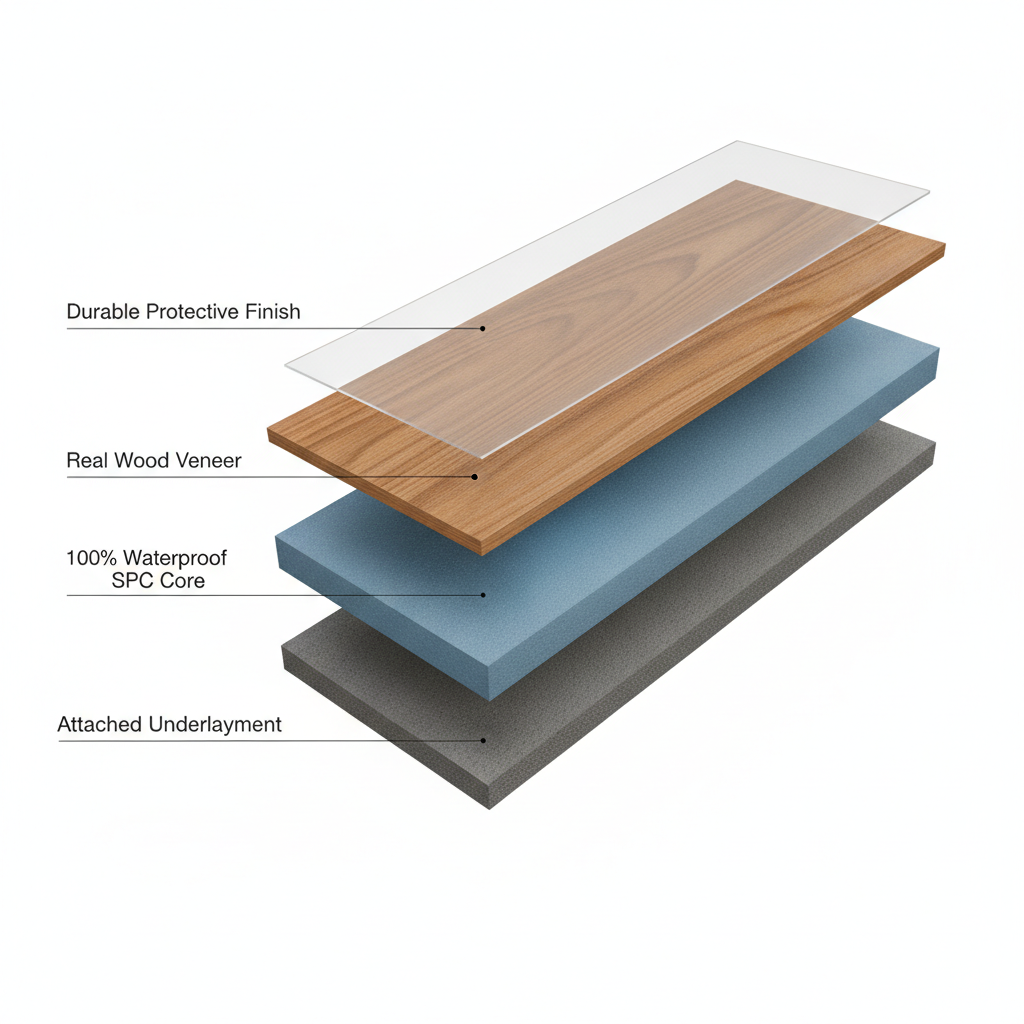
- Top Layer (Real Wood Veneer): This is what you see and feel. It’s a thin, authentic slice of genuine hardwood—like oak, hickory, or maple. Veneer thickness typically ranges from 0.6mm to 2mm, providing the unique grain patterns, knots, and character that can’t be replicated by printed designs.[3]
- Protective Finish: The wood veneer is sealed with multiple layers of a highly durable, factory-applied urethane finish that often includes aluminum oxide particles. This creates a tough wear layer (often 20 mil or more) that resists scratches, stains, and fading.
- Core Layer (The Waterproof Secret): This is the game-changer. Instead of a traditional wood-based core, hybrid hardwood uses a 100% waterproof composite core. This is typically an SPC (Stone Plastic Composite) core, which is incredibly dense and stable, or a WPC (Wood Plastic Composite) core, which is slightly softer and quieter underfoot. This rigid core prevents water from ever reaching your subfloor.
- Bottom Layer (Attached Underlayment): Most hybrid hardwood planks come with a pre-attached cork or foam underlayment, which adds cushioning, absorbs sound, and simplifies the installation process.
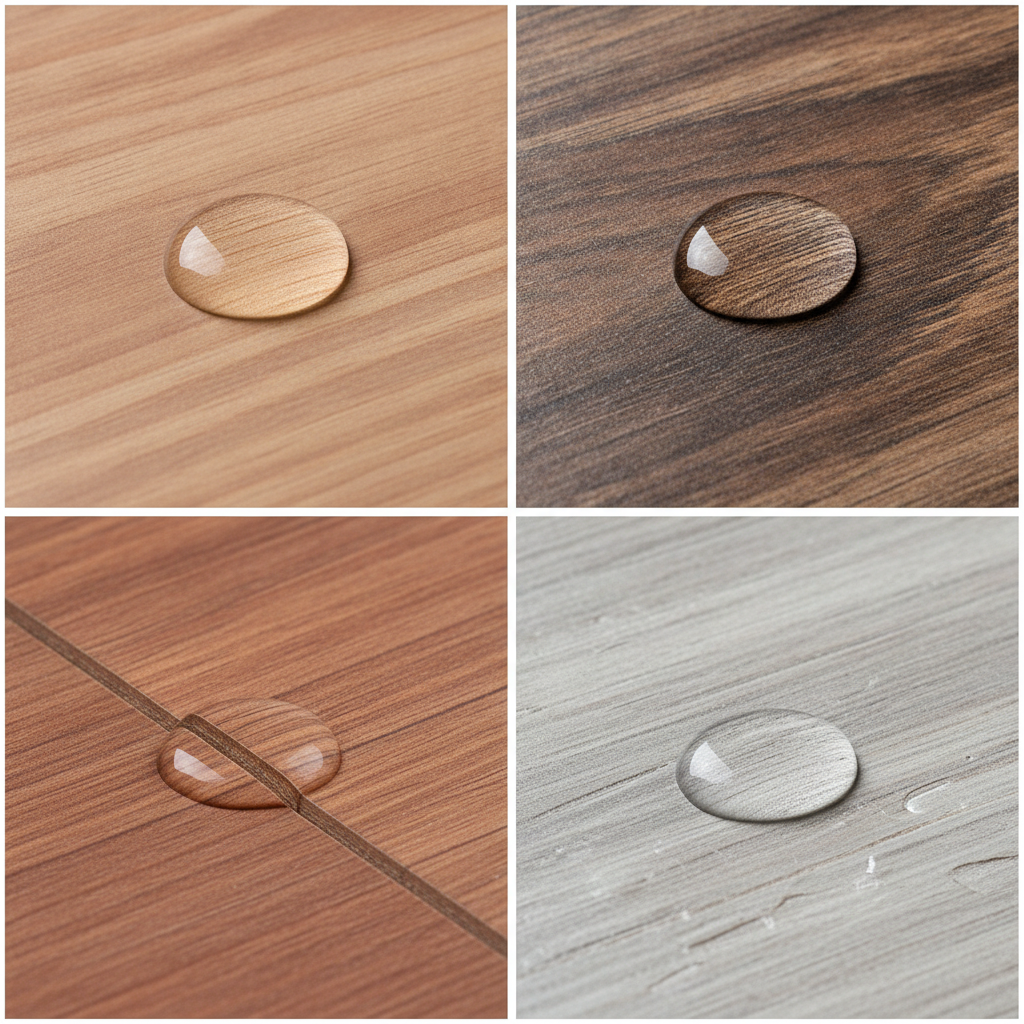
So, is hybrid hardwood flooring truly waterproof? Yes—with a crucial clarification. The composite core itself is impervious to water. Manufacturer warranties typically cover topical spills and moisture from above, meaning you don’t have to panic about everyday kitchen accidents.[3] However, this “waterproof” guarantee does not cover flooding or moisture issues coming from the subfloor below.
Hybrid Hardwood vs. Engineered Hardwood: What’s the Real Difference?
This is one of the most common points of confusion for shoppers. Both products feature a real wood veneer, but their performance in a kitchen is worlds apart. The difference lies entirely in the core.
To put it simply: Engineered hardwood is water-resistant, like a rain jacket. Hybrid hardwood is waterproof, like a submarine.
An engineered hardwood floor has a core made of plywood or HDF (high-density fiberboard). While more stable than solid wood, this core will still absorb water, swell, and delaminate if exposed to significant moisture. A hybrid hardwood floor’s composite core will not.
| Feature | Hybrid Hardwood | Traditional Engineered Hardwood |
|---|---|---|
| Core Material | 100% Waterproof SPC or WPC Composite | Plywood or HDF (Wood-Based) |
| Water Resistance | Waterproof. Can handle topical spills indefinitely. | Water-Resistant. Vulnerable to prolonged moisture. |
| Dimensional Stability | Extremely stable; minimal expansion/contraction. | More stable than solid wood, but still affected by humidity. |
| Ideal Use Cases | Kitchens, bathrooms, basements, any room in the house. | Living rooms, bedrooms, areas with controlled humidity. |
Pros and Cons of Hybrid Hardwood in the Kitchen
To make a balanced decision, it’s essential to weigh the specific advantages and disadvantages of using this material in the heart of your home.
Pros:
- Authentic Wood Beauty: You get the genuine, unique grain and texture of real hardwood because it is real hardwood on the surface.
- 100% Waterproof Core: This provides ultimate peace of mind against spills, pet accidents, and appliance leaks. Water simply can’t penetrate the core to damage the plank or your subfloor.
- Exceptional Durability: The factory-applied finish with aluminum oxide is incredibly tough, offering superior resistance to scratches and daily wear and tear compared to many site-finished hardwood floors.[3]
- Easy Maintenance: Spills wipe up easily from the sealed surface, and routine cleaning is simple.
Cons:
- Veneer Can Still Be Damaged: While the core is waterproof, the real wood veneer on top is not indestructible. A dropped cast-iron skillet can still dent it, and dragging a heavy appliance can still cause a deep scratch.
- Cannot Be Refinished: Unlike solid hardwood which can be sanded down multiple times, the thin veneer of hybrid flooring cannot be refinished. Severe damage may require a plank replacement.
- Higher Cost Than LVP: While offering a significant upgrade in realism, hybrid hardwood typically comes at a higher price point than its main competitor, luxury vinyl plank.
The Kitchen Flooring Showdown: Hybrid Hardwood vs. The Competition
How does hybrid hardwood stack up against the other top contenders for the kitchen? We’ve created the ultimate scorecard to compare the most popular options across the four criteria that matter most: water resistance, durability, style, and cost.
| Flooring Type | Water Resistance (1-5) | Scratch/Dent Durability (1-5) | Style & Realism (1-5) | Average Cost ($/sq ft) |
|---|---|---|---|---|
| Hybrid Hardwood | 5 | 4 | 5 | $5 – $12 |
| Luxury Vinyl Plank (LVP) | 5 | 4 | 4 | $2 – $7 |
| Porcelain Tile | 5 | 5 | 4 | $3 – $10 |
| Waterproof Laminate | 4 | 4.5 | 3.5 | $3 – $6 |
| Solid Hardwood | 1 | 2.5 | 5 | $5 – $15 |
*Durability scores are based on a combination of scratch and impact resistance. Tile durability is substantiated by PEI ratings[4], and wood durability is related to its Janka hardness rating.[5]
Option 1: Luxury Vinyl Plank (LVP)
LVP has exploded in popularity, and for good reason. It’s a 100% synthetic product made from PVC, making it completely waterproof and highly durable. The market for LVP has seen incredible growth, projected to expand significantly as technology improves.
Modern, high-quality LVP offers stunning realism thanks to Embossed in Register (EIR) technology. This process aligns the surface texture with the printed wood-grain image below, creating authentic-looking ridges and knots you can actually feel. While it gets incredibly close, it still can’t perfectly replicate the unique, natural variation of a real wood veneer.
Option 2: Porcelain & Ceramic Tile
For sheer, brute-force durability, nothing beats porcelain tile. It is the traditional champion of wet areas like kitchens and bathrooms. According to the Tile Council of North America (TCNA), porcelain tile has a water absorption rate of less than 0.5%, making it fundamentally waterproof.[4] Its hardness is measured on the PEI scale from 1 to 5; a rating of 4 or 5 is virtually indestructible and can withstand any kitchen abuse.
Modern printing technology has enabled hyper-realistic wood-look tiles, but they come with two main drawbacks: tile is cold and very hard underfoot, which can be uncomfortable for those who spend a lot of time standing and cooking. It’s also unforgiving with dropped glasses or plates.
Option 3: Modern Waterproof Laminate
This is not your parents’ laminate flooring. Older laminate would bubble and swell at the first sign of moisture. Modern “waterproof” laminate, like Mohawk’s RevWood line, features a water-resistant HDF core, water-repellent top coatings, and tightly sealed edges. These products can typically withstand topical water for a specified period, often up to 72 hours, before damage occurs. While a massive improvement, it’s still a time-limited defense rather than the fundamentally waterproof nature of hybrid hardwood or LVP.
Option 4: Traditional Hardwood (Solid & Engineered)
For the purist, there’s no substitute for real hardwood. If you’re committed to this classic look, success in the kitchen depends on “doing it right.” This means choosing the right species and the right finish.
The Janka Hardness Scale is your best friend here. It measures a wood’s resistance to denting. For a kitchen, you must choose a hard, dense species. According to data from the US Forest Service’s Forest Products Laboratory, species like Hickory (1820 Janka rating) and Hard Maple (1450) are excellent choices, while softer woods like Pine (ratings from 380-870) should be avoided at all costs.[5]
As one professional floor refinisher notes, “The finish is just as important as the wood itself. A factory-applied, UV-cured polyurethane with aluminum oxide is your best defense. It creates a plastic-like shell over the wood that provides the highest level of protection against minor spills and scratches.”
How to Choose the Perfect Kitchen Floor for Your Home
With a clear understanding of the materials, you can now focus on making the right choice for your specific needs, style, and budget.
Matching Your Floor to Your Kitchen Style
A floor is the foundation of your kitchen’s design. As one interior designer puts it, “The right floor can tie the entire room together, but the wrong one can feel like a constant design mistake. Think about the overall mood you want to create.”
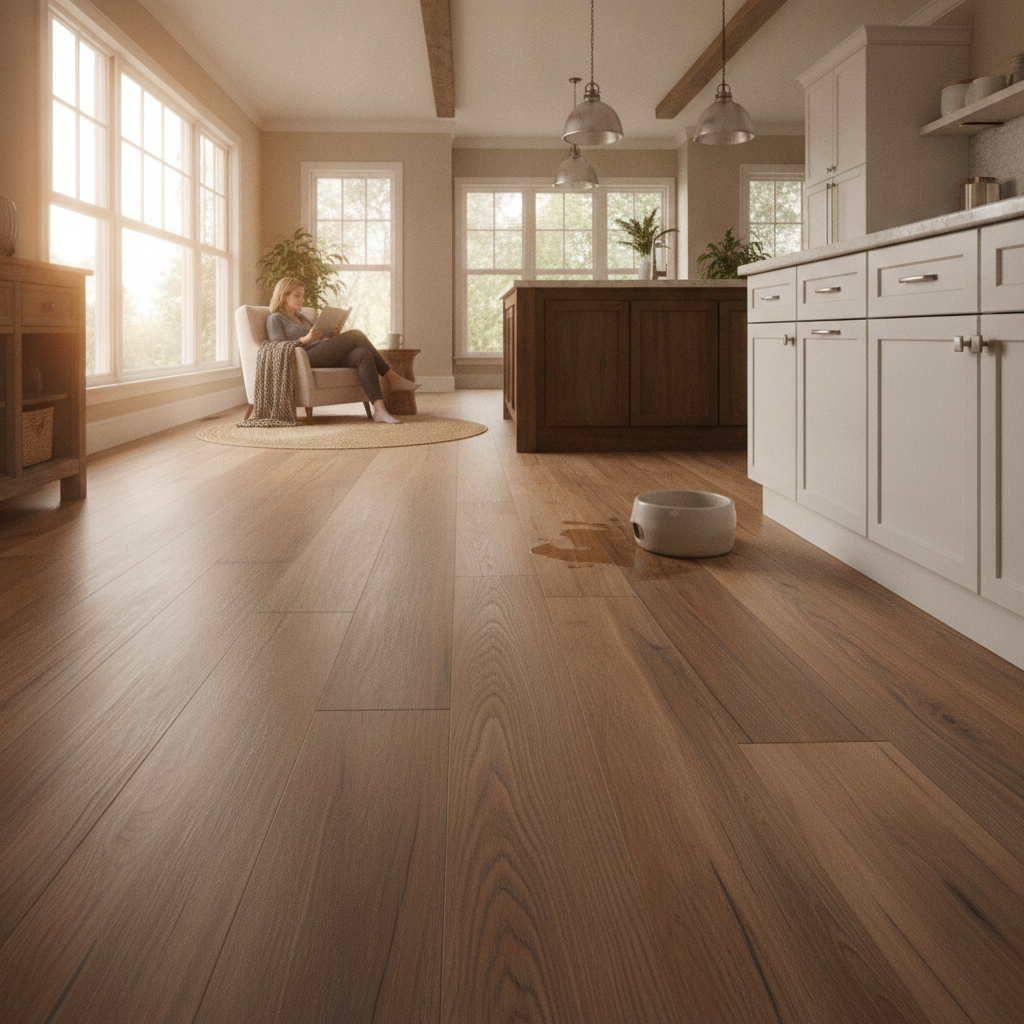
- Modern & Minimalist: Look for flooring with subtle grain patterns and clean lines. Light-colored maple or birch hybrid hardwood, large-format gray porcelain tiles, or smooth, light-toned LVP work beautifully.
- Rustic & Farmhouse: Embrace character and warmth. Wide-plank, rustic-grade hickory or oak hybrid hardwood with visible knots and texture is perfect. A realistic wood-look LVP or tile in a medium-brown, hand-scraped finish also fits this aesthetic.
- Industrial: Think raw, functional materials. Concrete-look porcelain tiles or LVP are a popular choice. A dark, wire-brushed hybrid hardwood can also provide a stunning contrast to stainless steel and exposed brick.
The width of the planks or size of the tiles also has a major impact. Wider planks (7″+) can make a space feel larger and more contemporary, while smaller tiles or narrower planks can create a more traditional or intricate look.
Budgeting for Your New Kitchen Floor: Material vs. Installation Costs
Your total project cost is a combination of the material price and the cost of labor. It’s crucial to budget for both.
| Flooring Type | Average Material Cost ($/sq ft) | Average Installation Cost ($/sq ft) |
|---|---|---|
| Hybrid Hardwood | $5 – $12 | $3 – $6 |
| Luxury Vinyl Plank (LVP) | $2 – $7 | $2 – $5 |
| Porcelain Tile | $3 – $10 | $7 – $15 |
| Waterproof Laminate | $3 – $6 | $2 – $5 |
| Solid Hardwood | $5 – $15 | $4 – $8 |
*Note: Installation costs can vary significantly based on your location, the condition of your subfloor, and the complexity of the job.
Installation Insights: DIY vs. Pro
Most hybrid hardwood, LVP, and laminate floors use a click-lock floating installation system, making them relatively DIY-friendly. Tile, on the other hand, is a much more complex and labor-intensive installation that is best left to professionals.
One critical installation rule, backed by National Wood Flooring Association (NWFA) standards, is that you should never install kitchen cabinets on top of a floating floor (like hybrid hardwood or LVP).[2] The floor needs to be able to expand and contract freely with temperature changes; pinning it down under thousands of pounds of cabinetry can cause it to buckle. The flooring should be installed after the cabinets, with an appropriate expansion gap left around the perimeter and covered by trim.
Furthermore, to ensure the entire floor system is waterproof, installers should use a 100% silicone sealant in all expansion gaps around the perimeter of the room and against tubs, showers, or pipes. This prevents water from getting around the edges of your waterproof planks.
Frequently Asked Questions (FAQ)
Is hybrid hardwood flooring slippery when wet?
Like most hard-surface floors (including tile and LVP), hybrid hardwood can be slippery when wet. The level of slipperiness can depend on the texture of the finish (e.g., a wire-brushed texture may offer more grip than a smooth one). It’s always wise to use caution and clean up spills promptly.
How do you repair a deep scratch in hybrid hardwood?
Because the real wood veneer is too thin to be sanded and refinished, repairs are handled differently than with solid hardwood. For minor scratches, you can use a manufacturer-approved wax or putty repair kit designed to match the color and finish of your floor. For deep gouges or dents, the best solution is to have a professional replace the damaged plank.
What is the most scratch-resistant waterproof flooring for a kitchen with pets?
For pure scratch-proof performance, nothing beats porcelain tile with a high PEI rating (4 or 5). Pet claws simply cannot scratch it. Among the wood-look options, LVP and hybrid hardwood with a thick commercial-grade wear layer (20 mil or more) and an aluminum oxide finish offer the best scratch resistance.
The Final Verdict: Confidence for Your Kitchen
Choosing a kitchen floor no longer has to be a compromise between the look you love and the performance you need. The daily gauntlet of spills, traffic, and potential leaks demands a floor that is both beautiful and resilient.
While porcelain tile remains the undisputed king of raw durability, waterproof hybrid hardwood offers an unparalleled combination of authentic wood style and complete, spill-proof peace of mind. It successfully closes the gap for homeowners who refuse to sacrifice the warmth and character of real wood but need a floor that can stand up to the realities of kitchen life.
You are now equipped with the knowledge to see past the marketing slogans and evaluate each option on its true merits. By understanding the technology, comparing the performance, and considering your own lifestyle, you can choose a kitchen floor not with fear, but with absolute confidence.
This article may contain affiliate links. All flooring installations should be performed according to manufacturer guidelines, and consulting a professional installer is recommended.
References & Authoritative Sources
- Institute of Inspection, Cleaning and Restoration Certification (IICRC). (N.D.). IICRC S500 Standard for Professional Water Damage Restoration. Official IICRC resources.
- National Wood Flooring Association (NWFA). (N.D.). Installation Guidelines and Technical Manuals. Official NWFA resources.
- Flooring Manufacturer Specifications. (N.D.). Technical data sheets and warranty documents from leading hybrid hardwood manufacturers (e.g., Raintree, Flooret, Cali Bamboo).
- Tile Council of North America (TCNA). (N.D.). TCNA Handbook for Ceramic, Glass, and Stone Tile Installation. Official TCNA resources.
- U.S. Forest Service, Forest Products Laboratory. (N.D.). Wood Handbook—Wood as an Engineering Material. Retrieved from official U.S. Forest Service publications.