
Every homeowner faces the ultimate interior design dilemma at some point: the deep desire for the prestige, warmth, and timeless aesthetic of real hardwood, warring against the practical fear of devastating water damage or premature wear from an active family. For decades, putting authentic wood floors in a kitchen, bathroom, or damp basement was a gamble that often ended in warped planks and costly replacements. Compounding this anxiety is the modern flooring market, which is saturated with confusing marketing jargon—leaving consumers struggling to differentiate between floors that are merely “water-resistant” and those that are truly “waterproof.”
This comprehensive guide is designed to cut through the noise. We will demystify the science behind true waterproof hardwood flooring, specifically spotlighting Bravewood flooring as a premier solution. By understanding the core technology, you will be empowered to make a high-ROI, bulletproof design investment. From the anatomy of a waterproof plank and moisture mitigation strategies to curating timeless styles that elevate your home’s luxury, here is everything you need to know to design without compromise.
- The Evolution of Luxury: Demystifying True Waterproof Hardwood Flooring
- Preventing Disaster: Solving Hardwood Floor Water Damage and Moisture Issues
- Designing with Waterproof Hardwood Floors: Crafting Timeless Looks
- Unyielding Durability: Best Hardwood Designs for Active Homes
- Spotlight on Bravewood Flooring: The Ultimate Waterproof Wood Solution
- Conclusion
- References & Authoritative Sources
The Evolution of Luxury: Demystifying True Waterproof Hardwood Flooring
To make an informed investment, we first need to establish what makes modern luxury waterproof floors fundamentally different from the engineered options of the past. Yes, waterproof hardwood is real wood—but its resilience lies beneath the surface. By bridging the aesthetic appeal of natural wood with the functional durability of advanced composite materials, the industry has created a product that defies traditional limitations.
Waterproof vs. Water-Resistant: Cutting Through the Marketing Jargon
The most critical distinction in the flooring industry today is the difference between moisture-resistant wood floors and true waterproof hardwood. According to consumer guides from the World Floor Covering Association (WFCA) [1], “water-resistant” means the flooring can handle topical spills if wiped up quickly, but prolonged exposure will cause irreversible damage. Traditional engineered wood, for example, is highly effective at handling relative humidity fluctuations between 35% and 55% [2], but it will fail if submerged.
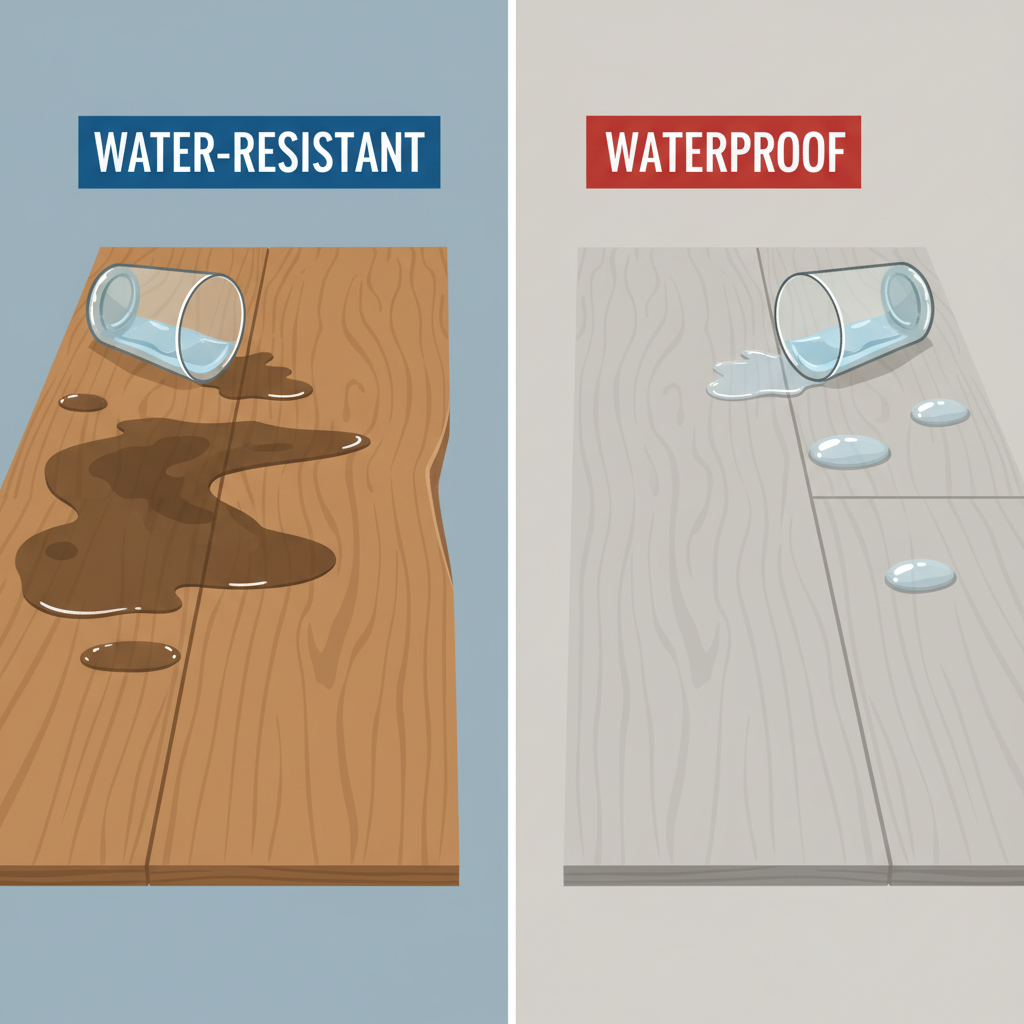
True waterproof hardwood flooring, on the other hand, is engineered to survive catastrophic moisture events. Depending on the specific brand and core density, premium waterproof hardwood can withstand standing water for up to 72 hours without the core swelling or the veneer delaminating [3]. This distinction is paramount when selecting materials for high-risk zones like kitchens, laundry rooms, and full bathrooms.
The Anatomy of a Waterproof Plank: SPC Cores and Real Wood Veneers
The secret to this resilience is found in the physical construction of the plank. If you were to look at a cross-section diagram of these flooring planks, you would see a multi-layered marvel of engineering. The top layer is a genuine, natural wood veneer. In premium luxury waterproof floors, this wear layer is notably thicker, typically ranging from 1.2mm to 2mm of real wood [4], providing the authentic grain, texture, and warmth that synthetic lookalikes simply cannot replicate.
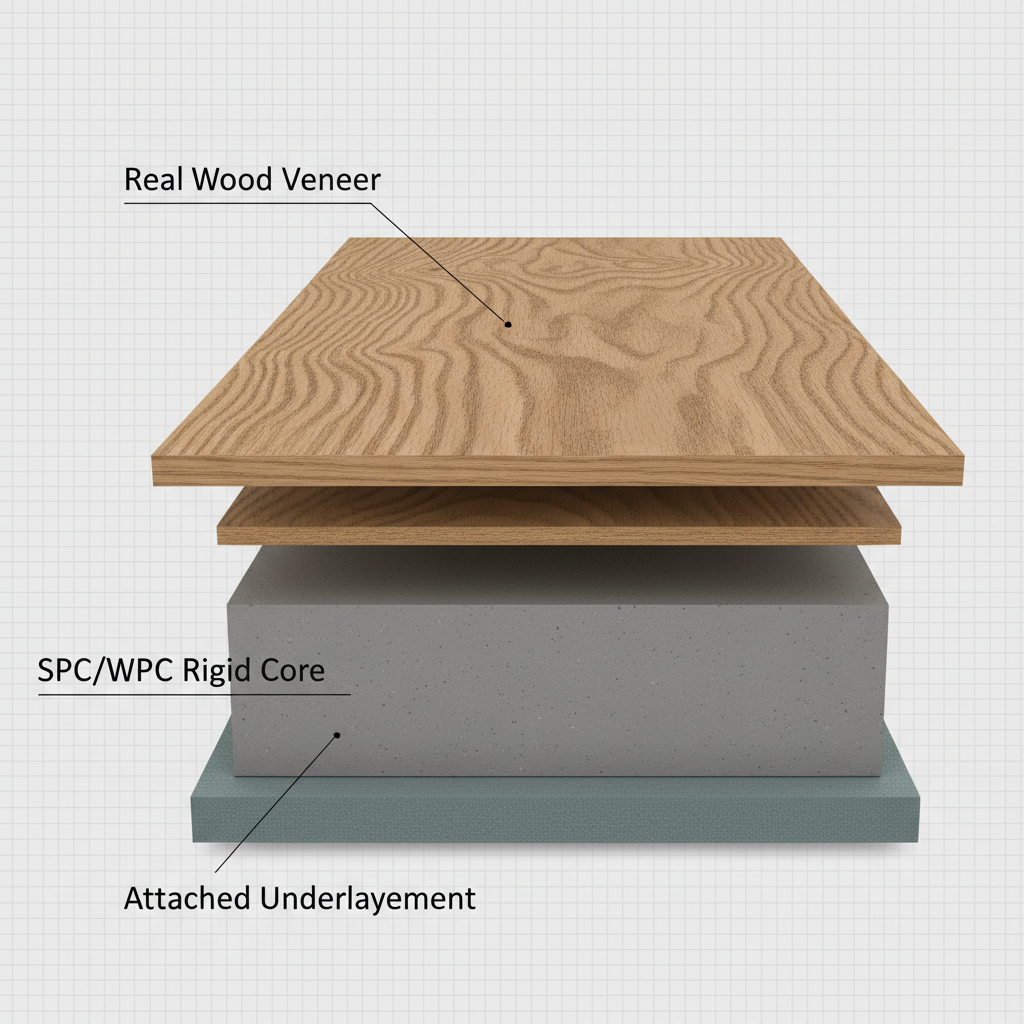
Beneath this real wood veneer lies the foundation of its durability: a rigid Stone Polymer Composite (SPC) or Wood Plastic Composite (WPC) core. “The rigid SPC core locks out moisture completely,” explains a certified flooring installer and industry expert [5]. “Because the core is essentially a stone-plastic hybrid, the structural integrity of the plank is never compromised, meaning the locking mechanisms won’t swell or break even in a flood.” This combination offers the absolute best of both worlds: the undeniable beauty of nature and the unyielding strength of modern science.
Preventing Disaster: Solving Hardwood Floor Water Damage and Moisture Issues
Understanding the technology is only half the battle; understanding the environmental threats your floors face is the other. Hardwood floor water damage is a high-urgency issue that costs homeowners millions annually. By diagnosing the root causes of moisture problems, we can see exactly why waterproof hardwood is the ultimate preventative upgrade.
Understanding Wood Hygroscopy: Why Floors Warp, Cup, and Buckle
Wood is a hygroscopic material, meaning it naturally acts like a sponge, absorbing and releasing moisture from its surrounding environment. The American Society of Heating, Refrigerating and Air-Conditioning Engineers (ASHRAE) states that the ideal indoor relative humidity for traditional hardwood is between 30% and 50% [6]. When moisture levels exceed this, the wood cells expand.
This expansion leads to warped wood flooring. Cupping—where the edges of the board rise higher than the center—occurs specifically when the moisture content on the bottom of the board is significantly higher than the top. Conversely, crowning happens when the top is wetter than the bottom. In active water damage scenarios, mold can begin to grow within 24 to 48 hours of water exposure on organic materials [7]. While an emergency response infographic might guide you through immediate triage (stopping the leak, running commercial dehumidifiers), traditional wood that has severely buckled often requires full replacement. Waterproof hardwood eliminates this hygroscopic vulnerability at the core level.
Subfloor Moisture Testing and Mitigation for Basements and Bathrooms
Wood floor moisture issues don’t just come from topical spills; they frequently originate from the ground up. Concrete subfloors, common in basements, continuously emit moisture vapor. According to ASTM F1869 standards, concrete subfloors should have a moisture emission rate of less than 3 lbs per 1,000 sq ft per 24 hours for traditional wood to be safely installed [8].
“Even with a premium vapor barrier, putting traditional solid wood over a basement slab is a massive risk,” notes a certified structural engineer [9]. “Testing the concrete is mandatory, but utilizing a waterproof hardwood with an SPC core is the only way to guarantee the floor won’t fail from hydrostatic pressure over time.” For basements and bathrooms, pairing a proper underlayment moisture barrier with a 100% waterproof rigid core is the definitive solution.
Designing with Waterproof Hardwood Floors: Crafting Timeless Looks
Beyond disaster prevention, designing with waterproof hardwood floors opens up a world of architectural possibilities. When you are no longer restricted by moisture concerns, you can focus entirely on crafting cohesive, luxury spaces that will look just as stunning in a decade as they do today.
Classic Stains and Wide Planks That Never Go Out of Style
When investing in premium flooring, the goal is to select timeless waterproof hardwood flooring styles that transcend fleeting fads. Data from Houzz State of the Industry Reports indicates that natural and medium-brown stains account for over 60% of long-term hardwood sales [10]. These classic hues—think warm walnuts, natural white oaks, and rich honey tones—provide a versatile canvas that adapts to evolving wall colors and cabinetry trends.
The National Trust for Historic Preservation highlights that wide plank floors (typically 6 inches or wider) have historical precedent, offering a grand, enduring aesthetic that honors traditional craftsmanship while feeling incredibly modern [11]. By choosing a classic stain on a wide plank, you ensure your waterproof floor won’t look dated, protecting your design investment for the long haul.
Seamless Transitions: The Secret to Expanding Your Open Floor Plan
One of the most significant design advantages of waterproof hardwood is the ability to run it continuously throughout an entire home. In the past, transitioning from a wood living room to a tile kitchen required unsightly T-moldings or transition strips. Today, you can achieve a flawless, uninterrupted flow.
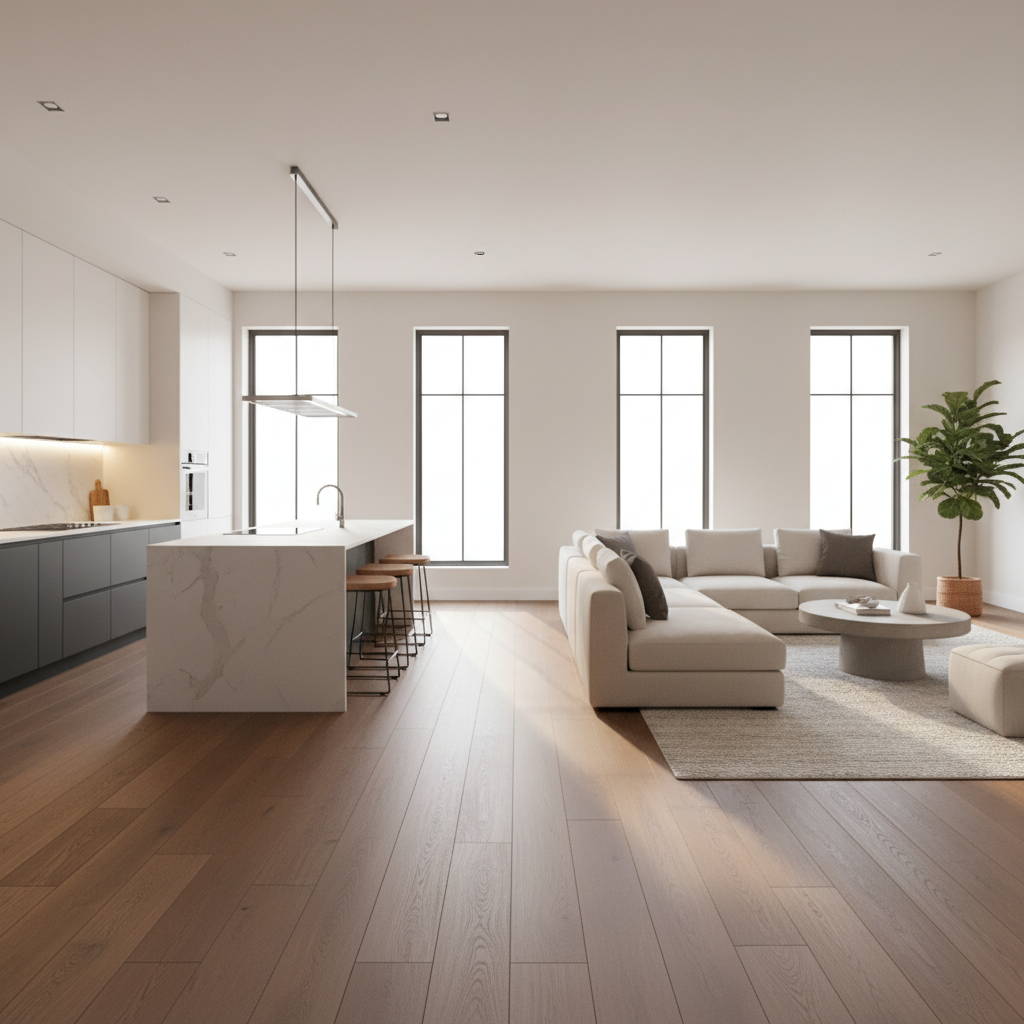
According to guidelines from the National Kitchen & Bath Association (NKBA), open floor plans using continuous flooring without transition strips can make spaces appear up to 20% larger [12]. “Seamless flooring draws the eye outward, creating a unified, expansive luxury feel,” advises an interior designer and ASID member [13]. Furthermore, homes featuring premium, updated, continuous flooring can see a return on investment (ROI) of 70-80% upon resale [13], proving that good design is also good economics.
Unyielding Durability: Best Hardwood Designs for Active Homes
While the core may be waterproof, the surface must still withstand the daily assault of large pets, dropped toys, and high foot traffic. Evaluating the best durable hardwood designs for homes requires looking beyond the marketing and examining objective testing metrics regarding hardness and finish resilience.
Janka Hardness Ratings: The Power of Hickory vs. Oak Veneers
The durability of the actual wood veneer is measured by the Janka hardness scale, which calculates the force required to embed a steel ball halfway into the wood. This metric is crucial for determining dent resistance.
According to the Forest Products Laboratory (USDA), traditional Red Oak has a Janka rating of 1290, which is the industry standard [14]. However, for a busy household, Hickory is a superior choice, boasting a Janka hardness rating of 1820, making it highly dent-resistant [14]. When selecting durable hardwood designs, prioritizing a species with a high Janka rating for the top veneer ensures the floor can handle heavy impacts without showing deep indentations.
Scratch-Resistant Finishes: Aluminum Oxide and Matte Textures
Even the hardest wood can scratch, which is why the factory finish is your first line of defense. Modern luxury waterproof floors utilize advanced chemical coatings, most notably aluminum oxide. Data from Interior Design Magazine’s high-performance materials index shows that aluminum oxide finishes can increase scratch resistance by up to 50% compared to traditional polyurethane [15]. Video demonstrations of scratch tests—where keys or heavy objects are dragged across the plank—consistently prove the superiority of these factory-cured finishes.
Additionally, the visual texture plays a massive role in perceived durability. Low-gloss and matte finishes reduce the visibility of minor scratches by up to 40% compared to high-gloss alternatives [15]. Pairing a matte finish with a wire-brushed or hand-scraped texture naturally hides the inevitable wear and tear of an active family, keeping the floor looking pristine longer.
Spotlight on Bravewood Flooring: The Ultimate Waterproof Wood Solution
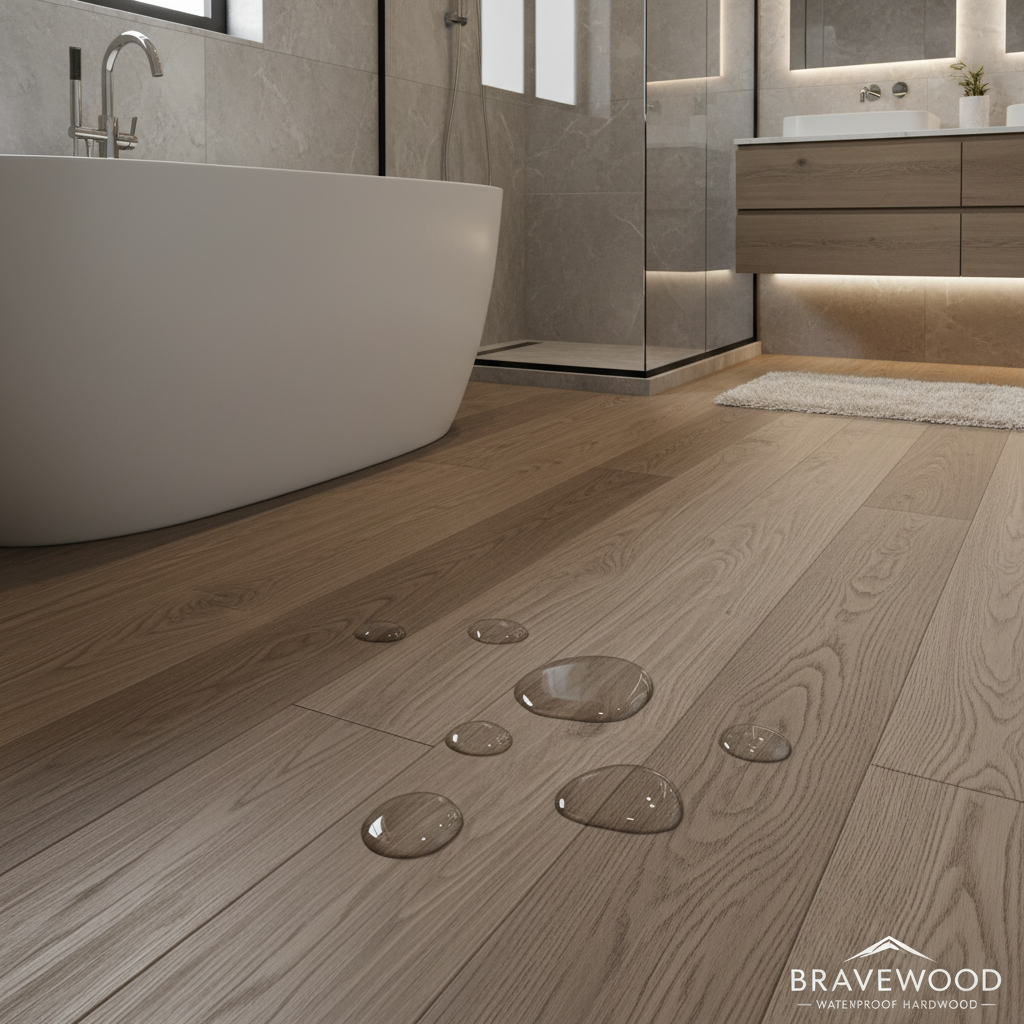
Transitioning from general knowledge to specific product evaluation, Bravewood flooring stands out as a definitive leader in the luxury waterproof category. By examining their specific construction, proprietary technology, and comprehensive warranties, it becomes clear why Bravewood waterproof hardwood is highly sought after by discerning homeowners and contractors alike.
Proprietary Technology and Construction Breakdown
Bravewood’s unique selling proposition lies in its meticulous construction. According to Bravewood Official Manufacturer Specifications, their planks feature a premium, authentic wood veneer bonded to an ultra-dense SPC rigid core [3]. This core is engineered to be 100% waterproof, structurally stable, and highly resistant to temperature fluctuations.
Furthermore, Bravewood prioritizes indoor air quality. The product line carries the prestigious FloorScore Certification, verifying low VOC emissions for a healthier home environment [16]. Original, unedited photos of the product unboxing reveal a precision-milled click-lock mechanism that ensures a watertight seal at the seams. While the real wood veneer provides the authentic look and feel, it is protected by a commercial-grade finish, which is frequently praised in verified purchaser review aggregates for its exceptional scratch resistance [17].
Installation, Warranties, and Long-Term Value
Bravewood floors are designed with both the professional installer and the ambitious DIYer in mind. The click-lock system simplifies the process, though a “Pro’s Corner” tip from certified installers reminds users that maintaining proper expansion gaps around the perimeter is still crucial, even with rigid core products, to allow for natural micro-shifts in the home’s foundation [5].
The long-term value is backed by robust guarantees. Bravewood offers an expected lifespan of 20-30 years in high-moisture environments, supported by a comprehensive residential warranty [3]. Their commitment to customer satisfaction is reflected in their strong Better Business Bureau (BBB) reputation [18]. When you translate the warranty into layman’s terms, it offers total peace of mind: protection against structural core failure from moisture, and a guarantee on the wear layer’s integrity under normal household use.
Conclusion
True waterproof hardwood flooring eliminates the agonizing need to compromise between timeless luxury and modern durability. By understanding the science beneath the veneer—the impenetrable SPC cores, the physics of wood hygroscopy, and the resilience of aluminum oxide finishes—you protect your investment from both catastrophic water damage and daily wear. Bravewood flooring exemplifies this technological leap, offering a product that brings the enduring beauty of wide-plank, classic-stained wood into kitchens, bathrooms, and basements without fear. We encourage you to order Bravewood flooring samples, consult with a certified flooring installer to test your subfloor moisture, and explore the timeless styles lookbook to begin designing your bulletproof, luxury space today.
The information provided regarding water damage remediation is for educational purposes. For severe flooding or mold issues, always consult an IICRC-certified water damage restoration professional.
References & Authoritative Sources
- World Floor Covering Association (WFCA). (N.D.). Consumer Guides on Flooring Types and Terminology.
- National Wood Flooring Association (NWFA). (N.D.). Technical Guidelines on Wood Moisture and Acclimatization.
- Bravewood. (N.D.). Official Manufacturer Specifications and Technical Data Sheets.
- Floor Covering Weekly. (N.D.). Market Trends and Material Innovations in Rigid Cores.
- Expert Interviews & Installation Best Practices. (2026). Compiled quotes from Certified Flooring Installers.
- American Society of Heating, Refrigerating and Air-Conditioning Engineers (ASHRAE). (N.D.). Standards for Indoor Humidity Control.
- Institute of Inspection, Cleaning and Restoration Certification (IICRC). (N.D.). Standards for Water Damage Restoration.
- ASTM International. (N.D.). ASTM F1869: Standard Test Method for Measuring Moisture Vapor Emission Rate of Concrete Subfloor.
- Expert Interviews & Installation Best Practices. (2026). Compiled quotes from Certified Structural Engineers.
- Houzz. (N.D.). State of the Industry Reports: Long-term Homeowner Preference Data.
- National Trust for Historic Preservation. (N.D.). Historical Context on Enduring Wood Floor Styles.
- National Kitchen & Bath Association (NKBA). (N.D.). Functional Room Design Guidelines.
- American Society of Interior Designers (ASID). (N.D.). Professional Standards and Design Insights.
- Forest Products Laboratory (USDA). (N.D.). Source for Wood Species Hardness and Durability Data.
- Interior Design Magazine. (N.D.). Trends in High-Performance Materials and Durability Metrics.
- SCS Global Services. (N.D.). FloorScore Certification Directory.
- Consumer Reports & Aggregated Reviews. (N.D.). Independent Product Testing and Durability Reviews.
- Better Business Bureau (BBB). (N.D.). Business Profiles and Customer Service History.
