
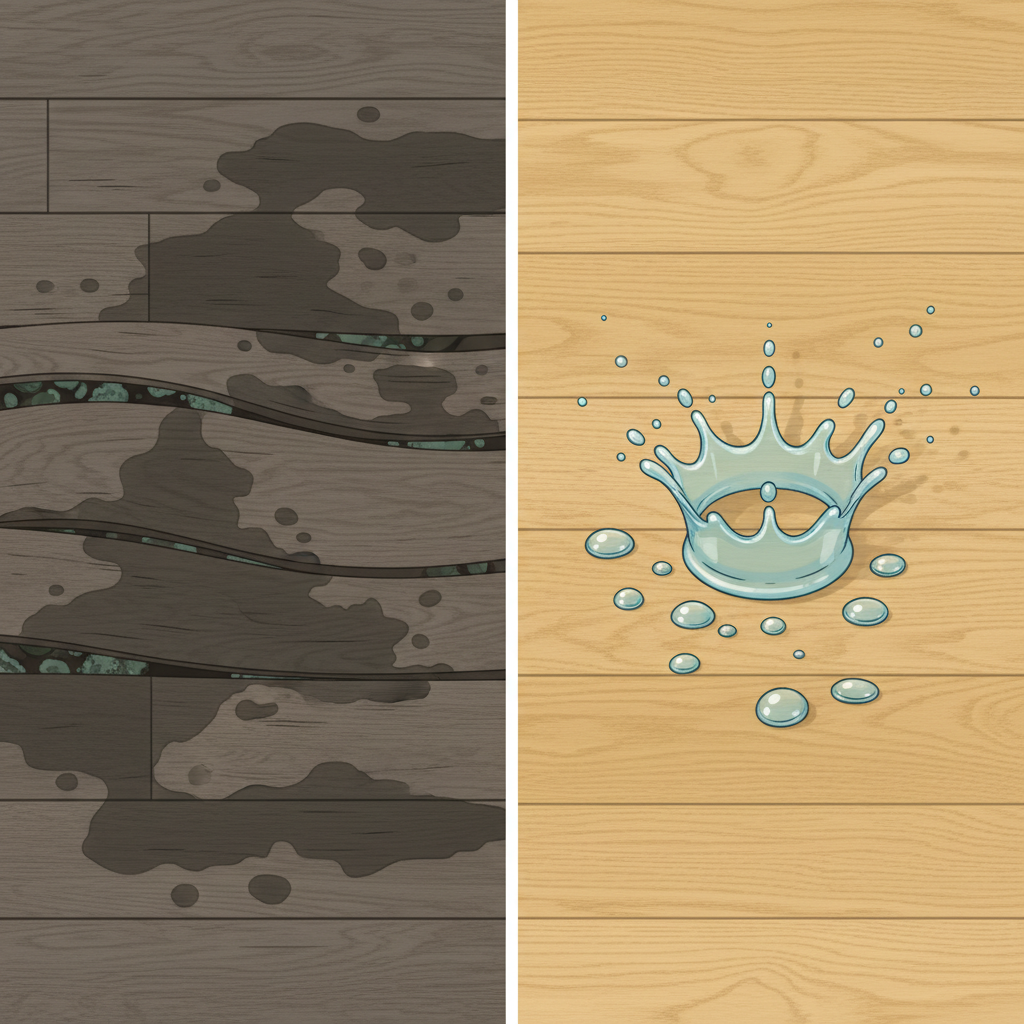
Few things are as devastating to a homeowner as discovering water damaged hardwood floors. The cupping, the buckling, and the looming threat of mold can turn a dream interior into a costly nightmare. Conversely, while traditional solid wood offers unmatched beauty, dealing with easily scratched surfaces from active pets and children is a daily frustration. Enter the flooring industry’s modern marvel: waterproof hybrid hardwood.
However, the market is currently flooded with confusing marketing jargon. Terms like “water-resistant” and “100% waterproof” are often used interchangeably, leaving consumers vulnerable to expensive mistakes. This definitive, science-backed buyer’s guide is designed to unmask the “waterproof wood” illusion. By dissecting hybrid flooring layer-by-layer—exploring core technologies, decoding wear layer ratings, and exposing installation realities—we will empower you to make a confident, life-proof flooring purchase.
- What is Waterproof Hybrid Flooring? Demystifying the Technology
- Decoding Durability: What to Look for in Waterproof Hybrid Flooring
- Installation Realities: How to Choose Hybrid Hardwood Flooring
- Finding the Best Waterproof Hybrid Hardwood Flooring for Homes
- Conclusion
- References & Authoritative Sources
What is Waterproof Hybrid Flooring? Demystifying the Technology
At its core, waterproof hybrid flooring represents the ultimate convergence of two distinct worlds: the authentic, natural aesthetics of real wood and the unyielding, rigid core durability of luxury vinyl. For years, consumers have asked if 100% waterproof wood flooring actually exists. The answer lies in modern manufacturing processes that fundamentally alter how the material interacts with moisture.
By utilizing hydrophobic sealants, tight locking mechanisms, and advanced composite cores, manufacturers have engineered a product that prevents moisture absorption from the bottom up and the top down. To ensure these claims hold up in the real world, authoritative bodies like the North American Laminate Flooring Association (NALFA) set rigorous testing standards for surface wear and water resistance [1]. When a product meets these standards, it means it has survived exhaustive topical moisture tests without swelling or delaminating.
To truly understand how this works, picture a cross-section diagram of a hybrid plank. From top to bottom, you will typically find a protective UV/aluminum oxide wear layer, a genuine hardwood veneer, a dense waterproof composite core (SPC or WPC), and an attached acoustic underlayment. This multi-layered anatomy is the secret to its resilience.
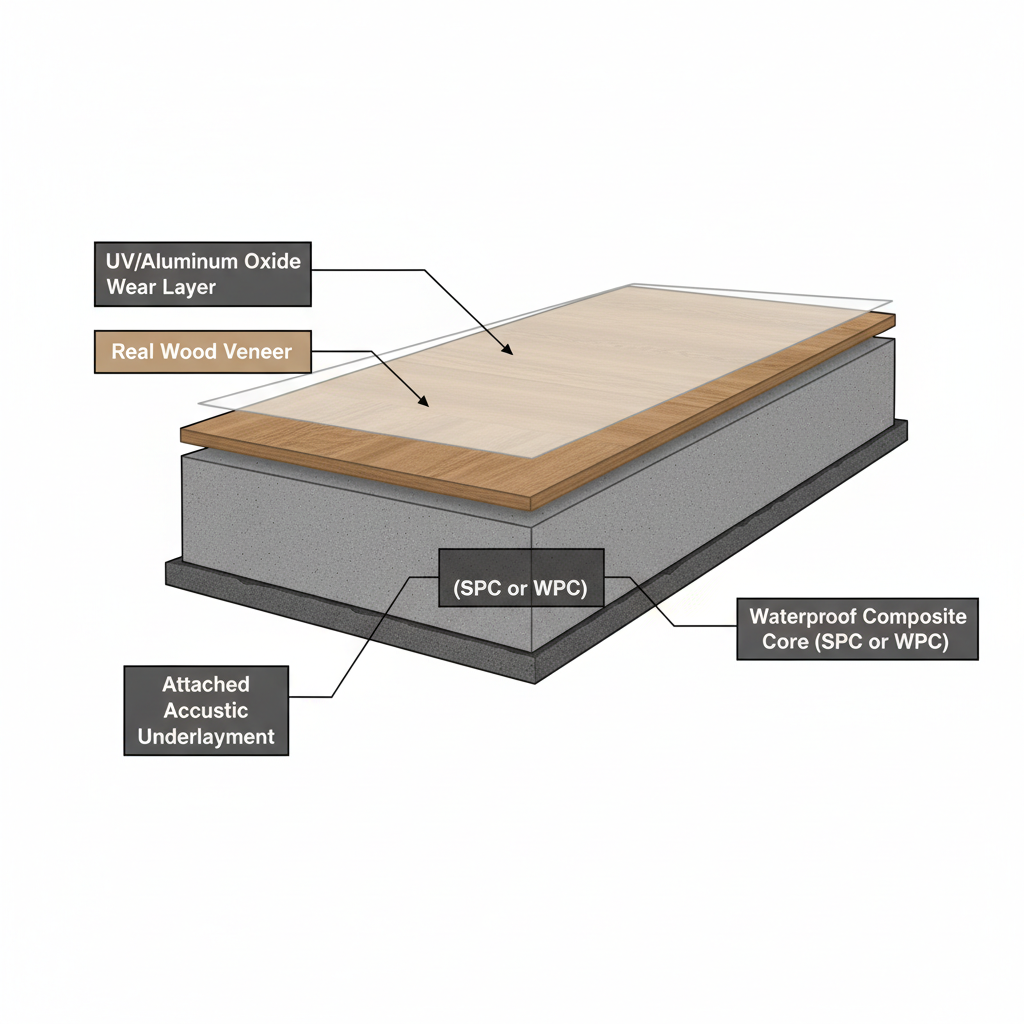
The Anatomy of Hybrid Hardwood Floors
The defining characteristic of hybrid hardwood floors is that they do, in fact, contain real organic wood—just not in the way traditional solid planks do. Hybrid hardwood features a real wood veneer typically ranging between 0.6mm and 1.2mm thick, which is permanently bonded to a waterproof polymer core.
This thin slice of authentic European Oak, Hickory, or Maple provides the exact grain, texture, and warmth of solid wood because it is solid wood. However, there is a trade-off. The National Wood Flooring Association (NWFA), the primary authority on wood flooring characteristics, notes that while traditional solid wood can be sanded and refinished multiple times over decades, the ultra-thin veneer on hybrid hardwood generally cannot be sanded down [2]. Once the factory finish is compromised, the floor must be repaired or replaced, making the initial factory finish incredibly important.
SPC vs. WPC: Understanding Waterproof Core Technology Floors
Beneath the wood veneer lies the engine of waterproof core technology floors. When evaluating these products, you will encounter two primary acronyms: SPC and WPC. Understanding the material science behind them is critical for choosing the right floor for your home.
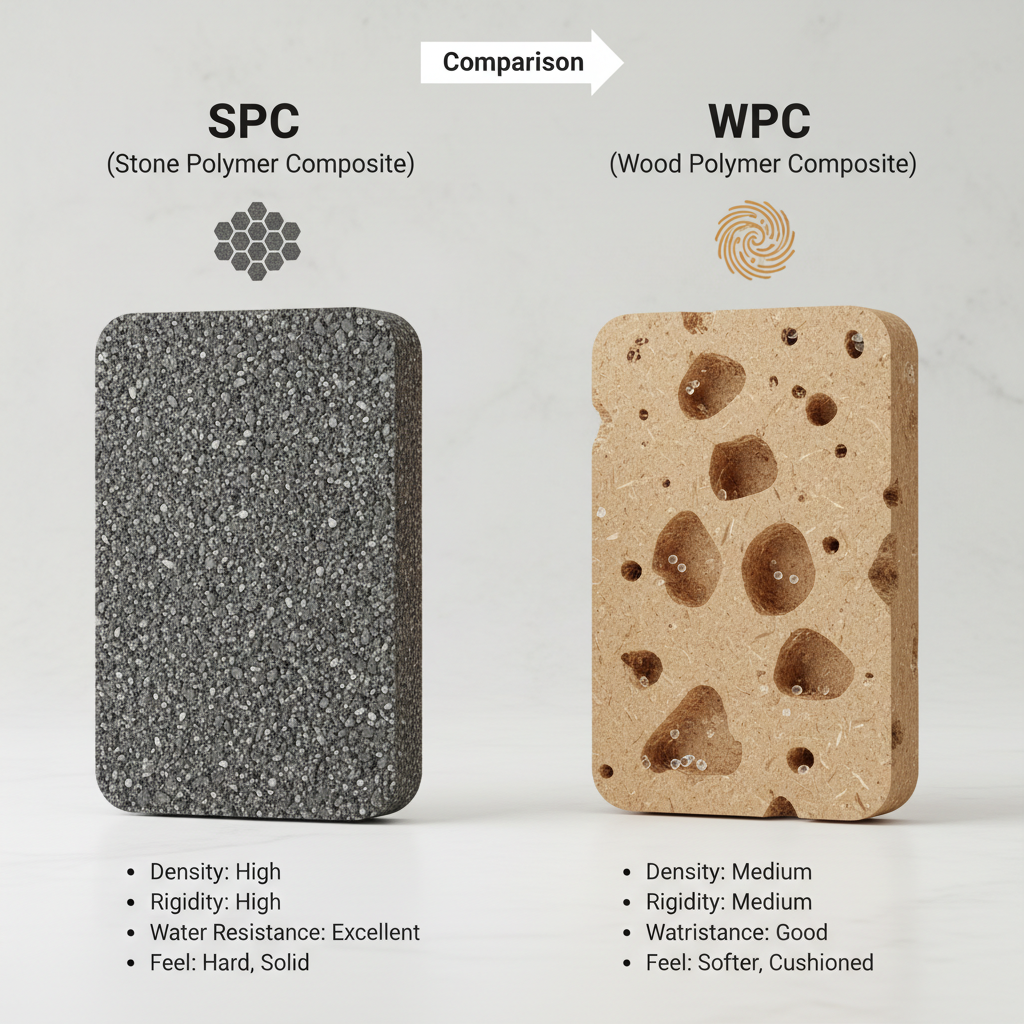
- SPC (Stone Polymer Composite): SPC cores are composed of roughly 60% limestone powder mixed with polyvinyl chloride and stabilizers. This extrusion process creates a core that is extremely dense, rigid, and dimensionally stable. It is highly resistant to impact and will not expand or contract significantly with temperature fluctuations, making it ideal for sunrooms or areas with heavy furniture.
- WPC (Wood Polymer Composite): WPC cores incorporate wood flour and foaming agents into the polymer mix. The introduction of air pockets makes WPC significantly thicker, lighter, and softer underfoot than SPC. It provides superior thermal insulation, making it a warmer choice for basements, though it is slightly more susceptible to heavy impact dents.
Regardless of whether you choose SPC or WPC, indoor air quality should be a priority. Always look for products that carry FloorScore certification, which ensures the flooring and its adhesives meet strict standards for low Volatile Organic Compound (VOC) emissions [3]. Furthermore, the Multilayer Flooring Association (MFA) provides standardized performance profiles for these rigid cores, helping consumers verify that the structural integrity of the plank meets industry benchmarks [4].
Decoding Durability: What to Look for in Waterproof Hybrid Flooring
Knowing what to look for in waterproof hybrid flooring requires moving past superficial marketing hype and evaluating the technical metrics that dictate long-term performance. A strategic, step-by-step evaluation methodology used by flooring professionals involves assessing four key areas: the core composition (SPC vs. WPC), the wear layer thickness, the Janka hardness of the veneer, and the quality of the finish.
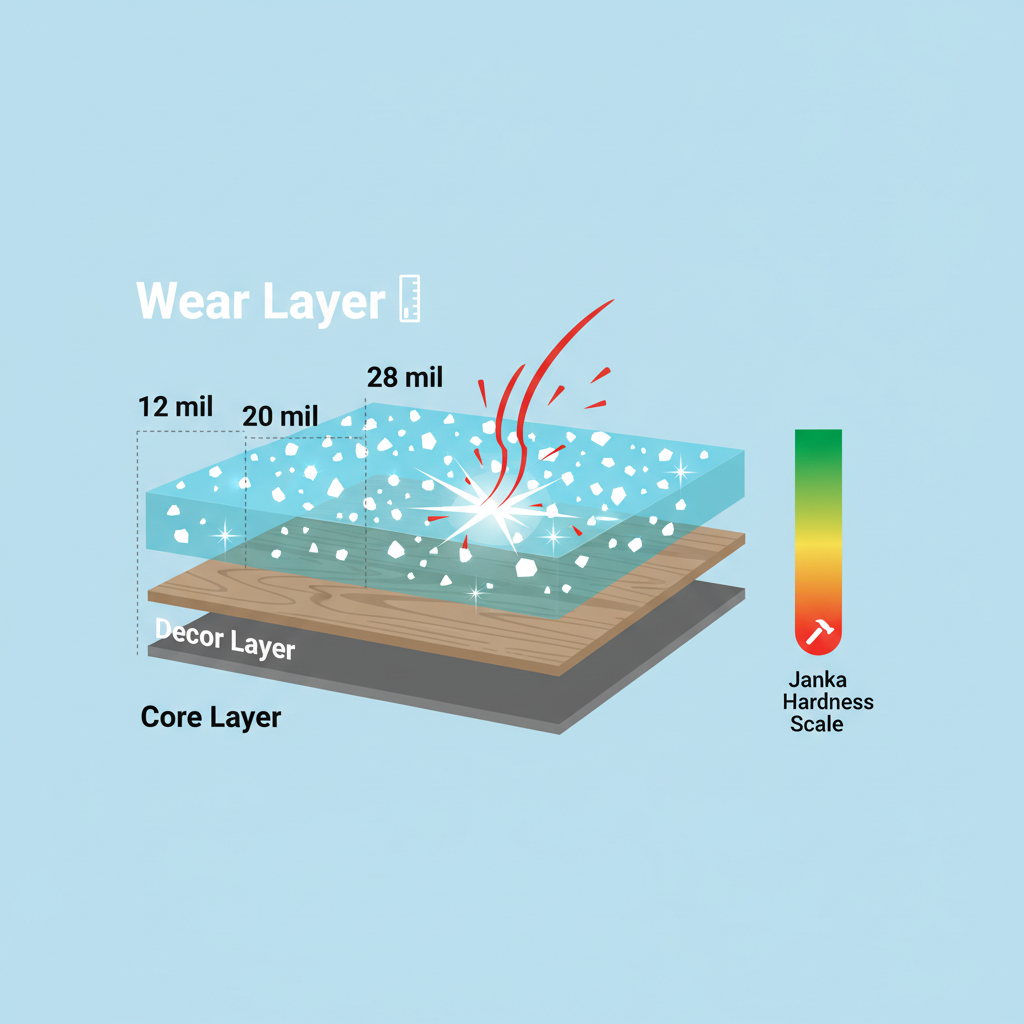
The Janka Hardness Scale is a critical metric that measures the resistance of a wood species to denting and wear. Even though the wood is just a veneer, its natural hardness still plays a role in impact resistance:
- Softer Woods (Janka under 1000): Species like Pine and Douglas Fir are highly susceptible to dents from dropped objects or high heels.
- Harder Woods (Janka 1300+): Species like White Oak, Hickory, and Hard Maple offer superior natural resistance to physical impacts.
Navigating High Wear Layer Rating Flooring
When assessing high wear layer rating flooring, consumers are often confused by the terminology. The thickness of the protective clear coat on top of the floor is measured in “mils,” which is frequently mistaken for millimeters.
To clarify: 1 mil equals 1/1000th of an inch. It is a measurement of thickness, not a millimeter. Here is a quick conversion guide to fill this common knowledge gap:
- 12 mil = ~0.3 mm (Sufficient for standard, low-traffic residential use)
- 20 mil = ~0.5 mm (Recommended for active homes, large pets, or light commercial use)
- 28+ mil = ~0.7 mm (Heavy commercial applications)
For a busy household, a 20 mil wear layer or higher is strongly recommended. The ASTM International sets the Standard Test Methods for Wear Resistance of flooring, utilizing Taber abrasion tests to determine how many cycles of friction a wear layer can withstand before the design layer is compromised [5]. A thicker mil rating directly correlates to a longer lifespan before the floor shows traffic patterns.
Preventing Easily Scratched Wood Flooring
A thick wear layer protects against wearing through the floor, but it doesn’t necessarily prevent easily scratched wood flooring from pet claws or dragging furniture. This is where the chemical composition of the finish matters.
Factory-applied aluminum oxide finishes are the gold standard in the industry. By infusing microscopic aluminum oxide crystals into the urethane topcoat and curing it under UV light, manufacturers can increase scratch resistance by up to 30% compared to traditional site-applied polyurethane. Bona, a leading and highly trusted manufacturer of hardwood floor care products, emphasizes that maintaining this factory finish with pH-neutral, approved cleaners is vital for long-term durability [6].
If superficial micro-scratches do occur in the clear coat, they can often be remedied with specialized blending pencils or finish restorers. For slightly deeper scratches in the wood veneer itself, rubbing a raw walnut over the scratch can naturally mask the blemish using the nut’s oils. However, explicitly avoid harmful DIY internet hacks—such as using olive oil and vinegar or harsh abrasive pads—which will permanently cloud or strip the protective aluminum oxide layer.
Installation Realities: How to Choose Hybrid Hardwood Flooring
Pro Installer’s Corner: “The biggest mistake homeowners make is ignoring the subfloor. If your concrete slab or plywood isn’t perfectly flat—usually within a 3/16-inch variance over a 10-foot span—the locking mechanisms of your hybrid floor will eventually snap under foot traffic. Subfloor preparation is 90% of a successful installation.”
Additionally, consider the acoustic properties of the floor. Hybrid planks with attached cork or EVA foam underlayments can drastically reduce sound transmission, improving the Impact Insulation Class (IIC) rating by up to 20 points, eliminating the hollow “clicking” sound often associated with floating floors.
Mastering Click-Lock Flooring Installation
For DIYers, traditional solid hardwood is notoriously hard to install flooring, requiring expensive pneumatic nailers, air compressors, and advanced carpentry skills. Modern click-lock flooring installation systems have revolutionized the industry, reducing installation time by up to 50%.
Unilin and Valinge are the primary patent holders and original inventors of these modern click-lock systems, engineering joints that drop and lock together to create a watertight, seamless surface [7]. However, “easy to install” does not mean foolproof.
To master click-lock installation, you must adhere to strict guidelines. A 1/4 to 1/2 inch expansion gap around the entire perimeter of the room (hidden by baseboards) is universally required to prevent the floor from buckling as the home’s temperature and humidity fluctuate. Furthermore, improper subfloor leveling accounts for over 50% of floating floor installation failures and joint separations, a statistic echoed by professional construction authorities like the Journal of Light Construction (JLC) [8].
Triage and Prevention: Water Damaged Hardwood Floors
Even with advanced technology, understanding how to handle water damaged hardwood floors is crucial. True waterproof hybrid floors utilize hydrophobic sealants and tight locking joints to prevent topical spills from penetrating the core for 24 to 72 hours. However, if water breaches the perimeter expansion gap and gets under the floor, you have a serious problem.
If you experience a flood or severe leak, you must perform immediate triage. Look for cupping (where the edges of the plank are higher than the center) or crowning (where the center is higher than the edges). The Institute of Inspection, Cleaning and Restoration Certification (IICRC) S500 standard dictates that porous materials exposed to Category 3 water (black water/sewage) must be removed and discarded [9].
Even with clean water, moisture trapped beneath a waterproof floating floor cannot evaporate. This creates a high-risk environment for hidden toxic mold growth. If water has saturated your subfloor, do not rely on the flooring’s “waterproof” claim; pull up the planks, dry the subfloor completely using commercial dehumidifiers, and consult a professional remediation team if mold is suspected.
Finding the Best Waterproof Hybrid Hardwood Flooring for Homes
When searching for the best waterproof hybrid hardwood flooring for homes, there is no single “best” brand; there is only the best brand for your specific application.
Evaluation Criteria Disclosure: To avoid marketing traps, weight your evaluation based on your home’s reality. If you have large dogs, prioritize a minimum 20 mil wear layer with an aluminum oxide finish and an AC4 durability rating. If you are installing in a basement, prioritize a WPC core for thermal insulation and a pre-attached vapor barrier.
Do not rely solely on showroom samples. Check aggregated, verified consumer reviews on community platforms like Houzz to see how the floor performs in real-world applications over several years [10]. Additionally, consult trusted residential interior design standards from publications like Better Homes & Gardens to ensure the aesthetic quality matches the technical durability [11].
Finally, read the fine print of the warranty. Many “lifetime waterproof warranties” only cover topical spills and explicitly void the warranty if damage is caused by hydrostatic pressure from a concrete subfloor.
Conclusion
The “waterproof wood” illusion relies on consumer confusion, but an educated buyer can easily cut through the marketing jargon. By understanding the distinct advantages of rigid SPC and insulating WPC cores, recognizing that a 20 mil wear layer is the benchmark for active homes, and respecting the strict subfloor requirements of click-lock installation, you can secure a floor that truly lasts. Waterproof hybrid hardwood flooring offers an incredible bridge between the beauty of nature and the resilience of modern engineering—provided you know exactly what to look for.
Before making your final decision, order physical samples of your top choices. Take a key or a coin to them to test the scratch resistance of the finish yourself. Most importantly, consult a certified flooring installer to test your subfloor’s moisture levels and flatness, ensuring your investment rests on a solid, reliable foundation.
Disclaimer: The information provided is for educational purposes. Always consult specific manufacturer warranty guidelines and certified flooring professionals for moisture testing and installation.
References & Authoritative Sources
- North American Laminate Flooring Association (NALFA). (N.D.). Testing Standards for Surface Wear and Water Resistance. Retrieved from NALFA Official Guidelines.
- National Wood Flooring Association (NWFA). (N.D.). Wood Flooring Characteristics and Maintenance Guidelines. Retrieved from NWFA Technical Standards.
- FloorScore. (N.D.). Indoor Air Quality Certification Standard for Hard Surface Flooring Materials. Retrieved from SCS Global Services / FloorScore.
- Multilayer Flooring Association (MFA). (N.D.). Industry Standards and Performance Profiles for Rigid Core Flooring. Retrieved from MFA Official Publications.
- ASTM International. (N.D.). Standard Test Method for Wear Resistance of Flooring. Retrieved from ASTM Technical Standards.
- Bona. (N.D.). Hardwood Floor Care, Finish Durability, and Maintenance Guidelines. Retrieved from Bona Professional Resources.
- Unilin / Valinge. (N.D.). Modern Click-Lock Flooring Systems and Locking Mechanism Patents. Retrieved from Unilin Technologies / Valinge Innovation.
- Journal of Light Construction (JLC). (N.D.). Professional Construction and Remodeling Advice: Floating Floor Installation Failures. Retrieved from JLC Archives.
- Institute of Inspection, Cleaning and Restoration Certification (IICRC). (N.D.). IICRC S500 Standard and Reference Guide for Professional Water Damage Restoration. Retrieved from IICRC Standards.
- Houzz. (N.D.). Community Discussions and Verified Reviews on Residential Flooring. Retrieved from Houzz Home Improvement Forums.
- Better Homes & Gardens. (N.D.). Residential Interior Design and Home Material Standards. Retrieved from Better Homes & Gardens Home Improvement Guides.
