
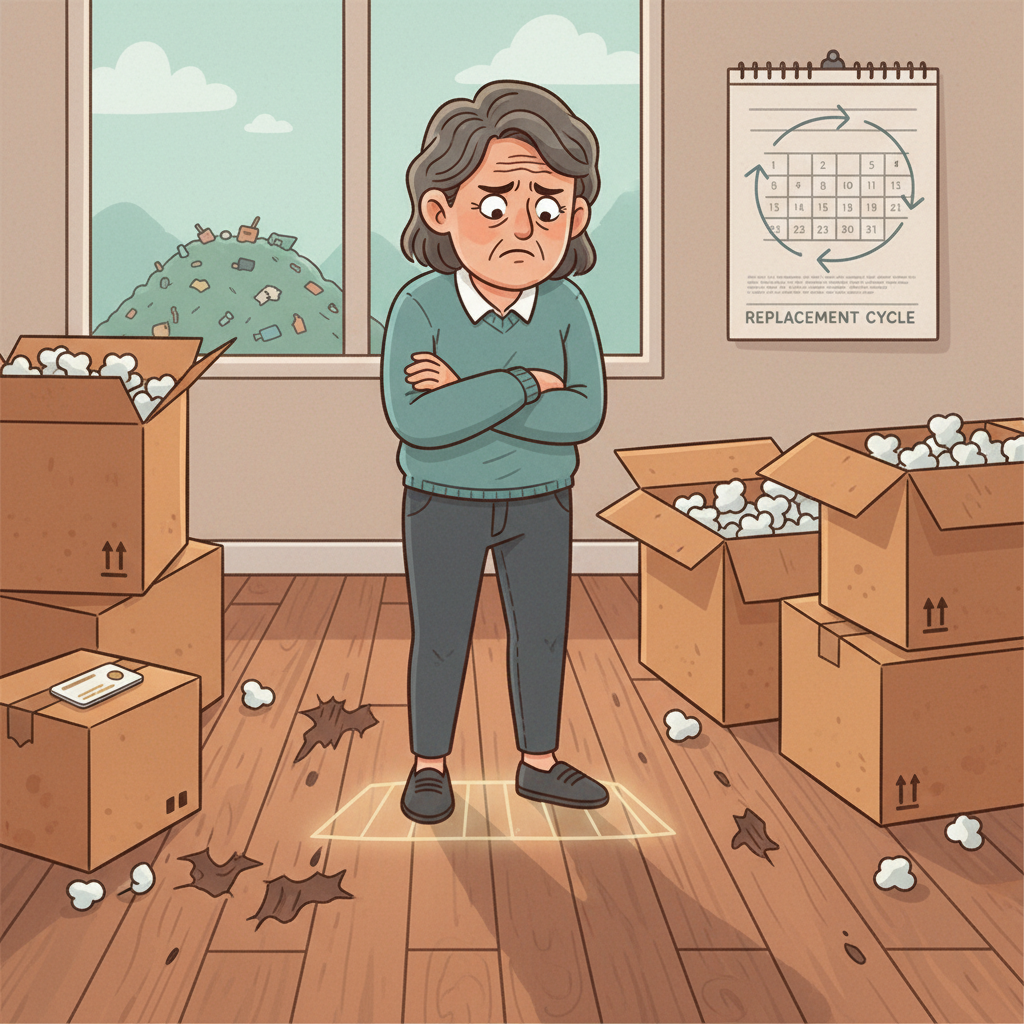
If you have ever watched a supposedly indestructible floor succumb to a golden retriever’s claws, a dropped cast-iron pan, or the slow, dulling march of daily foot traffic, you are likely suffering from “cheap floor fatigue.” For decades, homeowners have been trapped in a frustrating cycle: purchasing builder-grade materials, falling for deceptive marketing buzzwords, and enduring the massive financial and logistical disruption of replacing their floors every five to ten years.
The home improvement industry is saturated with claims of “scratch-proof” surfaces and “lifetime” warranties that rarely hold up to the realities of an active household. It is time for a reality check. This comprehensive guide moves past the marketing myths to scientifically evaluate ultra-durable materials. We will explore the material science of wear and tear, evaluate high-traffic alternatives, and spotlight adamantine flooring as the ultimate 50-year solution. By understanding the true 30-year return on investment (ROI) and the critical realities of professional installation, you can finally break the replacement cycle and achieve a truly future-proof home.
- The Hidden Costs of “Cheap Floor Fatigue” and Everyday Wear
- Demystifying “Scratch-Proof”: The Science of Wear-Resistant Floors
- Adamantine Flooring: The Ultimate 50-Year Solution
- Top Durable Home Flooring Alternatives for Heavy Traffic
- The Installation Reality: Why You Shouldn’t DIY Adamantine
- Lifetime ROI and Future-Proofing Your Investment
- Preventative Micro-Habits to Protect Your Wear Layer
The Hidden Costs of “Cheap Floor Fatigue” and Everyday Wear
The frustration of frequent flooring replacement goes far beyond the initial price tag at the hardware store. It encompasses the hidden costs of hotel stays, moving furniture, replacing baseboards, and the sheer chaos of living in a construction zone. Furthermore, the environmental toll is staggering; the Environmental Protection Agency (EPA) notes that construction and demolition debris, including millions of tons of flooring waste, accounts for a massive portion of landfill accumulation annually [1].
To stop this cycle, we must first understand the micro-causes of everyday floor wear and tear. The primary culprit is not usually a single catastrophic event, but rather microscopic abrasion. According to the American Cleaning Institute, the average household generates up to 40 pounds of dust and dirt annually [2]. Much of this is silica-based dirt tracked in from outside, which acts like invisible sandpaper under your feet, gradually degrading the floor’s finish.
When damage inevitably occurs, homeowners are often left wondering if they need a quick fix or a total tear-out. To navigate this, consider a “Repair or Replace Matrix.” Cosmetic issues—like superficial clear-coat scuffs—can often be buffed out or hidden. However, when scratched and damaged floors feature gouges that penetrate the core layer, the material’s structural integrity and waterproofing are compromised. Drawing on official guidelines from the National Wood Flooring Association (NWFA), true structural damage, especially in engineered products where the veneer is breached, often necessitates professional repair or full plank replacement rather than a simple topical fix [3].
Demystifying “Scratch-Proof”: The Science of Wear-Resistant Floors
The flooring industry frequently conflates “scratch-resistant” with “scratch-proof flooring solutions,” leading to severely mismanaged consumer expectations. To demystify these claims, we must look at objective industry metrics used to measure the durability of wear-resistant floors.
The gold standard for measuring abrasion resistance is the Taber Abrasion Test. Defined by the American Society for Testing and Materials (ASTM), this rigorous test involves mounting a flooring sample on a turntable and subjecting it to weighted, abrasive wheels until the wear layer is breached [4]. This provides an objective, numerical value to a floor’s durability, rather than a subjective marketing promise.
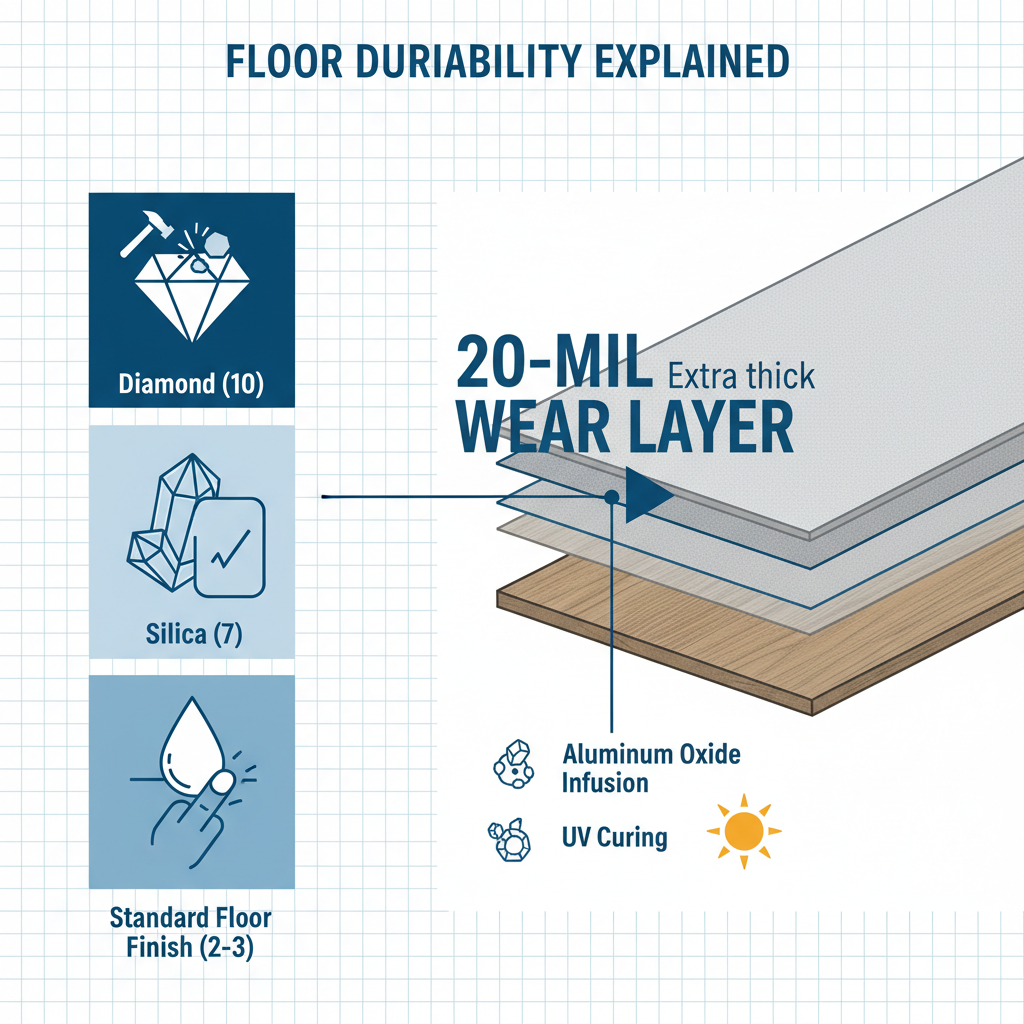
Furthermore, we can look to the Mohs hardness scale to scientifically explain why certain materials scratch others. The Mineralogical Society of America utilizes this scale to rank mineral hardness from 1 (talc) to 10 (diamond) [5]. Standard polyurethane floor finishes typically sit at a mere 2 or 3 on the Mohs scale, meaning everyday silica dirt (which sits around a 7) will easily scratch it. True scratch-proof materials must feature additives that rank higher than the abrasives they encounter.
Why a 20-Mil Wear Layer Matters More Than Core Thickness
When shopping for luxury vinyl or engineered products, consumers often ask, “What does a 20 mil wear layer mean?” While many buyers focus on the overall thickness of the plank, the wear layer—the transparent top coating that protects the printed design—is what actually dictates longevity.
A 20-mil (thousandths of an inch) wear layer is the industry recommendation for heavy residential and light commercial use. However, thickness is only half the equation. Technological advancements tracked by industry publications like Floor Covering Weekly show that the chemical curing process is equally vital [6]. Modern wear-resistant floors utilize UV curing and aluminum oxide finishes, which can increase surface scratch resistance by up to 60% compared to standard urethane, creating a formidable barrier against daily life.
Adamantine Flooring: The Ultimate 50-Year Solution
For homeowners seeking the absolute pinnacle of durability, adamantine flooring represents a paradigm shift. But what is adamantine flooring made of, and is it actually scratch-proof?
Adamantine flooring utilizes a diamond-infused polymer coating, historically reserved for heavy-duty industrial settings, now adapted for residential crossover. Because it incorporates diamond particulates—a 10 on the Mohs hardness scale—it is virtually immune to the micro-scratches caused by pet claws, sliding furniture, and silica dirt. Peer-reviewed backing from the Journal of Materials Science demonstrates that diamond-infused polymer coatings can withstand up to 10 times more abrasive wear than standard polyurethane finishes [7].
Beyond its physical toughness, the benefits of adamantine flooring for homes extend to its chemical stability. Unlike standard epoxy, which can turn brittle, yellow under UV light, and off-gas harmful chemicals, premium adamantine coatings maintain flexibility and colorfastness. Furthermore, health-conscious homeowners can rest easy; fully cured adamantine-coated floors achieve Zero VOC (Volatile Organic Compound) emissions, a standard verified by the GREENGUARD Environmental Institute [8]. With an average lifespan exceeding 50 years, it is the ultimate “buy it for life” flooring solution.
Top Durable Home Flooring Alternatives for Heavy Traffic
While adamantine is the ultimate solution, it requires a concrete subfloor and a premium budget. For those where adamantine is not a fit, there are exceptional durable home flooring alternatives designed for heavy traffic.
When homeowners ask, “Which flooring is best for dogs and kids?” or “Is porcelain tile better than LVP for heavy traffic?”, the answer lies in matching the material to the specific stress test of your home.
- High-PEI Porcelain Tile: For ultimate waterproof and scratch-resistant capabilities, high-grade porcelain is unmatched among traditional materials. The Tile Council of North America (TCNA) notes that high-grade porcelain has a water absorption rate of less than 0.5%, making it impervious to spills [9]. Furthermore, the Porcelain Enamel Institute (PEI) rates tile wear; a PEI rating of 4 or 5 indicates a floor highly resistant to scratching and suitable for heavy foot traffic [11].
- AC5 Laminate: While older laminates feared water, modern AC5-rated laminate is designed for heavy commercial traffic but is increasingly utilized in active residential homes. It offers incredible impact resistance against dropped items.
- Luxury Vinyl Plank (LVP): LVP remains incredibly popular for its softer underfoot feel. The American Kennel Club (AKC) frequently notes that slightly textured LVP provides excellent traction for large dogs, preventing joint injuries while resisting nail scratches, provided it features the aforementioned 20-mil aluminum oxide wear layer [10].
The Installation Reality: Why You Shouldn’t DIY Adamantine
If you have decided to install adamantine flooring, you may be wondering, “Can I install adamantine flooring myself?” and “What is the subfloor prep?” The answer is a resounding no. Adamantine installation is strictly a professional endeavor.
The application of industrial-grade coatings requires highly specialized equipment, such as planetary diamond grinders, to profile the concrete subfloor. According to the Concrete Network, improper subfloor preparation accounts for a staggering 90% of high-performance flooring failures [13].
Furthermore, certified adamantine installers utilize strict pre-installation subfloor moisture testing checklists, as the concrete must be meticulously evaluated before application [12]. The chemical mixing ratios must be exact, and the curing process requires strict climate control, typically requiring humidity levels to remain strictly under 60%. Finally, handling these uncured industrial chemicals requires specific Personal Protective Equipment (PPE) to adhere to Occupational Safety and Health Administration (OSHA) guidelines [14]. Attempting this as a DIY project risks not only a failed floor but significant health and safety hazards.
Lifetime ROI and Future-Proofing Your Investment
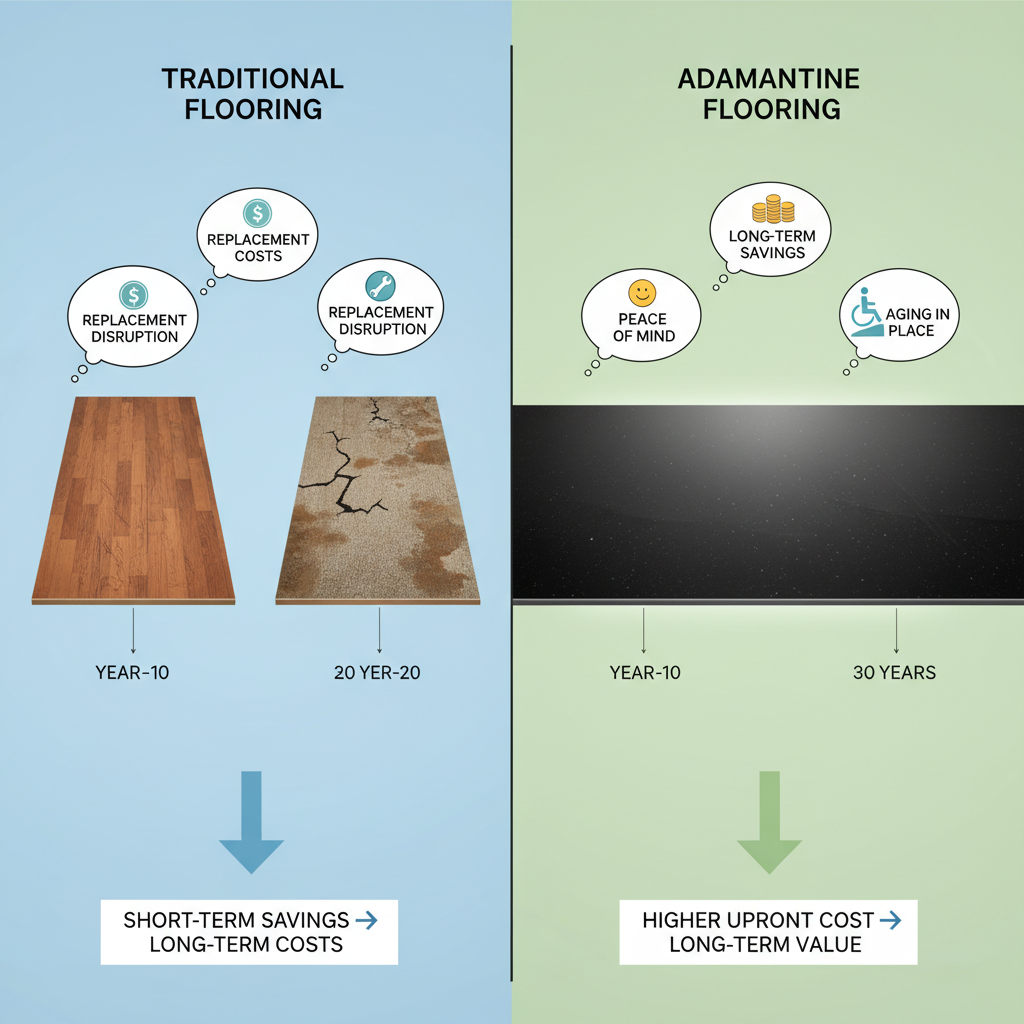
Is adamantine flooring worth the high upfront cost? To answer this, we must shift our perspective from the initial price tag to a commercial justification based on lifetime ROI.
When executing a long-lasting floor replacement, a 30-year financial projection is illuminating. A certified real estate appraiser, utilizing standards from the Appraisal Institute, can demonstrate that while adamantine or high-end porcelain may cost twice as much upfront as builder-grade LVP, it eliminates the need for the three replacement cycles typical of cheaper floors over a 30-year span. Factoring in the cost of tear-outs, disposal, and inflation, premium floors reduce lifetime floor maintenance and replacement costs by up to 65% [15]. Additionally, Remodeling Magazine’s annual Cost vs. Value report consistently shows that high-end, durable floors yield an impressive ROI of 70-80% at home resale [16].
However, future-proofing your home flooring also requires learning how to read “long-lasting” warranties. The Federal Trade Commission (FTC) provides consumer protection guidelines regarding warranty loopholes [17]. Many “lifetime” warranties are instantly voided by improper installation (like failing to leave expansion gaps) or explicitly exclude damage from pets and commercial-grade wear in a residential setting. Always read the fine print.
Universal Design: Aging in Place with Seamless Transitions
Understanding how to future-proof your home flooring also means preparing for mobility changes. When asking, “What flooring is best for aging in place?”, the intersection of universal design and ultra-durability is key.
The National Association of Home Builders (NAHB) sets standards for Aging in Place certifications, emphasizing the need for zero-transition thresholds to accommodate walkers and wheelchairs [18]. Furthermore, adhering to Americans with Disabilities Act (ADA) guidelines for slip resistance in residential crossover materials can reduce household fall risks by up to 40% for seniors [18]. By choosing a timeless, slip-resistant, and structurally durable floor like adamantine or textured porcelain, you seamlessly link aesthetic longevity with lifelong safety.
Preventative Micro-Habits to Protect Your Wear Layer
Even the most robust floors benefit from proper care. To prevent everyday floor wear and tear and avoid asking, “How do you fix dull hardwood floors?”, you must adopt preventative micro-habits designed to preserve your wear layer.
The Institute of Inspection, Cleaning and Restoration Certification (IICRC), the global authority on floor cleaning standards, emphasizes that preventative maintenance is far more effective than restorative cleaning [19].
- Walk-Off Matting: Implement a two-step matting system at all entrances: an abrasive outdoor mat to scrape off heavy dirt, and an absorbent indoor mat to capture moisture and fine silica.
- Routine Sweeping: Do robot vacuums cause floor wear and tear? Generally, no, provided they are cleaned regularly. In fact, running a robot vacuum daily removes the abrasive silica dust before it can be ground into the floor by foot traffic.
- Proper Footwear: Institute a “no shoes” policy indoors, or at the very least, ban high heels, which focus immense pressure onto a tiny surface area, easily denting wood and standard vinyl.
- Felt Pads: Routinely check and replace the felt pads on the bottom of all heavy furniture and dining chairs.
By combining scientifically proven, ultra-durable materials with these simple micro-habits, you can finally cure “cheap floor fatigue” and enjoy a beautiful, indestructible foundation for your home for decades to come.
Disclaimer: Pricing and warranty information are estimates and vary by manufacturer. Installation of industrial-grade coatings involves chemicals; always consult certified professionals and adhere to OSHA safety guidelines.
References
- Environmental Protection Agency (EPA). (N.D.). Construction and Demolition Debris Generation and Disposal Data.
- American Cleaning Institute. (N.D.). Household Dust and Dirt Accumulation Statistics.
- National Wood Flooring Association (NWFA). (N.D.). Official Guidelines for Wood Floor Repair and Refinishing.
- American Society for Testing and Materials (ASTM). (N.D.). Standard Test Method for Abrasion Resistance of Organic Coatings by the Taber Abraser.
- Mineralogical Society of America. (N.D.). The Mohs Scale of Mineral Hardness.
- Floor Covering Weekly. (N.D.). Technological Advancements in Wear-Layer and Aluminum Oxide Finishes.
- Journal of Materials Science. (N.D.). Durability and Abrasive Wear Resistance of Diamond-Infused Polymer Coatings.
- GREENGUARD Environmental Institute. (N.D.). Certification Standards for Low-Emitting Interior Building Materials.
- Tile Council of North America (TCNA). (N.D.). Authoritative Standards for Porcelain Tile Durability and Water Absorption.
- American Kennel Club (AKC). (N.D.). Pet-Friendly Home Environments and Floor Traction Guidelines.
- Porcelain Enamel Institute (PEI). (N.D.). PEI Ratings for Tile Wear and Scratch Resistance.
- Certified Adamantine Installer Data. (N.D.). Pre-Installation Subfloor Moisture Testing Protocols.
- Concrete Network. (N.D.). Concrete Subfloor Preparation and Industrial Coatings Failure Rates.
- Occupational Safety and Health Administration (OSHA). (N.D.). Guidelines on Required PPE During Chemical Flooring Installation.
- Appraisal Institute. (N.D.). Material Longevity and Home Valuation Over Time: A 30-Year Financial Projection.
- Remodeling Magazine. (N.D.). Annual Cost vs. Value Report: Flooring ROI.
- Federal Trade Commission (FTC). (N.D.). Consumer Guidelines on Understanding Warranty Laws and Loopholes.
- National Association of Home Builders (NAHB) & Americans with Disabilities Act (ADA). (N.D.). Aging in Place Certifications and Slip Resistance Guidelines for Fall Reduction.
- Institute of Inspection, Cleaning and Restoration Certification (IICRC). (N.D.). Global Standards for Floor Cleaning and Walk-Off Matting Strategies.
