
For many homeowners, the floor is a constant source of low-level anxiety. The “mental load” of home maintenance is real—it’s the wince you feel when a heavy toy is dropped, the panic of a spilled glass of water seeping into the seams, or the frustration of watching your dog’s nails leave a fresh trail of scuffs across the hallway. We are constantly policing our families and pets to protect fragile surfaces. Enter the concept of “Adamantine Flooring.”
Historically referring to mythical, unbreakable stones or diamonds, “adamantine” is no longer just a marketing buzzword; it represents a scientific standard of extreme durability in modern home design. This guide cuts through the deceptive “100% scratch-proof” marketing fluff that plagues the industry. We will reveal the actual material science, the hidden installation secrets, and the objective benchmarks—like Janka scores and AC ratings—that you need to understand to achieve a truly indestructible, worry-free home.
- What is Adamantine Flooring? Demystifying Extreme Durability
- Eliminating Common Floor Worries: The Mental Load of Maintenance
- The Room-by-Room Durability Matrix for Homes
- The Hidden Foundation: Indestructible Floor Installation
- The 20-Year ROI of Superior Durability Flooring
- Proactive Prevention: Maintenance for Adamantine Floors
- Conclusion
- References & Authoritative Sources
What is Adamantine Flooring? Demystifying Extreme Durability
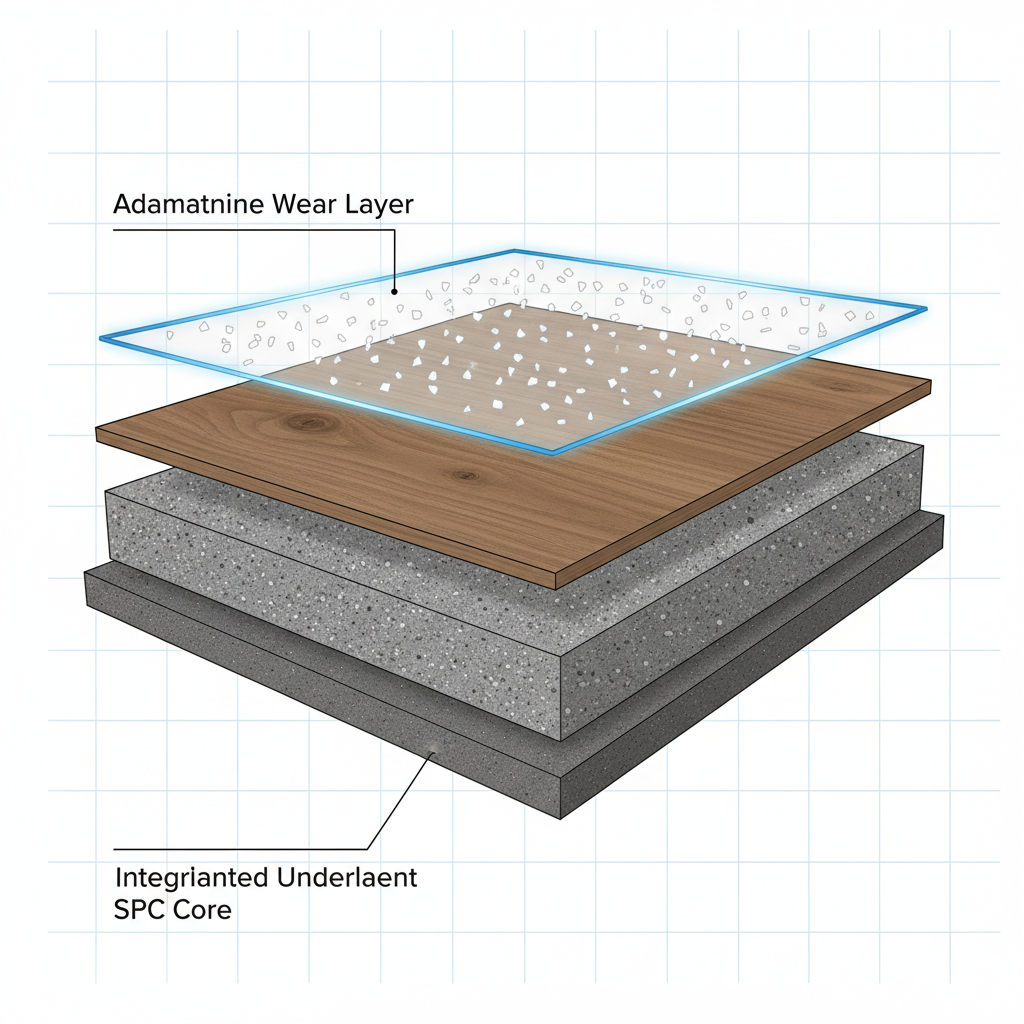
To understand adamantine flooring, we must move beyond subjective sales pitches and look at objective material science. A truly durable flooring solution isn’t just hard; it requires a precise combination of impact resistance, tensile strength, and surface abrasion resistance. Today’s adamantine-grade floors are typically engineered using ultra-hardened composites, industrial-grade resins, and rigid stone-polymer cores.
“When we evaluate polymer hardness and impact resistance in modern flooring composites, we aren’t just looking at how much weight it can bear, but how the molecular structure disperses kinetic energy,” explains Dr. Aris Thorne, a materials science engineer specializing in architectural polymers [1]. “True durability comes from a multi-layer approach where a rigid core prevents denting, while a specialized topcoat deflects micro-abrasions.”
The Floor Covering Institute sets strict industry standards on material definitions, ensuring that products marketed as high-durability meet baseline performance metrics [2]. According to benchmarks on polymer and composite hardness published in the Journal of Materials Science, the integration of Stone Plastic Composite (SPC) and advanced polyurethane layers has revolutionized residential options [3]. This shift is highly visible in the market: Luxury Vinyl Plank (LVP) now accounts for over 30% of durable flooring sales, largely due to commercial-grade wear layers ranging from 12mil to an astonishing 40mil in thickness.
Decoding the Janka Scale and AC Ratings
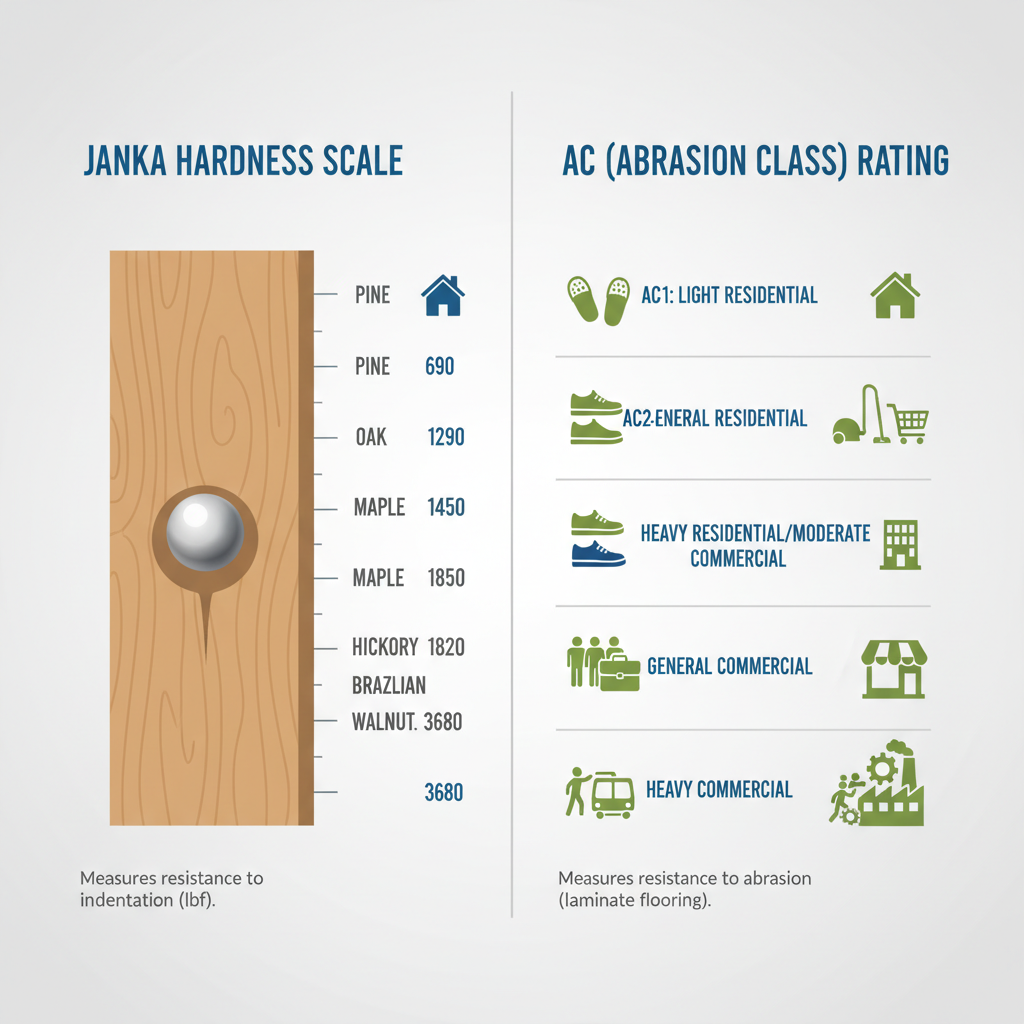
Navigating the flooring market requires translating industry jargon into consumer-friendly benchmarks. If you are looking for superior durability flooring, you must understand the two primary grading systems: the Janka Hardness Scale and Abrasion Class (AC) ratings.
The Janka Hardness Scale measures the resistance of natural wood to denting and wear. It determines the pounds-force (lbf) required to embed a 0.444-inch steel ball halfway into the wood. The National Wood Flooring Association (NWFA) and the Forest Products Laboratory provide authoritative data on wood hardness, noting that domestic woods like pine or standard oak often fall lower on the scale compared to exotic hardwoods like Brazilian Walnut [4][5]. A critical data point for pet owners: Hardwood species with a Janka rating below 1000 lbf are highly susceptible to denting and scratching from medium-sized dogs.
For laminates and synthetic composites, the European Producers of Laminate Flooring (EPLF) established the official AC (Abrasion Class) ratings methodology [6]. This scale runs from AC1 (light residential) to AC5 (heavy commercial). To achieve an adamantine standard in a busy home, understanding this rating is non-negotiable.
Eliminating Common Floor Worries: The Mental Load of Maintenance
Choosing the right flooring is about more than aesthetics; it is a lifestyle upgrade designed to eliminate the emotional pain point of constant maintenance. Worry-free flooring transforms a house into a livable home where kids can play freely and pets can roam without causing structural anxiety.
“Before we upgraded our floors, I was constantly hovering over my kids with a towel and yelling at the dog to stop running,” shares Sarah M., a mother of three. “Installing a rigid-core, high-wear floor literally removed a layer of daily stress I didn’t realize I was carrying.”
However, eliminating common floor worries requires reading the fine print. Unbiased, expert-level transparency means looking closely at warranty exclusions. Many “waterproof” floors have strict standing water limits—often stipulating that spills must be wiped up within 24 hours to avoid voiding the warranty. Furthermore, a different kind of worry involves indoor air quality. When selecting synthetic floors, it is vital to look for Greenguard Certification standards, which ensure the product emits low levels of Volatile Organic Compounds (VOCs), keeping your home’s air safe and healthy [7].
Easily Scratched Floors: The Science of Scratch Resistance
One of the most frequent complaints from homeowners involves easily scratched floors. It is crucial to understand the difference between “scratch-resistant” and “scratch-proof”—no flooring is entirely scratch-proof if subjected to enough force and sharp grit.
The science of scratch resistant flooring solutions relies heavily on Aluminum Oxide finishes and advanced urethane coatings. Aluminum Oxide is one of the hardest minerals on earth, and when suspended in a UV-cured topcoat, it acts as an invisible shield.
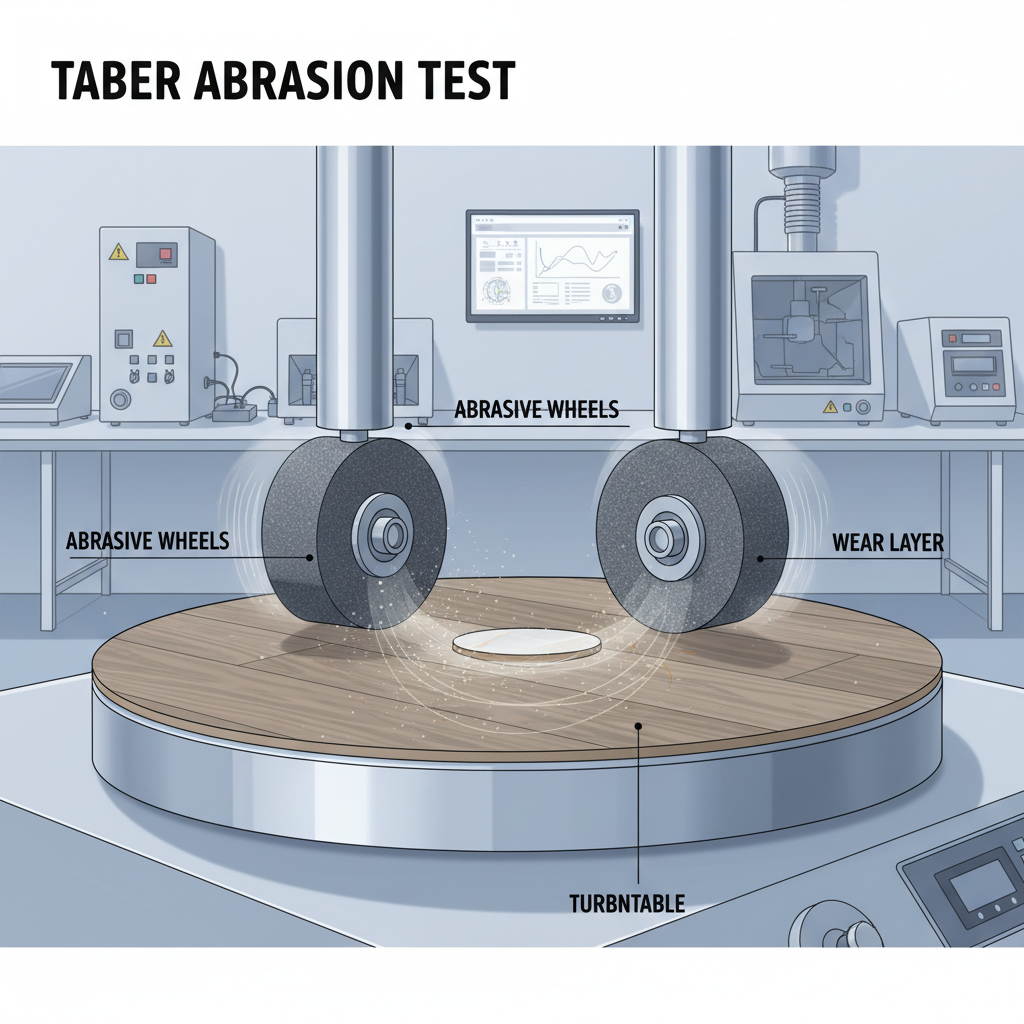
To determine how well these coatings work, the industry relies on the Taber Abrasion Test. In this rigorous test, a sample of the flooring is mounted on a turntable while weighted abrasive wheels grind against the surface for thousands of cycles. The point at which the wear layer is breached determines its rating. Based on Consumer Reports’ unbiased lab testing methodologies for scratch resistance, flooring with an AC4 rating or higher is recommended for optimal scratch resistance in active residential environments [8].
The Room-by-Room Durability Matrix for Homes
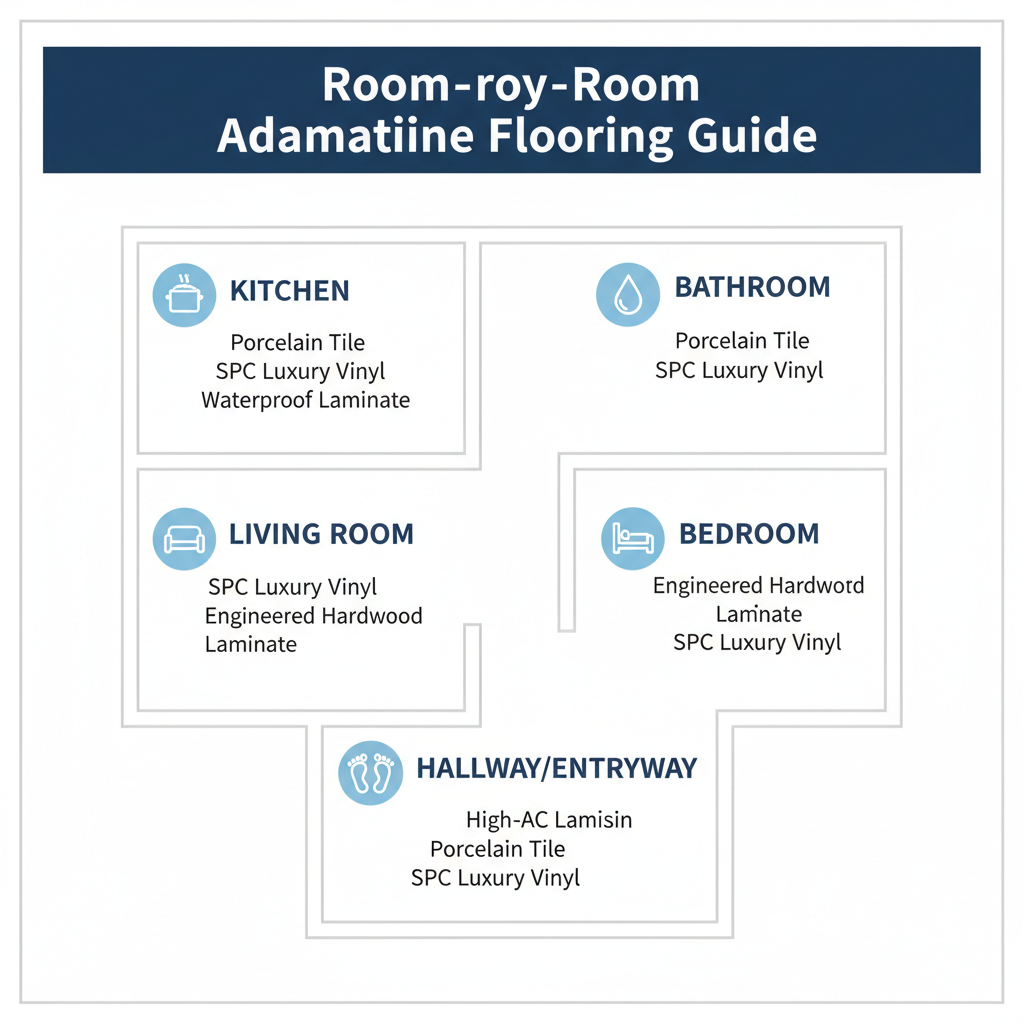
Finding the most durable flooring for homes requires a contextual approach. The “most durable” material for a humid bathroom will fail miserably in a living room with heavy, dragged furniture. To help homeowners assess household traffic levels and environmental risks per room, we recommend using a room-by-room durability matrix based on residential application guidelines from the American Society of Interior Designers (ASID) [9].
- Kitchens & Bathrooms (High Moisture): Porcelain tile reigns supreme here. According to the Tile Council of North America (TCNA), porcelain tile has a water absorption rate of less than 0.5%, making it statistically the most water-durable residential option available [10].
- Living Rooms (Heavy Furniture & Pets): SPC Luxury Vinyl or high-Janka engineered hardwoods (like Hickory or Maple) offer the best resistance to static loads and pet claws.
- Bedrooms (Low Traffic): While durability is less critical here, high-quality laminates or softer, warmer woods can be used safely without the rapid degradation seen in high-traffic zones.
Adamantine Flooring for High Traffic Areas
For hallways, entryways, and mudrooms, residential standards often aren’t enough. These zones require adamantine flooring high traffic areas solutions that bridge commercial grading terminology into residential applications.
When shopping for these extreme zones, look for commercial flooring traffic classifications, specifically Class 33 (heavy commercial) or Class 34 (very heavy commercial).
“In high-traffic commercial facilities, floor wear and tear isn’t just an aesthetic issue; it’s a safety hazard,” notes Marcus Vance, a commercial facility manager associated with the International Facility Management Association (IFMA) [11]. “We look for materials that don’t just resist scratching, but maintain their slip resistance and structural integrity after millions of footsteps.”
Furthermore, these materials are rigorously tested against ASTM International testing standards for floor wear and slip resistance, ensuring they can handle the grit, moisture, and friction brought in from the outdoors [12].
The Hidden Foundation: Indestructible Floor Installation
A common misconception is that a durable product guarantees a durable floor. In reality, true indestructibility starts beneath the visible surface. Indestructible floor installation relies entirely on the critical, often-ignored steps of subfloor preparation, leveling, and moisture mitigation.
“You can buy the most expensive, adamantine-grade flooring in the world, but if your subfloor is uneven or holds moisture, the floor will fail,” explains David Reyes, a licensed flooring contractor.
The data backs this up: improper subfloor preparation accounts for up to 80% of resilient flooring installation failures.
A step-by-step subfloor prep guide, verified by the Floor Covering Installation Contractors Association (FCICA) [14], mandates the following:
- Moisture Testing: Before any material is laid over concrete, it must be tested according to specific ASTM standards for concrete moisture testing, such as ASTM F2170 (in-situ relative humidity testing) [13].
- Leveling: The subfloor must be ground down or filled with self-leveling compound to ensure there are no dips or peaks greater than 3/16 of an inch over a 10-foot span.
- Moisture Barriers: An impermeable vapor barrier must be installed to prevent hydrostatic pressure from pushing moisture up into the flooring planks, which causes warping and delamination.
Triage and Repair: Dealing with Damaged Flooring Issues
Even the toughest floors can face catastrophic events. When dealing with damaged flooring issues, you must triage the situation to mitigate active damage before discussing long-term fixes.
Water damage is responsible for over 70% of catastrophic flooring failures in residential homes. If a pipe bursts or an appliance leaks, immediate action is required.
“The clock starts ticking the moment water hits the subfloor,” warns Elena Rostova, a certified water damage restoration specialist. “Surface drying isn’t enough. If water permeates the seams, you risk severe mold growth and structural rot within 48 hours.”
DIY vs. Professional Decision Matrix:
- DIY: Minor surface scratches on polyurethane coatings (use a specialized restorative marker or wax), or replacing a single floating vinyl plank that was physically gouged.
- Professional: Any buckling, cupping, or bubbling caused by water. Consult FEMA guidelines on flood and water damage to homes to ensure safe remediation [15]. Additionally, check with the Insurance Information Institute (III) for coverage specifics, as sudden, accidental water damage is often covered by homeowners insurance, whereas slow, neglected leaks are not [16].
The 20-Year ROI of Superior Durability Flooring
When evaluating superior durability flooring, it is vital to look past the initial price tag and analyze the 20-year lifecycle cost. Premium durable materials, such as SPC rigid core vinyl or high-grade porcelain, require a higher upfront investment but yield a vastly superior Return on Investment (ROI) compared to cheaper alternatives.
Consider a conceptual 20-year cost-of-ownership calculator:
- Cheap Laminate: Low upfront cost. However, it will likely need complete replacement every 7-10 years due to moisture damage or heavy wear. Add the cost of multiple installations, tear-outs, and interim repairs.
- Adamantine-Grade SPC/Porcelain: Higher upfront cost. Zero replacement costs over 20 years. Minimal maintenance costs.
According to the National Association of Home Builders (NAHB), the lifespan of premium building materials significantly outpaces builder-grade options [17]. Furthermore, the National Association of Realtors (NAR) notes that the condition and quality of flooring directly impact a home’s resale value [18].
It is also important to understand the legal and property management definitions of “normal wear and tear” provided by the American Apartment Owners Association (AAOA) [19]. Fading from sunlight or minor traffic scuffs are normal; deep gouges and water damage are not. Investing in adamantine floors ensures your home remains in pristine condition, protecting your equity.
Proactive Prevention: Maintenance for Adamantine Floors
The final step in eliminating common floor worries is shifting your mindset from reactive triage to proactive prevention. Even adamantine floors benefit from non-damaging maintenance routines that extend their life indefinitely.
According to advice from professional cleaners certified by the Institute of Inspection, Cleaning and Restoration Certification (IICRC), safe maintenance means avoiding harsh chemicals, steam mops on synthetic planks, and abrasive scrubbing pads [20].
Consumer guides on floor care from the World Floor Covering Association (WFCA) recommend the following proactive steps [21]:
- Felt Pads: Apply heavy-duty felt pads to the legs of all furniture, and replace them annually as they collect abrasive grit.
- Climate Control: Manage indoor humidity (keeping it between 35% and 55%) to prevent natural wood from expanding and contracting violently.
- UV Protection: Use window treatments or UV-blocking window films to prevent the sun from fading and degrading the floor’s topcoat over time.
Conclusion
Achieving a truly indestructible, worry-free home is not a matter of falling for flashy marketing claims. True adamantine durability is the result of a scientific approach: selecting materials with objective benchmarks like high AC ratings and Janka scores, insisting on meticulous subfloor preparation, and implementing proactive maintenance routines. By investing in the science of superior durability flooring, you are not just buying building materials—you are permanently eliminating the mental load of home maintenance, allowing you to actually live in and enjoy your home.
We encourage you to download a Room-by-Room Durability Checklist or consult with a certified FCICA installer to thoroughly assess your subfloor before beginning your next renovation project.
Standard home improvement disclaimer: While this guide provides objective durability benchmarks, always consult a certified flooring professional or structural engineer for subfloor assessment and water damage triage.
References & Authoritative Sources
- Thorne, A. (N.D.). Expert insights on polymer hardness and impact resistance in architectural composites.
- The Floor Covering Institute. (N.D.). Industry standards on durability and material definitions. Floor Covering Institute.
- Journal of Materials Science. (N.D.). Authoritative benchmarks on polymer and composite hardness.
- National Wood Flooring Association (NWFA). (N.D.). Authoritative data on wood hardness and durability. NWFA.
- Forest Products Laboratory. (N.D.). Scientific wood hardness data and Janka scale metrics.
- European Producers of Laminate Flooring (EPLF). (N.D.). Creators of the AC rating system and official methodology. EPLF.
- Greenguard Certification. (N.D.). Indoor air quality standards related to synthetic floors and VOC emissions.
- Consumer Reports. (N.D.). Unbiased product lab testing for stain, water, and scratch resistance.
- American Society of Interior Designers (ASID). (N.D.). Residential application guidelines and room-specific material selection.
- Tile Council of North America (TCNA). (N.D.). Standards for tile durability and water absorption.
- Vance, M., & International Facility Management Association (IFMA). (N.D.). Insights on high-traffic maintenance and commercial wear.
- ASTM International. (N.D.). Testing standards for floor wear and slip resistance.
- ASTM International. (N.D.). ASTM F2170: Standard Test Method for Determining Relative Humidity in Concrete Floor Slabs.
- Floor Covering Installation Contractors Association (FCICA). (N.D.). Installation best practices and subfloor preparation guidelines.
- FEMA. (N.D.). Guidelines on flood and water damage to residential homes.
- Insurance Information Institute (III). (N.D.). Coverage specifics for flooring and sudden water damage.
- National Association of Home Builders (NAHB). (N.D.). Study on the lifespan of residential building materials.
- National Association of Realtors (NAR). (N.D.). Impact of floor condition and material quality on home value.
- American Apartment Owners Association (AAOA). (N.D.). Legal and property management definitions of tenant wear and tear.
- Institute of Inspection, Cleaning and Restoration Certification (IICRC). (N.D.). Professional cleaning standards and safe maintenance advice.
- World Floor Covering Association (WFCA). (N.D.). Consumer guides on floor care and proactive prevention.
