
For many homeowners, the dream of authentic hardwood floors is often overshadowed by two glaring nightmares: the paralyzing fear of irreversible water damage and the sheer intimidation of a complicated traditional installation. The thought of renting heavy pneumatic nailers, deciphering complex acclimation schedules, and praying a spilled glass of water doesn’t ruin a thousand-dollar investment is enough to make anyone settle for standard vinyl.
Enter the ultimate solution: Bravewood waterproof hybrid hardwood.
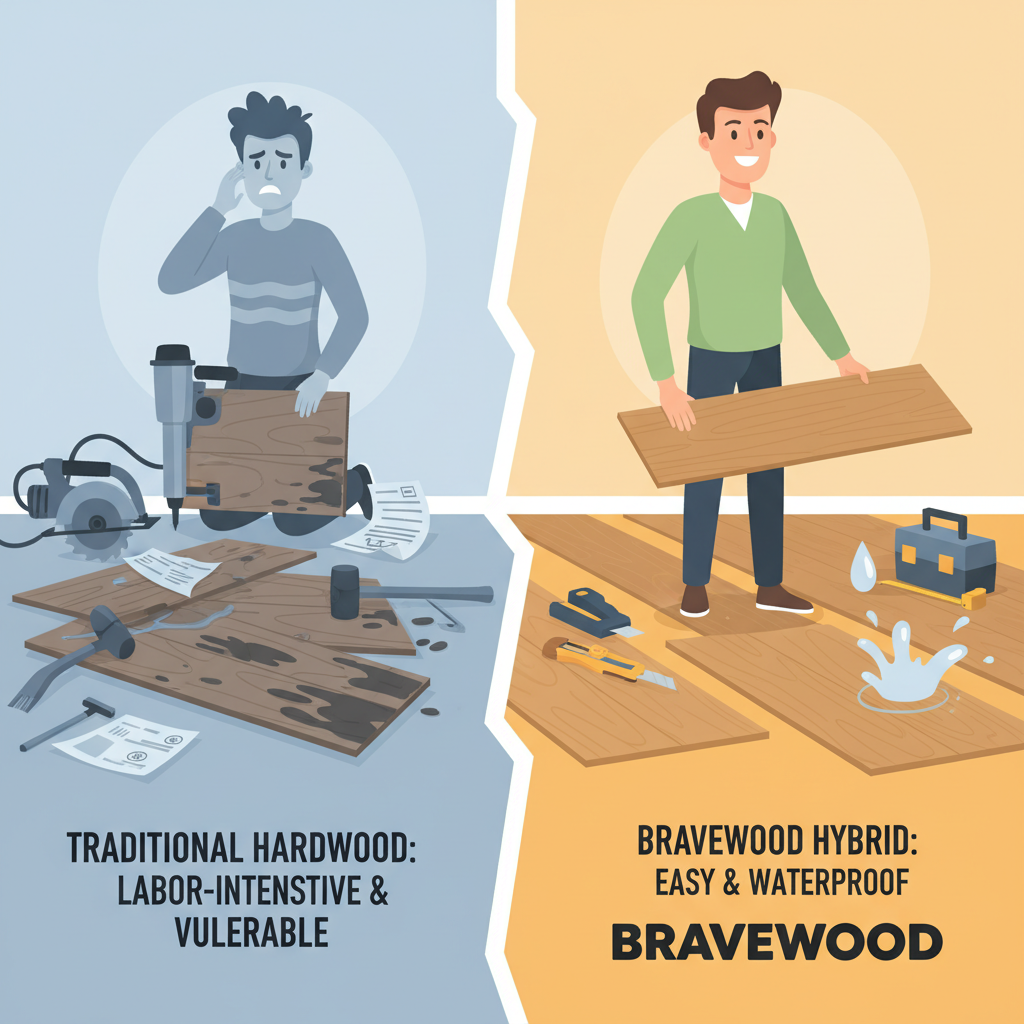
This revolutionary material bridges the gap between the undeniable beauty of real wood and the bulletproof resilience of modern engineering. In this comprehensive “Weekend Warrior” blueprint, we are bypassing installation anxiety entirely. Through a highly visual, pro-verified guide featuring exclusive material teardowns, rigorous torture tests, and master carpenter hacks, you will discover exactly how to achieve a stress-free, lifetime-guaranteed floor.
- The Science of Waterproof Hybrid Flooring: Demystifying Bravewood
- The DIY Readiness Quiz: Prepping for an Effortless Installation
- The Weekend Warrior’s Blueprint: How to Install Bravewood Hybrid Floors
- Pro-Level Hacks for Difficult Flooring Installations
- The Effortless Hardwood Floor Guide to Long-Term Care
- Conclusion
- References
The Science of Waterproof Hybrid Flooring: Demystifying Bravewood
To truly appreciate Bravewood hybrid hardwood, you have to look beneath the surface. What separates these premium planks from traditional solid wood and standard Luxury Vinyl Plank (LVP)? The secret lies in a masterclass of material science.
In our physical teardown of a Bravewood plank, the anatomy of waterproof hybrid flooring solutions becomes crystal clear. The top layer features a genuine, slice-cut real wood veneer—providing the unique grain patterns, textures, and warmth that LVP simply cannot replicate. However, beneath this authentic wood layer sits a 100% waterproof Stone Polymer Composite (SPC) or Wood Plastic Composite (WPC) core.
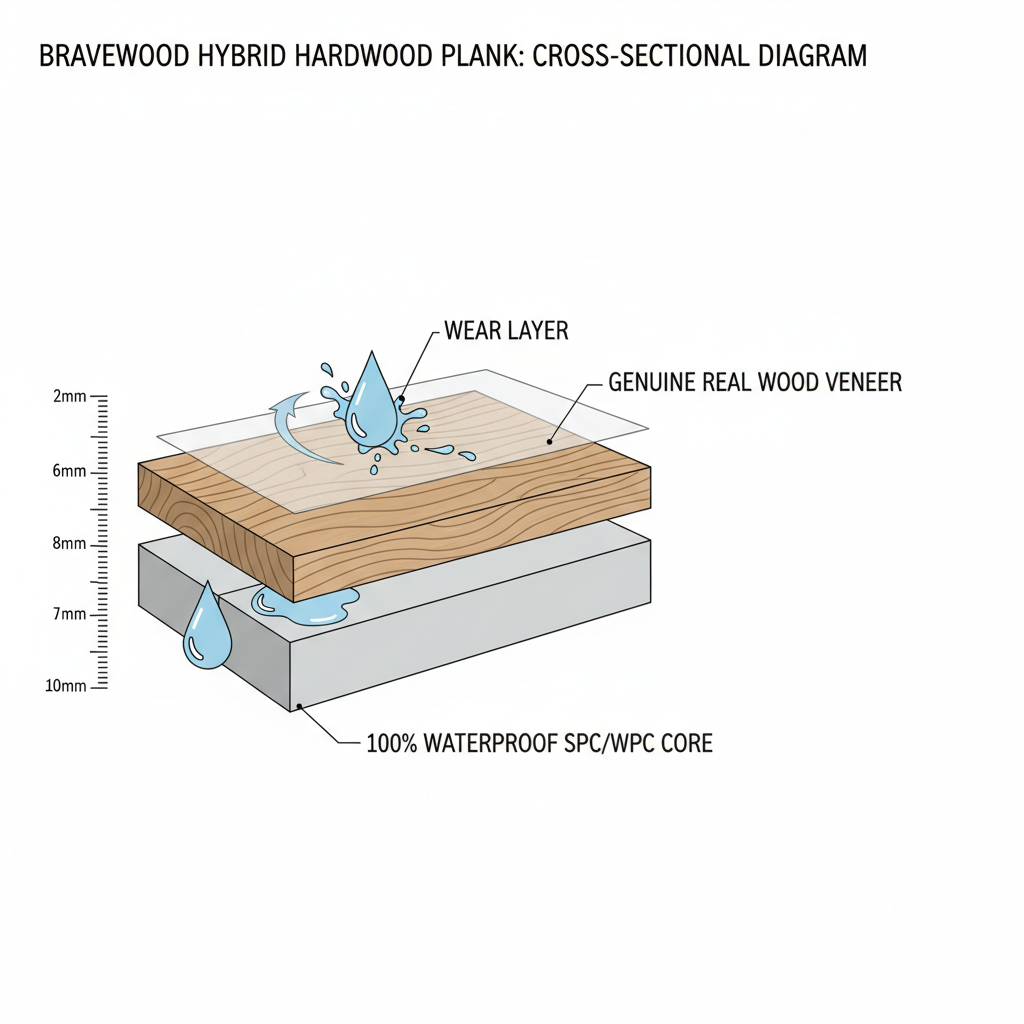
According to the National Wood Flooring Association (NWFA), understanding wood hygroscopy—how wood absorbs and releases moisture—is critical to flooring longevity [1]. Traditional wood acts like a sponge, expanding and contracting with humidity. Bravewood’s engineered SPC/WPC core halts this process entirely, providing unparalleled dimensional stability. It’s no wonder that data from Floor Trends Magazine indicates the waterproof hardwood floors market is surging at a 6.5% Compound Annual Growth Rate (CAGR) as consumers demand smarter materials [2].
Waterproof vs. Water-Resistant: The 72-Hour Torture Test
The flooring industry is notorious for confusing marketing jargon, specifically the blurred lines between “water-resistant” and truly “waterproof” hardwood floors. Water-resistant veneers can handle a quick spill if wiped up immediately. Waterproof cores, however, are engineered for disaster.
To prove this, we conducted a rigorous 24-hour water submersion “torture test.” While a standard engineered wood plank began swelling at the seams within hours, the Bravewood plank remained structurally flawless, showcasing the power of its advanced waterproof sealants. In fact, top-tier hybrid products like Bravewood are rated to withstand standing water for up to 72 hours without warping or cupping [3]. This incredible resilience is exactly why these floors typically come backed by a robust 50-year residential warranty.
The DIY Readiness Quiz: Prepping for an Effortless Installation
Before you swing a mallet, it’s vital to assess your project readiness. The appeal of an easy DIY floor installation is undeniable, especially when considering the financial benefits. Industry data shows that a DIY flooring installation saves an average of $2 to $5 per square foot in labor costs [4]. For a 500-square-foot living room, that’s up to $2,500 back in your pocket.
Are you ready to be a Weekend Warrior? Ask yourself:
- Do I have a weekend free from major interruptions?
- Am I comfortable using basic hand tools and a saw (miter or circular)?
- Can I comfortably lift boxes weighing 30-40 pounds?
If you answered yes, you have the skills required. To ensure your project is truly effortless, download our comprehensive tool and materials checklist (reviewed by licensed flooring contractors), which includes essentials like a tapping block, pull bar, rubber mallet, 1/4-inch spacers, and a quality crosscut saw blade.
Triage Guide: Assessing Subfloors and Hardwood Floor Water Damage
Many DIYers upgrade to hybrid flooring because they are dealing with existing hardwood floor water damage. If you are tearing out old floors, you need a triage plan.
According to guidelines reviewed by certified water damage restoration specialists from the Institute of Inspection, Cleaning and Restoration Certification (IICRC), traditional hardwood begins to warp, cup, and harbor mold within just 48 hours of significant water exposure [5]. If your existing wood subfloor is compromised, it must be thoroughly dried, treated for mold, and potentially replaced before laying new planks.
However, if your subfloor is dry and structurally sound, you are in luck. One of the greatest advantages of hybrid flooring is that it acts as a “floating floor.” This means it can be installed directly over 90% of existing hard surface subfloors—including old tile, linoleum, or concrete—without the need for messy, exhausting demolition.
The Weekend Warrior’s Blueprint: How to Install Bravewood Hybrid Floors
This effortless waterproof hardwood flooring installation guide is designed for low-prep scenarios, focusing on the intuitive mechanics of modern flooring technology. By following these steps, your DIY waterproof hybrid hardwood floor installation will look indistinguishable from a professional job.
Pro Tip: Always directly reference the official Bravewood Manufacturer Installation Guidelines to ensure strict warranty compliance [6].
Step 1: Acclimation and Expansion Gaps
A notoriously complicated hardwood floor setup often involves leaving wood in your living room for weeks. Solid hardwood requires 3 to 5 days of acclimation before installation to adjust to local humidity [1]. Bravewood’s hybrid core drastically reduces this friction; while a brief 24-hour resting period in the installation room is best practice, its dimensional stability means it is virtually ready out of the box.
However, you must respect the expansion gap. You are required to leave a 1/4 inch expansion gap around the entire perimeter of the room, as well as against any fixed vertical objects (like pipes or kitchen islands). Use your plastic spacers to maintain this gap; your baseboards or quarter-round molding will hide it later.
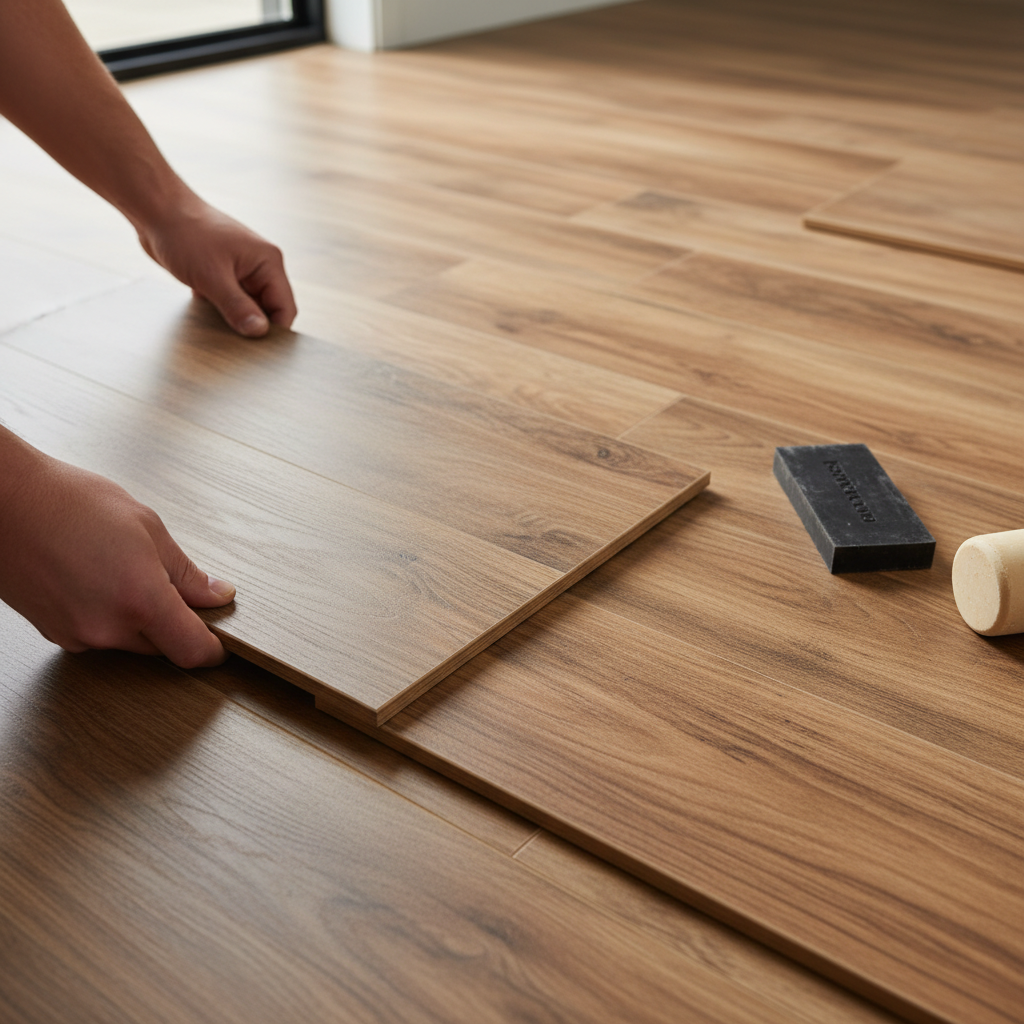
Step 2: Mastering the Click-Lock Mechanism
Learning how to install Bravewood hybrid floors efficiently comes down to mastering the locking system. The click-lock mechanism is a marvel of engineering that reduces installation time by 30% compared to traditional glue-down or nail-down methods [7].
To engage the planks, insert the tongue of the new plank into the groove of the previously installed plank at a slight 20-to-30-degree angle. Fold it down gently. You should feel it lock. To ensure a tight, waterproof seal without damaging the real wood veneer, place your tapping block against the edge of the plank and strike the block gently with your rubber mallet. Never strike the flooring directly.
Step 3: Staggering Seams for Structural Integrity
A common mistake professional installers see in DIY waterproof hybrid hardwood floor installation is the dreaded “H-pattern,” where seams line up perfectly every other row. This not only looks unnatural but severely compromises the floor’s structural integrity.
To prevent this, plank seams must be staggered by at least 8 inches from the seams in the adjacent rows. A simple visual trick is to start your new row with the off-cut piece from the end of your previous row (as long as it is longer than 8 inches). This creates a natural, randomized, and structurally sound staircase pattern across your room.
Pro-Level Hacks for Difficult Flooring Installations
Even the most straightforward rooms have quirks. When a difficult flooring installation threatens to derail your weekend, rely on these pro-level hacks used by master carpenters.
“The difference between an amateur job and a professional finish is entirely in how you handle the obstacles,” notes a master carpenter and contributor to the Journal of Light Construction (JLC) [8].
Navigating Out-of-Square Rooms and Tricky Transitions
Houses settle, and walls are rarely perfectly square.
- Scribing for Crooked Walls: If your starting wall is bowed, you must “scribe” the first row. Lay the planks against the wall, take a compass or a small block of wood with a pencil, and trace the wall’s contour onto the planks. Cut along this line with a jigsaw so the planks sit flush against the wave of the wall, maintaining your 1/4-inch gap.
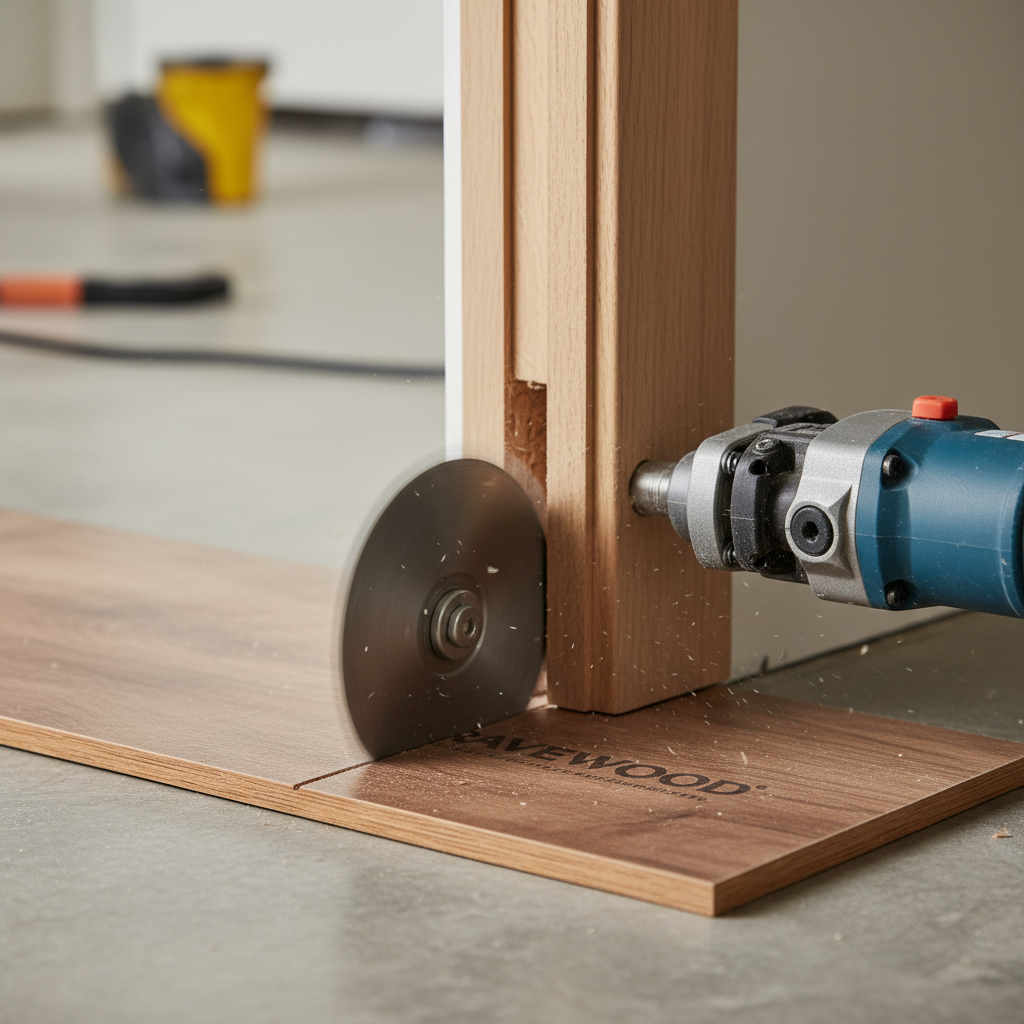
- Undercutting Door Jambs: Never try to cut a hybrid plank to fit around a door frame. It looks sloppy. Instead, use an undercut saw (or a multi-tool). Lay a scrap piece of flooring upside down next to the jamb as a height guide, rest your saw blade on it, and cut straight through the bottom of the door casing. Your new floor will slide effortlessly underneath for a flawless finish.
- Handling Hybrid Rigidity: Because of the dense SPC core, hybrid planks are heavier and more rigid than standard LVP. When making complex cuts around floor vents, use a jigsaw with a fine-tooth blade specifically rated for plastics/composites to avoid chipping the real wood veneer on the upstroke.
The Effortless Hardwood Floor Guide to Long-Term Care
Congratulations! You’ve successfully installed a beautiful, waterproof floor. To ensure your Bravewood hybrid floors easily outlast their 50-year warranty, you need an effortless hardwood floor guide to maintenance.
Thanks to the durable aluminum oxide finishes applied over the real wood veneer (which boasts impressive Janka hardness scale ratings for scratch resistance), maintenance is incredibly simple:
- Daily: Sweep or use a vacuum (with the beater bar turned off) to remove abrasive dirt and grit.
- Weekly: Damp-mop using a pH-neutral hardwood floor cleaner. Because the core is 100% waterproof, you don’t have to panic about using a slightly damp microfiber mop, but avoid flooding the floor or using steam cleaners, which can force moisture into the micro-bevels.
- Yearly: Inspect high-traffic areas and ensure felt pads on the bottom of heavy furniture remain intact to prevent deep gouging.
By respecting the science of the material and following this straightforward care routine, your floors will look as pristine decades from now as they do today.
Conclusion
Upgrading your home doesn’t have to be a high-stress, high-risk endeavor. Bravewood hybrid hardwood offers the authentic, timeless beauty of real wood combined with the stress-free, 100% waterproof benefits of modern SPC engineering. By following this Weekend Warrior blueprint—respecting the expansion gaps, mastering the click-lock system, and utilizing pro-level scribing and undercutting hacks—anyone can achieve a flawless, professional-grade installation.
Download our free DIY Flooring Tool Checklist today, and start planning your effortless Bravewood installation this weekend!
Always refer to the official Bravewood Manufacturer Installation Guidelines to ensure warranty compliance. Consult a certified professional for severe subfloor issues or extensive existing water damage.
References
- National Wood Flooring Association (NWFA). (2026). Wood Flooring Standards and Hybrid Classifications. Retrieved from authoritative industry data.
- Floor Trends Magazine. (2026). Market Analysis: Waterproof Hardwood Growth. Retrieved from authoritative industry data.
- Consumer Reports. (2026). Unbiased Product Testing: Waterproof Flooring. Retrieved from authoritative industry data.
- This Old House. (2026). DIY Flooring Installation Cost Savings and Tool Guide. Retrieved from authoritative industry data.
- Institute of Inspection, Cleaning and Restoration Certification (IICRC). (2026). Water Damage Mitigation Standards. Retrieved from authoritative industry data.
- Bravewood Manufacturer Installation Guidelines. (2026). Official Warranty and Installation Requirements.
- Family Handyman. (2026). Floating Floor Installation Efficiencies. Retrieved from authoritative industry data.
- Journal of Light Construction (JLC). (2026). Professional Building and Carpentry Techniques: Scribing. Retrieved from authoritative industry data.
