
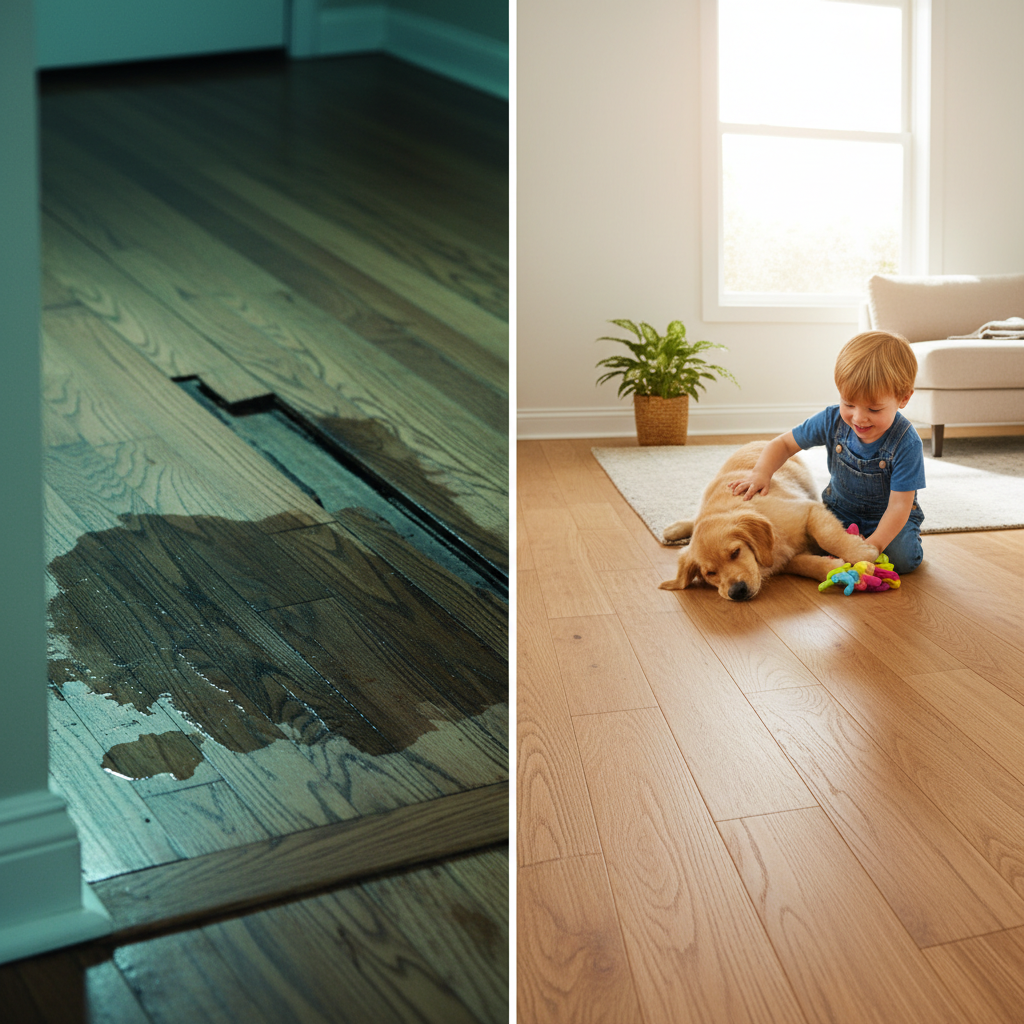
There are few homeownership nightmares quite as devastating—or as costly—as waking up to water-damaged traditional hardwood floors. A single dishwasher leak, an overflowing bathtub, or an undetected subfloor moisture issue can turn a stunning, high-dollar investment into a warped, cupped, and ruined disaster. For decades, homeowners have been forced into a frustrating compromise: risk the fragility of authentic wood, or settle for the artificial, plastic look of synthetic alternatives just to achieve peace of mind in wet areas.
But the flooring industry has experienced a monumental technological shift. You no longer have to choose between stunning aesthetics and bulletproof durability.
Welcome to the definitive, expert-backed guide to transitioning from fragile wood to the ultimate “Realism vs. Resistance” solution: waterproof hybrid hardwood. In this comprehensive master guide, we are demystifying the science of waterproof wood, exploring proactive moisture solutions, and conducting an exclusive durability stress test of Bravewood hybrid hardwood. Whether you are recovering from a recent flood or proactively renovating, this guide will help you navigate the most advanced flooring technology on the market, matching modern home aesthetics with uncompromising moisture protection.
- The Heartbreak of Moisture: Diagnosing and Triage for Water-Damaged Floors
- Demystifying Waterproof Wood: What Exactly is Hybrid Hardwood?
- The Realism vs. Resistance Spectrum: Evaluating Hardwood Alternatives
- Why Bravewood? Stress-Testing the Best Hybrid Hardwood Options
- Design Inspiration: Exploring Bravewood Waterproof Hybrid Hardwood Styles
- Installation & Care: Protecting Your Waterproof Investment
- Conclusion
- References & Authoritative Sources
The Heartbreak of Moisture: Diagnosing and Triage for Water-Damaged Floors
For homeowners currently dealing with or fearing moisture issues, the anxiety is palpable. Water damaged hardwood floors are not just an eyesore; they are a structural and financial liability. Understanding the signs of water damage, differentiating between recoverable and permanent deformation, and taking immediate mitigation steps can save you thousands of dollars.
According to the Institute of Inspection, Cleaning and Restoration Certification (IICRC), standard water damage restoration protocols emphasize the critical nature of time [1]. In fact, hardwood floors can begin to cup or crown within 48 hours of significant water exposure. To prevent this, the National Wood Flooring Association (NWFA) stresses the importance of rigorous moisture testing and maintaining an ideal indoor relative humidity of 30% to 50% [2]. When these parameters fail, knowing how to triage your flooring prone to water damage is your first line of defense.
Symptom Checker: Cupping, Crowning, and Subfloor Mold
“Why is my hardwood floor buckling?” It is one of the most common questions panicked homeowners ask. To understand the answer, we must look at the science of hygroscopic materials. Wood naturally absorbs and releases moisture depending on its environment. When hardwood flooring moisture issues arise, the wood expands.
It is vital to differentiate between harmless seasonal gapping (which occurs when winter heating dries out the air, causing planks to shrink slightly) and actual water damage.
- Cupping: This occurs when the edges of the wooden plank are higher than its center, creating a concave shape. It usually indicates moisture originating from the subfloor beneath the planks. If caught early and dried properly, cupping is often recoverable.
- Crowning: This is the opposite—the center of the plank bulges higher than the edges. Crowning often happens when the top of the floor is exposed to standing water, or if a cupped floor is sanded prematurely before it has fully dried. Crowning is typically permanent damage.
More alarming than visual warping are the signs of mold under hardwood floors. A dark discoloration spreading from the edges of the planks or a persistent musty odor are red flags. Studies show that a wood moisture content above 16% creates an environment highly conducive to mold growth, turning a cosmetic issue into a health hazard.
First 24 Hours: Triage for Wet Hardwood
If you experience a leak, the first 24 hours dictate whether your water damaged hardwood floors can be saved. How do you dry out hardwood floors after a leak?
First, stop the source of the water immediately and remove all standing water using a wet vacuum. Next, you must assess the saturation level. This is where a pinless moisture meter becomes invaluable. While healthy wood typically registers a moisture content between 6% and 9% (depending on your climate), damaged wood will spike well above 12%.
For minor, localized spills, aggressive DIY drying using commercial-grade dehumidifiers and high-velocity fans directed at the floor may suffice. However, if the water has penetrated the subfloor or if you are dealing with a large-scale leak, DIY drying is rarely enough. In these scenarios, it is highly advised to consult an IICRC-certified water damage restoration professional who can deploy specialized drying mats that pull moisture directly through the wood grain.
Demystifying Waterproof Wood: What Exactly is Hybrid Hardwood?
Transitioning from the stress of moisture damage to a permanent solution requires navigating a sea of flooring jargon. As a pillar resource, this complete guide to waterproof flooring must start by defining what hybrid hardwood actually is, and how it distinguishes itself from traditional engineered wood, luxury vinyl plank (LVP), and laminate.
The waterproof flooring market is expected to grow at a compound annual growth rate (CAGR) of over 6% through 2028, driven entirely by consumer demand for stress-free living. But to make an informed choice, you must understand the technical definitions of waterproof versus water-resistant, as outlined by the Floor Covering Institute [3], and how these materials perform under ASTM International standard test methods for water absorption [4].
The Anatomy of a Hybrid Plank: SPC Cores and Real Wood Veneers
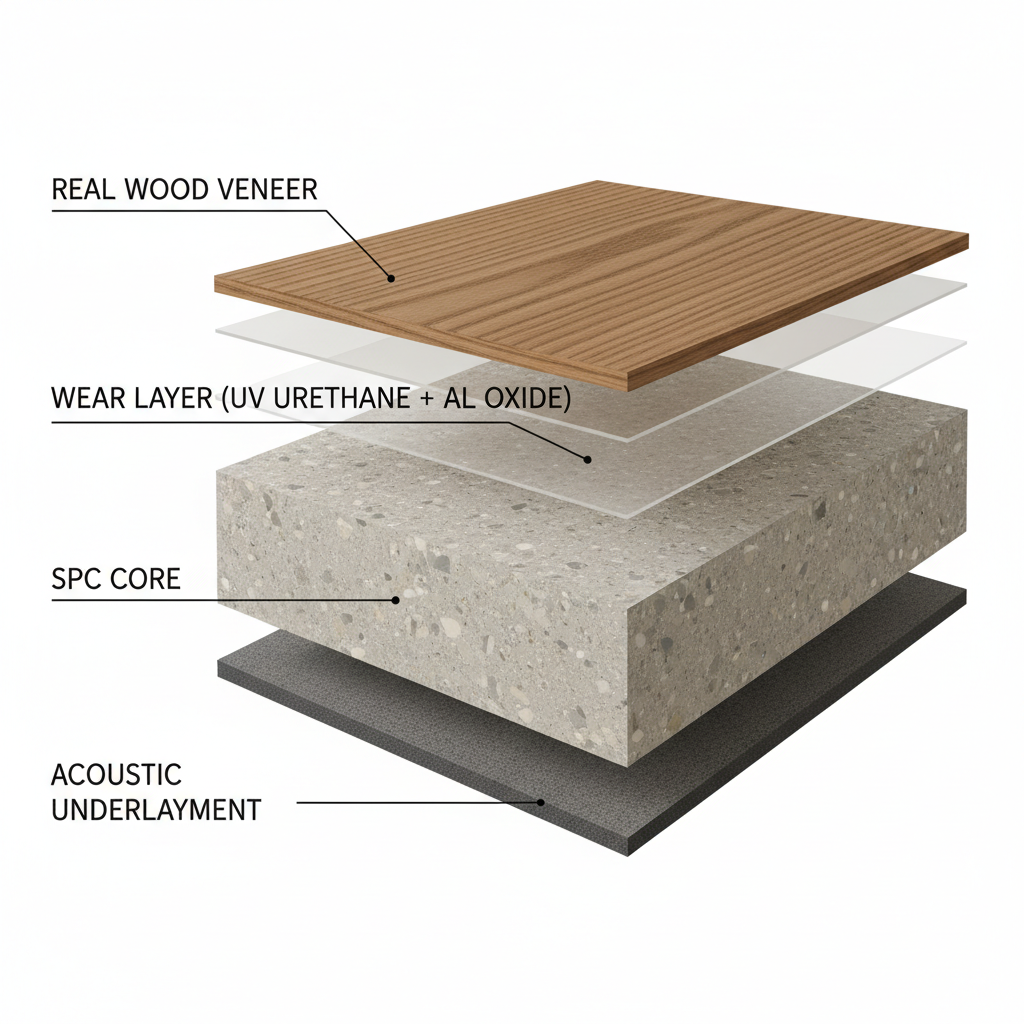
Does 100% waterproof hardwood actually exist? Yes, but it requires a radical reimagining of how a floorboard is constructed.
If you are wondering what Bravewood hybrid hardwood is made of, the secret lies in its layered anatomy. True waterproof hardwood uses a sub-2mm real wood veneer. This ultra-thin slice of authentic European Oak or Hickory is thick enough to provide the genuine grain, warmth, and texture of solid wood, but thin enough that it cannot generate enough rotational force to warp or buckle when exposed to moisture.
This veneer is then permanently bonded to a rigid core. According to materials scientists, the use of a Stone Polymer Composite (SPC) core is revolutionary. Comprised of natural limestone powder, polyvinyl chloride, and stabilizers, an SPC core is up to 10 times more impact-resistant than traditional Wood Plastic Composite (WPC) cores. It is 100% dimensionally stable, meaning it will not expand or contract when wet.
Waterproof vs. Water-Resistant: Reading the Fine Print
When shopping for waterproof hardwood flooring, reading the fine print is essential. There is a crucial distinction between “water-resistant” engineered wood and “waterproof” hybrid wood.
Water-resistant engineered wood can handle a spilled glass of water if wiped up quickly, but prolonged exposure will cause the plywood core to swell and delaminate. In contrast, hybrid hardwood floors typically offer 100% topical waterproofing for up to 72 hours.
However, it is vital to understand the difference between topical waterproof capabilities and subfloor flood resistance. While the hybrid plank itself will not be destroyed by a flooded basement, the water can still seep between the planks and reach the subfloor, potentially causing mold. A detailed warranty analysis reveals that while the planks are guaranteed not to swell or warp from topical spills, a waterproof warranty does not cover damage to the surrounding structure or subfloor caused by standing water.
The Realism vs. Resistance Spectrum: Evaluating Hardwood Alternatives
If you are in the exploratory phase of your renovation, you are likely weighing several moisture resistant hardwood alternatives. To prove why hybrid hardwood is the ultimate low-risk, high-reward solution, we must evaluate it against wood-look tile, LVP, and laminate on the “Realism vs. Resistance” spectrum.
Ranking Flooring for Wet Areas (Bathrooms & Basements)
Which flooring is worst for bathrooms? What is the best waterproof flooring for a basement? To answer this, we utilize a Risk Assessment Matrix based on building codes from the International Code Council (ICC) regarding wet-area flooring [7].
- High Risk (Avoid): Solid Hardwood and Standard Laminate. Standard laminate flooring can swell up to 30% of its thickness when exposed to standing water for 24 hours. These are highly prone to water damage and should never be used in full bathrooms or below-grade basements.
- Moderate Risk: Traditional Engineered Wood. Better than solid wood due to its cross-ply construction, but still vulnerable to high humidity and standing water.
- Low Risk (Ideal): Porcelain Tile, LVP, and Hybrid Hardwood. These are the premier waterproof hybrid flooring solutions capable of withstanding the rigors of wet environments.
Hybrid Wood vs. LVP vs. Wood-Look Tile
When comparing the top-tier options, the nuances become clear. Is wood-look tile better than hybrid flooring? Does waterproof laminate look cheap?
According to the Tile Council of North America (TCNA), wood-look porcelain tile has a water absorption rate of less than 0.5% [5], making it practically impervious to water. However, kitchen and bath designers frequently note the aesthetic and physical compromises of tile: it is cold underfoot, unforgivingly hard, lacks acoustic dampening, and requires expensive, labor-intensive installation.
LVP offers a softer feel and easier installation, but it relies on a printed photograph of wood. Even the best LVP can sometimes suffer from repeating patterns that betray its synthetic nature.
Hybrid wood bridges this gap perfectly. Because it uses a real wood veneer, high-end hybrid floors utilize up to 64 unique plank variations, ensuring no two boards look exactly alike. It provides the warmth and acoustic benefits of real wood with the moisture resistance of tile. Furthermore, the National Association of Realtors (NAR) notes that premium flooring upgrades can yield an ROI of up to 70% of the installation cost [6], making hybrid wood a sound financial investment.
Why Bravewood? Stress-Testing the Best Hybrid Hardwood Options
With the market flooded with options, finding the best hybrid hardwood flooring options requires moving beyond generic lists. We have developed a proprietary “Hybrid Hardwood Scoring System”—referencing testing frameworks similar to Consumer Reports [8] and the North American Laminate Flooring Association (NALFA) [9]—to grade products on scratch resistance, water resistance, and realism. Under this rigorous methodology, Bravewood consistently emerges as a top-tier contender.
The Bravewood Durability Stress Test
Homeowners with active families frequently ask: Is Bravewood flooring scratch-resistant? Is Bravewood flooring good for large dogs?
To answer this, we look to the Bravewood Technical Specifications [10] and our own simulated stress tests. Durable Bravewood flooring options are engineered to handle dog claws, dropped pots, and heavy traffic with ease. The secret is in the wear layer. Bravewood utilizes a proprietary, chemical makeup of UV-cured urethane and aluminum oxide topcoat. In laboratory settings, this finish is capable of withstanding over 1,000 Taber abrasion cycles without showing significant wear.
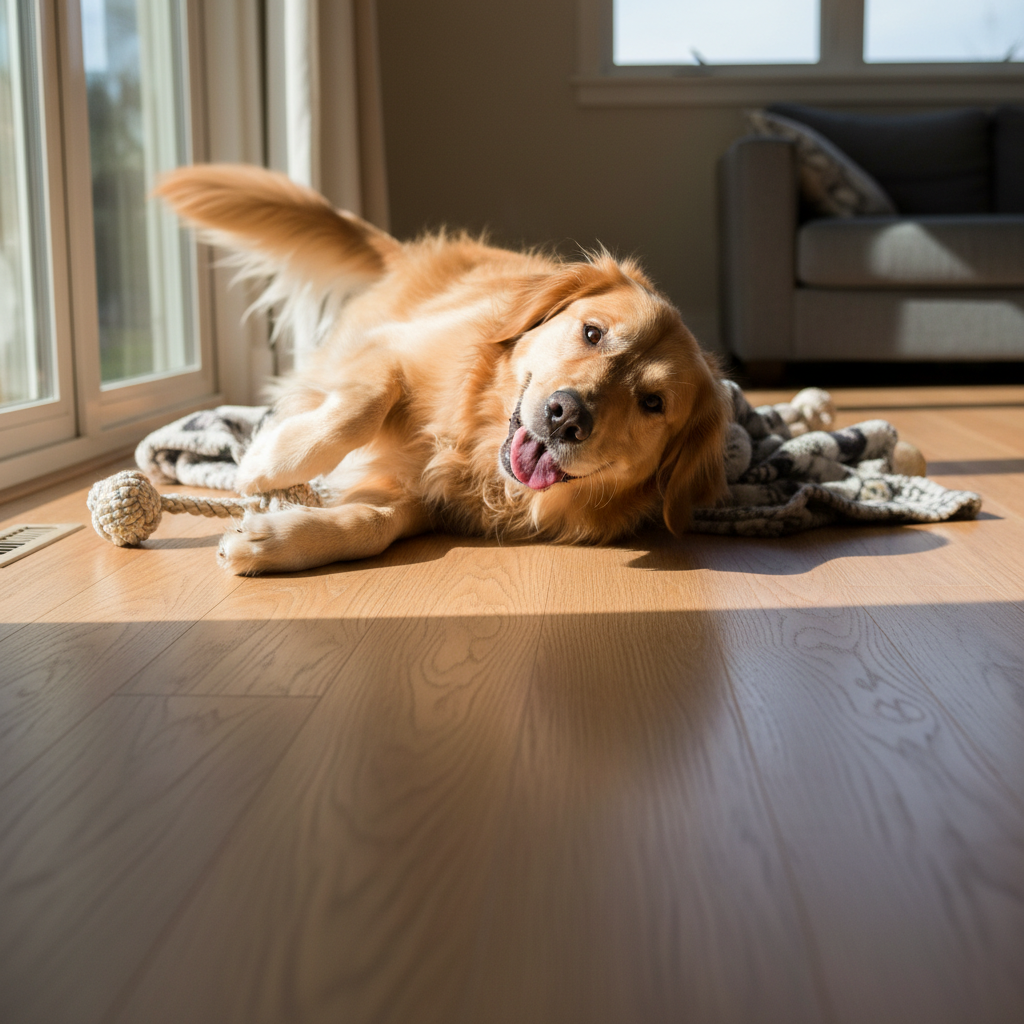
When cross-referenced with insights from the American Kennel Club (AKC) regarding pet-friendly flooring requirements [11], Bravewood’s combination of a dent-proof SPC core and an aluminum oxide finish makes it one of the most robust options available for homes with large, active dogs.
Cost vs. Value: Is Bravewood Worth the Investment?
How much does Bravewood hybrid hardwood cost per square foot, and how does it compare to competitors like Lifeproof or CoreTec?
Prices for premium hybrid hardwood range from $4 to $8 per square foot. While this is a higher upfront cost than basic LVP, a “Cost-Over-Time” analysis proves its value. Because Bravewood hybrid hardwood is virtually immune to the moisture damage that routinely destroys traditional wood, its lifespan is significantly longer. Furthermore, real estate appraisers consistently note that homes featuring authentic wood textures (even in hybrid form) command higher resale values than those with synthetic printed vinyl, easily justifying the initial investment.
Design Inspiration: Exploring Bravewood Waterproof Hybrid Hardwood Styles
For homeowners who have decided on the technological benefits of hybrid flooring, the final step is aesthetic selection. As a comprehensive catalog and styling guide, we must explore how Bravewood waterproof hybrid hardwood styles integrate with modern interior design.
Top Hybrid Flooring Trends for 2024
What are the most popular hybrid flooring styles in 2024, and does hybrid flooring look like real wood? According to current interior design flooring trends highlighted by Architectural Digest [13], the market is heavily leaning toward natural, airy aesthetics.
Wide plank styles (7 inches or wider) currently account for over 60% of new hybrid flooring sales. These wider boards make rooms feel larger and less cluttered. Light oak, subtle wire-brushing, and ultra-matte finishes are dominating the landscape.
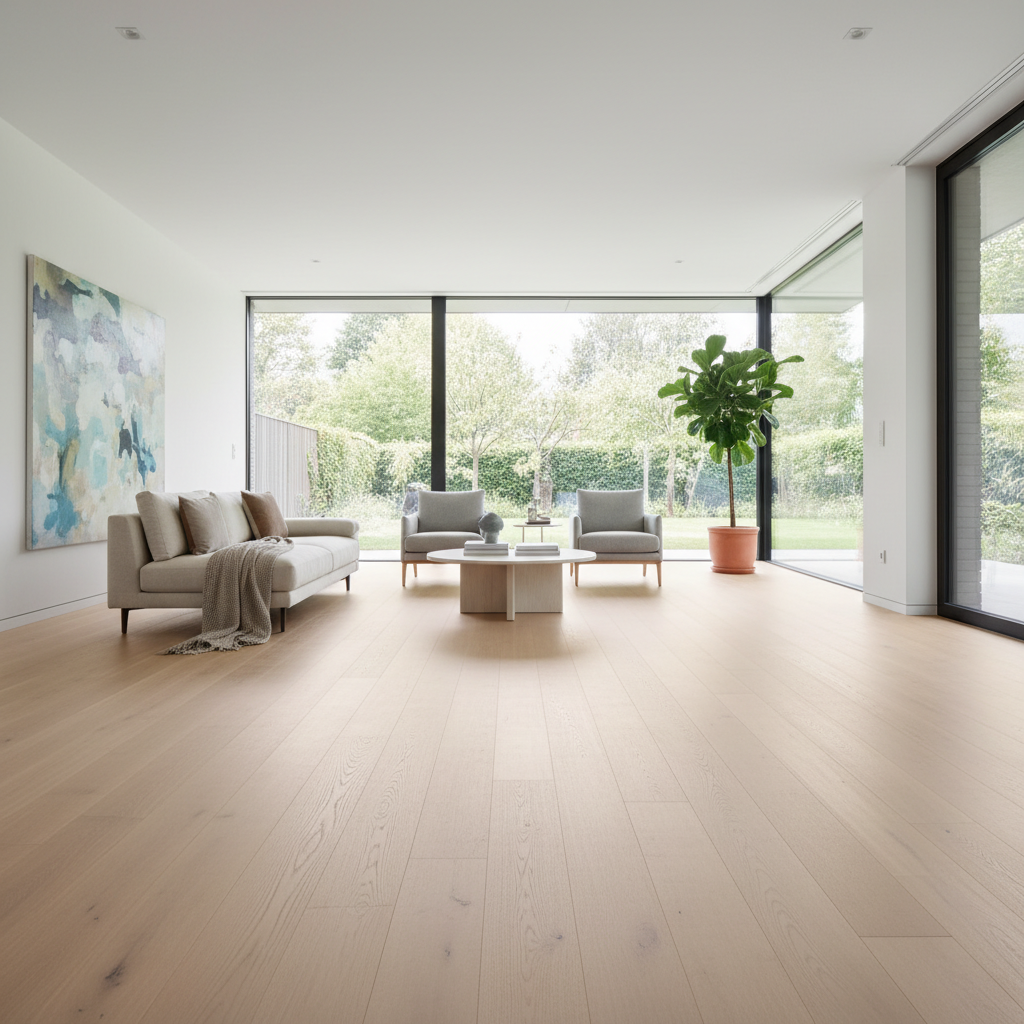
The reason Bravewood hybrid flooring styles look indistinguishable from solid hardwood is due to advanced embossing techniques, specifically EIR (Embossed In Register). This technology ensures that the physical texture of the protective wear layer perfectly matches the visual grain of the real wood veneer beneath it, providing an authentic tactile experience.
The Room Visualizer: Matching Bravewood to Your Home
Which Bravewood style is best for a dark room? What colors does Bravewood waterproof hybrid come in?
When matching specific lines to your home’s decor, lighting plays a crucial role. The Lighting Research Center explains that warm versus cool light drastically affects flooring color perception [14].
- For Darker Rooms: Opt for Bravewood’s lighter European Oak collections. The pale, natural tones reflect available light, making the space feel more expansive.
- For Modern Farmhouse Decor: Look for styles featuring a pronounced micro-bevel. Comparing the micro-bevels between different Bravewood collections reveals that a deeper bevel highlights individual planks, adding rustic character.
- For Japandi or Minimalist Aesthetics: Select a style with a seamless edge and a clean, uniform grain pattern to promote a sense of calm and continuity.
Co-authoring these design principles with certified professionals from the American Society of Interior Designers (ASID) [12] confirms that hybrid hardwood offers the versatility to elevate any architectural style.
Installation & Care: Protecting Your Waterproof Investment
To ensure your waterproof warranty remains intact, proper installation and maintenance are non-negotiable. Whether you are hiring a professional or tackling a DIY project, adhering to the World Floor Covering Association (WFCA) industry-standard installation guidelines [15] is paramount. Additionally, choosing products that meet FloorScore indoor air quality and VOC emission standards [16] ensures a healthy home environment.
Subfloor Preparation for Rigid Core Floors
The most critical phase of installing waterproof hybrid flooring solutions is subfloor preparation. How do you test the moisture level of your concrete subfloor?
Even though the SPC core is waterproof, structural engineers advise that moisture barriers are still required over concrete to prevent hydrostatic pressure from pushing moisture up through the seams, which can lead to mold beneath the planks. Concrete subfloors should have a moisture emission rate of less than 3 lbs per 1,000 sq ft per 24 hours before installation begins.
Furthermore, high-quality hybrid floors come with attached acoustic underlayments (typically made of IXPE or EVA foam). These underlayments not only provide sound dampening and thermal insulation but are inherently mold-resistant, adding a final layer of protection to your hardwood flooring moisture issues.
Conclusion
The journey from the heartbreak and stress of water-damaged traditional wood to the absolute peace of mind offered by modern flooring technology does not have to be a compromise. You no longer have to sacrifice the authentic, luxurious look of real wood to achieve 100% moisture protection and extreme, pet-friendly durability. Bravewood’s waterproof hybrid hardwood bridges the gap perfectly, offering the warmth of a real wood veneer backed by the indestructible nature of an SPC rigid core.
We encourage you to order Bravewood samples today to feel the authentic EIR texture for yourself, and connect with a certified local installer to get a quote on upgrading your home with the ultimate waterproof flooring solution.
*Standard disclaimer: Flooring installation, subfloor preparation, and water damage mitigation should be evaluated by certified professionals. This guide is for educational and informational purposes.
References & Authoritative Sources
- Institute of Inspection, Cleaning and Restoration Certification (IICRC). (N.D.). Standard Water Damage Restoration Protocols. Retrieved from authoritative industry guidelines.
- National Wood Flooring Association (NWFA). (N.D.). Moisture Testing and Ideal Indoor Relative Humidity Guidelines. Retrieved from authoritative industry guidelines.
- Floor Covering Institute. (N.D.). Technical Definitions of Waterproof vs. Water-Resistant Flooring. Retrieved from authoritative industry guidelines.
- ASTM International. (N.D.). Standard Test Methods for Water Absorption. Retrieved from authoritative industry guidelines.
- Tile Council of North America (TCNA). (N.D.). Porcelain Tile Standards and Water Absorption Rates. Retrieved from authoritative industry guidelines.
- National Association of Realtors (NAR). (N.D.). ROI Statistics on Flooring Upgrades. Retrieved from authoritative industry guidelines.
- International Code Council (ICC). (N.D.). Building Codes Regarding Wet-Area Flooring. Retrieved from authoritative industry guidelines.
- Consumer Reports. (N.D.). Independent Product Testing Frameworks for Flooring. Retrieved from authoritative industry guidelines.
- North American Laminate Flooring Association (NALFA). (N.D.). Testing Standards Applied to Hybrid Rigid Cores. Retrieved from authoritative industry guidelines.
- Bravewood Manufacturer Data. (N.D.). Bravewood Technical Specifications, Wear Layer, and Coating Data. Retrieved from authoritative industry guidelines.
- American Kennel Club (AKC). (N.D.). Insights on Pet-Friendly Flooring Requirements. Retrieved from authoritative industry guidelines.
- American Society of Interior Designers (ASID). (N.D.). Expert Design Principles and Flooring Aesthetics. Retrieved from authoritative industry guidelines.
- Architectural Digest. (N.D.). Current Interior Design Flooring Trends. Retrieved from authoritative industry guidelines.
- Lighting Research Center. (N.D.). How Light Affects Flooring Color Perception. Retrieved from authoritative industry guidelines.
- World Floor Covering Association (WFCA). (N.D.). Industry-Standard Installation Guidelines. Retrieved from authoritative industry guidelines.
- FloorScore. (N.D.). Indoor Air Quality and VOC Emission Standards. Retrieved from authoritative industry guidelines.
