
If you are shopping for new floors today, you are likely drowning in an alphabet soup of marketing jargon. Between SPC, WPC, mil wear layers, and Janka hardness ratings, choosing the right foundation for your home can feel like studying for a materials science exam. The core problem for most homeowners is simple: you want the undeniable prestige and warmth of natural wood, but your active life—complete with large dogs, spilled drinks, and heavy foot traffic—demands extreme durability.
Welcome to the definitive, stress-tested guide to modern flooring. This is not a standard manufacturer spec sheet. Instead, we are taking a “Deconstructed” approach to Bravewood hybrid hardwood and LVP (Luxury Vinyl Plank). By moving past the showroom hype, we will provide you with a comprehensive Lifestyle Matchmaker, real-world durability tests, and expert-backed damage triage protocols to ensure your investment survives the realities of daily life.
- Deconstructing the Planks: What Are Bravewood Hybrid Hardwood and LVP?
- The Ultimate Durability Reality Check: Comparing Hybrid Hardwood and LVP
- The Flooring Lifestyle Matchmaker: Which is Best for You?
- Triage & Maintenance: Handling Damage Like a Pro
- Conclusion: Making Your Final Flooring Decision
- References & Expert Sources
Deconstructing the Planks: What Are Bravewood Hybrid Hardwood and LVP?
To truly understand which wood look flooring is right for your home, you have to look inside the plank. When we break down the material science behind Bravewood hybrid hardwood and Bravewood LVP flooring, the differences in engineering become starkly apparent. We are moving past the superficial aesthetics to examine the exact anatomical layers that dictate how these floors will perform over the next two decades.
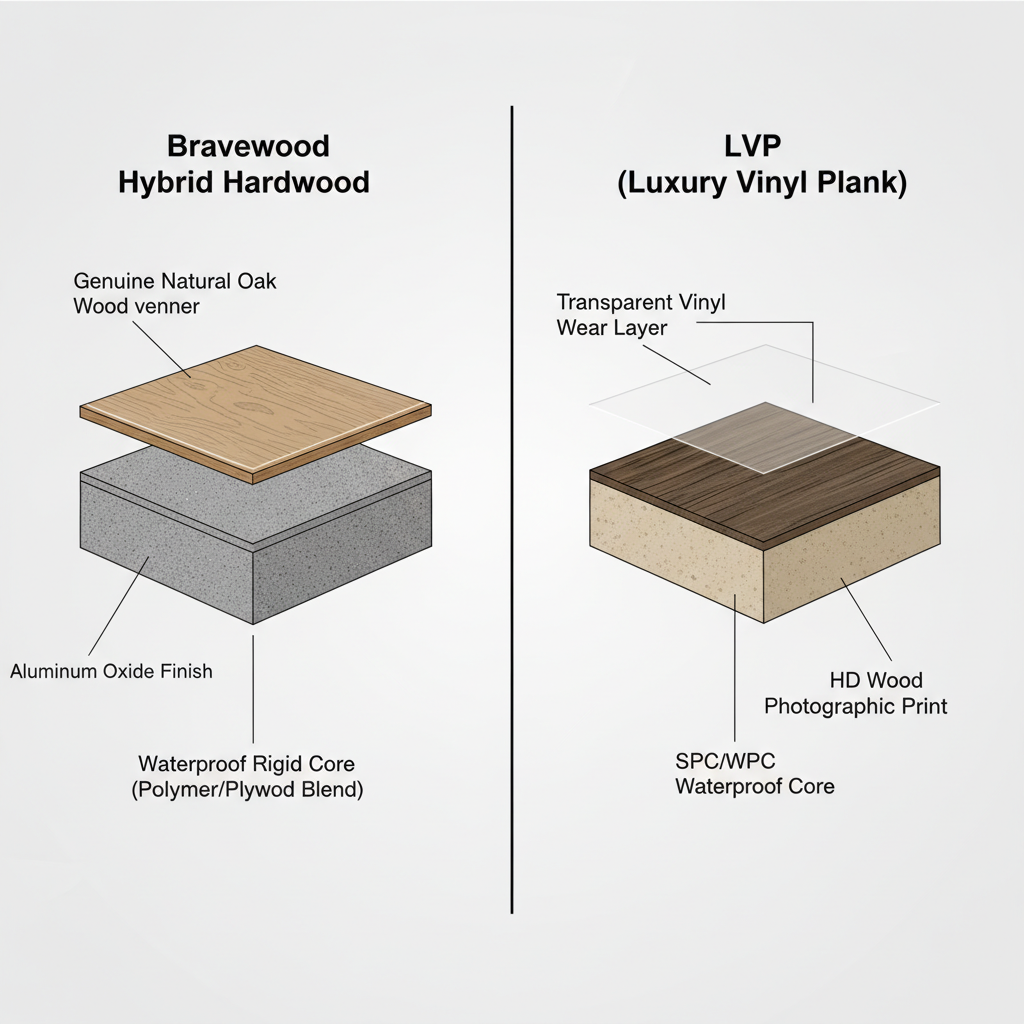
The Anatomy of Bravewood Hybrid Hardwood
If you were to examine a cross-section of Bravewood hybrid hardwood under high-resolution macro photography, you would see a fascinating marriage of nature and synthetic engineering. The top layer is not a print; it is a genuine, natural wood veneer. This means every plank features unique, unrepeated grain patterns.
However, unlike traditional solid hardwood, this veneer is bonded to a 100% waterproof core (often a rigid polymer or specialized plywood). The true magic, however, lies in the factory-applied finish. “Modern hybrid hardwood utilizes an Aluminum Oxide finish that is UV-cured at the factory, creating a protective seal that simply cannot be replicated by rolling polyurethane on-site,” notes manufacturing data from industry leaders [1]. This chemical finish provides up to 4X more scratch resistance than traditional solid hardwood, making scratch resistant hybrid hardwood a viable option for busy homes. Furthermore, the National Wood Flooring Association (NWFA) sets strict manufacturing standards and grading for these hybrid veneers, ensuring structural integrity and authentic grading [2].
The Anatomy of Bravewood LVP (Luxury Vinyl Plank)
Demystifying LVP construction requires understanding its purely synthetic nature. Under a macro lens, the top visual layer of Bravewood LVP is a high-definition photographic print of wood, protected by a clear vinyl wear layer. This wear layer’s thickness is the ultimate dictator of lifespan, typically ranging from a 6mil thickness for light residential use up to 20mil or higher for heavy commercial applications [3]. To mimic the feel of real wood, premium LVP uses Embossed-In-Register (EIR) texturing, where the physical grooves perfectly match the printed grain.
Beneath the print lies the waterproof core, which comes in two primary forms: WPC (Wood Polymer Composite) and SPC (Stone Polymer Composite). From a materials engineering perspective, SPC utilizes limestone powder mixed with stabilizers, creating a remarkably dense, rigid core. This makes SPC significantly more dent-resistant against heavy furniture or dropped items compared to the slightly softer, more aerated WPC core. Understanding this core science is the key to finding truly waterproof LVP flooring solutions that won’t indent under the weight of a dining room table.
The Ultimate Durability Reality Check: Comparing Hybrid Hardwood and LVP
Manufacturer warranties often paint a rosy picture, but how do these materials handle real-world abuse? When comparing hybrid hardwood and LVP head-to-head, we have to look past the controlled laboratory conditions and address the tactile feel, acoustic realities, and long-term wear.
Scratch Resistance & The Janka Scale Reality
When evaluating scratch resistant hybrid hardwood, we must look at two factors: the natural hardness of the wood species and the chemical topcoat. The official Janka hardness scale provides objective, standardized data on wood density. For example, a Brazilian Cherry veneer boasts a formidable Janka rating of 2350, while White Oak sits at 1360 [4].
However, the Aluminum Oxide topcoat is the first line of defense. As one certified flooring inspector notes, “Under a microscope, you can see that keys or dog claws will glide over an Aluminum Oxide finish, whereas they would gouge straight into standard polyurethane or a vinyl wear layer” [5]. But there is a critical caveat to this durability: while Aluminum Oxide is incredibly tough, it is notoriously difficult to sand and refinish once a deep scratch does penetrate the surface, unlike traditional solid wood.
Waterproofing: ‘Waterproof’ vs. ‘Watertight’
Both Bravewood hybrid hardwood vs LVP boast impressive water resistance, but consumers often confuse “waterproof” with “watertight.”
Bravewood LVP is 100% waterproof—meaning the plank itself will not swell, warp, or degrade if submerged in water. However, the floor as a whole is not necessarily watertight. “Water can and will travel through the microscopic seams of the locking mechanisms if left standing long enough,” explains an IICRC-certified water damage restoration specialist [6]. “Once water reaches the subfloor beneath your waterproof LVP flooring solutions, you are at risk for mold.” Therefore, proper subfloor moisture mitigation and vapor barriers are non-negotiable, regardless of the plank’s waterproof claims.
Acoustics, Feel, and UV Fading
The sensory experience of a floor is often overlooked until after installation. One of the biggest complaints with floating wood look flooring is the “hollow sound” or clicking noise when walked upon. Because LVP is often floated over a subfloor, it can sound plastic and echoey without a premium acoustic underlayment. Hybrid hardwood, especially if glued down, provides the dense, solid thud associated with traditional homes.
When planning second-story installations, you must look at detailed acoustic ratings. Aim for an IIC (Impact Insulation Class) and STC (Sound Transmission Class) rating of 60 or higher for excellent soundproofing. Additionally, consider sunlight exposure. Real wood veneers in hybrid hardwood will naturally patina and fade under direct UV light over the years, whereas the vinyl print layer of LVP remains highly static and colorfast.
The Flooring Lifestyle Matchmaker: Which is Best for You?
Generic lists cannot tell you what to install; your specific household hazards and budget should dictate your choice. Vetted by interior designers who specify materials for high-traffic homes, here is how to match the best wood look flooring options to your life [7].
Best for Large Dogs & Active Kids
If your home is a chaotic mix of muddy paws, spilled juice, and indoor tricycle racing, you need durable wood look flooring that forgives mistakes.
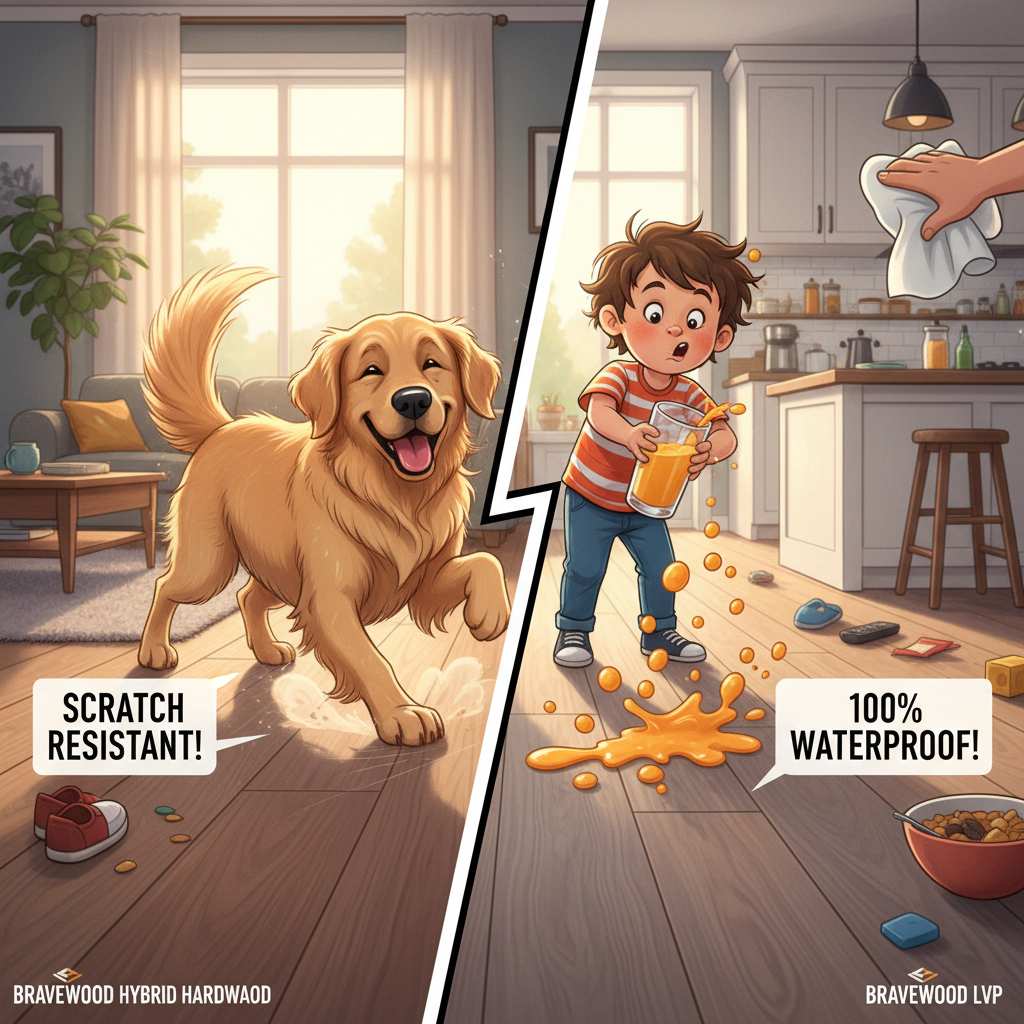
- LVP is the undisputed champion for frequent liquid accidents (like aging pets) because the synthetic material won’t absorb uric acid or water.
- Hybrid Hardwood with an Aluminum Oxide finish is superior for resisting the micro-scratches caused by large dogs pacing the hallways.
If you are torn, we recommend conducting your own “torture test” on sample planks: take a set of house keys and drag them firmly across both samples, then leave a puddle of water on the seams for 12 hours to validate the durability claims for yourself.
The True Cost Breakdown: Materials, Labor, and Subfloor Prep
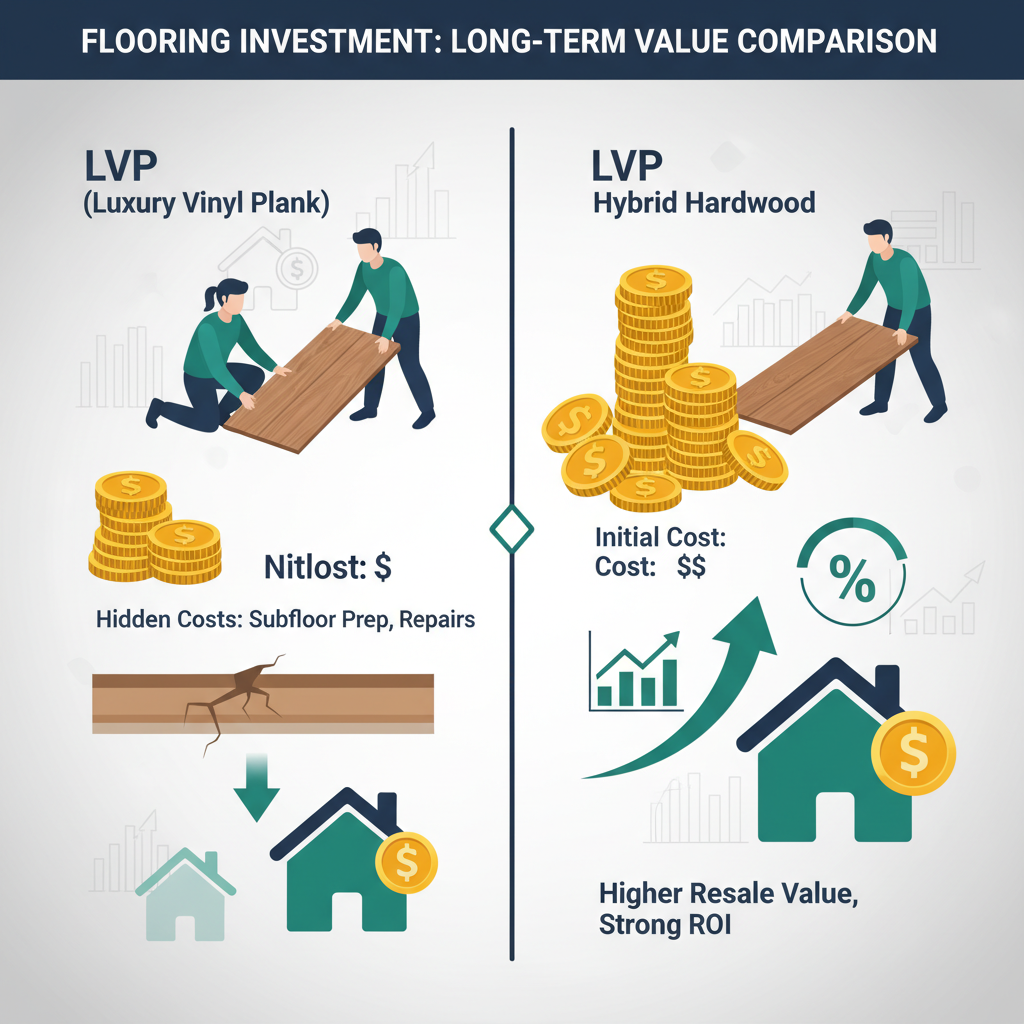
There is a significant amount of conflicting pricing information online. Some automated tools incorrectly list LVP as costing $4-$12 per square foot while listing engineered hardwood at an impossibly low $2-$6. To establish the truth: quality LVP is generally the more cost-effective option, both in materials and labor.
However, the true cost of comparing hybrid hardwood and LVP lies in subfloor preparation. Rigid SPC LVP requires a nearly perfectly level subfloor; otherwise, the locking mechanisms will snap under foot traffic. If your home requires extensive subfloor leveling (grinding concrete or pouring self-leveler), the labor costs can easily add $2 to $4 per square foot to your LVP installation. In some cases, a glued-down hybrid hardwood might be more forgiving of minor subfloor imperfections, shifting the total project ROI. Furthermore, licensed real estate agents consistently note that real wood veneers yield a higher return on investment and home resale value than vinyl [8].
Triage & Maintenance: Handling Damage Like a Pro
Even the most durable floors suffer casualties. Whether you are a homeowner dealing with a leaking dishwasher or a landlord disputing a security deposit, you need actionable emergency protocols.
The Scratch Depth Triage System
When dealing with scratched wood floor issues, the first step is identifying the severity of the damage to avoid ruining the floor with the wrong DIY fix.
- Level 1 (Clear Coat Scuffs): If the scratch is only in the clear finish and hasn’t removed color, a specialized blending pencil or finish restorer can hide it.
- Level 2 (Color Loss): If the raw wood or core is exposed, you will need a color-matched wood filler.
Be highly skeptical of viral DIY remedies. “Rubbing olive oil and vinegar into a scratch is a temporary mask that simply darkens the raw wood and attracts dirt; it is not a permanent fix,” warns home repair authority Family Handyman [9]. Always match your repair technique to your finish—Aluminum Oxide requires different touch-up kits than standard polyurethane [10].
Emergency 24-Hour Water Damage Protocol
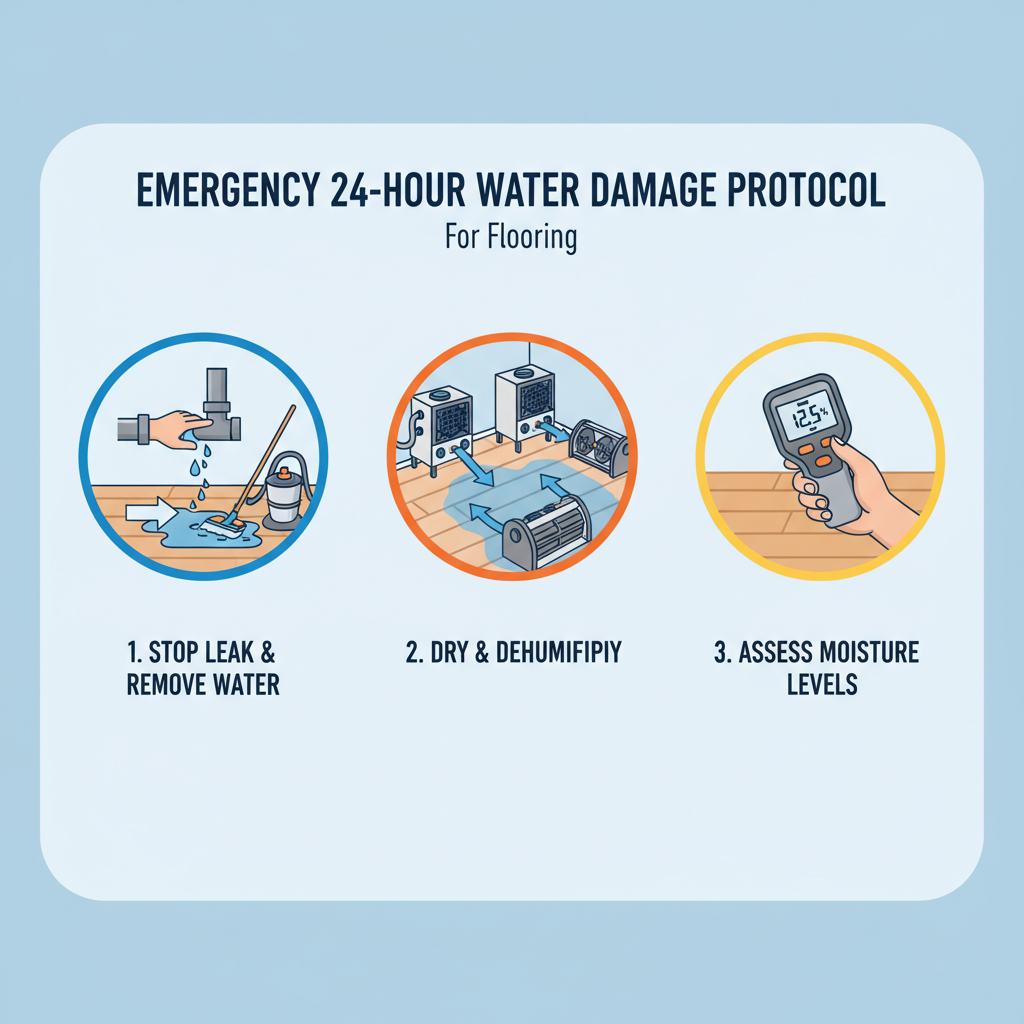
Hardwood floor water damage is a high-urgency emergency. If a pipe bursts or a roof leaks, the clock starts immediately. Cupping (where the edges of the board raise higher than the center) and mold colonization can develop within 24 to 48 hours of water exposure.
- Stop the source and extract standing water immediately.
- Deploy commercial dehumidifiers and air movers. Your goal is to bring the indoor relative humidity below 45% as rapidly as possible.
- Use a pinless moisture meter to test the floor. Do not rely on touch; the surface may feel dry while the core remains saturated [11].
Crucially, never sand a cupped floor before it is completely, structurally dry. If you sand a wet, cupped floor flat, it will eventually dry and shrink, resulting in “crowning” (where the center of the board is permanently higher than the edges). For severe saturation, always call an IICRC-certified professional.
Normal Wear and Tear vs. Property Damage
For landlords and tenants, flooring wear and tear is a frequent legal battleground. Property management standards clearly define the boundaries [12], [13].
- Normal Wear: Minor fading from sunlight, light scuffs in the clear coat from normal walking, or slight dulling of the finish in high-traffic hallways. Landlords cannot deduct from a security deposit for this.
- Property Damage: Deep gouges from dragging heavy furniture, chipped LVP locking mechanisms, pet urine stains that have penetrated the core, or burns.
When calculating deductions for damage, property managers must factor in the “useful life” of the floor. If an LVP floor has a useful life of 15 years and a tenant ruins it in year 10, the tenant is only responsible for the remaining 5 years of prorated value, not the cost of a brand-new floor. Visual side-by-side photo documentation during move-in and move-out is the only foolproof way to enforce these boundaries.
Conclusion: Making Your Final Flooring Decision
The battle between Bravewood hybrid hardwood vs LVP does not have a single winner; it only has the right winner for your specific home. Both offer incredible, high-definition wood-look aesthetics. However, their core materials serve different masters. Hybrid hardwood offers the undeniable prestige, warmth, and resale value of a natural wood veneer, fortified by scratch-resistant science. LVP offers absolute, worry-free waterproof durability and dent resistance at a more accessible price point.
Before making your final purchase, we highly recommend consulting with a certified flooring installer to evaluate your subfloor. Most importantly, order physical samples of both the best wood look flooring options you are considering. Take them home, drop your keys on them, spill a glass of water, and let your lifestyle be the ultimate judge.
DIY Home Improvement Disclaimer: Information regarding water damage triage and structural subfloor preparation is for educational purposes. Always consult an IICRC-certified professional for severe water damage or mold remediation.
References & Expert Sources
- National Wood Flooring Association (NWFA). (N.D.). Wood Flooring Manufacturing Standards and Grading. Retrieved from industry standards documentation.
- Bruce Flooring. (N.D.). The Science of Aluminum Oxide Finishes and Wood Durability. Retrieved from manufacturer technical specifications.
- Floor Covering Installer Magazine. (N.D.). Understanding LVP Wear Layers and Commercial vs. Residential Standards.
- Robbins Floors. (N.D.). Technical Comparisons: Natural Wood vs. Vinyl Products and Janka Hardness.
- Certified Flooring Inspector. (N.D.). Microscopic Analysis of Scratch Resistance on Flooring Finishes. Expert insight on wear layers.
- Institute of Inspection, Cleaning and Restoration Certification (IICRC) Certified Specialist. (N.D.). Water Migration Through Floating Floor Locking Mechanisms.
- Flooring America / Bob Vila. (N.D.). Consumer Trends and ROI on Wood-Look Flooring Options.
- Real Estate Resale Data. (N.D.). Impact of Flooring Materials on Home Value and Buyer Preference.
- Family Handyman. (N.D.). DIY Flooring Repairs: Myths vs. Permanent Fixes.
- Ambience Hardwood Flooring. (N.D.). Maintenance and Prevention for Hardwood Finishes.
- Certified Water and Fire. (N.D.). Emergency Response Protocols and Moisture Meter Usage for Hardwood.
- PURE Property Management. (N.D.). Legal Definitions of Wear and Tear vs. Damage in Rentals.
- Maple Leaf Management. (N.D.). Real Estate Management Authority on Security Deposit Deductions and Useful Life.
