
For active households, the dream of pristine hardwood floors often clashes with the chaotic reality of daily life. Kids, pets, heavy foot traffic, and the inevitable kitchen spills make traditional solid wood a high-maintenance, anxiety-inducing investment. You want the premium, authentic aesthetic of real hardwood, but you need the indestructible nature of modern synthetics.
If you have started shopping, you have likely encountered severe decision paralysis. The flooring industry is awash in confusing jargon—LVP, SPC, laminate, engineered wood, and hybrid floors—making it nearly impossible to know what will actually survive your living room.
This is your definitive, science-backed guide to decoding wood-look flooring. We are moving beyond the marketing hype to break down the exact material science of these floors, spotlighting the highly sought-after Bravewood Hybrid Hardwood collection. From a layer-by-layer anatomy lesson to expert triage for scratches and spills, we will equip you with the knowledge to select, install, and maintain a flawless, life-proof aesthetic.
- Decoding Wood-Look Flooring: What Exactly Are Hybrid Wood Floors?
- Deep Dive: Bravewood Hybrid Hardwood Styles & Specifications
- How to Choose the Right Wood-Look Floor for Your Home
- Damage Triage: Real Solutions for Scratches and Water Spills
- The Definitive Hybrid Floor Care Guide
- References & Authoritative Sources
Decoding Wood-Look Flooring: What Exactly Are Hybrid Wood Floors?
When navigating the market for wood look flooring, it is crucial to understand that not all planks are created equal. Traditional laminate uses a photographic layer over a fiberboard core, while Luxury Vinyl Plank (LVP) relies on entirely synthetic PVC materials. Hybrid wood floors, however, represent a massive leap forward in flooring engineering, bridging the gap between authentic beauty and synthetic resilience.
To understand why hybrid flooring is superior for active homes, we have to look at its cross-section. A true hybrid plank consists of three critical layers:
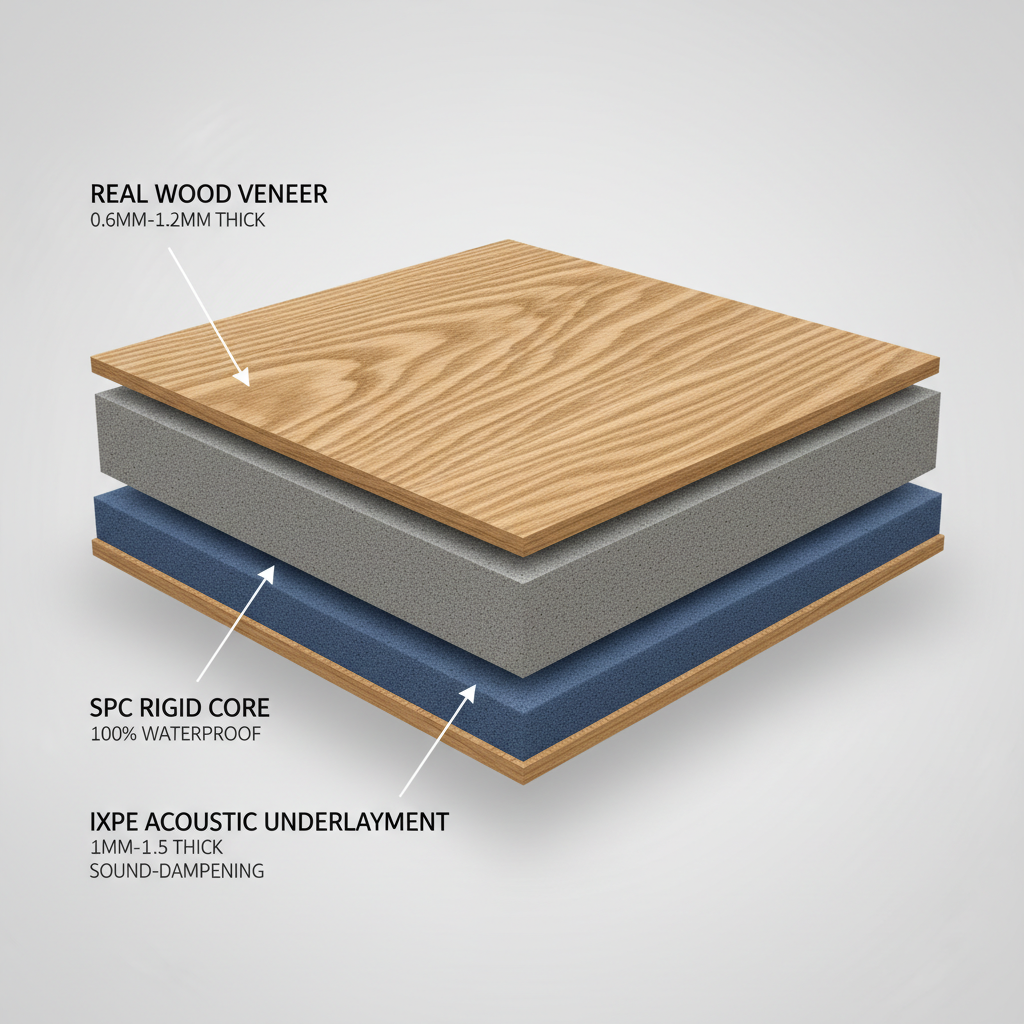
- The Veneer: Unlike LVP or laminate, a hybrid floor features a slice of real natural wood (typically 0.6mm to 1.2mm thick) as its top visual layer, protected by a high-performance, scratch-resistant finish.
- The SPC Core: Beneath the wood sits a Stone Plastic Composite (SPC) rigid core. According to material science data from AHF Products, the high specific gravity and density of an SPC core make it 100% waterproof and structurally impervious to the temperature and humidity fluctuations that cause traditional wood to expand, contract, and warp [1].
- The IXPE Pad: The base is usually a 1mm to 1.5mm attached IXPE (Irradiated Cross-Linked Polyethylene) acoustic underlayment, which provides sound dampening and underfoot comfort.
By referencing the National Wood Flooring Association (NWFA) standards for solid wood, we can see that hybrid floors offer the exact same surface grain, texture, and visual warmth as traditional hardwood, but with a structural foundation engineered to prevent cupping and moisture failure [2].
The Durability Torture Test: Hybrid vs. LVP vs. Laminate vs. Tile
To truly find durable wood look floors, you must compare materials across a matrix of real-world abuses. According to industry data from Floor Covering Weekly, wood-look flooring now accounts for over 60% of all hard surface flooring sales [3]. Here is how the top contenders survive the torture test:
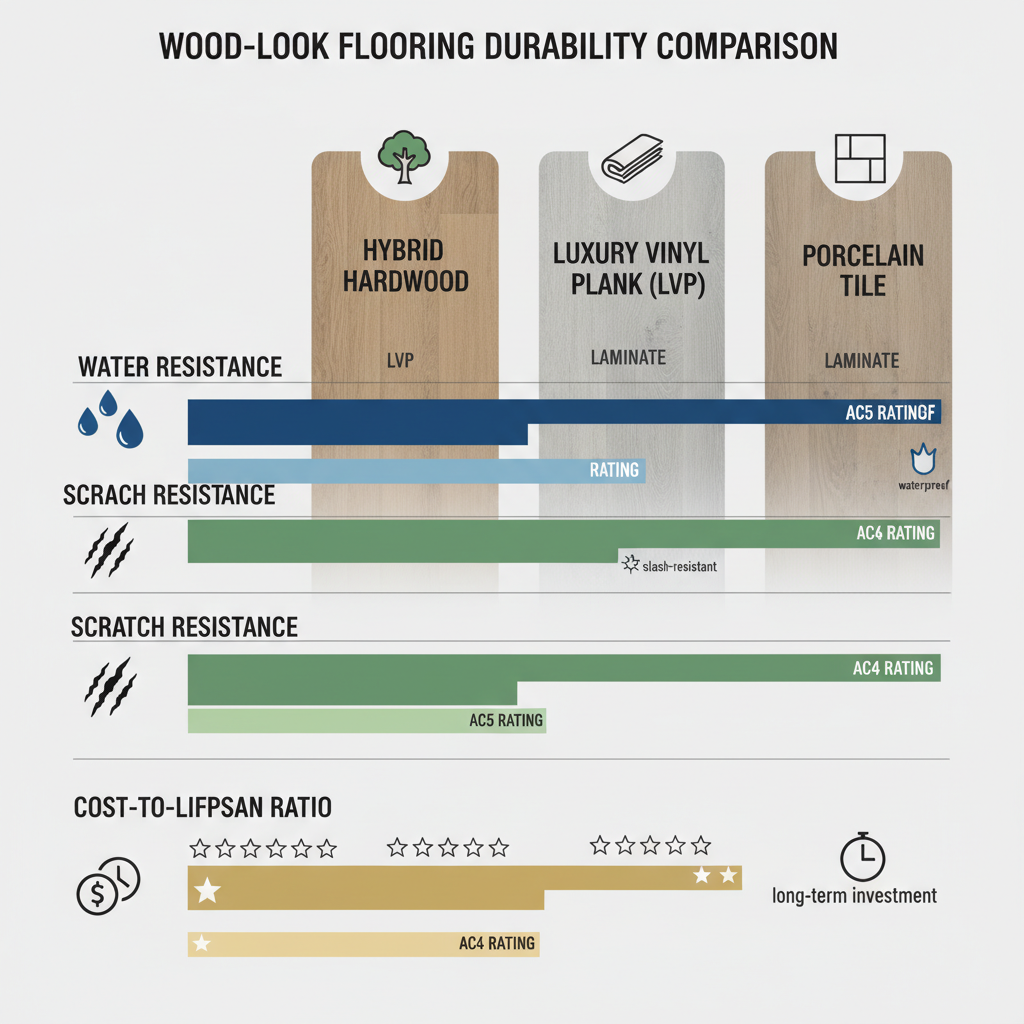
- Water Resistance: Porcelain wood-look tile and SPC-core hybrid floors tie for first place, both offering 100% waterproof cores. LVP is also highly water-resistant, while standard laminate (with its fiberboard core) is highly vulnerable to swelling if water breaches the seams.
- Scratch Resistance: This is measured scientifically. Laminate and hybrid floors use an AC (Abrasion Class) rating system. An AC4 rating means the floor is suitable for heavy residential and light commercial traffic. LVP durability is measured by wear layer thickness (ranging from 6 mil to 20+ mil). Porcelain tile is virtually scratch-proof but lacks the warmth of wood. Hybrid floors with an AC4 aluminum oxide finish offer the best balance of real wood feel and pet-claw resistance.
- Cost-to-Lifespan Ratio (ROI): Porcelain tile lasts 50+ years but is expensive to install. LVP offers a great budget-friendly lifespan (15-20 years). Hybrid hardwood sits in the premium middle ground, offering the high ROI of real wood aesthetics with a 20-to-30-year lifespan, avoiding the costly refinishing required by solid hardwood.
Deep Dive: Bravewood Hybrid Hardwood Styles & Specifications
For buyers with transactional or investigational intent, the Bravewood collection by TAS Flooring stands out as a masterclass in hybrid engineering. If you are searching for the best Bravewood hybrid hardwood styles, understanding the technical specifications is key to making a confident investment.
Directly citing TAS Flooring’s official specifications, Bravewood is a 7/16-inch (12mm) thick hybrid hardwood [4]. This robust thickness includes a 1.5mm attached IXPE pad for superior acoustic performance and a 0.6mm real Birch wood veneer. The surface is fortified with an AC4-rated antimicrobial finish, making it exceptionally resistant to both scratches and household bacteria.
Health and indoor air quality are also paramount. The Bravewood collection boasts both FloorScore and GreenGuard Gold certifications, ensuring that the adhesives and core materials emit virtually zero harmful VOCs (Volatile Organic Compounds) [5]. Backed by a Lifetime Residential and a 7-Year Light Commercial warranty, this flooring is designed to be a permanent, safe fixture in your home.
Top Bravewood Color Options and Design Trends
The true appeal of Bravewood hybrid hardwood lies in its aesthetic versatility. With 10 distinct color options, the collection utilizes an Embossed In Register (EIR) texture—meaning the physical texture of the protective wear layer perfectly matches the natural grain of the Birch veneer beneath it.
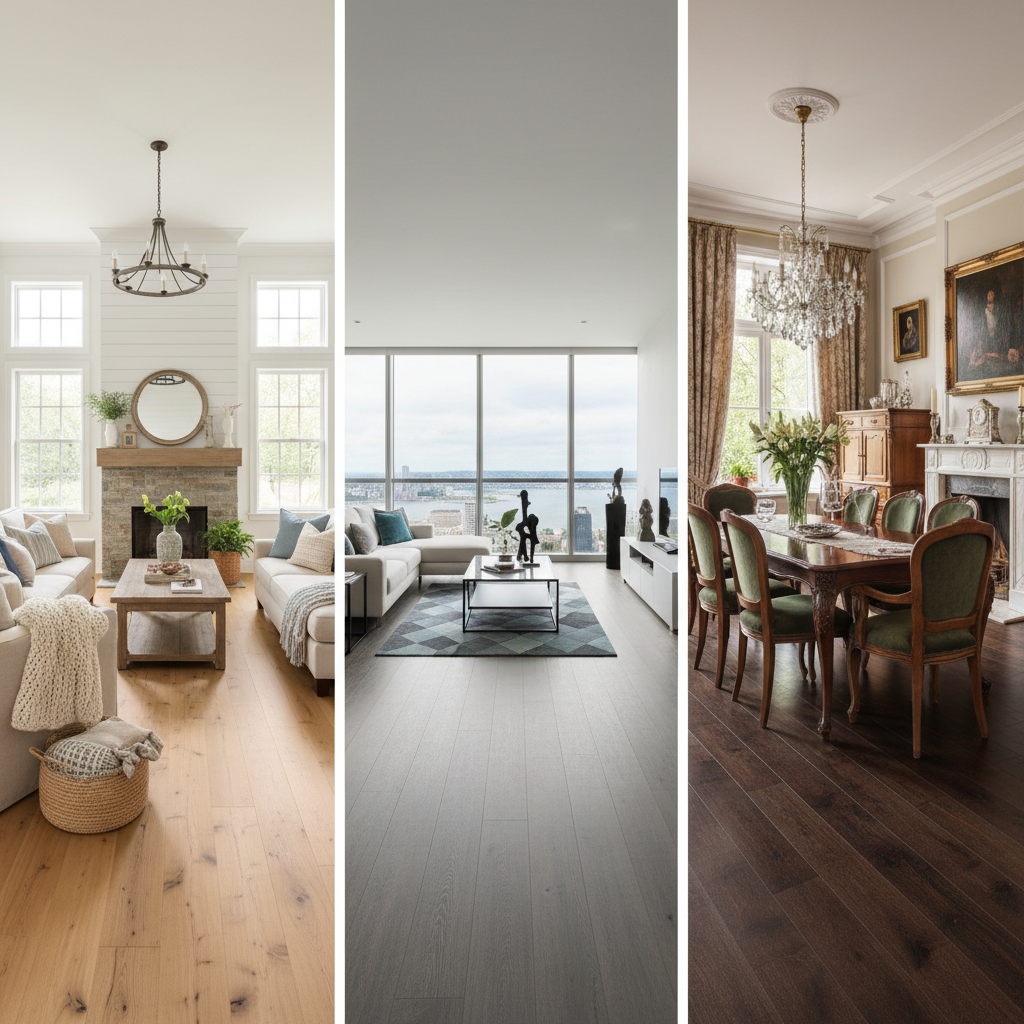
When looking at real-world installations rather than just digital swatches, certain styles dominate current interior design trends:
- Sunshine Hickory (SKU: BW343): Perfect for the “Modern Farmhouse” aesthetic, this style offers warm, honey-blonde tones that brighten up living spaces and hide daily dust and pet hair exceptionally well.
- Coastal Gray Tones: For contemporary or coastal-inspired homes, Bravewood offers cooler, muted ash tones that provide a sleek, neutral backdrop for bold furniture choices.
- Rich Traditional: Deeper, darker brown hues in the collection cater to formal dining rooms and classic architectural styles, offering the stately look of historic homes without the fragility.
How to Choose the Right Wood-Look Floor for Your Home
Overcoming decision paralysis requires a strategic framework. When figuring out how to choose wood look flooring, we recommend using a “Lifestyle vs. Design Matrix.” This involves filtering your options first by your household’s chaos level (pets, kids, pool access) and second by your aesthetic goals.
Choosing the right floor style also comes down to spatial perception. According to interior design expert Edward Martin, the color of your flooring dramatically impacts the feel of a room: light wood tones can make small, poorly lit rooms feel expansive and airy, while dark floors ground a large, open-concept space, adding warmth and intimacy [6].
Furthermore, you must consider subfloor preparation. Rigid core hybrid floors and LVP are forgiving of minor subfloor imperfections, but wood-look porcelain tile requires a perfectly level, deflection-free subfloor to prevent cracking. Always factor subfloor leveling into your renovation budget.
Waterproof Wood-Look Flooring Options for Wet Areas
When selecting flooring for kitchens, bathrooms, and mudrooms, you must seek out waterproof wood look flooring options. However, it is vital to understand the scientific difference between “water-resistant” and “waterproof.”
Water-resistant floors (like many engineered hardwoods or topical-seal laminates) can withstand a spill for a few hours, but standing water will eventually penetrate the core and cause swelling. True waterproof hybrid hardwood flooring features an impermeable core. For example, Raintree Floors utilizes a proprietary Ninja H2O Core (an SPC formulation) that provides top-to-bottom waterproof protection for up to 36 hours [7].
A Critical Warning: While the planks themselves may be 100% waterproof, your subfloor is not. Water can still seep through the microscopic seams between planks or around the perimeter of the room. Proper expansion gaps and, in highly wet areas, a high-quality moisture barrier underlayment are absolute necessities.
Damage Triage: Real Solutions for Scratches and Water Spills
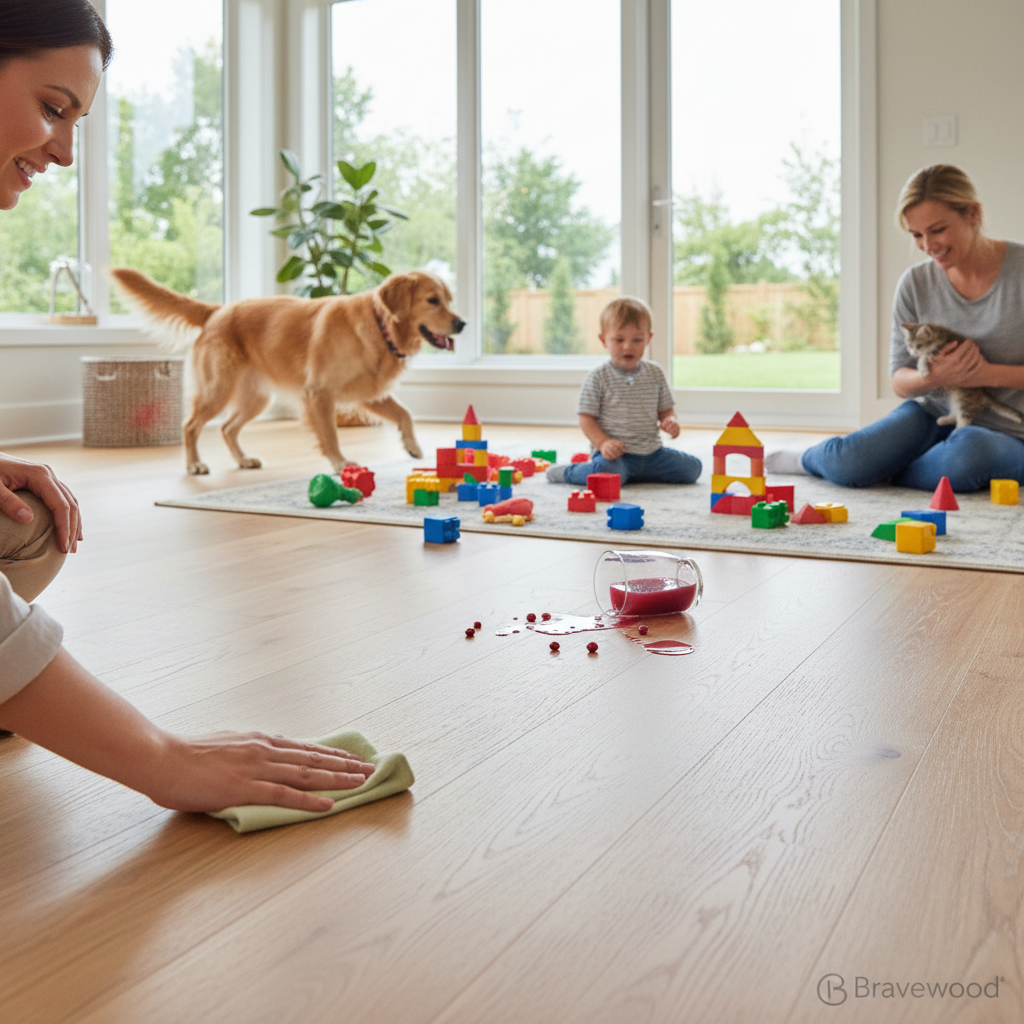
Even the most durable floors face the realities of life. When disaster strikes, you need problem-focused, actionable solutions. It is important to state upfront the limitations of DIY fixes: home remedies are often temporary and may result in slight sheen differences. Always consult your warranty before applying non-approved chemicals.
Water-Damaged Hardwood Floors: A 24-Hour Triage Guide
If a pipe bursts or an appliance leaks, rapid response is critical for water damaged hardwood floors. First, understand the damage: cupping occurs when the edges of a board are higher than its center (indicating moisture underneath), while crowning is when the center is higher than the edges (often caused by moisture on top or premature sanding).
Follow this triage plan based on standards from the Institute of Inspection, Cleaning and Restoration Certification (IICRC) [8]:
- The First 24 Hours (Extraction): Immediately remove all standing water using wet vacuums and towels. Do not apply heat directly to the floor, as this can bake the wood and cause permanent splitting.
- 48 Hours (Dehumidification): Set up commercial-grade dehumidifiers and high-velocity air movers. The goal is to draw moisture out of the room’s air, which in turn draws moisture out of the wood.
- 1 Week (Assessment): According to structural integrity insights from Bruce Flooring and PureDry Restoration, a floor is generally considered safe to refinish or assess for permanent damage only when the moisture content returns to its baseline equilibrium moisture content (EMC) [9]. Use a professional pinless moisture meter; readings should typically drop back down to between 6% and 9% depending on your region. Never sand a cupped floor before it is completely dry, or it will crown once the moisture finally evaporates.
The Scratch Severity Scale: When to DIY and When to Call a Pro
For scratched wood floor repair, match your remedy to the depth of the damage:
- Level 1: Micro-Scratches (Clear Coat Only): If the scratch disappears when you rub a drop of water on it, only the finish is damaged. The famous “walnut trick” (rubbing a raw walnut over the scratch) works temporarily because the nut’s natural oils fill the micro-abrasion. For a permanent fix, a specialized clear polyurethane pen can fill the gap.
- Level 2: Medium Scratches (Veneer Penetration): If the color of the wood is missing, use a high-quality stain marker. The trick to avoiding a patchy look is matching the sheen (matte, satin, or gloss) of your existing floor. Apply the stain, wipe away the excess immediately, and buff it out.
- Level 3: Deep Gouges (Core Exposure): Deep gouges require wood filler, sanding, and restaining. Note: Fixing scratches on a high-tech aluminum oxide finish (like Bravewood’s AC4 rating) is much more difficult than traditional polyurethane. Aluminum oxide is incredibly hard; if a deep gouge occurs, it is often better to replace the individual hybrid plank rather than attempting a spot-sand and refinish.
The Definitive Hybrid Floor Care Guide
To maintain easy to clean hybrid floors and protect your investment, you must adopt warranty-safe cleaning protocols. The wear layer on a hybrid floor is robust, but it is not impervious to chemical burns.
According to professional maintenance protocols from Westlink Commercial Cleaning, the golden rule is to use pH-neutral cleaners specifically formulated for resilient flooring [10].
Debunking Cleaning Myths:
- Never use vinegar: While popular for DIY cleaning, vinegar is highly acidic. Over time, this acid causes a chemical reaction that dulls and etches the protective wear layer, leaving the floor vulnerable to staining and scratching.
- Never use steam mops: Steam mops force high-temperature moisture into the micro-bevels and seams of the flooring. Even on an SPC waterproof core, the intense heat can compromise the adhesives holding the wood veneer to the core, leading to delamination and voiding your warranty.
- The Ideal Routine: Sweep or vacuum (with the beater bar turned off) daily to remove abrasive dirt. For wet cleaning, use a barely damp microfiber mop with a manufacturer-approved, pH-neutral solution.
Conclusion
Choosing the perfect wood look doesn’t mean sacrificing your peace of mind. Hybrid hardwood flooring, particularly the meticulously engineered Bravewood collection, offers the ultimate intersection of authentic natural aesthetics, structural durability, and waterproof reliability. By understanding the material science beneath your feet, utilizing our lifestyle matrix for selection, and adhering to expert-approved maintenance and triage protocols, you can achieve a truly indestructible wood-look floor that will elevate your home for decades.
We highly encourage you to order physical samples of Bravewood Hybrid Hardwood. Test the durability yourself, observe how the Embossed In Register texture catches the natural lighting in your specific rooms, and consult with a certified local installer to bring your vision to life.
Standard DIY repair and maintenance disclaimer: Always consult specific manufacturer warranties before attempting DIY scratch repairs or using new cleaning agents, as improper care can void coverage.
References & Authoritative Sources
- AHF Products. (N.D.). Technical Specifications: SPC Core Density and Specific Gravity. Retrieved from AHF Products Manufacturer Data.
- National Wood Flooring Association (NWFA). (N.D.). Wood Flooring Standards and Baseline Comparisons. Retrieved from NWFA Official Guidelines.
- Floor Covering Weekly. (N.D.). Annual Hard Surface Flooring Market Report. Retrieved from Floor Covering Weekly Industry Trends.
- TAS Flooring. (N.D.). Bravewood Collection Technical Specifications and Warranty Guide. Retrieved from TAS Flooring / TAS Contract Official Documentation.
- SCS Global Services. (N.D.). FloorScore Certification Directory. Retrieved from SCS Global Services Air Quality Standards.
- Martin, E. (N.D.). Interior Design Insights: Color Theory and Spatial Perception in Flooring. Retrieved from Edward Martin Design Publications.
- Raintree Floors. (N.D.). Ninja H2O Core Technology and Waterproof Engineering. Retrieved from Raintree Floors Technical Resources.
- Institute of Inspection, Cleaning and Restoration Certification (IICRC). (N.D.). Standards for Water Damage Restoration. Retrieved from IICRC Official Consumer Guidelines.
- Bruce Flooring & PureDry Restoration. (N.D.). Wood Floor Repair and Structural Integrity Post-Water Damage. Retrieved from Bruce Flooring Manufacturer Insights and PureDry Protocols.
- Westlink Commercial Cleaning. (N.D.). Professional Cleaning Protocols for Hybrid Resilient Floors. Retrieved from Westlink Commercial Cleaning Guidelines.
