
For decades, homeowners have faced the ultimate interior design dilemma: falling in love with the prestige, warmth, and authentic feel of real hardwood, only to despise its fragility against the realities of daily life. The heartbreak of easily scratched wood floors from a playful dog, or the panic of discovering warped traditional hardwood flooring after a minor plumbing leak, has driven many to seek alternatives. Historically, this meant settling for the artificial, printed look of luxury vinyl plank (LVP)—a functional choice, but an aesthetic compromise.
Today, the flooring industry is undergoing a revolution. Next-generation hybrid flooring, such as the Bravewood collection, alongside emerging densified wood technologies, has finally bridged the gap. These are the “no-compromise” solutions, delivering 100% waterproof cores, extreme scratch resistance, and the undeniable beauty of genuine wood. In this comprehensive guide, we will take a deep dive into the material science behind compromise-free hardwood flooring, provide spec-by-spec breakdowns, and share professional maintenance secrets to ensure your floors last a lifetime.
- The Anatomy of Compromise-Free Hardwood Flooring
- Deep Dive: Bravewood Hybrid Hardwood Spec-by-Spec
- Achieving Authentic Wood Aesthetics Without Compromise
- Defeating Scratches: Durability for Active Homes and Pets
- Moisture Mastery: Preventing Warping, Cupping, and Gapping
- Comparing the Best Hybrid Hardwood for Homes
- Maximizing the Lifespan of Durable Authentic Wood Floors
- Conclusion
- References & Authoritative Sources
The Anatomy of Compromise-Free Hardwood Flooring
To understand how modern flooring achieves both beauty and invincibility, we have to look beneath the surface. The term “hybrid” in flooring refers to a precise material science achievement: merging a genuine, natural wood veneer with an advanced, synthetic waterproof core. This creates compromise-free hardwood flooring that looks and feels exactly like traditional wood because the top layer is traditional wood, but it behaves entirely differently under stress.
If we were to look at a cross-sectional diagram of a premium hybrid wood plank, we would see three distinct layers. The top layer is the real wood veneer, providing the unique grain and texture. Beneath that lies the rigid core, typically made of Stone Plastic Composite (SPC) or Wood Plastic Composite (WPC). Finally, the base is often an attached acoustic backing, such as an IXPE pad, which dampens sound and provides underfoot comfort.
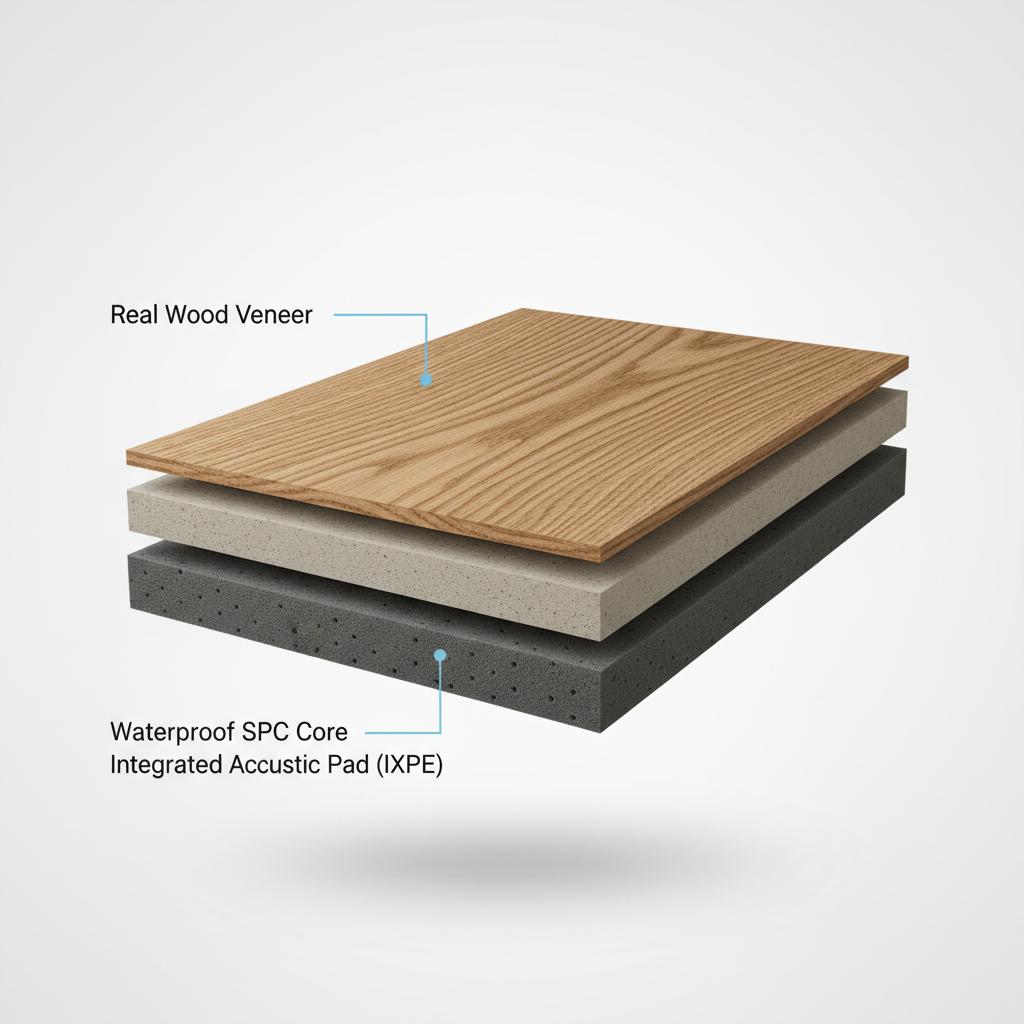
The magic lies in the SPC core. Composed of natural limestone powder, polyvinyl chloride, and stabilizers, SPC achieves 100% waterproof capabilities. It is dimensionally stable, meaning it will not expand or contract when exposed to moisture.
Simultaneously, the industry is seeing the rise of “Densified Wood.” Innovators like Hartco and Robbins have pioneered technologies that use intense heat and pressure to fundamentally alter and harden the cellular structure of 100% natural wood, without the use of synthetic plastic fillers [1]. Whether you choose a hybrid SPC core or densified solid wood, the era of fragile floors is over.
Hybrid Wood vs. Traditional Engineered Wood
While both hybrid and traditional engineered wood feature a real wood veneer, their cores dictate their moisture susceptibility. Traditional engineered wood utilizes a multi-layer plywood core. While more stable than solid wood, plywood is still wood; it can absorb moisture, swell, and delaminate if exposed to standing water.
Hybrid wood flooring, utilizing an SPC or WPC core, completely eliminates this vulnerability. Veteran flooring installers and material scientists consistently praise the structural integrity of SPC cores, noting that unlike multi-layer plywood, a stone-polymer core is entirely impervious to water absorption. This makes hybrid wood the first true hardwood option safe for full bathrooms, kitchens, and below-grade basements.
Deep Dive: Bravewood Hybrid Hardwood Spec-by-Spec
When evaluating hybrid options, the TAS Flooring Bravewood collection stands out as a prime example of modern engineering. To truly demystify its durability, we must look objectively at its exact specifications.
According to TAS Flooring’s official specification sheets, Bravewood hybrid hardwood features a robust 12mm overall thickness [2]. This substantial profile includes a 1.5mm attached IXPE pad, which eliminates the need for separate underlayment and provides excellent acoustic insulation. The visual layer is a 0.6mm real birch wood veneer.
Beyond its physical dimensions, Bravewood is engineered for safety and environmental responsibility. It holds the prestigious FloorScore certification, issued by SCS Global Services, ensuring it meets strict indoor air quality emissions criteria, and it is Carb Phase II compliant [3].
Aesthetically, the collection utilizes a 4-sided micro-bevel to distinctly define each plank, mimicking traditional solid hardwood installation. Furthermore, the embossed-in-register (EIR) texture ensures that the tactile indentations on the surface perfectly match the natural grain of the birch veneer beneath it, creating an indistinguishable replica of solid wood.
Verified Bravewood Hybrid Hardwood Flooring Reviews
When users are at the bottom of the purchasing funnel, real-world performance data is paramount. Aggregated retail data and verified Bravewood hybrid hardwood flooring reviews reveal a strong 4.6 out of 5 customer satisfaction score [4].
Customers consistently praise how well the floor holds up to heavy pet traffic, largely thanks to its protective topcoat. From a DIY perspective, professional installers note that the angle/angle locking mechanism is highly efficacious, allowing for a secure, watertight seam without the need for glue or nails.
However, an objective review must also weigh the limitations of the product. While the waterproof core and scratch-resistant finish are massive pros, the 0.6mm real wood veneer means this floor cannot be deeply sanded and refinished in the future like a traditional solid oak floor. It is designed for extreme durability out of the box, rather than multi-generational refinishing.
Achieving Authentic Wood Aesthetics Without Compromise
For high-end architectural and interior design, aesthetics cannot be sacrificed for performance. The current design zeitgeist heavily features “Organic Modernism”—a philosophy that blends clean, modern lines with natural, tactile materials to create warm, inviting spaces. Authorities in design, such as Golden Wood Furniture, note that hybrid materials fit perfectly into this trend by providing the organic beauty of wood without the maintenance anxiety [5].
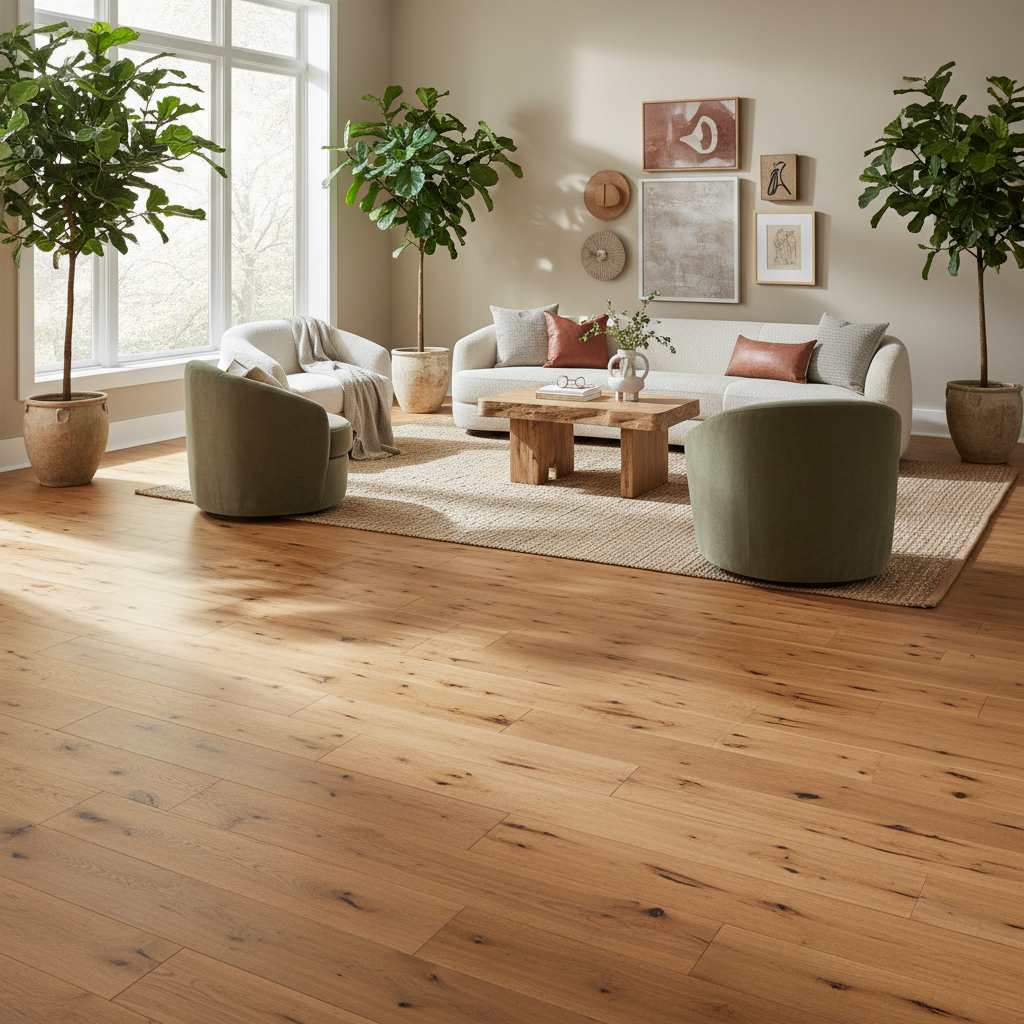
This is where authentic wood aesthetics without compromise truly shine. Interior designers frequently emphasize the psychological importance of tactile feel. Printed Luxury Vinyl Plank (LVP), no matter how high-definition the photograph, often feels like plastic and repeats patterns unnaturally. Hybrid floors, utilizing real wood veneers and Embossed in Register textures, provide the unique, non-repeating grain and warmth of nature. Furthermore, the acoustic benefits of the attached IXPE pads ensure the floor sounds solid underfoot, completely avoiding the hollow, “clicky” sound often associated with cheaper floating vinyl floors.
Defeating Scratches: Durability for Active Homes and Pets
The most common pain point for homeowners is easily scratched wood floors. Large dogs, moving furniture, and dropped toys can quickly ruin a traditional polyurethane finish. Fortunately, modern technologies have evolved to protect both hybrid and densified woods.
For traditional durable hardwood floors, durability is heavily dictated by the wood species itself, measured by the Janka Hardness Scale. For example, Hickory boasts a formidable Janka rating of 1820, making it significantly more dent-resistant than White Oak at 1360 [6].
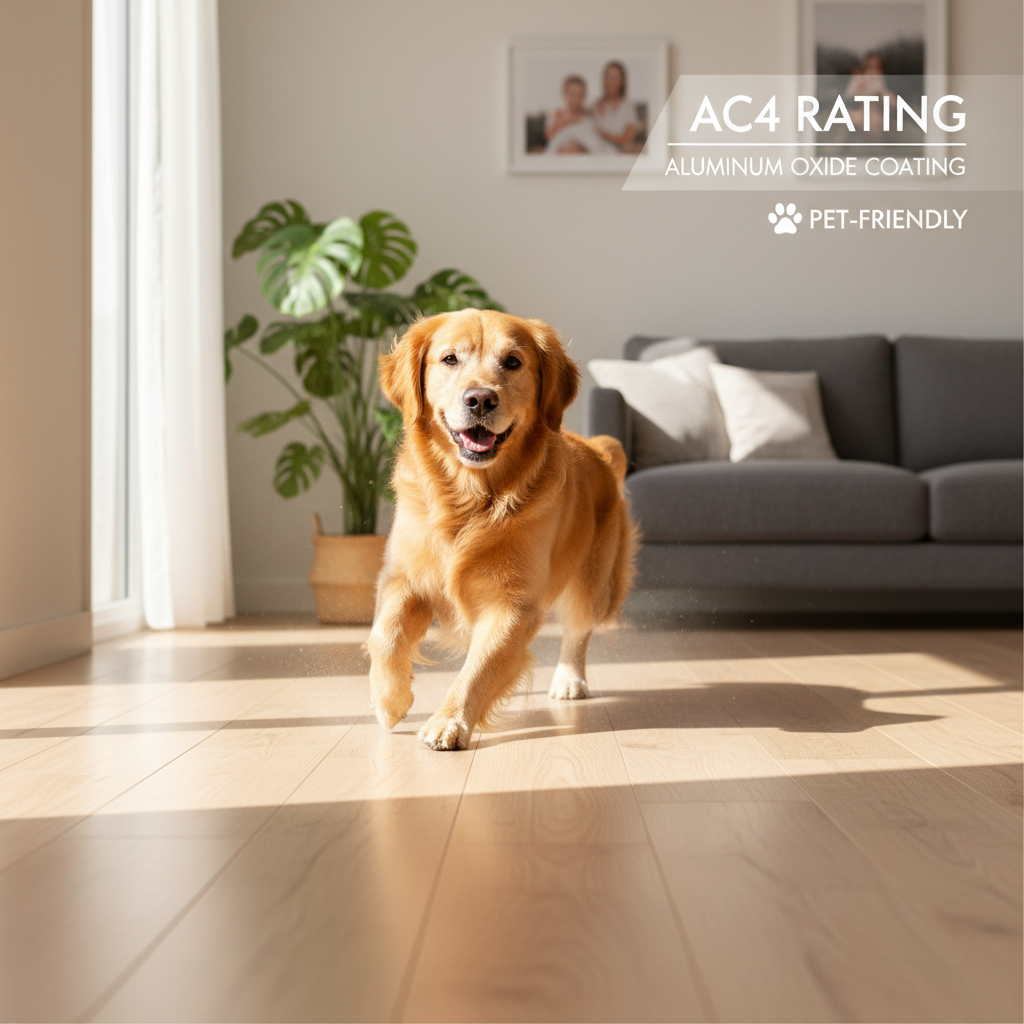
However, scratch resistant hybrid wood relies on advanced surface chemistry rather than just the wood species. The secret lies in the AC (Abrasion Class) rating system. Bravewood, for instance, features an AC4 rated antimicrobial surface finish. This extreme durability is achieved using an aluminum oxide (or aluminum sesquioxide) coating. The chemical properties of aluminum oxide create a crystalline barrier that makes hybrid floors up to 4X more scratch-resistant than traditional residential polyurethane finishes [7].
Triage Guide: Fixing Easily Scratched Wood Floors
Even with advanced coatings, accidents happen. When dealing with easily scratched wood floors, it is crucial to distinguish between a superficial clear-coat scuff and a deep gouge that penetrates the wood veneer.
For minor clear-coat scuffs, specialized floor restorers can often blend the mark. However, DIY experts at Average But Inspired provide a critical warning: never use paste wax or silicone-based furniture polishes to hide scratches on a modern floor. These products leave a residue that will prevent any future polyurethane or touch-up coats from adhering, often necessitating a costly full-floor sanding to fix [8].
For deep gouges in hybrid or engineered wood, professional-grade repair products, such as DAP blend sticks or color-matched acrylic putties, are recommended to fill the void and protect the exposed core from moisture.
Moisture Mastery: Preventing Warping, Cupping, and Gapping
Traditional solid wood is essentially a sponge; it constantly breathes, absorbing and releasing moisture based on its environment. This leads to severe hardwood flooring maintenance issues if the climate is not strictly controlled.
The National Wood Flooring Association (NWFA) troubleshooting guidelines explicitly state that to prevent structural failure, indoor relative humidity must be maintained between 30% and 50% year-round, with temperatures consistently between 60º and 80ºF [9]. Failure to maintain these metrics results in warped traditional hardwood flooring.
When diagnosing warped floors, professional installers like Loudoun Valley Floors use precise terminology: “cupping” (where the edges of the plank are higher than the center) indicates moisture is attacking from below the floor, while “crowning” (the center is higher than the edges) indicates moisture from above [10].
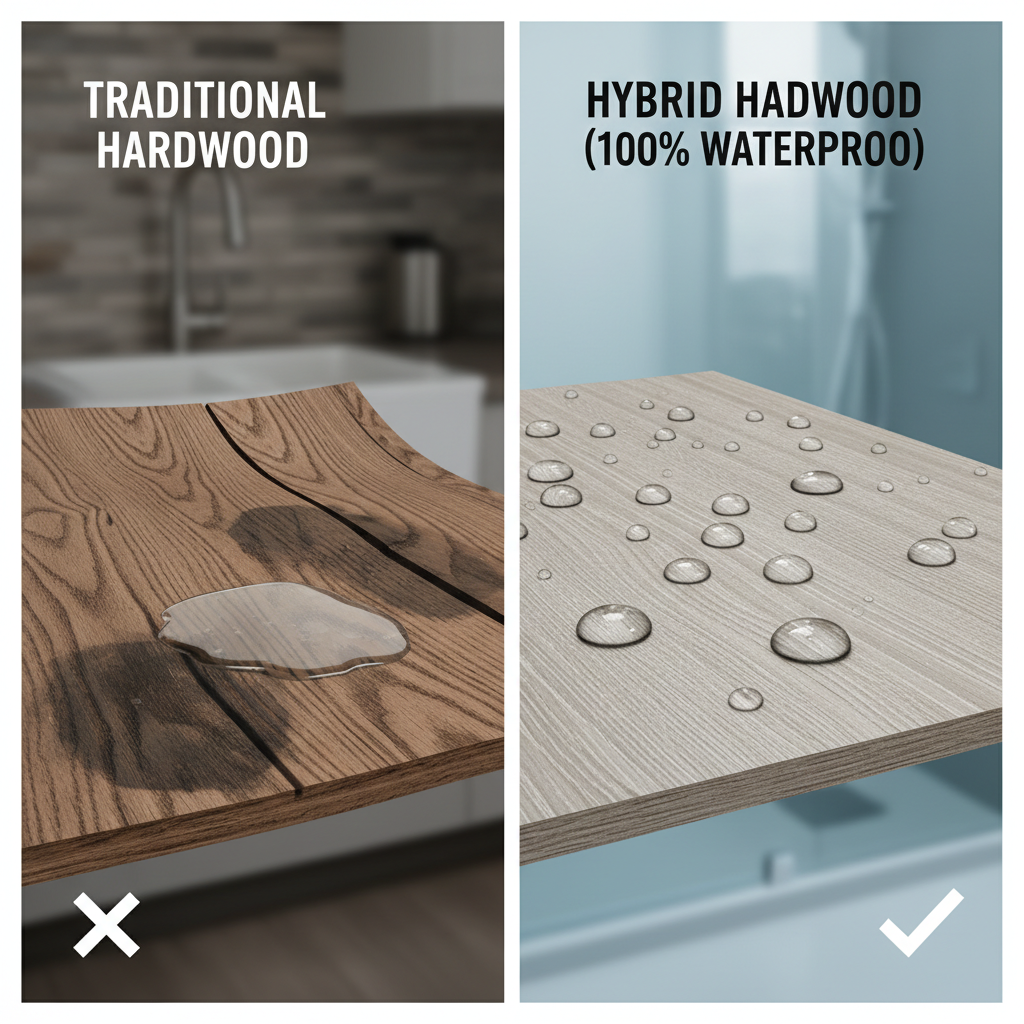
If you experience cupping in a traditional wood floor, heed this expert warning: NEVER sand a cupped floor before the moisture source is fixed and the wood has completely dried and returned to equilibrium. If you sand it flat while it is wet, it will permanently crown once it finally dries. Hybrid floors, with their 100% waterproof SPC cores, completely bypass these catastrophic moisture failures, offering true peace of mind.
Comparing the Best Hybrid Hardwood for Homes
For those in the commercial investigation phase, finding the best hybrid hardwood for homes requires looking past marketing jargon and establishing transparent scoring criteria. When comparing brands, you should evaluate the wear layer thickness, the core material (SPC vs. WPC), and the length and comprehensiveness of the warranty.
Industry data from Floor Covering News validates the strong market presence of top hybrid contenders like Cali GeoWood, Raintree, Bruce, and TAS Flooring’s Bravewood [11].
When choosing between them, consider the specific environment. Hybrid floors with SPC cores excel in high-moisture, high-impact areas like kitchens, bathrooms, and entryways due to their density and waterproof nature. Conversely, if you are flooring a formal living room and prioritize the ability to change the stain color in twenty years, a traditional solid wood or thick-veneer engineered wood might still be the preferred choice.
Maximizing the Lifespan of Durable Authentic Wood Floors
For homeowners who opt for traditional engineered or solid wood over hybrid options, understanding the long-term lifecycle of the material is key to maximizing your investment.
The lifespan of durable authentic wood floors is directly tied to the thickness of their wear layer. For active homes, an engineered floor wear layer of at least 2mm to 4mm is highly recommended. This thickness dictates the number of times the floor can be sanded and refinished. A 2mm layer can typically be lightly refinished once or twice, while a 4mm layer can be sanded multiple times, much like solid wood.
Authentic solid wood floors, when properly maintained and kept within strict humidity parameters, can easily last 50 years or more. Experts on wood species longevity, such as Vantia Hardwoods, note that the refinishing lifecycle allows these floors to be passed down through generations, adapting to new color trends over the decades [12].
Conclusion
The evolution of flooring has brought us from the fragile, moisture-sensitive solid woods of the past to the highly resilient, technologically advanced hybrids of today. Products like Bravewood hybrid hardwood prove that homeowners no longer have to choose between the authentic, tactile beauty of real wood and the waterproof, scratch-resistant durability demanded by modern, active lives. By merging natural wood veneers with impervious SPC cores and aluminum oxide finishes, the industry has finally delivered the ultimate no-compromise floor.
If you are ready to upgrade your home, we highly encourage you to order a physical sample of Bravewood or a competitor hybrid. Test the Embossed In Register texture with your own hands, and run a key across the AC4 finish to witness the scratch resistance yourself before committing to a full room installation.
Disclaimer: The information provided regarding flooring installation, maintenance, and repair is for educational purposes. Always consult the manufacturer’s official specification sheets and warranty guidelines (such as TAS Flooring for Bravewood) before applying chemicals, repairing scratches, or altering your home’s HVAC settings.
References & Authoritative Sources
- Hartco & Robbins. (N.D.). Densified Wood Technology Specifications. Retrieved from manufacturer data regarding heat and pressure densification processes.
- TAS Flooring. (N.D.). Bravewood Hybrid Hardwood Specification Sheets. Retrieved from tasflooring.com.
- SCS Global Services. (N.D.). FloorScore Certification Standards. Authority on indoor air quality emissions criteria.
- Home Depot. (N.D.). Verified Customer Reviews for TAS Flooring Bravewood. Aggregated retail performance data.
- Golden Wood Furniture. (N.D.). Organic Modernism in Interior Design. Insights on blending natural materials with modern performance.
- National Wood Flooring Association (NWFA). (N.D.). Janka Hardness Scale. Quantitative domestic species comparison.
- Lee Flooring / Elevate Flooring. (N.D.). Technical Specifications on Aluminum Sesquioxide Surfaces. Comparative analysis of hybrid scratch resistance.
- Average But Inspired. (N.D.). DIY Hardwood Floor Repair and Adhesion Warnings. Expert guidance on avoiding paste wax and silicone polishes.
- National Wood Flooring Association (NWFA). (N.D.). Troubleshooting Guidelines for Moisture and Humidity. Industry standards for environmental floor management.
- Loudoun Valley Floors. (N.D.). Professional Diagnostics for Cupping and Crowning. Professional installer terminology and repair thresholds.
- Floor Covering News. (N.D.). Industry Trends and Hybrid Brand Market Share. Market validation for top hybrid flooring contenders.
- Vantia Hardwoods. (N.D.). Wood Species Longevity and Refinishing Lifecycles. Expert analysis on wear layers and multi-generational wood lifespan.
