
Every homeowner with a furry companion knows the ultimate interior design dilemma: you want the premium, timeless aesthetic of real hardwood, but you live with the chaotic, beautiful reality of active pets. For years, the flooring industry has forced a compromise. You either accepted a home filled with flooring easily scratched by pets, or you settled for artificial-looking alternatives that lacked the warmth of natural wood. Adding to the frustration is a landscape littered with confusing marketing jargon—what is the real difference between “scratch-proof” and “scratch-resistant”? And how do you protect your investment from the hidden, irreversible damage of pet accidents?
This article is your definitive, science-backed matrix for decoding the modern flooring landscape. We will cut through the noise to explore the anatomy of hybrid hardwoods, the science of densified wood, and the truth behind commercial wear ratings. Finally, we will take a deep dive into Bravewood Hybrid Hardwood—a premier, spec-driven solution designed specifically to protect your home from claws and puddles without ever sacrificing that authentic wood look.
- The Aesthetic vs. Durability Dilemma: Why Traditional Wood Fails Pets
- Decoding Pet-Safe Wood Alternatives & Technologies
- Deep Dive Spotlight: Bravewood Hybrid Hardwood Review
- The Pet-Proof Flooring Matrix: Choosing the Right Floor for Your Pack
- The Triage Guide: How to Fix Pet Scratched Hardwood Floors
- Bonus: Pet-Safe Wood Alternatives for Chew Toys
- Conclusion
- References & Authoritative Sources
The Aesthetic vs. Durability Dilemma: Why Traditional Wood Fails Pets
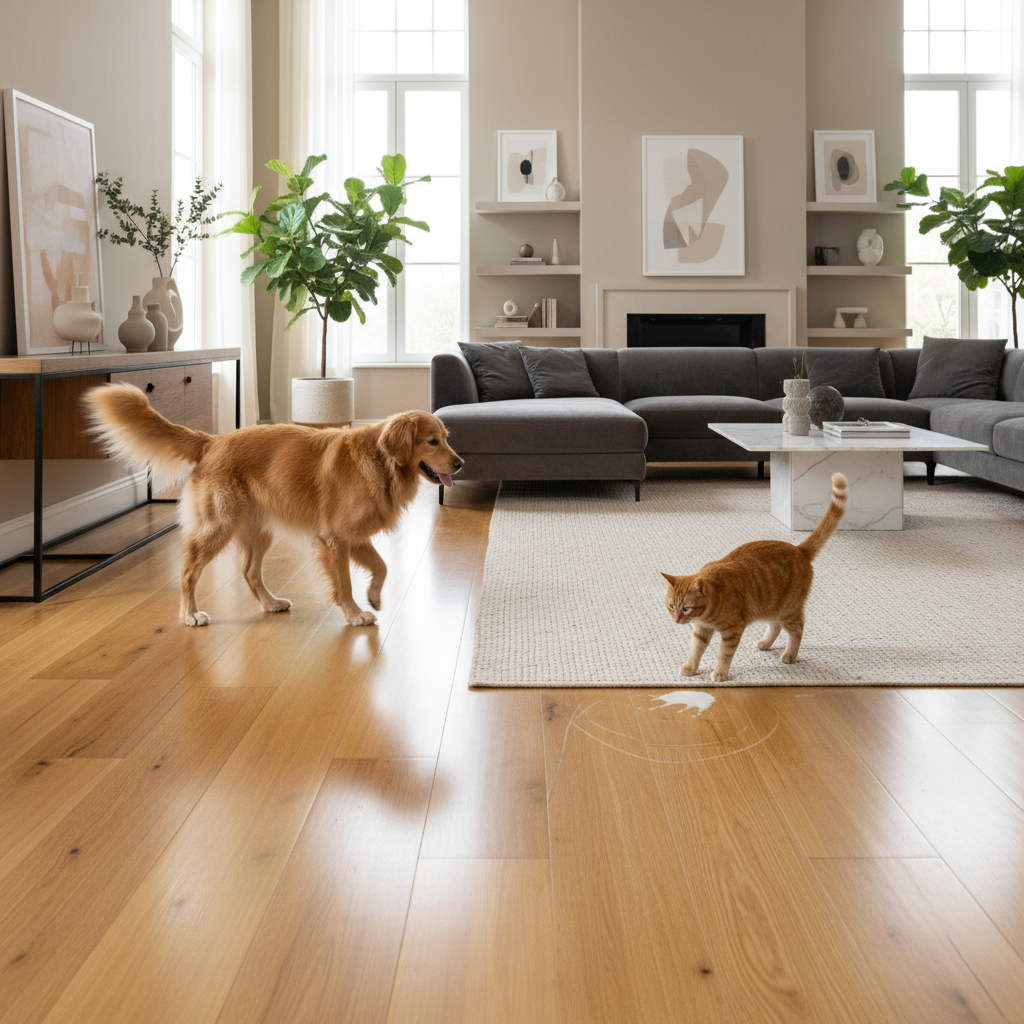
To understand the solution, we must first diagnose the problem. Traditional softwoods like pine, birch, and cherry—and even standard hardwoods finished with basic polyurethane—frequently fail in multi-pet households. The reason comes down to chemistry and density. Standard polyurethane topcoats simply lack the tensile strength to withstand the localized pressure of a 70-pound dog’s claws. When a dog runs or stops suddenly, the force exerted by their nails easily breaches these basic finishes.
Furthermore, pet damage isn’t just physical; it’s chemical. When dog damage to wood floors occurs, it is categorized into two distinct threats that require entirely different mitigation strategies.
Physical Damage: Surface Scratches vs. Deep Gouges
When assessing pet scratched hardwood floors, it is crucial to differentiate between a “scratch” and a “gouge.” A scratch is superficial damage that only breaches the clear finish or topcoat of the floor. A gouge or dent, however, means the actual wood fibers beneath the finish have been compressed or severed.
The likelihood of a floor denting is measured by the Janka Hardness Scale, an industry-standard metric that quantifies the density of wood species [2]. Woods with lower Janka ratings will dent under the pressure of large breed dogs, regardless of the finish applied. Additionally, the gloss level of your floor plays a massive role in aesthetics; high-gloss finishes act like mirrors, catching the light and drastically exacerbating the visibility of every single micro-scratch, whereas matte or wire-brushed textures help camouflage this inevitable wear.
Chemical Damage: The Hidden Threat of Pet Urine
While scratches are an eyesore, chemical stains are a structural hazard. Dog damage to wood floors from urine is particularly insidious. If you spot a black stain on your hardwood, it means the uric acid and ammonia have bypassed the protective finish, reacted with the tannins in the wood, and penetrated the subfloor.
According to professional wood floor millers like Hunt Custom Milled Wood Floors, deep urine penetration into the subfloor often compromises the structural integrity of the wood, meaning surface cleaning or sanding is no longer viable; the affected boards must be entirely replaced [1]. This is because pet urine contains uric acid crystals that bind tightly to porous wood fibers. This chemical reality is exactly why enzymatic cleaners are strictly required for pet accidents on wood surfaces—only specialized enzymes can break down uric acid at a molecular level to prevent permanent dark staining and lingering odors.
Decoding Pet-Safe Wood Alternatives & Technologies
Fortunately, flooring technology has evolved rapidly to address these pain points. Today, pet safe wood alternatives and advanced wood look flooring options offer the beauty of nature paired with synthetic-level resilience. By understanding the manufacturing processes behind these materials, you can make an informed, high-ROI investment for your home.
While costs fluctuate, current national averages for materials and labor indicate that investing upfront in advanced wood-look alternatives often yields a better long-term return than repeatedly refinishing traditional solid wood [3].
Densified Hardwood: Doubling Natural Hardness
For purists who refuse to install anything but 100% solid wood, densified hardwood is a revolutionary breakthrough. Pioneers in this space, such as Bruce Flooring and Hartco with their Dogwood® technology, have fundamentally changed how wood performs [4].
Densification is a manufacturing process that uses extreme heat and pressure to compress the wood’s cellular structure. This process effectively doubles the natural hardness of the wood. For example, traditional white oak has a Janka rating of roughly 1360. After the densification process, that same oak achieves a Janka rating of over 3000. This transforms traditional timber into hardwood floors that are safe for dogs, drastically reducing the risk of deep gouges from heavy, active pets.
The Anatomy of Scratch-Resistant Hybrid Hardwood
If you want the ultimate shield against claws, you need to look at scratch resistant hybrid hardwood. But what exactly is a hybrid plank?
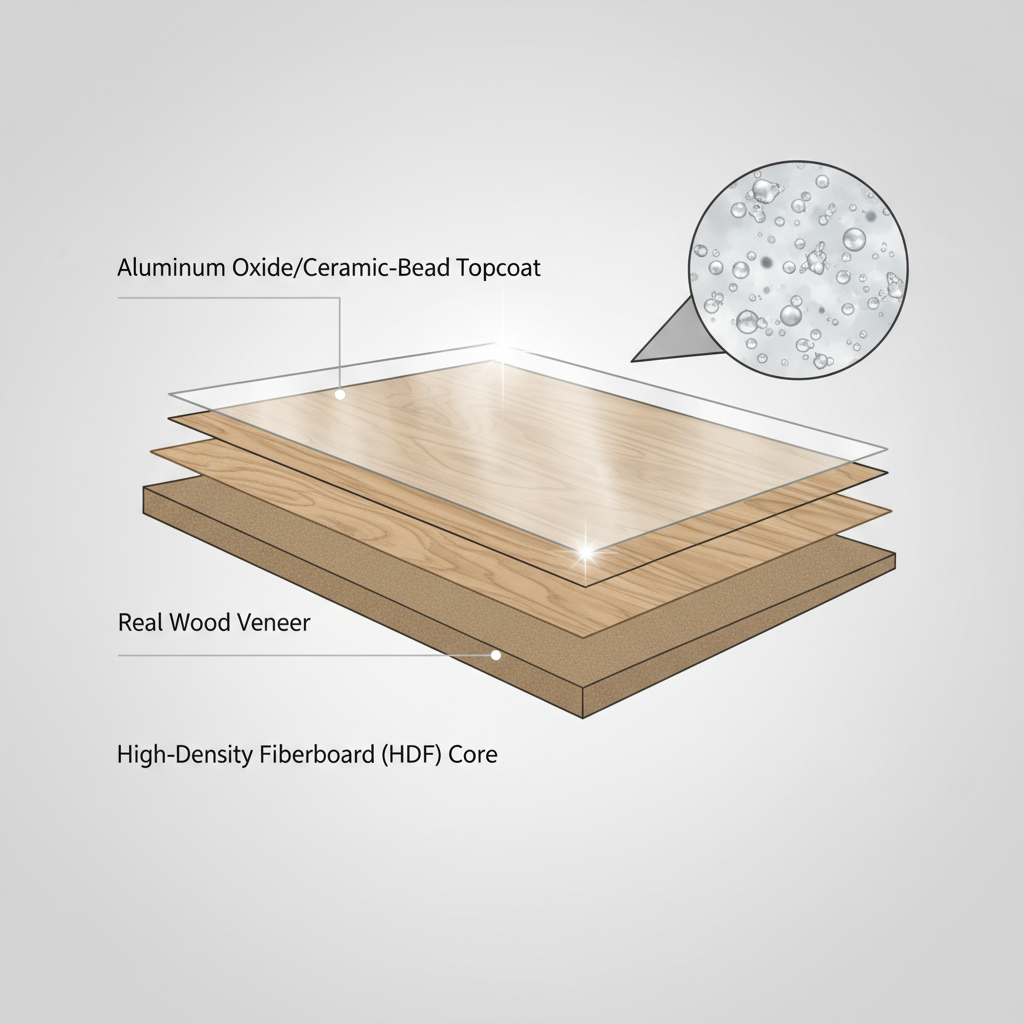
A hybrid hardwood floor combines a core of high-density fiberboard (HDF) or multi-layer plywood with a thin veneer of real, natural wood on top. The magic, however, lies in the topcoat. Instead of standard polyurethane, hybrid floors are sealed with advanced aluminum oxide or ceramic-bead finishes. Aluminum oxide is a naturally occurring mineral that is incredibly hard; when suspended in a UV-cured urethane topcoat, it creates a surface that is up to four times more scratch-resistant than traditional finishes.
However, there is a critical caveat that is often buried in the fine print: because the real wood veneer is thin and topped with this impenetrable mineral layer, hybrid hardwood cannot be sanded and refinished like solid wood. It is a permanent finish designed to last decades without needing a recoat.
Deep Dive Spotlight: Bravewood Hybrid Hardwood Review
When evaluating the market for durable pet flooring, Bravewood by TAS Flooring consistently emerges as a top-tier contender. It represents the ultimate compromise for homeowners who demand the authentic grain and texture of real wood but require commercial-grade durability to survive a multi-pet household.
Bravewood hybrid hardwood features impressive technical specifications directly from the manufacturer: a robust 12 mm overall thickness, wide 7-3/4″ x 48″ plank dimensions, and a stunning palette of 10 colors (such as Sunshine Hickory). Furthermore, it boasts a Lifetime Residential Warranty and holds both FloorScore® and GreenGuard Gold certifications—verified by SCS Global Services—ensuring that your indoor air quality remains safe and free from harmful VOC emissions [5], [6].
AC4 Antimicrobial Surface & Pet Durability
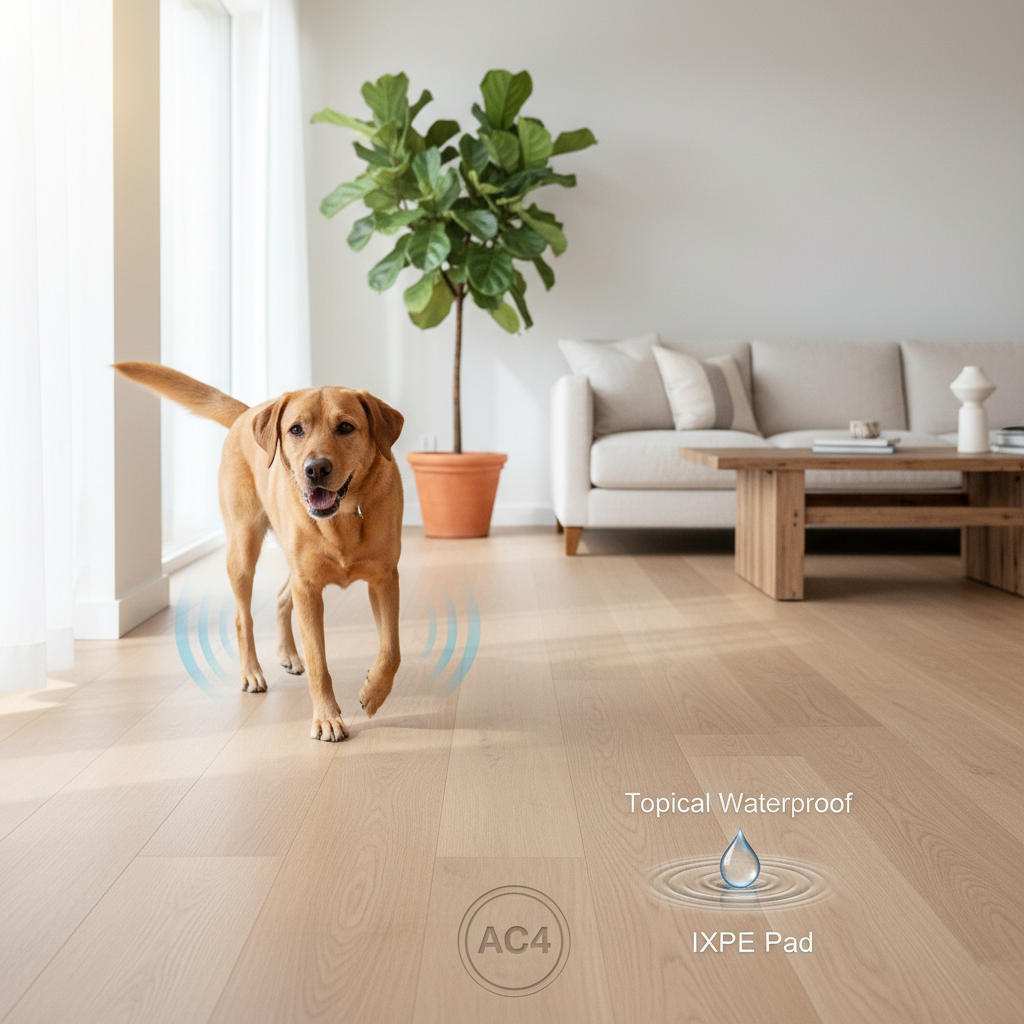
The standout feature of Bravewood pet friendly hybrid hardwood is its AC4 Rated Antimicrobial Surface Finish. But what does AC4 mean? The Abrasion Class (AC) rating is an objective, commercial rating system used to evaluate a floor’s resistance to abrasion, impact, and stains.
An AC4 rating means the floor is certified for “Commercial General” traffic. In the context of a residential home, an AC4 rating objectively proves that this scratch resistant hybrid hardwood can easily withstand the frantic pacing, playing, and sudden stops of large breed dogs without showing premature wear. It elevates the floor’s durability claims from subjective marketing fluff to verifiable, commercial-grade science.
Understanding ‘Topical Waterproof’ Construction
A major point of confusion for consumers is the term “waterproof.” Bravewood hybrid hardwood is marketed as “Topical Waterproof.” It is vital to understand this distinction to set realistic expectations and maintain your warranty.
Topical waterproof means that the surface of the plank will completely repel water, pet urine, and spills from the top down. If your dog has an accident, the liquid will pool on the surface rather than soaking into the wood veneer. However, this does not mean the floor can survive a flooded basement. If moisture breaches the edges of the room or rises from a damp concrete subfloor, the planks can still be damaged. Analyzing the warranty terms reveals that while Bravewood is highly resilient to everyday pet puddles, prompt cleanup is still recommended to prevent moisture from seeping into the micro-bevel joints.
The IXPE Pad: Solving the ‘Clicking Claws’ Problem
One of the most overlooked annoyances of owning dogs on hard surfaces is the incessant “click-clack” of their nails. Bravewood pet friendly hybrid hardwood addresses this directly with an attached 1.5 mm IXPE pad.
IXPE (Irradiated Cross-Linked Polyethylene) is a premium, closed-cell acoustic foam. In flooring applications, this attached underlayment acts as a shock absorber and sound dampener. It significantly reduces the acoustic transmission of pet nails clicking across the floor, creating a quieter, more peaceful home environment while also providing a softer feel underfoot.
The Pet-Proof Flooring Matrix: Choosing the Right Floor for Your Pack
Choosing between hybrid hardwood, densified wood, luxury vinyl plank (LVP), and laminate requires assessing your specific household needs. This matrix will help you identify the best pet friendly flooring for your unique situation.
Scratch Resistance vs. Traction: The Senior Dog Factor
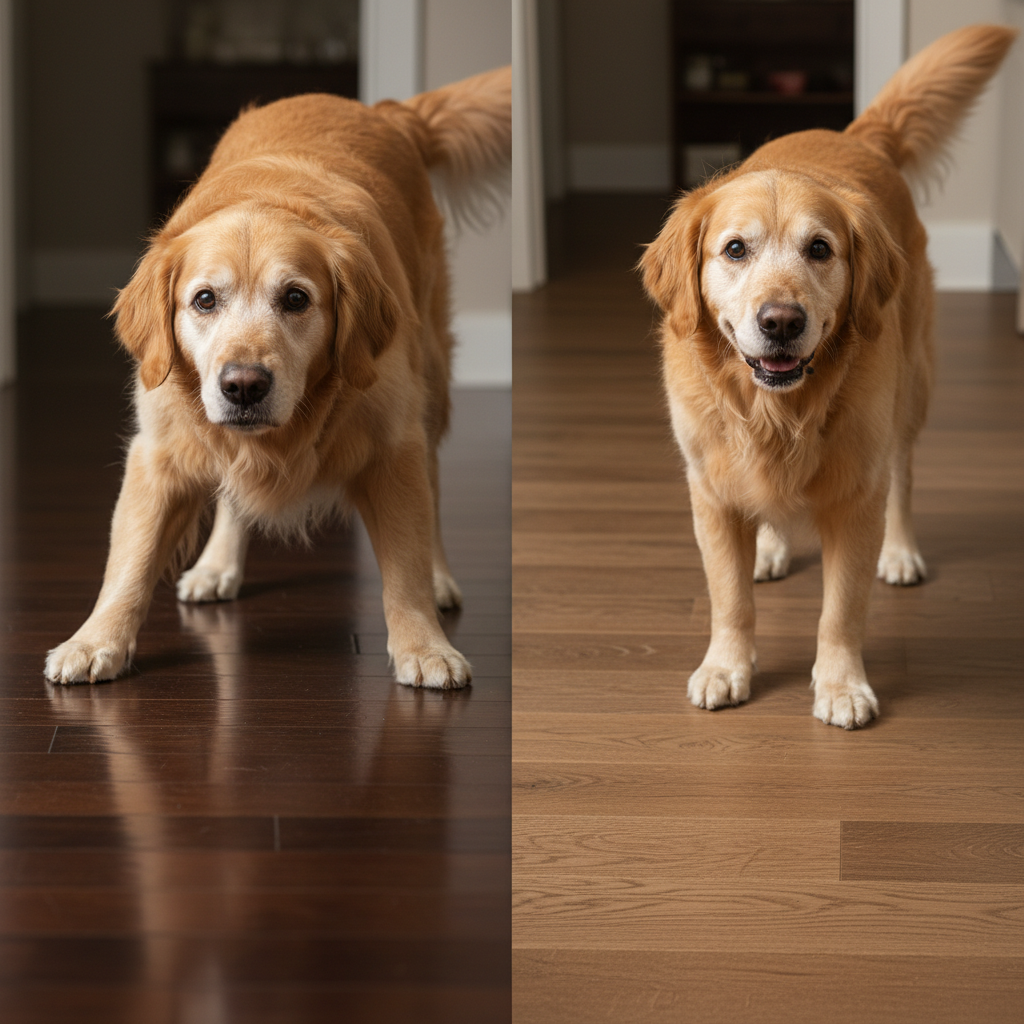
While finding scratch-resistant floors is a priority, a critical factor often overlooked is traction—especially for aging pets. Ultra-hard, high-gloss floors can be dangerously slick. According to veterinary orthopedic specialists and the American Kennel Club (AKC), slippery floors are a leading cause of joint injuries, hip dysplasia aggravation, and cruciate ligament tears in senior dogs [7].
When looking for hardwood floors that are safe for dogs in their golden years, prioritize wire-brushed or matte finishes. These textured surfaces provide the micro-grip necessary for older dogs to stand up and navigate the home confidently without their paws slipping out from under them.
Repairability vs. Replaceability
When investing in durable wood look flooring for pets, you must consider the long-term maintenance strategy: repairability versus replaceability.
Professional flooring contractors note that traditional and some engineered woods offer repairability; if a deep gouge occurs, the specific area can sometimes be lightly sanded and restained [8]. Conversely, high-tech options like LVP, laminate, and hybrid planks (like Bravewood) rely on replaceability. Because they feature specialized, un-sandable topcoats and click-lock floating installations, severe damage cannot be buffed out. Instead, the damaged plank must be entirely removed and replaced with a spare. Always buy an extra box of flooring during installation specifically for future plank replacements.
The Triage Guide: How to Fix Pet Scratched Hardwood Floors
If you are currently living with pet scratched hardwood floors, you need actionable, reactive solutions. However, it is vital to understand the strict limitations of DIY fixes based on your floor’s finish type. Attempting to aggressively sand an engineered wood floor with a thin wear layer can ruin the plank entirely.
DIY Fixes for Surface Scratches
If your dog has left minor, superficial scratches in the clear coat of your floor, you can often restore the aesthetic yourself.
- Clean Thoroughly: Before applying any product, the floor must be immaculately clean. Crowdsourced warnings from the Hometalk Community stress that applying restorers over dust or pet hair will permanently embed the dirt into your floor’s finish [9].
- Color-Matching Crayons and Markers: For isolated scratches, wood-stain markers or wax blending crayons are excellent for coloring in the raw micro-fissures to match the surrounding finish.
- Restorer Products: For widespread, light surface scratching, a liquid wood floor restorer (which contains polyurethane polymers) can be applied with a microfiber mop. This fills in the micro-scratches and restores the uniform sheen of the topcoat.
When to Call a Professional
Knowing when a fix is beyond your capabilities can save you thousands of dollars. You should call a certified flooring professional when dealing with:
- Deep Gouges: If the wood fibers are splintered or deeply indented, wax crayons will not suffice. The board may need professional wood filler or replacement.
- Extensive Urine Rot: As noted by home repair authorities like This Old House, if pet urine has caused the wood to warp, cup, or turn pitch black, the subfloor is likely compromised [10]. This requires professional extraction and subfloor remediation to eliminate the odor and structural rot.
- Specialized Topcoats: If you have an aluminum oxide hybrid floor that has somehow been severely damaged, do not attempt to sand it. Call a professional to execute a plank replacement.
Bonus: Pet-Safe Wood Alternatives for Chew Toys
When discussing pet safe wood alternatives, it is important to address the dual nature of this search: keeping your home safe from your dog, and keeping your dog safe from wood.
Many dogs chew on baseboards or furniture out of boredom or a natural instinct to gnaw on sticks. However, real sticks from the yard pose severe splinter risks and can cause intestinal blockages, while treated furniture wood contains toxic glues and finishes. To satisfy your dog’s chewing instinct safely, look to veterinary-approved alternatives. Products like Petstages Dogwood sticks use a proprietary blend of natural wood fiber and synthetic materials to create a chew toy that smells and feels like real wood but is completely phthalate-free, lead-free, and designed to flake away safely rather than splintering into sharp shards [11].
Conclusion
The days of choosing between a beautiful home and a happy pet are over. Traditional softwoods and basic finishes are undeniably risky for multi-pet households, but modern flooring technology has bridged the gap. By understanding the science of densified wood and the power of AC4 commercial wear ratings, you can make a confident, lasting investment. Bravewood’s topical waterproof hybrid construction, complete with its sound-absorbing IXPE pad and impenetrable aluminum oxide surface, offers a no-compromise solution for the modern homeowner.
If you are ready to upgrade your home, we highly encourage you to order a sample of Bravewood Hybrid Hardwood to test its scratch resistance against your own dog’s claws, or consult a local flooring professional to assess your current pet damage and plan your renovation.
This article provides general guidance on flooring durability and pet safety. Always consult manufacturer warranties (like TAS Flooring) for specific care instructions to avoid voiding your coverage. Chew toy safety should always be discussed with your veterinarian.
References & Authoritative Sources
- Hunt Custom Milled Wood Floors. (N.D.). Professional insights on subfloor urine damage and structural integrity. Retrieved from proactive industry research.
- National Wood Flooring Association (NWFA). (N.D.). Janka Hardness Scale Standards. Retrieved from proactive industry research.
- HomeAdvisor / Angi. (N.D.). Cost and installation data aggregates for flooring. Retrieved from proactive industry research.
- Bruce Flooring / Hartco. (N.D.). Dogwood Densified Wood Technology. Retrieved from bruce.com / hartco.com.
- TAS Flooring / T&A Supply. (N.D.). Bravewood Hybrid Hardwood Manufacturer Specifications and Warranties. Retrieved from tasflooring.com.
- SCS Global Services. (N.D.). FloorScore and GreenGuard Gold Certification Verification. Retrieved from proactive industry research.
- American Kennel Club (AKC). (N.D.). Authority on dog care, home safety, and senior dog joint health. Retrieved from proactive industry research.
- Block Renovation. (N.D.). Contractor expertise on material selection, repairability, and replaceability. Retrieved from blockrenovation.com.
- Hometalk Community. (N.D.). Crowdsourced DIY repair experiences and floor restorer warnings. Retrieved from hometalk.com.
- This Old House. (N.D.). Home repair authority on assessing structural subfloor damage from pet urine. Retrieved from thisoldhouse.com.
- Outward Hound / Petstages. (N.D.). Manufacturers of safe pet chew alternatives (Dogwood sticks). Retrieved from outwardhound.com.
