
There is an undeniable prestige that comes with natural hardwood floors, but for many homeowners, the dream quickly collides with a harsh reality. The constant anxiety over pet claws, the panic of a spilled glass of water, and the exhausting cycle of specialized maintenance can turn a beautiful investment into a daily source of stress. If you are frustrated by the fragility of traditional timber, you are not alone.
Welcome to the science-backed blueprint for bulletproofing your home. Today, homeowners no longer have to choose between aesthetic elegance and indestructible durability. In this comprehensive guide, we will dissect the anatomy of modern wood-look alternatives—from luxury vinyl plank (LVP) and wood-look porcelain tile to emerging densified wood technologies. We will also provide an objective review of Bravewood flooring and introduce a customized “Room-by-Room Matchmaker” to help you pair your exact lifestyle with the perfect, low-maintenance flooring solution.
- The Hardwood Reality Check: Diagnosing Fragile and High-Maintenance Floors
- Anatomy of the Best Wood-Look Flooring Alternatives
- Spotlight on Bravewood Flooring: An Objective Review
- The Room-by-Room Wood-Look Matchmaker
- Installation Secrets: Bulletproofing Your Investment
- Conclusion
- References
The Hardwood Reality Check: Diagnosing Fragile and High-Maintenance Floors
To understand the value of modern alternatives, we first have to address the primary pain points of natural wood. Real wood is a hygroscopic material, meaning it constantly absorbs and releases moisture depending on its environment. In modern, busy homes, this natural characteristic makes fragile hardwood floors highly susceptible to structural failure and surface damage.
The reality of high maintenance wood floors is often misunderstood by new homeowners. For instance, many believe that frequent waxing is the key to a pristine shine. However, according to experts at Hudson Hardwood Floors, waxing just one or two times a year is usually sufficient; over-waxing actually leads to a dull, cloudy buildup that traps dirt and degrades the floor’s appearance [1].
Water Damage: Cupping, Crowning, and Buckling Explained
When it comes to water damaged wood flooring, time is the ultimate enemy. Whether it is a leaky dishwasher or a major flood, the physical mechanics of water damage are predictable and severe. As wood absorbs excess moisture, it expands. When the boards have nowhere left to expand, they push upward.
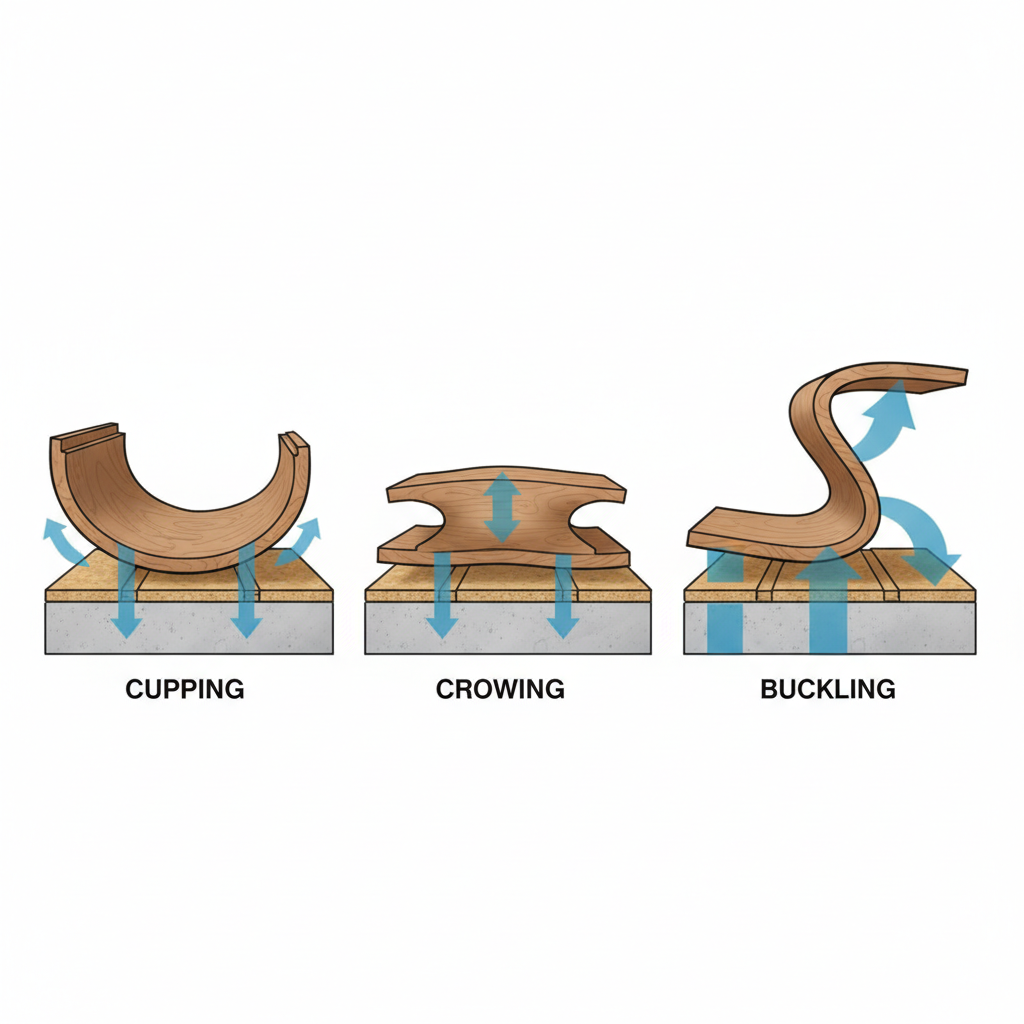
According to professional contractors at Duffy Floors, this manifests in two distinct ways: “cupping,” where the edges of the plank rise higher than the center, and “crowning,” where the center swells higher than the edges [2]. In severe cases of water damage, hardwood floorboards can buckle and raise up from the subfloor by an astonishing 4 to 5 inches.
If you are dealing with a wet floor, emergency triage is critical. Stop the source of the water immediately. Wood takes a minimum of 24 hours to dry, but industrial fans and dehumidifiers should run for 48 to 72 hours to be safe. Most importantly, never attempt to sand a cupped floor before it is completely dry. Premature sanding will result in permanent crowning once the moisture finally leaves the wood. To ensure the wood has stabilized before attempting any refinishing, authoritative guidelines from Angi strongly advise the use of professional moisture meters [3].
Hidden Dangers: Rug Pads, Office Chairs, and Chemical Cleaners
Beyond catastrophic leaks, everyday life poses a constant threat to fragile hardwood floors. Scratches and dullness are often caused by counterintuitive culprits. For example, standard floor cleaners that are not pH-neutral can chemically burn and strip the polyurethane finish over time. It is highly recommended to use specific, pH-neutral cleaners like Bona to safely maintain the surface.
Furthermore, the accessories you buy to protect your floors might actually be destroying them. The physics of floor friction play a massive role here. According to the Cornell Cooperative Extension, smooth or “silky” rug pads are notorious for trapping microscopic dirt and sand; as you walk on the rug, the pad grinds that debris directly into the wood finish like sandpaper [4]. Sticky, high-quality rubber or felt pads are required to prevent this. Similarly, the hard plastic casters on standard rolling office chairs will quickly dent and gouge natural wood, necessitating specialized polyurethane replacement wheels.
Anatomy of the Best Wood-Look Flooring Alternatives
If you are exhausted by high maintenance wood floors, the market is overflowing with highly engineered solutions. To find the best wood look flooring options, you must look beyond the marketing veneer and understand the technical anatomy of these materials.
As Travis Bjorkman, Principal Scientist for Wood at AHF Products, notes when comparing the limitations of natural wood to modern engineering, advanced waterproof products are fundamentally changing residential design by offering dimensional stability that natural timber simply cannot match [5].
Luxury Vinyl Plank (LVP): Rigid Core and Wear Layers Demystified
Luxury vinyl wood dominates the resilient flooring market, and for good reason. It offers the hyper-realistic look of timber without the moisture anxiety. To evaluate waterproof luxury vinyl plank, you must understand its core and its wear layer.
The industry standards set by the Resilient Floor Covering Institute (RFCI) highlight the importance of manufacturing quality [6]. Modern LVP utilizes photorealistic 3D printing and embossed-in-register (EIR) technology, meaning the physical texture of the plank perfectly matches the printed wood grain.
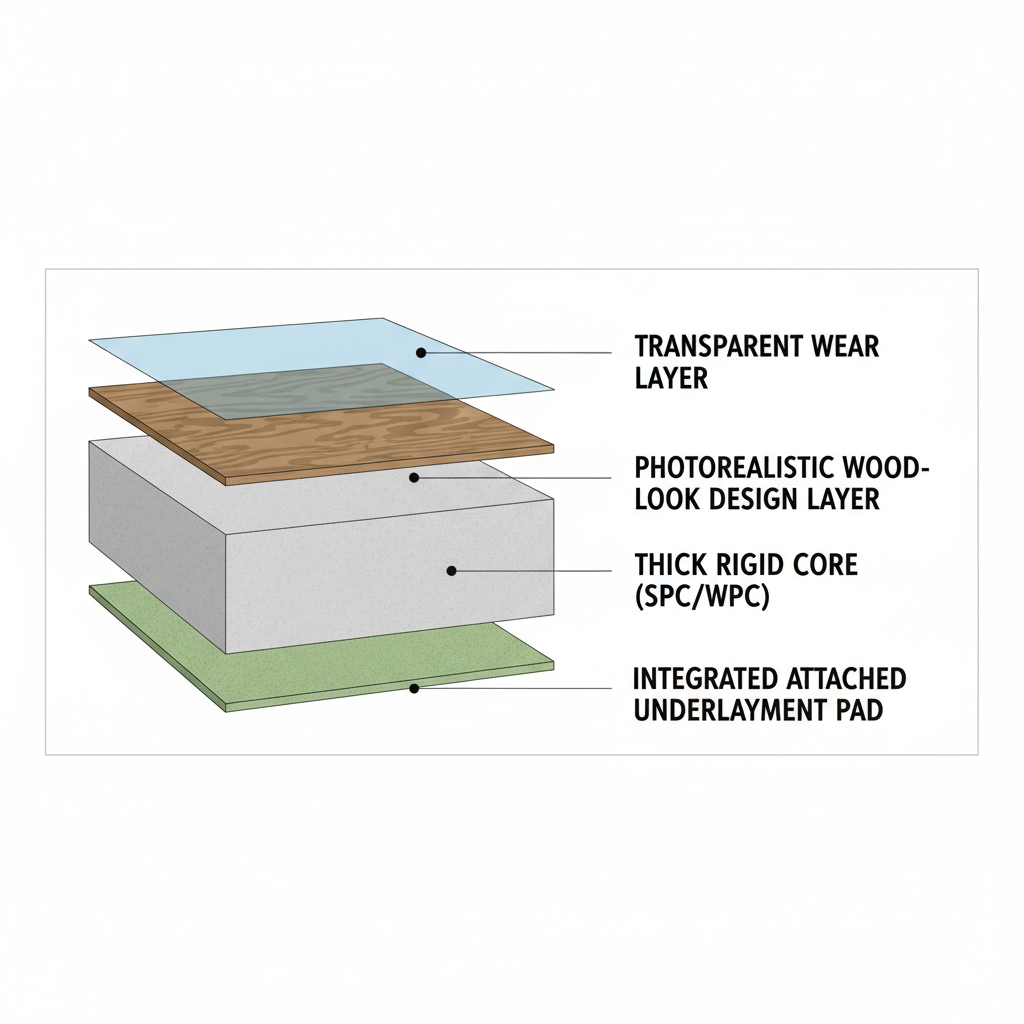
Structurally, the best LVP features a “Rigid Core,” typically categorized as either SPC (Stone Plastic Composite) or WPC (Wood Plastic Composite). SPC is denser and highly impact-resistant, while WPC is slightly softer underfoot and offers better insulation. These planks usually range in overall thickness from 4mm to 5mm and often include an attached foam pad. This pad serves a vital dual function: it provides acoustic dampening to eliminate the “hollow” sound associated with older laminates, and it helps hide minor subfloor imperfections. Pricing for these materials is highly accessible, ranging significantly from $0.79 per square foot on clearance to $2.99 or more for premium lines.
Densified Wood: The Future of Real Wood Durability
For purists who demand the authenticity of real timber but require a durable wood look flooring guide, “densified wood” is the ultimate bridge between natural beauty and synthetic toughness.
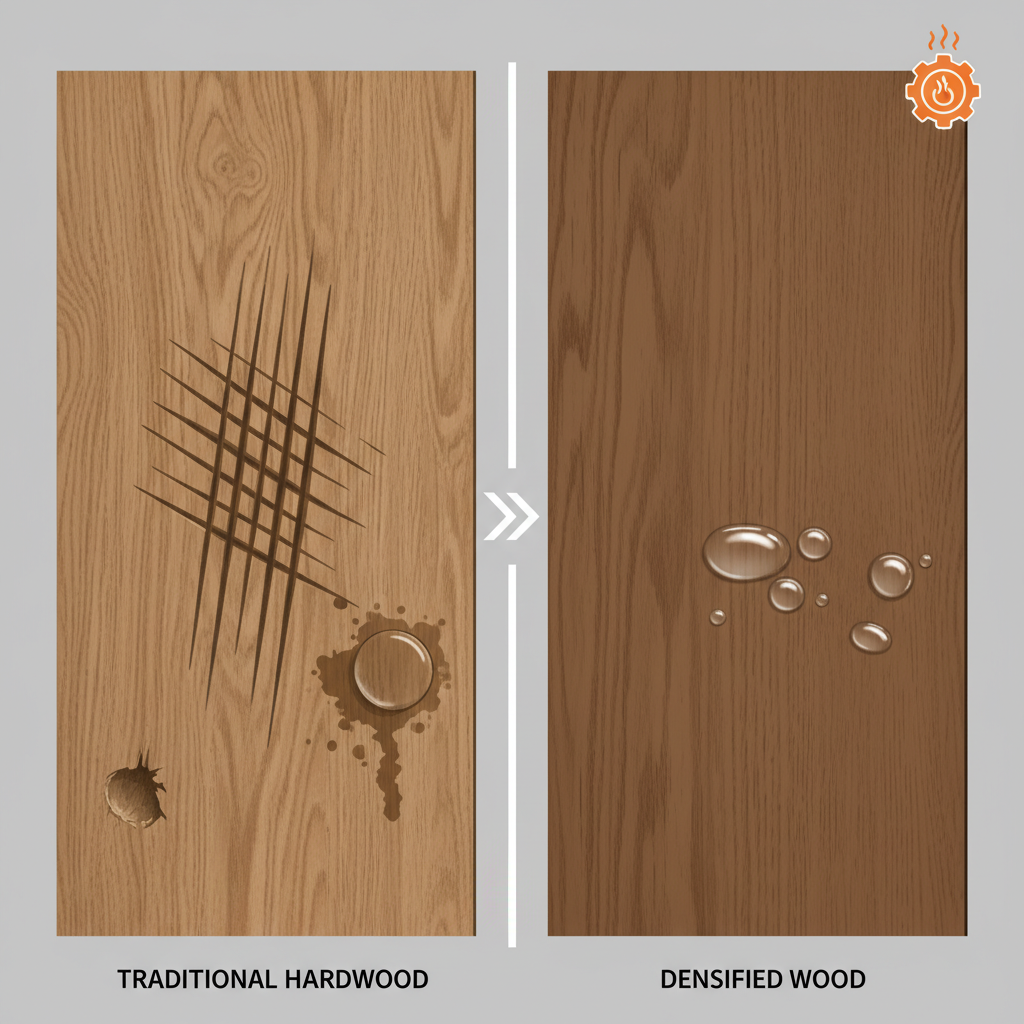
Using immense heat and pressure, manufacturers alter the cellular structure of real wood to make it exponentially harder. According to scientific data provided by Bruce Flooring, their Dogwood densified wood flooring boasts 4 times the scratch resistance and 6 times the dent resistance of standard hardwoods [7]. This makes it an exceptional choice for homeowners who want the prestige of real wood without the fragility.
Spotlight on Bravewood Flooring: An Objective Review
When searching for the perfect flooring, navigational queries often lead buyers to specific brands like Bravewood flooring. To determine if Bravewood is the right investment, we must look at objective performance metrics rather than just aesthetic appeal.
Bravewood positions itself as a premium competitor to industry giants like LifeProof and Coretec. Utilizing defect analysis frameworks established by the Floor Inspectors Educational Guild, a critical evaluation of Bravewood reveals a highly robust click-lock mechanism [8]. The integrity of this locking system is paramount; a weak lock will separate over time, allowing water to seep into the subfloor. Bravewood’s precision-milled edges provide a tight, seamless fit that rivals top-tier LVP brands, ensuring a highly water-resistant surface.
Furthermore, when evaluating any brand, it is essential to look at long-term customer satisfaction. Checking data from the Better Business Bureau (BBB) indicates how a company handles warranty claims and defect resolutions [9]. Bravewood maintains a strong reputation for honoring its wear-layer warranties, provided the homeowner adhered strictly to their subfloor preparation guidelines during installation.
The Room-by-Room Wood-Look Matchmaker
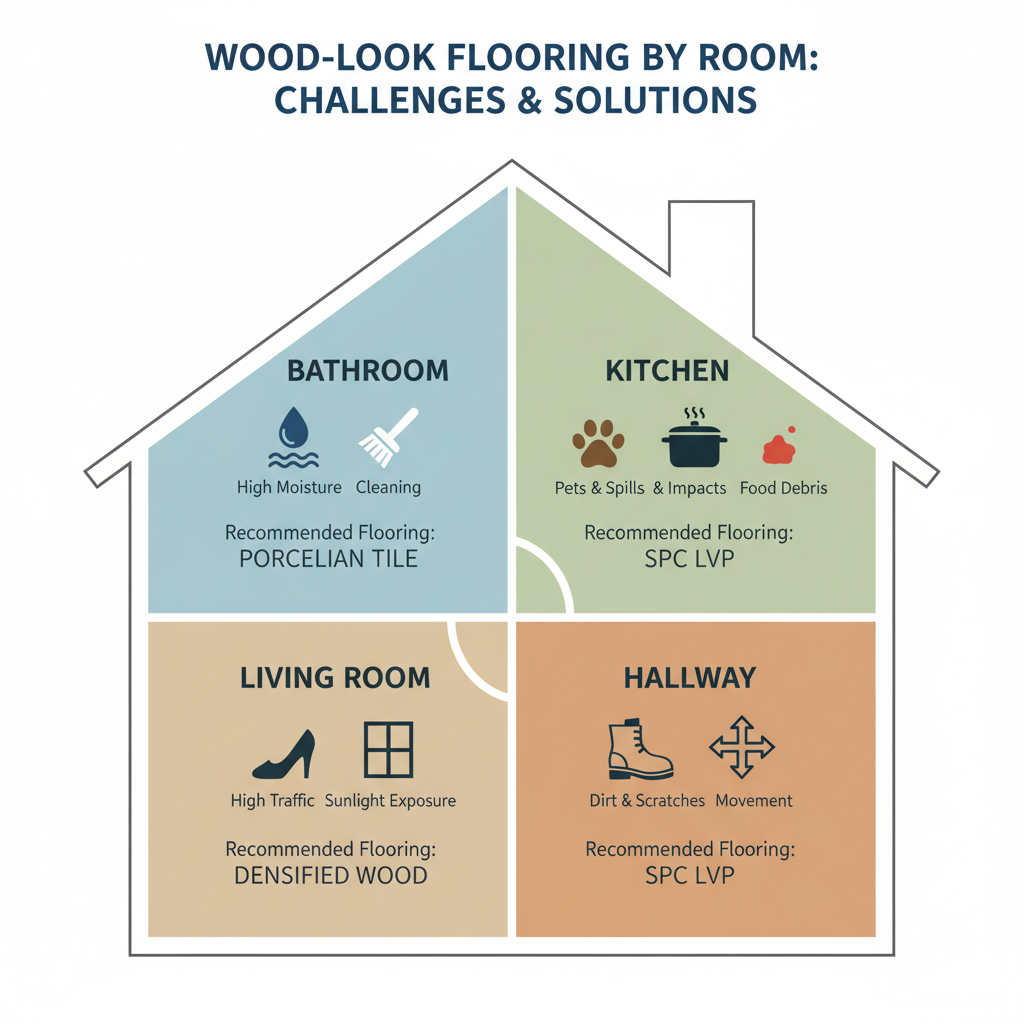
Choosing the right material is not a one-size-fits-all endeavor. The secret to how to choose wood look flooring is matching the specific technical properties of a low maintenance wood alternative to the unique stress factors of each room.
Aesthetic trends also play a role. Brett Miller, VP of technical standards for the National Wood Flooring Association (NWFA), emphasizes that both aesthetic and technical considerations must align with the homeowner’s lifestyle [10]. Currently, the average hardwood plank is 7 to 7½ inches wide, a trend strongly reflected in modern LVP and tile designs to create a spacious, contemporary look.
High-Moisture Zones: Bathrooms, Kitchens, and Basements
For areas prone to standing water, you need a “Waterproof vs. Water-Resistant” matrix.
Wood-look porcelain tile is the undisputed champion of extreme moisture zones. It is entirely impervious to water, will never warp, and is immune to flooding. However, it is cold underfoot and unforgiving if you drop a glass.
Conversely, waterproof luxury vinyl plank offers a warmer, more forgiving surface. When shopping for LVP in wet zones, look for specific dimensions of water protection. Certain premium engineered waterproof products now offer guaranteed waterproof protection top to bottom for up to 36 hours, making them ideal for kitchens and basements where spills might not be noticed immediately.
High-Traffic and Pet Zones: Living Rooms and Hallways
If your primary concern is dog claws, moving furniture, and heavy foot traffic, your focus must shift to wear layer thickness and dent resistance.
Among the best wood look flooring options, rigid core LVP (specifically SPC) is highly recommended. However, you must differentiate between commercial-grade and residential-grade wear layers. The wear layer is the clear protective coating over the printed design, measured in “mils” (thousandths of an inch). A 6-mil to 12-mil wear layer is standard for light residential use, but for large dogs and high traffic, you should upgrade to a 20-mil or higher commercial-grade wear layer to prevent the wood-look print from scratching off over time.
Installation Secrets: Bulletproofing Your Investment
Even the most durable wood look flooring guide is useless if the product is installed incorrectly. The unglamorous reality of flooring is that the longevity of your investment is entirely dependent on subfloor preparation and environmental acclimatization.
First, strict subfloor leveling tolerances are non-negotiable. Flooring contractors warn that if your subfloor dips or peaks by more than 3/16 of an inch over a 10-foot span, the click-lock mechanisms of rigid core LVP will flex under foot traffic and eventually snap.
Second, expansion gaps are critical. Even synthetic materials expand and contract with temperature changes. Authoritative installation standards from Junckers Hardwood explicitly state that expansion gaps of 10-20 mm are required around the perimeter of the room to allow for natural movement [11]. Failing to leave this gap will result in the floor buckling against the baseboards, ruining the entire installation.
Conclusion
You no longer have to live with the anxiety of fragile, high-maintenance hardwood. By understanding the science behind rigid core luxury vinyl, the indestructible nature of porcelain tile, and the innovative strength of densified wood, you can permanently solve your flooring woes. Remember that the secret to a bulletproof home lies not just in selecting a thick wear layer, but in meticulous subfloor preparation and proper installation. We encourage you to order a sample of Bravewood flooring to test its durability firsthand, and always consult a certified flooring installer to evaluate your subfloor before making your final purchase.
Pricing, wear layer specifications, and warranty information are subject to change. Always consult manufacturer guidelines and certified flooring professionals for specific subfloor preparation and installation requirements.
References
- Hudson Hardwood Floors. (N.D.). Maintenance Guidelines.
- Duffy Floors. (N.D.). Water Damage Mechanics.
- Angi. (N.D.). Guidelines for Hardwood Moisture and Refinishing.
- Cornell Cooperative Extension. (N.D.). Floor Protection and Rug Pad Physics.
- Bjorkman, T. (N.D.). Expert Quote on Engineered Waterproof Products. AHF Products.
- Resilient Floor Covering Institute (RFCI). (N.D.). Industry Standards for Luxury Vinyl.
- Bruce Flooring. (N.D.). Dogwood Densified Wood Data.
- Floor Inspectors Educational Guild. (N.D.). Defect Analysis Frameworks.
- Better Business Bureau (BBB). (N.D.). Company Reputation and Warranty Data.
- Miller, B. (N.D.). Expert Quote on Aesthetic and Technical Considerations. National Wood Flooring Association (NWFA).
- Junckers Hardwood. (N.D.). Installation and Expansion Gap Standards.
