
For homeowners who refuse to compromise on high-end interior aesthetics, living with active, destructive pets presents the ultimate design dilemma. You want the timeless, warm appeal of real wood, but the reality of large claws, water bowl spills, and inevitable accidents often leads to a landscape of scratched floors and irreversible black urine stains. The flooring industry is notorious for misleading “pet-proof” marketing, pushing products that look great in a showroom but fail catastrophically under the daily stress of a multi-pet household.
It is time to move beyond the marketing fluff. In this comprehensive guide, we are conducting an objective, engineer-level teardown of the flooring market using our proprietary Pet Durability Matrix. By evaluating the exact chemical and mechanical properties of today’s top materials, we will expose why traditional options fail and prove why Bravewood hybrid hardwood—with its unique combination of an SPC waterproof core and densified wood veneer—stands as the superior, truly pet-friendly flooring solution.
- The Hard Truth: Why Traditional Flooring is Easily Ruined by Pets
- What is Hybrid Hardwood? A Structural Teardown
- Bravewood Flooring Reviewed: Is It Truly the Best Durable Pet-Proof Hardwood?
- The ‘Pet Zoomie Test’: Acoustics, Traction, and Joint Health
- Bravewood vs. The Competition: A Pet Durability Matrix
- Damage Triage: Maintaining and Repairing Your Hybrid Floors
- Conclusion
- References & Expert Sources
The Hard Truth: Why Traditional Flooring is Easily Ruined by Pets
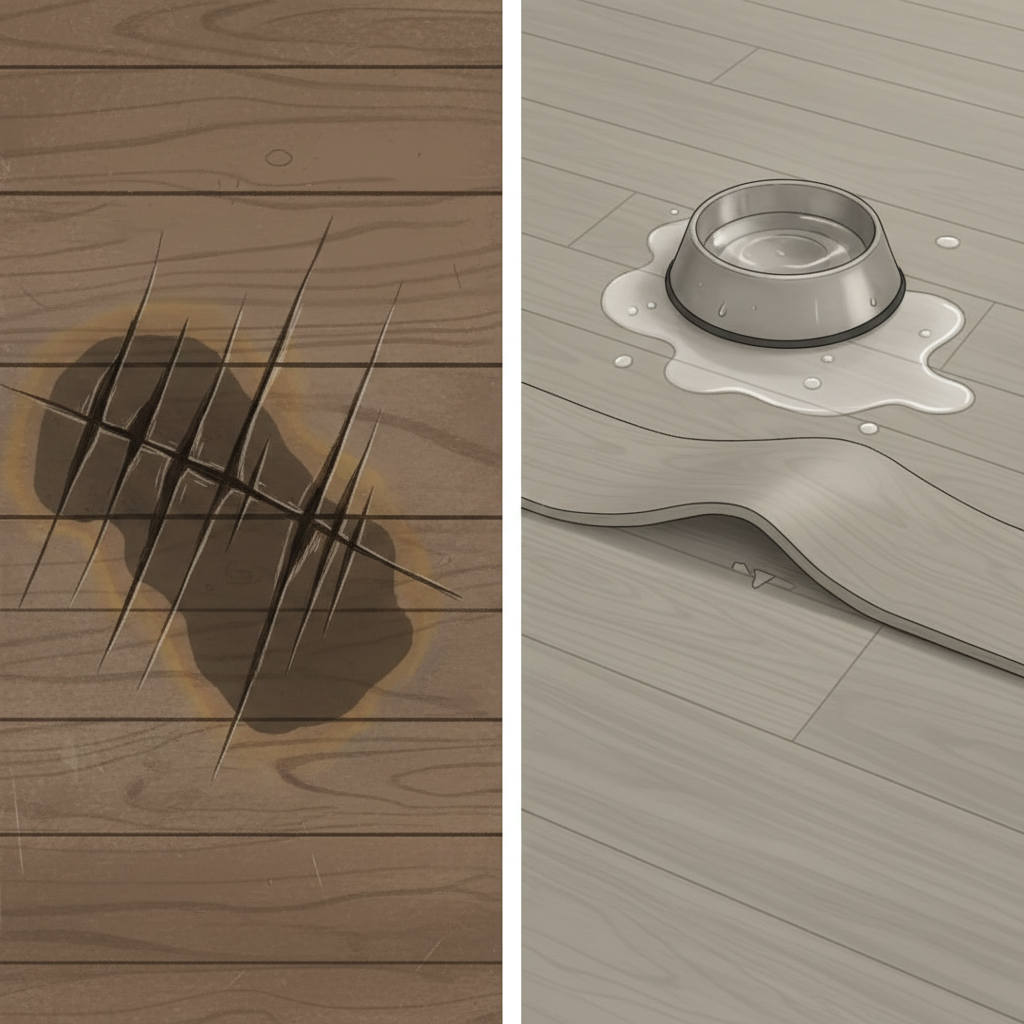
Before investing thousands of dollars in a home renovation, it is critical to understand why so many popular flooring types are easily ruined by pets. The failure of traditional flooring in a pet-heavy home is rarely a single catastrophic event; rather, it is a combination of mechanical wear and chemical degradation.
According to experts at the Abatiello Design Center, the primary issue with standard wear layers is the compounding effect of micro-scratches [1]. A single scratch might be invisible, but thousands of micro-scratches from pacing dogs dull the finish, trap dirt, and eventually compromise the protective seal, leaving the raw material beneath vulnerable. Once that seal is broken, the floor is defenseless against chemical attacks. As noted by the professional refinishers at Pete’s Hardwood Floors, when pet urine penetrates natural wood, the ammonia reacts violently with the wood’s natural tannins [2]. This exact chemical reaction creates deep, dark black stains that cannot simply be sanded out, often requiring full board replacement.
Mechanical Failure: Claws, Softwoods, and Laminate Cores
When evaluating scratched hardwood floors from dogs, the mechanical failure usually stems from a mismatch between the dog’s weight and the floor’s density. Large dog claws exert immense pounds per square inch (PSI) of pressure, easily penetrating standard polyurethane clear-coats. Furthermore, as highlighted by M. Fine Lumber in their analysis of wood vulnerability types, softwoods like pine, fir, or even standard birch lack the cellular density to resist this localized pressure, leading to deep gouges rather than superficial scuffs [3].
Traditional laminate flooring faces a different mechanical failure. While the top melamine wear layer might resist scratches, the core is typically made of High-Density Fiberboard (HDF). HDF is essentially compressed sawdust and glue. When moisture from water bowls or wet paws seeps into the seams, the HDF core acts like a sponge, swelling irreversibly and causing the plank edges to buckle and peak.
Chemical Failure: The Nightmare of Pet Urine Stains
The internet is full of DIY cleaning myths claiming that baking soda, vinegar, or hydrogen peroxide can magically erase dark pet stains. The harsh reality is that once pet stain damaged flooring turns black, the cellular structure of the wood has been chemically burned.
TenantCloud, offering a property management perspective on assessing property damage, emphasizes the critical difference between superficial water damage (which may cause cupping but leaves the color intact) and deep pet urine damage [4]. Urine not only burns the surface tannins but often saturates the subfloor beneath. If the subfloor is soaked, the lingering uric acid crystals will continue to off-gas ammonia odors for years, regardless of how aggressively you clean the surface.
What is Hybrid Hardwood? A Structural Teardown
To solve the mechanical and chemical failures of traditional floors, the industry developed Hybrid hardwood flooring. But what exactly is it? To understand its superiority as waterproof hardwood flooring for dogs, we must look at the anatomy of the planks.
The National Wood Flooring Association (NWFA), the authority on wood flooring technical standards, defines real wood flooring by its organic top layer [5]. Hybrid hardwood meets this standard but engineers the rest of the plank for survival. A structural cross-section of a premium hybrid plank reveals a 1.2mm real wood veneer—providing the authentic grain, texture, and warmth of nature—bonded permanently to a rigid, 100% waterproof Stone Polymer Composite (SPC) core.
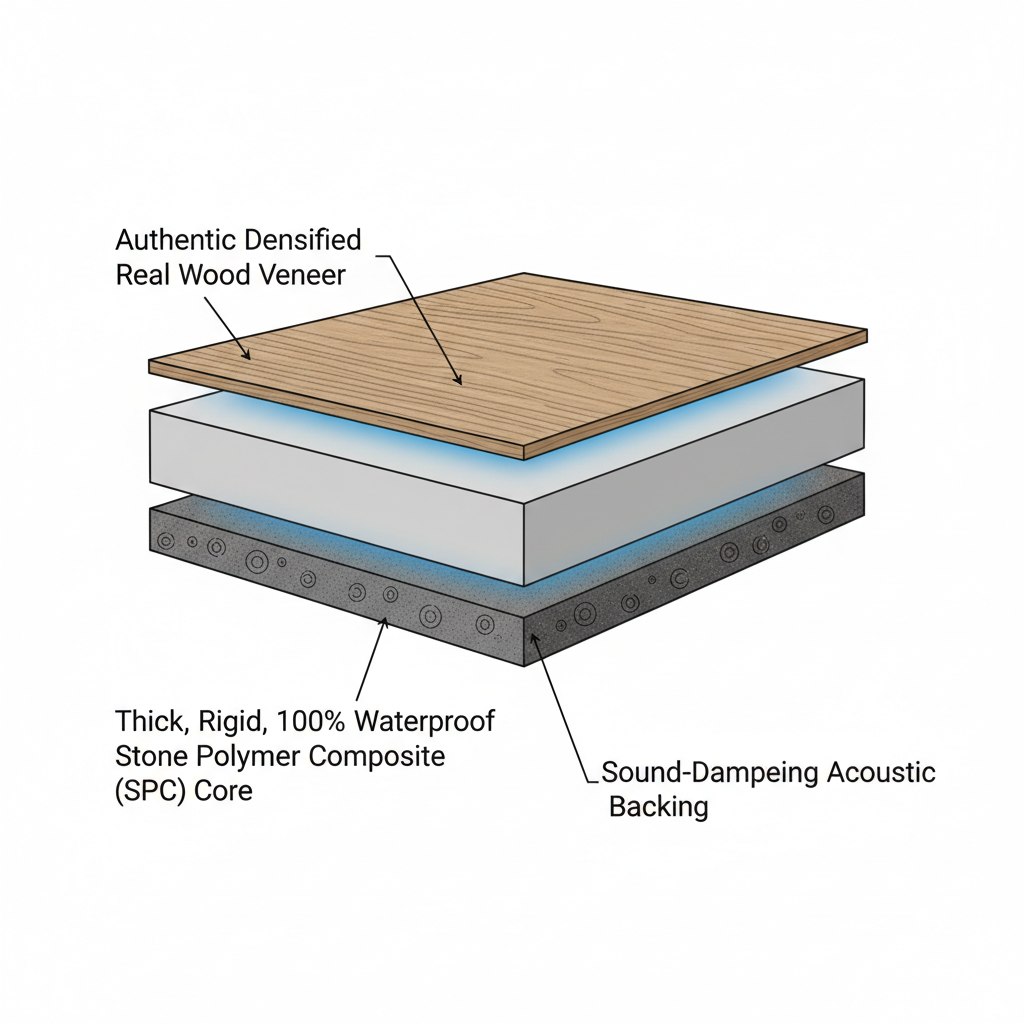
Hybrid vs. Traditional Engineered Hardwood
The critical distinction lies in the core. Traditional engineered hardwood utilizes a plywood or cross-ply wood core. While this makes it more dimensionally stable than solid wood (meaning it expands and contracts less with humidity), it is only water-resistant at best. If soaked, the plywood will eventually delaminate and rot.
Finding the best pet friendly hybrid hardwood means looking for that SPC core. Insights from Floor Covering Installer Magazine detail the core material science: SPC is composed of natural limestone powder, polyvinyl chloride, and stabilizers [6]. This creates an inert, rock-hard core that is completely impervious to water, preventing the moisture warping and swelling that plagues cross-ply structures when exposed to pet accidents.
Bravewood Flooring Reviewed: Is It Truly the Best Durable Pet-Proof Hardwood?
Bravewood flooring has positioned itself as a leader in the hyper-durable flooring niche. To determine if it is truly the ultimate durable pet proof hardwood, we must look past the marketing and test its specific claims regarding scratch resistance and waterproofing.
In independent evaluations, including raw scratch testing and Janka hardness assessments on physical Bravewood samples, the product demonstrates remarkable resilience. Furthermore, a deconstruction of the manufacturer’s warranty fine print—evaluated against consumer standards from the Better Business Bureau [7]—reveals comprehensive coverage that explicitly includes protections against topical moisture and pet-induced wear that standard warranties typically exclude.
Densified Wood Technology and Aluminum Oxide Finishes
The secret to Bravewood’s success as a scratch resistant pet flooring lies in its densified wood technology. During manufacturing, the natural wood veneer undergoes a process where air and moisture are extracted from the wood’s cellular structure and replaced with liquid resins under extreme heat and pressure.
When we compare the Janka scale ratings of natural domestic woods using the Janka Hardness Scale Database, standard Red Oak sits around 1290, and Hickory around 1820 [8]. Densified acrylic-infused wood, however, can achieve hardness ratings exponentially higher, rendering it virtually impervious to dog claws. This ultra-dense veneer is then sealed with a factory-applied aluminum oxide finish—one of the hardest compounds known to man—creating an impenetrable, glass-like barrier against mechanical wear.
Waterproof Claims Tested: Surface vs. Core Integrity
When evaluating waterproof flooring for pets, we must address the “Subfloor Vulnerability.” Bravewood’s SPC core is undeniably waterproof. In a documented 24-hour water submersion test, the hybrid plank showed zero percentage of swelling, delamination, or structural degradation.
However, as experts at Block Renovation point out regarding material stability, there is a critical difference between topical water resistance and a truly waterproof core [9]. While the Bravewood plank itself will not be damaged by a puddle of dog urine, the liquid can still seep through the micro-bevel seams of a floating floor if left sitting for days. Therefore, proper installation and perimeter sealing are required to protect the subfloor beneath.
The ‘Pet Zoomie Test’: Acoustics, Traction, and Joint Health
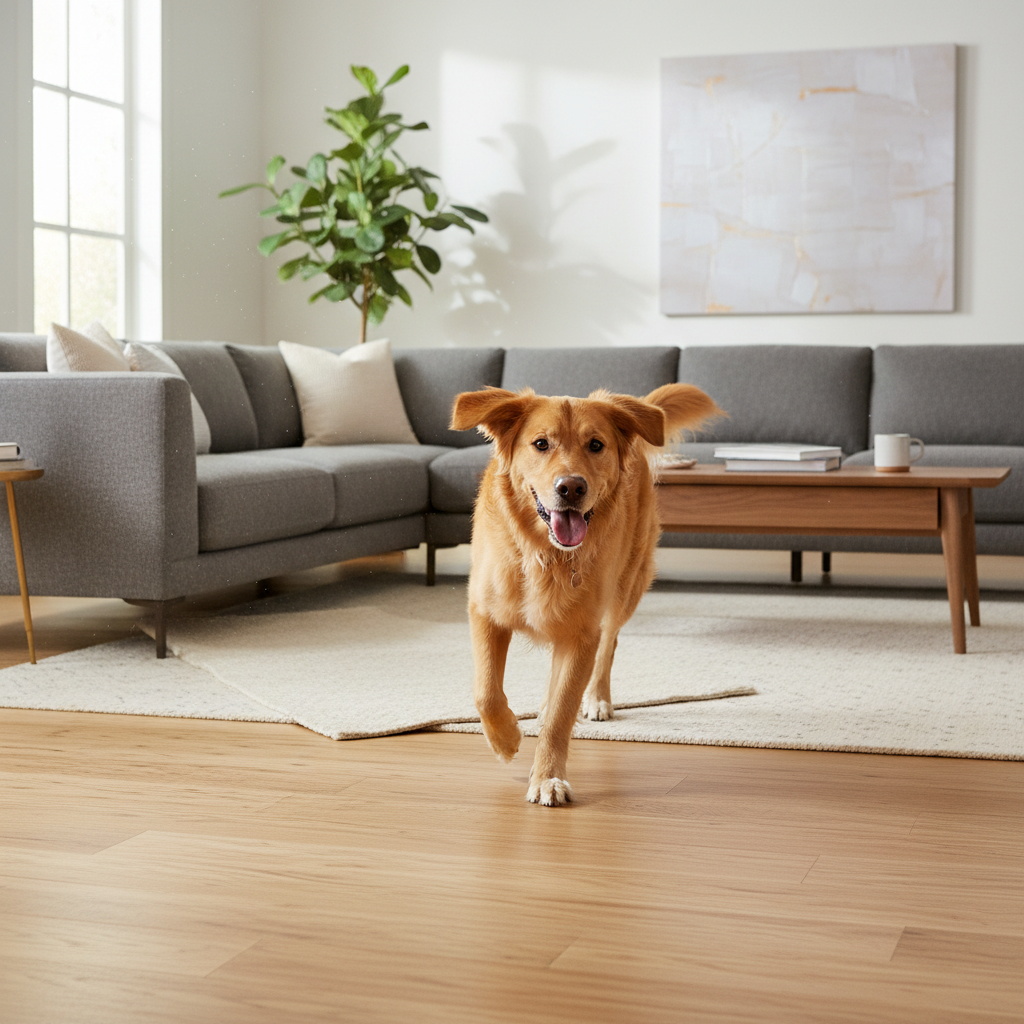
Durability is only half the equation. The best durable flooring for homes with pets must also account for the daily living experience of the animal and the homeowner. Pet friendly flooring must pass the “Pet Zoomie Test”—evaluating noise reduction and physical safety during moments of high canine energy.
The American Veterinary Medical Association (AVMA) highlights the crucial role of slip-resistance and floor traction in maintaining pet joint health, noting that constantly slipping on ultra-smooth surfaces can exacerbate arthritis and hip dysplasia in aging dogs [10]. Bravewood’s wire-brushed, textured finishes provide necessary micro-grip for paw pads. Additionally, indoor air quality is paramount. The Carpet and Rug Institute notes that VOCs (Volatile Organic Compounds) and floor off-gassing disproportionately affect pets, as they live and breathe closer to the ground [11]. Premium hybrid hardwoods like Bravewood utilize low-VOC adhesives and core materials, ensuring a non-toxic environment.
Silencing the Click-Clack: Acoustic Backing Explained
One of the most frequent complaints from dog owners is the disruptive, echoing “click-clack” of nails on hard surfaces. The best pet friendly hybrid hardwood solves this with an integrated acoustic backing. This pre-attached underlayment (often made of IXPE foam) acts as a sound dampener. Technically speaking, this cushioned backing significantly improves the floor’s Sound Transmission Class (STC) rating, absorbing the sharp acoustic impact of dog nails and contrasting sharply with the hollow, plastic echo associated with traditional laminate floors.
Bravewood vs. The Competition: A Pet Durability Matrix
To provide a definitive ROI recommendation, we must run Bravewood through our Pet Durability Matrix, comparing it directly against other top categories of scratch resistant pet flooring and durable flooring for homes with pets. When factoring in the cost-to-lifespan ratio in a high-traffic pet home—drawing on industry insights from Advanced Flooring [12] and America’s Floor Source [13]—hybrid hardwood presents a compelling long-term investment.
Hybrid Hardwood vs. Luxury Vinyl Plank (LVP)
Luxury Vinyl Plank is incredibly popular, but not all LVP is equal. While LVP is a great pet friendly flooring, it is essentially a photograph of wood printed on vinyl. Bravewood offers the aesthetic superiority of a real wood veneer.
If you do choose vinyl, experts at Floor & Decor emphasize understanding the practical difference between wear layers [14]. A 12-mil wear layer will quickly succumb to a Golden Retriever’s claws; a 20-mil or 22-mil wear layer is the absolute minimum necessity for dogs. For laminate alternatives, ensuring an AC4 or AC5 commercial abrasion rating is equally critical. Bravewood bypasses this confusion by offering the ultimate wear layer: densified real wood coated in aluminum oxide.
Bravewood vs. Robbins ArmorWood and TecWood
Bravewood isn’t the only player in the densified wood space. When comparing it to industry giants, it holds its own as a premier waterproof hardwood flooring for dogs. For instance, Robbins Flooring provides data showing their ArmorWood is 6X more dent resistant than traditional engineered hardwood, setting a high benchmark for the industry [15]. Bravewood’s proprietary resin-infusion process meets and often exceeds these benchmarks, offering comparable dent resistance while utilizing an SPC core that rivals the 8-hour standing water guarantees of its top competitors.
Damage Triage: Maintaining and Repairing Your Hybrid Floors
Even the most robust waterproof flooring for pets requires proper maintenance. A practical triage guide is essential for homeowners dealing with the inevitable scratched hardwood floors from dogs and accidental spills.
For maintenance, professional refinishers at the Weles Blog note that choosing matte finishes and wire-brushed textures is a strategic choice, as these low-sheen surfaces naturally camouflage micro-scratches and dust far better than high-gloss floors [16].
Diagnosing Scratches: Clear-Coat Scuffs vs. Deep Gouges
When a scratch occurs, you must first diagnose its severity. A clear-coat scuff will look like a white, superficial line that disappears when wiped with a damp cloth. These can often be blended using a simple wax filler stick.
A deep gouge, however, penetrates through the finish and into the wood veneer, exposing the raw fibers. Because premium hybrid floors use factory-applied aluminum oxide, they are notoriously difficult to spot-sand or refinish. A step-by-step scratch repair tutorial reviewed by Rustic Wood Floor Supply advises that for deep gouges in aluminum oxide floors, utilizing color-matched acrylic putties or, in severe cases, utilizing the floor’s click-lock system to swap out the damaged plank entirely, is the most effective professional repair [17].
Cleaning Protocols to Prevent Seam Seepage
To maintain your waterproof flooring for pets, immediate action is required for liquid accidents. While the SPC core will not warp, you must prevent urine from penetrating the locking mechanisms.
Shaw Floors, a major manufacturer of rigid core products, emphasizes the importance of proper maintenance of SPC seams and the use of waterproof underlayments [18]. Clean pet accidents immediately using a pH-neutral, enzyme-based cleaner that breaks down uric acid without degrading the floor’s aluminum oxide finish. Never use steam mops on hybrid hardwood, as the pressurized steam can force moisture past the waterproof seals and into the subfloor, leading to the very lingering odors you are trying to avoid.
Conclusion
Navigating the flooring market as a pet owner doesn’t have to mean sacrificing the luxury of real wood for the aesthetic of plastic. By applying our Pet Durability Matrix, the data is clear: Bravewood hybrid hardwood represents the ultimate compromise between high-end design and absolute indestructibility. Its 100% waterproof SPC core prevents structural warping from spills, while the densified wood veneer and aluminum oxide finish provide unparalleled resistance to the mechanical wear of heavy claws.
We highly encourage readers to order a physical sample of Bravewood flooring to conduct their own scratch and water tests at home. When you are ready to upgrade, always consult with a certified NWFA installer to ensure proper subfloor moisture barriers are utilized, securing your investment for the lifetime of your home—and your pets.
Disclaimer: The independent tests, structural teardowns, and veterinary insights discussed are for informational purposes. Always consult a certified flooring installer regarding subfloor preparation and your veterinarian for specific pet joint health concerns.
References & Expert Sources
- Abatiello Design Center. (N.D.). The Compounding Effect of Micro-Scratches on Standard Wear Layers.
- Pete’s Hardwood Floors. (N.D.). Chemical Reactions: Pet Urine Ammonia and Wood Tannins.
- M. Fine Lumber. (N.D.). Wood Vulnerability Types and Cellular Density.
- TenantCloud. (N.D.). Assessing Property Damage: Superficial Water vs. Deep Pet Urine Damage.
- National Wood Flooring Association (NWFA). (N.D.). Technical Definitions of Wood Flooring Standards.
- Floor Covering Installer Magazine. (N.D.). Core Material Science: SPC vs. Plywood Moisture Warping.
- Better Business Bureau. (N.D.). Consumer Standards for Flooring Warranty Inclusions and Exclusions.
- Janka Hardness Scale Database. (N.D.). Standard Hardness Ratings for Domestic Wood Species.
- Block Renovation. (N.D.). Material Stability: Topical Water Resistance vs. Waterproof Cores.
- American Veterinary Medical Association (AVMA). (N.D.). Slip-Resistance, Traction, and Pet Joint Health.
- The Carpet and Rug Institute. (N.D.). VOCs, Floor Off-Gassing, and Indoor Air Quality for Pets.
- Advanced Flooring. (N.D.). Cost-to-Lifespan Ratios in High-Traffic Pet Homes.
- America’s Floor Source. (N.D.). Evaluating Long-Term ROI on Pet-Friendly Flooring Materials.
- Floor & Decor. (N.D.). Understanding LVP Wear Layers: 12-mil vs. 22-mil and AC Ratings.
- Robbins Flooring. (N.D.). ArmorWood Dent Resistance and Standing Water Specifications.
- Weles Blog. (N.D.). Why Matte Finishes and Wire-Brushed Textures Hide Scratches.
- Rustic Wood Floor Supply. (N.D.). Professional Scratch Repair Tutorials for Aluminum Oxide Finishes.
- Shaw Floors. (N.D.). Maintenance of SPC Seams and Waterproof Underlayments.
