
You have just invested in the stunning, natural beauty of Bravewood hybrid hardwood floors, and naturally, you want to keep them looking flawless. But if you have spent any time searching online for maintenance advice, you have likely encountered a chaotic mix of conflicting tips. From viral social media hacks involving hot water and dish soap to outdated advice recommending vinegar or steam mops, the internet is full of “cleaning hacks” that can actively destroy your new floors.
The truth is, maintaining your investment requires a specific approach tailored to its unique construction. This definitive, science-backed, and manufacturer-aligned manifesto will cut through the noise. We are shifting the focus away from harsh chemical washing and restorative polishing, and introducing you to the philosophy of “Dry Grit Control” and chemical-free detoxing. By following this guide, you will learn exactly how to protect your floor’s delicate 0.6mm real wood veneer and its robust AC4 finish, ensuring your floors retain their factory-fresh beauty for a lifetime. Here is everything you need to know about Bravewood floor care.
- Understanding Your Bravewood Floors: Why Anatomy Dictates Care
- The Golden Rules of Hybrid Hardwood Cleaning
- Your Step-by-Step Hybrid Hardwood Maintenance Routine
- Troubleshooting: The ‘Residue Detox’ for Dull or Dirty Floors
- What NEVER to Do: Debunking Destructive Cleaning Myths
- Long-Term Protection: Environment and Furniture Care
- References
Understanding Your Bravewood Floors: Why Anatomy Dictates Care
To understand how to clean your floors, you first need to understand what you are cleaning. Bravewood hybrid hardwood is not your traditional solid oak or maple plank, and therefore, standard solid hardwood cleaning methods do not apply.
Bravewood is a highly engineered, topical waterproof hybrid manufactured by TAS Flooring. According to official TAS Flooring specifications, the planks feature a 12 mm overall thickness (7/16 inch), which includes an attached 1.5 mm IXPE pad for sound absorption and comfort [1].
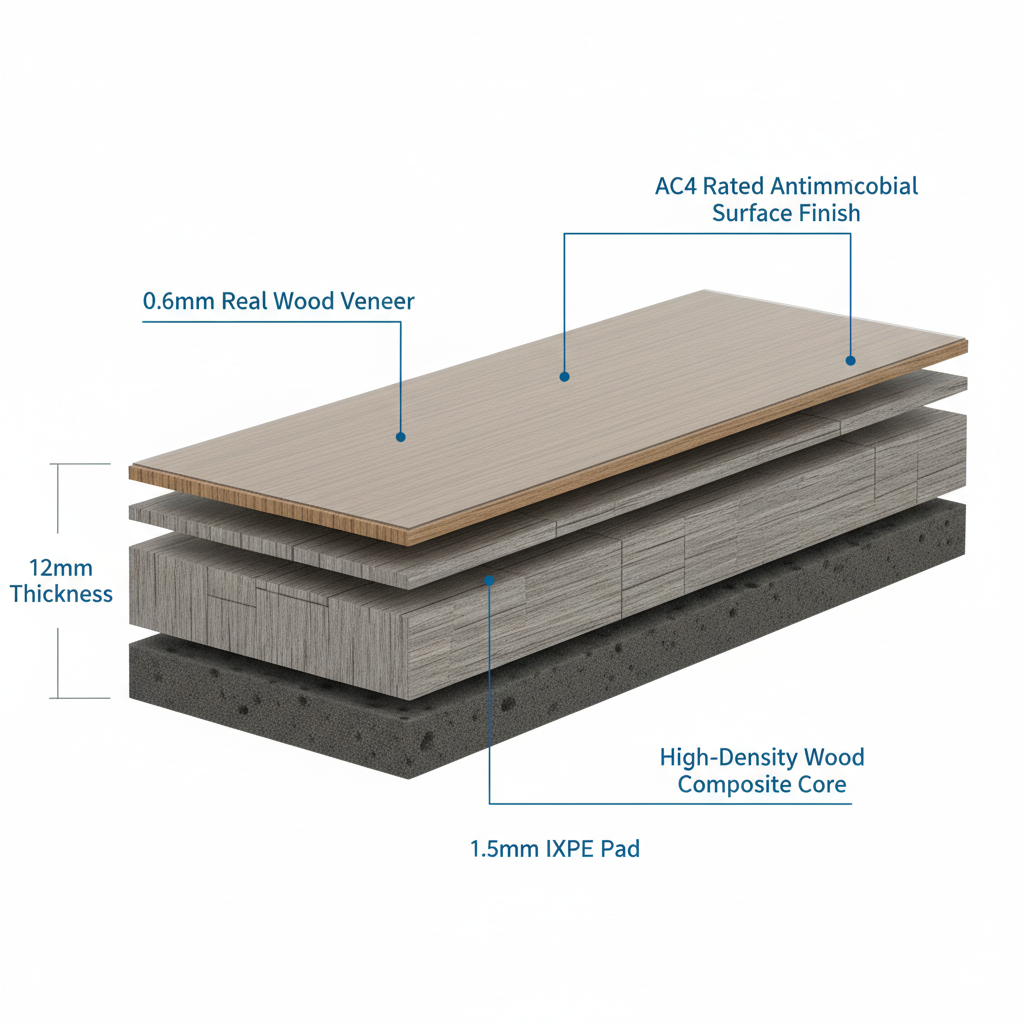
The most critical components for your cleaning routine, however, are the top two layers. The floor boasts a beautiful 0.6 mm real wood veneer, giving it its authentic texture and grain. This veneer is protected by an AC4 Rated Antimicrobial surface finish [1]. This AC4 rating is a commercial-grade durability standard that makes the floor highly resistant to wear, but it also means the surface is non-porous. Because of this finish, your Bravewood floor does not need—and physically cannot absorb—traditional wood waxes, oils, or polishes. Applying them will only create a sticky mess on the surface. Furthermore, Bravewood flooring carries the FloorScore certification, ensuring it meets strict indoor air quality standards [2]. Using harsh, unapproved chemicals not only risks your floor’s finish but also compromises the healthy indoor environment your flooring was designed to support.
The Golden Rules of Hybrid Hardwood Cleaning
When it comes to hybrid hardwood cleaning, the safest approach is a preventative one. The goal is to shift your mindset from “wet washing” to “dry prevention.” The National Wood Flooring Association (NWFA) strictly warns against the dangers of excess moisture on wood veneers, noting that water can seep into microscopic seams and cause irreversible swelling or warping over time [3]. Safe hardwood cleaning methods prioritize keeping the floor free of abrasive particles rather than frequently soaking it in liquid.
The ‘Dry Grit Control’ Philosophy
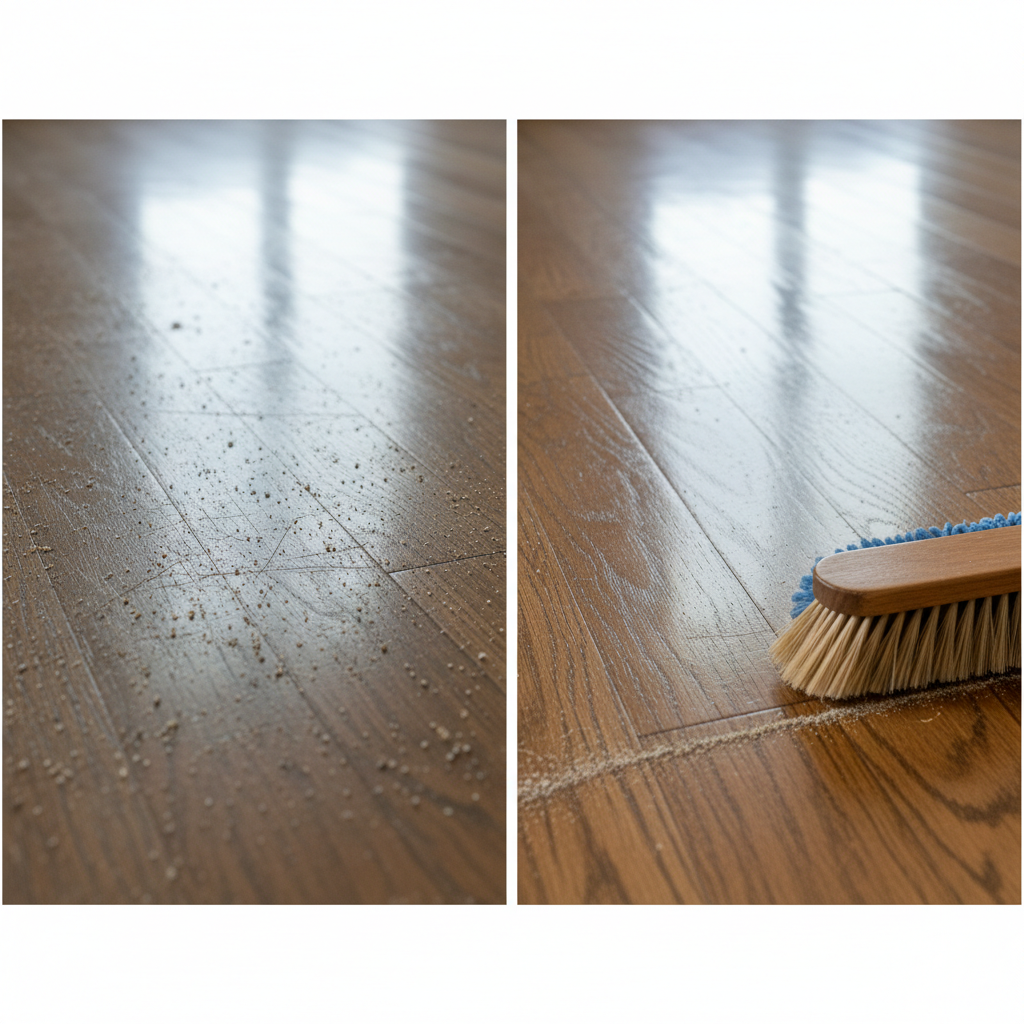
The absolute most important aspect of essential cleaning tips for Bravewood flooring is what industry professionals call “Dry Grit Control.” Microscopic dirt, sand, and dust act exactly like fine-grit sandpaper on your floor’s AC4 finish. Every time you walk across a dusty floor, your footsteps grind those particles into the surface, causing micro-scratches that diffuse light and make the floor look dull.
Remarkably, a simple 5-to-10-minute daily sweeping or vacuuming routine prevents up to 80% of all floor damage [4]. However, you must be incredibly careful about your tools. You should never use a vacuum cleaner with an engaged “beater bar” (the rotating bristle brush meant for carpets). Bravewood planks feature 4-sided micro-bevel edges. A rapidly spinning rigid beater bar can violently strike these delicate edges, chipping the finish and voiding your warranty. Always use a soft-bristle broom, a dry microfiber dust mop, or a vacuum set to the “hard floor” setting with the beater bar turned off.
Best Cleaning Products for Hybrid Hardwood
When dry sweeping isn’t enough to remove footprints or light spills, you will need a liquid cleaner. The best cleaning products for hybrid hardwood are strictly pH-neutral.
Why does pH matter? The protective wear layer on hybrid floors is typically only 0.3 to 0.7 mm thick. Acidic cleaners (like vinegar) or highly alkaline cleaners (like ammonia) will chemically degrade and etch this thin protective layer over time. Safe cleaners must sit right around pH 7. Independent lab tests from organizations like Consumer Reports frequently highlight pH-neutral, water-based formulas—such as Bona Hard-Surface Floor Cleaner or ZEP Neutral Floor Cleaner—as highly effective and safe [5]. For health-conscious households, look for cleaners that carry the EPA Safer Choice label or are EWG-verified, ensuring they leave behind no harmful chemical residues.
Your Step-by-Step Hybrid Hardwood Maintenance Routine
To protect your investment and ensure warranty compliance, align your habits with the official Bravada/TAS Hardwood Care Guides [6]. Here is a structured, easy-to-follow hybrid hardwood maintenance routine:
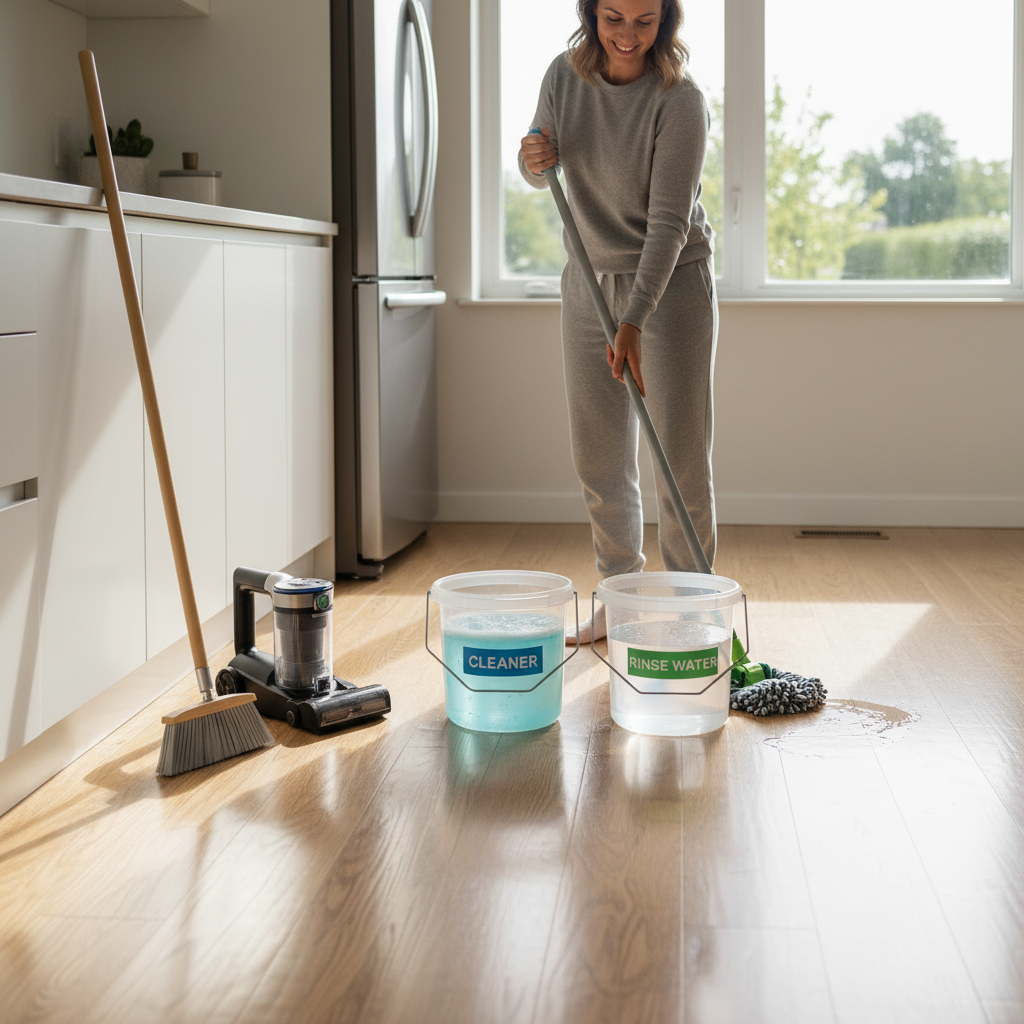
- Daily: Practice Dry Grit Control. Spend 5 minutes running a dry microfiber dust mop or a hard-floor vacuum over high-traffic areas to remove abrasive dust and pet hair. Wipe up any liquid spills immediately with a soft, dry cloth.
- Weekly: It is time for a damp mop. How to clean Bravewood hybrid hardwood floors correctly involves the “Two-Bucket System.” Fill one bucket with your diluted pH-neutral cleaner and a second bucket with clean water. Dip your microfiber mop into the cleaner, wring it out until it is barely damp (never soaking wet), and mop a small section. Then, rinse the dirty mop in the clean water bucket, wring it out, and dip it back into the cleaner. This prevents you from simply pushing dirty water around the floor.
- Monthly: Perform a deep edge cleaning along baseboards where dust accumulates. Additionally, inspect all the felt pads under your furniture. Dust and grit can become embedded in the felt over time, turning a protective pad into a scratching hazard. Replace any flattened or dirty pads immediately.
Troubleshooting: The ‘Residue Detox’ for Dull or Dirty Floors
One of the most common frustrations homeowners face is dirty hybrid hardwood floors that look cloudy or dull, even right after mopping. If you are dealing with dull Bravewood flooring, the culprit is rarely actual dirt; it is almost always chemical residue.
Oil soaps, standard household detergents, and popular “mop and shine” products leave behind a sticky, microscopic film. Because your AC4 finish cannot absorb these oils, the film sits on top of the floor, acting as a magnet that actively attracts and holds onto new dirt. Restoring hybrid floor shine does not mean adding more polish—in fact, hybrid floors cannot be sanded, lacquered, or refinished, and aftermarket “shine restorers” will ruin the floor.
Instead, you need a “Residue Detox.” To strip away this cloudy buildup, mix a high-quality, pH-neutral cleaner with warm water. Using a clean, damp microfiber mop, work in small sections, applying gentle pressure to lift the old soap residue. You may need to repeat this process a few times over a couple of weeks to fully break down months of wax or oil buildup. Once the residue is gone, the factory shine of the AC4 finish will naturally reveal itself.
How to Safely Remove Hybrid Hardwood Floor Stains
Accidents happen, but treating hybrid hardwood floor stains requires precision. Because you cannot sand out a stain on a 0.6mm veneer, you must use the right solvent. For stubborn, localized stains like paint, heavy grease, asphalt, or tar, official SPC and hybrid care procedures recommend the highly localized, sparing use of acetone or nail polish remover [7].
Apply a small amount of acetone to a clean white cloth and gently rub the specific stain until it lifts. Immediately wipe the area with a damp cloth to remove any remaining solvent. Never pour acetone directly onto the floor, and never attempt to use traditional wood stains to change the color of your hybrid floor.
What NEVER to Do: Debunking Destructive Cleaning Myths
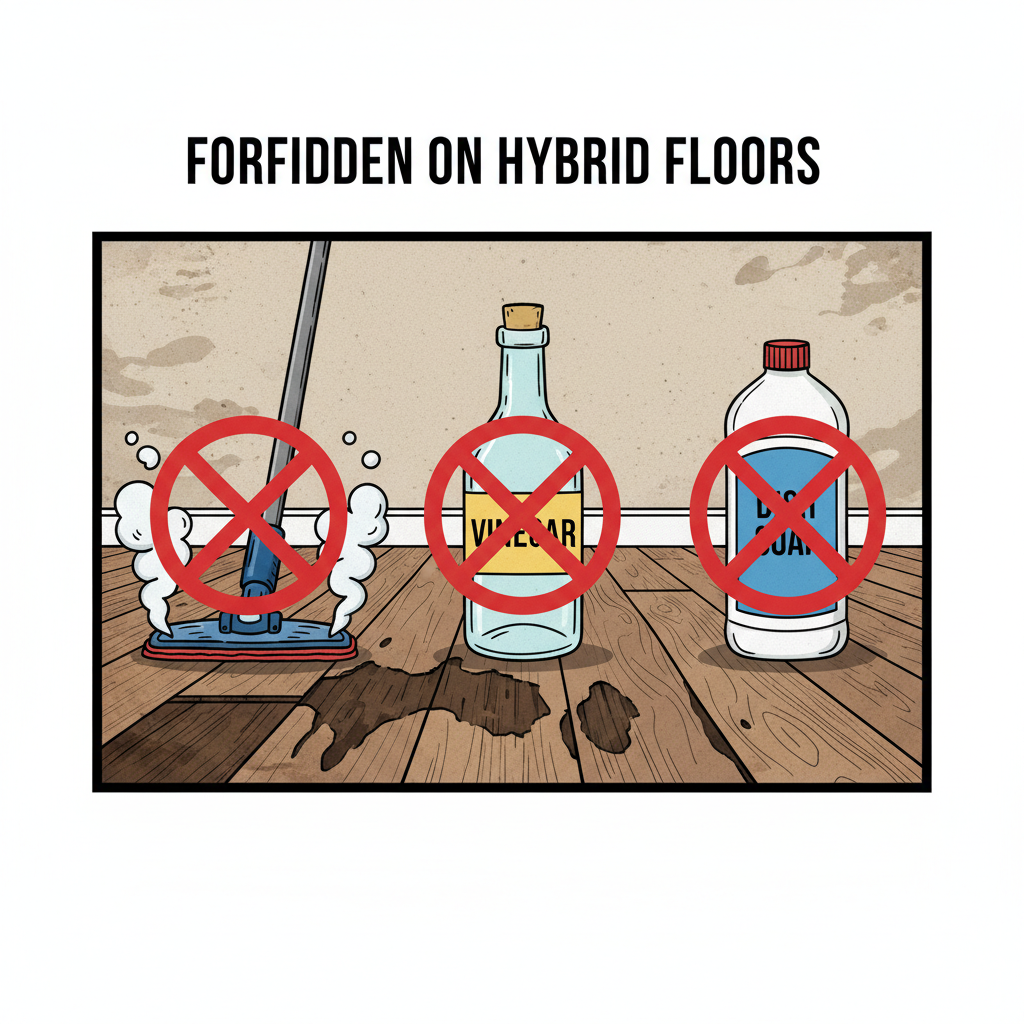
To guarantee you are using safe hardwood cleaning methods, you must actively avoid several popular but destructive viral cleaning hacks:
- Never Use a Steam Mop: Steam mops are the enemy of hybrid hardwood. Flooring experts warn that the combination of intense heat and pressurized moisture forces water vapor deep into the micro-bevel joints of the planks. This causes irreversible warping, delamination of the wood veneer, and instantly voids your manufacturer warranty [3].
- Never Use Vinegar and Water: While a popular eco-friendly hack, vinegar is highly acidic (usually around a pH of 2 to 3). Over time, washing your floors with acid will chemically strip and dull the AC4 finish, leaving the wood veneer vulnerable.
- Never Use Hot Water and Dawn Dish Soap: This social media trend is disastrous for hybrid floors. Dish soap is formulated to leave a sheeting action on dishes, which translates to a thick, cloudy, dirt-attracting film on your flooring.
Long-Term Protection: Environment and Furniture Care
Bravewood floor care extends beyond the mop and broom. Because your flooring contains a real natural wood veneer, it reacts to its environment. According to manufacturer guidelines, you must maintain your home’s indoor relative humidity levels around 45% [1]. If the air is too dry, the wood veneer can splinter or gap; if it is too humid, it can swell.
UV protection is also paramount. Direct, intense sunlight can thermally degrade the floor and cause the natural wood veneer to fade or discolor over time. Utilize blinds, curtains, or UV-blocking window films during peak sunlight hours.
When selecting area rugs, only use breathable, colorfast mats. Never use rugs with solid rubber or vinyl backings. These dense materials trap moisture and heat against the floor, which can chemically stain or blister the finish. Finally, protect the floor from physical gouges. The physics of a stiletto heel or a rigid plastic chair caster generates massive compressive force (often thousands of pounds per square inch) that will easily dent the wood veneer. Always use wide, non-staining felt protectors under all furniture legs, and swap out hard plastic rolling casters for soft, polyurethane floor-safe wheels.
Disclaimer: Always consult your official TAS Flooring warranty and care guide before applying new chemicals to your floor. Test any new cleaning product in an inconspicuous area first.
References
- TAS Flooring. (N.D.). Bravewood Collection Specifications and Warranty. TAS Flooring.
- SCS Global Services. (N.D.). FloorScore Certification.
- National Wood Flooring Association (NWFA). (N.D.). Wood Floor Maintenance Guidelines.
- Westlink Commercial Cleaning. (N.D.). Commercial Floor Care Statistics.
- Consumer Reports. (N.D.). Floor Cleaner Testing and Reviews.
- Bravada/TAS Hardwood. (N.D.). Hardwood Care Guides.
- Beau Floor. (N.D.). SPC Care Procedures.
