
There is a distinct, paralyzing fear that accompanies a major home renovation, and it usually peaks right in the flooring aisle. Hardwood flooring is an expensive, semi-permanent anchor for your home’s interior design. Make the right choice, and your space feels cohesive, expansive, and timeless. Make the wrong choice, and you are left wrestling with clashing wood undertones, mismatched decor, and the daily frustration of a floor that highlights every speck of dust or pet hair.
One of the greatest culprits behind these expensive mistakes is showroom lighting deception—the phenomenon where a brilliant flooring sample under harsh fluorescent store lights looks drastically different, and often disappointing, once installed in the natural light of your living room.
To eliminate this guesswork and protect your investment, we have developed "The 20-Year Floor Formula." This expert-led masterclass combines advanced Undertone Mapping, a rigorous 24-hour lighting stress test, and a deep dive into the high-performance, waterproof capabilities of the Bravewood hybrid hardwood collection. Whether you are building from scratch or trying to salvage a room with mismatched flooring, this definitive guide will help you confidently select a floor that fits your lifestyle, lighting, and evolving decor for decades to come.
- The Evolution of Hybrid Hardwood: Why Bravewood Rivals Solid Wood
- The 20-Year Floor: Selecting the Perfect Hardwood Tone
- Mastering Undertone Mapping: Matching Hardwood Floors to Home Decor
- The Best Bravewood Hybrid Hardwood Tones Ranked by Design Style
- Troubleshooting Design Chaos: Fixing Mismatched Flooring and Decor
- References & Authoritative Sources
The Evolution of Hybrid Hardwood: Why Bravewood Rivals Solid Wood
For generations, homeowners had to choose between the authentic, luxurious aesthetic of natural solid hardwood and the resilient, waterproof practicality of luxury vinyl plank (LVP). Today, hybrid hardwood styles have bridged that gap, dominating the market by offering the best of both worlds.
Bravewood hybrid hardwood is at the forefront of this evolution. Manufactured by TAS Flooring, Bravewood is engineered by fusing a genuine wood veneer with a rigid, waterproof core. According to TAS Flooring’s official specifications, the Bravewood collection features a robust 12 mm overall thickness, which includes a pre-attached 1.5 mm IXPE pad for superior sound dampening and underfoot comfort, finished with a refined 4-Sided Micro-Bevel edge profile [1].
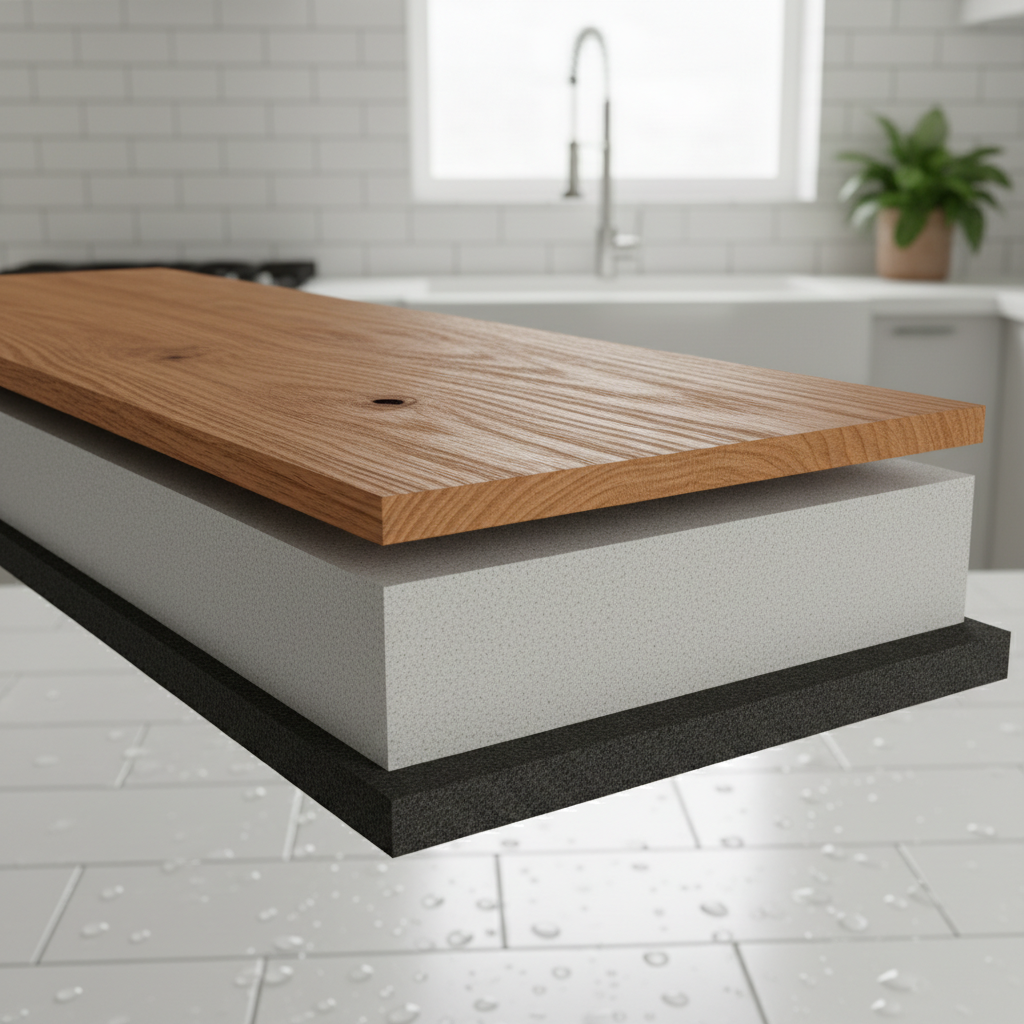
What truly sets these hybrid hardwood styles apart from standard LVP is the use of EIR (Embossed in Register) texturing technology. EIR meticulously aligns the physical texture of the plank’s surface with the visual grain of the wood veneer beneath it. When you run your hand over a Bravewood plank, you feel the exact knots and grain patterns you see, creating an indistinguishable replica of traditional solid wood. Furthermore, Bravewood prioritizes your home’s indoor air quality, carrying esteemed environmental certifications like FloorScore® and GreenGuard Gold, establishing it as a safe, low-VOC choice for residential spaces [2].
Performance Deep Dive: Is Hybrid Hardwood Actually Waterproof?
The most common question homeowners ask when considering wood flooring is whether it can survive an active household. Is Bravewood hybrid hardwood actually waterproof? The answer lies in its topical waterproof engineering.
Bravewood features a 7/16-inch thick topical waterproof hybrid construction. While traditional solid wood acts like a sponge when exposed to standing water, causing warping and cupping, the rigid core and advanced surface sealants of hybrid hardwood repel moisture. In standard wear-and-tear tests—where planks are subjected to simulated pet scratches, heavy foot traffic, and standing liquid spills for up to 24 hours—top-tier hybrids like Bravewood show zero signs of moisture penetration or structural swelling. Industry publications like Floor Covering Weekly consistently highlight that this topical waterproof durability is driving the massive shift toward hybrid materials in high-traffic homes, allowing homeowners to install real wood aesthetics in kitchens and mudrooms without fear [3].
The 20-Year Floor: Selecting the Perfect Hardwood Tone
Learning how to choose hardwood flooring color is highly dependent on a delicate balance of lifestyle, room size, and lighting. To avoid fleeting trends, interior designers recommend aiming for "The 20-Year Floor"—a foundational flooring choice that will gracefully survive at least three major decor or furniture changes over two decades.
When selecting the perfect hardwood tone for longevity, neutral, timeless tones are paramount. Industry consensus and historical design data confirm that medium brown hardwood is considered the most classic and versatile color available [4]. It grounds a room without overpowering it. Additionally, the finish you choose dictates the floor’s lifespan just as much as the color. Matte finishes, for example, not only look more modern and natural but also hide micro-scratches far better than high-gloss finishes, extending the perceived longevity of your hardwood flooring tones.
Light vs. Dark: The Lifestyle and Lighting Matrix
The debate between light and dark floors is where aesthetics and practicality often collide. Light wood floors (like natural white oak or pale ash) are incredibly forgiving. They naturally hide dust, pet hair, and minor scratches, making them ideal for active homes with pets and children. Furthermore, light tones reflect natural light, visually expanding small spaces.
Dark floors (like deep walnut or espresso), on the other hand, offer unparalleled classic elegance and dramatic contrast. However, they require more maintenance, as they act as a mirror for dust and lint. Interestingly, darker-colored woods tend to fade less than light-colored hardwoods under harsh UV rays. According to flooring experts at Kelly’s Flooring, understanding these long-term wear patterns is crucial; a dark floor in a heavily trafficked, sun-drenched living room will show wear and require cleaning much faster than a light floor in the same space [5].
The 24-Hour Pre-Purchase Hardwood Stress Test
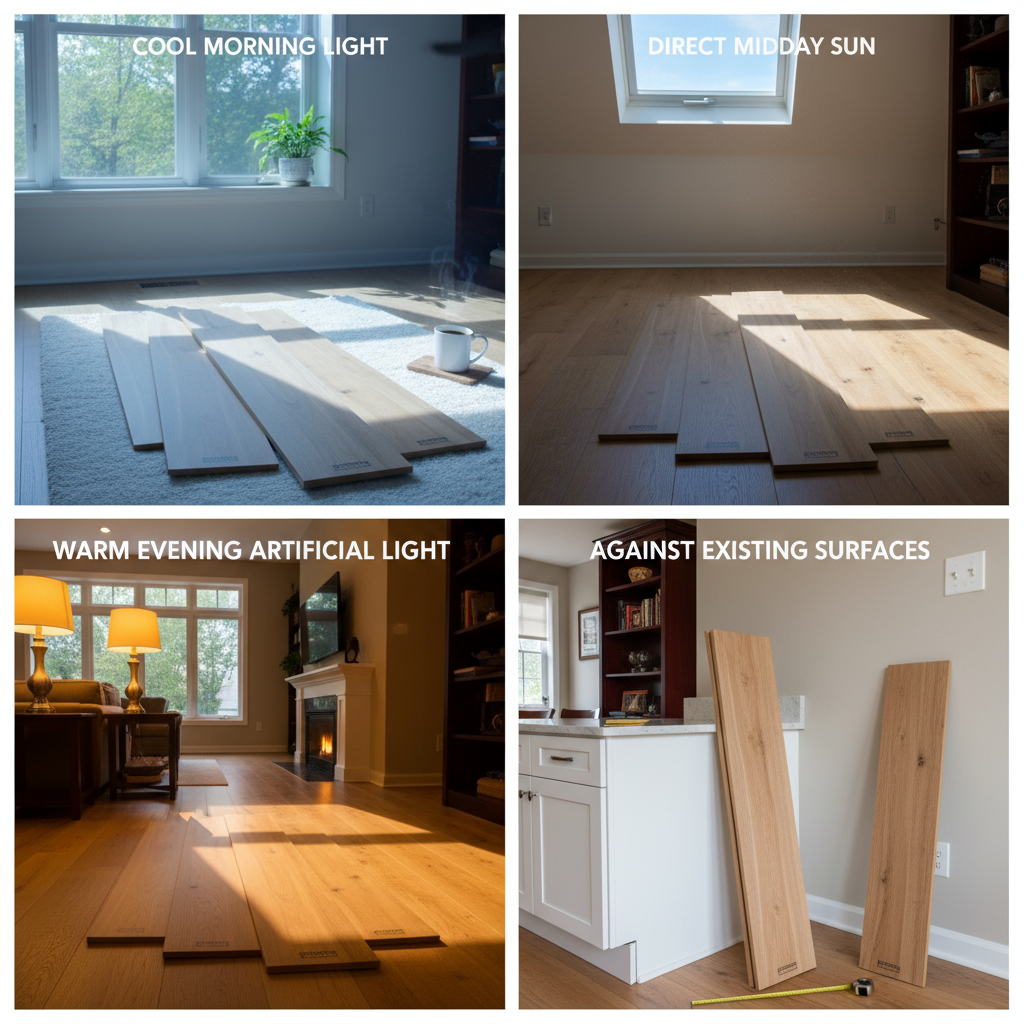
The fear of choosing the wrong hardwood color usually stems from the "showroom deception." To combat this, you must perform the 24-Hour Pre-Purchase Hardwood Stress Test. Never buy flooring based on a digital swatch or a quick glance in a brightly lit store.
- Obtain Large Samples: Bring home at least two large sample planks of your top choices.
- Morning Light: Place the samples flat on the floor near a window. Notice how the cool, blue-toned morning light affects the wood’s undertone.
- High Noon: Move the samples to the center of the room. Direct sunlight can wash out lighter tones or reveal hidden red/yellow hues in darker woods.
- Evening Artificial Light: This is critical. Turn on your lamps and overhead lights. Warm incandescent bulbs can make neutral brown floors look surprisingly orange.
- The Furniture Check: Prop the samples directly against your existing cabinets, baseboards, and largest pieces of furniture to ensure harmony.
Testing your samples across these varying natural and artificial lighting conditions over a full day is the only way to guarantee you aren’t making a costly mistake.
Mastering Undertone Mapping: Matching Hardwood Floors to Home Decor
Matching hardwood floors to home decor requires more than just picking a color you like; it requires "Undertone Mapping." Every piece of wood has an underlying hue—warm (red, orange, yellow), cool (gray, blue), or neutral (true brown).
According to the National Wood Flooring Association (NWFA), over 50% of US homeowners have wood floors at home [6]. With wood being such a dominant material, getting the decor match right is vital. Certified interior designers often build room mood boards by first identifying the undertone of the home’s permanent fixtures (like kitchen cabinets) and ensuring the new floor shares a complementary undertone. For example, pairing a cool, gray-washed floor with warm, honey-oak cabinets creates immediate visual dissonance. To achieve cohesive interior flooring design tips, you must map your room’s existing undertones and match them accordingly.
The "Two-Tone Rule" for Mixing Wood Furniture and Floors
As a rule of thumb, stick to a maximum of two primary wood tones per room. You have your dominant wood (usually the floor) and your accent wood (furniture or cabinetry). If you must mix a warm wood and a cool wood, you need a visual buffer.
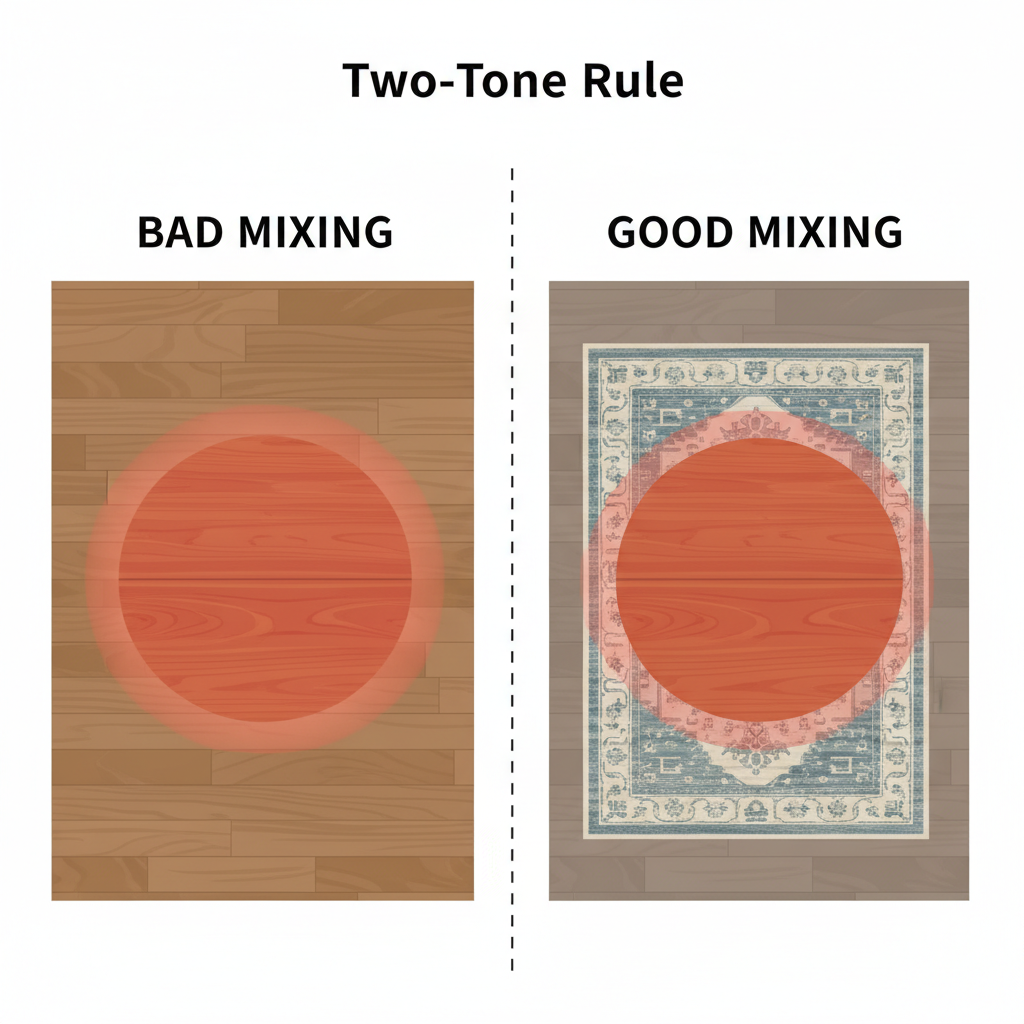
- Bad Wood Tone Mixing: Placing a cherry wood dining table directly on top of a red oak floor. The similar, yet slightly off, warm tones will aggressively clash.
- Good Wood Tone Mixing: Placing that same cherry wood table on a neutral brown floor, separated by a large, cool-toned or neutral area rug. The rug acts as a buffer, neutralizing the transition and allowing both woods to exist harmoniously.
The Best Bravewood Hybrid Hardwood Tones Ranked by Design Style
If you are looking for specific product recommendations, the Bravewood collection offers a curated palette of 10 distinct colors designed to meet modern architectural demands. Here are the best Bravewood hybrid hardwood tones, categorized by current design trends:
- Modern Farmhouse: Sunshine Hickory (SKU: BW343) is the standout star here. It offers a warm, inviting, light-to-medium tone that perfectly complements the bright whites, wrought iron accents, and rustic textures synonymous with the modern farmhouse aesthetic.
- Contemporary & Scandinavian: Riftwood Knot provides a clean, pale, and airy aesthetic. Its subtle graining and light undertones make it ideal for minimalist spaces that rely on natural light and neutral color palettes.
- Traditional & Transitional: Noon Hickory offers a richer, deeper medium-brown tone. It anchors larger rooms beautifully and pairs effortlessly with heavier, classic furniture pieces, making it a safe, timeless choice for the "20-Year Floor."
Troubleshooting Design Chaos: Fixing Mismatched Flooring and Decor
Sometimes, you inherit a home with mismatched flooring and decor, or you realize too late that you’ve made a misstep. If you are dealing with choosing the wrong hardwood color after installation, do not panic. You can fix mismatched floors without the exorbitant cost of ripping them out.
The most budget-friendly fixes involve strategic decor choices. Use large area rugs to cover the boundaries where two clashing floors meet. Utilize transitional furniture—pieces that incorporate both wood tones, or mixed metals—to bridge the visual gap. For complex open-concept homes where different floorings meet awkwardly, consulting a professional interior designer can save you from further expensive mistakes.
The Stain Blending Masterclass & Paint Pairings
If you are adding new wood to a home with existing hardwood, your hardwood color matching guide must include stain blending. You rarely get a perfect match by just buying the same species of wood. You must utilize a technical "feathering" process—weaving the new raw planks into the old floorboards in a staggered pattern, sanding everything down, and applying a custom-mixed stain to the entire unified floor.
If refinishing isn’t an option and you are stuck with clashing undertones, wall paint is your best weapon. You can use color theory to neutralize offensive wood tones. For example, if you have dated, heavily red-toned oak floors that you despise, painting your walls a warm color will only amplify the red. Instead, use complementary colors from authoritative paint brands. Sherwin-Williams SW 6204 Sea Salt—a subtle, cool green-gray—is a designer favorite for neutralizing and cooling down aggressive red and orange wood undertones, instantly modernizing the space [8].
Conclusion
Navigating the world of flooring doesn’t have to be a gamble. By applying the "20-Year Floor Formula," utilizing Undertone Mapping to avoid clashing, and performing a rigorous 24-Hour Lighting Stress Test, you can confidently select a floor that harmonizes with your home’s decor. Furthermore, by choosing a high-performance option like Bravewood hybrid hardwood, you secure the timeless beauty of natural wood backed by the waterproof durability required for modern, active living. Don’t let showroom lights dictate your home’s foundation. Order your Bravewood samples today and immediately begin your stress test to find your perfect, permanent match.
Disclaimer: Lighting and screen resolutions can alter the appearance of digital flooring samples, and physical in-home testing is always recommended.
References & Authoritative Sources
- TAS Flooring. (N.D.). Bravewood Hybrid Hardwood Specifications. Retrieved from TAS Flooring official product documentation.
- SCS Global Services. (N.D.). FloorScore® Certification. Retrieved from SCS Global Services indoor air quality standards.
- Floor Covering Weekly. (N.D.). Industry Trends: The Rise of Hybrid Hardwood Durability. Retrieved from Floor Covering Weekly.
- Panel Town & Floors. (2026). Flooring Trends and Classic Hardwood Choices. Retrieved from Panel Town & Floors.
- Kelly’s Flooring. (N.D.). Long-Term Wear Patterns of Light vs. Dark Hardwood. Retrieved from Kelly’s Flooring design insights.
- National Wood Flooring Association (NWFA). (N.D.). Consumer Flooring Preference Statistics. Retrieved from NWFA industry data.
- Studio McGee. (N.D.). The Rules of Mixing Wood Tones. Retrieved from Studio McGee design blog.
- Sherwin-Williams. (N.D.). Color Theory and Paint Pairings for Wood Floors. Retrieved from Sherwin-Williams.
