
For decades, homeowners have faced a paralyzing dilemma when renovating their living spaces: do you invest in the luxurious, generational authenticity of traditional timber, or do you surrender to the resilient, low-maintenance practicality of modern synthetic floors? Today, the flooring industry claims you no longer have to choose. Enter hybrid hardwood—a category promising the genuine aesthetic of real wood with the waterproof invincibility of luxury vinyl.
However, the market is flooded with confusing durability jargon and misleading “100% waterproof” marketing claims that leave consumers anxious about their high-ticket investments. Which flooring actually survives a household full of active pets, spilled drinks, and high foot traffic?
This guide cuts through the showroom fluff. Welcome to the Ultimate Lifestyle Decision Matrix. By decoding the hidden engineering of top-tier waterproof hardwood flooring options like TAS Bravewood, analyzing the 50-year return on investment (ROI) of solid wood, and providing forensic repair guides, we will equip you with the objective data needed to protect your home and your wallet.
- The Anatomy of Modern Flooring: What is Hybrid Hardwood?
- The Legacy of Traditional Hardwood Floors
- Head-to-Head: Bravewood Hybrid vs. Traditional Hardwood
- The Lifestyle Decision Matrix: Which is Best for Your Home?
- The Expert Diagnostic Clinic: Protecting and Repairing Your Investment
- Conclusion
- References & Authoritative Sources
The Anatomy of Modern Flooring: What is Hybrid Hardwood?
Hybrid hardwood flooring represents the ultimate compromise in modern interior design. It bridges the gap between the authentic, organic beauty of natural wood and the structural resilience of composite materials. To understand why it performs so well in active homes, you have to look beneath the surface.
Imagine a cross-sectional diagram of a hybrid plank. At the very top sits a protective wear layer and a genuine wood veneer—this is what gives the floor its authentic grain, texture, and warmth. Beneath this veneer lies the secret to its durability: a rigid, waterproof core, typically made of Stone Plastic Composite (SPC). Finally, the base features an attached acoustic pad.
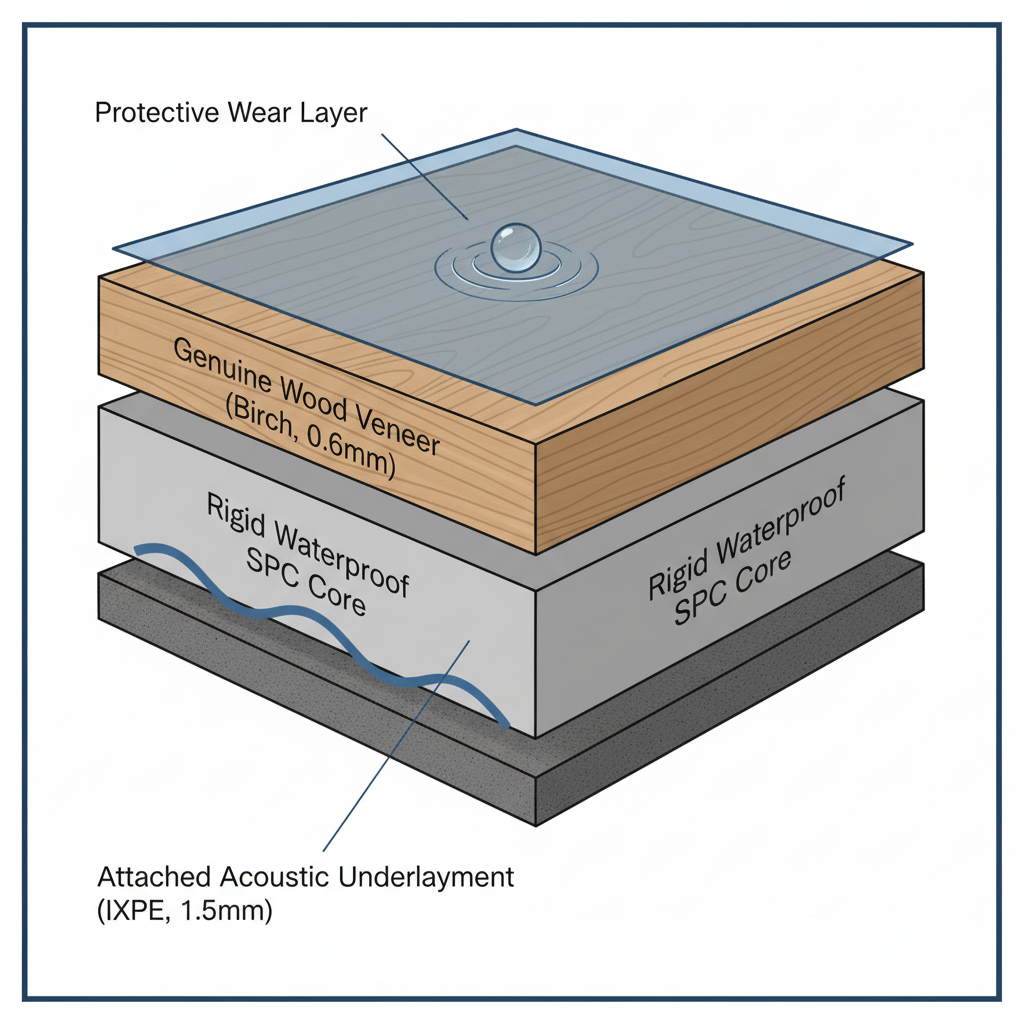
As noted by certified flooring installers and materials engineers, the primary benefit of this rigid core stability is its resistance to the moisture swelling that notoriously plagues traditional wood. According to technical specifications provided by industry distributors like BuildDirect, the combination of a specialized core construction and a precise veneer thickness prevents the plank from expanding and contracting drastically during seasonal humidity shifts [1].
Deep Dive into TAS Bravewood Hardwood Specifications
When evaluating hybrid hardwood flooring, vague marketing promises aren’t enough; you need hard data. The Bravewood collection, manufactured by TAS Flooring, is a prime example of engineered precision designed for high-traffic residential use.
For homeowners conducting research-heavy comparisons, here is the exact breakdown of Bravewood hardwood specifications:
- Overall Thickness: 12 mm (7/16 inch), providing a substantial, premium feel underfoot.
- Wood Veneer: A 0.6 mm real Birch wood veneer, delivering authentic grain patterns.
- Acoustic Underlayment: A 1.5 mm attached IXPE pad, which dampens sound and eliminates the need for purchasing separate underlayment rolls.
- Locking System: A precision click-lock mechanism designed for seamless, watertight joints.
Crucially, TAS Flooring spec sheets highlight that Bravewood features an “AC4 Rated Antimicrobial” surface finish [2]. But what does that mean for your living room? The Association of European Producers of Laminate Flooring (EPLF) defines an AC4 rating as suitable for both heavy residential and moderate commercial traffic [3]. In practical terms, this means the finish is engineered to withstand the claws of large dogs, the impact of dropped toys, and the friction of moving furniture far better than standard polyurethane.
The Brutally Honest Pros and Cons of Hybrid Flooring
To make an informed decision when weighing Bravewood hybrid hardwood vs traditional hardwood, transparency is required. Hybrid flooring is not flawless, and understanding its limitations is critical.
The pros of hybrid hardwood are undeniable: it is highly water-resistant, features incredible scratch resistance, includes pre-adhered underlayments, and allows for relatively easy installation. However, the cons are significant for flooring purists.
Who should NOT buy hybrid hardwood? If you are looking for a floor that you can sand down and change the stain color of in ten years, hybrid is not for you. Due to the 0.6 mm thickness of the Birch veneer on products like Bravewood, it cannot be traditionally sanded and refinished. Furthermore, experts at Back to Timber highlight that while hybrid floors have excellent temperature stability, they can still be susceptible to environmental impacts [4]. A major identified content gap in the industry is the long-term data on UV degradation. In sun-drenched rooms with massive, unshaded windows, the UV-cured wear layers on hybrid floors can experience slight discoloration or degradation over a decade of intense, direct sunlight.
Finally, consumers must clearly distinguish between “water-resistant” and “100% waterproof.” While the hybrid plank itself will not swell or warp when submerged, the floor system as a whole is only as waterproof as its installation.
The Legacy of Traditional Hardwood Floors
While hybrid flooring relies on modern chemistry, traditional solid hardwood relies on a legacy of proven longevity. Milled from a single piece of timber, solid wood is celebrated for its unmatched authenticity, warmth, and ability to dramatically increase property value.
Traditional hardwood floors are not just a design choice; they are a generational real estate investment. Historical home restorations routinely uncover original hardwood floors that are 100+ years old and still structurally sound. However, this longevity comes with a caveat: solid wood is highly susceptible to moisture and climate fluctuations. The National Wood Flooring Association (NWFA) provides definitive guidelines emphasizing that solid wood must be carefully acclimated to the home’s specific humidity levels prior to installation to prevent future warping or gapping [5].
50-Year Cost-of-Ownership and ROI Analysis
The core user intent for those researching the best hardwood flooring for residential homes often revolves around weighing the high initial investment against long-term value. Let’s look at a 50-year cost-of-ownership analysis.
Solid hardwood requires a higher upfront cost for materials and professional nail-down installation. Furthermore, it typically requires sanding and refinishing every 7 to 15 years, depending on household traffic. However, because a standard 3/4-inch solid wood plank can be refinished up to 6 or 7 times, its lifespan easily stretches past 50 years.
Conversely, hybrid floors like Bravewood have a lifespan of 10 to 30 years. Over a 50-year period, a homeowner might have to completely tear out and replace a cheaper hybrid floor two or three times. According to the Appraisal Institute, solid hardwood yields a significantly higher ROI during home sales, often recovering 70% to 80% of its installation cost in added property value [6]. Therefore, while hybrid floors are cheaper in the short term, traditional wood is arguably more cost-effective over a half-century.
Head-to-Head: Bravewood Hybrid vs. Traditional Hardwood
When we pit TAS Bravewood directly against traditional solid timber, the decision comes down to your household’s specific chaos level.
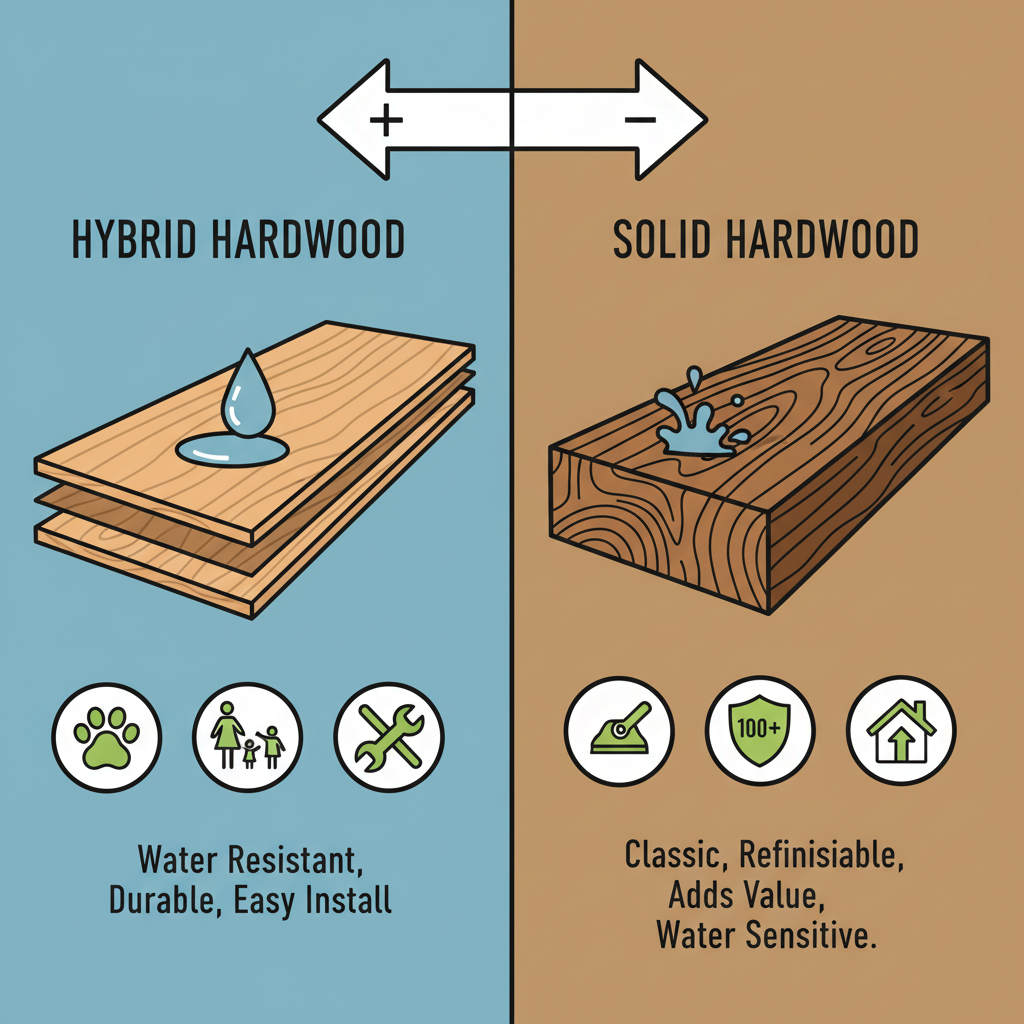
Technical Comparison:
- Veneer Thickness: Bravewood (0.6 mm – no refinishing) vs. Traditional Wood (Solid 3/4 inch – multiple refinishes).
- Wear Resistance: Bravewood (AC4 Antimicrobial Finish) vs. Traditional Wood (Site-applied Polyurethane – prone to surface scratches).
- Water Resistance: Bravewood (Topical waterproof core) vs. Traditional Wood (Highly vulnerable to moisture and cupping).
- Lifespan: Bravewood (10-30 years) vs. Traditional Wood (50-100+ years).
As noted in comparative analyses by Sensse Floor regarding climate suitability, solid wood struggles in humid, coastal environments or below-grade basements, whereas rigid core hybrids excel in these challenging spaces [7].
The Science of Durability: Scratch and Dent Resistance
When searching for durable scratch resistant hardwood, many homeowners mistakenly focus solely on the wood species. While species matters, the finish is often more important for preventing scratches.
To rank wood species objectively, the industry uses the Janka Hardness Scale. For example, Hickory is incredibly dense, clocking in at a Janka rating of 1,820, while Brazilian Cherry (Jatoba) reaches a massive 2,350. However, even the hardest wood can suffer surface scratches if the clear coat fails.
This is where hybrid technology shines. Experts at Wally’s Carpet & Tile emphasize that advanced factory finishes—such as Aluminum Oxide, Ceramic-bead, or AC4 coatings—utilize microscopic particles to create an impenetrable wear layer [8]. This chemistry makes hybrid floors exceptionally resistant to dog nails and dragged furniture, often outperforming site-finished solid oak in daily scratch resistance.
Moisture Dynamics: Waterproofing vs. Water Resistance
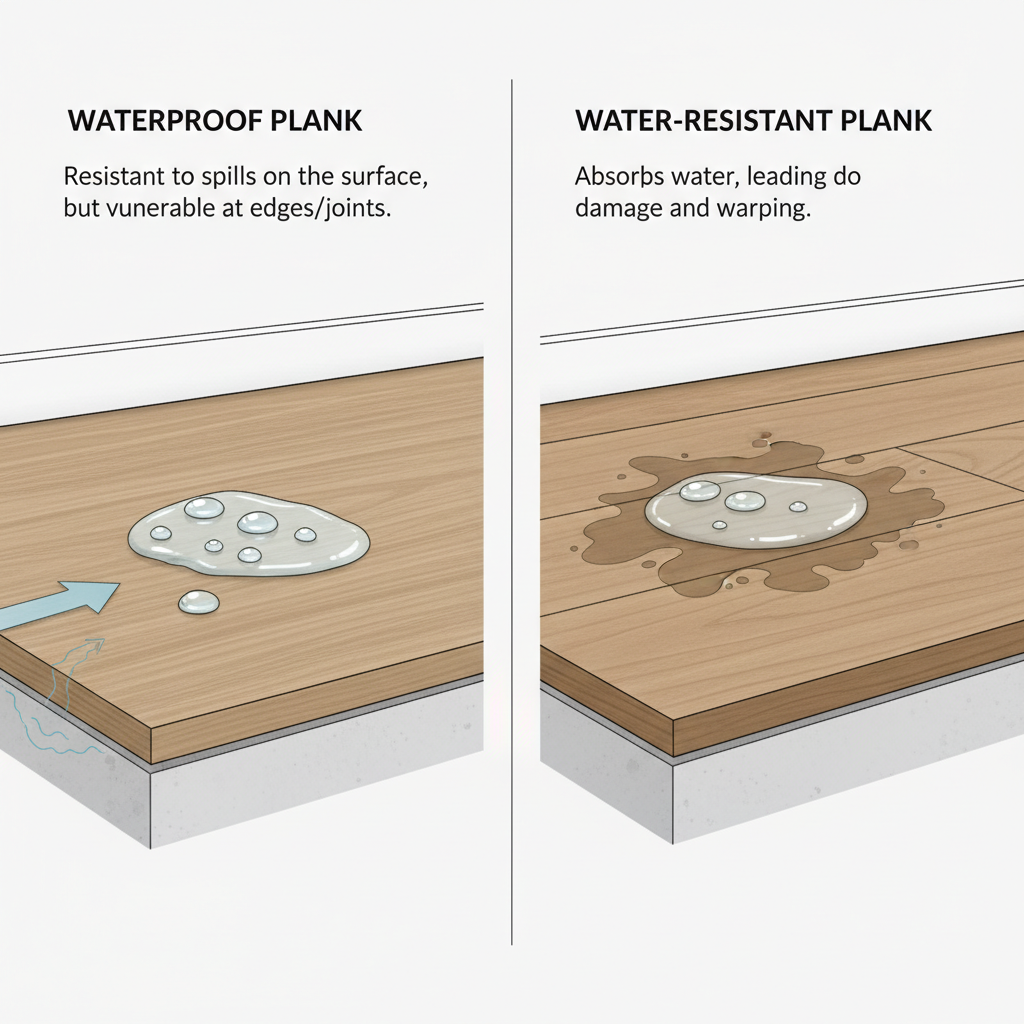
The most critical distinction in modern flooring is demystifying “waterproof” claims. Waterproof hardwood flooring options utilize advanced technology, such as leakproof locking joints (like the Valinge 5G Dry system), to keep spills on the surface for up to 24 hours.
However, a critical warning must be made regarding perimeter sealing. While the Bravewood planks are waterproof, your subfloor is not. If a major plumbing leak occurs and water bypasses the flooring at the baseboards, it will soak into the wooden subfloor or concrete below, leading to mold and structural damage. Traditional wood, on the other hand, will immediately absorb surface water, leading to severe hardwood floor warping issues like cupping and buckling.
The Lifestyle Decision Matrix: Which is Best for Your Home?
To resolve decision paralysis, we must segment recommendations by household persona. As architectural flooring authorities at Havwoods suggest, matching the wood’s performance and aesthetic to your specific home style and subfloor compatibility is paramount [9].
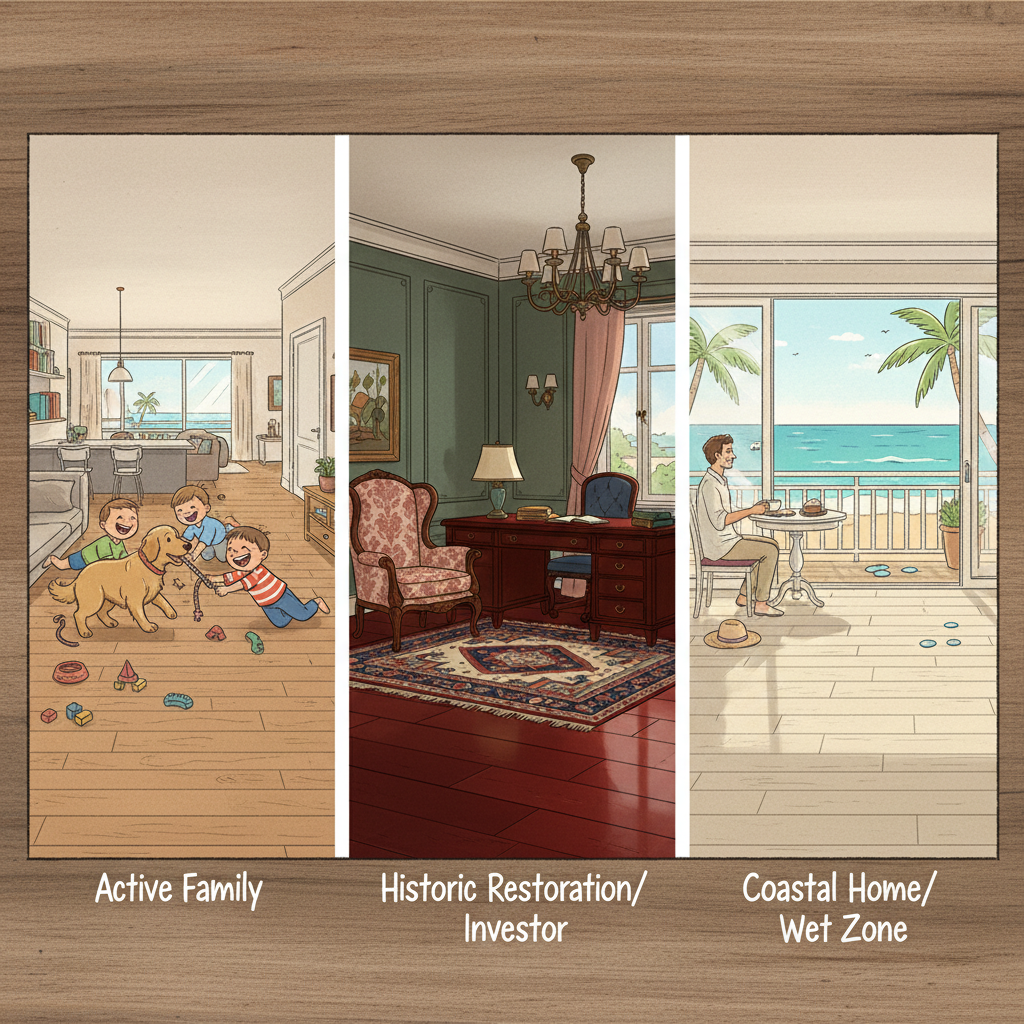
The Active Family & Pet Owner
If your home is a high-traffic zone filled with dogs, kids, and frequent spills, durability is your top priority.
Recommendation: Bravewood hybrid hardwood is an excellent choice due to its AC4 scratch-resistant finish and waterproof core. If you insist on traditional wood, opt for a high-Janka species like Hickory pre-finished with an Aluminum Oxide coating.
The Historic Restoration & Generational Investor
If you are restoring a century-old home, prioritizing authentic aesthetics, or looking to maximize your property’s resale value over the next several decades, synthetic floors will fall short.
Recommendation: Traditional solid hardwood. Its 100+ year lifespan and ability to be custom-stained over generations make it the ultimate real estate investment.
The Coastal Home & Wet Zone Renovator
If you live in a coastal climate with wild humidity swings, or if you are installing flooring over a concrete slab or in a kitchen/half-bath, solid wood is a massive liability.
Recommendation: Bravewood hybrid hardwood. Its SPC core is highly compatible with concrete slabs and impervious to the ambient moisture that causes solid wood to swell and warp.
The Expert Diagnostic Clinic: Protecting and Repairing Your Investment
Establishing a beautiful floor is only half the battle; preserving it requires forensic-level maintenance knowledge. Whether you choose low maintenance hybrid flooring or traditional timber, understanding how to diagnose and repair damage is crucial. As experts at Parma Flooring note, proper acclimation times before installation are non-negotiable to prevent environmental warping [10]. Furthermore, fixing a warped floor without fixing the underlying plumbing leak guarantees a recurrence.
Emergency Triage Timeline for Water-Damaged Floors
Water damaged hardwood floors are a homeowner’s worst nightmare. Water damage manifests as “cupping” (where the edges of the plank are raised higher than the center) or “crowning” (where the center bulges upward).
- First 24 Hours: Rapidly remove all standing water. Set up high-volume fans and commercial dehumidifiers.
- Week 1: Monitor the drying progress. Do not rely on touch; use a pinless moisture meter to objectively measure the moisture content inside the wood.
- Month 1: Wait. The absolute biggest mistake homeowners make is sanding a cupped floor too early. According to Duffy Floors, if you sand a cupped floor before the moisture content has completely stabilized, the wood will eventually dry and flatten out, leaving you with a permanently crowned floor [11].
Additionally, if water has penetrated the subfloor, you must address potential hidden mold growth between the hardwood and the subfloor, a critical step often highlighted by structural integrity experts at RW Supply + Design [12].
Diagnostic Repair Guide for Scratched Wood Flooring
Repairing scratched traditional wood flooring requires diagnosing the depth of the wound. Has the scratch merely breached the polyurethane clear coat, or has it penetrated the actual raw wood grain?
For minor surface scratches in the clear coat, professional-grade touch-up products work wonders. Products like the Tibet Almond Stick or Bona Pro Series Refresher use specialized oils and chemical actions to blend the scratch into the surrounding finish. For deep gouges that expose raw wood, you will need color-matched wood filler and localized sanding. However, as advised by Classic Wood Floors, if a deep gouge spans multiple planks or if your floor has a factory-applied Aluminum Oxide finish, DIY fixes will likely fail, and it is time to call a professional refinisher [13].
Low-Maintenance Cleaning Regimens for Hybrid Floors
Hybrid floors are marketed as low-maintenance, but using the wrong cleaning methods will permanently ruin them. The goal is to preserve the synthetic wear layer.
Your cleaning regimen must be strictly pH-neutral. Avoid harsh chemicals, waxes, and polish, as these will leave a cloudy residue on the AC4 finish. Most importantly, step away from the steam mop. Despite “waterproof” claims, the intense heat and pressure of a steam mop can force moisture into the click-lock seams and warp the planks or delaminate the composite layers, a vulnerability noted by composite core experts at Airbase Carpet & Tile Mart [14]. Stick to standard sweeping and a lightly damp microfiber mop.
Conclusion
Ultimately, there is no universal “best” hardwood flooring—there is only the best hardwood for your specific lifestyle, climate, and household chaos level.
If you are a generational investor looking for unmatched authenticity and a 50-year ROI, traditional solid timber remains the undisputed king. However, if you need a floor that can survive muddy paws, spilled sippy cups, and coastal humidity without demanding a rigorous maintenance schedule, the waterproof, low-maintenance reality of Bravewood hybrid hardwood is a technological marvel.
We encourage you to assess your home’s traffic levels and subfloor type using this Lifestyle Decision Matrix. Before making your final investment, order physical samples of both TAS Bravewood and traditional solid wood to test their durability and aesthetic appeal in your home’s unique lighting.
Disclaimer: The information provided in this article is for educational and informational purposes only. Always consult with the manufacturer’s specific installation and maintenance guidelines. For severe water damage, structural subfloor issues, or black water contamination, strongly advise consulting a certified National Wood Flooring Association (NWFA) professional or a licensed remediation specialist.
References & Authoritative Sources
- BuildDirect. (N.D.). Technical Specifications on Veneer Thicknesses and Core Construction. Retrieved from BuildDirect.
- TAS Flooring. (N.D.). Bravewood Collection Technical Specification Sheets. Retrieved from TAS Flooring.
- Association of European Producers of Laminate Flooring (EPLF). (N.D.). Abrasion Class (AC) Ratings and Residential Wear Standards. Retrieved from EPLF.
- Back to Timber. (N.D.). Temperature Stability and Environmental Impact of Hybrid Floors. Retrieved from Back to Timber.
- National Wood Flooring Association (NWFA). (N.D.). Installation and Acclimation Guidelines for Solid Wood Flooring. Retrieved from NWFA.
- Appraisal Institute. (N.D.). Impact of Housing Materials on Property Valuation and ROI. Retrieved from Appraisal Institute.
- Sensse Floor. (N.D.). Comparative Analysis on Climate Suitability for Hybrid vs. Solid Wood. Retrieved from Sensse Floor.
- Wally’s Carpet & Tile. (N.D.). Modern High-Performance Finishes: Aluminum Oxide and AC Coatings. Retrieved from Wally’s Carpet & Tile.
- Havwoods. (N.D.). Architectural Flooring Trends and Wood Species Matching. Retrieved from Havwoods.
- Parma Flooring. (N.D.). Engineered Wood Structure and the Mechanics of Warping. Retrieved from Parma Flooring.
- Duffy Floors. (N.D.). The Mechanics of Wood Cupping and the Dangers of Premature Sanding. Retrieved from Duffy Floors.
- RW Supply + Design. (N.D.). Subfloor Moisture Dynamics and Structural Flooring Integrity. Retrieved from RW Supply + Design.
- Classic Wood Floors. (N.D.). Professional Refinishing and Practical DIY Triage Steps. Retrieved from Classic Wood Floors.
- Airbase Carpet & Tile Mart. (N.D.). Layered Design and Composite Core Strength of Hybrid Floors. Retrieved from Airbase Carpet & Tile Mart.
