
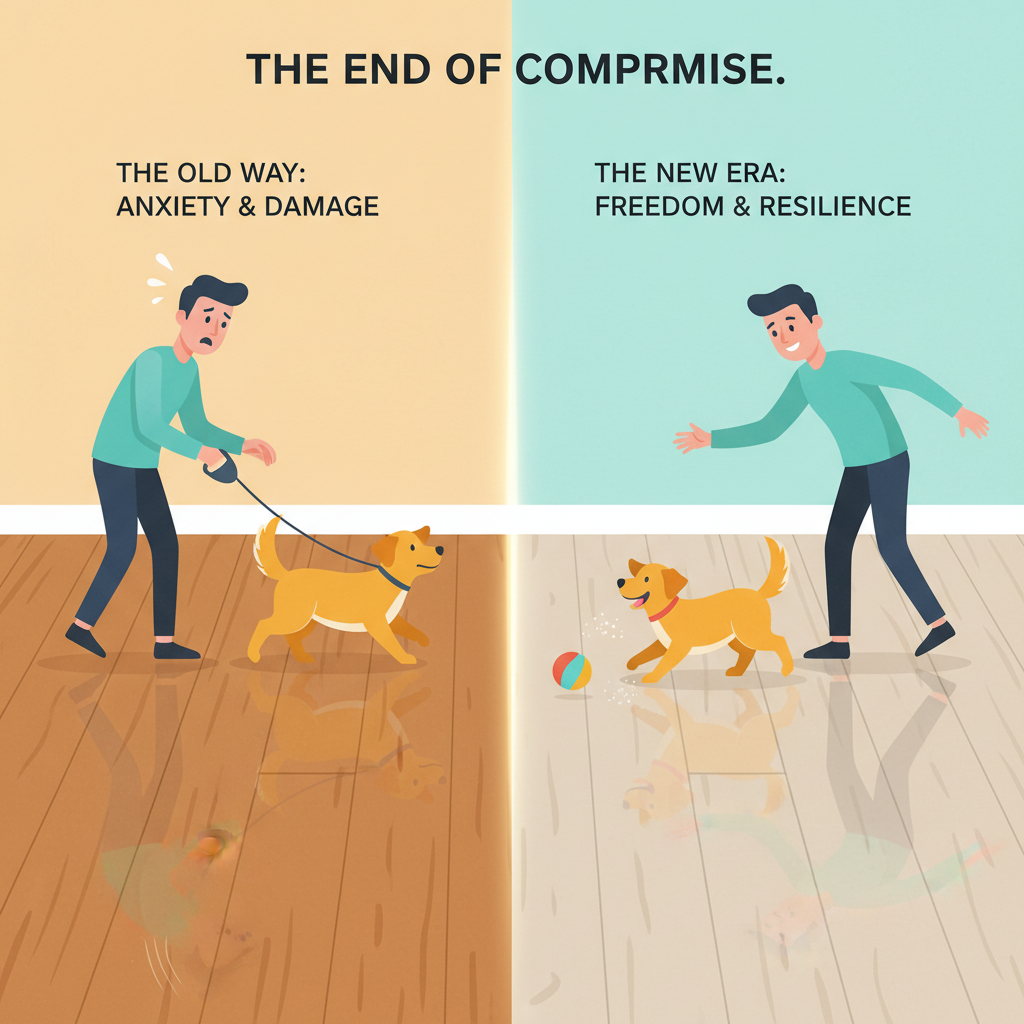
Every homeowner with an active household faces the ultimate interior design dilemma: the deep desire for the prestige and warmth of beautiful hardwood floors, constantly at war with the paralyzing fear of inevitable scratches, spills, and pet stains. For years, the industry forced a compromise. You could either have stunning, natural wood floors that required walking on eggshells, or you could install indestructible, synthetic flooring that lacked the authentic charm of nature.
Welcome to the end of the compromise. This is your science-backed blueprint to achieving a stunning, pet-friendly home without sacrificing aesthetic elegance. By leveraging cutting-edge hybrid technologies like Bravewood hybrid hardwood, understanding the physics of wood densification, and utilizing the “Trifecta” of pet-friendly design, you can rescue your home from the anxiety of flooring wear and tear. In this definitive guide, we will decode the true science of durability, explore the anatomy of modern hybrid resilient floors, and provide expert triage strategies to protect your investment for a lifetime.
- The Science of Pet-Friendly Flooring: Decoding True Durability
- Enter Hybrid Resilient Flooring: The Ultimate Compromise
- The ‘Design-First’ Pet Tactic: Styling Floors to Hide Wear and Tear
- Damage Triage: Fixing Scratched Hardwood Floors from Pets
- Zero-Fuss Maintenance: Keeping Your Floors Pristine
- Conclusion
- References
The Science of Pet-Friendly Flooring: Decoding True Durability
When searching for durable hardwood floors, many homeowners mistakenly believe that all wood is created equal, or that a thick polyurethane coat makes any species indestructible. In reality, true durability is a complex equation combining natural cellular density with advanced finish chemistry.
To understand which materials make the best hardwood flooring for dogs, we must first look at the Janka Hardness Scale. This standardized industry measurement tests the density of wood by measuring the force required to embed a 0.444-inch steel ball halfway into the plank. The higher the number, the harder the wood [1].
The Janka Hardness Scale: A Visual Benchmark
- White Oak (Standard Benchmark): 1360 Janka Rating. A highly popular, moderately durable choice, but susceptible to dents from large, active dogs.
- Hickory (Domestic High): 1820 Janka Rating. One of the hardest domestic woods available, offering excellent natural resistance to heavy traffic and pet nails.
- Brazilian Walnut / Ipe (Exotic High): 3680 Janka Rating. An incredibly dense exotic hardwood that is nearly impervious to standard household denting.
A common question among homeowners is whether engineered hardwood is more durable than solid wood. Structurally, engineered wood is more dimensionally stable against moisture due to its cross-ply construction. However, its surface durability against scratches relies entirely on the species of the top veneer and the quality of the finish, not the core itself.
Wood Densification: How Heat and Pressure Create ‘Indestructible’ Floors
What if you love the look of traditional White Oak but need the performance of an exotic species? Enter the science of wood densification. Through a rigorous physical and chemical process utilizing extreme heat and pressure, manufacturers can alter the very cellular structure of natural wood, compressing it to drastically increase its density.
A prime example of this innovation is Dogwood Pro by Bruce Flooring and Hartco Floors. By applying this densification process to traditional oak, the wood achieves a staggering 3000 Janka rating—more than double its natural hardness of 1360 [2]. This makes it one of the absolute best hardwood flooring for dogs on the market, offering the authentic grain of domestic oak with the armor-like dent resistance of an exotic species.
Enter Hybrid Resilient Flooring: The Ultimate Compromise
While densified wood is a marvel, some active homes require a solution that goes beyond dent resistance to offer 100% waterproof capabilities. This is where hybrid resilient flooring steps in as the ultimate compromise.
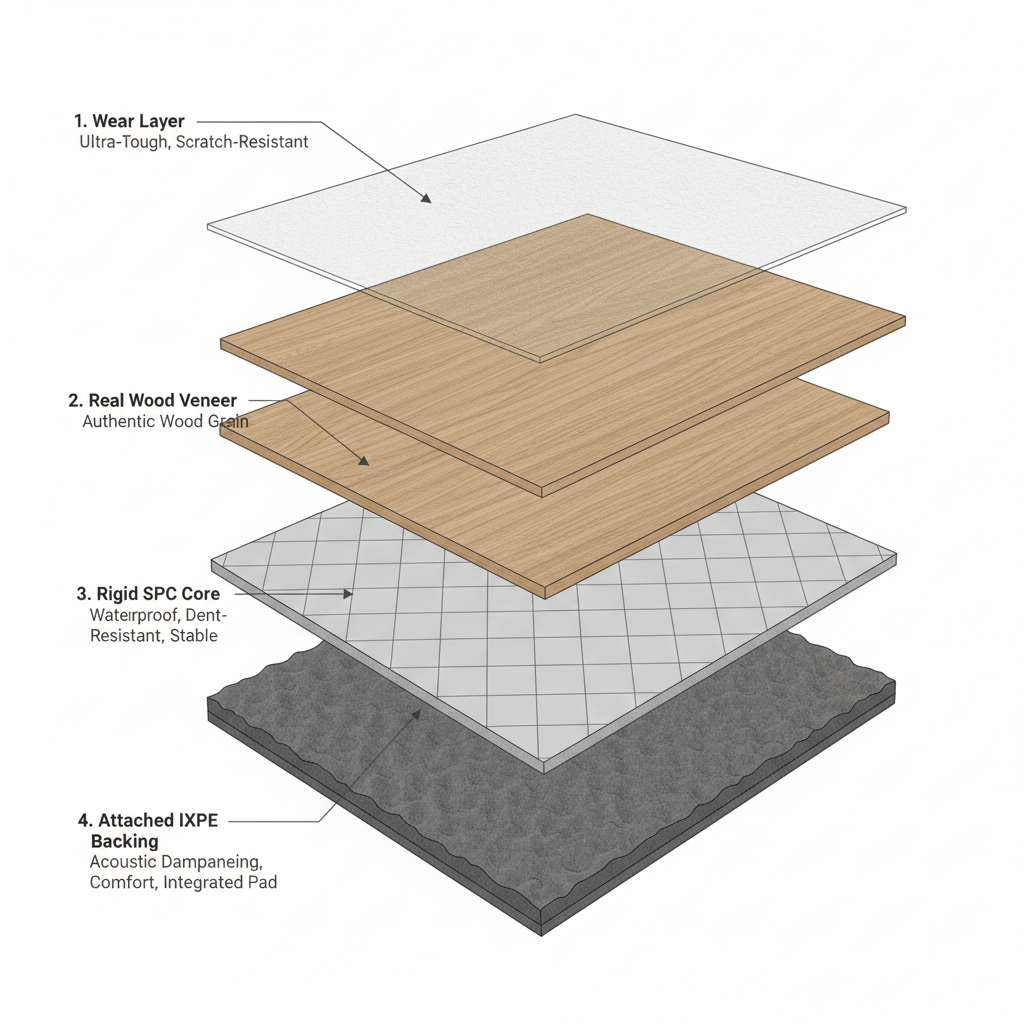
But what exactly is hybrid resilient flooring? It is a specialized category that fuses the authentic beauty of a real wood veneer with the impenetrable, waterproof core of luxury vinyl or laminate. To understand why scratch resistant hybrid hardwood is revolutionizing active homes, we must diagram its 4-layer anatomy:
- The Wear Layer: An ultra-tough, clear topcoat (often enhanced with aluminum oxide or antimicrobial properties) designed to resist micro-scratches and fading.
- The Decorative Veneer: A thin slice of 100% real wood (like oak, hickory, or birch) that provides authentic texture, grain, and color.
- The Rigid Core: Typically a Stone Plastic Composite (SPC) or Wood Plastic Composite (WPC). Unlike traditional engineered plywood cores which can dent or swell, an SPC core is fiercely dent-resistant and entirely waterproof.
- The Attached Backing: An underlayment pad that provides acoustic dampening and underfoot comfort.
Is hybrid hardwood better than laminate? Yes. While laminate uses a printed photograph of wood, hybrid flooring uses a real wood veneer, offering superior aesthetics while matching or exceeding laminate’s waterproof and scratch-resistant properties.
Deep Dive: Bravewood Hybrid Hardwood for Active Homes
When evaluating specific product lines, Bravewood hybrid hardwood by TAS Flooring stands out as a premier choice for chaotic, pet-heavy households. Bravewood is engineered specifically to handle the rigorous demands of active living while maintaining a high-end aesthetic.
According to manufacturer specifications, Bravewood features a robust 12mm overall thickness. This includes a 0.6mm real birch wood veneer that delivers authentic visual warmth, backed by a 1.5mm attached IXPE pad [3]. This IXPE pad is critical for active homes; it acts as a premium acoustic dampener, silencing the disruptive “click-clack” of dog nails and heavy footsteps that often plague rigid core floors.
Furthermore, Bravewood hybrid hardwood for active homes boasts an AC4 Rated Antimicrobial surface finish. In the flooring industry, an AC4 rating means the floor has passed stringent abrasion tests and is approved for heavy residential and light commercial use. It is built to withstand high-traffic friction, making it exceptionally resilient against pet claws and dropped toys. Additionally, Bravewood holds official FloorScore® and GreenGuard Gold certifications, ensuring that despite its tough chemical wear layer, it meets the strictest standards for indoor air quality and safety [4].
The ‘Design-First’ Pet Tactic: Styling Floors to Hide Wear and Tear
Durability isn’t just about structural integrity; it’s also about aesthetic longevity. The “Design-First” pet tactic involves choosing stylish pet friendly flooring options that actively camouflage the minor wear and tear that inevitably occurs in any lived-in home.
Today, pet-friendly flooring can absolutely look like real wood or high-end stone without the fragility. For instance, engineered tile offers a phenomenal alternative to cold, hard ceramic. Products like Alterna by Armstrong Flooring are constructed of 70% limestone, providing the luxurious look of natural stone but with a warmer, more forgiving surface underfoot [5]. These modern resilient options are often protected by advanced wear-layer technologies, such as Diamond 10® technology, which uses cultured diamonds to protect high-definition design layers from gouges and stains, resulting in highly durable pet friendly wood floors and tiles.
The Pet-Friendly Trifecta: Species, Finish, and Texture
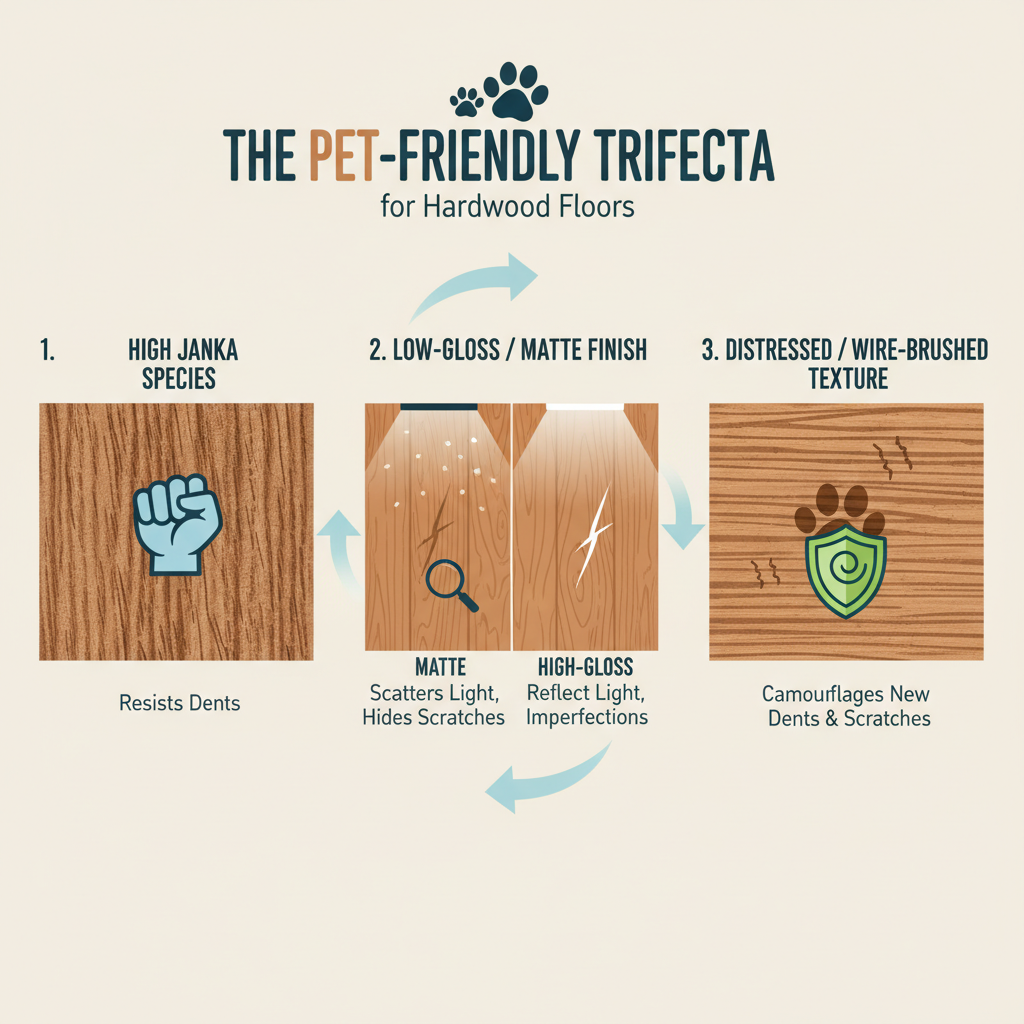
If you are committed to real wood, you can dramatically extend its visual lifespan by employing the “Pet-Friendly Trifecta.” This strategy combines three specific elements to render scratches nearly invisible:
- High Janka Species: Start with a hard baseline, like Hickory or Maple.
- Low-Gloss / Matte Finish: The physics of light reflection play a massive role in scratch visibility. High-gloss finishes reflect light uniformly; when a dog nail creates a micro-scratch, it interrupts that reflection, casting a visible shadow. Matte finishes scatter light naturally, allowing minor scuffs to blend seamlessly into the floor.
- Distressed / Wire-Brushed Texture: A smooth floor highlights every imperfection. A wire-brushed texture removes the softest wood fibers, leaving the hardest grains exposed while creating a textured canvas that actively hides new dents and scratches.
Traction Matters: A Vet’s Perspective on Canine Joint Health
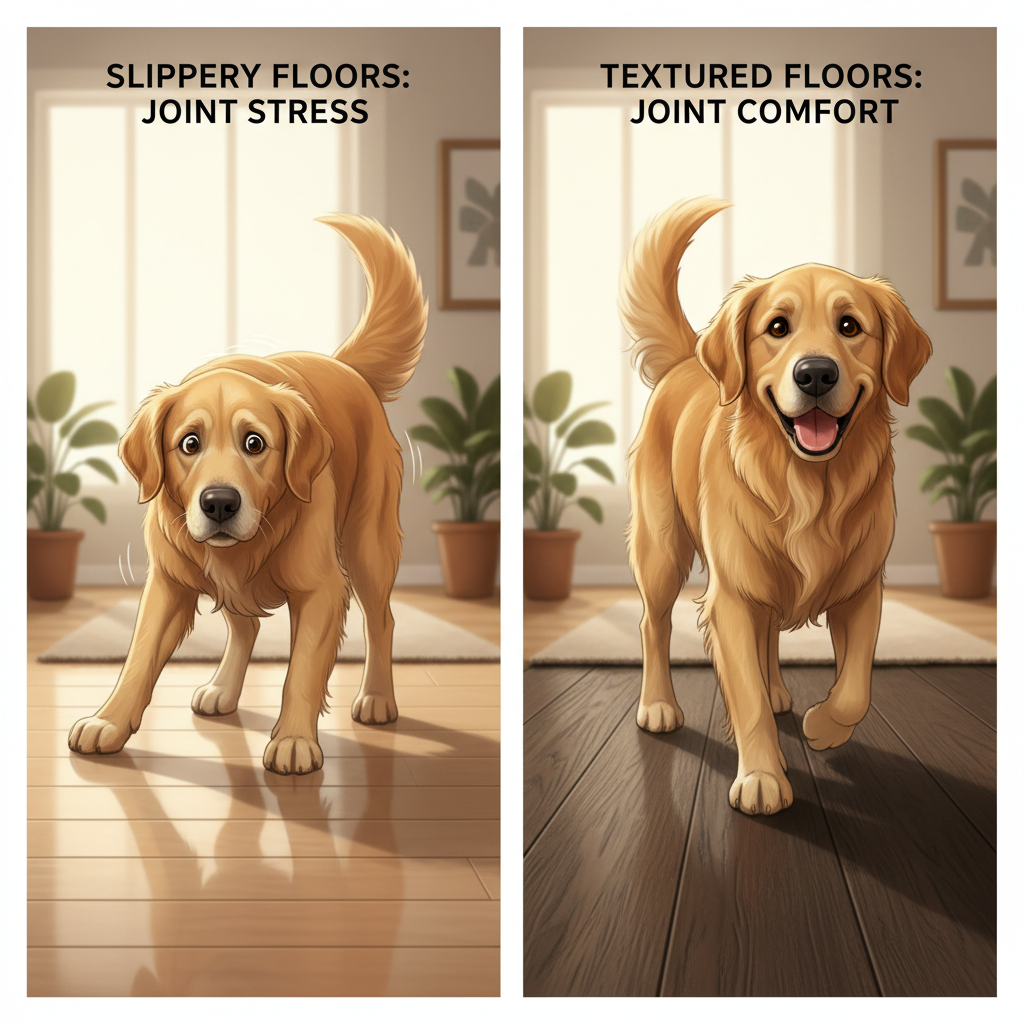
When discussing pet friendly flooring, we must address a critical content gap: the health of the pet itself. Focusing solely on scratch resistance often leads homeowners to choose ultra-smooth, rigid surfaces that are incredibly slippery for animals.
According to insights aligned with the American Veterinary Medical Association (AVMA), chronic slipping on hard floors can have severe long-term impacts on canine joint health, particularly for large breeds and senior dogs prone to hip dysplasia or arthritis [6]. When a dog constantly scrambles for traction, it places unnatural micro-stresses on their ligaments. When categorizing flooring, consider the pet: active cats may require maximum scratch resistance, but large, aging dogs desperately need floors with an Embossed In Register (EIR) texture or wire-brushed finish to provide necessary grip and prevent joint degradation.
Damage Triage: Fixing Scratched Hardwood Floors from Pets
Even with the best preventative measures, accidents happen. When dealing with scratched hardwood floors from pets, the first step is accurate diagnosis. You must determine if the damage is a superficial finish scratch or a deep wood gouge.
The Diagnostic Checklist:
- Level 1 (Surface Finish): If the scratch is visible but you cannot feel a distinct ridge when running your fingernail over it, only the polyurethane topcoat is damaged. This can often be blended with a specialized finish restorer or a light buffing.
- Level 2 (Color Layer): If the scratch reveals lighter wood underneath but isn’t a deep trench, color-matching wood putty and a touch-up pen can effectively mask the pet damage on wood floors.
- Level 3 (Deep Wood Grain): If the wood is physically splintered or deeply gouged, spot-fixing is rarely effective. Professional floor refinishers, such as the experts at Pete’s Hardwood Floors, advise that deep gouges require grinding through the damaged wood fiber, often necessitating at least a 36-grit sandpaper and a localized or full-room refinish [7].
The Hard Truth About Pet Urine: Ammonia Burns and Wood Tannins
While scratches are frustrating, liquid accidents are destructive. The hard truth about pet urine is that it causes severe chemical damage. When dog or cat urine sits on a hardwood floor, the urea breaks down into ammonia. This highly alkaline ammonia reacts violently with the natural tannins present in the wood (especially in species like Oak).
This chemical reaction creates deep, black stains that are not merely on the surface—they are burned into the cellular structure of the wood itself.
- For Light Stains: You can attempt to reverse the chemical reaction using a wood bleach called oxalic acid, which specifically targets tannin stains.
- For Irreversible Damage: If the wood has turned charcoal black and begun to warp, sanding will not save it. As noted by restoration professionals at U.S. Wood Floor Corp, the only solution for deep structural ammonia burns is the complex process of cutting out the affected planks and “weaving” in new floorboards to match the existing floor [8].
Zero-Fuss Maintenance: Keeping Your Floors Pristine
To ensure your easy to clean hardwood remains beautiful, you must establish a zero-fuss, preventative maintenance protocol. The easiest finishes to maintain are matte and satin, as they hide daily dust and smudges. However, the way you clean them dictates their lifespan.
The National Wood Flooring Association (NWFA) provides strict guidelines on floor care, explicitly warning against two popular but destructive cleaning methods [1]:
- Vinegar and Water: Vinegar is highly acidic. Over time, this acid chemically degrades and dulls the polyurethane finish, stripping away the floor’s protective layer. Always use a pH-neutral hardwood floor cleaner.
- Steam Mops: Steam mops force high-temperature moisture down into the micro-bevels and seams of the wood. This physical intrusion of moisture causes the wood to swell, cup, and eventually warp.
Defining Normal Wear and Tear vs. Damage
For property managers and renters, understanding flooring wear and tear is vital for lease agreements and security deposits. Property management authorities like Azibo clearly delineate the legal and practical boundaries between expected use and actionable damage [9].
A Visual Guide to Wear and Tear vs. Damage:
- Normal Wear and Tear: Fading from sunlight exposure, minor surface scuffs from shoes, gentle dulling of the finish in high-traffic hallways, and microscopic scratches that do not penetrate the stain.
- Actionable Damage: Deep gouges from dragging heavy furniture, black ammonia burns from uncleaned pet urine, chipped veneer edges, and localized water damage/cupping from overflowing pet bowls.
Conclusion
Achieving a stunning, magazine-worthy home is no longer a compromise for active households. Thanks to the relentless innovation in the flooring industry, you no longer have to choose between aesthetic prestige and practical survival. By embracing hybrid technologies like Bravewood hybrid hardwood, understanding the impenetrable nature of wood densification, and implementing the design-first Trifecta of hard species, matte finishes, and textured surfaces, you can create a space that is as beautiful as it is resilient.
Armed with the right science, an understanding of true Janka durability, and NWFA-approved maintenance protocols, your family and your pets can live freely. We highly encourage readers to request a sample of Bravewood hybrid hardwood to test its durability firsthand, or consult with a certified NWFA flooring professional to evaluate the specific needs of your active home.
Disclaimer: The information provided regarding pet health and joint impact is for educational purposes; consult a licensed veterinarian for specific pet health concerns. Always follow manufacturer guidelines for flooring installation and maintenance to preserve warranties.
References
- National Wood Flooring Association (NWFA). (N.D.). Wood Floor Maintenance and Janka Hardness Scale Guidelines. Retrieved from https://www.woodfloors.org
- Bruce Flooring / Hartco Floors. (N.D.). Dogwood Pro Densified Wood Technology Specifications. Retrieved from https://www.bruce.com
- TAS Flooring. (N.D.). Bravewood Hybrid Hardwood Product Specifications and Warranty Data. Retrieved from https://www.tasflooring.com
- SCS Global Services. (N.D.). FloorScore® Indoor Air Quality Certification. Retrieved from https://www.scsglobalservices.com
- Armstrong Flooring. (N.D.). Alterna Engineered Tile and Diamond 10 Technology. Retrieved from https://www.armstrongflooring.com
- American Veterinary Medical Association (AVMA). (N.D.). Canine Joint Health and Environmental Impacts. Retrieved from https://www.avma.org
- Pete’s Hardwood Floors. (N.D.). Expert Advice on Sanding and Refinishing Realities. Retrieved from https://www.peteshardwoodfloors.com
- U.S. Wood Floor Corp. (N.D.). Professional Floor Restoration and Board Replacement. Retrieved from https://www.uswoodfloorcorp.com
- Azibo. (N.D.). Landlord Guide to Normal Wear and Tear vs. Property Damage. Retrieved from https://www.azibo.com
