
The modern farmhouse aesthetic is defined by its inviting warmth, blending rustic architectural elements with clean, contemporary lines. At the heart of this highly sought-after design is the flooring—typically envisioned as sweeping, wide-plank hardwood that tells a story of heritage and charm. However, for many homeowners, the dream of authentic farmhouse flooring quickly collides with the nightmare of traditional wood maintenance. Reclaimed and solid wood floors are notoriously fragile, prone to scratching from family pets, and require strict, unwavering climate control to prevent catastrophic warping.
Enter Bravewood hybrid hardwood: the ultimate “no-compromise” solution. By ingeniously fusing a genuine wood veneer with a 100% waterproof rigid core, hybrid hardwood survives the chaos of active modern homes, pets, and inevitable moisture spills without sacrificing an ounce of authentic rustic charm. In this comprehensive guide, we will explore the vulnerabilities of traditional wood, demystify the advanced engineering behind hybrid flooring, and reveal why Bravewood’s collections are the perfect foundation for your modern farmhouse interior.
- The Modern Farmhouse Flooring Dilemma: Aesthetics vs. Reality
- Demystifying Hybrid Hardwood Flooring: The Lifeproof Solution
- Why Bravewood Hybrid Hardwood is the Ultimate Farmhouse Choice
- Bravewood Hybrid Hardwood Flooring Ideas & Applications
- Living with Hybrid Hardwood: Maintenance and Repair
- Conclusion
- References
The Modern Farmhouse Flooring Dilemma: Aesthetics vs. Reality
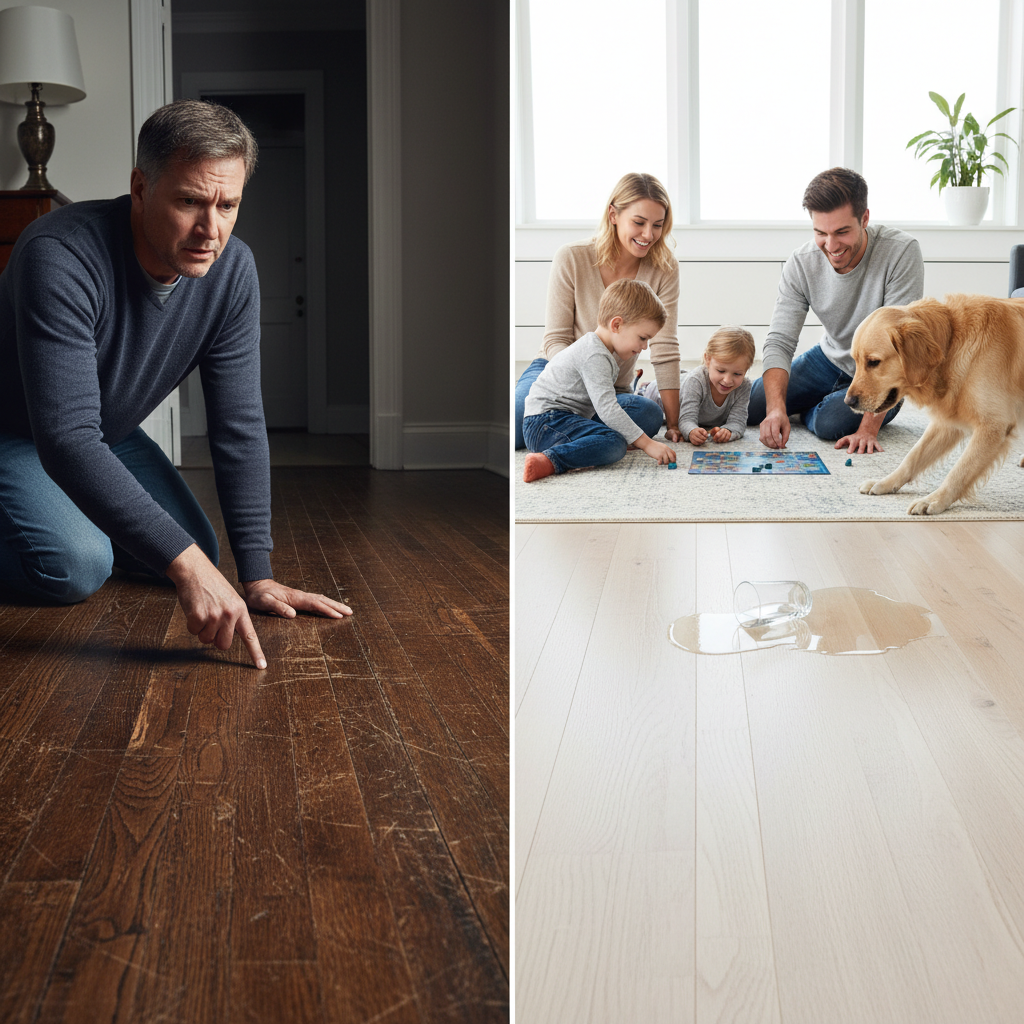
It is easy to romanticize the idea of 100-year-old reclaimed heartwood floors gracing a sunlit farmhouse kitchen. The reality, however, is that traditional solid wood is a highly reactive, living material. For active households, high maintenance farmhouse floors quickly become a source of daily anxiety rather than aesthetic pleasure.
To maintain the structural integrity of antique or solid wood, strict environmental controls are non-negotiable. According to E.T. Moore, a leading authority on reclaimed wood restoration, indoor humidity must be meticulously maintained between 30% and 50%, with ambient temperatures kept strictly between 60° to 80°F [1]. Deviating from these parameters leads to fragile wood flooring that is highly susceptible to structural failure.
The National Wood Flooring Association (NWFA), in their technical Publication No. C200, outlines how moisture imbalances cause wood to distort, leading to unsightly cupping (where the edges of the board are higher than the center) and buckling [2]. Furthermore, modern farmhouse designs often feature expansive, unshaded windows. This architectural choice creates a “Greenhouse Effect,” generating intense micro-climates of heat and UV exposure directly on the floorboards. In engineered woods lacking a rigid core, this extreme temperature fluctuation can cause “wood shear”—a physical phenomenon where external thermal stresses literally tear the wood fibers apart from their adhesive layer.
Beyond structural failures, homeowners constantly battle scratched hardwood floor problems. Softwoods like yellow pine dent easily under the weight of heavy farmhouse furniture, and the daily patter of dog claws can quickly turn a pristine finish into a scuffed, distressed mess that requires expensive, disruptive sanding and refinishing.
Demystifying Hybrid Hardwood Flooring: The Lifeproof Solution
To solve the inherent vulnerabilities of traditional wood, the flooring industry developed hybrid hardwood flooring. This innovative category bridges the gap between the authentic beauty of real wood and the indestructible nature of luxury vinyl. But what exactly makes durable hybrid hardwood the best flooring for modern farmhouse style? The secret lies in its anatomical engineering.
A premium hybrid plank is constructed in distinct, purpose-built layers. Typically, it features a 1.2 mm sliced veneer of genuine hardwood. Because this top layer is real wood, it offers the exact grain, texture, and visual depth that synthetic mimics simply cannot replicate. This veneer is permanently fused to a 5.4 mm 100% waterproof SPC (Stone Plastic Composite) core. When combined with a 1 mm IXPE acoustic back pad, the total plank thickness sits at a robust 7.6 mm.
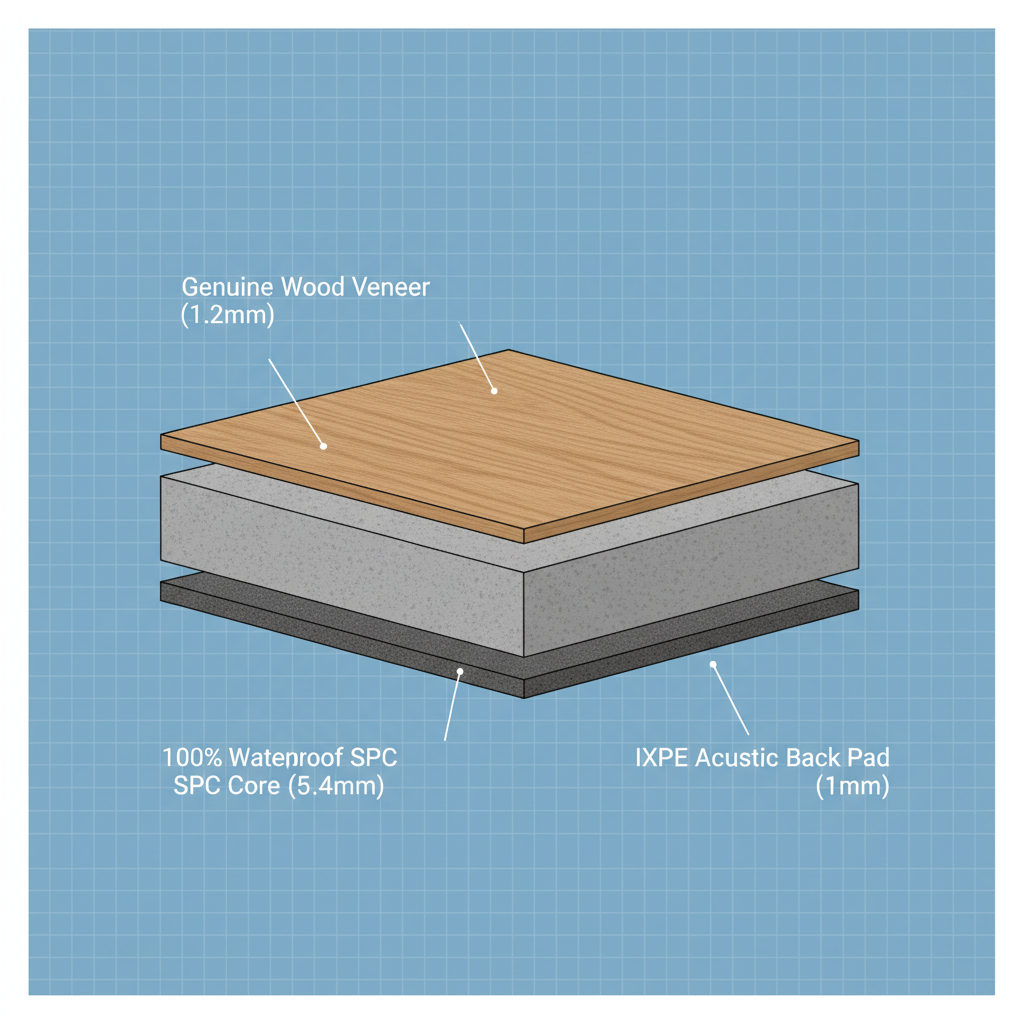
The core material is the defining factor. While WPC (Wood Plastic Composite) cores use wood flour and are slightly softer underfoot, SPC cores are engineered from a blend of natural limestone powder and PVC. Flooring engineers and manufacturers like Raintree Floors note that this ultra-dense, rigid SPC core is completely impervious to water [3]. It acts as an impenetrable barrier, preventing subfloor moisture from migrating upward and causing the bottom-up cupping and warping that plagues traditional wood.
Why Bravewood Hybrid Hardwood is the Ultimate Farmhouse Choice
The modern farmhouse look is not just a passing trend; according to the National Association of Realtors, it remains the most popular architectural style searched for by plan buyers [4]. To meet this massive demand, Bravewood hybrid hardwood has positioned itself as the premier choice, perfectly marrying the technical benefits of a waterproof core with the specific aesthetic requirements of farmhouse design.
Bravewood utilizes high-density wood species for its veneers to ensure maximum durability. For instance, their Hickory options boast a formidable Janka hardness rating of 1820, while their White Oak sits at a resilient 1360. For those seeking the absolute pinnacle of durable hybrid hardwood for farmhouse interiors, the industry is also seeing the rise of “densified wood” technology. Pioneered by benchmark lines like Bruce Flooring’s Dogwood, densification involves using immense heat and pressure to compress wood fibers, resulting in floors with four times the scratch resistance and six times the dent resistance of standard hardwoods [5]. Bravewood’s commitment to high-Janka veneers and advanced core stability mirrors this industry push toward lifeproof flooring.
Authentic Wide Plank Aesthetics
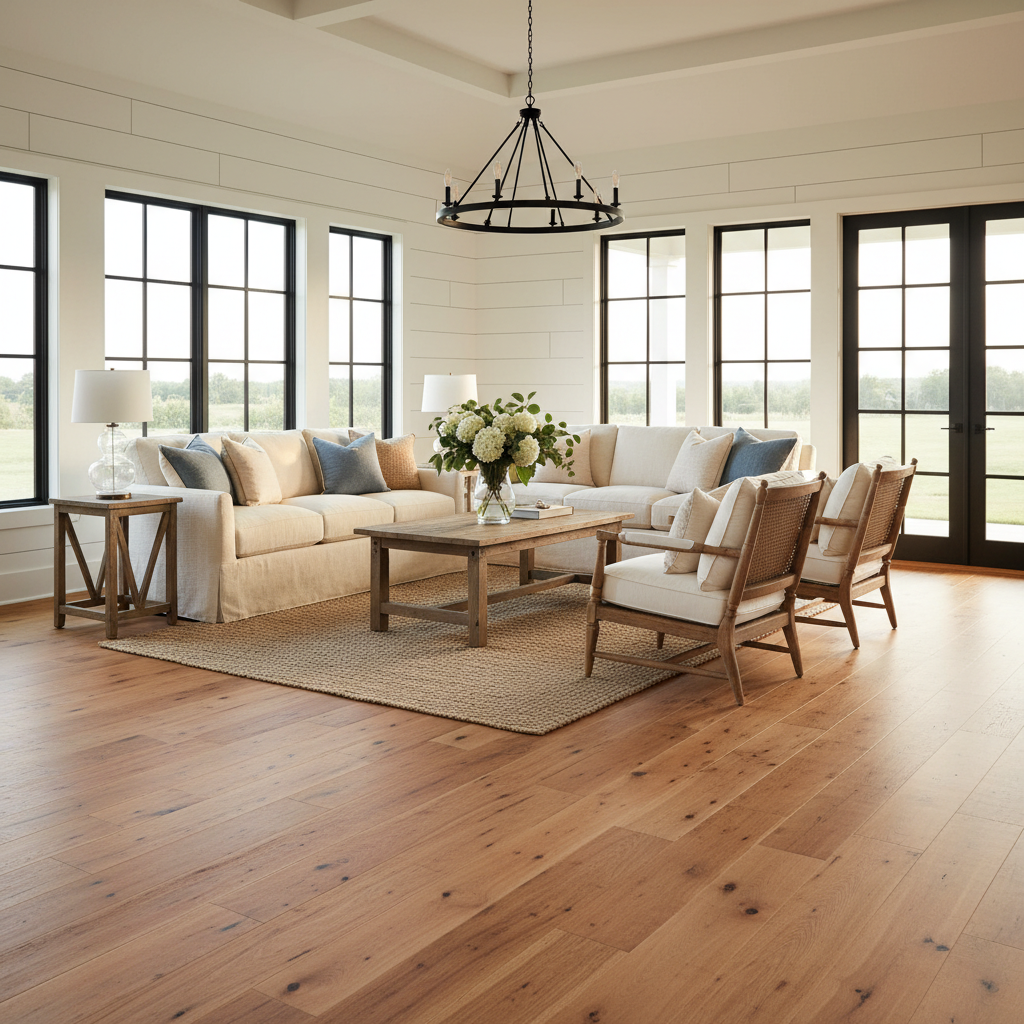
A hallmark of modern farmhouse flooring is the use of wide planks—typically ranging from 7-inch to 8-inch widths. Wide planks reduce the number of visible seams in a room, creating a sprawling, spacious look that harkens back to early American milling practices. Interior designers frequently emphasize that balancing rustic textures with modern clean lines requires these wider formats, ideally finished in a matte or low-sheen clear coat. Bravewood achieves this authentic aesthetic effortlessly because the surface layer is genuine wood, allowing the natural knots, mineral streaks, and wide-grain patterns to shine through without the artificial, repeating patterns found in laminate.
Unmatched Scratch Resistance for Active Homes
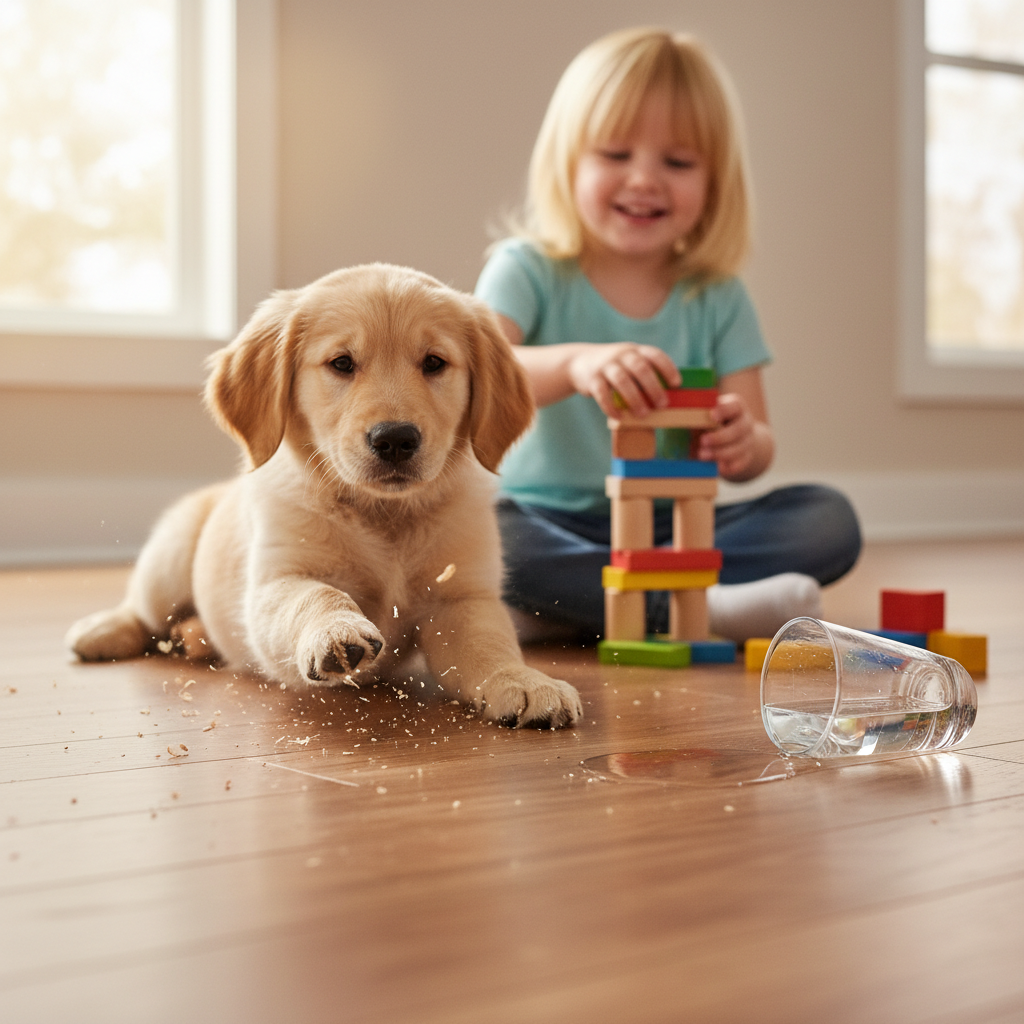
To deliver truly scratch resistant farmhouse flooring, the real wood veneer must be protected by more than just standard polyurethane. Bravewood hybrid floors feature advanced surface protection technologies, most notably aluminum oxide nanoparticle finishes. In this chemical process, microscopic aluminum oxide crystals are suspended within the liquid finish before it is UV-cured. Once hardened, this creates an invisible, armor-like shield over the wood. This finish prevents the wear layer from degrading under heavy foot traffic, resisting micro-scratches from pet claws and sliding chairs, and keeping the floor looking newly installed for years.
Bravewood Hybrid Hardwood Flooring Ideas & Applications
When planning your interior, Bravewood hybrid hardwood flooring ideas abound due to the brand’s versatile collections. Typically priced between $3 and $10 per square foot, it offers a cost-effective alternative to the endless maintenance cycle of reclaimed wood.
For high-traffic areas like mudrooms, kitchens, and grand living rooms, specific Bravewood collections cater to different structural needs. The Alta Vista collection, featuring a substantial 5/8-inch thickness, provides a solid, premium feel underfoot that mimics traditional solid hardwood perfectly. For renovations where matching existing floor heights is critical, the Del Mar collection offers a sleeker 7/16-inch profile without sacrificing the waterproof SPC core.
Color selection is vital for the farmhouse aesthetic. Bravewood’s “Gray Oak” provides a beautiful, weathered driftwood appearance that pairs perfectly with crisp white shiplap and matte black hardware. Alternatively, “Sunshine Hickory” offers a warmer, honey-toned rustic charm that grounds a room, hiding dust and minor daily debris effortlessly.
Living with Hybrid Hardwood: Maintenance and Repair
The most celebrated benefit of these floors is how they transform daily life. Low maintenance hybrid floors require absolutely no waxing, oiling, or specialized climate-control pampering. Routine care simply involves dry mopping or vacuuming to remove abrasive dirt, followed by occasional damp-mopping with a pH-neutral hardwood cleaner. Because of the SPC core, you never have to panic over a spilled glass of water or a wet dog running through the kitchen. However, it is important to avoid steam mops, as the pressurized steam can force moisture into the click-lock seams and potentially damage the finish over time.
Even with aluminum oxide protection, life happens. If you encounter scratched hardwood floor problems, it is important to triage the damage. Experts from home improvement communities like Room For Tuesday and the Home Improvement Stack Exchange suggest first determining if the scratch is a superficial clear-coat scuff or a deep gouge into the raw wood [6]. Minor scuffs can often be masked with a color-matched stain marker or a dab of water-based polyurethane. While some DIYers use a steam-iron method to swell dented wood fibers back into place on solid wood, this method has strict limitations on hybrid floors and should be avoided, as extreme localized heat can compromise the adhesive bonding the veneer to the SPC core.
Conclusion
Achieving the modern farmhouse aesthetic no longer requires sacrificing durability or living with constant maintenance anxiety. The era of tip-toeing around fragile, moisture-sensitive reclaimed wood is over. Bravewood hybrid hardwood represents the ultimate investment for active families, offering a brilliant synthesis of authentic, wide-plank wood beauty and 100% waterproof, scratch-resistant SPC engineering. We encourage you to order Bravewood flooring samples to feel the genuine wood texture for yourself, or visit a local dealer to see how the Alta Vista and Del Mar collections can serve as the perfect, lifeproof foundation for your dream home.
General Home Improvement Disclaimer: Flooring installation requirements vary by environment. Always consult manufacturer guidelines and professional installers for specific subfloor and climate conditions.
References
- E.T. Moore. (N.D.). Authoritative Guidelines on Reclaimed Wood Environmental Requirements.
- National Wood Flooring Association (NWFA). (N.D.). Publication No. C200: Wood Floor Cupping and Distortion. NWFA Technical Standards.
- Raintree Floors. (N.D.). Manufacturer Technical Specifications on SPC Hybrid Plank Construction.
- National Association of Realtors. (N.D.). Architectural Style Popularity and Housing Trends Reports.
- Bruce Flooring. (N.D.). Dogwood Densified Wood. Manufacturer Specifications on Densification Technology.
- Room For Tuesday / Home Improvement Stack Exchange. (N.D.). Expert Community Consensus on Hardwood Scratch Repair and Steam-Iron Limitations.
