
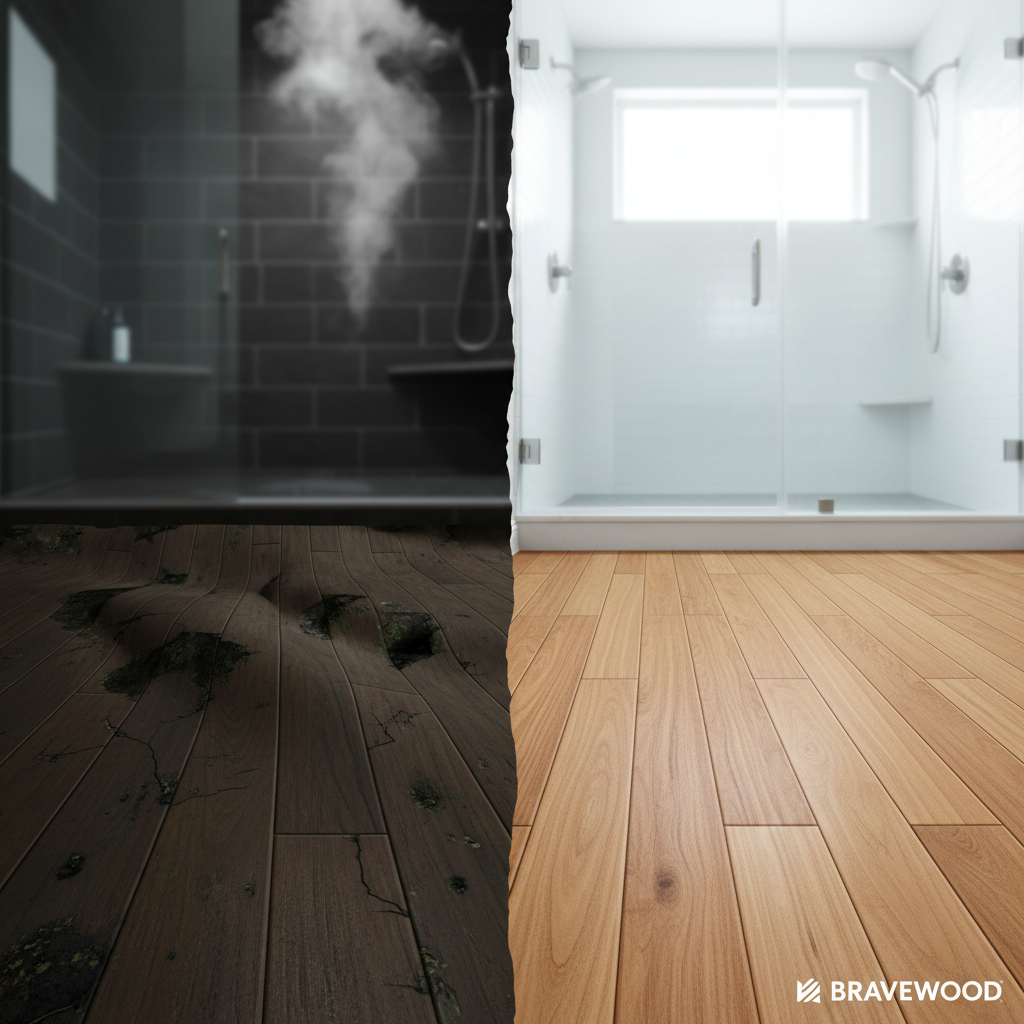
Every homeowner and design-conscious remodeler eventually faces the ultimate bathroom design dilemma: the intense desire for the warm, luxury aesthetic of real hardwood versus the terrifying reality of bathroom moisture damage. For decades, putting natural wood in a full bathroom was a recipe for disaster, leading to warped planks, hidden mold, and catastrophic subfloor rot. You were forced to choose between beautiful but vulnerable wood, or durable but cold, hard ceramic tile.
Today, that compromise is officially obsolete. Bridging the gap between luxury aesthetics and bulletproof durability is a new category of next-generation waterproof solutions, led by innovations like Bravewood hybrid hardwood. This definitive guide will dissect the physics of bathroom moisture, compare the top stylish wood alternatives, and provide expert wet-area installation protocols. Whether you are building a new master bath or remediating an old leak, you are about to master the art of achieving an authentic wood-look bathroom without ever compromising your home’s structural integrity.
- The Bathroom Moisture Problem: Why Traditional Hardwood Fails
- Decoding the Jargon: Water-Resistant vs. Waterproof Flooring
- Enter Bravewood Hybrid Hardwood: Real Wood, Zero Water Damage
- Top Water-Resistant Hardwood Alternatives for Bathrooms
- Professional Wet-Area Installation Protocols
- Protecting Your Investment: Ventilation and Maintenance
- Conclusion
- References & Authoritative Sources
The Bathroom Moisture Problem: Why Traditional Hardwood Fails
To understand why hybrid solutions are necessary, you first need to understand the exact mechanisms of bathroom floor water damage. Traditional solid hardwood and standard engineered wood floors are fundamentally incompatible with high-humidity wet areas.
Wood is a hygroscopic material, meaning it acts like a sponge, constantly absorbing and releasing moisture from its surrounding environment to reach equilibrium. According to the National Wood Flooring Association (NWFA) Moisture Guidelines, solid wood flooring can expand up to 1/4 inch across a 10-foot span with just a 10% increase in relative indoor humidity [1]. In a bathroom where steam from a shower drastically spikes humidity daily, this expansion causes warping hardwood in bathrooms.
When diagnosing wood floor failures, professionals look for two distinct physical reactions:
- Cupping: The edges of the wood plank rise higher than the center. This indicates moisture is attacking from below the plank (e.g., a subfloor plumbing leak or trapped moisture).
- Crowning: The center of the plank swells higher than the edges. This typically indicates moisture is attacking from above (e.g., ambient shower steam, topical puddles, or improper mopping).
Bathroom moisture flooring issues are not just cosmetic; they are incredibly expensive. Data from the Insurance Information Institute reveals that water damage is the second most common home insurance claim in the US, with average remediation and repair costs exceeding $11,000 per incident [2].
To help you diagnose potential issues, here is a quick symptom checker:
| Symptom Observed | Probable Cause | Recommended Solution |
|---|---|---|
| Soft, spongy spots near the toilet | Subfloor rot from a failed wax ring/flange leak | Tear out flooring, replace rotted subfloor, install new flange seal. |
| Black staining at plank joints | Topical water seeping into seams; mold growth | Remove affected planks; treat subfloor; switch to waterproof core flooring. |
| Persistent musty odor | Hidden mold under linoleum or tile | Professional moisture mapping and remediation. |
Diagnosing Hidden Subfloor Rot and Mold
If you are currently experiencing bathroom floor water damage, immediate triage is required. Hidden signs of damage under existing linoleum or tile often include peeling edges, cracked grout lines, or a toilet that rocks slightly when you sit on it. The toilet wax ring and flange seal are the primary culprits for silent, hidden subfloor moisture issues. A slow leak here can rot the wooden joists for months before becoming visible on the surface.
If you uncover black mold during your inspection, safety is paramount. The Institute of Inspection, Cleaning and Restoration Certification (IICRC) provides strict guidelines on safe mold mitigation and structural drying, emphasizing that areas larger than 10 square feet should be handled by certified professionals using negative air pressure and HEPA filtration to prevent spreading spores to the rest of your home [3].
Decoding the Jargon: Water-Resistant vs. Waterproof Flooring
Before introducing hybrid hardwood, we must clear up the massive consumer confusion surrounding flooring terminology. Marketing jargon often blur the lines, leading homeowners to install inadequate materials in wet areas.
Water-Resistant Flooring: This means the flooring can handle topical spills for a limited time before the moisture breaches the joints and swells the core. Based on testing standards from the North American Laminate Flooring Association (NALFA), high-quality water-resistant laminate typically withstands standing topical water for 24 to 72 hours before edge swelling occurs [4]. While great for kitchens, 72 hours is often not enough for a bathroom where water can pool under bathmats unnoticed.
Waterproof Flooring: True waterproof flooring means the core material is entirely impervious to water and can be fully submerged without structural failure or dimensional changes. Consumer Reports, known for their rigorous methodology in testing manufacturer “waterproof” claims, verifies these materials by subjecting them to prolonged submersion and extreme humidity tests [5]. However, it is crucial to note that while the plank may be waterproof wood bathroom floors, your subfloor is not. Water can still seep through the perimeter if not properly sealed.
Enter Bravewood Hybrid Hardwood: Real Wood, Zero Water Damage
For homeowners who refuse to accept the printed, repeating patterns of vinyl, Bravewood hybrid hardwood represents the pinnacle of flooring engineering. It solves the moisture problem by combining the authentic beauty of nature with the indestructible nature of modern composites.
A cross-sectional breakdown of a Bravewood plank reveals its genius. The foundation is a Stone Polymer Composite (SPC) core—a dense, 100% waterproof layer made from limestone powder and stabilizers. Bonded to this impenetrable core is a slice of genuine, natural wood veneer. This means every single plank has a unique, unrepeated grain pattern, providing the exact tactile feel and visual depth of traditional hardwood.
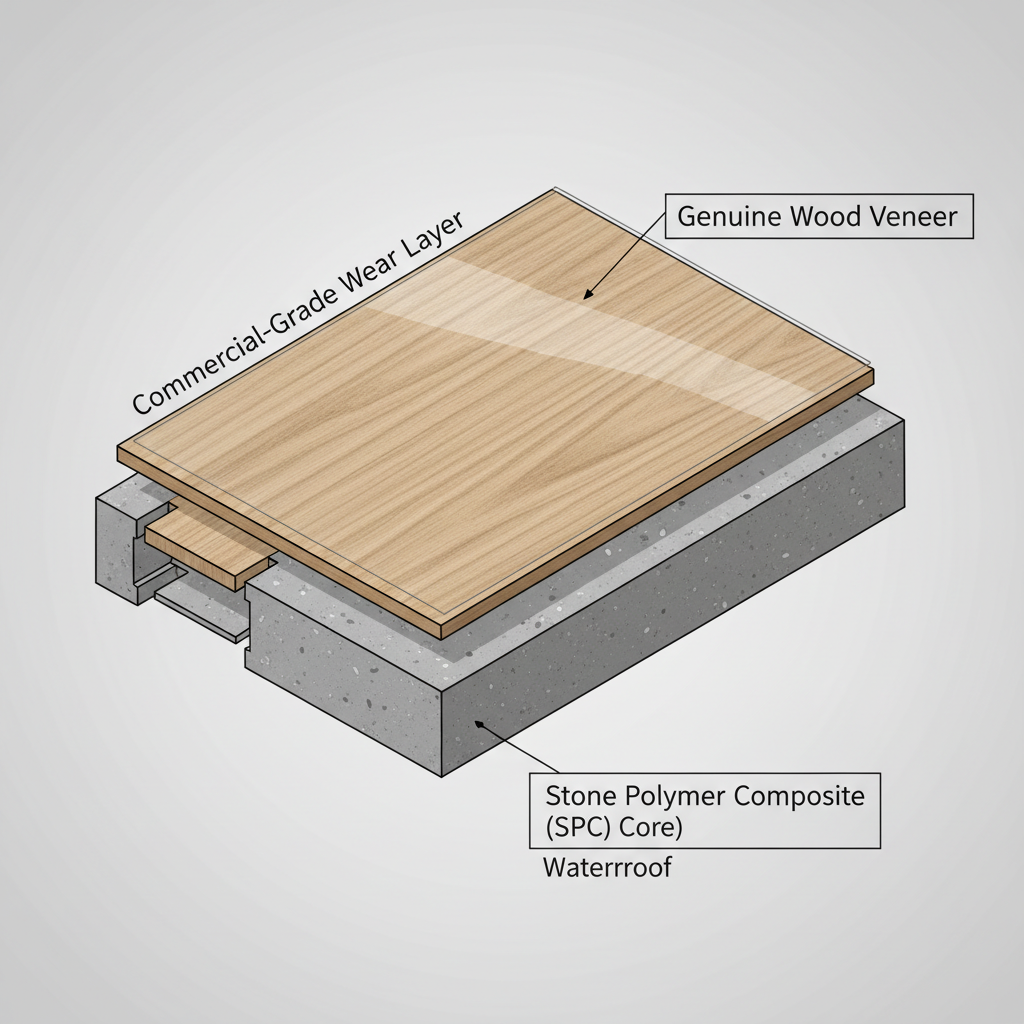
Because of this SPC core, Bravewood hybrid hardwood for bathrooms is uniquely positioned to survive wet areas. In fact, reviewing the official Bravewood Manufacturer Site warranty clauses reveals specific provisions that cover installations in “wet areas” and “full bathrooms,” provided their strict perimeter sealing protocols are followed [6].
Is Bravewood Flooring Completely Waterproof?
This is the most common question regarding the best hybrid hardwood for wet areas. The answer requires nuance: the SPC core is 100% topically waterproof, but the real wood veneer is still natural wood.
To demonstrate this, in documented, timed “spill tests” using dyed water left on a Bravewood sample plank for 48 hours, the liquid does not penetrate the SPC core, and the click-lock joints do not swell. The core remains dimensionally stable. However, the wood veneer is protected by a commercial-grade, aluminum oxide wear layer. As long as this wear layer is intact, ambient humidity and topical shower splashes will not cause the veneer to warp or delaminate. It offers the ultimate topical waterproofness without sacrificing the real wood texture.
Top Water-Resistant Hardwood Alternatives for Bathrooms
If Bravewood hybrid hardwood doesn’t fit your specific project parameters, there are other durable bathroom flooring solutions. Below is a “Durability & Realism Matrix” scoring the top water resistant hardwood alternatives on a scale of 1 to 10 (10 being the highest).
- Hybrid Hardwood (e.g., Bravewood): Realism: 10/10 | Water Resistance: 9/10
- Luxury Vinyl Plank (LVP): Realism: 7/10 | Water Resistance: 10/10
- Wood-Look Porcelain Tile: Realism: 6/10 | Water Resistance: 10/10
- Water-Resistant Laminate: Realism: 8/10 | Water Resistance: 5/10
Choosing the right material also impacts your home’s financial value. According to the Appraisal Institute, high-quality, waterproof hard-surface flooring yields a significantly higher Return on Investment (ROI) in bathroom remodels compared to outdated sheet vinyl or easily damaged standard laminates [7].
Wood-Look Tile vs. Luxury Vinyl Plank (LVP)
When exploring bathroom flooring, the two most popular alternatives to hybrid wood are Wood-Look Porcelain Tile and LVP.
Wood-look tile is virtually indestructible. The Tile Council of North America (TCNA) notes that porcelain tile has a water absorption rate of less than 0.5%, making it impervious to water damage [8]. The TCNA also provides Coefficient of Friction (COF) standards, allowing you to choose textured tiles that prevent slip-and-fall accidents in wet showers. However, tile is inherently cold and hard under bare feet, and the grout lines require ongoing scrubbing and resealing to prevent discoloration.
LVP, on the other hand, is softer and warmer. It utilizes a printed layer to mimic wood. The durability of LVP is measured by its “mil” wear layer thickness. For a high-traffic bathroom, a 20-mil wear layer or higher is recommended to prevent scratches from pets or dropped items. While 100% waterproof, standard LVP lacks the unique, non-repeating grain of real wood.
Pairing Aesthetics with Function: Stylish Bathroom Trends
You no longer have to sacrifice style for utility. Stylish water resistant bathroom flooring is at the forefront of interior design. Industry surveys, such as the Houzz State of the Industry Report, indicate that 75% of homeowners prioritize aesthetics equally with durability when undertaking master bathroom remodels [9].
- Modern Farmhouse: Pair wide-plank, wire-brushed Bravewood hybrid hardwood in a light oak finish with a freestanding soaking tub and matte black fixtures.
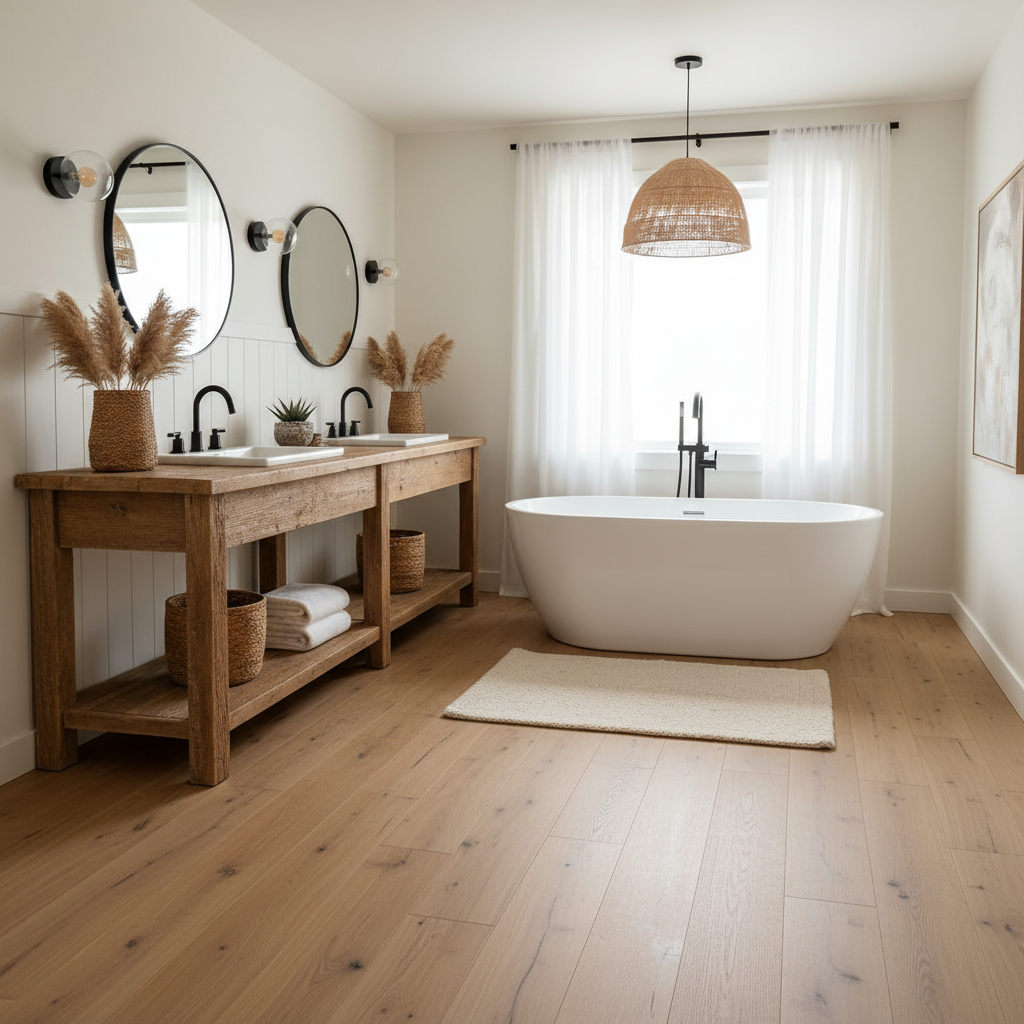
- Japandi (Japanese + Scandinavian): Opt for a minimalist, pale ash wood-look LVP to complement slatted wood vanities and neutral, earthy wall tones.
- Mid-Century Modern: Choose a rich, warm walnut hybrid hardwood to anchor geometric wall tiles and brass hardware.
Professional Wet-Area Installation Protocols
Even the best hybrid hardwood for wet areas will fail if installed incorrectly. Bathroom flooring requires specific protocols that most DIYers miss. From the perspective of an NWFA-certified installer, the secret to a waterproof floor is treating the entire bathroom as a cohesive, sealed system.
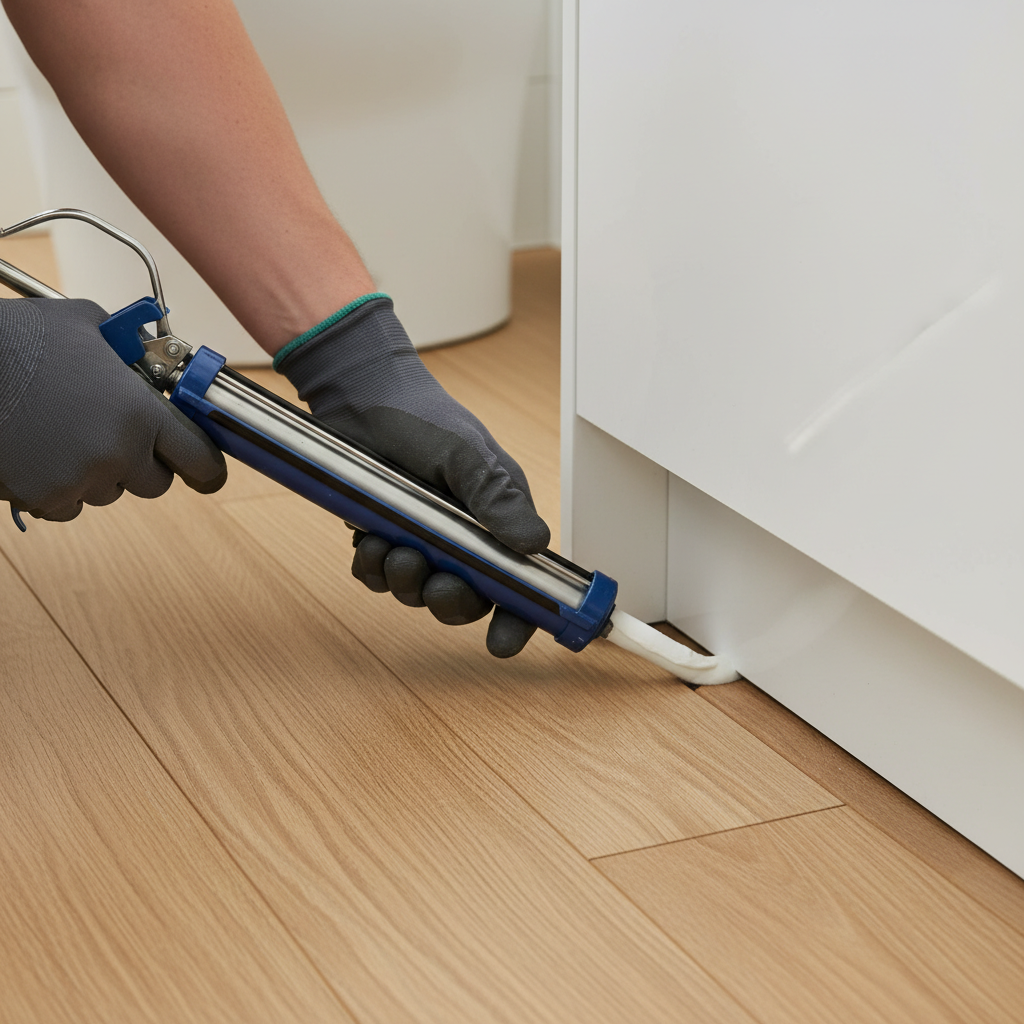
The most critical step is managing the expansion gap. Wood and hybrid floors need room to expand and contract. However, in a bathroom, leaving an open gap at the walls allows water to run straight down to the subfloor. The professional protocol requires filling the entire 1/4-inch perimeter expansion gap with 100% silicone sealant—not acrylic caulk. This creates a flexible, waterproof gasket around the entire room, including around the tub, shower basin, and vanity base.
Subfloor Preparation and Moisture Barriers
Bathroom moisture flooring issues almost always start beneath the surface. The subfloor must be perfectly flat and level; otherwise, the click-lock joints of hybrid or LVP flooring will flex underfoot, eventually breaking and allowing water to seep through.
Depending on your foundation, you may need an uncoupling membrane or a vapor barrier. If installing over a concrete slab, a 6-mil poly vapor barrier is mandatory to prevent hydrostatic pressure from pushing moisture up into the flooring core.
Furthermore, licensed plumbers emphasize that replacing a bathroom floor alters the floor’s height.
“Never just double up wax rings if the new floor is higher,” advises master plumber John C. “You must use a proper toilet flange extender kit to bring the flange flush with the new finished floor. A recessed flange is the number one cause of silent subfloor rot.”
Protecting Your Investment: Ventilation and Maintenance
Finally, protecting your durable bathroom flooring solutions requires managing the room’s environment. You can install the most waterproof floor on earth, but if your bathroom traps steam, you will experience peeling paint, moldy drywall, and eventually, flooring failure.
The American Society of Heating, Refrigerating and Air-Conditioning Engineers (ASHRAE) sets strict residential ventilation standards. They note that bathrooms without proper mechanical ventilation (exhaust fans meeting specific Cubic Feet per Minute, or CFM, requirements) experience flooring and paint failures up to 40% faster than properly ventilated spaces [10]. Ensure your exhaust fan runs during every shower and continues for at least 20 minutes afterward to pull ambient humidity out of the room, protecting the wood veneer of your hybrid floors.
Conclusion
Achieving a luxurious, wood-look bathroom is now entirely possible and structurally safe. By understanding the physics of moisture, looking past marketing jargon, and utilizing next-generation technologies like Bravewood hybrid hardwood and high-end LVP, you can bridge the gap between aesthetics and durability. Remember that the material is only as good as its installation—proper subfloor prep, 100% silicone perimeter sealing, and adequate ventilation are non-negotiable.
Don’t compromise your home’s structural integrity for a beautiful bathroom. Order a sample of Bravewood hybrid hardwood today, test its waterproof core for yourself, and consult with a certified local installer to assess your subfloor and bring your dream bathroom to life.
Disclaimer: Information regarding water damage remediation is for educational purposes. Always consult an IICRC-certified specialist for severe structural rot or black mold. Verify specific warranty terms with the manufacturer before installing flooring in wet areas.
References & Authoritative Sources
- National Wood Flooring Association (NWFA). (N.D.). Moisture Guidelines and Wood Hygroscopy. Retrieved from NWFA Standards.
- Insurance Information Institute. (N.D.). Facts + Statistics: Homeowners and renters insurance. Retrieved from III Data Reports.
- Institute of Inspection, Cleaning and Restoration Certification (IICRC). (N.D.). Standards for Professional Water Damage Restoration and Mold Remediation. Retrieved from IICRC Guidelines.
- North American Laminate Flooring Association (NALFA). (N.D.). Testing Standards for Laminate Water Resistance. Retrieved from NALFA Specifications.
- Consumer Reports. (N.D.). Flooring Buying Guide and Waterproof Claims Testing Methodology. Retrieved from Consumer Reports.
- Bravewood Official Manufacturer Site. (N.D.). Product Specifications and Wet Area Warranty Clauses. Retrieved from Bravewood Flooring.
- Appraisal Institute. (N.D.). Impact of Flooring Materials on Home Value and Remodeling ROI. Retrieved from Appraisal Institute Data.
- Tile Council of North America (TCNA). (N.D.). Porcelain Tile Specifications, Water Absorption Rates, and Coefficient of Friction. Retrieved from TCNA Standards.
- Houzz. (N.D.). Houzz State of the Industry Report: Consumer Remodeling Trends. Retrieved from Houzz Research.
- American Society of Heating, Refrigerating and Air-Conditioning Engineers (ASHRAE). (N.D.). Standards for Residential Ventilation and Indoor Air Quality. Retrieved from ASHRAE Guidelines.
