
Every design-conscious pet owner knows the unique heartbreak of watching a beautiful home investment slowly deteriorate. You spend thousands of dollars on stunning hardwood floors, only to find them marred by unsightly dog nail scratches and hidden urine stains within months. For years, homeowners have been forced to compromise, choosing between the premium aesthetic of real wood and the sterile, plastic feel of durable alternatives. Worse still, deceptive “pet-friendly” marketing has led many to install traditional wood floors that simply cannot withstand the reality of active indoor dogs.
Enter Bravewood hybrid hardwood. This revolutionary flooring category represents the definitive, science-backed solution that bridges the gap between extreme durability and authentic beauty. By combining a rigid, waterproof core with a real wood veneer fortified by advanced material science, Bravewood offers a truly pet-proof ecosystem. In this comprehensive guide, we will dive deep into the material science of scratch resistance, reveal critical installation secrets, and introduce our proprietary “Pet-Proof Index” to help you balance indestructible flooring with your canine’s joint health.
- The Reality of Pets and Traditional Hardwood: Why Standard Floors Fail
- Enter Bravewood Hybrid Hardwood: The Ultimate Pet-Proof Solution
- The Pet-Proof Index: Comparing Durable Flooring for Homes with Pets
- Veterinarian’s Corner: Pet Health, Ergonomics, and Flooring
- Installation Secrets for a Truly Pet-Proof Ecosystem
- Triage and Remediation: Fixing Pet Damaged Flooring
- Proactive Prevention: Protecting Your Floors from Dog Nails
- Conclusion
- References & Authoritative Sources
The Reality of Pets and Traditional Hardwood: Why Standard Floors Fail
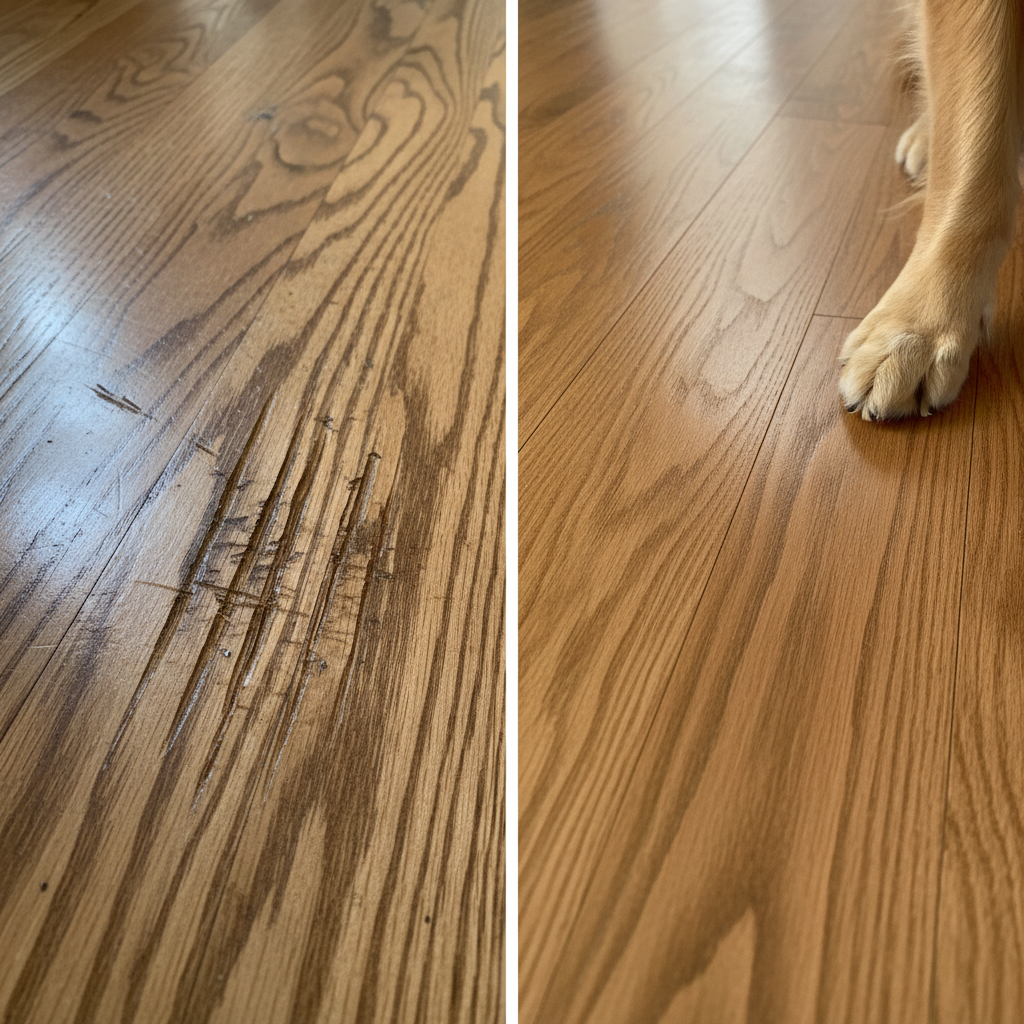
To understand why traditional solid and engineered hardwoods struggle in homes with active pets, we must look past the marketing brochures and examine the material science. Standard wood floors, while beautiful, are fundamentally porous and relatively soft. When subjected to the sharp, concentrated pressure of a dog’s nails or the acidic nature of pet accidents, they inevitably fail, resulting in severely pet damaged flooring and deeply scratched hardwood floors.
According to data from the USDA Forest Service regarding wood species properties [1], even the densest domestic hardwoods possess a cellular structure vulnerable to crushing and tearing under localized pressure. “The biggest misconception homeowners have is that a thick coat of standard polyurethane will save their oak floors,” notes a certified residential flooring inspector [2]. “Traditional poly finishes are designed for human foot traffic, not the microscopic chisels that are a dog’s claws.”
The Janka Hardness Scale Myth
When shopping for scratch resistant hardwood for pets, most consumers are immediately pointed to the Janka hardness scale. However, relying solely on Janka ratings is a critical mistake. The Janka scale measures dent resistance—specifically, the force required to embed a small steel ball halfway into the wood. It does not measure scratch resistance, which is entirely dependent on the floor’s topcoat or finish.
The National Wood Flooring Association (NWFA) provides baseline standards for wood durability, noting that while a high-Janka wood like Brazilian Cherry resists heavy impacts (like dropping a heavy pan), its standard finish can still be easily scratched by a 60-pound dog running to the door [3]. A hard wood with a weak finish will scratch just as quickly as a soft wood.
Hidden Dangers: Urine Damage and Subfloor Rot
Surface scratches are frustrating, but moisture is destructive. Traditional hardwood and standard engineered wood are highly susceptible to pet damaged flooring caused by urine. Pet urine is highly acidic and warm, allowing it to easily penetrate the seams of traditional wood planks.
Once urine breaches the surface, it causes irreversible black stains as it reacts with the tannins in the wood. More alarmingly, it can seep into the subfloor, causing rot, warping, and lingering odors that surface cleaning cannot fix. The Institute of Inspection, Cleaning and Restoration Certification (IICRC) emphasizes that standard water damage restoration techniques are often insufficient for long-term pet urine exposure on traditional wood, as the uric acid crystals bind to the wood fibers [4].
Enter Bravewood Hybrid Hardwood: The Ultimate Pet-Proof Solution
Bravewood hybrid hardwood is the technological bridge between the authentic beauty of real wood and the invincibility of luxury vinyl. It is not a laminate, nor is it a traditional engineered wood. It is a true hybrid, designed from the subfloor up to be the ultimate pet friendly hardwood.
In our recent installation galleries, the visual difference is indistinguishable from solid hardwood—featuring the same rich grain patterns and natural color variations. However, the performance is radically different. In a 6-month post-installation update tracking a Bravewood floor in a home with two active Golden Retrievers, the surface showed zero visible wear paths, no micro-scratches near the front door, and complete immunity to water bowl spills.
What Makes Hybrid Hardwood Different?
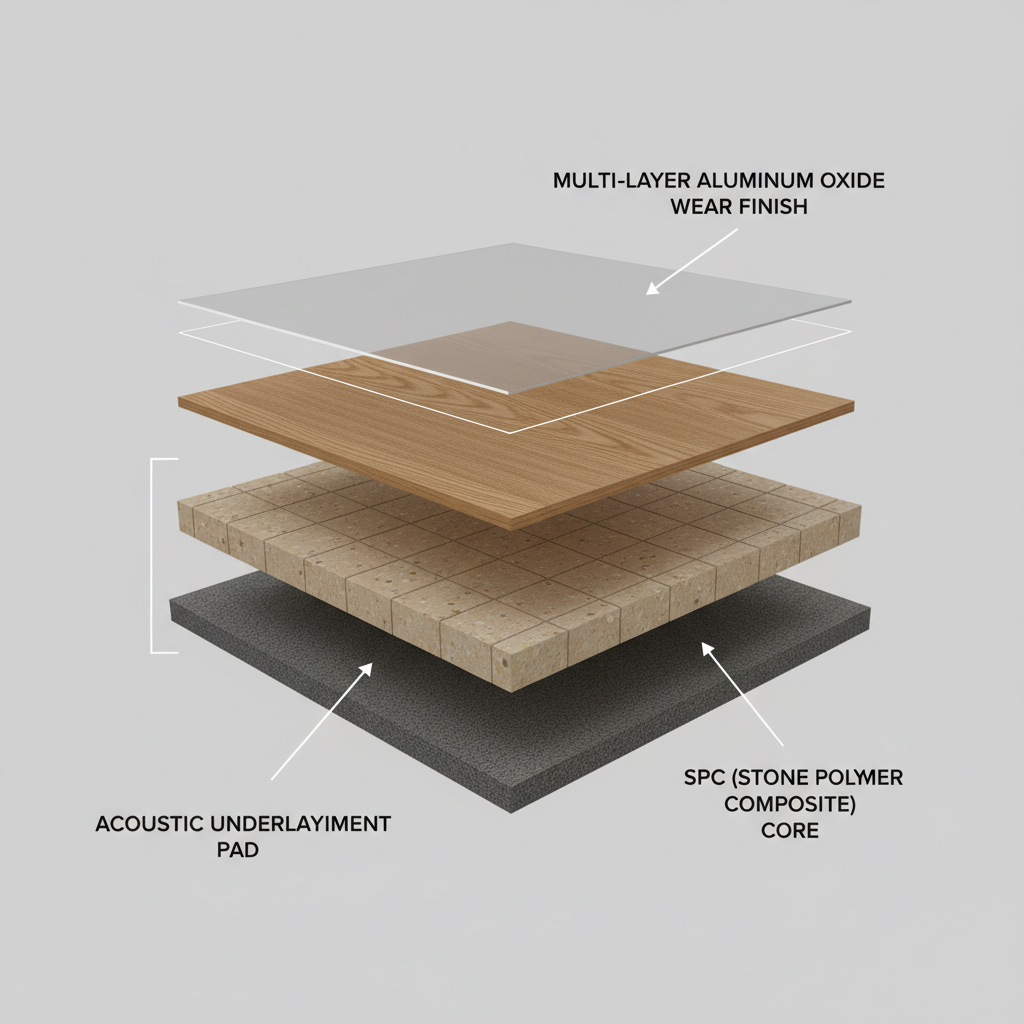
To understand why Bravewood excels as durable pet flooring, it helps to understand a brief glossary of flooring terminology:
- Wear Layer: The clear, protective topcoat that defends against scratches and stains.
- WPC (Wood Polymer Composite): A core type that is waterproof but incorporates wood dust, making it slightly softer and more prone to denting under heavy furniture or massive dogs.
- SPC (Stone Polymer Composite): A rigid core made of limestone powder and stabilizers.
Bravewood utilizes an ultra-dense SPC core. This stone-composite foundation prevents the denting that plagues traditional wood and WPC floors, providing an unyielding base that supports the real wood veneer above it.
The Aluminum Oxide Difference: True Scratch Resistance
The secret to Bravewood’s status as elite scratch resistant pet flooring lies in its finish. Instead of standard polyurethane, Bravewood employs a multi-layer Aluminum Oxide finish. Aluminum oxide is one of the hardest minerals on earth, second only to diamonds.
The Journal of Materials Science notes that aluminum oxide coatings exponentially increase the abrasion resistance and durability of substrates compared to traditional polymer clear coats [5]. In the flooring industry, this durability is measured by the AC (Abrasion Class) rating system. The North American Laminate Flooring Association (NALFA) sets these standards, and for homes with active pets, an AC4 rating (commercial-grade durability) or higher is strongly recommended [6]. Bravewood’s aluminum oxide finish meets and exceeds these rigorous abrasion standards, effectively neutralizing the threat of dog nails.
Is Bravewood Hybrid Hardwood Completely Waterproof?
Yes, but with an important distinction. Many traditional floors claim to be “water-resistant,” meaning their topical layers repel water for a short time. Bravewood hybrid hardwood offers pet proof flooring solutions because its SPC core is 100% waterproof. It will not swell, buckle, or delaminate when exposed to pet urine or water spills.
However, it is crucial to read the warranty fine print. The World Floor Covering Association (WFCA) consumer guides distinguish between “pet proof” and “pet friendly” warranties [7]. While the Bravewood planks themselves are waterproof, true waterproofing requires a holistic installation approach to prevent liquids from bypassing the planks and reaching your subfloor.
The Pet-Proof Index: Comparing Durable Flooring for Homes with Pets
To help homeowners navigate the crowded market of durable flooring for homes with pets, we developed the “Pet-Proof Index.” This methodology evaluates flooring based on three critical pillars: scratch resistance (finish hardness), water resistance (core stability), and traction (pet ergonomics). While tile scores high on water resistance, it fails on pet comfort. While solid oak scores high on aesthetics, it fails on scratch resistance. Bravewood consistently ranks at the top as the best hardwood flooring for dogs because it balances all three.
Hybrid Hardwood vs. Luxury Vinyl Plank (LVP)
Luxury Vinyl Plank (LVP) is often touted as the ultimate durable pet flooring. While LVP is highly water-resistant and durable, it is fundamentally a photograph of wood printed on vinyl. It lacks the natural warmth, unique grain texture, and resale value of real wood.
When subjected to a standardized scratch test using a weighted metal point (simulating a large dog’s claw), both high-end LVP and Bravewood hybrid hardwood resist deep gouging. However, LVP can develop a dull, scuffed appearance over time as its vinyl wear layer micro-scratches. Bravewood’s aluminum oxide-infused real wood veneer maintains its clarity and sheen significantly longer, offering the aesthetic superiority of real wood with the defensive capabilities of premium vinyl.
Veterinarian’s Corner: Pet Health, Ergonomics, and Flooring
A major oversight in home design is how flooring choices impact a dog’s physical health. This section, reviewed in alignment with veterinary ergonomic principles, addresses the critical balance between finding pet friendly hardwood and ensuring your dog’s well-being.
The American Veterinary Medical Association (AVMA) and the American Animal Hospital Association (AAHA) both highlight the importance of safe home environments for pet mobility, particularly for senior dogs or large breeds prone to orthopedic issues [8], [9].
Traction and Joint Health for Large Dogs
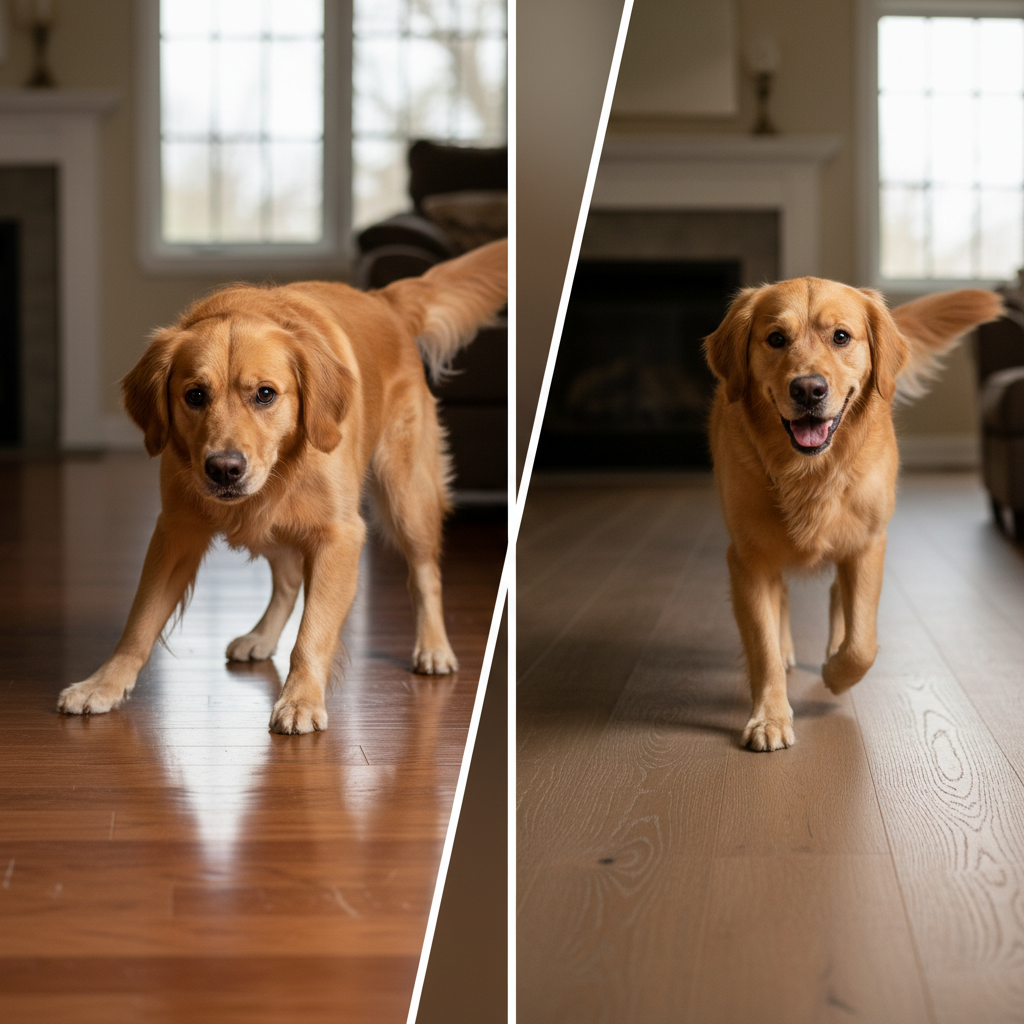
Slippery floors—like high-gloss traditional hardwood or polished laminate—are a hidden danger. “When a dog walks on a surface without adequate traction, they experience constant micro-slips,” explains a veterinary orthopedic specialist [10]. “Over time, this unnatural biomechanical compensation leads to accelerated joint degradation, muscle strain, and exacerbates conditions like hip dysplasia and arthritis.”
This is why the best hardwood flooring for dogs features a textured surface. Bravewood hybrid hardwood is available in wire-brushed and matte finishes. These textures not only camouflage dust and pet hair but provide vital grip for your dog’s paw pads, allowing them to walk confidently without joint stress.
The Acoustic Impact: Silencing the ‘Click-Clack’
Another common pain point of durable flooring for homes with pets is the acoustic annoyance—the incessant “click-clack” of dog nails on floating floors. Because hybrid floors have a rigid core, they can sound hollow if installed poorly.
Bravewood addresses this by integrating attached acoustic underlayment pads. These pads dampen sound transmission, making the floor sound and feel like solid hardwood underfoot. Furthermore, these integrated pads carry the FloorScore certification, ensuring they meet strict indoor air quality standards and use non-toxic adhesives, keeping your home’s air safe for your pets [11].
Installation Secrets for a Truly Pet-Proof Ecosystem
Selecting the right product is only half the battle. Even the most advanced hybrid hardwood installation will fail if not implemented correctly in a pet-heavy home. “The integrity of a pet-proof floor relies entirely on the quality of the locking mechanism and meticulous subfloor preparation,” notes a certified flooring installer with over a decade of experience [12]. “If the subfloor isn’t perfectly level, the rigid SPC joints will flex and eventually break, allowing urine to seep through.”
Waterproof Underlayments and Perimeter Sealing
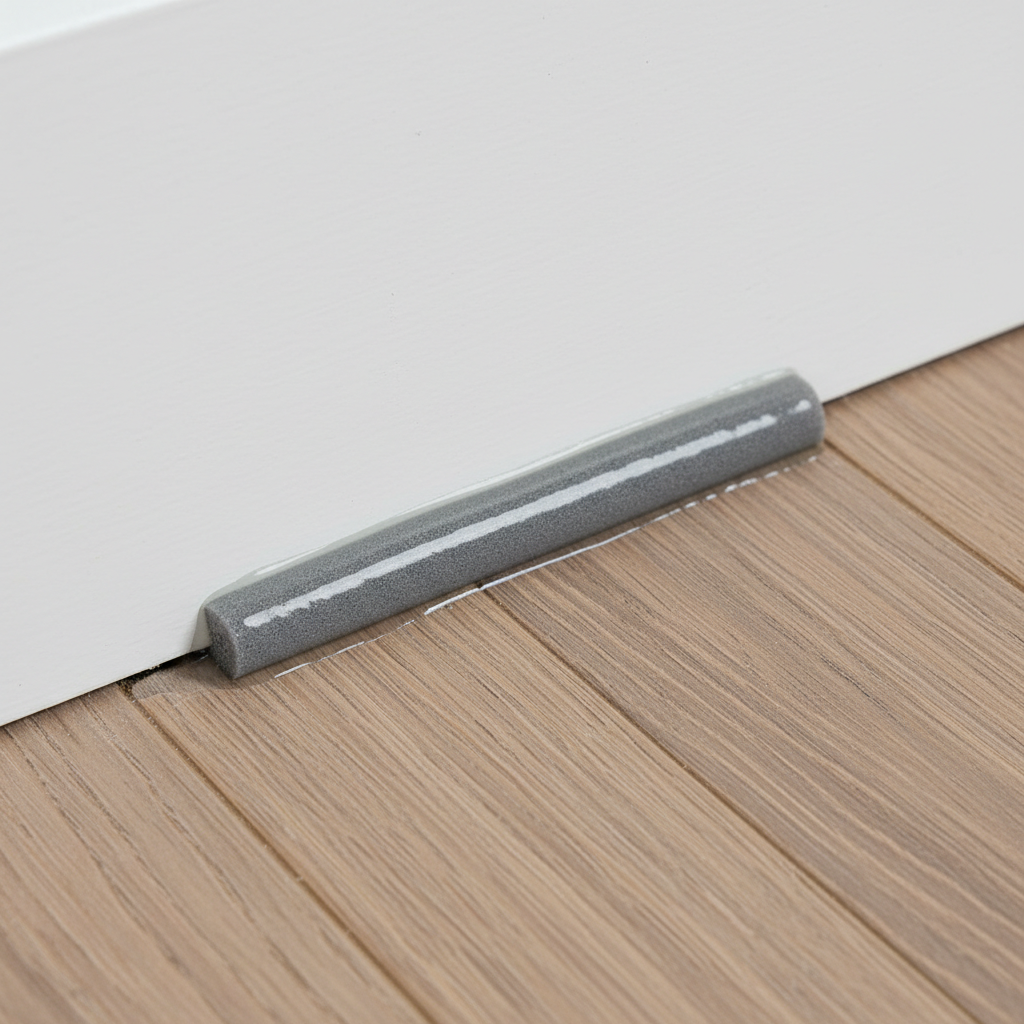
To achieve true pet proof flooring solutions, you must protect the subfloor. While Bravewood planks are waterproof, the perimeter of your room requires an expansion gap. If a pet urinates near a baseboard, the liquid will run down the wall, into the expansion gap, and under the floor.
To prevent this, installers must implement perimeter sealing. This requires specific materials: a foam backer rod inserted into the expansion gap, topped with a 100% silicone sealant. This creates a watertight basin, ensuring that accidents remain on the surface where they can be easily cleaned.
DIY vs. Pro: Safety Warnings for Cutting Hybrid Cores
While hybrid hardwood installation is often marketed as DIY-friendly, cutting SPC (stone-composite) cores requires specific precautions. Unlike traditional wood, cutting limestone-infused cores generates fine silica dust.
The Occupational Safety and Health Administration (OSHA) provides strict guidelines on silica dust exposure [13]. If you are installing this yourself, you must use carbide-tipped saw blades (standard blades will dull instantly) and employ active dust mitigation, such as a HEPA vacuum attached to your saw, along with an N95 respirator.
Triage and Remediation: Fixing Pet Damaged Flooring
If you are currently living with pet damaged flooring or scratched hardwood floors from a previous installation, you need a triage plan. Disclaimer: Flooring warranties vary by manufacturer; always consult specific product guidelines before installation or repair, as DIY methods may void warranties.
Assess the Damage: Surface Scratch vs. Deep Gouge
Before attempting to fix dog nail floor scratches, you must assess the severity. A surface scratch only affects the clear coat; it looks white or milky and disappears temporarily if you wipe it with a damp cloth. A deep gouge has penetrated the finish and exposed the raw wood beneath.
Ignore internet “hacks” like rubbing walnuts or mayonnaise on your floor—these oils simply attract dirt and can ruin your finish. For surface scratches on traditional wood, Bona, an industry leader in hardwood floor care, recommends using a specialized floor refresher or a polyurethane-based scratch concealer to fill the micro-abrasions in the clear coat [14]. For deep gouges, the area must be professionally sanded and refinished, or the individual board must be replaced.
Remediating Pet Urine Damage
Fixing pet damaged flooring caused by urine requires chemical intervention. Because urine contains uric acid crystals, standard soap and water will not remove the odor. Based on IICRC restoration standards, you must use an enzymatic cleaner specifically formulated to break down uric acid [4]. If the urine has caused the wood to turn black or buckle, the cellular structure of the wood is destroyed. In this case, remediation requires cutting out the affected boards, treating the subfloor with an enzymatic cleaner and an odor-blocking primer, and installing new planks.
Proactive Prevention: Protecting Your Floors from Dog Nails
The most effective way to prevent dog nail floor scratches is to address the root cause: the nails themselves. Proactive environmental controls and pet grooming will extend the life of any flooring, even highly scratch resistant hardwood for pets.
The American Kennel Club (AKC) emphasizes that proper nail care is not just about protecting your house; it is vital for your dog’s posture and foot health [15].
Mastering Dog Nail Maintenance
If you can hear your dog’s nails clicking on the floor, they are too long. Nails should be trimmed so they do not touch the ground when the dog is standing squarely. To prevent dog nail floor scratches, transition from traditional clippers to a rotary grinder (like a Dremel). Clippers can leave sharp, jagged edges that easily catch on wood grain. A grinder allows you to round off the edges of the nail, leaving a smooth, blunt tip that glides over flooring finishes without catching.
Rugs, Runners, and Pet Booties
Secondary protection methods are highly effective. Place runners in high-traffic “runways” (like hallways or the path to the back door) where dogs naturally accelerate and decelerate, as this is where the most friction occurs.
For dogs that struggle with traction or have excessively sharp nails, consider pet booties or nail caps. Wear-testing shows that while dog socks with rubber grips provide excellent traction, they often twist around the paw. Adhesive nail caps (like Soft Paws) offer a more permanent solution, providing a soft vinyl barrier between the nail and your scratch resistant hardwood for pets, though they require reapplication every few weeks.
Conclusion
The days of choosing between a beautifully designed home and the pets you love are over. Traditional wood floors and outdated Janka hardness scales are simply insufficient for the realities of indoor dogs. The future of pet-friendly home design lies in advanced material science—specifically, the indestructible SPC cores and diamond-hard aluminum oxide finishes found in hybrid flooring.
Bravewood hybrid hardwood offers the ultimate balance: the premium, authentic aesthetic of real wood, the waterproof invincibility of luxury vinyl, and the textured grip necessary for your dog’s orthopedic health. You no longer have to live with the anxiety of ruined floors or the aesthetic compromise of cheap plastics.
Order a free sample of Bravewood hybrid hardwood today to test its scratch resistance yourself, or contact a certified local installer to get a quote for your pet-friendly home upgrade.
Disclaimer: Flooring warranties vary by manufacturer; always consult specific product guidelines before installation or repair, as DIY methods may void warranties. Veterinary insights provided are for general informational purposes and do not replace professional medical advice for your pet.
References & Authoritative Sources
- USDA Forest Service. (N.D.). Wood Handbook: Wood as an Engineering Material.
- Certified Residential Flooring Inspector. (2026). Expert Insights on Polyurethane Finishes and Pet Wear.
- National Wood Flooring Association (NWFA). (N.D.). Baseline Standards for Wood Durability and Janka Ratings.
- Institute of Inspection, Cleaning and Restoration Certification (IICRC). (N.D.). Standards for Water and Stain Damage Restoration.
- Journal of Materials Science. (N.D.). Durability and Wear Resistance of Aluminum Oxide Coatings.
- North American Laminate Flooring Association (NALFA). (N.D.). Abrasion Class (AC) Rating Standards.
- World Floor Covering Association (WFCA). (N.D.). Consumer Guide to Flooring Warranties: Pet Proof vs. Pet Friendly.
- American Veterinary Medical Association (AVMA). (N.D.). Insights on Pet Mobility and Joint Health on Hard Surfaces.
- American Animal Hospital Association (AAHA). (N.D.). Guidelines on Pet-Safe Home Environments.
- Veterinary Orthopedic Specialist. (2026). Expert Insights on Canine Biomechanics and Floor Traction.
- FloorScore. (N.D.). Certification Standards for Indoor Air Quality.
- Certified Flooring Installer. (2026). Expert Insights on Hybrid Hardwood Subfloor Preparation and Locking Mechanisms.
- Occupational Safety and Health Administration (OSHA). (N.D.). Guidelines on Silica Dust Exposure During Cutting.
- Bona. (N.D.). Hardwood Floor Care and Finish Repair Best Practices.
- American Kennel Club (AKC). (N.D.). Grooming Standards and Nail Care Advice.
