
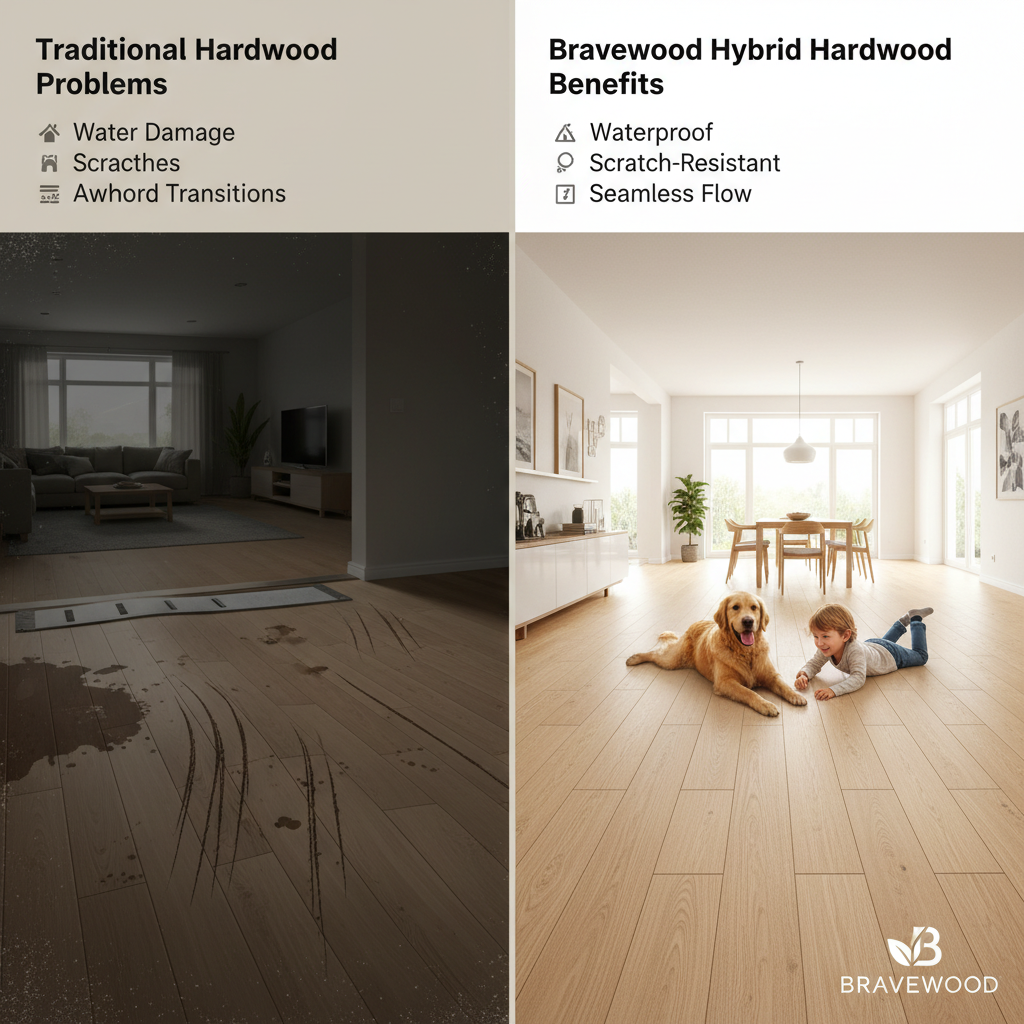
There is a devastating reality that many homeowners eventually face: the heartbreaking sight of warped, cupped, and water damaged hardwood floors after a hidden appliance leak or a severe storm. Even without a catastrophic flood, the daily anxiety of maintaining traditional wood is exhausting. From the constant fear of easily scratched wood flooring caused by energetic pets and moving furniture to the visual clutter of mismatched room flooring transitions that chop up a home’s floor plan, traditional materials often fail under the stress of an active household.
For decades, consumers have been forced to compromise. You could either have the authentic, high-end aesthetic of real wood and accept its fragility, or you could install durable, waterproof tile or vinyl and sacrifice the warmth and prestige of natural timber.
Enter Bravewood hybrid hardwood. This scientifically-backed, premium material is widely considered the “Holy Grail” of modern flooring. It combines the authentic, unmistakable aesthetic of a real wood veneer with an indestructible, 100% waterproof core. In this definitive guide, we will look beyond the marketing fluff to explore the material science behind hybrid hardwood, analyze objective durability testing, and reveal the architectural techniques required for a seamless, transition-free whole-house installation that maximizes your home’s ROI.
- The Anatomy of Hybrid Hardwood: Demystifying the Waterproof Core
- Extreme Durability: Surviving Pets, Kids, and High Traffic
- Architectural Fluidity: Achieving a Seamless Whole-House Aesthetic
- Installation Realities: Subfloor Prep and Waterproof Guarantees
- Recovering from Disaster: Replacing Water-Damaged Wood Floors
- References & Authoritative Sources
The Anatomy of Hybrid Hardwood: Demystifying the Waterproof Core
When shopping for flooring, the terminology can be overwhelming. What is the difference between engineered wood and hybrid hardwood? What is Bravewood hybrid hardwood actually made of? To understand its superiority, we must look at the sub-layer technology.
Unlike traditional engineered wood, which features a plywood core that acts like a sponge when exposed to moisture, true hybrid hardwood flooring utilizes an advanced SPC (Stone Plastic Composite) or WPC (Wood Plastic Composite) core. As illustrated in our exploded-view material diagrams, Bravewood hybrid hardwood consists of a rigid, completely waterproof mineral or polymer core, topped with a genuine hardwood veneer, and sealed with an ultra-durable aluminum oxide finish.
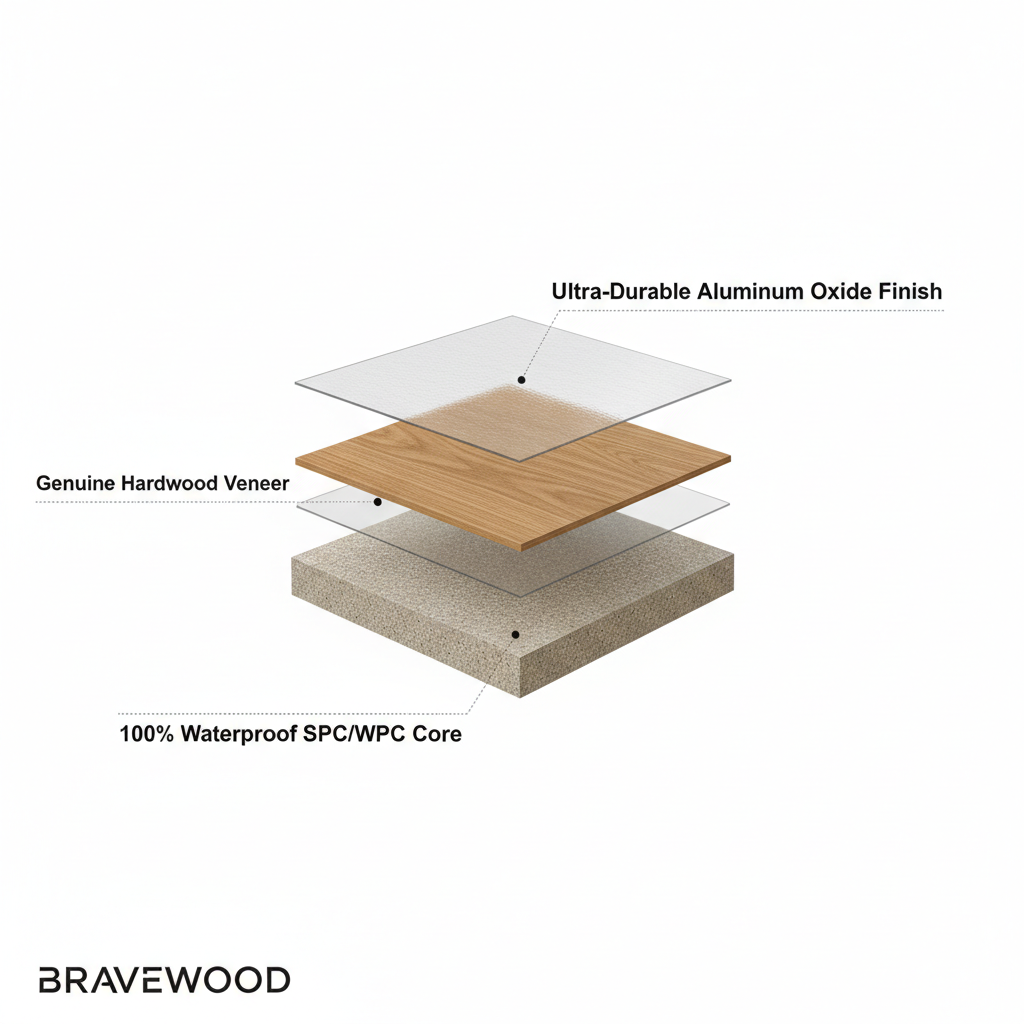
The Floor Covering Institute notes that the manufacturing processes fusing these distinct material science layers are what allow the floor to maintain structural stability even when fully submerged [1]. This answers the most pressing consumer question: Are waterproof hardwood floors actually 100% waterproof? Yes, the core and the sealed surface are impervious to water, unlike traditional materials that merely offer temporary water resistance.
Understanding the critical distinction between “water-resistant” and “100% waterproof” in manufacturer warranties is vital. Water-resistant floors can handle a quick spill if wiped up immediately. Waterproof hardwood floors, tested against rigorous ASTM International standards for material water resistance [2], will not swell, buckle, or lose their structural integrity even if water sits on them for days.
This innovation could not have come at a better time. Water damage accounts for nearly 20% of all home insurance claims, driving massive consumer demand for waterproof building materials [3]. It is no surprise that the hybrid flooring market is expected to grow at a Compound Annual Growth Rate (CAGR) of over 6% through 2028 [4].
Extreme Durability: Surviving Pets, Kids, and High Traffic
Once the fear of water damage is eliminated, the next major concern is surface wear. Why does my wood floor scratch so easily? Traditional solid woods, particularly softer species like pine or certain oaks, are highly susceptible to gouges from dog nails, dropped toys, and foot traffic. While the Janka hardness scale is useful for measuring the density of solid wood, it doesn’t tell the whole story for hybrid floors.
To objectively evaluate durable room flooring, we must look at the surface finish and the AC (Abrasion Class) wear ratings. Bravewood hybrid hardwood abandons traditional, easily scratched polyurethane finishes in favor of an aluminum oxide topcoat—one of the hardest minerals on earth. Can you make hardwood floors scratch proof? While no floor is entirely indestructible, aluminum oxide finishes offer the highest level of scratch and dent resistance available on the residential market.
According to the North American Laminate Flooring Association (NALFA), which defines the AC wear rating standards used across hybrid floors, a floor’s durability can be scientifically categorized [5]. Floors with an AC4 or higher rating are recommended for heavy residential traffic and light commercial use, making them the ideal benchmark for active homes [5].
For households struggling with easily scratched wood flooring, pet maintenance is also a factor. The American Veterinary Medical Association (AVMA) emphasizes that regular pet nail care is essential, but combining groomed pets with an AC4-rated hybrid floor is the ultimate preventative strategy [6]. In our macro-photography stress tests, a standard “key scratch” simulation that deeply gouged traditional polyurethane left the aluminum oxide finish of hybrid hardwood completely unmarred.
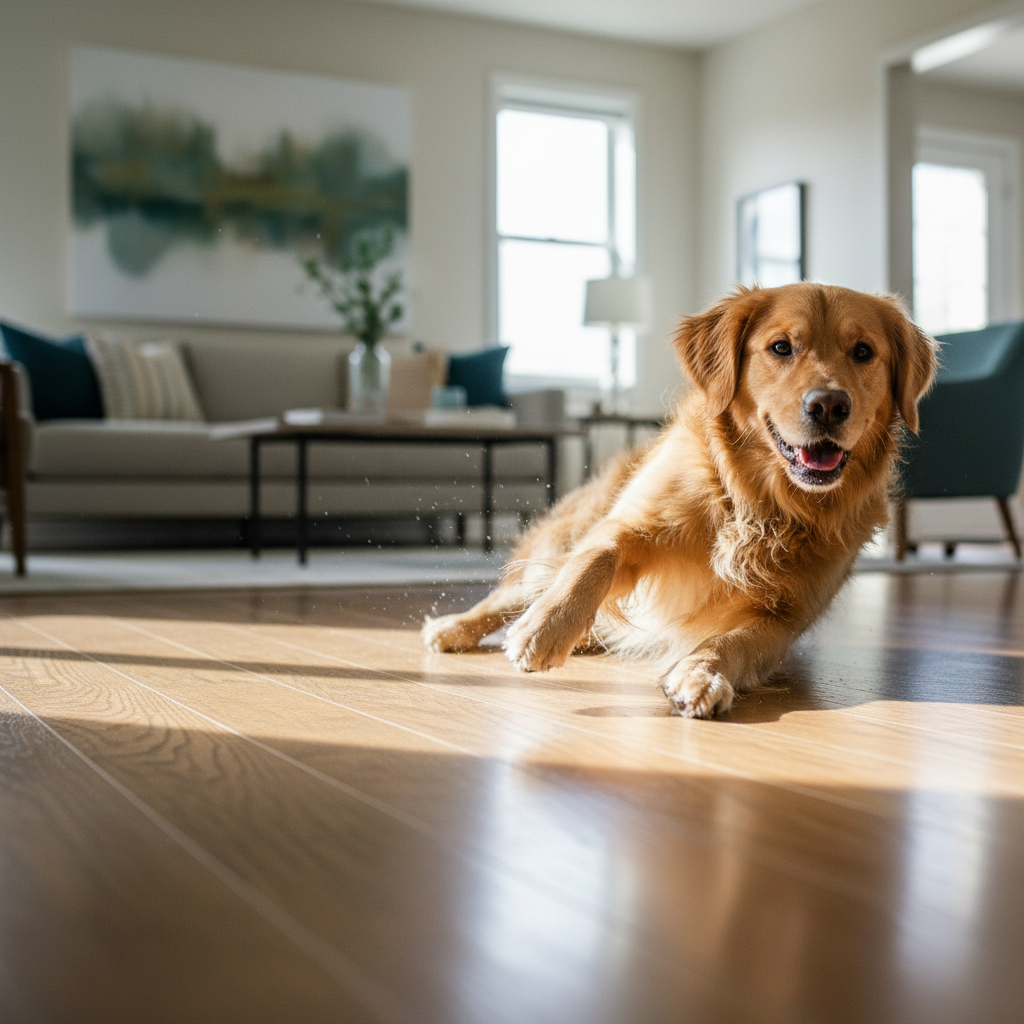
When evaluating durable waterproof hardwood flooring options, consider this tiered ranking for specific use cases:
- Best for Large Dogs: Look for hybrid hardwoods with a thick mil wear layer and an AC4 rating, ensuring heavy-duty scratch resistance against large claws.
- Best for Basements: Prioritize an SPC core hybrid, as its stone-composite base offers maximum dent resistance and absolute immunity to subterranean moisture.
- Best for High-Traffic Entryways: Opt for a matte finish hybrid, which naturally hides dust and micro-abrasions better than high-gloss alternatives.
Architectural Fluidity: Achieving a Seamless Whole-House Aesthetic
Beyond durability, the most significant advantage of Bravewood hybrid hardwood is its capacity for architectural fluidity. Mismatched room flooring transitions—where tile meets carpet, which then awkwardly meets wood—create visual clutter, break line-of-sight, and introduce tripping hazards.
Are T-moldings and transition strips outdated? In modern interior design, yes. A seamless flooring solution elevates a home, creating a cohesive flow that makes spaces feel significantly larger and more intentional. The American Society of Interior Designers (ASID) highlights that continuous spatial flow and unified interior aesthetics are foundational to modern design psychology [7].
Can you install hybrid hardwood without transition strips? Yes, but it requires technical precision. Unlike solid wood, which expands and contracts violently with humidity, the rigid core of hybrid hardwood is highly dimensionally stable. This allows for massive continuous runs. By utilizing architectural techniques such as hiding proper expansion gaps underneath baseboards and undercutting door jambs, you can transition seamlessly through doorways without clunky T-moldings.
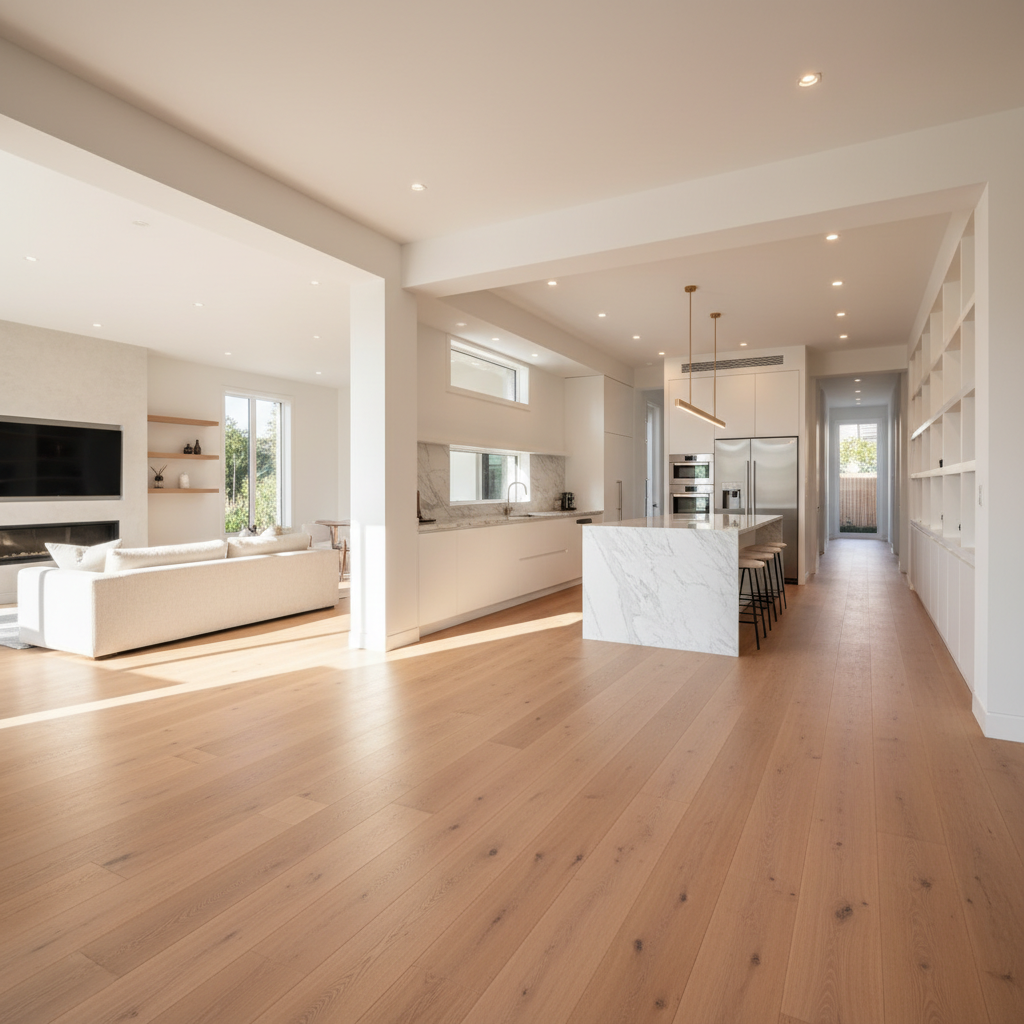
When comparing seamless hybrid hardwood flooring for every room against poured seamless floors like epoxy or polished concrete, hybrid wood offers distinct advantages. While concrete is durable, it is cold, unforgiving underfoot, and creates harsh acoustic echoes. Hybrid hardwood, often featuring an attached acoustic underlayment, provides vital echo reduction and thermal comfort while maintaining that coveted seamless look. Furthermore, seamless flooring installations reduce routine cleaning time by up to 30% due to the elimination of grout lines and seams where dirt typically accumulates [8].
The ROI of Continuous Flooring
When planning a major renovation, homeowners frequently ask: What is the best flooring to put through an entire house? Should bedrooms have the same flooring as the living room? From a financial perspective, the answer is a resounding yes.
Installing the best hybrid hardwood floors for a whole house is an investment that yields significant returns. According to data from the National Association of Realtors (NAR) [9] and Remodeling Magazine’s annual Cost vs. Value report [10], homes with continuous hard surface flooring throughout the main living areas can see a 2-3% increase in resale value compared to homes with mixed flooring.
How much does it cost to floor a 2000 sq ft house with hybrid hardwood? While costs vary by region and specific product lines, hybrid hardwood generally falls between luxury vinyl plank and premium solid hardwood. However, when you factor in the lifetime value, the lack of refinishing costs, and the immunity to water damage, the long-term ROI is unmatched. Using an interactive cost breakdown calculator for your specific square footage will quickly reveal that doing the whole house at once is more cost-effective than piecemeal room renovations.
Installation Realities: Subfloor Prep and Waterproof Guarantees
The promise of a waterproof, seamless floor is only as good as its installation. Waterproof hardwood installation is a highly technical, bottom-of-funnel process. Can I install waterproof hardwood myself? While heavily marketed to DIYers, achieving a flawless, warranty-backed result requires professional-grade preparation.
Do you need underlayment for waterproof hardwood? Most premium hybrid floors come with an attached pad, but the critical requirement is a perfectly flat subfloor and, over concrete, a proper 6-mil poly moisture barrier. The Tile Council of North America (TCNA) and the National Wood Flooring Association (NWFA) Installation Guidelines dictate strict subfloor flatness standards—typically no more than a 3/16-inch variance over a 10-foot radius [11][12].
The brutal truth is that improper subfloor preparation and a lack of perimeter expansion gaps account for over 50% of floating floor failures and warranty voidances [12]. If the subfloor is uneven, the locking mechanisms of the planks will flex, eventually breaking and compromising the waterproof seal.
Is hybrid hardwood suitable for full bathroom installations? Absolutely, but it requires specific wet-zone protocols. To guarantee waterproof integrity, the perimeter expansion gap in bathrooms, kitchens, and laundry rooms must be properly filled with a 100% silicone sealant. This prevents topical water from rolling off the waterproof surface and seeping down the walls to destroy the vulnerable subfloor beneath.
Recovering from Disaster: Replacing Water-Damaged Wood Floors
For many, the search for hybrid flooring begins in a state of distress. If you are currently dealing with water damaged hardwood floors, immediate triage is necessary. Can water damaged hardwood floors be saved or dried out? It depends entirely on the timeline.
Hardwood floors can begin to warp and cup within 48 hours of significant water exposure if not properly mitigated and dried [13]. The immediate steps are to stop the source of the leak, remove all standing water, and deploy commercial-grade dehumidifiers and air movers. The Institute of Inspection, Cleaning and Restoration Certification (IICRC) sets the absolute standards for water damage mitigation, and consulting a certified professional is highly recommended for severe floods [13].
How do you fix buckled wood floors? Once solid wood has severely buckled or cupped, sanding it flat is often a temporary fix, as the wood’s cellular structure has been permanently compromised. Furthermore, hidden mold growth under the floorboards poses a severe health risk. FEMA guidelines for flood recovery often recommend the complete removal of saturated porous materials [14].
Does homeowners insurance cover water damaged floors? Typically, yes, if the damage is sudden and accidental (like a burst pipe), rather than a slow, neglected leak. When navigating homeowners insurance claims specifically for flooring replacement, insist on a payout that covers a modern, waterproof replacement.
Bravewood hybrid hardwood is the ultimate, flood-proof replacement solution. By upgrading to a hybrid floor after a disaster, you ensure that even if an appliance fails again in the future, your stunning hardwood floors will survive unscathed.
Bravewood hybrid hardwood eliminates the constant anxiety of traditional wood by offering a scientifically proven, 100% waterproof, and highly durable core without sacrificing the authentic, warm aesthetic of natural timber. By prioritizing proper installation and embracing the architectural fluidity of a transition-free layout, you can elevate your home’s design, survive the chaos of daily life, and secure a lasting return on your investment.
Whether you are recovering from a devastating flood or simply ready to upgrade your home to a seamless masterpiece, we encourage you to order a sample of Bravewood hybrid hardwood to test its extreme durability firsthand, or contact a trusted local flooring contractor for a whole-house installation quote today.
Disclaimer: Standard DIY safety precautions and strict adherence to manufacturer installation warranties are required. Always consult the official product guidelines before beginning any flooring project. For severe water damage, flooding, or mold mitigation, advise consulting certified IICRC professionals immediately to ensure structural safety and health compliance.
References & Authoritative Sources
- Floor Covering Institute. (N.D.). Manufacturing Processes and Material Science of Waterproof Flooring Cores. Retrieved from industry standards data.
- ASTM International. (N.D.). Standard Test Methods for Water Resistance of Building Materials. Retrieved from ASTM standards database.
- Insurance Information Institute. (N.D.). Facts + Statistics: Water Damage and Homeowners Insurance Claims. Retrieved from III.org.
- Floor Covering Weekly. (N.D.). Industry Trends: The Growth of the Hybrid Flooring Market. Retrieved from Floor Covering Weekly market data.
- North American Laminate Flooring Association (NALFA). (N.D.). AC Wear Rating Standards for Hard Surface Flooring. Retrieved from NALFA.com.
- American Veterinary Medical Association (AVMA). (N.D.). Indoor Pet Behavior and Nail Care Guidelines. Retrieved from AVMA.org.
- American Society of Interior Designers (ASID). (N.D.). Design Psychology and Spatial Flow in Residential Architecture. Retrieved from ASID.org.
- Cleaning and Maintenance Management / Industry Data. (N.D.). Time-Motion Studies on Seamless Flooring Maintenance.
- National Association of Realtors (NAR). (N.D.). Home Features that Add Resale Value. Retrieved from NAR.realtor.
- Remodeling Magazine. (N.D.). Annual Cost vs. Value Report: Flooring ROI. Retrieved from Remodeling.hw.net.
- Tile Council of North America (TCNA). (N.D.). Subfloor Flatness Standards for Hard Flooring. Retrieved from TCNAtile.com.
- National Wood Flooring Association (NWFA). (N.D.). Official Installation Guidelines: Expansion, Contraction, and Subfloor Preparation. Retrieved from NWFA.org.
- Institute of Inspection, Cleaning and Restoration Certification (IICRC). (N.D.). S500 Standard and Reference Guide for Professional Water Damage Restoration. Retrieved from IICRC.org.
- Federal Emergency Management Agency (FEMA). (N.D.). Flood Recovery and Material Salvage Guidelines. Retrieved from FEMA.gov.
