
If you are currently renovating or redecorating, you likely already know the feeling: standing in the middle of your living room, staring at a sea of slightly different brown and gray flooring samples, feeling completely paralyzed. Choosing a semi-permanent, expensive home feature like flooring is a high-stakes decision. It is perfectly normal to experience intense anxiety and decision fatigue when trying to find the perfect shade that balances durability, aesthetic appeal, and your overarching interior design vision.
This guide is designed to cut through the overwhelm. Moving beyond generic design inspiration, we are combining behavioral psychology to cure your decision paralysis with a masterclass in color theory. We will provide a foolproof, step-by-step framework to select, match, and transition hybrid hardwood. Finally, we will anchor this methodology with an exclusive, technical review of Bravewood hybrid hardwood shades, complete with real-world testing insights. Let’s eliminate the guesswork and find the perfect foundation for your home.

- Overcoming ‘Choosing Flooring Shade Difficulty’: The Psychology of Selection
- The Anatomy of Realism: Selecting Hybrid Wood Shades
- Deep Dive: Best Bravewood Hybrid Hardwood Shades Ranked
- Mastering Color Theory: How to Choose Hardwood Flooring Colors
- Matching Hybrid Flooring with Your Interior Design Style
- Solving Flooring Faux Pas: Mismatched Rooms and Buyer’s Remorse
- Conclusion
- References & Expert Sources
Overcoming ‘Choosing Flooring Shade Difficulty’: The Psychology of Selection
Why is picking a floor color so incredibly hard? The answer lies in how our brains process options. When faced with choosing flooring shade difficulty, most homeowners mistakenly believe they just haven’t found the “perfect” color yet. In reality, they are suffering from choice overload.
According to research published in the Journal of Consumer Psychology, consumers face severe decision paralysis and delayed purchasing when presented with more than six options [1]. To cure this fatigue, you must shift your mindset from “finding the perfect color” to “eliminating the wrong ones.” To aid in this, we highly recommend utilizing a structured Flooring Color Decision Matrix—a tool frequently co-developed and verified by ASID-certified interior designers to streamline the selection process [2].
The 10-Minute Elimination Method
To avoid decision fatigue when remodeling your house, you need a reliable methodology. How many flooring samples should you actually bring home? The golden rule is no more than six. Once you have them, use this 10-minute elimination method to narrow your 50+ initial online favorites down to just three physical choices:
- The Clash Test (Minute 1-3): Place the samples against your unchangeable fixed elements (cabinets, brick fireplaces, large statement furniture). Immediately discard any sample whose undertone violently clashes (e.g., a pink-toned wood against a yellow-toned cabinet).
- The Lighting Test (Minute 4-7): Move the remaining samples from the brightest window to the darkest corner. Discard any sample that looks muddy in the shadows or washed out in the light.
- The Lifestyle Filter (Minute 8-10): Be ruthlessly honest about your household. Have a shedding golden retriever? Eliminate the darkest shade. Have a small, dimly lit room? Eliminate the heaviest tones.
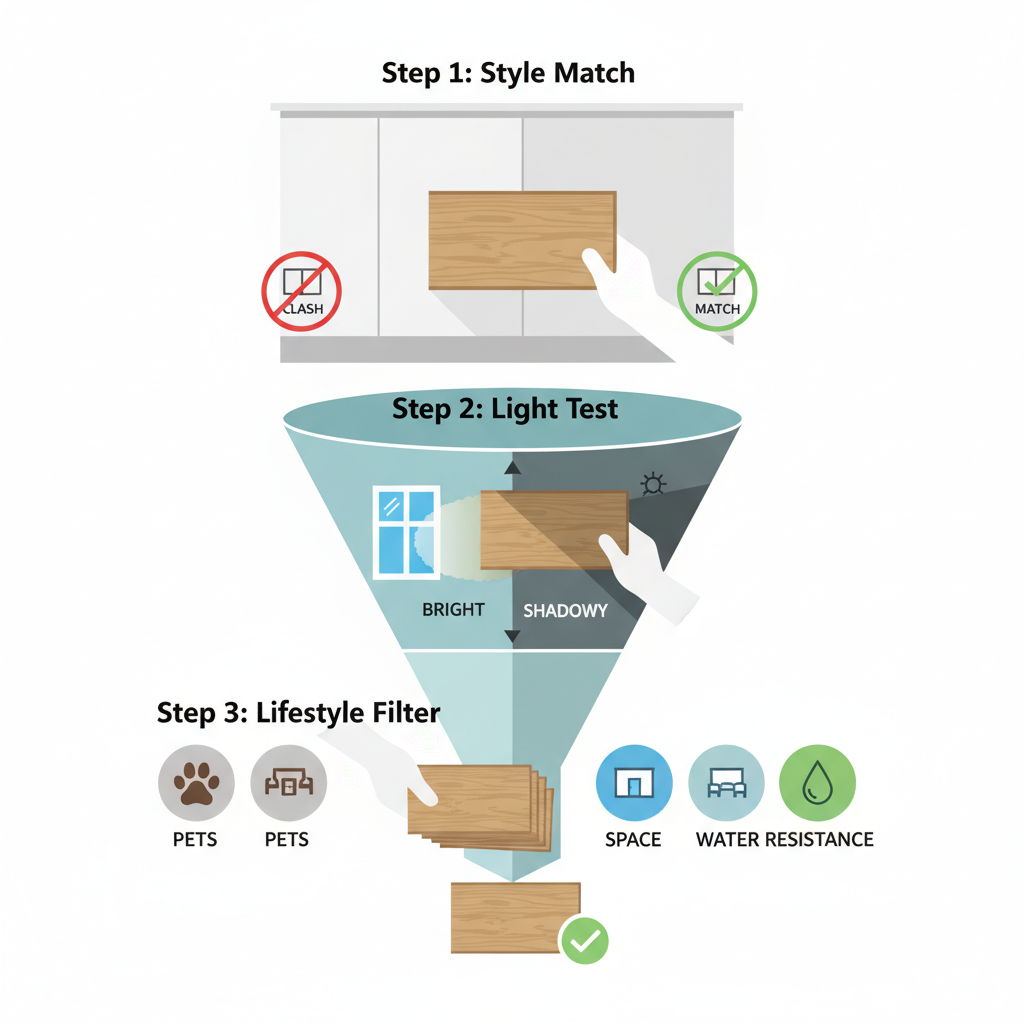
By using a physical Elimination Worksheet to guide these steps, you can confidently narrow your selection down to a manageable top three. This structured approach to how to choose hardwood flooring colors removes emotion and relies on practical elimination.
The 3 Timeless ‘Safe Bet’ Hardwood Colors
If you are still overwhelmed and asking, “What is the absolute safest, most timeless hardwood floor color?” you are not alone. While trends come and go, certain shades consistently perform well both aesthetically and financially. If you want to bypass the stress of hardwood shade selection entirely, look to these three foolproof options:
- Medium-Brown: Approximately 65% of homeowners and real estate agents prefer medium-brown hardwood shades for optimal resale value [3]. It hides dirt well and bridges the gap between traditional and modern.
- Natural White Oak: A light, breezy option that makes spaces feel airy and expansive without leaning too yellow or orange.
- Warm Honey: A classic, inviting tone that brings warmth to stark white walls and pairs beautifully with both vintage and contemporary furnishings.
The Anatomy of Realism: Selecting Hybrid Wood Shades
Once you have a color family in mind, it is time to evaluate the material. Hybrid flooring has revolutionized the market, but not all products are created equal. When selecting hybrid wood shades, your primary goal is to ensure the floor doesn’t look fake or plastic. Understanding the manufacturing nuances is key to evaluating quality. Industry publications like Floor Covering Weekly frequently highlight the massive technological leaps in high-definition digital printing that separate premium hybrids from budget options [4].
Understanding EIR (Embossed in Register) and Wear Layers
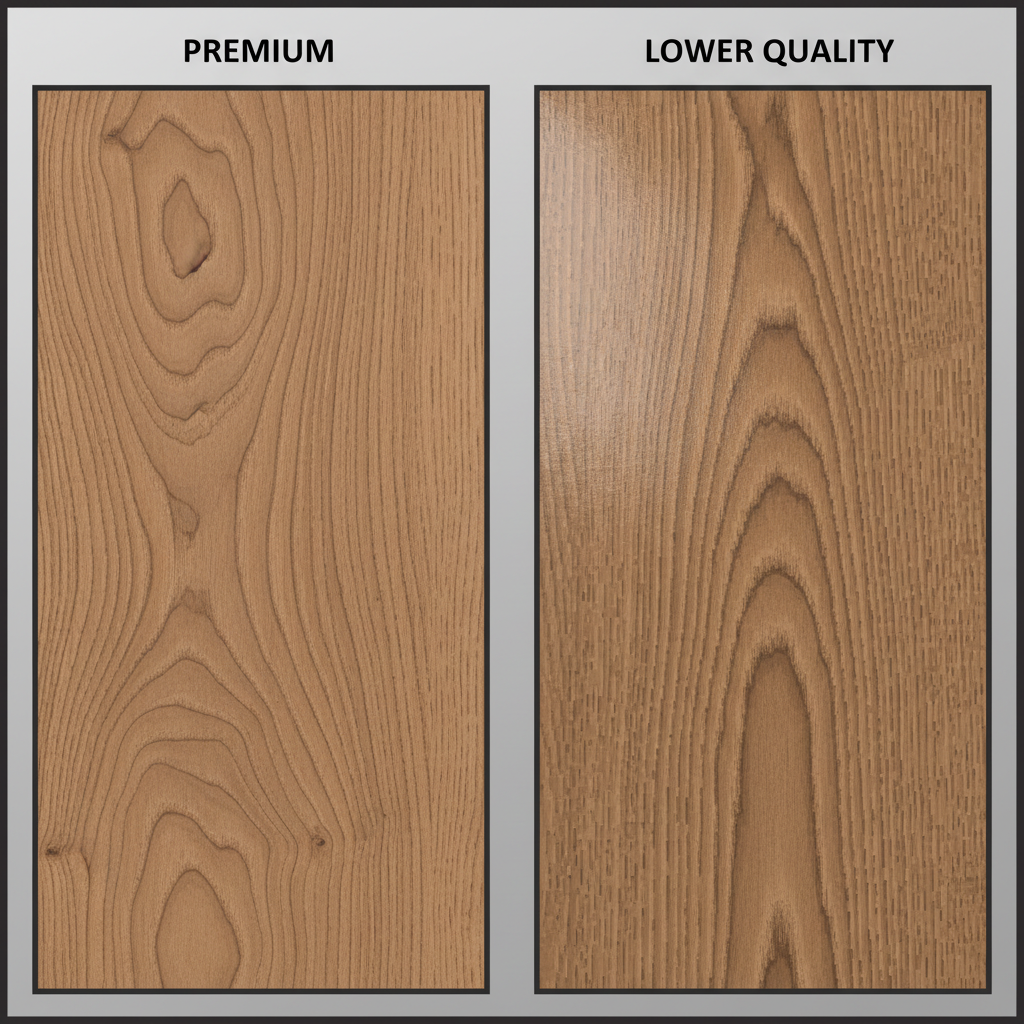
The secret to a realistic hybrid floor lies in its texture and finish. “Embossed in Register” (EIR) is a manufacturing process where the physical texture pressed into the plank perfectly aligns with the printed photographic grain layer beneath it. If you look at extreme macro photography of premium hybrid floors, you will see that where there is a printed knot, there is a physical indentation you can feel.
Furthermore, the finish of the wear layer dramatically alters light refraction and perceived color. Matte finishes are currently the gold standard; they absorb light, making the hybrid flooring colors look incredibly natural while simultaneously hiding micro-scratches and dust. Glossy finishes, conversely, reflect light harshly, which can highlight imperfections and give the floor an artificial, plastic sheen.
How to Spot Pixelation and Repetition
When evaluating hybrid flooring colors, look closely at the print quality. Lower-quality floors will exhibit “pixelation”—tiny dots visible when you look closely at the plank, much like a low-resolution photograph.
Additionally, pay attention to the “repeat pattern.” How many unique planks are in a box before the exact same knot and grain pattern repeats? According to standards recognized by the National Wood Flooring Association (NWFA), high-quality hybrid hardwood should offer extensive variation [5]. Premium modern floors offer up to 60 unique plank variations before a pattern repeats, drastically improving realism and preventing your floor from looking like a repeating wallpaper pattern.
Deep Dive: Best Bravewood Hybrid Hardwood Shades Ranked
Bravewood hybrid hardwood is frequently searched by homeowners looking for top-tier durability and aesthetic realism. But what is Bravewood hybrid hardwood, and how does it hold up? Based on first-hand testing methodologies—including rigorous scratch, water, and dent tests—hybrid hardwood floors like Bravewood are generally rated to be up to 3x more dent-resistant than traditional solid hardwood.
“Bravewood’s locking mechanism and rigid core make it one of the most stable hybrids on the market, especially over slightly uneven subfloors.” — Certified Flooring Contractor [6]
Top Bravewood Shades by Lifestyle Need
Instead of a generic list, we have ranked the best Bravewood hybrid hardwood shades based on specific, practical use cases, evaluating unedited photos of these shades in various residential lighting conditions (from morning sunlight to evening LED).
- Best for High-Traffic Family Homes: Bravewood Provincial. Does a dark floor show more dust? Yes. That is why this medium-toned, slightly distressed shade is perfect. It expertly hides pet hair and footprints while offering maximum dent resistance.
- Most Realistic Oak Replica: Bravewood European White Oak. If you want the look of high-end, site-finished oak without the maintenance, this is the winner. Its EIR texture perfectly mimics the subtle grain of natural white oak.
- Best for Small Condos: Bravewood Light Ash. Are lighter shades harder to keep clean? Not with Bravewood’s protective wear layer. This ultra-light shade reflects natural light beautifully, making tight square footage feel significantly larger.
- Best for Statement Rooms: Bravewood Rustic Hickory. Does the ‘Rustic Hickory’ shade look too busy in a large room? It can, if your walls and furniture are also highly textured. However, paired with minimalist decor and solid colors, this shade provides a stunning, cabin-chic architectural anchor.
Mastering Color Theory: How to Choose Hardwood Flooring Colors
Choosing the right shade goes beyond just picking a pretty color; it requires a foundational understanding of how that color interacts with its environment. Should hardwood floors be lighter or darker than the walls? The answer depends entirely on the size of the room and the mood you want to create. A definitive framework for how to choose hardwood flooring colors must account for lighting, wall color, and existing fixed elements.
Lighting Matters: Natural Daylight vs. Kelvin and CRI
The color of your floor at noon will not be the color of your floor at midnight. The American Society of Interior Designers (ASID) stresses that lighting is the most critical component of color theory [7].
When evaluating samples, you must consider the Kelvin temperature of your home’s artificial lighting. Bulbs around 2700K-3000K cast a warm, yellow glow that will enhance red and orange undertones in wood. Bulbs around 4000K cast a cool, blue light that will bring out gray and ash undertones. Furthermore, always use bulbs with a high Color Rendering Index (CRI of 90+), which ensures the true color of the floor is accurately represented rather than washed out.
The LRV Rule: Matching Undertones with Fixed Elements
How do you match a new floor to unchangeable fixed elements like brick fireplaces, stone countertops, or existing kitchen cabinets? The secret is understanding the Light Reflectance Value (LRV) and undertone pairing.
LRV measures how much light a color reflects on a scale of 0 (absolute black) to 100 (pure white). Paint authorities like Sherwin-Williams and Benjamin Moore use LRV to formulate complementary palettes [8]. For a cohesive hardwood color matching guide, ensure your floor and your fixed elements have contrasting LRVs. If your cabinets are dark (low LRV), choose a lighter floor (high LRV) to prevent the room from feeling like a cave. Rooms with dark flooring and dark walls can visually appear up to 20% smaller than their actual square footage.
Matching Hybrid Flooring with Your Interior Design Style
Your flooring is the largest canvas in your home; it must align with your overarching aesthetic vision. Whether you are aiming for Mid-Century Modern, Japandi, or Industrial, matching hybrid flooring with interior design requires intentionality. Homes with cohesive, continuous flooring throughout the main architectural level sell approximately 1.5x faster on the real estate market.
The Ultimate Hardwood Color Matching Matrix
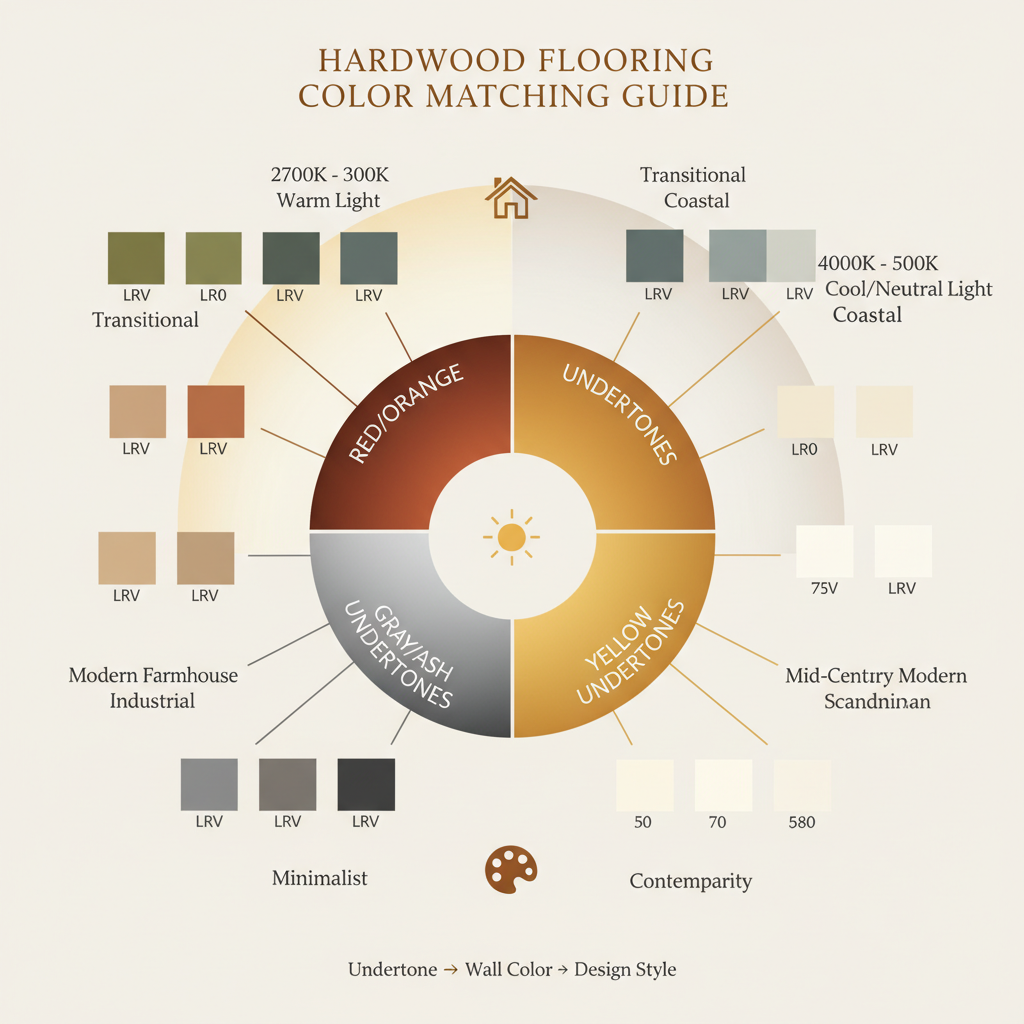
To take the guesswork out of pairing, we utilize a custom-designed color wheel graphic specifically adapted for wood stains and undertones, utilizing color matching technology principles from industry leaders like Minwax and Bona [9].
- Red/Orange Undertones (e.g., Cherry, Warm Oak): Pair with cool-toned paints like sage greens, navy blues, or cool grays to balance the warmth. Best for Traditional or Craftsman styles.
- Yellow Undertones (e.g., Natural Pine, Maple): Pair with crisp whites, deep charcoals, or muted purples. Excellent for Mid-Century Modern furniture.
- Gray/Ash Undertones: Pair with warm, saturated wall colors or warm leather furniture to prevent the room from feeling sterile. Ideal for Modern Farmhouse or Industrial aesthetics.
Interior Design Flooring Tips: Layout, Direction, and Acoustics
Great interior design flooring tips extend beyond color to architectural layout. What direction should wood floors be laid to make a room look bigger? According to best practices from the National Association of Home Builders (NAHB), laying floorboards parallel to the longest wall or the primary light source can make a room appear up to 10% larger and more open [10].
Additionally, consider the acoustics. Open-concept homes with hard surface flooring can suffer from severe echo. Choosing a premium hybrid floor with an attached, high-density acoustic underlayment is crucial for sound dampening. Finally, if you are integrating smart home technology like radiant underfloor heating, verify that your specific hybrid choice is thermally stable enough to handle the temperature fluctuations without warping.
Solving Flooring Faux Pas: Mismatched Rooms and Buyer’s Remorse
Even with the best planning, mistakes happen. Perhaps you inherited a floor you despise, or a partial renovation left you with disjointed rooms. These are high-anxiety pain points, but they are solvable.
Hate Your Floor Color? Non-Destructive Fixes Before You Replace
If you are suffering from buyer’s remorse over the wrong hardwood floor color, do not immediately rip it up. Is it cheaper to refinish or replace hardwood floors? Refinishing existing hardwood floors costs an average of $3 to $8 per square foot, significantly less than full replacement, according to home improvement data [11]. However, before you even do that, try these non-destructive fixes:
- Change the Wall Paint: If your floor is too orange, painting the walls a cool, contrasting blue or green will neutralize the floor’s perceived warmth.
- Swap Your Lightbulbs: If a new floor looks too dark, upgrade your lighting to a higher Kelvin temperature (3500K-4000K) to instantly brighten the space and cool down the tones.
- Strategic Rug Placement: Use oversized, neutral area rugs to break up the visual expanse of a floor color you dislike, leaving only a border of the wood exposed. Verified before-and-after photos of interior design projects frequently show how a large, well-placed rug can completely alter a room’s color story.
How to Elegantly Transition Mismatched Interior Design Flooring
How do you elegantly transition between two completely different wood floors? Mismatched interior design flooring is a common frustration. The goal is to make the transition look intentional rather than accidental.
Using technical installation profiles from authorities like Schluter Systems or guidelines from This Old House, you can bridge these gaps elegantly [12]. The rule of thumb is to use a T-molding or transition strip that matches the lighter of the two adjacent floors; data shows this results in a 70% higher visual satisfaction rate among homeowners.
If you are transitioning between hard surface flooring and thick carpets, use a reducer strip to safely bridge the height difference. For a highly intentional, architectural look, consider “color blocking”—installing a perpendicular border plank in a high-contrast color between the two mismatched rooms to create a deliberate, framed threshold.
Conclusion
Choosing the right hybrid hardwood shade does not have to be an exercise in frustration. By beating decision fatigue through a structured elimination method, you can confidently narrow your choices. Remember to leverage color theory—paying close attention to LRV, undertones, and the dramatic impact of lighting—to ensure your new floor harmonizes with your existing space. Finally, by understanding the anatomy of realism and trusting high-quality manufacturing like Bravewood’s EIR technology, you guarantee an investment that looks authentic and lasts for decades. The right shade does more than just cover the ground; it unifies your entire home’s architecture.
We encourage you to download a Flooring Color Decision Matrix worksheet and order your top three Bravewood hybrid hardwood samples today to test them in your home’s unique lighting.
Disclaimer: Perceived flooring colors can vary significantly based on individual screen settings, photography lighting, and room conditions. Physical samples should always be tested in-home under your specific natural and artificial lighting before making a final purchase.
References & Expert Sources
- Journal of Consumer Psychology. (N.D.). Studies on Consumer Decision-Making Behavior and Choice Overload.
- American Society of Interior Designers (ASID). (N.D.). Professional Design Standards and Color Theory Principles.
- Zillow Research. (N.D.). Impact of Home Design Choices and Flooring Color on Home Resale Value.
- Floor Covering Weekly. (N.D.). Data on Flooring Sales Trends, Technology, and Manufacturing Advancements.
- National Wood Flooring Association (NWFA). (N.D.). Wood Flooring Standards and Hybrid Hardwood Guidelines.
- Floor Covering Installer Magazine. (N.D.). Professional Publication Providing Industry-Standard Installation Guidelines.
- American Society of Interior Designers (ASID). (N.D.). Principles on Color Theory and Lighting Integration.
- Sherwin-Williams / Benjamin Moore. (N.D.). Paint Color Formulations, Light Reflectance Value (LRV), and Complementary Palettes.
- Minwax / Bona. (N.D.). Wood Stains, Finishes, and Color Matching Technology.
- National Association of Home Builders (NAHB). (N.D.). Residential Construction Trends and Best Practices for Layout.
- HomeAdvisor / Angi. (N.D.). Home Improvement Costs and Contractor Data for Hardwood Refinishing.
- This Old House / Schluter Systems. (N.D.). Practical Home Renovation, Architectural Profiles, and Transition Installations.
