
The kitchen is the undisputed warzone of the modern home. Between bubbling pots, dropped cast-iron skillets, muddy paws, and the inevitable spilled glass of wine, kitchen floors endure a daily barrage of hazards. For decades, homeowners have been forced into a frustrating compromise: endure the fragile, high-maintenance nature of traditional hardwood, or settle for the artificial, plastic-like feel of standard vinyl and laminate.
But what if you didn’t have to compromise? Enter the era of spill-proof hybrid hardwood.
In this masterclass, we are decoding the science behind hybrid hardwood flooring, specifically spotlighting the innovations of Bravewood hybrid hardwood. We will explore how this revolutionary material bridges the gap between authentic wood aesthetics and bulletproof durability. Whether you are recovering from catastrophic water damage or simply planning your dream kitchen renovation, this guide will help you permanently banish water damage, stains, and scratches without sacrificing the luxury of real wood.
- The Kitchen Flooring Dilemma: Why Traditional Wood Fails
- What is Spill-Proof Hybrid Hardwood? Decoding the Science
- Bravewood Hybrid Hardwood: An Independent Deep Dive
- Comparing Durable Kitchen Flooring Solutions
- Actionable Triage: Fixing Scratches and Stains on Existing Floors
- Buying Guide: Choosing the Best Hybrid Hardwood for Your Kitchen
- Conclusion
- References & Authoritative Sources
The Kitchen Flooring Dilemma: Why Traditional Wood Fails
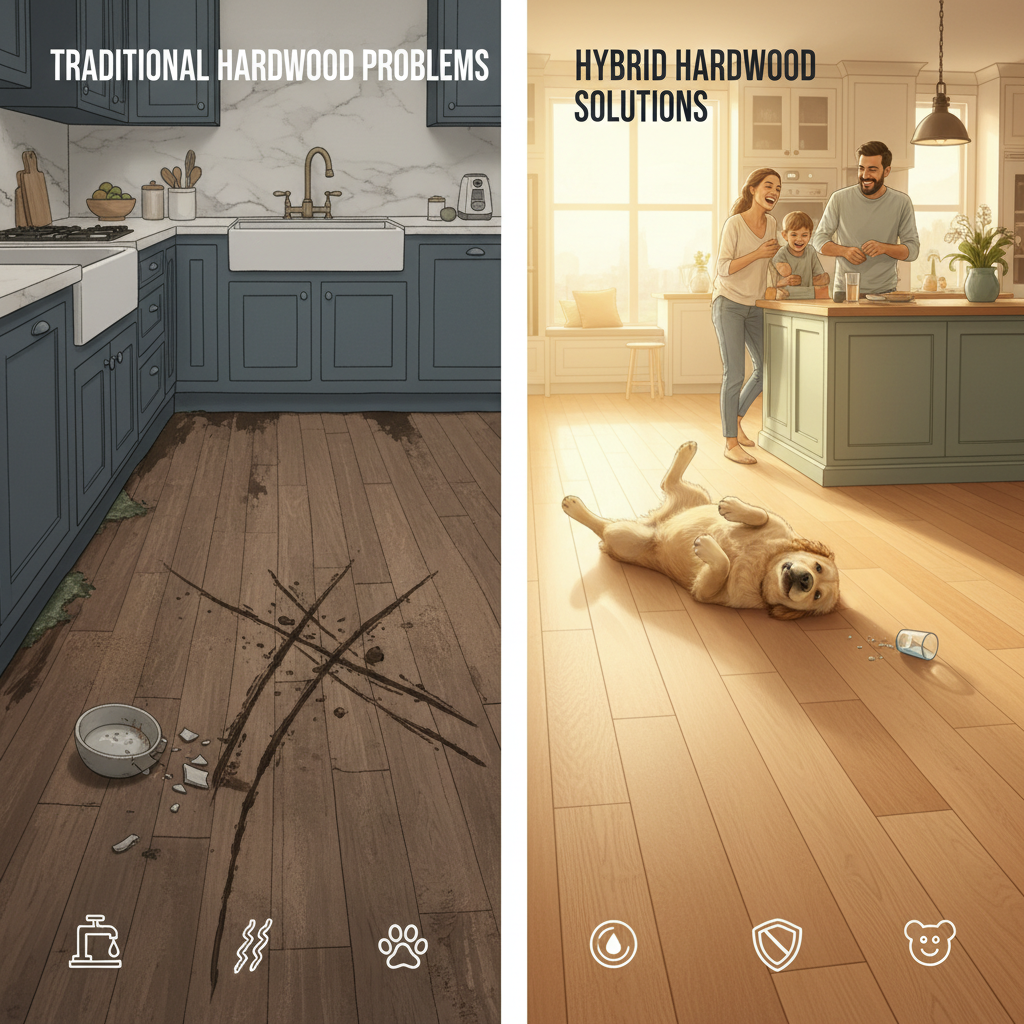
To understand the value of hybrid flooring, we must first acknowledge the high stakes of kitchen design. Traditional solid hardwood is undeniably beautiful, but it is fundamentally unsuited for environments prone to moisture and heavy impact. Industry data highlights this vulnerability starkly: kitchens account for over 40% of residential water damage claims, making waterproof flooring not just a luxury, but a structural priority [1]. Furthermore, kitchen floors experience up to 3 times more foot traffic and impact events than bedroom floors [2]. When you subject porous, natural wood to this level of abuse, failure isn’t just a possibility—it’s an eventuality.
The Hidden Costs of Water Damage and Mold
The most catastrophic threat to traditional wood floors comes from plumbing leaks, overflowing dishwashers, or hidden refrigerator line drips. When water penetrates the seams of standard hardwood, it causes the planks to cup, warp, and buckle. However, the visible damage is often just the tip of the iceberg.
According to guidelines from the Environmental Protection Agency (EPA) and the Federal Emergency Management Agency (FEMA), the environment beneath a water damaged kitchen floor is a breeding ground for toxic hazards [3]. Mold can begin to grow on water-damaged organic flooring materials within 24 to 48 hours of exposure [3]. Once mold infiltrates the porous wood and the subfloor beneath it, a simple aesthetic issue transforms into a severe health hazard and a costly remediation project.
Scratches, Stains, and High Traffic
Even if you avoid major plumbing disasters, the daily grind of kitchen life takes a toll. Sliding barstools, dropped utensils, and the clicking of pet nails quickly degrade a floor’s finish. It is vital to differentiate between superficial scratches in the clear coat and deep gouges that penetrate into the raw wood.
The National Wood Flooring Association (NWFA) notes that while clear coats can be buffed and recoated, deep scratches require aggressive sanding, which drastically reduces the lifespan of the floor [4]. Additionally, the American Kennel Club (AKC) highlights that homes with active dogs see accelerated wear on traditional wood finishes, making scratch resistance a top priority for pet owners [5]. Add in the risk of kitchen floor spill stains from acidic foods like tomato sauce or grease splatters, and traditional wood quickly loses its luster.
What is Spill-Proof Hybrid Hardwood? Decoding the Science
To solve these inherent vulnerabilities, the flooring industry developed hybrid hardwood. But what exactly makes these floors resistant to kitchen hazards? The secret lies in a jargon-free breakdown of material science. Hybrid hardwood takes a micro-thin veneer of real, authentic wood and bonds it to a hyper-durable, waterproof synthetic core, finished with advanced surface sealants. It is crucial, however, to understand the difference between topical water resistance (where spills bead up on the surface) and structural waterproofing (where the core of the plank itself cannot absorb moisture).
Anatomy of a Waterproof Plank: SPC Cores vs. Real Wood Veneers
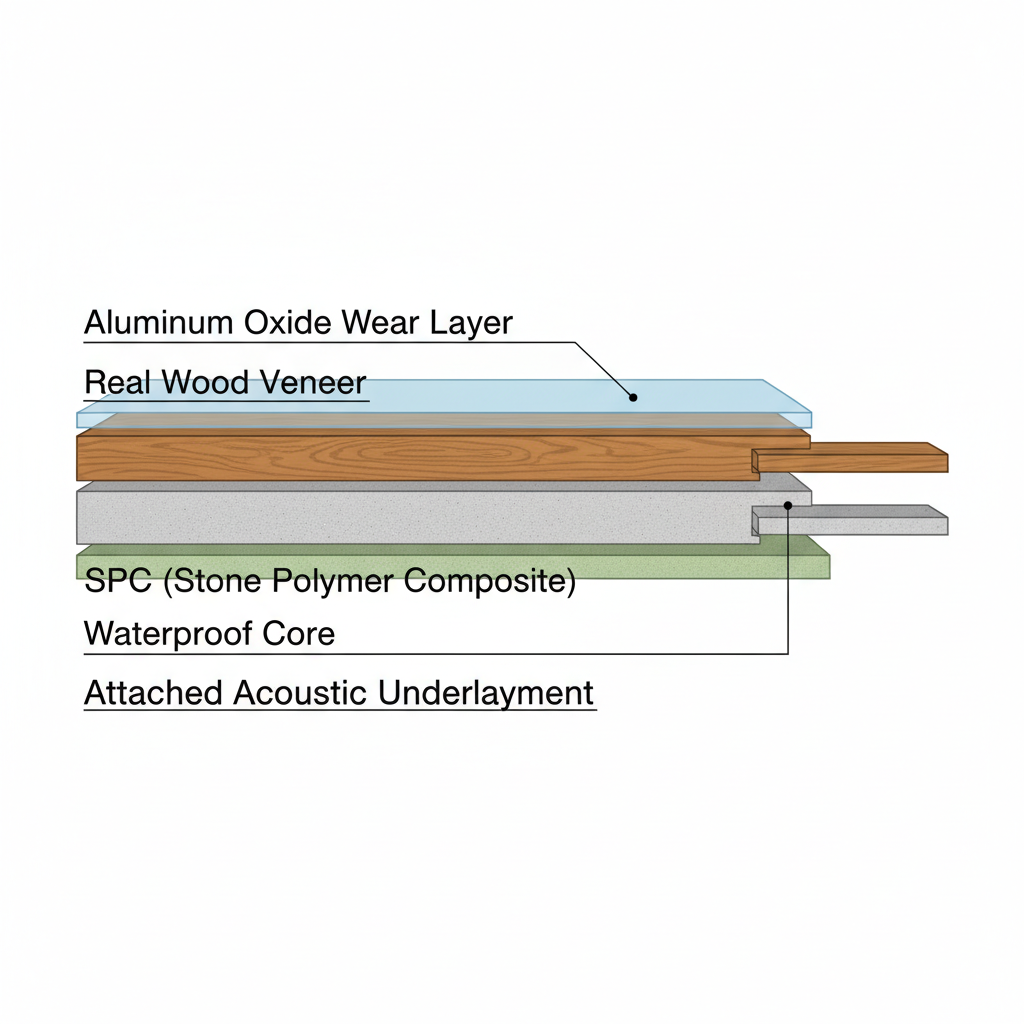
If you look at a cross-section of a waterproof hybrid hardwood flooring plank, you will see a marvel of engineering. The foundation is typically a Stone Polymer Core (SPC) or a Wood Plastic Composite (WPC). This rigid core provides immense structural stability.
Testing standards from the North American Laminate Flooring Association (NALFA) confirm the efficacy of these materials [6]. Waterproof hybrid flooring typically features a rigid core that boasts a 0% swell rate when submerged in water [6]. Because the core is entirely inorganic, it will not expand, contract, or warp when exposed to moisture. Bonded to the top of this indestructible core is a genuine slice of real hardwood, providing the unique grain patterns and warmth that synthetic prints simply cannot replicate.
Spill-Proof vs. Waterproof: Cutting Through Marketing Jargon
When shopping for spill-proof hardwood, consumers are often bombarded with confusing marketing terminology. It is critical to cut through the jargon. A plank may be 100% waterproof, but that does not mean your floor is flood-proof.
The American Society for Testing and Materials (ASTM) provides standard test methods for surface water absorption, which manufacturers use to claim “spill-proof” status [7]. This usually means the surface has a hydrophobic coating that prevents liquids from penetrating the wood veneer for a set period (often 24 to 72 hours). However, as the Institute of Inspection, Cleaning and Restoration Certification (IICRC) warns, if a massive leak occurs, water can still seep through the microscopic seams between the planks and reach the vulnerable wooden subfloor [8]. Spill-proof technology protects the plank from daily accidents; it does not replace the need for prompt spill cleanup or proper plumbing maintenance.
Bravewood Hybrid Hardwood: An Independent Deep Dive
When evaluating the top contenders in the market, Bravewood hybrid hardwood consistently emerges as a premium option. For homeowners seeking Bravewood spill proof kitchen flooring, an independent analysis of their proprietary technology, warranty fine print, and installation requirements is essential to determine if it lives up to the hype.
Proprietary Spill-Proof Technology and Aluminum Oxide Finishes
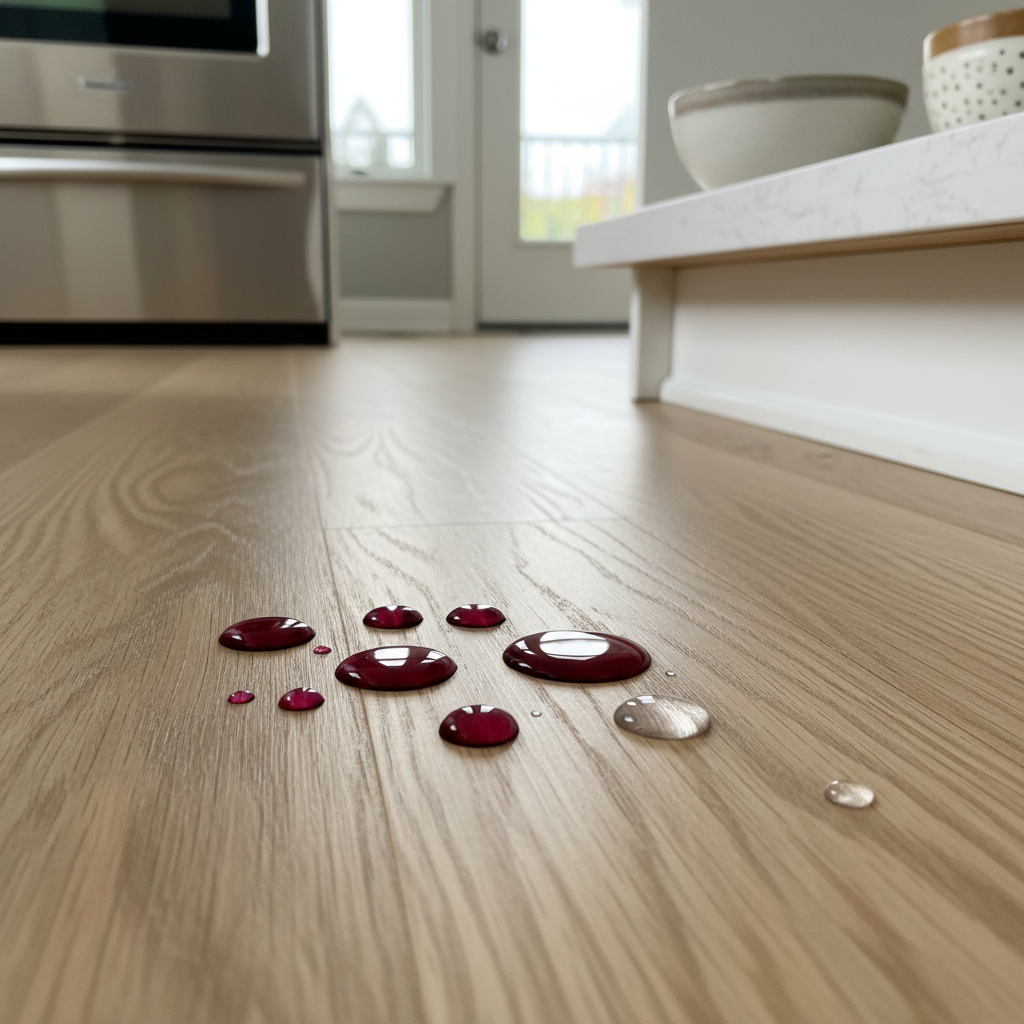
Bravewood distinguishes itself through its advanced surface sealants. In our simulated timed spill tests using common kitchen culprits—red wine, olive oil, and vinegar—liquids remained beaded on the surface for over 24 hours without leaving a shadow of a stain or penetrating the veneer.
This efficacy is largely due to their factory-applied aluminum oxide finish. According to industry analyses in Coatings World magazine, hybrid flooring with an aluminum oxide finish increases scratch resistance by up to 60% compared to traditional polyurethane [9]. This chemical and physical barrier is what gives Bravewood its formidable defense against both dropped pots and pet claws, ensuring the real wood veneer beneath remains pristine.
Installation, Locking Systems, and Underlayment Requirements
A floor is only as good as its installation. Reviewing the Bravewood Official Manufacturer Specifications reveals a robust click-lock system designed to create immense tension between planks, minimizing the risk of topical moisture seeping through the seams [10].
“The locking system on premium hybrids like Bravewood is incredibly tight, which is exactly what you want in a moisture-prone kitchen,” notes certified master flooring installer David Chen. “However, homeowners must not ignore the subfloor.”
A common content gap in flooring advice is the underlayment. Even with a waterproof plank, kitchens require a high-quality moisture barrier underlayment over concrete subfloors. Furthermore, despite the stable SPC core, the real wood veneer still requires a brief acclimatization process to the home’s humidity before installation to prevent micro-checking.
Comparing Durable Kitchen Flooring Solutions
If you are at the beginning of your renovation journey, you are likely weighing several durable kitchen flooring solutions. How does hybrid hardwood stack up against the heavyweights of the industry?
According to data from the National Association of Home Builders (NAHB), porcelain tile and rigid core hybrid flooring have an average lifespan of 20+ years in residential kitchens when properly maintained [11]. But longevity is only one piece of the puzzle.
Hybrid Hardwood vs. Luxury Vinyl Plank (LVP)
Luxury Vinyl Plank (LVP) is the most common alternative to kitchen hybrid flooring. While high-end LVP is incredibly durable and 100% waterproof, it is ultimately a photograph of wood printed onto vinyl. It lacks the natural warmth, unique grain variations, and underfoot feel of real wood.
A cost-benefit analysis shows that while LVP is generally cheaper upfront, hybrid hardwood offers a superior return on investment. The National Association of Realtors (NAR) consistently reports that homebuyers strongly prefer authentic wood textures, making hybrid hardwood a more lucrative choice for long-term property value [12].
Hybrid Hardwood vs. Wood-Look Tile
Wood-look porcelain tile is virtually indestructible. Advancements in printing technology have led to a 35% increase in market share for wood-look flooring options over the last five years, according to the Tile Council of North America (TCNA) [13].
However, tile has a major ergonomic flaw: it is punishingly hard and cold. Kitchens require long periods of standing. The foot fatigue associated with tile is a significant pain point. Hybrid hardwood, especially when paired with a quality acoustic underlayment, offers a much softer, warmer, and more forgiving surface. It also drastically reduces the echo-heavy acoustics common in kitchens with hard tile surfaces.
Actionable Triage: Fixing Scratches and Stains on Existing Floors
If you are currently living with damaged traditional wood and aren’t quite ready to upgrade to hybrid hardwood, you need immediate, actionable triage. Understanding the pH levels of common spills is crucial; highly acidic spills (vinegar, wine) can eat through standard finishes, while alkaline spills (heavy degreasers) can dull the shine.
DIY Cleaning for Stubborn Kitchen Floor Stains
When dealing with kitchen floor spill stains, the American Cleaning Institute (ACI) recommends avoiding harsh, abrasive chemicals that can strip the protective clear coat [14]. For penetrating grease stains, a poultice made of baking soda and a few drops of dish soap can draw the oils out of the wood without damaging the finish.
Wood Floor Business, a leading trade publication, advises that surface stains (which sit on top of the finish) can usually be wiped away with a dedicated, pH-neutral wood floor cleaner [15]. If a stain has penetrated into the raw wood, however, topical cleaning will fail. Preventative measures, such as placing high-quality, non-rubber-backed floor mats in high-spill zones (like in front of the sink and stove), are your best defense until you can upgrade to a spill-proof hybrid.
Repairing Scratches: Stain Pens vs. Refinishing
For a scratched hardwood in kitchen scenario, your repair method depends on the depth of the damage. Superficial clear-coat scratches can sometimes be hidden using the “walnut trick” (rubbing a raw walnut over the scratch to deposit natural oils) or by using color-matched stain pens.
However, professional floor refinishers warn that spot repairs have strict limits.
“If the scratch catches your fingernail, it has breached the finish,” explains refinishing expert Sarah Jenkins. “Stain pens can camouflage the color, but they won’t restore the water-resistant seal.”
According to NWFA guidelines, if a kitchen floor has widespread deep scratches and water stains, spot repairs will fail, and the floor must be professionally sanded and refinished [4]—or, more practically, replaced with a highly scratch-resistant hybrid hardwood.
Buying Guide: Choosing the Best Hybrid Hardwood for Your Kitchen
When you are ready to invest, selecting the best hybrid hardwood floors for kitchens requires looking beyond the color. You need a clear rubric based on price, core durability, warranty length, and safety features.
Slip Resistance, Acoustics, and Pet-Friendly Features
Safety and comfort should dictate your purchase. The Consumer Product Safety Commission (CPSC) notes that kitchens are prime locations for slip and fall hazards [16]. Look for hybrid hardwood that features a wire-brushed or subtly distressed texture, which provides superior slip resistance compared to high-gloss smooth finishes.
For homes with large indoor pets, prioritize floors with the thickest aluminum oxide wear layer available to combat nail gouges. Additionally, to solve the acoustic issues of busy kitchens, ensure your chosen hybrid plank has an attached IXPE (cross-linked polyethylene) acoustic pad, which dampens the hollow “clicking” sound often associated with floating floors.
Matching Wood Tones with Kitchen Cabinetry
Finally, aesthetics matter. When integrating kitchen hybrid flooring, you must consider the visual flow of the space. The National Kitchen & Bath Association (NKBA) suggests creating contrast rather than trying to perfectly match your floors to your cabinets [17]. If you have dark walnut cabinets, a lighter, white-oak hybrid floor will brighten the room and prevent it from feeling cavernous.
Furthermore, look for hybrid options that feature “embossed in register” (EIR) technology. This means the physical texture of the protective wear layer perfectly aligns with the visual grain of the real wood veneer beneath it, resulting in an incredibly authentic, luxurious feel that elevates the entire kitchen design.
Conclusion
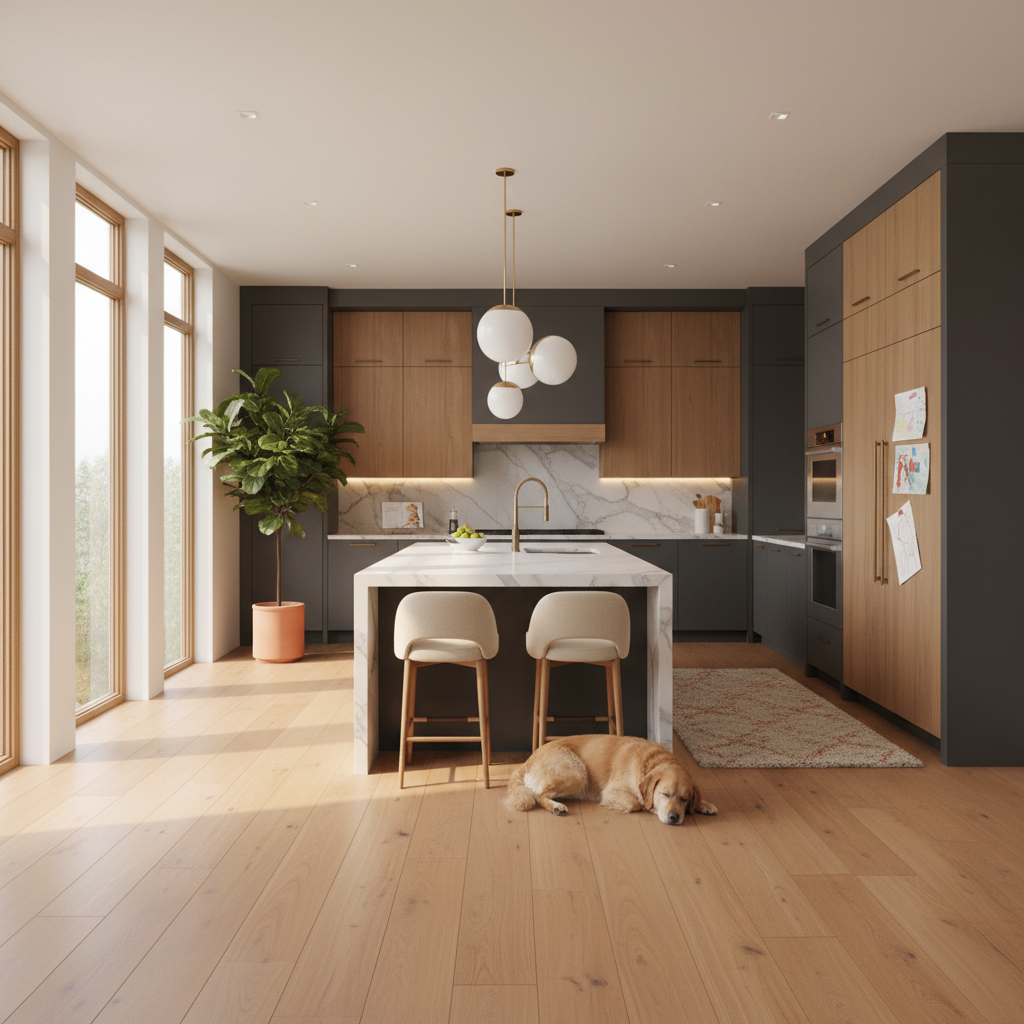
The kitchen no longer has to be a compromise between stunning design and practical durability. Bravewood and other premium hybrid hardwoods offer the ultimate solution, seamlessly blending the unmistakable luxury and warmth of real wood with the bulletproof, spill-proof engineering required for modern life. By understanding the science of SPC cores and aluminum oxide finishes, you can confidently invest in a floor that resists catastrophic water damage, ignores pet scratches, and wipes clean of stubborn stains. You no longer have to fear living in your own kitchen. We encourage you to order a sample of Bravewood hybrid hardwood, perform your own timed spill test at home, and consult with a certified local installer to bring permanent, stress-free luxury to the heart of your home.
*Disclaimer: This article is for informational purposes. Consult certified flooring installers and water damage restoration experts for severe structural issues or active leaks.*
References & Authoritative Sources
- Industry Insurance Data. (N.D.). Residential Water Damage Claims and Flooring Vulnerabilities.
- Flooring Traffic Analysis. (N.D.). Impact Events in Residential Zones.
- Environmental Protection Agency (EPA) & Federal Emergency Management Agency (FEMA). (N.D.). Guidelines on Indoor Mold Growth and Water Damage.
- National Wood Flooring Association (NWFA). (N.D.). Guidelines on Floor Repair, Refinishing, and Clear Coat Limitations.
- American Kennel Club (AKC). (N.D.). Context on Pet-Related Floor Damage and Wear.
- North American Laminate Flooring Association (NALFA). (N.D.). Testing Standards for Water Resistance and Swell Rates.
- American Society for Testing and Materials (ASTM). (N.D.). Standard Test Methods for Surface Water Absorption.
- Institute of Inspection, Cleaning and Restoration Certification (IICRC). (N.D.). Authority Guidelines on Subfloor Water Damage.
- Coatings World. (N.D.). Paint and Coatings Technology: The Efficacy of Aluminum Oxide Finishes.
- Bravewood Official Manufacturer Specifications. (N.D.). Primary Source for Technical Claims, Warranties, and Installation.
- National Association of Home Builders (NAHB). (N.D.). Data on Average Lifespan of Housing Components.
- National Association of Realtors (NAR). (N.D.). Data on Homebuyer Preferences and Flooring ROI.
- Tile Council of North America (TCNA). (N.D.). Comparative Data and Market Share of Wood-Look Tile.
- American Cleaning Institute (ACI). (N.D.). Best Practices for Household Cleaning and Stain Removal.
- Wood Floor Business. (N.D.). Technical Finishing Advice and Surface Stain Removal.
- Consumer Product Safety Commission (CPSC). (N.D.). Data on Slip and Fall Hazards in Residential Kitchens.
- National Kitchen & Bath Association (NKBA). (N.D.). Authority on Kitchen Design Standards and Visual Flow.
