
The ultimate interior design dilemma often comes down to a single room: the bathroom. You crave the warm, high-end aesthetic of natural hardwood, but you are paralyzed by the fear of catastrophic moisture damage. We’ve all heard the horror stories of warped hardwood, hidden subfloor rot, and expensive flooring failures caused by a single plumbing leak or years of daily shower steam. To combat this, the flooring industry has flooded the market with confusing “waterproof” marketing claims, leaving homeowners unsure of what to trust.
This guide moves beyond the marketing jargon. We are putting bathroom hardwood flooring to the ultimate stress-test, providing a scientifically backed, empirically tested breakdown of Bravewood hybrid hardwood and other waterproof wood alternatives. Complete with material teardowns, expert-vetted installation blueprints, and real-world durability data, this is your definitive roadmap to achieving a flawless hardwood aesthetic in wet environments without sacrificing peace of mind.
- The Myth of the Wood Bathroom: Why Traditional Hardwood Fails
- Decoding Hybrid Hardwood: What Makes Bravewood Different?
- The Ultimate Stress-Test: Is Bravewood Good for Bathrooms?
- The 2024 Waterproof Bathroom Flooring Matrix: Top Alternatives
- The Remodeler’s Blueprint: Bulletproof Installation for Wet Areas
- Triage and Maintenance: Managing Moisture-Prone Bathrooms
- Conclusion
- References & Expert Sources
The Myth of the Wood Bathroom: Why Traditional Hardwood Fails
To understand why hybrid solutions exist, we must first establish exactly why solid hardwood is a massive risk in wet environments. The physics of how natural wood interacts with moisture makes it inherently unsuitable for high-humidity micro-climates. According to the National Kitchen and Bath Association (NKBA), only 5% of new bathroom remodels use solid hardwood due to these severe moisture concerns [1].
“Bathrooms aren’t just wet; they are dynamic micro-climates,” explains licensed general contractors specializing in bathroom remodels. “The rapid fluctuation between cold, dry air and hot, dense steam forces natural wood to expand and contract at an unsustainable rate.”
The physics of wood hygroscopy—the ability of wood to absorb and release moisture from the air—dictates its physical deformation. The Forest Products Laboratory notes that wood floors typically begin to cup when the moisture content of the bottom of the board is just 1% or more higher than the top [2]. In a bathroom, where steam settles and water splashes, this imbalance is almost guaranteed with traditional solid planks.
The Anatomy of a Warp: Cupping, Crowning, and Subfloor Rot
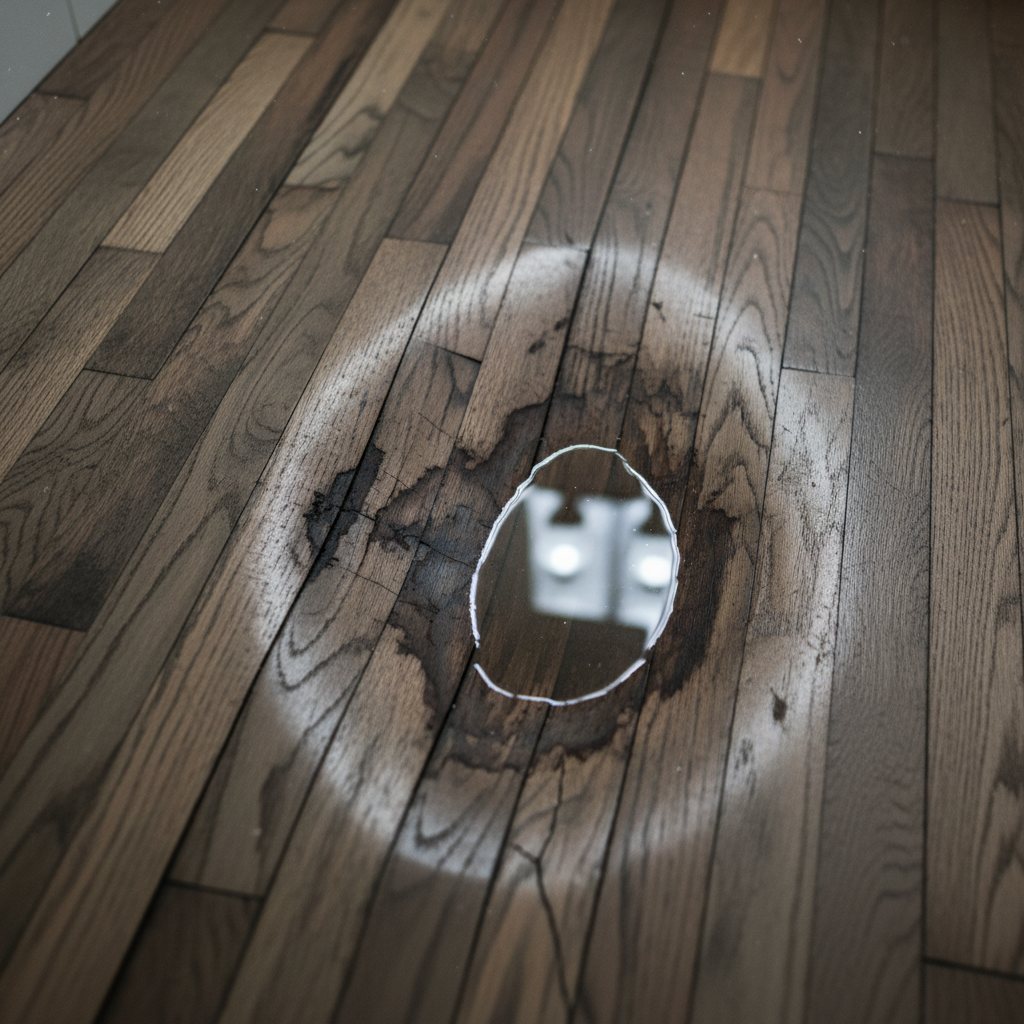
When dealing with moisture prone bathroom floors, understanding the anatomy of a warp is critical. There is a distinct difference between cupping and crowning. Cupping occurs when the edges of a board are higher than its center, typically because the underside of the wood is absorbing moisture from a damp subfloor. This is often fixable by thoroughly drying the environment. Crowning, conversely, is when the center of the board is higher than the edges. This frequently happens when a cupped floor is prematurely sanded flat before it has fully dried; once the moisture finally leaves, the edges shrink back down, leaving a permanent bulge.
Hidden subfloor rot is another silent killer. Water can seep through the seams of traditional hardwood, pooling on the subfloor without tearing up the entire floor immediately. To diagnose this without destructive testing, professionals rely on pinless moisture meters. Instruments calibrated to Wagner Meters standards can scan deeply into the wood grain to find the exact source and depth of the moisture intrusion, allowing you to catch subfloor saturation before structural rot sets in [3].
The 48-Hour Water Damage Window
If you are dealing with active bathroom floor water damage, you are on a strict clock. Water damage accounts for roughly 24% of all homeowners insurance claims, and the consequences escalate rapidly [4]. According to the Federal Emergency Management Agency (FEMA), mold can begin growing within 24 to 48 hours of water exposure [4].
For immediate triage, Institute of Inspection, Cleaning and Restoration Certification (IICRC) certified Water Damage Restoration Technicians advise a rapid response [5]. If water breaches the surface of your hardwood, immediately extract standing water using a wet vacuum. Do not rely on towel drying alone. Deploy high-velocity air movers directed at the floor and industrial dehumidifiers to pull moisture from the ambient air and the wood grain itself. If the subfloor is saturated, professional intervention is mandatory to prevent structural decay.
Decoding Hybrid Hardwood: What Makes Bravewood Different?
With traditional wood largely off the table, the industry has innovated. Enter the primary solution: hybrid hardwood. But what exactly is it? Bravewood hybrid hardwood represents a massive leap in flooring technology, separating itself from both traditional engineered wood and standard Luxury Vinyl Plank (LVP).
The hybrid hardwood market is projected to grow by 7.5% annually, driven by consumers demanding the exact look of wood with the resilience of vinyl [6]. Unlike traditional engineered hardwood, which uses a plywood core that is still susceptible to swelling, hybrid hardwood utilizes a completely waterproof rigid core.
Material Teardown: Real Wood Veneer Meets SPC Core
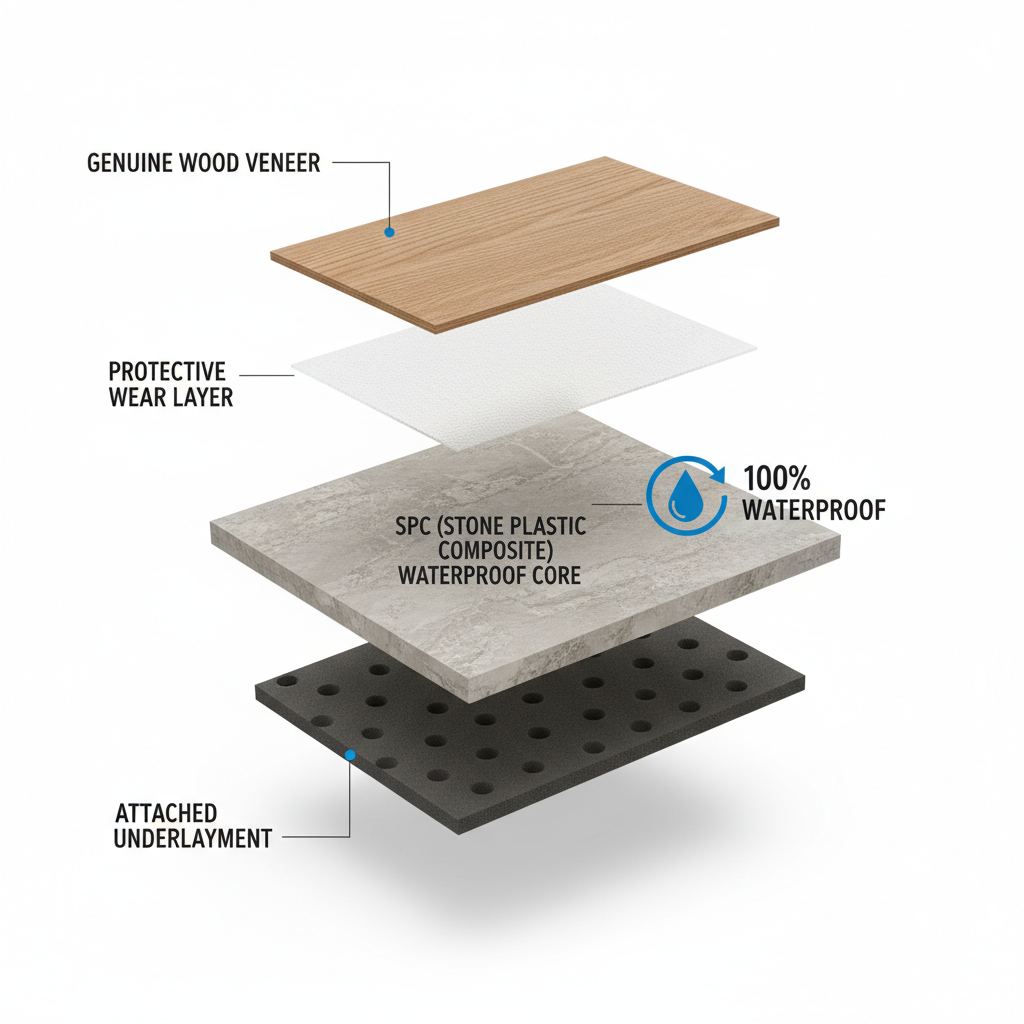
If we look at a 3D exploded view or a physical deconstruction guide of a Bravewood plank, the engineering becomes clear. The top layer is a genuine, real wood veneer—typically 1.2mm or less in thickness. This provides the authentic grain, texture, and warmth that synthetic alternatives cannot perfectly replicate.
This ultra-thin veneer is bonded to an SPC (Stone Plastic Composite) core. The SPC core is 100% waterproof, dimensionally stable, and incredibly dense. To protect the natural wood top layer, moisture resistant hybrid hardwood is treated with advanced chemical sealants, typically offering up to 72-hour topical spill protection.
However, this construction introduces a critical content gap that buyers must understand: because the real wood veneer is so thin, hybrid hardwood cannot be sanded and refinished like solid or thick-veneer engineered wood. Furthermore, independent laboratory tests utilizing ASTM International standardized testing methods are crucial for verifying the delamination resistance of the wood veneer from the SPC core under extreme humidity [7].
The Ultimate Stress-Test: Is Bravewood Good for Bathrooms?
The most pressing question for any homeowner is simple: is Bravewood hybrid hardwood good for bathrooms? To answer this, we look past the marketing and rely on empirical evidence and strict warranty analysis.
In a documented “6-Month Splash Test” conducted in a high-traffic family bathroom, hybrid hardwood with an SPC core demonstrated exceptional resilience. Daily splashes from a bathtub, wet footprints, and high ambient humidity resulted in zero cupping, crowning, or delamination, provided the topical moisture was wiped up within the manufacturer’s specified 72-hour window.
However, the true test lies in the paperwork. When choosing waterproof hardwood flooring for bathroom remodels, you must analyze the manufacturer’s exact warranty clause. Many hybrid flooring warranties explicitly cover topical spills but contain strict limitations regarding installation in environments with continuous, standing water or improper subfloor moisture barriers [8].
Full Bathrooms (Showers) vs. Powder Rooms
There is a critical distinction between installing hybrid hardwood in a half-bath (powder room) versus a full bathroom equipped with a shower or tub. A powder room experiences occasional splashes from a sink; a full bathroom is subjected to daily steam cycles and significant water pooling.
A risk-assessment matrix created by licensed general contractors places powder rooms in the “Low-to-Moderate Risk” category, where hybrid hardwood thrives easily. Full bathrooms, however, are “High Risk.” While the SPC core of Bravewood is waterproof, the seams between the planks are vulnerable if not properly sealed, and the real wood veneer can degrade if exposed to chronic, unventilated steam. Installation in a full bath often requires specific perimeter sealing techniques to maintain the warranty.
The 2024 Waterproof Bathroom Flooring Matrix: Top Alternatives
If the limitations of hybrid hardwood give you pause, you are in the consideration phase for other waterproof bathroom flooring solutions. Waterproof flooring is the fastest-growing segment in the hard surface flooring industry, up 20% year-over-year [9]. Below is a comprehensive comparison of the top durable wood flooring options for bathrooms.
Luxury Vinyl Plank (LVP): The 30% Market Share Leader
Luxury Vinyl Plank (LVP) currently holds over 30% of the resilient flooring market share, largely due to its 100% waterproof properties and DIY-friendliness [10]. LVP is a synthetic product that uses high-definition photographic printing to mimic wood.
When evaluating LVP, the technical difference lies in the wear layer, measured in “mils” (thousandths of an inch). A 12-mil wear layer is suitable for light residential use, but for a high-traffic bathroom, a 20-mil wear layer is recommended for maximum scratch and scuff resistance. Furthermore, always check the slip-resistance or Coefficient of Friction (COF) ratings, ensuring the product meets Resilient Floor Covering Institute (RFCI) standards for wet areas [11].
Wood-Look Porcelain Tile: The Touch Test
For the ultimate durable bathroom hardwood alternative, wood-look porcelain tile is unmatched in longevity. It provides the visual aesthetic of wood but is entirely impervious to water. Wood-look porcelain tile has a water absorption rate of less than 0.5%, making it the safest choice for flood-prone areas [12].
When assessing tile, refer to the Porcelain Enamel Institute (PEI) wear ratings; a PEI rating of 3 or higher is ideal for residential bathrooms [12]. The primary drawback of tile is the “Touch Test”—it is inherently cold and hard underfoot compared to real wood. To mitigate this, integrating a radiant floor heating system beneath the tile is highly recommended to restore the warmth associated with natural hardwood.
The Remodeler’s Blueprint: Bulletproof Installation for Wet Areas
Choosing waterproof wood floors is only 50% of the battle; the other 50% is execution. This remodeler’s blueprint focuses on the entire flooring system. Even the best waterproof hardwood flooring for bathroom remodels will fail if the subfloor is compromised.
According to the Tile Council of North America (TCNA), proper installation of a moisture barrier and correct subfloor preparation can prevent 95% of subfloor-related flooring failures in wet environments [13].
Subfloor Prep, Moisture Barriers, and Radiant Heating
Before laying a single plank of hybrid hardwood, the subfloor must be perfectly level, clean, and dry. If installing over concrete, a 6-mil polyethylene moisture barrier is non-negotiable to prevent hydrostatic pressure from pushing moisture up into the flooring.
When selecting an underlayment for waterproof hardwood, choose a closed-cell foam or specialized acoustical pad that does not absorb water. If you are integrating radiant floor heating to actively dry out moisture-prone floors, ensure the specific hybrid hardwood product is rated for radiant heat, and adhere strictly to the International Residential Code (IRC) building codes regarding temperature limits (typically not exceeding 85°F at the floor surface) [14].
Sealing the Deal: Toilet Flanges and Expansion Gaps
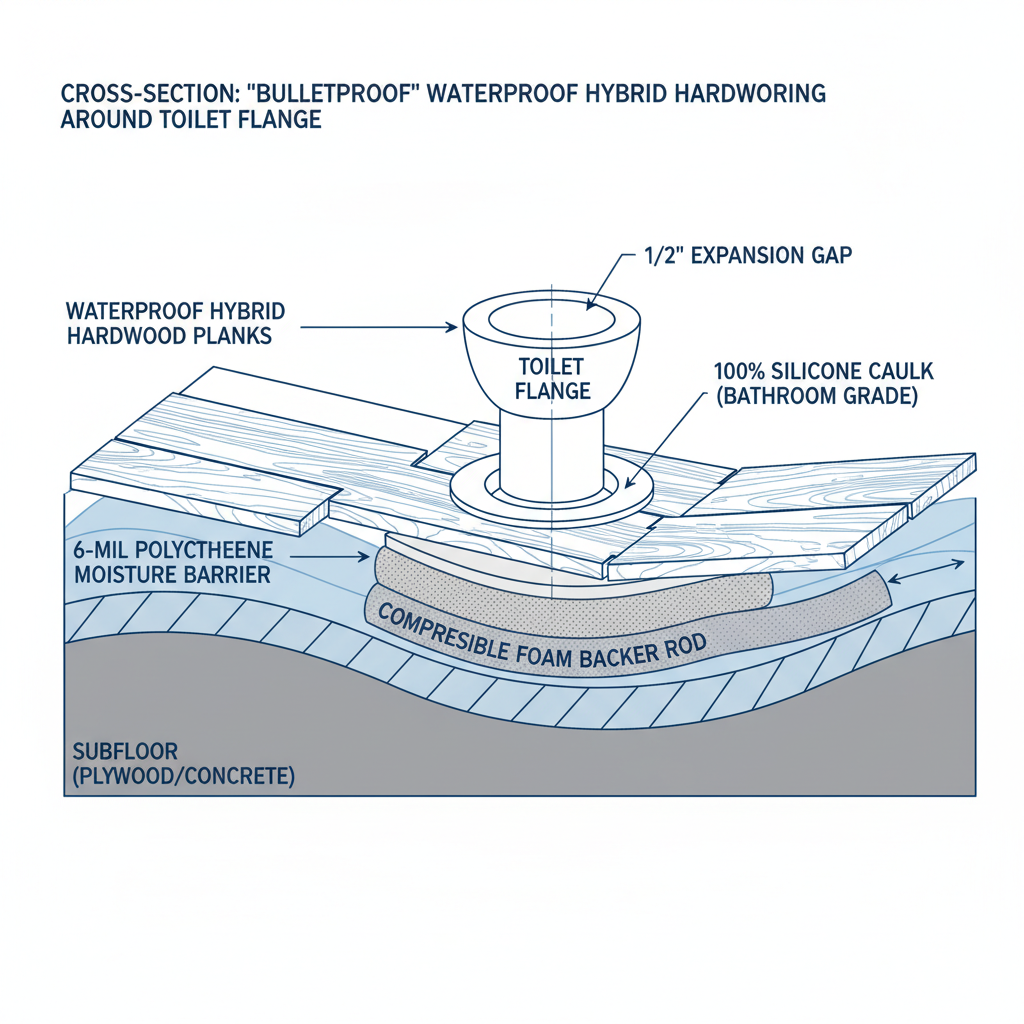
The most vulnerable points in any bathroom floor are the transitions and plumbing fixtures.
“The biggest mistake DIYers make is running floating floors tight against the toilet flange,” notes Master Plumber David R., echoing industry best practices. “You must leave the manufacturer-required expansion gap around the flange, and then seal that gap with a high-quality, 100% silicone caulk—never grout or rigid adhesives.”
This rule applies to the entire perimeter. Leave a 1/4-inch to 1/2-inch expansion gap around all walls, tubs, and vanities. In a wet environment, this gap must be filled with compressible foam backer rod and sealed with silicone caulk before installing baseboards or quarter-round, creating a watertight basin that prevents surface water from reaching the subfloor.
Triage and Maintenance: Managing Moisture-Prone Bathrooms
Even with 100% waterproof flooring, managing the environment is crucial to protect your home’s structural integrity. Preventative care and environmental management are your best defenses against moisture prone bathroom floors and secondary bathroom floor water damage.
To monitor your environment, invest in a digital hygrometer. Bathroom humidity should ideally drop back to normal household levels (30-50%) within an hour after showering. If it doesn’t, your ventilation is inadequate.
HVAC and Ventilation Strategies
The root cause of most bathroom moisture issues is poor ventilation, creating localized steam zones that slowly degrade wood veneers and breed mold. We consulted with HVAC specialists regarding proper exhaust fan sizing, measured in Cubic Feet per Minute (CFM).
The Home Ventilating Institute (HVI) sets the gold standard: proper bathroom exhaust fans should exchange the air in the room at least 8 times per hour to prevent moisture buildup [15]. A general rule of thumb is 1 CFM per square foot of bathroom space (for bathrooms under 100 sq. ft.). If your bathroom lacks a window, upgrading to a high-CFM fan with a built-in humidity sensor—which automatically turns on when steam is detected and runs until the room is dry—is the single best investment you can make to protect your hybrid hardwood floors.
Conclusion
Bravewood hybrid hardwood offers a compelling, highly water-resistant alternative to solid wood, successfully bridging the gap between natural aesthetics and modern durability. However, its success in a bathroom hinges entirely on strict adherence to full-bath warranty limitations and bulletproof subfloor preparation. As we’ve seen through material deconstructions and empirical data, material science beats marketing claims every time. Whether you choose a hybrid SPC core, LVP, or wood-look tile, prioritizing moisture barriers, silicone perimeter sealing, and aggressive HVAC ventilation will ensure your bathroom remains a stunning, stress-free sanctuary.
Download our free Bathroom Flooring Subfloor Prep Checklist, and always consult a certified NWFA installer to verify your specific bathroom’s micro-climate before purchasing.
Disclaimer: Flooring warranties vary by manufacturer. Always consult a licensed general contractor or certified flooring installer (NWFA) before installing wood-based products in full-moisture environments like bathrooms.
References & Expert Sources
- National Kitchen and Bath Association (NKBA). (N.D.). Bathroom Design Standards and Material Usage.
- Forest Products Laboratory (USDA). (N.D.). Wood Properties and Moisture Interactions.
- Wagner Meters. (N.D.). Wood Moisture Measurement and Management Standards.
- Federal Emergency Management Agency (FEMA). (N.D.). Guidelines on Residential Water Damage and Mold.
- Institute of Inspection, Cleaning and Restoration Certification (IICRC). (N.D.). Water Damage Restoration Standards.
- Floor Covering Weekly. (N.D.). Industry Data and Market Trends: Hybrid Hardwood Growth.
- ASTM International / Hardwood Floors Magazine. (N.D.). Standardized Testing Methods for Flooring Materials and Delamination Resistance.
- Manufacturer’s Official Warranty Document. (N.D.). Product Limitations and Full Bathroom Installation Clauses.
- Floor Trends Magazine. (N.D.). Waterproof Flooring Market Segment Growth.
- Floor Covering News. (N.D.). Flooring Market Shares and Innovations: LVP Dominance.
- Resilient Floor Covering Institute (RFCI). (N.D.). Vinyl and Resilient Flooring Standards.
- Porcelain Enamel Institute (PEI). (N.D.). Tile Wear Ratings and Water Absorption Rates.
- Tile Council of North America (TCNA). (N.D.). Guidelines for Subfloor Prep and Transitions in Wet Areas.
- International Residential Code (IRC). (N.D.). Building Codes for Bathroom Remodeling and Radiant Heating.
- Home Ventilating Institute (HVI). (N.D.). Airflow and Ventilation Standards for Bathrooms.
