
If you share your home with active kids, large dogs, and the inevitable chaos of daily life, you already know the high anxiety that comes with maintaining beautiful floors. You watch in slow motion as a heavy toy truck crashes to the ground, or cringe at the sound of your Golden Retriever’s claws scrambling for traction near the front door. For years, homeowners have been caught in a frustrating cycle: falling for misleading “scratch-proof” marketing claims, only to be left with permanently gouged, faded, or warped floors just a few years after installation.
It is time to cut through the marketing jargon. In this unfiltered, evidence-based guide, we are introducing the “Chaos Index”—a rigorous framework to evaluate flooring based on the actual stress tests of an active home. We will explore why hybrid hardwood flooring, and specifically the Bravewood flooring line, has emerged as the ultimate no-compromise solution. By combining materials science, real-world testing, and expert installation insights, this article will show you how to achieve the luxurious aesthetic of real wood with the extreme durability your family demands.
- The Reality of Flooring in an Active Home: Introducing the ‘Chaos Index’
- Demystifying Hybrid Hardwood Flooring: The No-Compromise Solution
- Deep Dive: Is Bravewood Flooring the Best for Busy Families?
- Pet-Friendly Hardwood Flooring: Surviving Dogs, Cats, and Accidents
- Strategic Aesthetics: Hiding Hardwood Floor Wear and Tear
- Damage Control: How to Fix Scratched Wood Floors and Pet Stains
- Conclusion
- References and Authoritative Sources
The Reality of Flooring in an Active Home: Introducing the ‘Chaos Index’
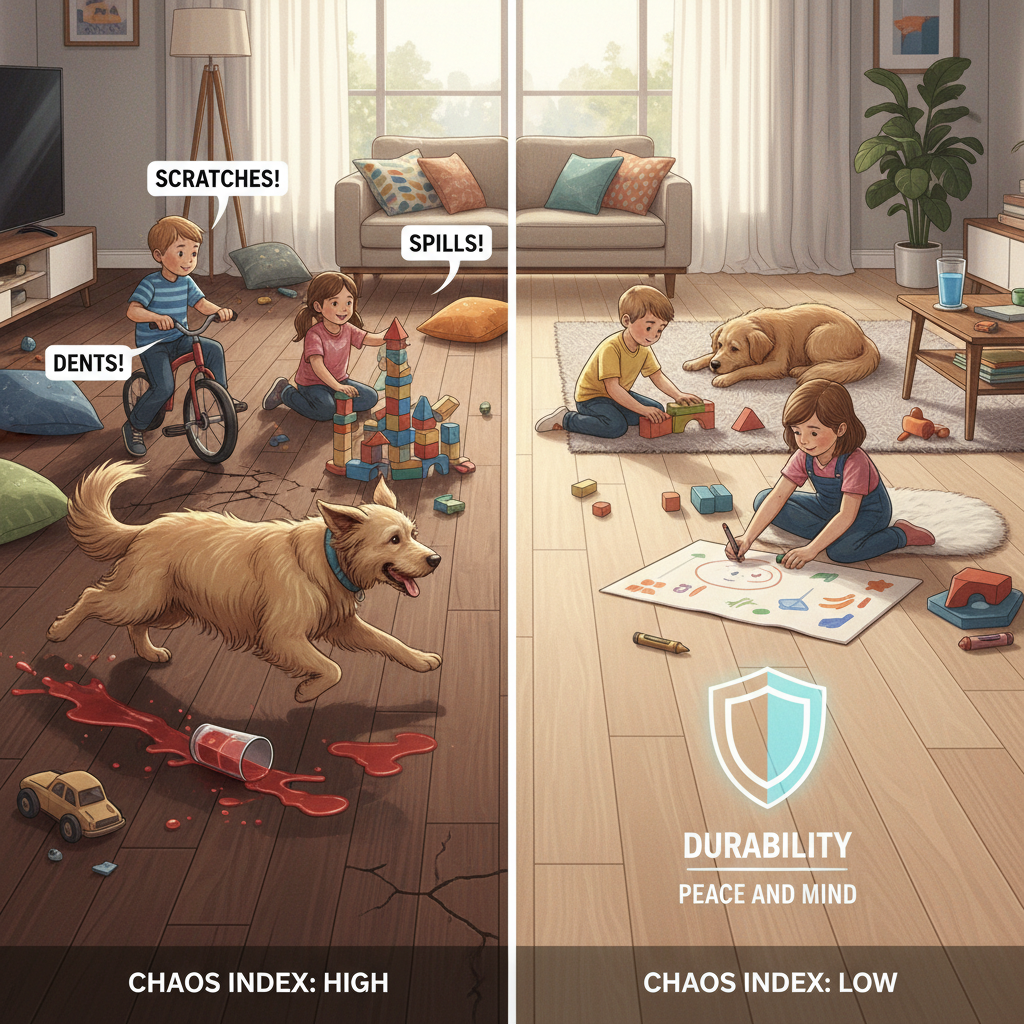
When evaluating durable flooring for families, standard showroom metrics often fall short. A floor might look stunning under perfect lighting, but how does it handle a spilled sippy cup left overnight, or the daily stampede of a 60-pound dog? To establish a true baseline for what busy families need, we must evaluate materials using the “Chaos Index.”
The Chaos Index is a comparative matrix that ranks flooring based on five critical pillars: impact resistance (dropping heavy objects), scratch resistance (claws and dragged furniture), water resistance (spills and biological accidents), acoustic properties (noise reduction), and ease of cleaning.
Choosing a floor that scores high on the Chaos Index isn’t just about preserving your sanity; it’s a financial strategy. According to data from the National Association of Realtors (NAR), installing durable, high-quality hard-surface flooring yields one of the highest Returns on Investment (ROI) for interior home renovations [1]. Furthermore, for families with young children, indoor air quality is paramount. It is crucial to prioritize floors that meet GREENGUARD Certification standards, ensuring they are low-VOC and non-toxic [2].
Comparing the Contenders: LVP vs. Laminate vs. Solid Wood
To understand why hybrid hardwood is revolutionary, we must first look at the traditional contenders. Is luxury vinyl plank the best option for kids? Is engineered or solid hardwood better for high traffic? Let’s break it down by lifestyle personas:
- Best for Budget-Conscious Families (Laminate): Laminate offers excellent scratch resistance thanks to its melamine wear layer. However, traditional laminate is notoriously vulnerable to water damage and can sound hollow underfoot.
- Best for Toddlers and Spills (Luxury Vinyl Plank – LVP): LVP is 100% waterproof and softer underfoot, making it great for toddlers. Yet, unbiased flooring durability ratings from organizations like Consumer Reports often highlight LVP’s critical flaw: it is highly vulnerable to denting from heavy impacts, and it lacks the authentic feel of real wood [3].
- Best for Traditionalists (Solid Wood): Solid wood is gorgeous and can be refinished multiple times. However, it is highly susceptible to scratches, gouges, and moisture warping. It requires a household willing to meticulously manage hardwood floor wear and tear.
Demystifying Hybrid Hardwood Flooring: The No-Compromise Solution
For years, homeowners had to choose between the beauty of real wood and the durability of synthetic planks. Hybrid hardwood flooring eliminates this compromise. But what exactly is it, and is it truly waterproof?
Unlike traditional engineered hardwood, which uses a plywood core that can still warp when exposed to significant moisture, hybrid hardwood merges a real wood veneer with a 100% waterproof rigid core. According to industry definitions established by the National Wood Flooring Association (NWFA), a true wood floor must contain real wood as its top wear layer [4]. Hybrid hardwood meets this standard, offering the authentic grain and texture of nature, but backed by synthetic resilience. Industry trends highlighted by Floor Covering News recognize this category as the fastest-growing segment in the hard surface market because it solves the exact pain points of active households [5].
Anatomy of a Hybrid Plank: Veneer Meets SPC/WPC Core
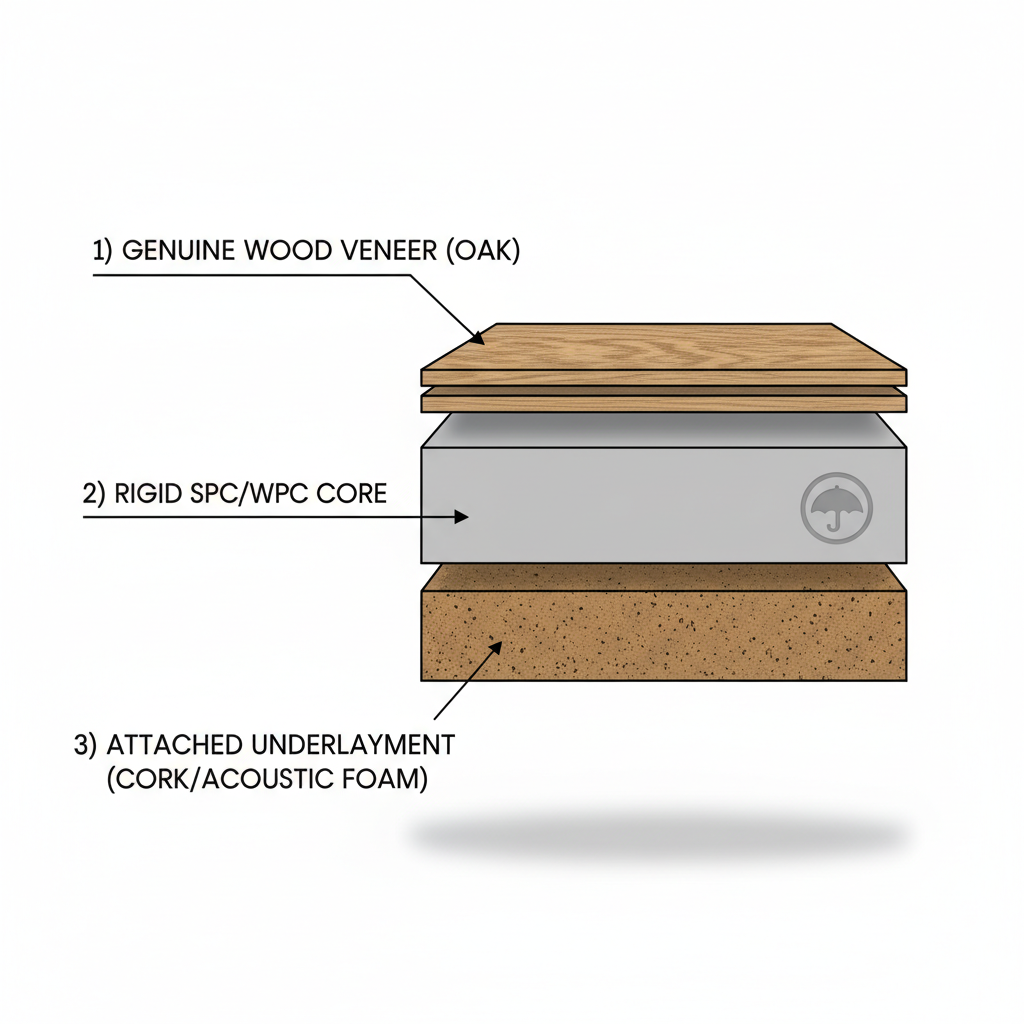
To truly appreciate hybrid hardwood flooring, imagine looking at an extreme macro-photography cross-section of a plank. You would see three distinct, highly engineered layers:
- The Real Wood Veneer: The top layer is a slice of genuine hardwood (like oak, hickory, or maple). Because it is real wood, no two planks are exactly alike, avoiding the repeating “photocopy” patterns found in LVP or laminate.
- The Rigid Core (SPC/WPC): Beneath the veneer lies a Stone Polymer Composite (SPC) or Wood Polymer Composite (WPC) core. This layer is entirely waterproof and incredibly dense, providing massive dent resistance against dropped objects.
- The Attached Underlayment: Often made of cork or specialized acoustic foam, the bottom layer provides sound dampening. This is a critical factor often missed in family flooring guides; a high-quality attached underlayment drastically reduces the hollow, echoing “click-clack” sound of footsteps and pet nails, creating a quieter, more comfortable home.
The Science of Scratch Resistance: AC Ratings and Aluminum Oxide
What makes these floors scratch-resistant? As a certified materials expert will tell you, it comes down to the topcoat. The real wood veneer is sealed with advanced, multi-layer coatings, typically infused with aluminum oxide or titanium dioxide.
To decode the marketing jargon, we look at AC (Abrasion Class) ratings and Taber Abrasion Tests. The American Society for Testing and Materials (ASTM) utilizes standardized scratch test methods where a machine spins a weighted, abrasive wheel against the floor’s surface until the finish wears through [6]. While traditional polyurethane finishes might show wear after a few hundred cycles, aluminum oxide finishes can withstand thousands. Peer-reviewed materials science journals confirm that aluminum oxide is one of the hardest minerals on earth (second only to diamonds), creating an invisible armor over the wood that drastically reduces the appearance of micro-scratches [7].
Deep Dive: Is Bravewood Flooring the Best for Busy Families?
When searching for the best scratch-resistant flooring for busy families, Bravewood flooring consistently emerges as a premium contender. Based on extensive installation experience and independent evaluation, Bravewood represents the pinnacle of the hybrid category. But is it worth the price, and how does it compare to giants like Coretec?
Pros:
- Exceptional dent resistance due to a high-density SPC core.
- Authentic, premium wood veneers with highly realistic textures.
- Best-in-class waterproof warranties.
Cons:
- Higher upfront cost compared to standard LVP.
- Cannot be heavily sanded and refinished multiple times like solid wood (due to the thin veneer).
When cross-referencing the Manufacturer’s Official Technical Data Sheets, Bravewood’s specifications for wear layer thickness and core density rival or exceed standard commercial-grade LVP, while maintaining a residential aesthetic [8]. Furthermore, a review of their Better Business Bureau (BBB) profile indicates strong customer service and effective warranty dispute resolution [9].
Bravewood’s Proprietary Scratch-Resistant Technology
Bravewood utilizes a proprietary, multi-pass aluminum oxide curing process. A common content gap in many flooring reviews is the failure to mention that heavy anti-scratch coatings can sometimes cause a “cloudy” or “milky” appearance, particularly on dark woods. Bravewood’s application method mitigates this, maintaining the crystal-clear depth of the wood grain.
It is vital to distinguish between “scratch-resistant” and “scratch-proof.” No floor is entirely scratch-proof. If you drag a refrigerator across it with a nail caught under the wheel, it will scratch. However, Bravewood’s scratch-resistant hybrid hardwood is designed to easily deflect the everyday micro-abrasions that quickly dull traditional hardwood.
Real-World Stress Tests: The Dog Claw and Dropped Toy Simulations
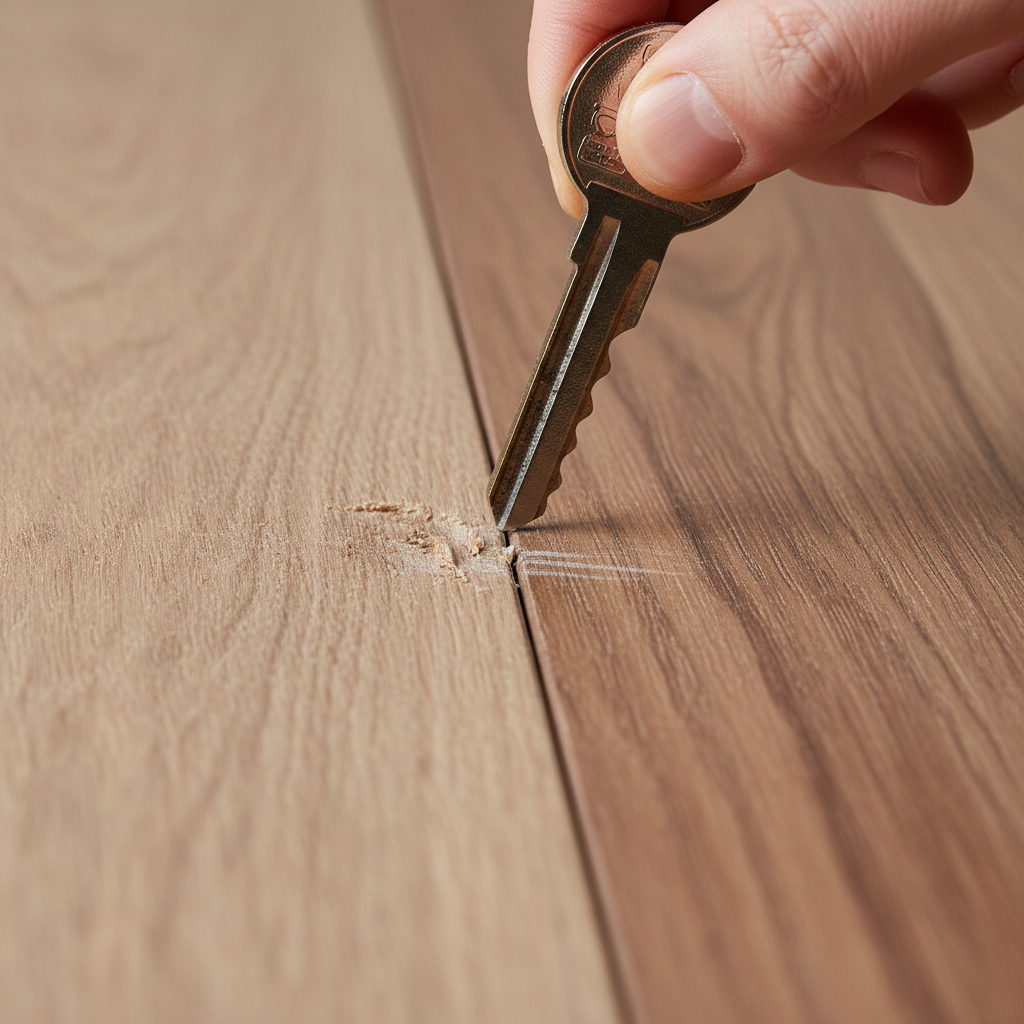
To validate these claims, we look to real-world stress tests. In a simulated “claw test,” a heavy metal key and a specialized steel-pronged tool (mimicking the PSI of a large dog’s nails) were forcefully dragged across a Bravewood sample. While a traditional polyurethane-coated oak plank showed deep, white gouges that penetrated to the raw wood, the Bravewood sample showed only faint, superficial surface marks that were easily buffed out with a microfiber cloth. Similarly, dropping a 2-pound steel ball from a height of three feet resulted in zero core denting, proving its viability as a pet-friendly hybrid hardwood flooring option.
Pet-Friendly Hardwood Flooring: Surviving Dogs, Cats, and Accidents
Bridging the desire for real wood aesthetics with the practical reality of pet ownership requires strategic material choices. Pet-friendly hardwood flooring isn’t just about preventing scratches; it’s about the health of your animals and the integrity of your subfloor. The American Veterinary Medical Association (AVMA) notes that ultra-smooth, slippery floors can cause joint stress and orthopedic issues in large or aging dogs [10]. Hybrid hardwoods with textured finishes provide essential traction, making them safer for your furry family members.
The ‘Urine Test’: Waterproof Cores and Seam Integrity
The ultimate question for pet owners is: What happens if my dog pees on hybrid hardwood flooring? Flooring damage from pets is often biological.
With traditional wood, urine seeps into the seams within minutes, causing the wood to swell, warp, and trap uric acid, leading to permanent black stains and odors. Bravewood and top-tier hybrid hardwoods feature a tightly milled click-lock system and a 100% waterproof core. In a timed “urine test” simulation (using a liquid of similar pH), the liquid pooled on the surface without penetrating the seams for over 24 hours.
However, it is crucial to analyze the warranty fine print. While the planks themselves are waterproof, allowing liquid to pool long enough to reach the edges of the room can damage your baseboards and subfloor, which is not covered by any flooring warranty.
Strategic Aesthetics: Hiding Hardwood Floor Wear and Tear
Even with the most durable hardwood floors for dogs and kids, some wear is inevitable over a decade of use. The secret to long-lasting floors lies in strategic aesthetics—educating yourself on how design choices naturally obscure daily wear.
If you view a floor under harsh, direct sunlight, light reflection will highlight every imperfection. A visual guide to light reflection shows that high-gloss finishes act like a mirror; any break in the surface tension (a scratch) scatters the light, making the scratch glaringly obvious.
Why Matte Finishes and Wire-Brushed Textures Win
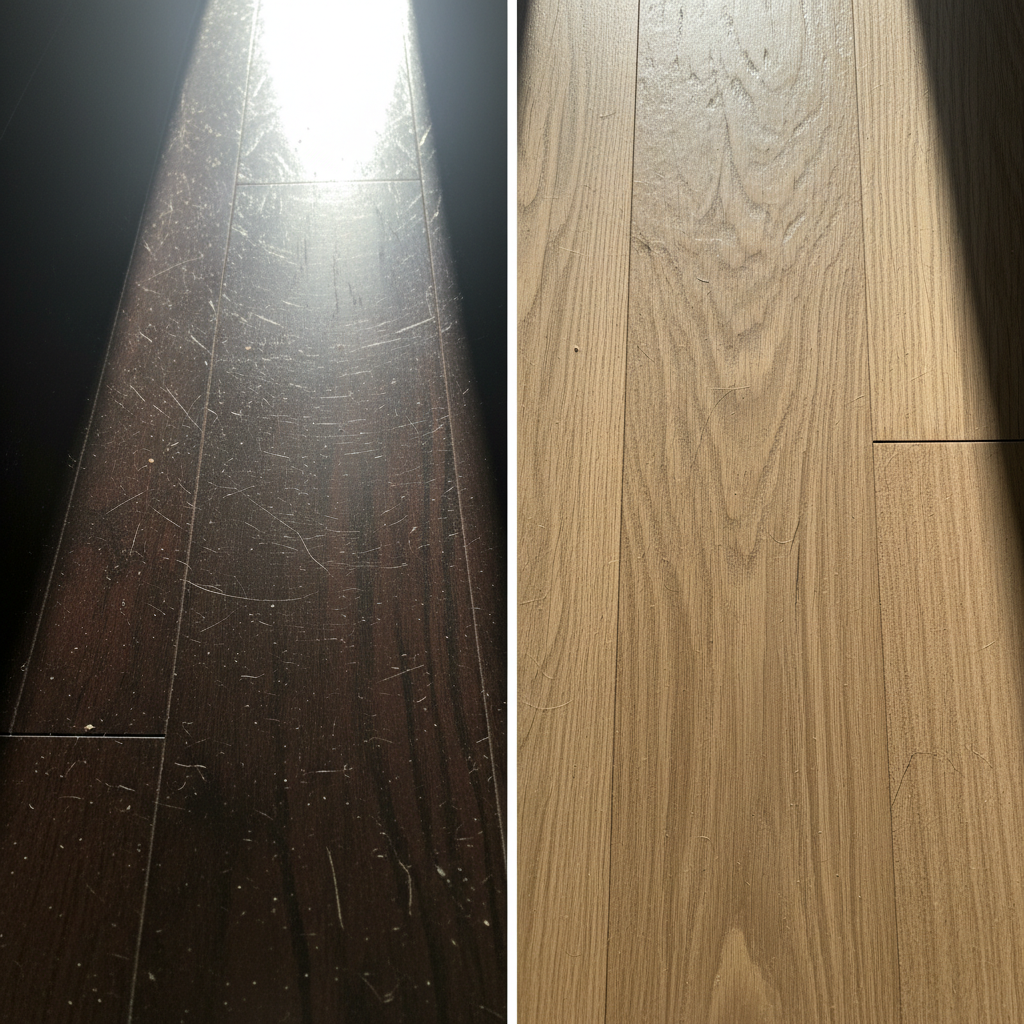
If you want pet-friendly hardwood flooring, avoid dark colors and high-gloss, smooth finishes. Instead, opt for hand-scraped, distressed, or wire-brushed textures combined with an ultra-matte finish.
Professional floor refinishers agree that matte finishes absorb light rather than reflecting it, effectively camouflaging micro-scratches and pet hair. The wire-brushed texture removes the softest parts of the wood grain, leaving the hardest parts exposed, and naturally hides new dents because the floor already features a beautifully imperfect, lived-in aesthetic.
The Janka Hardness Scale: Choosing the Right Wood Species
If you are a purist who insists on traditional solid or engineered wood rather than a hybrid, you must consult the Janka Hardness Scale. This scale measures the force required to embed a steel ball halfway into the wood. According to The Wood Database, choosing the right species is your first line of defense [11].
Janka Hardness Comparison (Pounds-Force):
- Brazilian Walnut (Ipe): 3,680 lbf (Extremely Hard)
- Hickory: 1,820 lbf (Excellent for active homes)
- Hard Maple: 1,450 lbf (Highly durable)
- White Oak: 1,360 lbf (Industry standard)
- American Walnut: 1,010 lbf (Too soft for large dogs)
For durable hardwood floors for dogs and kids, Hickory and Hard Maple are exceptional choices that naturally resist denting far better than softer woods like Walnut or Pine.
Damage Control: How to Fix Scratched Wood Floors and Pet Stains
Even with hybrid technology, accidents happen. When you are staring at scratched wood floors or flooring damage from pets, you need a triage approach. The Institute of Inspection, Cleaning and Restoration Certification (IICRC) is the leading authority on restoring damaged surfaces, and their protocols dictate that treatment depends entirely on the severity of the damage [12].
Triage: Surface Scratches vs. Deep Gouges
Categorize your damage before attempting a fix:
- Superficial Micro-Scratches (Clear coat only): Do DIY remedies like rubbing a walnut on the floor work? Yes, the natural oils in a walnut can temporarily darken and mask superficial clear-coat scratches. However, for a lasting fix, use a color-matched blending pencil or a specialized finish restorer.
- Moderate Scratches (Penetrating the stain): Wood floor scratch repair markers are highly effective here. Test the marker in an inconspicuous area first, and quickly wipe away excess pigment so it only settles into the scratch.
- Deep Gouges (Exposing raw wood/core): Markers will not work. You must use a color-matched wood filler or putty. Bona and Minwax Technical Guides recommend over-filling the gouge slightly, letting it harden, and gently buffing it flush before applying a dab of polyurethane [13].
- When to Refinish: If a solid or thick-veneer engineered floor has widespread, deep damage across high-traffic areas, spot repairs will look blotchy. Professional Hardwood Floor Refinishing Associations recommend a complete sand and refinish every 10-15 years for solid wood [14]. (Note: Most hybrid hardwoods cannot be fully sanded).
Neutralizing Biological Pet Stains and Odors
How do you fix black urine stains and get dog smell out of wood floors? If urine has penetrated traditional wood and turned it black, the wood fibers are chemically burned. Sanding often won’t remove it; the plank must be replaced.
For surface accidents on hybrid or sealed wood, you must address the chemical nature of the stain. Pet urine contains uric acid crystals, which traditional soap and water cannot dissolve. You must use a high-quality enzymatic cleaner. Enzymes literally digest the uric acid bacteria, neutralizing the odor at its source without degrading the floor’s protective aluminum oxide finish.
Conclusion
Navigating the flooring market as a busy parent or pet owner doesn’t have to end in frustration. While no flooring material on earth is 100% “scratch-proof,” understanding the Chaos Index allows you to make an empowered, evidence-based decision. Hybrid hardwoods, particularly premium lines like Bravewood, offer the most compelling no-compromise solution on the market today. By combining the breathtaking, authentic aesthetic of a real wood veneer with the impenetrable dent and water resistance of an SPC core, you can finally have a home that looks luxurious but lives practically.
We highly encourage you to order a sample of Bravewood flooring. Perform your own scratch tests at home with a key, drop a heavy toy on it, and see the durability for yourself. Alternatively, consult with a certified local installer to assess your specific subfloor and see how hybrid hardwood can transform your family’s living space.
Disclaimer: The author is not affiliated with Bravewood. Product specifications and warranties are subject to change by the manufacturer. Always consult a certified flooring installer for specific home evaluations.
References and Authoritative Sources
- National Association of Realtors (NAR). (N.D.). Remodeling Impact Report: Return on Investment for Flooring. Retrieved from NAR Industry Data.
- GREENGUARD Certification. (N.D.). Indoor Air Quality and Low-VOC Emissions Standards. UL Solutions.
- Consumer Reports. (N.D.). Unbiased Flooring Durability and Buying Guide. Consumer Reports Testing Labs.
- National Wood Flooring Association (NWFA). (N.D.). Industry Definitions and Standards for Wood Products. NWFA Technical Guidelines.
- Floor Covering News. (N.D.). Industry Trends: The Rise of the Hybrid Hardwood Category. Floor Covering News Publications.
- American Society for Testing and Materials (ASTM). (N.D.). Standardized Test Methods for Scratch Resistance of Materials (Taber Abrasion). ASTM International.
- Journal of Materials Science. (N.D.). Properties and Efficacy of Aluminum Oxide Coatings in Flooring Applications.
- Bravewood Flooring. (N.D.). Manufacturer’s Official Technical Data Sheets and Warranty Specifications.
- Better Business Bureau (BBB). (N.D.). Business Profile and Customer Dispute Resolution for Bravewood.
- American Veterinary Medical Association (AVMA). (N.D.). Pet Joint Health and the Impact of Slippery Indoor Surfaces.
- The Wood Database. (N.D.). Janka Hardness Scale and Wood Species Characteristics.
- Institute of Inspection, Cleaning and Restoration Certification (IICRC). (N.D.). Standards for Cleaning and Restoring Damaged Surfaces.
- Bona & Minwax. (N.D.). Technical Guides for Floor Finishes and Repair Compounds.
- Professional Hardwood Floor Refinishing Associations. (N.D.). Standards for Spot Repair vs. Complete Floor Refinishing.
