
Choosing the right home flooring can feel like navigating a minefield of conflicting information, especially when you are trying to balance authentic aesthetics with the rigorous demands of modern living. Homeowners today are chasing a specific dream: they want the undeniable, warm look of real wood, but they live in constant fear of water damage, pet scratches, and the exorbitant costs associated with traditional solid hardwood. If you are torn between the budget-friendly appeal of laminate and the emerging technology of hybrid flooring, you are not alone.
This guide serves as your ultimate blueprint, decoding the technical differences between traditional laminate and next-generation hybrid hardwood. We will place a special spotlight on the highly sought-after Bravewood collection, breaking down its unique engineering. From dissecting durability and waterproof cores to providing actionable advice on DIY installation and warranty-safe maintenance, this comprehensive resource will empower you to make the perfect flooring investment for your home.
Table of Contents
- Understanding the Contenders: Hybrid Hardwood vs. Laminate Flooring
- Bravewood Flooring Spotlight: A Deep Dive into Next-Gen Hybrids
- The Definitive Comparison: Hybrid Hardwood vs. Laminate Flooring
- Installation Realities: Which Flooring is Easier to Install?
- Maintenance, Wear & Tear, and Damage Control
- Room-by-Room Flooring Selector: Making the Right Choice
- Conclusion
- References and Authoritative Sources
Understanding the Contenders: Hybrid Hardwood vs. Laminate Flooring
Before diving into specific brands, it is crucial to establish the foundational definitions of our two main contenders. Both hybrid hardwood and laminate flooring are engineered products designed to solve the inherent vulnerabilities of solid wood, but they achieve this through vastly different manufacturing processes and materials. When choosing the right home flooring, understanding these core constructions is your first step toward a high-ROI renovation.
According to the National Wood Flooring Association (NWFA), a product can only be classified as real wood flooring if its top wear layer is made of genuine wood [1]. This distinction is critical when comparing hybrid options to synthetic laminates. Meanwhile, independent testing authorities like Consumer Reports [2] and home improvement editorials like The Spruce [3] have extensively documented the evolution of laminate, noting how modern iterations have drastically improved upon the flimsy, easily damaged materials of the past.
What is Hybrid Hardwood? The Anatomy of Durability
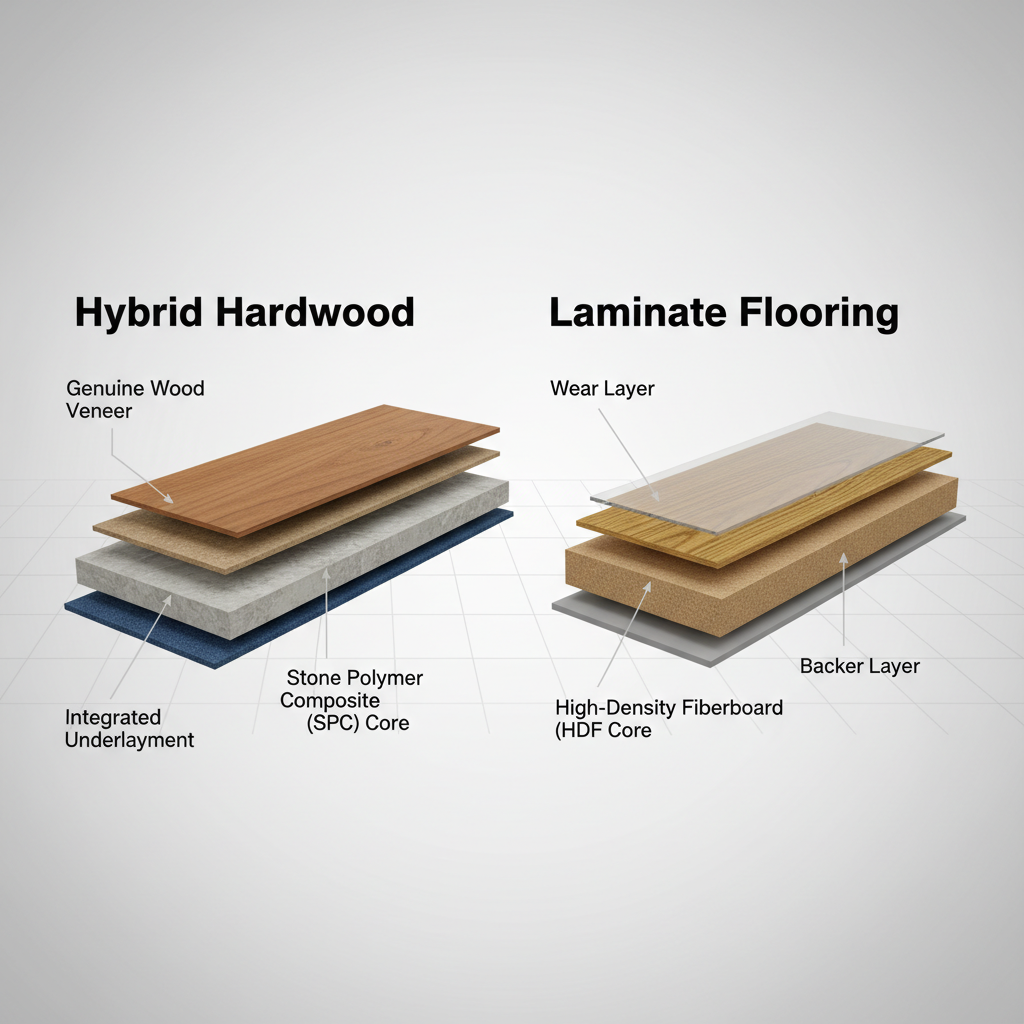
Hybrid hardwood is often hailed as the ultimate flooring compromise. It is engineered by bonding a genuine, 1.2mm real wood veneer to a 100% waterproof rigid core, typically made of limestone composite or Stone Polymer Composite (SPC). This means you are walking on actual, natural wood, but the foundation beneath it is virtually indestructible.
If you were to look at a cross-sectional breakdown of a durable hybrid hardwood plank, you would see a UV-cured protective finish on top, followed by the authentic wood veneer, a high-density SPC core, and often an attached acoustic underlayment pad. Industry publications like Floor Covering News have highlighted the rapid rise of SPC core technology, noting that this dense, stone-like foundation is what gives hybrid hardwood its superior dimensional stability and dent resistance [4].
The Evolution of Laminate Flooring
Laminate flooring, by contrast, contains no actual wood in its top layer. It is a synthetic, multi-layer product designed to mimic the appearance of wood or stone using a high-definition photographic applique layer, protected by a clear melamine resin wear layer. Its core is typically made of High-Density Fiberboard (HDF).
It is time to dispel outdated notions of cheap, peeling laminate. Today’s premium laminate flooring often features thicker 12mm planks and water-resistant core treatments. To help consumers gauge durability, the industry uses the AC (Abrasion Class) rating system. Ranging from AC1 (light residential) to AC5 (heavy commercial), this rating dictates how well the floor will withstand foot traffic, scratches, and impacts, allowing you to choose the exact level of resilience your lifestyle demands.
Bravewood Flooring Spotlight: A Deep Dive into Next-Gen Hybrids
To truly understand the capabilities of modern hybrid flooring, we must look at a real-world case study. Bravewood flooring represents a premium collection of hybrid hardwood that bridges the gap between commercial-grade durability and residential aesthetics. When looking for a comprehensive Bravewood hybrid hardwood flooring review, it is essential to look past the marketing terminology and examine the hard technical specifications that dictate how the floor will actually perform in your home.
Technical Specs and Environmental Certifications
One of the most significant advantages of the Bravewood collection is its commitment to indoor air quality and environmental safety. Unlike some lower-tier synthetic laminates that can off-gas volatile organic compounds (VOCs), Bravewood flooring is Carb Phase II compliant. Furthermore, it holds rigorous certifications from FloorScore and GreenGuard Gold, validated by SCS Global Services [6].
This means the product has been independently tested to ensure low VOC emissions, making it a safer choice for homes with children and pets. When comparing synthetic laminate to real wood veneer hybrids, the environmental impact and indoor air quality metrics of a Carb Phase II compliant product like Bravewood offer substantial peace of mind.
Pros, Cons, and Real-World Application
To consolidate the technical data, here is an objective pros and cons breakdown of the Bravewood collection:
Pros:
- Authentic Aesthetics: Features a real wood veneer for genuine grain texture.
- Robust Warranty: Carries a Lifetime Residential Warranty and a 7-Year Light Commercial Warranty, directly verified by TAS Contract specifications [5].
- Waterproof Core: The SPC rigid core prevents dimensional warping from moisture.
- Eco-Friendly: FloorScore and GreenGuard Gold certified.
Cons:
- Refinishing Limits: Like all hybrids, the thin veneer cannot be sanded and refinished multiple times like solid hardwood.
- Availability: Purchasing often requires contacting a regional representative or distributor, making immediate pricing transparency slightly more complex than big-box store alternatives.
When compared directly to industry standards and mainstream competitors like LL Flooring’s Duravana [7], Bravewood holds its own, particularly in its commercial-grade warranty offerings and strict environmental compliance.
The Definitive Comparison: Hybrid Hardwood vs. Laminate Flooring
When weighing hybrid hardwood vs laminate flooring, consumers are essentially choosing between authentic realism and budget-friendly practicality. It is important to objectively state upfront that neither of these options can be traditionally sanded and refinished multiple times like a solid 3/4-inch oak floor. Therefore, setting realistic lifespan expectations is key.
Water-Resistant vs. 100% Waterproof Options
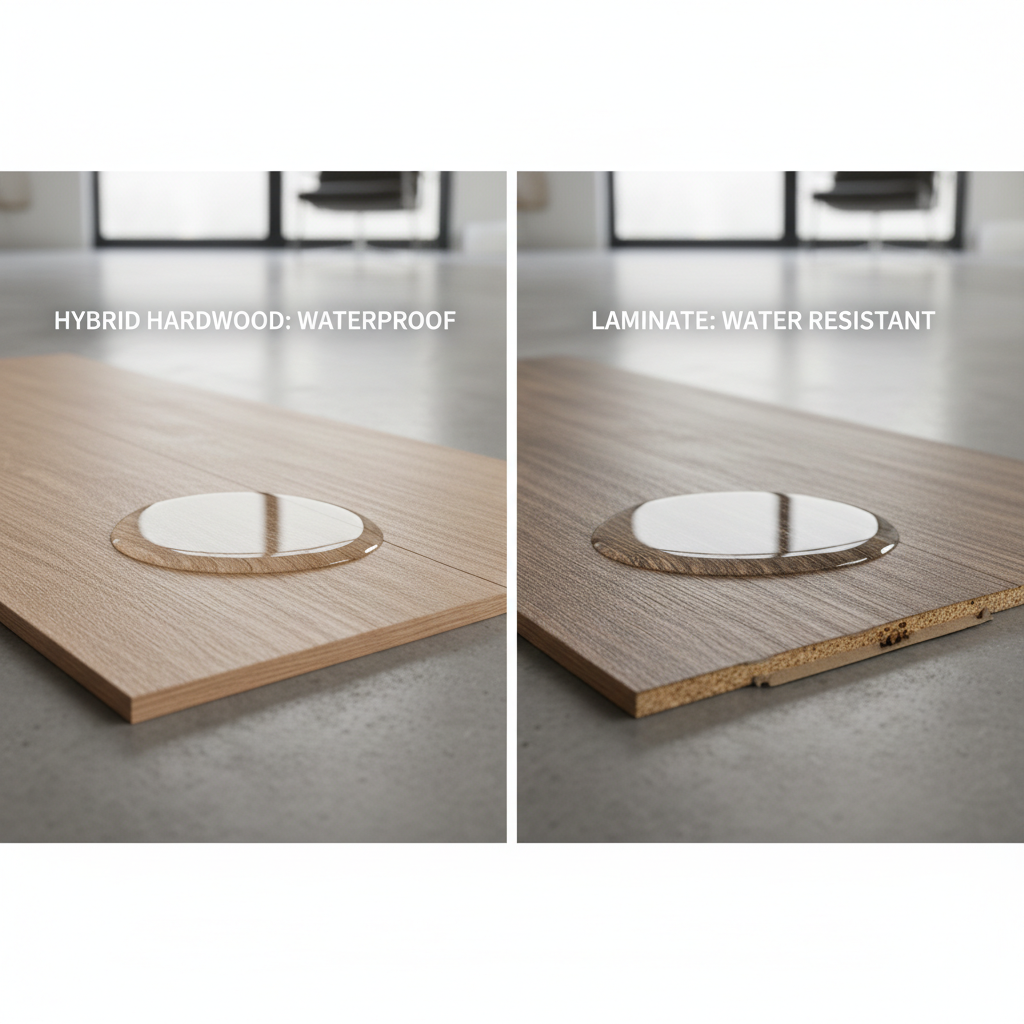
The most critical distinction between these two materials lies in their relationship with moisture. Laminate flooring is generally considered water-resistant. Its HDF (fiberboard) core can handle topical spills if they are wiped up quickly, but prolonged exposure to standing water will cause the fiberboard to absorb moisture, swell, and irreversibly warp.
Conversely, hybrid hardwood with an SPC or limestone core is 100% waterproof. The chemical composition of the core (stone and PVC-based polymers) is completely impervious to water. If a room floods, the hybrid plank itself will not swell or degrade, making it a vastly superior choice among water resistant flooring options for wet environments.
Durability, Dent Resistance, and Acoustics
When evaluating durable hybrid hardwood and laminate for flooring wear and tear, traditional metrics like the Janka hardness scale (used for solid wood) are less relevant. According to insights from NWFA-certified inspectors, the dent resistance of a hybrid floor comes from its rigid SPC core, not the wood veneer itself [8]. If you drop a heavy pan on a hybrid floor, the stone-polymer core absorbs the impact, preventing the deep gouges that would easily dent solid pine or oak. Laminate is also highly scratch-resistant (thanks to its melamine wear layer), but it can chip upon heavy impact.
Acoustically, laminate has historically been criticized for producing a “hollow” or “clicking” sound when walked upon. Hybrid hardwood, due to its denser core and often attached acoustic padding, tends to sound and feel much more solid underfoot, closely mimicking the acoustic profile of traditional hardwood.
Cost Analysis and Long-Term ROI
Budget is often the deciding factor in the hybrid hardwood vs laminate flooring debate. Laminate remains the champion of affordability, with average costs ranging from $1 to $5 per square foot. With proper care, a high-quality laminate can last 15 to 25 years.
Hybrid hardwood is a larger upfront investment, typically ranging from $3 to $10+ per square foot. However, its lifespan can exceed that of laminate, and because it features a real wood veneer, it generally offers a better long-term Return on Investment (ROI) and can positively impact your home’s resale value in ways that synthetic laminate cannot.
Installation Realities: Which Flooring is Easier to Install?
Both materials are heavily marketed toward the DIY community, but “easy” is a relative term. On a DIY Difficulty Rating scale, laminate generally scores a 3/10, while hybrid hardwood scores a 4/10 due to the planks being slightly heavier and harder to cut. Both require specific tools to ensure a tight fit, including a tapping block, a pull bar, and expansion spacers. If you are looking for easy to install flooring, both are viable, but the devil is in the details.
Mastering the Angle/Angle Click-Lock System
Most modern laminate and Bravewood flooring utilize an Angle/Angle click-lock installation system. This mechanism allows the planks to interlock seamlessly without the need for nails or messy glues. Professional installers frequently praise the Angle/Angle system for its efficiency, noting that it drastically reduces labor time [8]. However, a common pitfall for DIYers is failing to properly angle the plank during insertion, which can snap the locking mechanism and ruin the board.
Crucial Subfloor Preparation and Hidden Costs
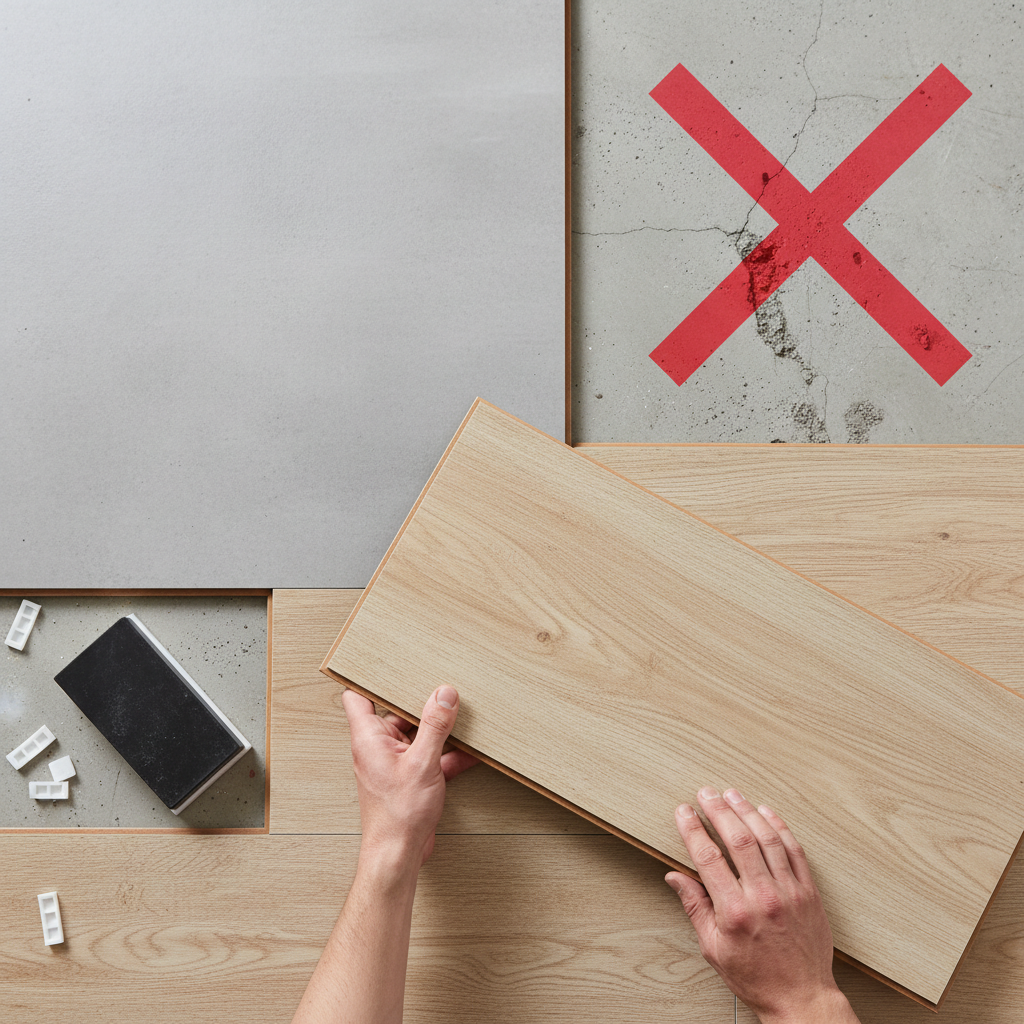
The biggest secret in the flooring industry is that choosing the right home flooring is only half the battle; the subfloor dictates the success of the installation. The hidden costs of DIY often lie in subfloor preparation. “Easy to install” floating floors still require a meticulously leveled subfloor. If your concrete slab or plywood is uneven, the click-lock joints will eventually separate or break under foot traffic.
Furthermore, you must account for climate impact. Changes in humidity and temperature cause materials to expand and contract. Failing to leave a mandatory 1/4-inch expansion gap around the perimeter of the room will result in the floor buckling as the seasons change. You must also factor in the cost of moisture barriers (essential over concrete) and premium underlayments if they are not pre-attached.
Maintenance, Wear & Tear, and Damage Control
Protecting your investment requires strict adherence to manufacturer guidelines. Improper cleaning can void your warranty and destroy your floor in a matter of months.
Warranty-Safe Cleaning Protocols
For hardwood floor maintenance, you must abandon the myths. Never use a steam mop on hybrid hardwood or laminate; the pressurized steam will force moisture into the joints and delaminate the finish. Similarly, avoid acidic cleaners like vinegar, which will dull polyurethane and aluminum-oxide finishes over time.
Instead, follow a strict chronological schedule: daily dust-mopping to remove abrasive dirt, and weekly damp-mopping using a well-wrung microfiber mop and a neutral-pH cleaner approved by the NWFA [1]. To prevent wood gapping and scratches, utilize felt pads under all heavy furniture and maintain your home’s indoor humidity levels between 35% and 55%, as dictated by most manufacturer warranties.
Normal Wear and Tear vs. Property Damage
For landlords and tenants, distinguishing between flooring wear and tear and actual property damage is a frequent source of security deposit disputes. According to property management experts like Avail [9], “normal wear and tear” includes minor fading from UV sunlight, gentle dulling of the finish in high-traffic walkways, and superficial surface scuffs.
“Property damage,” on the other hand, includes deep gouges that penetrate the wear layer, pet urine stains that have soaked into the seams, and irreversible core warping from negligent spills. Documenting the floor’s condition with high-resolution photos upon move-in is the best way to mitigate these disputes.
Emergency Response: Handling Laminate Water Damage
When a dishwasher leaks or a pipe bursts, laminate floor water damage is an absolute emergency. Because the HDF core acts like a sponge, core swelling is irreversible. You cannot simply dry out a swollen laminate plank and expect it to shrink back to its original shape.
Immediate extraction is critical. Stop the source of the water, use wet vacs to extract standing water immediately, and deploy commercial dehumidifiers. If the water has seeped beneath the planks, the hidden mold risks associated with trapped moisture in the underlayment are severe. Fortunately, the tongue-and-groove mechanism allows for single plank replacement. Technical repair guides from experts like Carpet Advantage [10] detail how to carefully cut out the damaged plank and glue a replacement board into the existing matrix without tearing up the entire room.
Room-by-Room Flooring Selector: Making the Right Choice
Wet Areas: Kitchens, Bathrooms, and Basements
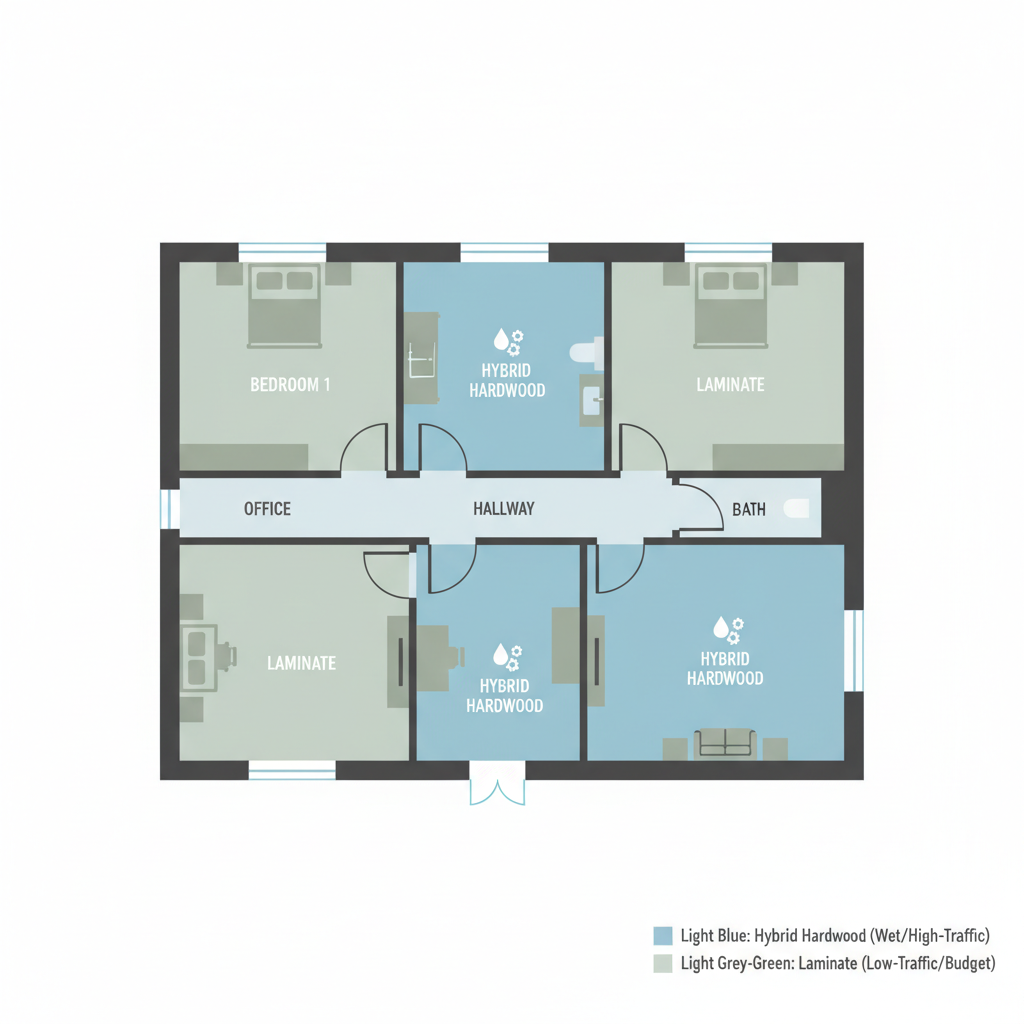
In environments prone to spills, humidity, and plumbing leaks, 100% waterproof materials are mandatory. This is where water resistant flooring options like traditional laminate must be avoided. Hybrid SPC hardwood, Luxury Vinyl Plank (LVP), and Porcelain Tile are the champions here. However, remember that while a hybrid plank itself is waterproof, the subfloor beneath the seams is still vulnerable. Large spills must still be cleaned up promptly to prevent water from migrating through the micro-bevels and breeding mold on the subfloor.
Living Spaces and High-Traffic Areas
For living rooms, dining rooms, and hallways, you have more flexibility. If you have large dogs or active children, balancing the authentic look of hybrid hardwood with the budget-friendly durability of a high-AC rated laminate is the goal. Hybrid hardwood offers the aesthetic prestige and dent resistance ideal for a “forever home,” while laminate is perfect for budget-conscious renovations or rental property flips. Additionally, if your home utilizes radiant heating, ensure you check the manufacturer specifications, as both high-quality laminates and SPC hybrids are generally compatible, provided the heating system does not exceed the floor’s maximum temperature threshold.
Conclusion
The choice between hybrid hardwood and laminate ultimately comes down to your budget, your environment, and your desire for authenticity. Hybrid hardwood, exemplified by the eco-certified, SPC-core Bravewood collection, offers the ultimate compromise: the undeniable, authentic beauty of real wood combined with the 100% waterproof, dent-proof resilience of modern engineering. Laminate, meanwhile, remains the undisputed champion of budget-friendly, highly scratch-resistant renovations.
Whichever path you choose, remember that meticulous subfloor preparation and strict, warranty-safe maintenance are the true keys to a floor that lasts decades. Before making your final decision, we highly encourage you to order physical samples of Bravewood hybrid hardwood and high-quality laminate to test in your own home’s unique lighting, or consult a certified local flooring installer for a professional subfloor assessment.
Pricing, availability, and warranty details are subject to change. Always consult official manufacturer guidelines (e.g., TAS Contract) for specific installation, subfloor, and warranty requirements.
References and Authoritative Sources
- National Wood Flooring Association (NWFA). (N.D.). Real Wood Flooring Standards and Maintenance Guidelines. NWFA Official Guidelines.
- Consumer Reports. (N.D.). Flooring Buying Guide: Durability and Testing. Consumer Reports.
- The Spruce. (N.D.). The Evolution of Laminate Flooring and AC Ratings. The Spruce.
- Floor Covering News. (N.D.). The Rise of SPC Core Technology in Hybrid Hardwood. Floor Covering News.
- TAS Contract. (N.D.). Bravewood Collection Product Specifications and Warranties. TAS Contract.
- SCS Global Services. (N.D.). FloorScore and GreenGuard Gold Certification Registry. SCS Global Services.
- LL Flooring. (N.D.). Duravana Hybrid Resilient Flooring Specifications. LL Flooring.
- Ansbro Aldrich Flooring. (N.D.). Professional Installation Insights and Material Lifespans. Ansbro Aldrich Flooring.
- Avail. (N.D.). Landlord Guide: Normal Wear and Tear vs. Property Damage. Avail Property Management.
- Carpet Advantage. (N.D.). Technical Repair Guides: Plank Replacement and Water Extraction. Carpet Advantage.
