
The phrase “waterproof hardwood” sounds like an oxymoron to anyone who has ever watched a beautiful solid oak floor buckle after a plumbing leak. For decades, homeowners have been forced to choose between the authentic, warm aesthetics of real wood and the bulletproof moisture resistance of synthetic materials like tile or luxury vinyl. But a rapidly growing category in the flooring industry is changing the rules: waterproof hybrid hardwood.
Despite the marketing hype, many consumers remain confused about what “waterproof” actually means in this context. They fear hidden water damage, cupping planks, and subfloor mold. This definitive guide decodes the engineering behind waterproof hybrid hardwood—with a special deep-dive into the popular Bravewood collection. We will expose the critical reality of the “waterproof plank vs. vulnerable subfloor,” and provide actionable, expert-backed strategies for flawless installation, moisture management, and emergency water damage triage. Whether you are planning a kitchen remodel or trying to save a flooded living room, this is your ultimate roadmap.
- What is Waterproof Hybrid Hardwood? The Anatomy Explained
- The Bravewood Flooring Buyer’s Guide (TAS Flooring)
- Flawless Waterproof Wood Flooring Installation
- Managing Hardwood Flooring Moisture Problems
- Conclusion
- References & Authoritative Sources
What is Waterproof Hybrid Hardwood? The Anatomy Explained
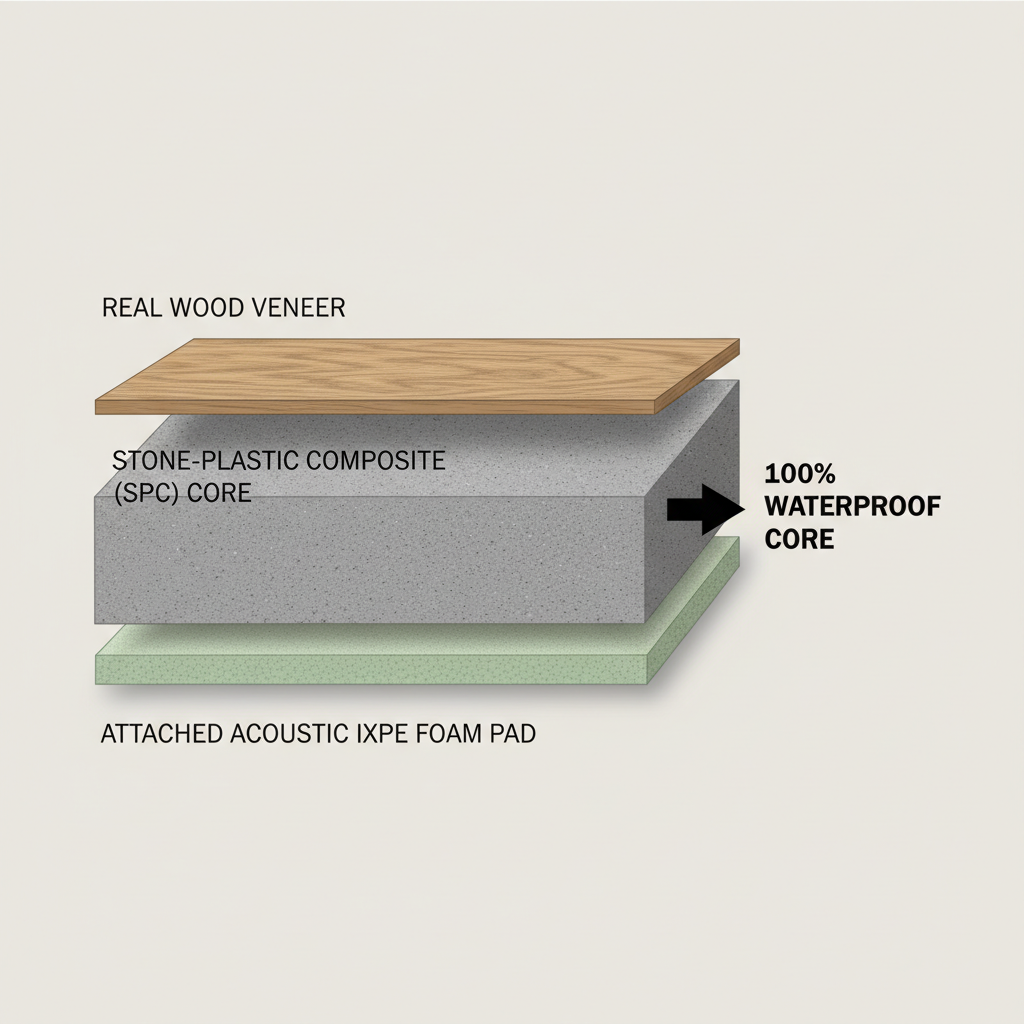
To understand why waterproof hybrid hardwood is revolutionizing the industry, you have to look beneath the surface. Traditional engineered hardwood uses a real wood veneer glued to a core of plywood or high-density fiberboard (HDF). While more stable than solid wood, these traditional cores act like sponges when exposed to standing water.
Hybrid wood floors solve this vulnerability by replacing the moisture-sensitive core with a rigid, 100% waterproof composite. According to the National Wood Flooring Association (NWFA), understanding the exact composition of your flooring is critical for proper application and maintenance [1].
Here is the textual diagram of a standard waterproof hybrid hardwood plank’s anatomy:
- Top Layer (The Visuals): A 0.6mm to 1.2mm real wood veneer (such as oak, hickory, or birch), protected by advanced, multi-layer polyurethane or aluminum oxide lacquers.
- Middle Layer (The Engine): A 5.4mm+ Stone Plastic Composite (SPC) or Compositek core. Unlike plywood or fiberboard, this dense core of limestone powder and stabilizers is completely impervious to water and highly resistant to denting.
- Bottom Layer (The Foundation): An attached acoustic pad (typically IXPE foam) that provides sound dampening, thermal insulation, and underfoot comfort.
Solid vs. Engineered vs. Hybrid Wood Floors
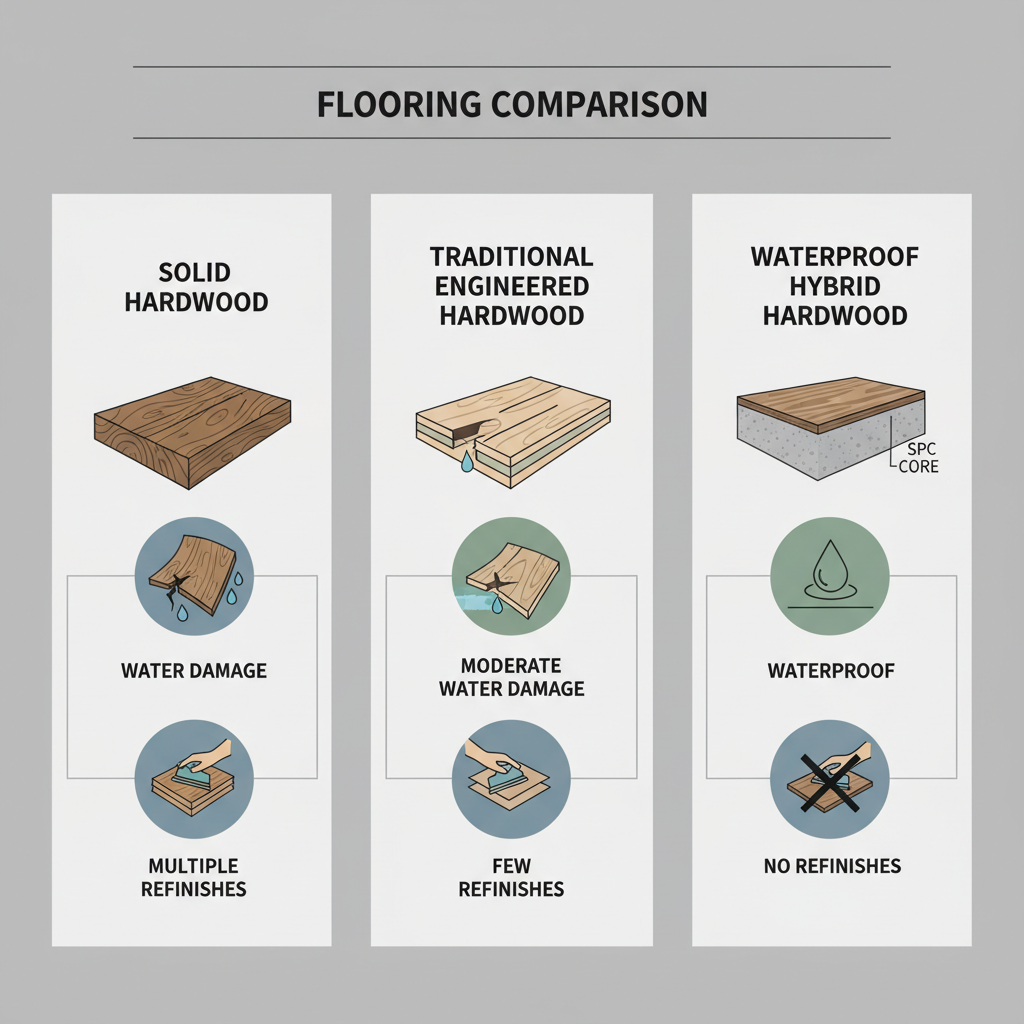
When exploring durable hybrid hardwood alternatives, homeowners need an objective comparison. Here is how the three main categories stack up:
- Solid Hardwood: The traditional gold standard. It offers a 100-year lifespan because it can be sanded and refinished 4 to 6 times. However, it is highly susceptible to water damage, scratching, and seasonal gapping.
- Traditional Engineered Hardwood: Better dimensional stability than solid wood and can usually be refinished 1 to 2 times. However, its plywood/HDF core is still vulnerable to moisture, making it unsuitable for wet rooms.
- Waterproof Hybrid Hardwood: Offers extreme water resistance and up to 3x the impact resistance of traditional hardwood, largely due to high-compression SPC cores and innovations like Woodura® surface technology [2]. The trade-off? Because the real wood veneer is ultra-thin (often under 1mm), hybrid floors typically cannot be sanded and refinished.
Consumer Reports methodologies for unbiased durability and scratch testing consistently highlight that while hybrid floors sacrifice refinish-ability, their factory-applied finishes and dense cores make them vastly superior for high-traffic, pet-heavy households [3].
The ‘Waterproof’ Reality Check: Planks vs. Subfloors
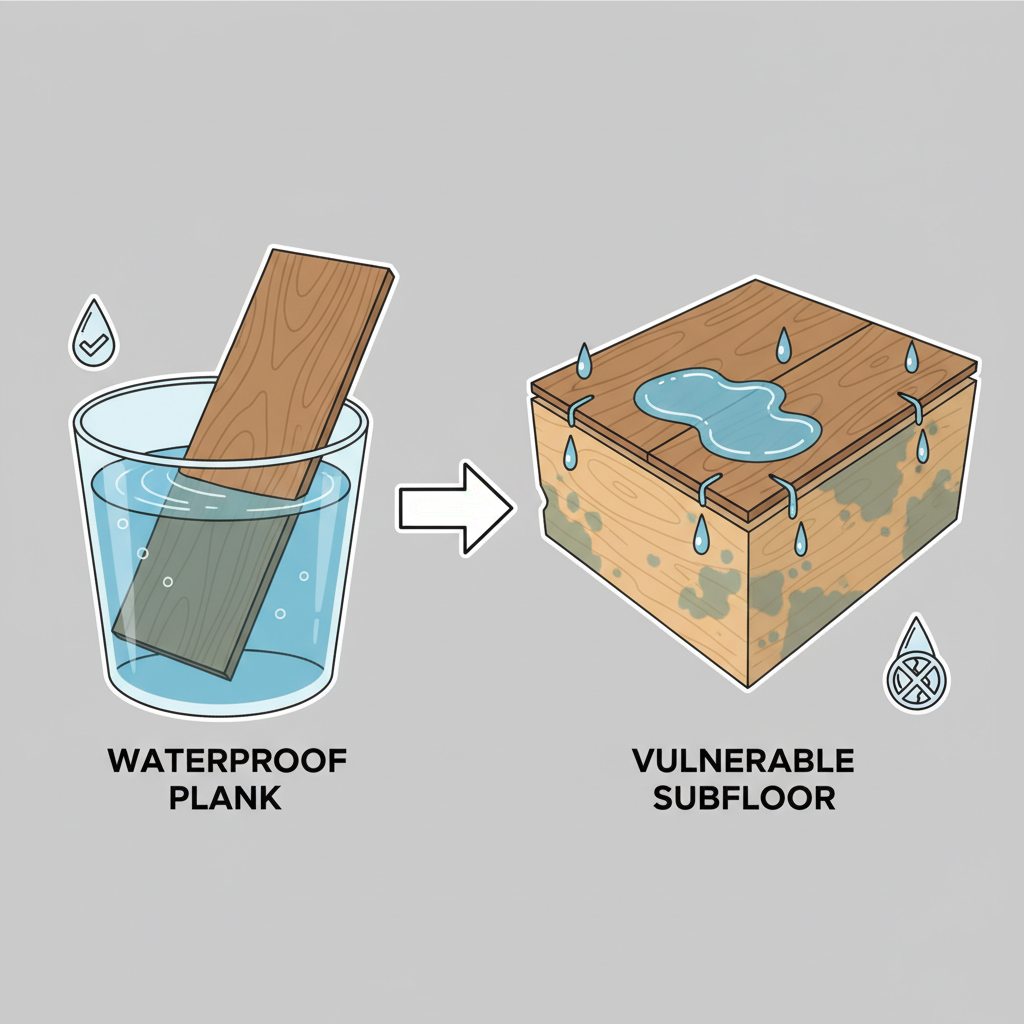
Is hybrid hardwood flooring waterproof? Yes, but with a massive asterisk. The SPC core and sealed veneers make the planks themselves waterproof. You could submerge a hybrid plank in a bathtub for a week, and it would not swell.
However, a waterproof plank does not automatically equal a waterproof flooring system. This is the most critical content gap in flooring marketing today. If you spill a gallon of water and let it sit, the water can seep through improperly sealed perimeter expansion gaps or poorly locked seams. Once water reaches the subfloor (especially a wooden subfloor or a concrete slab without a vapor barrier), mold and rot will begin to colonize within 48 hours.
To combat seam seepage, premium hybrid floors utilize advanced mechanics like Välinge Innovation’s 5G® Dry™ fold-down locking system, which creates a watertight joint that prevents liquids from passing through the seams [2]. Yet, even with watertight seams, protecting the subfloor through proper installation remains your first line of defense.
The Bravewood Flooring Buyer’s Guide (TAS Flooring)
For homeowners specifically researching the Bravewood hybrid hardwood flooring reviews, it is essential to look past the showroom gloss and analyze the specifications. Manufactured by TAS Flooring, the Bravewood collection is a prime example of topical waterproof hybrid hardwood designed for modern, active homes [4].
Here is the spec-by-spec breakdown and what it means for you:
- 12mm Overall Thickness: This is a robust plank. It includes a 1.5mm IXPE attached pad, which eliminates the need to buy separate underlayment and provides excellent sound dampening (crucial for second-story installations).
- 0.6mm Real Birch Wood Veneer: Birch offers a smooth, elegant grain. While 0.6mm is too thin to ever sand and refinish, it provides the authentic texture and warmth that luxury vinyl simply cannot replicate.
- AC4 Rated Antimicrobial Surface Finish: The AC (Abrasion Class) rating system measures wear resistance. An AC4 rating means this floor is graded for heavy residential and light commercial use. It will easily withstand dog claws, dropped toys, and sliding chairs. The antimicrobial property inhibits bacterial growth on the surface.
- Aesthetics and Edge Profile: Bravewood features a 4-sided micro-bevel edge. This subtle groove between planks creates stunning visual definition, mimicking traditional solid hardwood. It is available in 10 colors, ranging from light coastal ashes to deep, rich walnuts. Pro-tip: Test samples in your home, as the micro-bevels can cast different shadows depending on your room’s natural and artificial lighting.
Furthermore, Bravewood flooring is certified by SCS Global Services with both FloorScore and GreenGuard Gold certifications [5]. This guarantees that the flooring meets strict indoor air quality standards and emits virtually zero Volatile Organic Compounds (VOCs), making it safe for nurseries and homes with allergy sufferers.
Flawless Waterproof Wood Flooring Installation
Even the best moisture resistant flooring solutions will fail if installed incorrectly. Whether you are a DIYer or hiring a professional, your waterproof wood flooring installation must follow a strict protocol.
Pro Installer’s Corner: The Pre-Installation Checklist
- Acclimation is Non-Negotiable: Even though the core is SPC, the top layer is real wood. You must leave the boxes open in the installation room for 48 to 72 hours to allow the veneer to adjust to the ambient temperature and humidity.
- Subfloor Preparation: The subfloor must be clean, dry, and flat (typically within 3/16-inch over a 10-foot radius). SPC cores are rigid; if your subfloor has dips, the locking mechanisms will flex and eventually break under foot traffic.
- The Vapor Barrier Rule: If you are installing over a concrete slab, you must use a 6-mil polyethylene vapor barrier, even if the planks have an attached pad. Concrete acts like a sponge, and hydrostatic pressure will force ground moisture up into your floor.
- Know Your Materials: Understand the technical difference between water-resistant and waterproof. Standard laminate with a high-density fiberboard (HDF) core is only water-resistant and should be strictly avoided in wet areas. True waterproof hybrid floors have composite cores.
Troubleshooting Click-Lock Planks: If a plank won’t snap together properly, do not force it with a hammer. Check the groove for debris (even a tiny wood chip will prevent a lock). Ensure the angle of insertion matches the manufacturer’s spec (usually 20-30 degrees).
Best Practices for Kitchens and High-Moisture Zones
When searching for the best waterproof wood flooring for kitchens, the debate usually comes down to waterproof hardwood versus wood-look porcelain tile. Tile is undeniably the most waterproof option, but it is cold, hard underfoot, and unforgiving to dropped dishes. Hybrid hardwood offers warmth and comfort while easily handling dishwasher splashes and wet shoes.
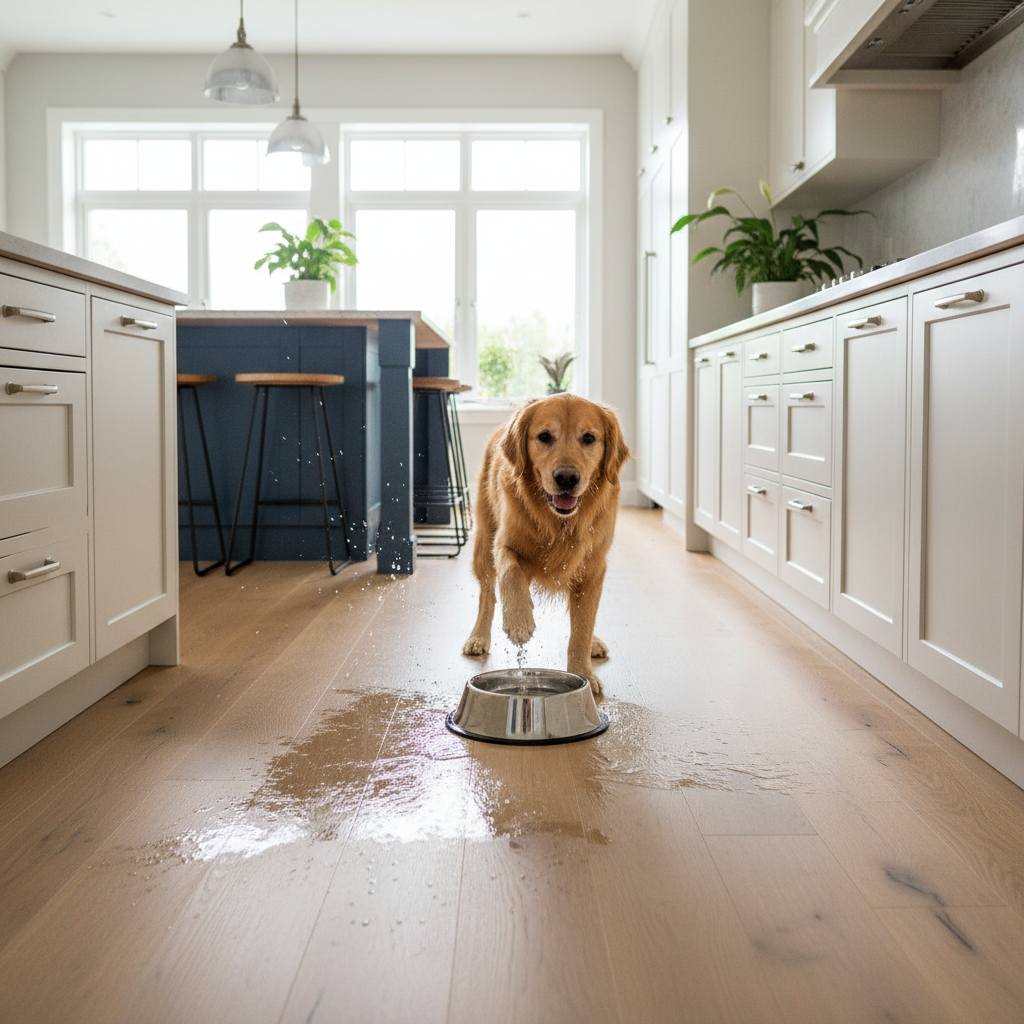
To make a hybrid floor truly kitchen-ready, you must seal the perimeter. Because floating floors require a 1/4-inch to 1/2-inch expansion gap around the edges, water from a major spill can run under the baseboards. Fill this expansion gap with a highly flexible, moisture-resistant 100% silicone caulk before installing your baseboards or quarter-round.
Additionally, be cautious with heavy kitchen appliances like kitchen islands or massive double-door refrigerators. Pinning down a floating floor with thousands of pounds can restrict its natural micro-expansion, leading to buckling. Always build heavy islands directly onto the subfloor and install the flooring around them, leaving the proper expansion gap.
Managing Hardwood Flooring Moisture Problems
Wood is a “hygroscopic” material, meaning it naturally absorbs and releases moisture from the air. This is the root cause of most hardwood flooring moisture problems. In humid summers, wood absorbs moisture and expands (sometimes buckling). In dry winters, it releases moisture and shrinks, causing unsightly gaps between planks.
To prevent this, you must maintain your home’s indoor relative humidity between 30% and 50% year-round. Use a humidifier in the winter and your air conditioner or a dehumidifier in the summer.
If you suspect moisture issues, a wood moisture meter is an invaluable diagnostic tool. To use it correctly, calibrate the meter to the specific wood species of your floor’s veneer (e.g., Birch for Bravewood). Take readings in multiple spots, comparing the center of the room to areas near exterior doors or plumbing fixtures to isolate the source of the moisture.
Emergency Triage for Water-Damaged Hardwood Floors
If a pipe bursts or an appliance leaks, you are dealing with high-urgency water damaged hardwood floors. The clock is ticking: you have a critical 24 to 48-hour window before irreversible cupping and mold colonization set in.
- Stop the Source and Extract: Immediately shut off the water and use a wet-dry vacuum to extract all visible standing water. Towels are not enough.
- Assess the Damage (Cupping vs. Crowning): “Cupping” occurs when the edges of the plank are higher than the center, indicating moisture is trapped underneath. “Crowning” is when the center is higher than the edges. Warning: Never sand a cupped floor! If you sand it flat while it is wet, it will permanently crown once it finally dries.
- Active Drying Phase: Set up commercial-grade dehumidifiers and high-velocity fans to create a vortex of dry air. This active drying phase typically takes 7 to 10 days.
- Call the Pros: If the water sat for more than a few hours, or if the water was unsanitary (e.g., a dishwasher backup), immediately call an Institute of Inspection, Cleaning and Restoration Certification (IICRC) professional [6]. They have thermal imaging cameras to detect trapped moisture under the waterproof planks that you cannot see.
Repair vs. Replace: Fixing Warped Wood Floor Issues
If you missed the mitigation window, you will be left with warped wood floor issues. How do you decide between repair and full replacement?
First, assess the severity. Minor warps caused by top-down surface spills can sometimes be coaxed back into place. A classic DIY trick involves lightly moistening the warped board (if it’s solid wood, not hybrid) and placing a heavy, flat weight (like a stack of books) on it for several days.
For severe warps in hybrid flooring, you cannot sand the board down due to the thin veneer. Instead, you must replace the plank.
- The “Stolen Plank” Pro-Tip: If you don’t have extra boxes of flooring in the attic, steal a perfectly matching plank from the back of a dark closet to use for your repair.
- Single Plank Replacement: To seamlessly remove a plank in the middle of a room, tape the edges of the surrounding good planks to protect them. Use a circular saw set to the exact depth of the floor to make two parallel cuts down the center of the damaged plank. Chisel out the center, then carefully pull out the tongue and groove edges. To install the new plank, use a utility knife to cut off the bottom lip of the groove. Apply premium wood glue to the tongue of the adjacent boards, drop the new plank into place, and weight it down for 24 hours.
Conclusion
Waterproof hybrid hardwood, exemplified by collections like Bravewood, is not just a marketing gimmick; it is a genuine technological leap in home design. It offers an incredible blend of authentic, warm aesthetics and modern, rigid-core durability. However, the key to unlocking its 100% waterproof potential lies in understanding the nuances of subfloor protection, proper acclimation, and meticulous installation. Informed buyers make the best long-term flooring decisions. We highly encourage you to order a sample of Bravewood flooring to test its durability and micro-bevel aesthetics in your own home’s lighting, and always consult with a certified local flooring installer to assess your subfloor before making your final purchase.
Disclaimer: Water mitigation and mold remediation can pose health risks. While this guide provides emergency triage steps, always consult an IICRC-certified professional for severe water damage. Installation advice is for informational purposes; always defer to the manufacturer’s official guidelines.
References & Authoritative Sources
- National Wood Flooring Association (NWFA). (N.D.). Wood Flooring Standards.
- Välinge Innovation. (N.D.). 5G® Dry™ Fold-Down Locking System and Woodura® Surface Technology.
- Consumer Reports. (N.D.). Flooring Durability and Scratch Testing Methodologies.
- TAS Flooring / TAS Contract. (N.D.). Bravewood Collection Official Specification Sheet.
- SCS Global Services. (N.D.). FloorScore and GreenGuard Gold Indoor Air Quality Certifications.
- Institute of Inspection, Cleaning and Restoration Certification (IICRC). (N.D.). Water Damage Restoration Guidelines.
