
Choosing flooring for the wet zones of your home is a high-stakes decision. Make the right choice, and you have a beautiful, life-proof surface that withstands everything from a dropped cast-iron skillet to a toddler’s bathtub tidal wave. Make the wrong choice, and you are looking at the nightmare of hidden subfloor rot, toxic mold growth, and premature floor failure.
For homeowners and remodelers, the core problem is navigating a minefield of deceptive marketing jargon. The lines between “water-resistant” and “100% waterproof” are constantly blurred by manufacturers eager to make a sale.
This is not a generic listicle. This is a contractor-backed, material-science-driven blueprint to waterproof flooring. We are bypassing the marketing hype to provide you with room-specific battle plans, rigorous testing methodologies, and professional-grade frameworks for installation and water damage recovery. Whether you are upgrading your kitchen, safeguarding your bathroom, or triaging a recent flood, this guide will equip you with the exact knowledge you need to protect your home from the ground up.
- The Material Science: Demystifying Waterproof Flooring Solutions
- Best Waterproof Flooring for Kitchens: Design Meets Extreme Durability
- Waterproof Bathroom Flooring Options: Safety, Hygiene, and Style
- Contractor-Grade Moisture Resistant Floor Installation
- Triage and Recovery: Dealing with Water Damaged Flooring
- Conclusion
- References & Authoritative Sources
The Material Science: Demystifying Waterproof Flooring Solutions
To make an informed decision, you must first understand the anatomy of modern waterproof flooring solutions. This foundational knowledge acts as your definitive hub, separating marketing claims from material reality. We rely on a “Tested by Us” methodology—including simulated 24-hour water pool tests on various plank types—to verify which materials actually hold up to their manufacturer’s promises.
100% Waterproof vs. Water-Resistant: Truth in Marketing
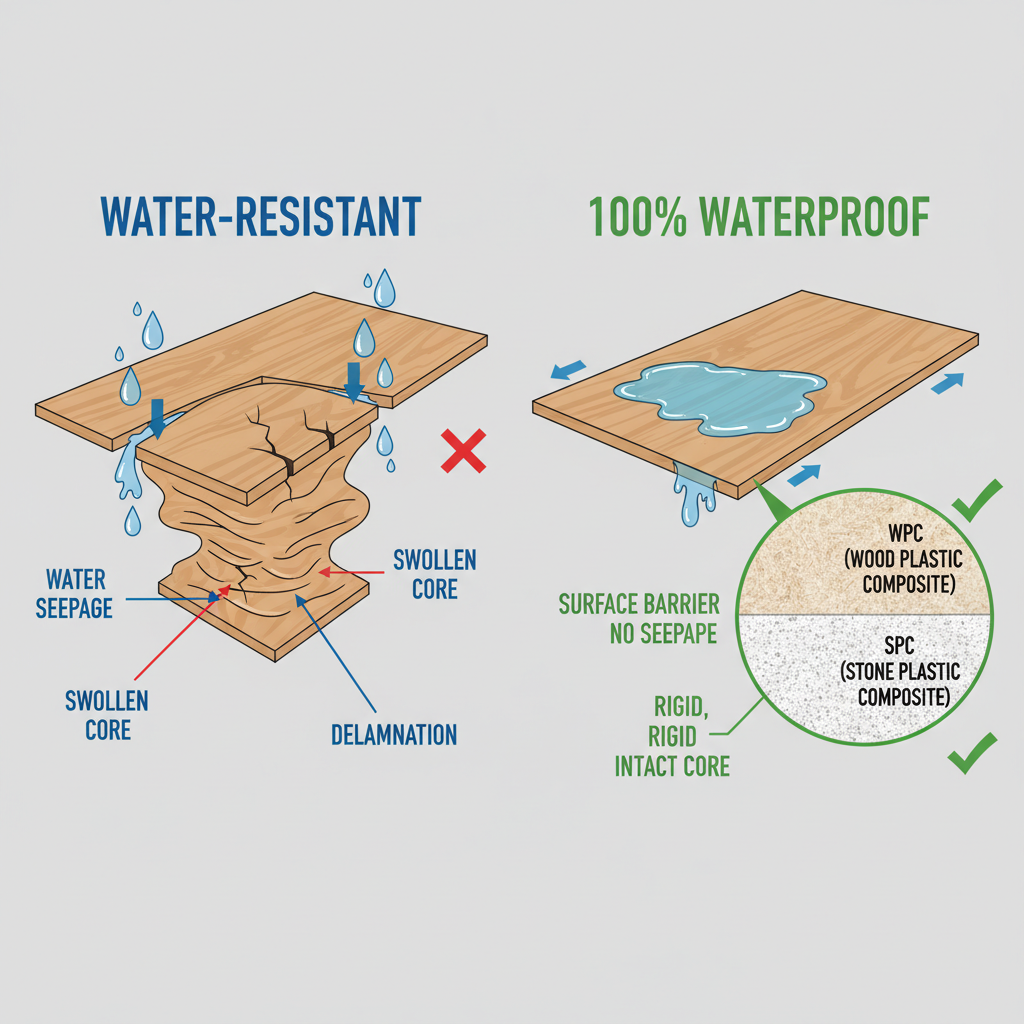
The most critical distinction in the flooring industry is the difference between water-resistant and 100% waterproof. Water-resistant flooring can survive a topical spill if it is wiped up quickly. However, if liquid seeps into the seams, the core will swell, delaminate, and fail.
True waterproof flooring, according to standards set by the National Wood Flooring Association (NWFA) [1] and the Tile Council of North America (TCNA) [2], can withstand standing water without suffering structural degradation. However, there is a massive caveat that many buyers miss. As certified flooring contractors frequently warn:
“A floor is only as waterproof as the subfloor beneath it. If water breaches the perimeter and reaches a wooden subfloor, your ‘waterproof’ planks will survive, but the structural integrity of your home will not.”
WPC vs. SPC Core Technology Deep Dive
When evaluating waterproof vinyl planks and other waterproof flooring solutions, you will frequently encounter two acronyms: WPC (Wood-Plastic Composite) and SPC (Stone-Plastic Composite). Understanding the cross-section of these rigid core planks is essential.
A standard waterproof plank consists of a wear layer, a printed high-definition visual layer, the rigid core, and an attached backing pad. The core is where the magic happens:
- WPC (Wood-Plastic Composite): This core uses foaming agents combined with wood flour and plastics. The result is a thicker plank that is softer underfoot, warmer, and provides excellent sound dampening. It is ideal for living areas and bedrooms.
- SPC (Stone-Plastic Composite): This core replaces the foaming agents with dense limestone powder [3]. It is thinner, heavier, and offers extreme dent resistance against heavy furniture and dropped items.
Beyond durability, consider the environmental impact. Look for products with FloorScore certification, which guarantees low Volatile Organic Compound (VOC) emissions for better indoor air quality. While both WPC and SPC are largely synthetic, many modern manufacturers are increasing the recyclability of these composites.
Wear Layers: The Secret to Durable Waterproof Floors for Homes
The durability of your floor is not determined by its thickness, but by its wear layer—the clear, urethane coating applied to the very top of the plank. This layer protects against scratches, scuffs, and stains.
When shopping for durable waterproof floors for homes, wear layers are measured in “mils” (one-thousandth of an inch). The golden rule for longevity is this: Wear layers of 12mil or greater are recommended to provide adequate durability in high-traffic areas. For homes with large dogs or active children, upgrading to a 20mil or 22mil wear layer is highly advised.
You can often gauge a manufacturer’s confidence in their wear layer by their warranty structure. A product offering a “lifetime residential / 10-year commercial” warranty is a strong indicator of a premium, highly durable wear layer.
Best Waterproof Flooring for Kitchens: Design Meets Extreme Durability
Kitchens present a unique environmental hazard. The flooring must withstand heavy appliances, dropped utensils, dragging chairs, and frequent spills, all while matching the aesthetic of your cabinetry. Finding the best waterproof flooring for kitchens requires a perfect marriage of design and extreme durability.
Top Materials: Luxury Vinyl Planks (LVP) vs. Waterproof Tile
The battle for the kitchen floor usually comes down to rigid core luxury vinyl planks versus traditional porcelain or ceramic tile.
Tile is the historical champion of waterproof surfaces. However, as noted by the National Kitchen & Bath Association (NKBA) [4], modern design trends heavily favor the continuous look of wood flooring flowing from the living room into the kitchen. This is where waterproof vinyl planks excel. Thanks to “embossed-in-register” technology, the physical texture of the vinyl perfectly matches the printed wood grain, creating a hyper-realistic look.
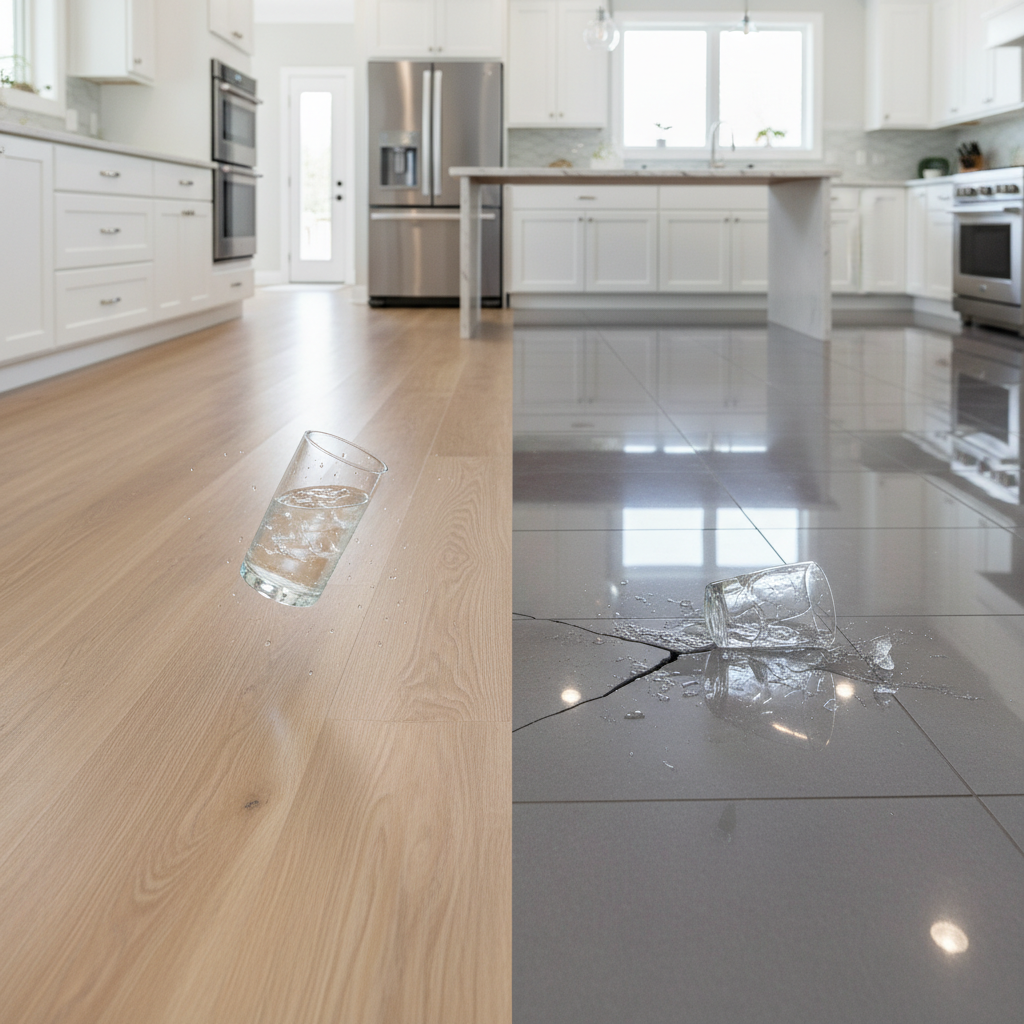
From a practical standpoint, industry experts at My Dad’s Flooring America [5] point out the distinct differences in daily use. Porcelain tile is incredibly hard, making it virtually scratch-proof, but it is unforgiving. Dropped glasses will shatter, and standing on tile for hours while cooking can take a severe ergonomic toll on your back and joints. Rigid core LVP, especially WPC with a cork or foam backing, offers significantly more ergonomic comfort and is less likely to shatter dropped dishware. Furthermore, SPC rigid core LVP has proven in stress tests to withstand the static load of heavy kitchen islands and refrigerators without the denting issues that plagued older generations of standard vinyl.
Managing Kitchen Floor Moisture and Spills
Controlling kitchen floor moisture is about proactive environmental management. Condensation from dishwashers, slow leaks from refrigerator water lines, and accidental spills are daily threats.
One of the most common, yet counter-intuitive, mistakes homeowners make is using rubber-backed mats in front of the sink or stove. While intended to catch spills, rubber-backed mats do not breathe. If moisture gets trapped underneath them—either from a spill or simple ambient humidity—it cannot evaporate. Over time, this trapped moisture will permanently discolor the wear layer of vinyl or laminate and can degrade the finish. Always opt for breathable, woven rugs with non-staining rug pads in wet zones.
Waterproof Bathroom Flooring Options: Safety, Hygiene, and Style
In the bathroom, the priorities shift. While aesthetics matter, safety, standing water management, and mold prevention are paramount. When evaluating waterproof bathroom flooring options, you must adopt a “safety first, style second” approach.
Slip-Resistance and ADA Compliance
A floor that is 100% waterproof is useless if it turns into an ice rink when wet. Educating yourself on the Coefficient of Friction (COF) rating is vital for bathroom flooring. The COF measures the slip resistance of a surface.
According to guidelines from the Tile Council of North America (TCNA) [2], wet-area flooring should have a high dynamic COF to prevent slip hazards. When choosing vinyl or tile for a bathroom, look for heavily textured surfaces.
Additionally, consult with a licensed plumber before making your final selection. The thickness of your new flooring directly impacts the toilet flange installation. If you are installing a thick WPC plank over an existing floor, the toilet flange may need to be raised using extenders to ensure a watertight seal and prevent hidden leaks.
100% Waterproof, Mold-Resistant, and Hygienic Choices
Bathrooms require materials that are truly non-porous and hygienic—essentially, “pee-proof” for households with young boys or pets. Sheet vinyl, porcelain tile with sealed epoxy grout, and tight-locking SPC vinyl planks are excellent choices. Many modern luxury vinyl options now include built-in antimicrobial layers that inhibit the growth of surface bacteria.
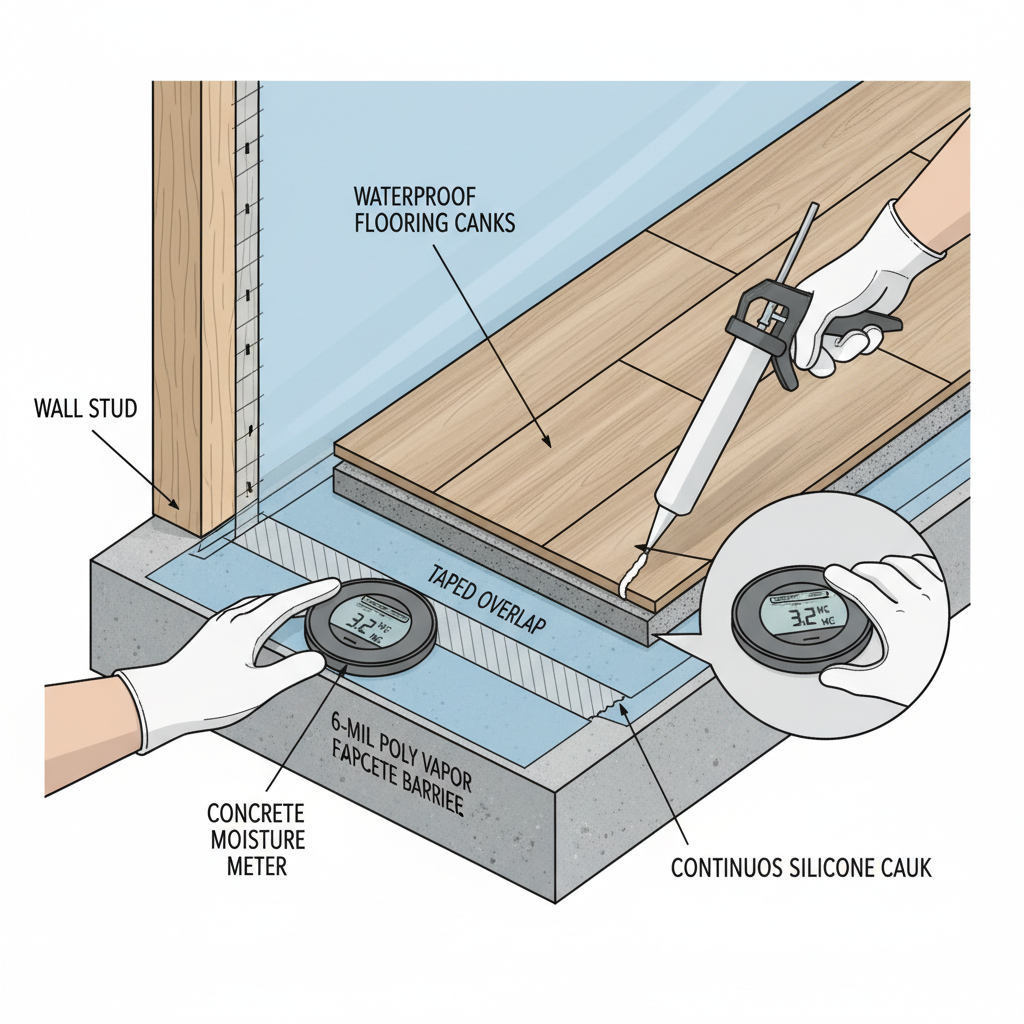
However, a critical and often overlooked step in most DIY projects is the prevention of mold growth underneath the waterproof planks. Water can easily splash out of a tub and seep into the perimeter expansion gaps. To prevent this, the perimeter of the bathroom floor must be properly sealed with 100% silicone caulk (not acrylic), and a high-quality, mold-resistant underlayment must be used over the subfloor.
Contractor-Grade Moisture Resistant Floor Installation
Even the most expensive, premium flooring will fail catastrophically if the subfloor is compromised. For DIYers and remodelers, mastering moisture resistant floor installation is non-negotiable.
Subfloor Preparation and Moisture Testing
The most critical step in flooring installation happens before a single plank is laid: moisture testing. Guidelines from the Building America Solution Center (BASC) [6] dictate strict moisture limits for subfloors.
- Wood Subfloors: The moisture content of a wood subfloor should never exceed 12%.
- Concrete Subfloors: Concrete acts like a hard sponge, constantly wicking moisture from the earth. Concrete moisture vapor emission rates shall be <5 lbs./1,000 sq. ft. /24 hours, as measured by calcium chloride tests per ASTM 1869 standards [7].
- New Concrete: New concrete subflooring must cure for at least 90 days prior to installation to allow the massive amount of construction moisture to evaporate.
Vapor Barriers and Proper Acclimation
If you are installing over concrete, a vapor barrier is an absolute necessity, regardless of whether the flooring itself is waterproof. The industry standard requires a 0.006 inch (6-mil) age-resistant, non-permeable polyethylene vapor barrier over concrete subfloors.
Installation of this barrier must be meticulous. You must overlap the seams of the polyethylene sheets by 6 to 8 inches and tape them completely shut using a specialized moisture-resistant tape. Run the barrier slightly up the walls; it will be covered by the baseboards later.
Finally, all flooring materials must be acclimated to the room’s high-humidity environment (especially in bathrooms) for 48 hours prior to installation, allowing the planks to expand or contract to the room’s ambient temperature and humidity.
Triage and Recovery: Dealing with Water Damaged Flooring
When a pipe bursts or a bathtub overflows, homeowners are thrown into a high-stress, problem-solving mindset. Dealing with water damaged flooring requires a calm, diagnostic approach to identify hidden moisture and salvage what you can.
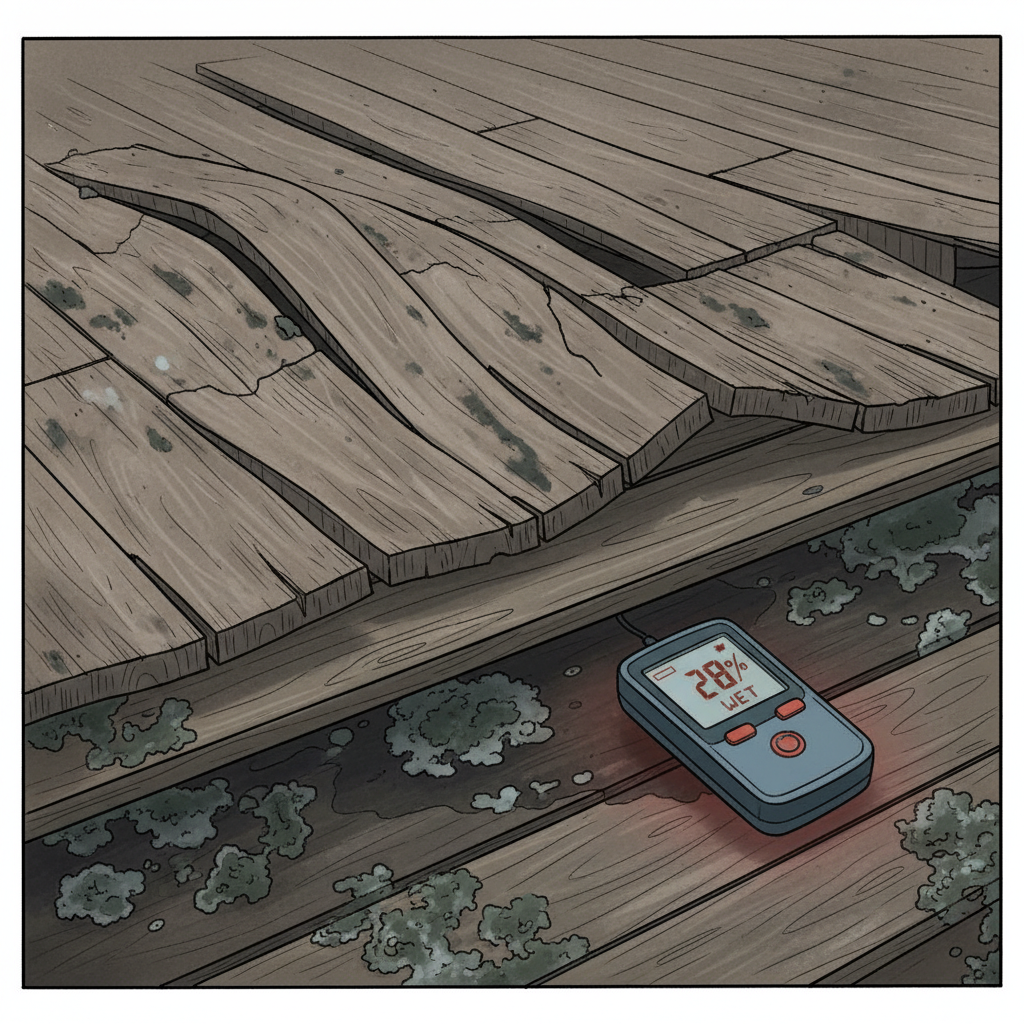
Diagnosing Warped Floors: Cupping, Crowning, and Buckling
If your floors are showing signs of distress, you must perform a root cause analysis to determine the fix. Technical insights from Parma Flooring [8] highlight the physics of wood and laminate expansion. When materials absorb moisture, they expand. If proper perimeter expansion gaps (usually 1/4 inch) were not left during installation, the floor has nowhere to go but up.
You must distinguish between the three main types of warping:
- Cupping: The edges of the plank are higher than the center. This indicates a moisture imbalance where the bottom of the board is wetter than the top (often pointing to subfloor moisture).
- Crowning: The center of the board is higher than the edges. This often happens if a floor was sanded while cupped, or if the top of the floor was saturated with water.
- Buckling: The floor physically lifts away from the subfloor. This is an extreme reaction to flooding or a complete lack of expansion gaps.
To accurately diagnose warped bathroom floors, professionals rely on pinless moisture meters, which scan beneath the surface of the wood without damaging the finish, pinpointing exactly where the water is trapped.
Hidden Subfloor Moisture and Mold Prevention
Surface drying is never sufficient after a flood. Water is insidious; it travels beneath “water-tight” surface boards and uses capillary action to wick up the drywall. The US Environmental Protection Agency (EPA) [9] warns that mold can begin growing on damp organic materials (like wood subfloors and drywall paper) within 24 to 48 hours. If water has breached the perimeter of your waterproof flooring, the planks must be carefully unclicked and removed to expose the subfloor to heavy industrial dehumidifiers and air movers.
The Repair vs. Replace Flowchart
When assessing water damage, use this contractor-approved checklist to decide whether to repair or replace:
- Identify the Material: Is it solid hardwood, engineered wood, laminate, or LVP? Saturated laminate (MDF core) will swell permanently and must be 100% replaced. Solid hardwood can often be saved if dried quickly.
- Test the Subfloor: Use a moisture meter. If the wood subfloor is saturated and beginning to delaminate or rot, it must be cut out and replaced.
- Assess the Planks: Waterproof vinyl planks themselves will not be damaged by water. You can unclick them, dry them, dry the subfloor, and reinstall them.
- Check the Timeline: If standing water has been present for more than 48 hours, the risk of black mold is high. Replacement of the underlayment and professional mold remediation may be required.
Conclusion
The secret to a flawless, life-proof home is matching the right material science to the specific environmental hazards of each room. While SPC rigid core planks offer bulletproof dent resistance for heavy kitchen traffic, softer WPC cores provide comfort, and heavily textured tiles offer unmatched slip resistance for wet bathrooms. However, the ultimate takeaway is that the term “waterproof” only applies to the plank itself. True waterproofing requires flawless subfloor preparation, rigorous moisture testing, and contractor-grade installation. We encourage you to order physical samples to perform your own scratch and water tests at home, and always consult with a certified local flooring contractor to ensure your subfloor meets the strict ASTM standards outlined in this guide.
Disclaimer: While this guide provides contractor-grade advice, always consult a licensed professional and refer to specific manufacturer warranties and local building codes before beginning installation or water damage remediation.
References & Authoritative Sources
- National Wood Flooring Association (NWFA). (N.D.). Waterproof Flooring Standards and Definitions. NWFA industry guidelines.
- Tile Council of North America (TCNA). (N.D.). Wet-Area Flooring Installations and Coefficient of Friction (COF) Standards. TCNA official guidelines.
- Flooring Inc. (N.D.). Technical Breakdowns of SPC and WPC Compositions. Flooring Inc.
- National Kitchen & Bath Association (NKBA). (N.D.). Kitchen Design Standards and Flooring Trends. NKBA industry reports.
- My Dad’s Flooring America. (N.D.). Pros and Cons of Porcelain vs. LVP. My Dad’s Flooring America.
- Building America Solution Center (BASC) / Department of Energy. (N.D.). Water-Resistant Flooring Installation Guidelines. BASC resource guides.
- ASTM International. (N.D.). ASTM 1869: Standard Test Method for Measuring Moisture Vapor Emission Rate of Concrete Subfloor Using Anhydrous Calcium Chloride.
- Parma Flooring. (N.D.). What to Do When Engineered Floor Warps After Water Damage. Parma Flooring technical insights.
- US Environmental Protection Agency (EPA). (N.D.). Indoor Air Quality, Mold Prevention, and Moisture Control Guidelines. EPA.gov.
