
Have you ever felt the sting of disappointment when a new piece of furniture—a bookshelf, a coffee table, a nightstand—starts to wobble, peel, or sag just a year or two after you brought it home? You’re not alone. We live in an era of “fast furniture,” where low prices often mask poor quality, leading to a frustrating and costly cycle of buying, breaking, and replacing. This cycle doesn’t just drain your wallet; it fills our landfills and compromises the health and beauty of our homes.
But there is a better way. It involves a shift in mindset: from viewing furniture as a disposable expense to seeing it as a long-term investment in a legacy of beauty, function, and family history. This is the promise of heirloom-quality furniture.
This guide is your actionable framework for breaking free from the disposable cycle. We will demystify what “heirloom quality” truly means, expose the hidden costs of that seemingly cheap alternative, and empower you to identify, choose, and care for magnificent pieces. You’ll learn to calculate the superior “cost per year” value of true craftsmanship and discover how investing in timeless furniture can enrich your home and your life for generations to come.
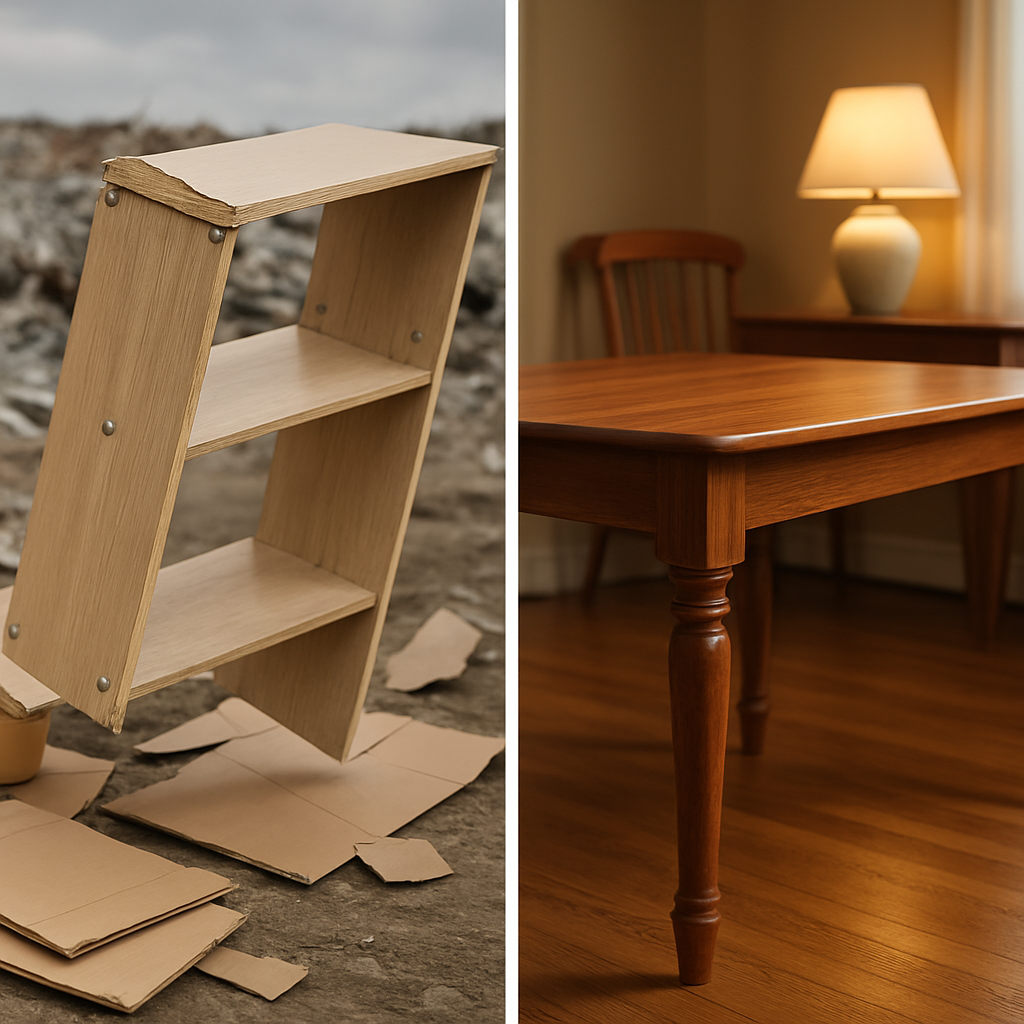
- The Hidden Costs of ‘Fast Furniture’: Why Your Bargain Isn’t a Bargain
- What is Heirloom Quality Furniture? The Definitive Checklist
- Building Your Legacy: An Investor’s Guide to Timeless Furniture
- Living with Lasting Beauty: Care and Preservation for Generations
- Conclusion
- References
The Hidden Costs of ‘Fast Furniture’: Why Your Bargain Isn’t a Bargain
The allure of a low price tag is powerful, but the initial savings on mass-produced furniture often conceal a range of significant long-term costs. From frequent replacements to environmental degradation and even potential health risks, the disposable furniture model is fundamentally flawed. Before you can appreciate the value of an heirloom, it’s crucial to understand the true price of its opposite.
The True Cost of Ownership: Calculating the ‘Cost Per Year’
One of the most compelling arguments against cheap furniture is a simple financial calculation: the Total Cost of Ownership (TCO). While a high-quality piece has a higher upfront cost, its longevity dramatically lowers its cost when amortized over its lifespan. Conversely, the need to repeatedly replace a low-quality item makes it far more expensive in the long run.
Consider this real-world scenario:
| Metric | Heirloom-Quality Solid Wood Table | Mass-Produced Particleboard Table |
|---|---|---|
| Upfront Cost | $3,000 | $300 |
| Expected Lifespan | 30+ years (often much longer) | 3-5 years |
| Replacements in 30 Years | 0 | 5-9 times |
| Total Cost Over 30 Years | $3,000 | $1,800 – $3,000 (plus time, hassle) |
| Cost Per Year | $100 | $60 – $100 |
While the cost per year might seem comparable in a simple calculation, the particleboard table’s total cost doesn’t account for the time spent shopping for replacements, the hassle of assembly and disposal, and the frustrating reality of living with a deteriorating product. As a comprehensive analysis of furniture value points out, this false economy ignores the financial drain of the replacement cycle[2]. The heirloom piece, meanwhile, maintains its beauty and structural integrity, often becoming more valuable over time.
From Forest to Landfill: The Environmental Impact of Disposable Furniture
The “buy cheap, toss, and repeat” model has staggering environmental consequences. When you throw away a broken piece of furniture, it joins millions of tons of other items in landfills, creating a significant ecological burden.
Research from institutions like the University of San Francisco highlights several critical impacts[1]:
- Landfill Overload: Furniture is bulky and does not compact easily, consuming vast amounts of precious landfill space.
- Greenhouse Gas Emissions: As wood-based materials like particleboard and MDF decompose in an oxygen-free landfill environment, they can produce methane, a greenhouse gas over 25 times more potent than carbon dioxide.
- Resource Depletion: The constant manufacturing of disposable goods consumes immense energy, water, and raw materials, contributing to deforestation and loss of biodiversity.
Choosing durable, long-lasting furniture is a powerful act of sustainability, directly reducing waste and conserving natural resources for the future.
Health Hazards in Your Home: The Dangers of Low-Quality Materials
Beyond the financial and environmental toll, cheap furniture can introduce hidden health risks into your home. The composite wood products commonly used, such as particleboard and Medium-Density Fiberboard (MDF), are bound together with adhesives that can release harmful chemicals into the air you breathe.
The primary concern is the off-gassing of volatile organic compounds (VOCs). One of the most notorious VOCs found in furniture is formaldehyde, a known respiratory irritant and carcinogen. Exposure to formaldehyde can cause symptoms like sore throats, coughing, scratchy eyes, and nosebleeds. For individuals with asthma or other respiratory conditions, the impact can be even more severe. Investing in furniture made from solid wood with low-VOC finishes is an investment not only in durability but in your family’s health and indoor air quality.
What is Heirloom Quality Furniture? The Definitive Checklist
“Heirloom quality” is more than a marketing buzzword; it’s a standard defined by tangible characteristics that ensure a piece can withstand the test of time. It represents a commitment to materials, construction, and design that allows it to be used, loved, and passed down. Authoritative sources in the design world emphasize that true heirloom quality goes beyond simple durability to include concepts like “maintainability”—the ability to be repaired and refinished—and “material honesty,” where the beauty of the raw material is celebrated[3].
To confidently identify a future heirloom, use this definitive checklist.
The Foundation: Why Solid Hardwood is Non-Negotiable
The journey to generational furniture begins with the wood itself. Unlike the composite materials found in fast furniture, solid hardwood provides the fundamental strength, stability, and repairability required for a long life.
- Solid Wood: Each component is milled from a single, solid piece of lumber. It can be sanded, refinished, and repaired countless times over its life.
- Veneer: A very thin layer of attractive hardwood is glued over a core of a lesser material, typically particleboard or MDF. While it can look good initially, it is easily damaged, and deep scratches or chips are often irreparable.
- Particleboard/MDF: These are engineered products made from wood dust, chips, and resin compressed under high pressure. They are susceptible to water damage, sag under weight, and do not hold screws well over time, making repairs difficult.
A commitment to using sustainably sourced North American hardwoods, as benchmarked by expert makers like Vermont Woods Studios, is a hallmark of quality and environmental responsibility[4].
A Guide to Common Furniture Hardwoods
| Wood Type | Key Characteristics | Best For |
|---|---|---|
| Oak | Extremely strong, heavy, and durable with a prominent grain. Resists scratches and wear. | Dining tables, desks, flooring, high-use items. |
| Cherry | Known for its smooth, fine grain and rich reddish-brown color that deepens beautifully with age. | Bed frames, cabinets, decorative pieces. |
| Walnut | Prized for its rich, dark color and complex grain patterns. Strong yet relatively lightweight. | High-end accent pieces, headboards, chairs. |
| Maple | Very hard, dense, and resistant to dents. Typically has a light, creamy color and subtle grain. | Dressers, kitchen cabinetry, butcher blocks. |
Signatures of Craftsmanship: Identifying Superior Joinery and Construction
How a piece of furniture is put together is just as important as the material it’s made from. True craftsmanship lies in the joinery—the methods used to connect pieces of wood. These techniques create immensely strong bonds that distribute stress and withstand decades of use.
Craftsman’s Corner: The Art of the Joint
For centuries, master artisans like the Amish craftsmen have relied on time-honored joinery techniques passed down through generations[5]. These methods use the interlocking geometry of the wood itself to create strength, rather than relying on screws or glue alone.
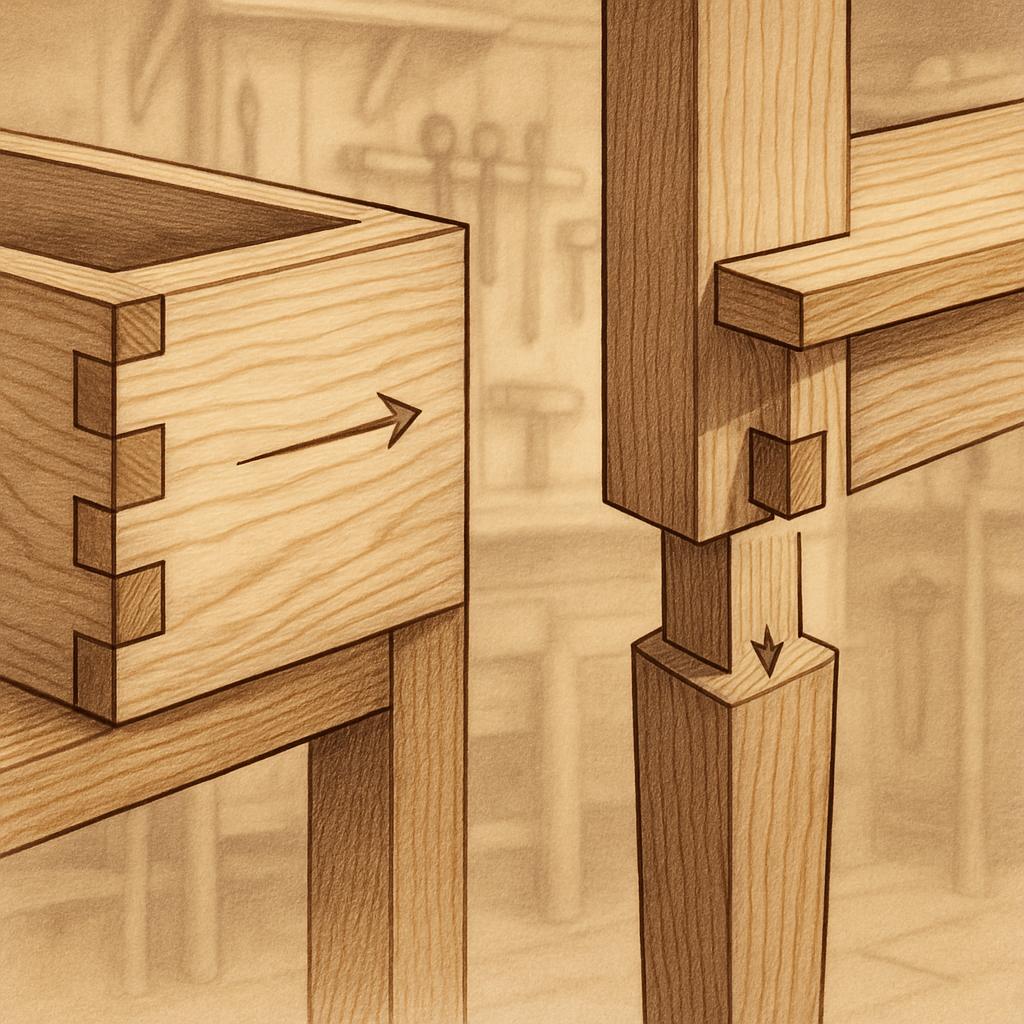
- Dovetail Joints: Characterized by a series of interlocking pins and tails, this joint is incredibly strong and resistant to being pulled apart. Look for it on the corners of high-quality drawers.
- Mortise-and-Tenon Joints: A “tenon” (a projecting tongue of wood) fits snugly into a “mortise” (a corresponding hole). This is the fundamental joint for connecting table legs to aprons and chair rails to legs, providing exceptional stability.
When inspecting furniture, look for these signs of quality construction:
- The Wobble Test: Push gently on the piece from different angles. It should feel solid and stable, with no racking or swaying.
- Drawer Construction: Open a drawer. It should glide smoothly. Check the corners for dovetail joints instead of staples or glue.
- Back Panels: Look at the back of a cabinet or dresser. Quality pieces will have a solid wood panel set into grooves, not a flimsy piece of cardboard stapled on.
Beyond the Build: The Importance of Finish and Hardware
The final details are often a clear indicator of the overall quality of a piece.
- The Finish: A high-quality finish does more than just add color; it protects the wood from moisture and wear. Surface finishes like lacquer provide a durable, protective topcoat. Penetrating finishes like oil soak into the wood, creating a more natural, hand-rubbed look that is easy to touch up. Feel the surface—it should be smooth and deep, not plasticky or rough.
- The Hardware: Open doors and pull on handles. The hardware should feel heavy and substantial, made of solid metal like brass or steel, not plated plastic or lightweight alloys. Hinges should operate smoothly and silently. These small components are touched daily and are a testament to a “no-shortcuts” approach to building.
Building Your Legacy: An Investor’s Guide to Timeless Furniture
Once you know how to identify quality, the next step is to choose pieces that will not only last physically but will also endure stylistically. This means shifting your perspective from that of a consumer to that of an investor. As experts in the field advise, purchasing high-quality furniture should be treated as a deliberate financial decision—an investment in a tangible asset for your family’s future[6]. By focusing on timeless design principles over fleeting trends, you can build a collection of furniture that serves as the beautiful, functional backdrop to your life’s story.
The Principles of Timeless Design: How to Trend-Proof Your Home
What makes a piece of furniture timeless? It’s not about being old-fashioned; it’s about possessing qualities that transcend eras. Legendary designers like Hans Wegner and Mies van der Rohe created pieces decades ago that remain coveted today because they embody these core principles.
According to leading interior designers cited in publications like Homes and Gardens and The Spruce, timeless design is defined by[7]:
- Clean Lines and Simple Forms: Pieces with uncluttered silhouettes and classic shapes, like a Parsons table or a Chesterfield sofa, can adapt to almost any decor.
- Balanced Proportions: The piece feels visually correct—not too bulky, not too delicate. It has a sense of harmony and stability.
- Functionality and Purpose: Timeless furniture is, above all, useful. It serves its intended purpose elegantly and efficiently.
- Authentic Materials: The natural beauty of solid wood, genuine leather, or natural stone is always in style.
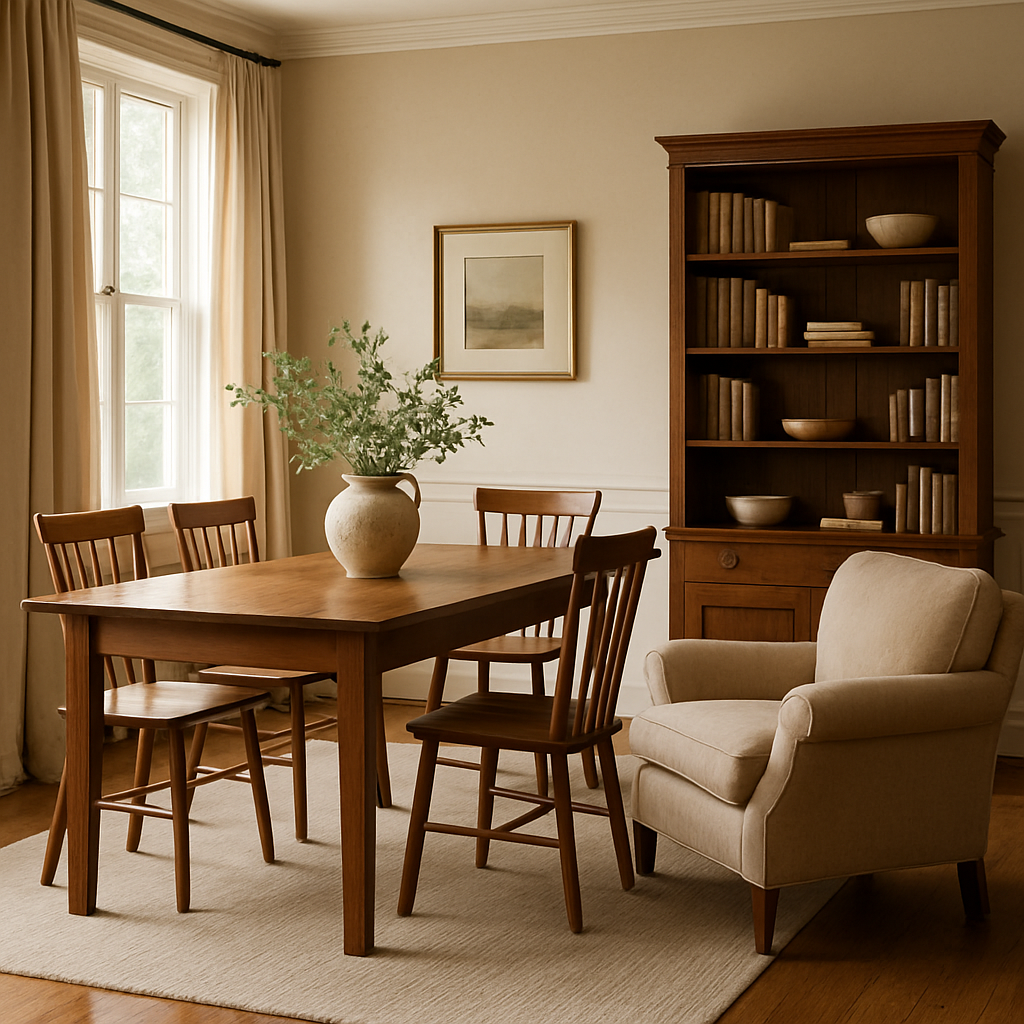
By prioritizing these principles, you can avoid the trap of today’s fast-fading trends, such as the once-ubiquitous monochrome gray schemes or the over-saturation of bouclé fabric.
Your First Heirlooms: 5 Foundational Pieces to Invest In
Starting your heirloom collection can feel daunting. The key is to begin with foundational pieces that play a central role in family life. Drawing on the expertise of traditional furniture makers, these five items are prime candidates for becoming your family’s first generational treasures[8].
- The Solid Wood Dining Table: As the heart of the home, this is where holiday meals are shared, homework is done, and conversations unfold. Its central role makes it the ultimate legacy piece.
- A Well-Built Chest of Drawers: A sturdy dresser or chest is incredibly versatile. It can move from a nursery to a master bedroom to a hallway over the years, storing memories along with belongings.
- A Classic Armchair: A comfortable, well-constructed armchair (like a Wingback or a club chair) can become a favorite spot for reading and relaxing, passed down from one generation’s quiet corner to the next.
- A Versatile Bookcase: More than just storage, a solid wood bookcase displays a family’s interests, stories, and history. Its simple, functional form never goes out of style.
- A Sturdy Bed Frame: A solid wood bed frame provides a literal foundation for rest and rejuvenation. Its durability and classic form offer a sense of permanence and stability.
Modern Heirlooms: Commissioning a Future Classic
Heirloom quality does not mean you are limited to traditional or antique styles. One of the most meaningful ways to build a legacy is to commission a custom piece from a contemporary artisan. This fills a common gap in thinking—that heirlooms must be inherited rather than created.
Designer’s Take: Creating Your Own Legacy
Working with a local woodworker or furniture maker allows you to create a “modern heirloom” that reflects your personal aesthetic while being built with traditional, time-honored quality. Discuss your needs for function, your preference for certain woods, and your home’s style. The result is a unique piece that begins its story with you, destined to become a future classic cherished by your children and grandchildren.
Living with Lasting Beauty: Care and Preservation for Generations
Investing in heirloom-quality furniture is the first step. The second is ensuring its preservation through proper care and maintenance. With the right attention, high-quality materials can achieve incredible longevity. For example, furniture made from Grade A teak is known to be capable of lasting for 75 or even 100+ years with proper care[9]. A consistent care routine will protect your investment and ensure its beauty endures for the next generation to enjoy.
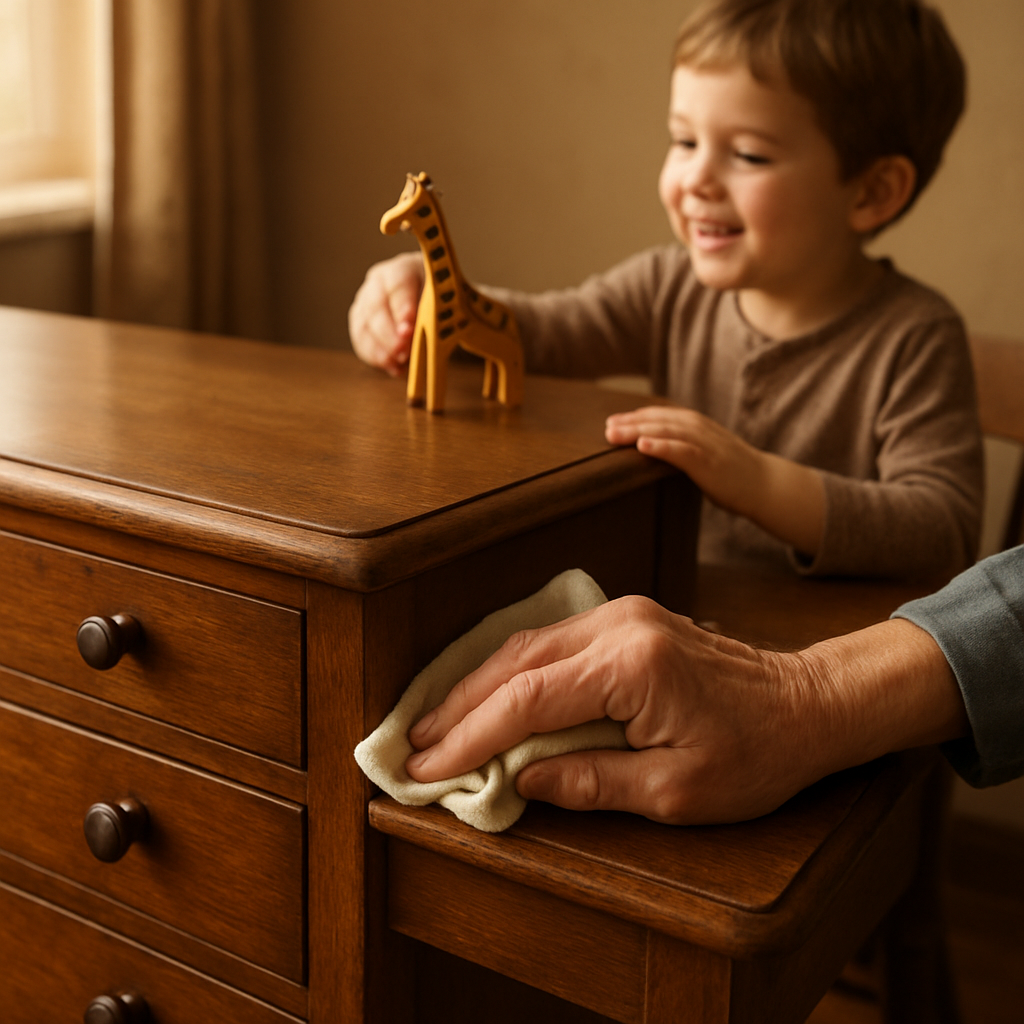
The Essentials of Wood Care: Cleaning, Polishing, and Protecting
Routine care is simple and essential for maintaining the health and beauty of your solid wood furniture.
The Do’s and Don’ts of Wood Furniture Care
| Do | Don’t |
|---|---|
| Dust regularly with a soft, dry microfiber cloth. | Use silicone-based polishes or all-purpose cleaners, which can damage the finish. |
| Clean spills immediately with a slightly damp cloth, then wipe dry. | Place wet or hot items directly on the wood surface; always use coasters and trivets. |
| For deeper cleaning, use a mild soap-and-water solution, wiping completely dry. | Allow the furniture to sit in direct, harsh sunlight for prolonged periods. |
| Apply a quality paste wax once or twice a year for added protection and luster. | Use feather dusters, which can have sharp quills that may scratch the surface. |
Managing Your Environment: Humidity, Sunlight, and Scratches
Solid wood is a natural material that responds to its environment. Managing these factors is key to preventing damage.
- Humidity: Wood expands and contracts with changes in humidity. Extreme swings can cause warping or cracking. Try to maintain a stable indoor humidity level (ideally between 40-50%).
- Sunlight: UV rays can fade and damage the wood’s finish over time. Position valuable pieces away from direct, prolonged sunlight, or use window coverings to filter the light.
- Scratches: For minor surface scratches, products like touch-up markers or paste wax can often conceal the damage.
Q&A with a Furniture Restorer
Q: When is a scratch or dent something I can fix myself, and when should I call a professional?
A: For light surface scratches in the finish, a simple wax stick or polish can often do the trick. However, if you have a deep gouge that has removed wood, a large water ring that has turned white or black, or a structural issue like a loose joint, it’s always best to consult a professional. A botched DIY repair can cause more damage and be more expensive to fix correctly later.
Honoring the Past, Adapting for the Future: Updating an Heirloom Piece
Inheriting a family piece is a gift, but sometimes its style may not perfectly match your modern decor. With care, you can update an heirloom without compromising its integrity.
According to interior design experts, the key is to make changes that are reversible or that honor the piece’s original character. Simple updates like changing out the hardware on a dresser, reupholstering the seat of a classic chair with a modern fabric, or even a professional, high-quality paint or lacquer job on a piece with good bones can give it a new life. For any significant alterations, always consult a professional restorer to ensure the piece’s structural integrity and value are preserved.
Conclusion
Choosing heirloom-quality furniture is about more than just buying a table or a chair. It is a conscious decision to reject the wasteful cycle of “fast furniture” and embrace a philosophy of permanence, quality, and meaning. It is an investment in your financial stability, freeing you from the hidden costs of constant replacement. It is an investment in a healthier planet, reducing your contribution to our overflowing landfills.
Most importantly, it is an investment in your family’s story. These are the pieces that will bear witness to your life—the dining table that hosts decades of celebrations, the armchair where bedtime stories are read, the chest that holds treasured keepsakes. By understanding the true “cost per year” and learning to recognize the hallmarks of durable craftsmanship, you are now empowered to make a confident, meaningful choice. You are ready to build a legacy of lasting beauty.
Begin your own legacy of lasting beauty. Explore the Bravewood collection of heirloom-quality furniture, crafted with the promise to endure for generations.
References
- University of San Francisco. (n.d.). The Environmental Impact of Furniture. USF Office of Sustainability. Retrieved from usfblogs.usfca.edu.
- SnydersFurniture.com. (n.d.). The Hidden Costs of Cheap Furniture. Retrieved from www.snydersfurniture.com.
- The Citizenry & LUXONAS HOME. (n.d.). Expert commentary on the definition of ‘heirloom quality’, emphasizing maintainability and material honesty.
- Vermont Woods Studios. (n.d.). Commitment to Sustainably Sourced Hardwoods. Retrieved from vermontwoodsstudios.com.
- Amish Craftsmen Communities. (n.d.). As represented by sources like Heirloom Amish Furniture and Brandenberry Amish Furniture, recognized for time-honored woodworking techniques.
- Wildedgewoodcraft.com & Divine Consign. (n.d.). Expert commentary on framing furniture as a long-term financial investment.
- Homes and Gardens & The Spruce. (n.d.). Expert interior designer consultations on timeless and outdated design trends.
- AmishFurnitureFactory.com. (n.d.). Expertise on identifying traditional types of generational furniture pieces.
- King Living. (n.d.). Furniture Designed for Longevity. Retrieved from www.kingliving.com.
